Getting Real: The smarter, faster, easier way to build a successful web application
by Jason Fried, David Heinemeier Hansson
On This Page
Description
Getting Real details the business, design, programming, and marketing principles of 37signals. The book is packed with keep-it-simple insights, contrarian points of view, and unconventional approaches to software design. This is not a technical book or a design tutorial, it's a book of ideas.Anyone working on a web app — including entrepreneurs, designers, programmers, executives, or marketers — will find value and inspiration in this book.37signals used the Getting Real process to show more launch five successful web-based applications (Basecamp, Campfire, Backpack, Writeboard, Ta-da List), and Ruby on Rails, an open-source web application framework, in just two years with no outside funding, no debt, and only 7 people (distributed across 7 time zones). Over 500,000 people around the world use these applications to get things done.Now you can find out how they did it and how you can do it too. It's not as hard as you think if you Get Real. show lessTags
Recommendations

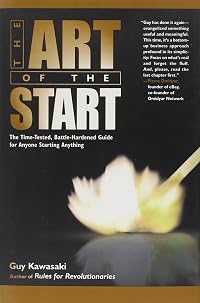
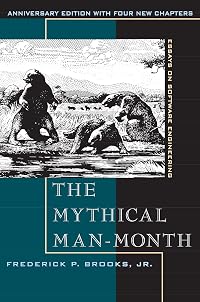
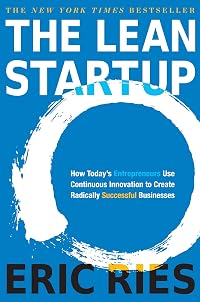




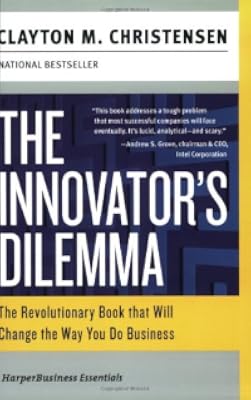

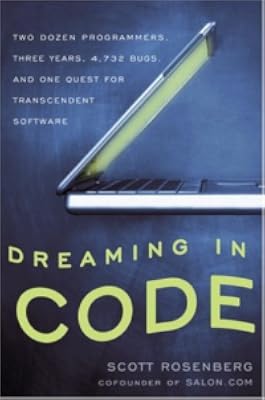
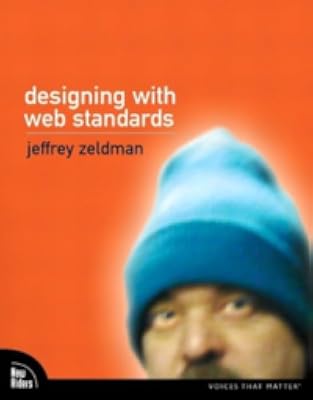
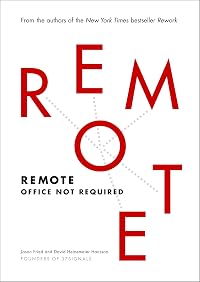

Member Recommendations
timspalding The recommendations for this book are too heavy on programming, and too light on creating great websites and web applications.
Member Reviews
freaking awesome
expresses in a clear concise manner a ton of topics that have been half formed and bouncing around in my head for a while (even saying that feels arrogant because this book is brilliant in its simplicity and clarity of vision, more than likely it is just so good and makes so much sense that it makes you think you've had the ideas all along)
just plain elegant. captures the idea of "actually doing stuff"
take a stand. its not going to be perfect now. leave stuff out on purpose.
Do less...BUT actually DO something...don't talk about it...don't write about it...Do it.
"good ideas with out implementation are worthless"
"enthusiasm is everything" -Pele, not from the book (just my favorite quote) but captured in the book's show more statement of the importance of passion
small groups, constant iteration, attention to detail...
fantastic, quick, can't put down read. The one book I've made the time to read in an incredibly busy last 2 months here in Afghanistan
specifically about web development, but truly is a vision that can be applied to life and everything. Found it practically inspirational.
Not easy though.
This is a spirit that I felt was lacking in every course I never liked, and unfortunately is counter to much of what we were forced to sit through.
Really unfortunately I feel that this is the exact opposite of how the Army, particularly staff, works. but thats enough on that.
Oh and i forgot one of the best parts. I read it all for free online.
http://gettingreal.37signals.com/toc.php
...enjoy show less
expresses in a clear concise manner a ton of topics that have been half formed and bouncing around in my head for a while (even saying that feels arrogant because this book is brilliant in its simplicity and clarity of vision, more than likely it is just so good and makes so much sense that it makes you think you've had the ideas all along)
just plain elegant. captures the idea of "actually doing stuff"
take a stand. its not going to be perfect now. leave stuff out on purpose.
Do less...BUT actually DO something...don't talk about it...don't write about it...Do it.
"good ideas with out implementation are worthless"
"enthusiasm is everything" -Pele, not from the book (just my favorite quote) but captured in the book's show more statement of the importance of passion
small groups, constant iteration, attention to detail...
fantastic, quick, can't put down read. The one book I've made the time to read in an incredibly busy last 2 months here in Afghanistan
specifically about web development, but truly is a vision that can be applied to life and everything. Found it practically inspirational.
Not easy though.
This is a spirit that I felt was lacking in every course I never liked, and unfortunately is counter to much of what we were forced to sit through.
Really unfortunately I feel that this is the exact opposite of how the Army, particularly staff, works. but thats enough on that.
Oh and i forgot one of the best parts. I read it all for free online.
http://gettingreal.37signals.com/toc.php
...enjoy show less
The software industry has seen many incarnations as far as project development methodologies with its first account of a true leap in flexibility when some teams abandoned waterfall and spiral for the ideas presented in the agile manifesto. This brought for a whopping number of agile methods ranging from SCRUM, extreme programming, lean and many more. Years later, evangelists still clamor how their methodology is better in every single way than the rest (despite the fact that most of them are founded on the same principles) and this has started many fruitless discussions in the same manner people argue over religion.
Now enter Getting Real. Getting Real is more than simply a software methodology. It is an opinionated manifesto of what show more should and shouldn't be done not only in software development but in business and projects in general. It takes the agile manifesto and pushes it to such an extreme that other agile methods seem slow and bloated in comparison.
The tone of the book is so strong that you almost feel like the writers are saying "fuck this" and "fuck that" even though they never actually say it. You WILL question why things aren't being done the Getting Real way. Some of the principles in Getting Real can seem pretty revolutionary, specially if you've worked in software development. It says no to specs, no to meetings, and no to pretty much everything you've been doing in the past. On the flip-side, some of the ideas in Getting Real can seem pretty irresponsible; like saying no to specs, no to meetings and many more. The whole purpose of this book is not to blindly follow what 37signals has done to achieve success, but to see software development and business from their perspective and figure out what could actually work for you.
While I do agree with some of the ideas in this book, some of them I don't. Yet the reason why I won't give this book five stars is not related to the ideas presented in the Getting Real process, but the meaning of the process as a whole: it implies that by following this formula (or rather process) you'll gain success. The whole idea of following a script in business is preposterous. You will not be successful just by following what this book says. People think that just by following Getting Real, Rework, The Lean Startup (and many similar books) they can be as successful as the people who wrote them and that is statistically wrong. You cannot assume an absolute outcome from initial variables in business for the simple fact that business success is relative to the competition. This book is part of the plague that roams around in startup circles who are more interested in processes than strategy or vision, thus narrowing their focus of business to the complexity of the Ten Commandments.
There are many things that this book will achieve: it will inspire and motivate you. But more important, it will force you to question why things are done the the way they are in order for you to draw your own conclusions and adapt. Read the book, but take it as a grain of salt. Read it assuming this books subtitle is "how we do things at 37signals, yet it may not all work for you". show less
Now enter Getting Real. Getting Real is more than simply a software methodology. It is an opinionated manifesto of what show more should and shouldn't be done not only in software development but in business and projects in general. It takes the agile manifesto and pushes it to such an extreme that other agile methods seem slow and bloated in comparison.
The tone of the book is so strong that you almost feel like the writers are saying "fuck this" and "fuck that" even though they never actually say it. You WILL question why things aren't being done the Getting Real way. Some of the principles in Getting Real can seem pretty revolutionary, specially if you've worked in software development. It says no to specs, no to meetings, and no to pretty much everything you've been doing in the past. On the flip-side, some of the ideas in Getting Real can seem pretty irresponsible; like saying no to specs, no to meetings and many more. The whole purpose of this book is not to blindly follow what 37signals has done to achieve success, but to see software development and business from their perspective and figure out what could actually work for you.
While I do agree with some of the ideas in this book, some of them I don't. Yet the reason why I won't give this book five stars is not related to the ideas presented in the Getting Real process, but the meaning of the process as a whole: it implies that by following this formula (or rather process) you'll gain success. The whole idea of following a script in business is preposterous. You will not be successful just by following what this book says. People think that just by following Getting Real, Rework, The Lean Startup (and many similar books) they can be as successful as the people who wrote them and that is statistically wrong. You cannot assume an absolute outcome from initial variables in business for the simple fact that business success is relative to the competition. This book is part of the plague that roams around in startup circles who are more interested in processes than strategy or vision, thus narrowing their focus of business to the complexity of the Ten Commandments.
There are many things that this book will achieve: it will inspire and motivate you. But more important, it will force you to question why things are done the the way they are in order for you to draw your own conclusions and adapt. Read the book, but take it as a grain of salt. Read it assuming this books subtitle is "how we do things at 37signals, yet it may not all work for you". show less
Getting Real details the business, design, programming, and marketing principles of 37signals. The book is packed with keep-it-simple insights, contrarian points of view, and unconventional approaches to software design. This is not a technical book or a design tutorial, it's a book of ideas. Anyone working on a web app — including entrepreneurs, designers, programmers, executives, or marketers — will find value and inspiration in this book. 37signals used the Getting Real process to launch five successful web-based applications (Basecamp, Campfire, Backpack, Writeboard, Ta-da List), and Ruby on Rails, an open-source web application framework, in just two years with no outside funding, no debt, and only 7 people (distributed across show more 7 time zones). Over 500,000 people around the world use these applications to get things done. Now you can find out how they did it and how you can do it too. It's not as hard as you think if you Get Real. show less
Very quick read, but not a particularly good one. The advice is extremely simplistic, bordering on platitudes, and much of it is not particularly actionable. A lot of it simply does not apply to *many* companies: e.g. building for yourself is all it takes to find a market (tell that to the many engineers who built something that *only* they would want), everything can be self-funded (many business cannot), everyone should give away all of their data for free (unless, of course, data is your differentiator, which it is for many companies).
It's not all bad, of course. The advice on design is actually quite good, mostly because it sticks with very concrete details: e.g. avoid too many preferences/settings in an app, design for regular, show more blank, and error states, copywriting is part of the design, and that your app has a voice. And some of the quotes from third parties are decent too.
Overall, there is some good stuff in this book, but it doesn't do a very good job of presenting it.
Some quotes that I liked:
Build half a product, not a half-ass product
The best designers and the best programmers aren’t the ones with the best skills, or the nimblest fingers, or the ones who can rock and roll with Photoshop or their environment of choice, they are the ones that can determine what just doesn’t matter. That’s where the real gains are made. Most of the time you spend is wasted on things that just don’t matter. If you can cut out the work and thinking that just don’t matter, you’ll achieve productivity you’ve never imagined.
Another reason to design first is that the interface is your product. What people see is what you’re selling. If you just slap an interface on at the end, the gaps will show.
Design for regular, blank, and error states.
The customer decides if an application is worthy at this blank slate stage – the stage when there’s the least amount of information, design, and content on which to judge the overall usefulness of the application. When you fail to design an adequate blank slate, people don’t know what they are missing because everything is missing.
Copywriting is interface design. Great interfaces are written. If you think every pixel, every icon, every typeface matters, then you also need to believe every letter matters.
Encourage programmers to make counteroffers.You want to hear: “The way you suggested will take 12 hours. But there’s a way I can do it that will only take one hour. It won’t do x but it will do y.”
Lorem ipsum changes the way copy is viewed. It reduces text-based content to a visual design element – a shape of text – instead of what it should be: valuable information someone is going to have to enter and/or read. Dummy text means you won’t see the inevitable variations that show up once real information is entered. It means you won’t know what it’s like to fill out forms on your site. Dummy text is a veil between you and reality.
Think of your product as a person. What type of person do you want it to be? Polite? Stern? Forgiving? Strict? Funny? Deadpan? Serious? Loose? Do you want to come off as paranoid or trust- ing? As a know-it-all? Or modest and likable? Once you decide, always keep those personality traits in mind as the product is built. Use them to guide the copywriting, the interface, and the feature set. Whenever you make a change, ask yourself if that change fits your app’s personality. Your product has a voice – and it’s talking to your customers 24 hours a day. show less
It's not all bad, of course. The advice on design is actually quite good, mostly because it sticks with very concrete details: e.g. avoid too many preferences/settings in an app, design for regular, show more blank, and error states, copywriting is part of the design, and that your app has a voice. And some of the quotes from third parties are decent too.
Overall, there is some good stuff in this book, but it doesn't do a very good job of presenting it.
Some quotes that I liked:
Build half a product, not a half-ass product
The best designers and the best programmers aren’t the ones with the best skills, or the nimblest fingers, or the ones who can rock and roll with Photoshop or their environment of choice, they are the ones that can determine what just doesn’t matter. That’s where the real gains are made. Most of the time you spend is wasted on things that just don’t matter. If you can cut out the work and thinking that just don’t matter, you’ll achieve productivity you’ve never imagined.
Another reason to design first is that the interface is your product. What people see is what you’re selling. If you just slap an interface on at the end, the gaps will show.
Design for regular, blank, and error states.
The customer decides if an application is worthy at this blank slate stage – the stage when there’s the least amount of information, design, and content on which to judge the overall usefulness of the application. When you fail to design an adequate blank slate, people don’t know what they are missing because everything is missing.
Copywriting is interface design. Great interfaces are written. If you think every pixel, every icon, every typeface matters, then you also need to believe every letter matters.
Encourage programmers to make counteroffers.You want to hear: “The way you suggested will take 12 hours. But there’s a way I can do it that will only take one hour. It won’t do x but it will do y.”
Lorem ipsum changes the way copy is viewed. It reduces text-based content to a visual design element – a shape of text – instead of what it should be: valuable information someone is going to have to enter and/or read. Dummy text means you won’t see the inevitable variations that show up once real information is entered. It means you won’t know what it’s like to fill out forms on your site. Dummy text is a veil between you and reality.
Think of your product as a person. What type of person do you want it to be? Polite? Stern? Forgiving? Strict? Funny? Deadpan? Serious? Loose? Do you want to come off as paranoid or trust- ing? As a know-it-all? Or modest and likable? Once you decide, always keep those personality traits in mind as the product is built. Use them to guide the copywriting, the interface, and the feature set. Whenever you make a change, ask yourself if that change fits your app’s personality. Your product has a voice – and it’s talking to your customers 24 hours a day. show less
Great read: easy, intelligent and to the point. The authors confidently present their own ideas about building and promoting web-based applications, using examples from their own company and products. They practice what they preach and have created entire line of products by following their own advice. The approach to just getting things done and minimizing (and even removing) formal and time-consuming processes, meetings and specifications is refreshing.
One of the best books, which cut the crap, and is to-the-point from Page-1. Shed the fat, and start lean, and just-do-it approach is the crux of this book.
An inspiring read about how small companies such as 37signals can compete against larger companies on the web. By working as a small agile team they can produce small, straightforward apps faster than most software giants. This new approach to web applications is the key to surviving as a small upstart company on the web.
Members
- Recently Added By
Author Information

5+ Works 3,674 Members

7+ Works 4,908 Members
Common Knowledge
- Canonical title
- Getting Real: The smarter, faster, easier way to build a successful web application
- Original publication date
- 2006
- People/Characters
- 37Signals
- First words
- Want to build a successful web app? (Introduction)
Conventional wisdom says that to beat your competitors you need to one-up them. - Last words
- (Click to show. Warning: May contain spoilers.)Figure out where the big waves are breaking and adjust accordingly.
Classifications
- Genres
- Technology, Business, Nonfiction, General Nonfiction, Art & Design
- DDC/MDS
- 006.76 — Computer science, information & general works Computer science, knowledge & systems Special computer methods (AI, barcoding, VR, web design, social media) Multimedia systems Web & Multimedia Programming
- LCC
- TK5105.888 .G48 — Technology Electrical engineering. Electronics. Nuclear engineering Electrical engineering. Electronics. Nuclear Telecommunication
- BISAC
Statistics
- Members
- 339
- Popularity
- 93,484
- Reviews
- 18
- Rating
- (4.11)
- Languages
- English
- Media
- Paper, Ebook
- ISBNs
- 1
- ASINs
- 3