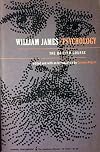
Psychology: The Briefer Course
by William James
On This Page
Description
Condensed and reworked from James's monumental Principles of Psychology, this classic text examines habit; stream of consciousness; self and the sense of personal identity; discrimination and association; the sense of time; memory; perception; imagination; reasoning; emotions, instincts; the will and voluntary acts; and much more. This edition omits the outdated first nine chapters.Tags
Recommendations























Member Reviews
One of the most classic psychology books, written by the giant William James. Must have for any psychology or science library. This is a shorter version of multi-volume book published few years earlier.
green boards, clean and tight, pages sunned, prior owner name, decorative fly pages.pictures upon request
Ratings
Members
- Recently Added By
Lists

Art of Reading
188 works; 5 members

Tom's Bookstore
346 works; 2 members
Author Information

137+ Works 14,628 Members
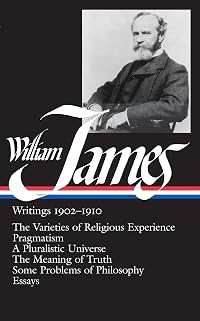
William James, oldest of five children (including Henry James and Alice James) in the extraordinary James family, was born in New York City on January 11, 1842. He has had a far-reaching influence on writers and thinkers of the nineteenth and twentieth centuries. Broadly educated by private tutors and through European travel, James initially show more studied painting. During the Civil War, however, he turned to medicine and physiology, attended Harvard medical school, and became interested in the workings of the mind. His text, The Principles of Psychology (1890), presents psychology as a science rather than a philosophy and emphasizes the connection between the mind and the body. James believed in free will and the power of the mind to affect events and determine the future. In The Will to Believe (1897) and The Varieties of Religious Experience (1902), he explores metaphysical concepts and mystical experiences. He saw truth not as absolute but as relative, depending on the given situation and the forces at work in it. He believed that the universe was not static and orderly but ever-changing and chaotic. His most important work, Pragmatism (1907), examines the practical consequences of behavior and rejects the idealist philosophy of the transcendentalists. This philosophy seems to reinforce the tenets of social Darwinism and the idea of financial success as the justification of the means in a materialistic society; nevertheless, James strove to demonstrate the practical value of ethical behavior. Overall, James's lifelong concern with what he called the "stream of thought" or "stream of consciousness" changed the way writers conceptualize characters and present the relationship between humans, society, and the natural world. He died due to heart failure on August 26, 1910. (Bowker Author Biography) show less
Some Editions
Series
Belongs to Publisher Series
Work Relationships
Common Knowledge
- Canonical title
- Psychology: The Briefer Course
- Original publication date
- 1892
- People/Characters
- William James
- Quotations
- There is no more miserable human being than one in whom nothing is habitual but indecision, and for whom the lighting of every cigar, the drinking of every cup, the time of rising and going to bed every day, and the beginning... (show all) of every bit of work, are subjects of express volitional deliberation.
Classifications
Statistics
- Members
- 384
- Popularity
- 81,839
- Reviews
- 4
- Rating
- (4.00)
- Languages
- English, French, German
- Media
- Paper, Ebook
- ISBNs
- 14
- UPCs
- 1
- ASINs
- 29