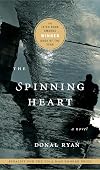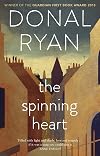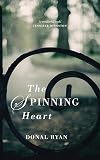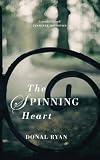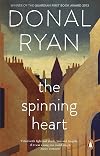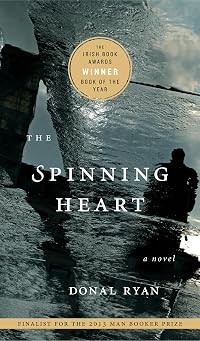
The Spinning Heart
by Donal Ryan
On This Page
Description
An "affecting" portrait of a working-class community in contemporary rural Ireland that is "reminiscent of William Faulker's As I Lay Dying" (The New York Times Book Review)In the aftermath of Ireland's financial collapse, dangerous tensions surface in an Irish town. As violence flares, the characters face a battle between public persona and inner desires. Through a chorus of unique voices, each struggling to tell their own kind of truth, a single authentic tale unfolds.
The Spinning Heart show more speaks for contemporary Ireland like no other novel. Wry, vulnerable, all-too human, it captures the language and spirit of rural Ireland and with uncanny perception articulates the words and thoughts of a generation. Technically daring and evocative of Patrick McCabe and J.M. Synge, this novel of small-town life is witty, dark and sweetly poignant. Donal Ryan's brilliantly realized debut announces a stunning new voice in fiction. show less
Tags
Recommendations





Member Reviews
These voices come from the same neighbourhoods as [a:Roddy Doyle|10108|Roddy Doyle|http://d202m5krfqbpi5.cloudfront.net/authors/1195236672p2/10108.jpg]'s and [a:Agnes Owens|108420|Agnes Owens|http://d202m5krfqbpi5.cloudfront.net/authors/1312630005p2/108420.jpg]'s. They are the working class of an Irish village, suffering the ongoing effects of the financial crash of the last few years. Each short chapter is in the voice of a different character, chatting to you, explaining or describing recent events in the village in the context of their own lives.
The reader is surrounded by a constant overlapping and at times jarringly different perspectives on key incidents. The characters speak as if they already know the reader, as if they are show more talking directly to you in the local pub. They are simultaneously optimistic but realistically pessimistic about their lives. Some of them are funny -- "My father still lives back the road past the weir in the cottage I was reared in. I go there every day to see is he dead and every day he lets me down." -- others are spitefully mean and selfish. Ryan has superbly captured the voices.
“There’s a red metal heart in the centre of the low front gate, skewered on a rotating hinge. It’s flaking now; the red is nearly gone. It needs to be scraped and sanded and painted and oiled. It still spins in the wind, though. I can hear it creak, creak, creak as I walk away. A flaking, creaking, spinning heart.”
The spinning heart is the hope and the reality of this Irish village. show less
The reader is surrounded by a constant overlapping and at times jarringly different perspectives on key incidents. The characters speak as if they already know the reader, as if they are show more talking directly to you in the local pub. They are simultaneously optimistic but realistically pessimistic about their lives. Some of them are funny -- "My father still lives back the road past the weir in the cottage I was reared in. I go there every day to see is he dead and every day he lets me down." -- others are spitefully mean and selfish. Ryan has superbly captured the voices.
“There’s a red metal heart in the centre of the low front gate, skewered on a rotating hinge. It’s flaking now; the red is nearly gone. It needs to be scraped and sanded and painted and oiled. It still spins in the wind, though. I can hear it creak, creak, creak as I walk away. A flaking, creaking, spinning heart.”
The spinning heart is the hope and the reality of this Irish village. show less
Yerra what about it, sure wasn’t I at least the author of my own tale? And if you can say that as you depart this world, you can say a lot.
Each chapter is a story from one character brilliantly, fiercely linked to create a collage of western Ireland after the financial collapse in 2008. The book draws you into stories of the town and whilst providing no straightforward narrative, tells a powerful tale.
Well worth a read.
Each chapter is a story from one character brilliantly, fiercely linked to create a collage of western Ireland after the financial collapse in 2008. The book draws you into stories of the town and whilst providing no straightforward narrative, tells a powerful tale.
Well worth a read.
The Spinning Heart is set in a small town in Ireland in the aftermath of the 2008 financial crisis. It is told from twenty-one different characters’ perspectives. This approach provides a collective voice for an entire community, where the housing boom has gone bust and jobs have disappeared. Some characters maintain their dignity and hope, while others succumb to despair, aggression, or self-harm.
It is lyrically written. Ryan is skilled at providing a distinctive voice for each of the characters. One of the novel's most powerful elements is its portrayal of how an economic crisis can fragment a previously tight-knit community. Many characters show anger and frustration through spousal abuse, other physical violence, or show more self-destructive tendencies such as turning to drink.
Despite its dark tone, it is not hopeless. There are moments of tenderness and concerns for others. This is one of those books that can feel uncomfortable due to sadness and trauma, but it also offers a compassionate look at resilience and the yearning for connection. I cannot say I “enjoyed” it, but I deeply appreciated it. I read this book in anticipation of reading its recently released companion novel Heart, Be at Peace. show less
It is lyrically written. Ryan is skilled at providing a distinctive voice for each of the characters. One of the novel's most powerful elements is its portrayal of how an economic crisis can fragment a previously tight-knit community. Many characters show anger and frustration through spousal abuse, other physical violence, or show more self-destructive tendencies such as turning to drink.
Despite its dark tone, it is not hopeless. There are moments of tenderness and concerns for others. This is one of those books that can feel uncomfortable due to sadness and trauma, but it also offers a compassionate look at resilience and the yearning for connection. I cannot say I “enjoyed” it, but I deeply appreciated it. I read this book in anticipation of reading its recently released companion novel Heart, Be at Peace. show less
I discovered this guy, Donal Ryan, from a post on Facebook. He's apparently created quite a stir in Ireland over the past few years, but I don't know if he's much known here in the USA. In any case, he is a terrific writer. THE SPINNING HEART was his first novel, back in 2012, but it took a couple more years to make it over to this side of the pond when Steerforth Press published it here. I think he now has five books out, and they've all gotten rave reviews, although I don't know if he's making a living at writing yet. I hope so, because he ought to be.
THE SPINNING HEART is a series of connected stories, each one with a different narrator - a couple dozen voices - all from the same small village somewhere near Limerick. All together show more the stories form an intricate web that tell different parts of the same story. Set in modern times, around 2009, THE SPINNING HEART is a kind of contemporary Irish WINESBURG, OHIO. Which is a modern classic, of course, and Ryan's writing is that good. The village featured here is very insular, very smug and self-contained. One of the characters, a young woman whose toddler is kidnapped, is an outsider, called a "blow-in."
"That girl whose child was taken from the creche is a blow-in, Mam says. Blow-in. That phrase is used so derisively. As if to say it's a failing to not have been born and bred here, to have settled in a place outside of the place of your birth."
And that kind of prejudice is common in the village, a community racked by malicious gossip, adultery, alcoholism, and rampant unemployment during the world recession. A child is snatched from a town daycare. An old man is murdered. A prominent developer skips town with all the retirement and unemployment funds for his workers. Immigrant workers are used and tossed aside. Forget Sherwood Anderson, there are echoes of PEYTON PLACE here, but brought up to date and flavored by Ireland's financial crisis of the 2000s.
This is a damn good book. READ it. I've got three more Donal Ryan books waiting. Onward. Very highly recommended for consumers of serious literature.
- Tim Bazzett, author of the memoir, BOOKLOVER show less
THE SPINNING HEART is a series of connected stories, each one with a different narrator - a couple dozen voices - all from the same small village somewhere near Limerick. All together show more the stories form an intricate web that tell different parts of the same story. Set in modern times, around 2009, THE SPINNING HEART is a kind of contemporary Irish WINESBURG, OHIO. Which is a modern classic, of course, and Ryan's writing is that good. The village featured here is very insular, very smug and self-contained. One of the characters, a young woman whose toddler is kidnapped, is an outsider, called a "blow-in."
"That girl whose child was taken from the creche is a blow-in, Mam says. Blow-in. That phrase is used so derisively. As if to say it's a failing to not have been born and bred here, to have settled in a place outside of the place of your birth."
And that kind of prejudice is common in the village, a community racked by malicious gossip, adultery, alcoholism, and rampant unemployment during the world recession. A child is snatched from a town daycare. An old man is murdered. A prominent developer skips town with all the retirement and unemployment funds for his workers. Immigrant workers are used and tossed aside. Forget Sherwood Anderson, there are echoes of PEYTON PLACE here, but brought up to date and flavored by Ireland's financial crisis of the 2000s.
This is a damn good book. READ it. I've got three more Donal Ryan books waiting. Onward. Very highly recommended for consumers of serious literature.
- Tim Bazzett, author of the memoir, BOOKLOVER show less
John Lennon once sang :
If you had the luck of the Irish
You'd be sorry and wish you were dead
You should have the luck of the Irish
And you'd wish you was English instead!
I don't think the characters making up this novel would go that far, but they are all certainly down on their luck. During the "Celtic Tiger' period of the mid 90ies to early 2000 the Irish economy was booming and life seemed great for everyone. But in 2008 the bubble burst and a deep recession caused suffering for all. It's at this point where the book begins with Bobby's chapter. Most of the novel centers around Bobby,but there are 20 more chapters that each tell the plight of the village from a different point of view. That's what I found so brilliant about this book. show more Each character gets about a, 6 pages or so, chapter all their own. And yet so much is revealed about them in these short chapters. What is particularly fascinating is the is a vast diversity of the characters. Some we hate right from the start, some have our full support, but they're all just so miserable and so down on themselves. One of the darkest, bleakest, and depressing works of fiction I've read in a long time. But still a worthwhile read because the characters have an honesty and sense of perseverance about them. The Irish have suffered many hard times throughout the centuries, but they always keep up the good fight. show less
If you had the luck of the Irish
You'd be sorry and wish you were dead
You should have the luck of the Irish
And you'd wish you was English instead!
I don't think the characters making up this novel would go that far, but they are all certainly down on their luck. During the "Celtic Tiger' period of the mid 90ies to early 2000 the Irish economy was booming and life seemed great for everyone. But in 2008 the bubble burst and a deep recession caused suffering for all. It's at this point where the book begins with Bobby's chapter. Most of the novel centers around Bobby,but there are 20 more chapters that each tell the plight of the village from a different point of view. That's what I found so brilliant about this book. show more Each character gets about a, 6 pages or so, chapter all their own. And yet so much is revealed about them in these short chapters. What is particularly fascinating is the is a vast diversity of the characters. Some we hate right from the start, some have our full support, but they're all just so miserable and so down on themselves. One of the darkest, bleakest, and depressing works of fiction I've read in a long time. But still a worthwhile read because the characters have an honesty and sense of perseverance about them. The Irish have suffered many hard times throughout the centuries, but they always keep up the good fight. show less
I’ve read three of Donal Ryan’s novels and have loved them all. The Spinning Heart is his debut novel from 2012 which is being re-released. It won numerous awards and I can understand why.
The book is set in a rural Irish town in the aftermath of the country’s financial crisis in 2008. Through the inner monologues of 21 of the community’s residents, we see the impact of the sudden closure of a construction firm. Jobs vanish, livelihoods crumble, and tensions escalate; the ripple effects of the property bubble burst are wide-ranging.
Though a plot of sorts emerges, the focus is definitely on people. With the number of characters, I feared getting confused, but that was not the case. I enjoyed learning about the blood ties. We show more encounter Bridie and later her brother Jim. Lily speaks longingly about her granddaughter Millicent who later also has a voice in the book. First we meet Josie who mentions he has a daughter that he doesn’t discuss anymore; later his daughter Mags speaks and we learn the reason for the fracture in their relationship. There are also plot connections: Trevor and Lloyd’s choices affect Réaltín and Seanie most directly but also Kate and her husband Denis; the latter acts in a way that changes the lives of Frank, Bobby, and Triona.
The character with the first monologue is Bobby Mahon. He is very much the heart of the novel. Almost all of the other 20 characters mention Bobby and almost all admit, though some grudgingly, that he’s a good man. He’s a decent, hard-working, humble, and loving man who tries to help others; his wife Triona best describes him as someone who takes on the troubles of others.
Each character is carefully crafted. What is commendable is that each emerges as a complex character with both positive and negative traits. Even characters who seem to be evil are shown to have understandable motivations, if not redeeming qualities. Frank Mahon, Bobby’s father, is a prime example. Frank drank until he had wasted his entire inheritance, made the lives of his wife and son an absolute misery, and continues to verbally abuse Bobby. Virtually no one has a kind word to say about Frank, but in the end, we learn the reasons for his behaviour, and his daughter-in-law says, “I started for the first time to think that there was more inside in Frank than just spite.”
What is emphasized is that there is often a contrast between how people present themselves to the world and the inner truths they conceal from the world. Sometimes how people are perceived by others is not accurate. One character worries whether he might have inherited his father’s schizophrenia. Someone viewed by everyone as a womanizer suffers with depression and has contemplated suicide. Two young men decide to leave Ireland to find employment elsewhere, but worry about hurting their parents. One young man is viewed as lacking intelligence but he provides the key to solving a crime. People in small towns often believe they know everything about everyone else, but that is not usually the case.
The novel depicts life in a small town. People gossip: there are tales about Bobby that tarnish his reputation. Triona scoffs at how “The Teapot Taliban fattened on their stories.” People are judgmental: people ostracize Lily. There are instances where neighbours help neighbours, but Triona comments that this may be the case only in good times: “if we were all in the black we’d all be in the pink. The air is thick with platitudes around here. We’ll all pull together. We’re a tight-knit community. We’ll all support each other. Oh really?”
Much of the subject matter is serious. There are examples of domestic violence, alcoholism, dysfunctional families, and generational trauma. We read about strong emotions: fear, hopelessness, anger, and grief. There is suspense: When Kate hires Trevor, we know the risk. And will Dylan be found? Did Bobby do what he admits wanting to do? There are also, however, moments of tenderness; parents love and worry about their children. The love between Bobby and Triona certainly stands out, and the novel’s last sentence is significant.
The novel is written using Irish vernacular so I did occasionally find myself at a loss: came a cropper, ollagoan, skittin, crathur, tacher, tapping a flaker, culchie, subbie, and cigire are examples of slang that left me confused. Nonetheless, this language adds local colour and authenticity.
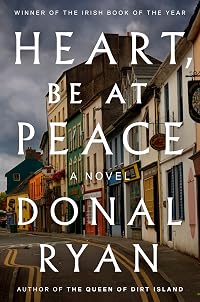
I highly recommend this book. It is masterfully written. A follow-up, Heart, Be at Peace, was released recently; it returns to the village a decade later. It’s just been added to my to-read stack.
Here are links to my reviews of more Donal Ryan’s books:
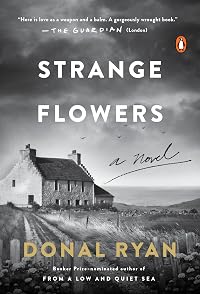
Strange Flowers: https://schatjesshelves.blogspot.com/2021/10/review-of-strange-flowers-by-donal-...
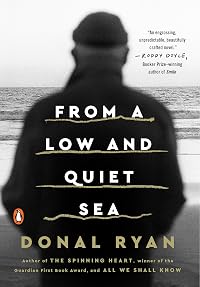
From a Low and Quiet Sea: https://schatjesshelves.blogspot.com/2019/01/review-of-from-low-and-quiet-sea-by...
The Queen of Dirt Island: https://schatjesshelves.blogspot.com/2023/02/review-of-queen-of-dirt-island-by-d...
Note: I received an eARC from the publisher via NetGalley.
Please check out my reader's blog (https://schatjesshelves.blogspot.com/). show less
The book is set in a rural Irish town in the aftermath of the country’s financial crisis in 2008. Through the inner monologues of 21 of the community’s residents, we see the impact of the sudden closure of a construction firm. Jobs vanish, livelihoods crumble, and tensions escalate; the ripple effects of the property bubble burst are wide-ranging.
Though a plot of sorts emerges, the focus is definitely on people. With the number of characters, I feared getting confused, but that was not the case. I enjoyed learning about the blood ties. We show more encounter Bridie and later her brother Jim. Lily speaks longingly about her granddaughter Millicent who later also has a voice in the book. First we meet Josie who mentions he has a daughter that he doesn’t discuss anymore; later his daughter Mags speaks and we learn the reason for the fracture in their relationship. There are also plot connections: Trevor and Lloyd’s choices affect Réaltín and Seanie most directly but also Kate and her husband Denis; the latter acts in a way that changes the lives of Frank, Bobby, and Triona.
The character with the first monologue is Bobby Mahon. He is very much the heart of the novel. Almost all of the other 20 characters mention Bobby and almost all admit, though some grudgingly, that he’s a good man. He’s a decent, hard-working, humble, and loving man who tries to help others; his wife Triona best describes him as someone who takes on the troubles of others.
Each character is carefully crafted. What is commendable is that each emerges as a complex character with both positive and negative traits. Even characters who seem to be evil are shown to have understandable motivations, if not redeeming qualities. Frank Mahon, Bobby’s father, is a prime example. Frank drank until he had wasted his entire inheritance, made the lives of his wife and son an absolute misery, and continues to verbally abuse Bobby. Virtually no one has a kind word to say about Frank, but in the end, we learn the reasons for his behaviour, and his daughter-in-law says, “I started for the first time to think that there was more inside in Frank than just spite.”
What is emphasized is that there is often a contrast between how people present themselves to the world and the inner truths they conceal from the world. Sometimes how people are perceived by others is not accurate. One character worries whether he might have inherited his father’s schizophrenia. Someone viewed by everyone as a womanizer suffers with depression and has contemplated suicide. Two young men decide to leave Ireland to find employment elsewhere, but worry about hurting their parents. One young man is viewed as lacking intelligence but he provides the key to solving a crime. People in small towns often believe they know everything about everyone else, but that is not usually the case.
The novel depicts life in a small town. People gossip: there are tales about Bobby that tarnish his reputation. Triona scoffs at how “The Teapot Taliban fattened on their stories.” People are judgmental: people ostracize Lily. There are instances where neighbours help neighbours, but Triona comments that this may be the case only in good times: “if we were all in the black we’d all be in the pink. The air is thick with platitudes around here. We’ll all pull together. We’re a tight-knit community. We’ll all support each other. Oh really?”
Much of the subject matter is serious. There are examples of domestic violence, alcoholism, dysfunctional families, and generational trauma. We read about strong emotions: fear, hopelessness, anger, and grief. There is suspense: When Kate hires Trevor, we know the risk. And will Dylan be found? Did Bobby do what he admits wanting to do? There are also, however, moments of tenderness; parents love and worry about their children. The love between Bobby and Triona certainly stands out, and the novel’s last sentence is significant.
The novel is written using Irish vernacular so I did occasionally find myself at a loss: came a cropper, ollagoan, skittin, crathur, tacher, tapping a flaker, culchie, subbie, and cigire are examples of slang that left me confused. Nonetheless, this language adds local colour and authenticity.
I highly recommend this book. It is masterfully written. A follow-up, Heart, Be at Peace, was released recently; it returns to the village a decade later. It’s just been added to my to-read stack.
Here are links to my reviews of more Donal Ryan’s books:
Strange Flowers: https://schatjesshelves.blogspot.com/2021/10/review-of-strange-flowers-by-donal-...
From a Low and Quiet Sea: https://schatjesshelves.blogspot.com/2019/01/review-of-from-low-and-quiet-sea-by...
The Queen of Dirt Island: https://schatjesshelves.blogspot.com/2023/02/review-of-queen-of-dirt-island-by-d...
Note: I received an eARC from the publisher via NetGalley.
Please check out my reader's blog (https://schatjesshelves.blogspot.com/). show less
What happens when a story is pared down to its absolute essentials? There is nothing here in Donal Ryan's tale of rural Ireland that does not ring of truth. Each of the interior monologues shaves the skin off the apple. Even the monologue of the dead. I cannot think of another writer since William Faulkner who tells me what real people are thinking even as the characters are woven in their own words, then the words of their neighbours and relatives. There is no real present tense here. There is the impetus of the past folding these people into the future, like scraggly lines of DNA, or neurons of some colossal brain.
Members
- Recently Added By
Published Reviews
ThingScore 92
The portrait of a whole town facing sudden crisis naturally packs quite a punch. Even so, the most impressive aspect of this overwhelmingly impressive novel is the sheer quality of those 21 narrations. Apart, understandably, from a now-marooned Siberian immigrant, everybody speaks with varying degrees of Irish demotic (‘in school I was well able for the English and geography and history’). show more Nonetheless, all are perfectly distinguishable, and in every case — including the Siberian immigrant — Ryan triumphantly pulls off a trick more usually associated with the best theatre: that of entirely convincing heightened speech. These monologues, you feel, may not be exactly what the characters would say — but they are exactly what the characters would want to say. As a result, we’re led deep into what I’m tempted to call their souls....Of course, the traditional epithet for a good first novel is ‘promising’. The Spinning Heart, however, is far more than that. Instead, it’s the unambiguous announcement of a genuine and apparently fully-formed new talent. show less
added by vancouverdeb
Stories of murder, betrayal and kidnap thread through The Spinning Heart, Donal Ryan's debut, which is told from the points of view of 21 people struggling to get by in a rural village in contemporary south-west Ireland.
Compared to J M Synge and Patrick McCabe, praised by The Boy in the Striped Pyjamas author John Boyne and chosen to be the first novelist published by Doubleday Ireland, Ryan show more has a writing style that is perceptive, intimate and darkly comic, revealing the human cost of the financial crisis by creating a chorus of overlapping voices. show less
Compared to J M Synge and Patrick McCabe, praised by The Boy in the Striped Pyjamas author John Boyne and chosen to be the first novelist published by Doubleday Ireland, Ryan show more has a writing style that is perceptive, intimate and darkly comic, revealing the human cost of the financial crisis by creating a chorus of overlapping voices. show less
added by vancouverdeb
Ryan’s nuanced playfulness with language and the joyous idiom of west of Ireland speech doesn’t dilute the individuality of each character – and in a book of just over 150 pages, there are 21. Their surface wit and spark wrap around the despair at the book’s centre, with its fractured symbol of a flaking, spinning heart, worked in metal on the gate of Bobby’s much-hated father. As show more the story develops, Ryan stokes up momentum through each voice, leaving off at the point where circumstances spiral violently out of control....Caveats aside, this is a formidable debut, with snatches of the savage comedy of Patrick McCabe and a wistful cadence all its own. show less
added by vancouverdeb
Lists

Booker Prize
491 works; 62 members

International IMPAC Dublin Literary Award
179 works; 6 members

Man Booker Prize Longlist 2013
13 works; 3 members

Books Read in 2015
3,299 works; 129 members

BBC Radio 4 Bookclub
341 works; 13 members

IMPAC Dublin Literary Award 2014 longlist
150 works; 3 members

Books Read in 2025
4,128 works; 98 members
Talk Discussions
Past Discussions
2013 Booker longlist: The Spinning Heart by Donal Ryan in Booker Prize (January 2015)
Author Information

9+ Works 2,274 Members
Some Editions
Awards and Honors
Awards
Common Knowledge
- Canonical title
- The Spinning Heart
- Original title
- The Spinning Heart
- Original publication date
- 2012
- Important places
- Ireland
- Dedication
- This book is dedicated to the memory of Dan Murphy
- First words
- My father still lives back the road past the weir in the cottage I was reared in.
- Quotations
- There's a red metal heart in the centre of the low front gate, skewererd on a rotating hinge. It's flaking now; the red is nearly gone. It needs to be scraped and sanded and painted and oiled. It still spings in the wind, tho... (show all)ugh. I can hear it creak, creak, creak as I walk away A flaking, creaking, spinning heart. (p. 9)
And here am I, like an orphaned child, bereft, filling up with fear like a boat filling with water. (p. 20)
I love all my children the same way a swallow loves the blue sky; I have no choice in the matter. (p. 33)
The list of things he'd have done got longer and bigger over the years until we couldn't see each other at either side of it, and he left and never came back and the only difference was the noise of him was gone. (p. 70)
There was a red metal heart, spinning in the breeze in the centre of the low front gate. The hinge was loose but rusty, it squeaked and creaked but still allowed the litte heart to spin. It reminded me of my palpitations. (p.... (show all) 124)
Leaving the herd isn't safe. You're the loose gazelle that the lion will chase. A child putting themselves in danger, physically or emotionally, can trigger a reaction in a parent that comes out as anger directed at the child... (show all), but is really their anguish and worry, verbalized in an inappropriate or awkward way. (p. 130)
She says people's thoughts, when their upbringing is mired in dogma aren't really their own. Their opinions are twisted, not reflective of what's in their souls... (p. 130)
I wonder how is it I was able to do to Bobby exactly what was done to me,even with my useless hands bound by cowardice. I wonder how I will ever be reconciled to myself. I wonder how will I look upon the face of God. (p. 145)
Bernadette used The Word to torture Coley, just as Frank used his own spiteful words to torment Bobby. (p. 147)
There was a spinning heart on the gate at the front of their house, a mocking symbol, Bobby's rough cross. (p. 148)
I mean to say, Frank never laid a finger on him or his mother. It was just the life of awful, awful coldness, and the constant wearing down of their sprits a gloomy, nervy slog of a life, punctuated by days and nights of mad... (show all) rage when he'd wreck the house and Bobby's mother would grab him and run for it, just in case he forgot himself altogether and took at them as well as the furniture and the crockery. (p. 149) - Last words
- (Click to show. Warning: May contain spoilers.)What matters only love?
- Blurbers
- Boyne, John; Hughes, Declan
- Disambiguation notice
- What matters only love?
Classifications
Statistics
- Members
- 647
- Popularity
- 44,789
- Reviews
- 44
- Rating
- (3.82)
- Languages
- 8 — Chinese, Czech, Danish, English, French, German, Italian, Spanish
- Media
- Paper, Audiobook, Ebook
- ISBNs
- 24
- ASINs
- 9