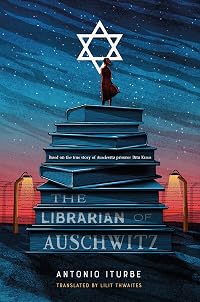
The Librarian of Auschwitz
by Antonio G. Iturbe
On This Page
Description
*Recommended by Parents' Choice*This program features an author's note read by Dita Kraus.
Based on the experience of real-life Auschwitz prisoner Dita Kraus, The Librarian of Auschwitz is the incredible story of a girl who risked her life to keep the magic of books alive during the Holocaust.
Written with touching sensitivity by Antonio Iturbe, and translated by Lilit Thwaites, this audiobook provokes every emotional response and will not be forgotten.
Fourteen-year-old Dita is one of the show more many imprisoned by the Nazis at Auschwitz. Taken, along with her mother and father, from the Terezín ghetto in Prague, Dita is adjusting to the constant terror that is life in the camp. When Jewish leader Freddy Hirsch asks Dita to take charge of the eight precious volumes the prisoners have managed to sneak past the guards, she agrees. And so Dita becomes the librarian of Auschwitz.
Out of one of the darkest chapters of human history comes this extraordinary story of courage and hope.
This title has Common Core connections.
. show less
Tags
Recommendations
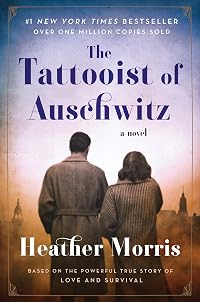
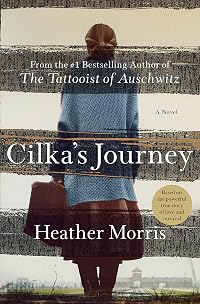
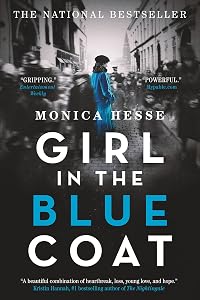
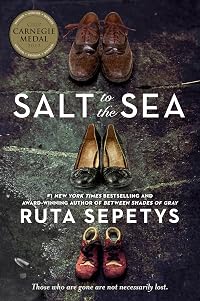
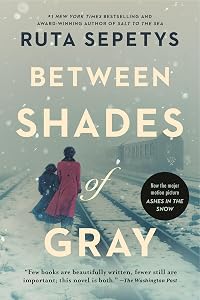
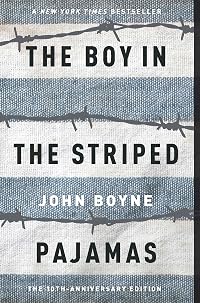
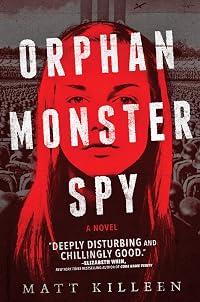
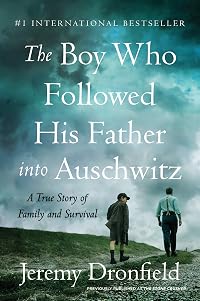
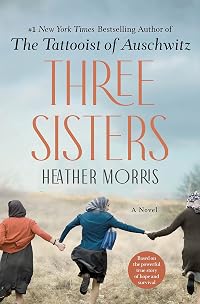
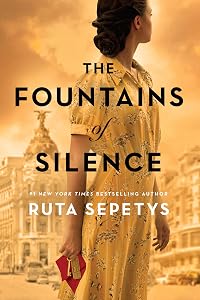
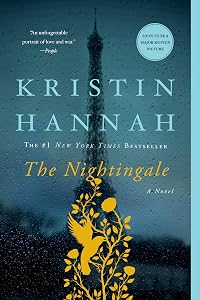
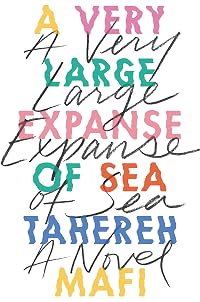
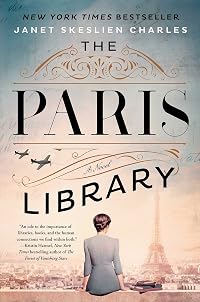
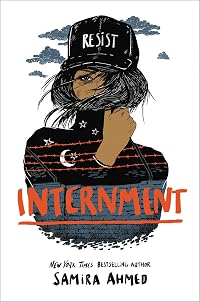
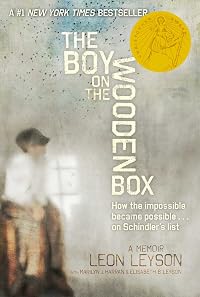
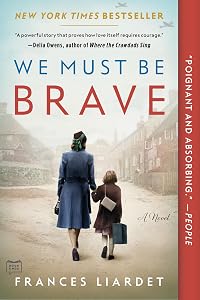
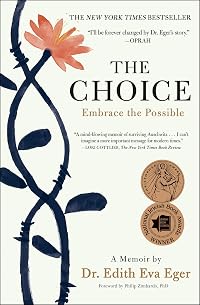

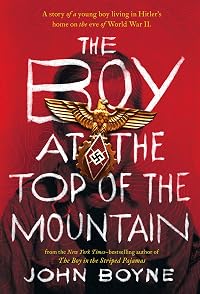
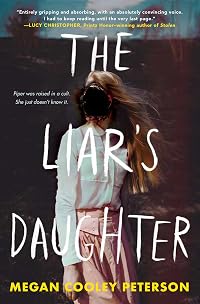
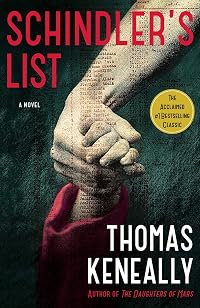
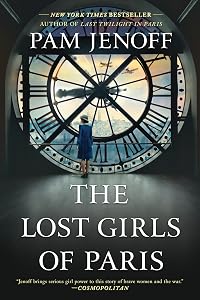
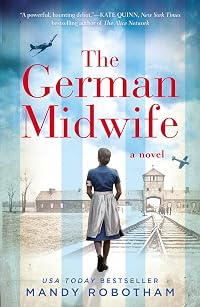

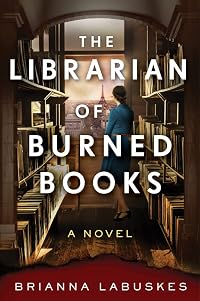
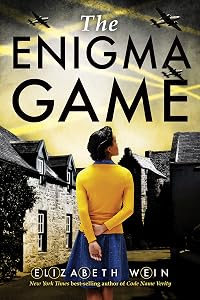
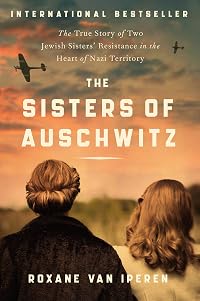
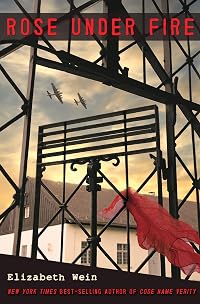
Member Recommendations
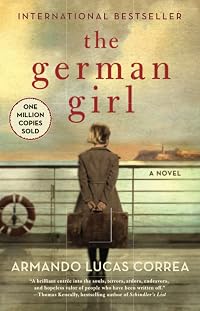
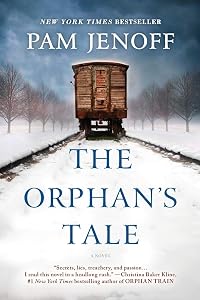
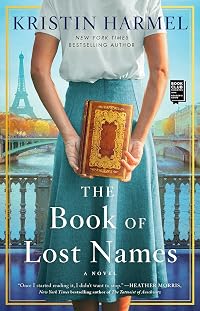
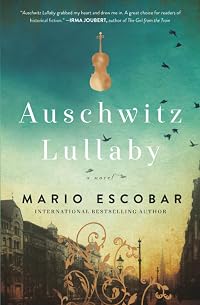
_eskarina Similar setting (WWII), similar emphasis on the power of the books.
Member Reviews
"A teenage girl imprisoned in Auschwitz keeps the secret library of a forbidden school.
Dita Adlerova, 14, is confined in the notorious extermination camp of Auschwitz-Birkenau. Compared to her fellow inmates, Dita’s relatively lucky. The several thousand residents of camp BIIb are inexplicably allowed to keep their own clothing, their hair, and, most importantly, their children. A young man named Fredy Hirsch maintains a school in BIIb, right under the noses of the Nazis. In Fredy’s classroom, Dita discovers something wonderful: a dangerous collection of eight smuggled books. The tale, based on the real life of Dita Polach Kraus and the events of 1944 and 1945, intertwines the stories of several real people: Dita, Fredy, several show more little-known war heroes, even a grim cameo from Anne and Margot Frank. Holocaust-knowledgeable readers will have suspicions about how many characters will die horribly (spoiler alert: this is Auschwitz). Yet somehow, myriad storylines told by multiple narrators offer compelling narrative tension. Why does BIIb exist? Will Rudi and Alice have a romance? What’s Fredy’s secret? Will Dr. Mengele subject Dita to his grotesque experiments? Dita’s matter-of-fact perspective, set in a slow build from BIIb to the chaotic starvation of the war’s end, both increases the horror and makes it bearable to read.
Though no punches are pulled about the unimaginable atrocity of the death camps, a life-affirming history . (Historical fiction. 13-16)" A Kirkus Starred Review, www.kirkusreviews.com show less
Dita Adlerova, 14, is confined in the notorious extermination camp of Auschwitz-Birkenau. Compared to her fellow inmates, Dita’s relatively lucky. The several thousand residents of camp BIIb are inexplicably allowed to keep their own clothing, their hair, and, most importantly, their children. A young man named Fredy Hirsch maintains a school in BIIb, right under the noses of the Nazis. In Fredy’s classroom, Dita discovers something wonderful: a dangerous collection of eight smuggled books. The tale, based on the real life of Dita Polach Kraus and the events of 1944 and 1945, intertwines the stories of several real people: Dita, Fredy, several show more little-known war heroes, even a grim cameo from Anne and Margot Frank. Holocaust-knowledgeable readers will have suspicions about how many characters will die horribly (spoiler alert: this is Auschwitz). Yet somehow, myriad storylines told by multiple narrators offer compelling narrative tension. Why does BIIb exist? Will Rudi and Alice have a romance? What’s Fredy’s secret? Will Dr. Mengele subject Dita to his grotesque experiments? Dita’s matter-of-fact perspective, set in a slow build from BIIb to the chaotic starvation of the war’s end, both increases the horror and makes it bearable to read.
Though no punches are pulled about the unimaginable atrocity of the death camps, a life-affirming history . (Historical fiction. 13-16)" A Kirkus Starred Review, www.kirkusreviews.com show less
What can I say? This book is breathtaking, in that the majority of the story is true, as told to the author by Dita, the 14 year old who kept the "Library" at Auschwitz. Other characters and incidents have been compiled from different survivors stories and records.
Dita is part of a group of a few hundred Jews who are kept at Auschwitz in case the Red Cross comes to see the treatment being metered out by the Nazis. They are fed a meagre ration, sleep in bunks and in Bunker 31, they are allowed to group the children to play. What the Nazis don't know is that 31 is actually a school where the children are taught whatever subjects the adults can remember. A part of this school is the Library, a collection of 8 books smuggled into the death show more camp, and hidden under floorboards at the back of the building.
Dita is given the role of the librarian by Freddy Hirsch, an enigmatic German Jew who is in charge of all the better treated prisoners. But Freddy is hiding a terrible secret and when Dita stumbles upon talking with an SS soldier in private, she is horrified to think he may be a collaborator with the Nazis. What is Freddy's secret?
I think this book will appeal to readers of The Book Thief and The Boy in Striped Pyjamas - we know what is really going to happen to most of the characters in the story, so Antonio Iturbe's little side steps into other characters' events helps to build up the picture of individuals caught up in a mass atrocity.
This is not for the squeamish as he doesn't hold back in his descriptions of what happens to the inmates - not only in the gas chamber, but also Dr Mengele's subjects, the people worked or starved to death and the punishments metered out to escapees who are re-caught.
What shines in this book is Dita's use of the books to escape her harsh reality - she travels with the cheeky Czech soldier and the Count of Monte Christo to far away worlds and escapes her own terrible one. The author's descriptions of the way she tends to the welfare of the books with smuggled glue and scissors demonstrates the great power of the books and the word's contained within. There are lots of memorable quote but my favorite is from page 4..."Books are extremely dangerous. They make people think." show less
Dita is part of a group of a few hundred Jews who are kept at Auschwitz in case the Red Cross comes to see the treatment being metered out by the Nazis. They are fed a meagre ration, sleep in bunks and in Bunker 31, they are allowed to group the children to play. What the Nazis don't know is that 31 is actually a school where the children are taught whatever subjects the adults can remember. A part of this school is the Library, a collection of 8 books smuggled into the death show more camp, and hidden under floorboards at the back of the building.
Dita is given the role of the librarian by Freddy Hirsch, an enigmatic German Jew who is in charge of all the better treated prisoners. But Freddy is hiding a terrible secret and when Dita stumbles upon talking with an SS soldier in private, she is horrified to think he may be a collaborator with the Nazis. What is Freddy's secret?
I think this book will appeal to readers of The Book Thief and The Boy in Striped Pyjamas - we know what is really going to happen to most of the characters in the story, so Antonio Iturbe's little side steps into other characters' events helps to build up the picture of individuals caught up in a mass atrocity.
This is not for the squeamish as he doesn't hold back in his descriptions of what happens to the inmates - not only in the gas chamber, but also Dr Mengele's subjects, the people worked or starved to death and the punishments metered out to escapees who are re-caught.
What shines in this book is Dita's use of the books to escape her harsh reality - she travels with the cheeky Czech soldier and the Count of Monte Christo to far away worlds and escapes her own terrible one. The author's descriptions of the way she tends to the welfare of the books with smuggled glue and scissors demonstrates the great power of the books and the word's contained within. There are lots of memorable quote but my favorite is from page 4..."Books are extremely dangerous. They make people think." show less
If a story set in the hell of Auschwitz can be triumphant, it is [The Librarian of Auschwitz]. In the midst of the unimaginable, the inmates set up a school, providing some semblance of safety to the children. The librarian--14-year-old Dita--manages the few precious books, those made of paper and flesh, and risks her life in doing so. We see Auschwitz through her eyes, her fear of Mengele, her worry for her family and friends, her need to understand her mentor's motive in a moment of crisis.
Well, you all know how I felt going into this novel - so how did it pan out?
About 30 pages in I'd decided to bail. The fictionalising of events in Auschwitz really wasn't sitting well with my conscience, and the narrative voice wasn't doing it for me either. It felt like something had perhaps been lost in the translation from Spanish to English; there was a stiltedness to it. At over 400 pages long it's not a short book either, and I wasn't sure I could go the distance given the subject matter.
So I put it to one side, but then my husband and I had a conversation about it. This is a man who won't watch the Titanic movie as he feels disgusted about Hollywood turning a terrible tragedy into entertainment, and who refused to go to Auschwitz show more when he was in Poland as he didn't want to feel like he was contributing to it being a tourist attraction. I expected for sure that he'd agree that writing a novel about a librarian in Auschwitz was a poor taste way of getting sales, but he surprised me by suggesting that there may be value in reading it given the author's engagement with Dita Kraus, the 'librarian' of Auschwitz. At the back of the book I found that Iturbe had engaged significantly with her, even visiting the Czech ghetto with her where her family were initially moved to, so I decide to pick it up again, and a few more chapters in the narrative style stopped jarring with me and I really got into it.
Having read Eli Wiesel's Night, Iturbe doesn't capture the horror of Auschwitz with the same sharpness of a survivor's own account, but I tried to keep the perspective that his objective wasn't necessarily to be that authority. Rather, he wanted to develop out the story of Kraus' teenage role in Auschwitz as librarian for 8 books as the narrative device for telling the story of the family camp. This was, at the time, a new and suspicious step by the Nazis, allowing families to stay together, with the prisoners informed that after 6 months each intake would receive special treatment. A school for children was allowed to take place every day, a significant event beyond its educational merit as its structure and focus resulted in no children dying whilst attending the school, which statistically was unheard of in Auschwitz hitherto. Needless to say the family camp was simply a ruse to distract any potential inspections from The Red Cross, and you can guess what the special treatment at the end of the 6 months was for so many innocent souls.
The trouble with fictional accounts of something like Auschwitz is that as you become absorbed you can lose the perspective of it being based on real lives. As Iturbe develops the plot of this book and dramatic tension is built up at various points, at times I did feel uncomfortable that the Auschwitz horrors were giving me page-turning moments.
So, in all, I own up - I enjoyed it and zipped through it in 2 days. Should I have enjoyed it? Should it have been page-turning fodder? I still feel that there's an author's selfishness at play in wanting to use Auschwitz as a plot device, but on the other side of the coin he writes of the bravery of a number of people whose stories would probably otherwise be lost in history forever.
4 stars for being a good read. I'm still searching my conscience a little, though. show less
About 30 pages in I'd decided to bail. The fictionalising of events in Auschwitz really wasn't sitting well with my conscience, and the narrative voice wasn't doing it for me either. It felt like something had perhaps been lost in the translation from Spanish to English; there was a stiltedness to it. At over 400 pages long it's not a short book either, and I wasn't sure I could go the distance given the subject matter.
So I put it to one side, but then my husband and I had a conversation about it. This is a man who won't watch the Titanic movie as he feels disgusted about Hollywood turning a terrible tragedy into entertainment, and who refused to go to Auschwitz show more when he was in Poland as he didn't want to feel like he was contributing to it being a tourist attraction. I expected for sure that he'd agree that writing a novel about a librarian in Auschwitz was a poor taste way of getting sales, but he surprised me by suggesting that there may be value in reading it given the author's engagement with Dita Kraus, the 'librarian' of Auschwitz. At the back of the book I found that Iturbe had engaged significantly with her, even visiting the Czech ghetto with her where her family were initially moved to, so I decide to pick it up again, and a few more chapters in the narrative style stopped jarring with me and I really got into it.
Having read Eli Wiesel's Night, Iturbe doesn't capture the horror of Auschwitz with the same sharpness of a survivor's own account, but I tried to keep the perspective that his objective wasn't necessarily to be that authority. Rather, he wanted to develop out the story of Kraus' teenage role in Auschwitz as librarian for 8 books as the narrative device for telling the story of the family camp. This was, at the time, a new and suspicious step by the Nazis, allowing families to stay together, with the prisoners informed that after 6 months each intake would receive special treatment. A school for children was allowed to take place every day, a significant event beyond its educational merit as its structure and focus resulted in no children dying whilst attending the school, which statistically was unheard of in Auschwitz hitherto. Needless to say the family camp was simply a ruse to distract any potential inspections from The Red Cross, and you can guess what the special treatment at the end of the 6 months was for so many innocent souls.
The trouble with fictional accounts of something like Auschwitz is that as you become absorbed you can lose the perspective of it being based on real lives. As Iturbe develops the plot of this book and dramatic tension is built up at various points, at times I did feel uncomfortable that the Auschwitz horrors were giving me page-turning moments.
So, in all, I own up - I enjoyed it and zipped through it in 2 days. Should I have enjoyed it? Should it have been page-turning fodder? I still feel that there's an author's selfishness at play in wanting to use Auschwitz as a plot device, but on the other side of the coin he writes of the bravery of a number of people whose stories would probably otherwise be lost in history forever.
4 stars for being a good read. I'm still searching my conscience a little, though. show less
This is the second book about Auschwitz that I have read recently, and you can probably guess the title of the other very publicised book, but I have to say that The Librarian of Auschwitz stands head and shoulders above the rest. From early on, I knew that this wasn't going to be an easy read as the level of detail in the book depicted the full horror of the Auschwitz-Birkenau concentration camp; a level of detail that was welcome, however difficult to read, as this period of history should be portrayed as close to the truth as it can be.
Dita was only 9 years old when the Germans invaded her home in Prague; and at aged 14, Dita is imprisoned in the Auschwitz-Birkenau concentration camp. This is a book based on real facts from Dita's show more life with a bit of fiction woven into it to create a compelling story from which you cannot bear to tear your eyes away. The way that the prisoners in the camp tried to create elements of normalcy showed a strength of character that was beyond admirable in the face of adversity. A school for the children, with teachers no more than children themselves, and Dita taking charge of the precious eight books in the camp gave the prisoners a reminder of the normal life they once knew.
As Dita's story is told, I loved reading the actual true facts, albeit sometimes horrific and shocking, but it adds gravity and depth to the story and reminds us that it's not a purely fictional account of a nameless Holocaust survivor. I really enjoyed reading about the customs performed at Passover and the symbolism of the traditional food prepared for the meal. It's always good to learn from books, especially when you're least expecting it. I certainly know a lot more about the concentration camps than I did before reading this book; although it's not a pleasant history, it's one that should not be forgotten.
I feel slightly guilty saying that I enjoyed The Librarian of Auschwitz but it is such a compelling read; it's vivid, descriptive and informative and a MUST READ for all readers, not just those who enjoy historical fiction. I will say that you need to wrap up warm to read The Librarian of Auschwitz as, despite sitting in a warm sunny spot to read, I was constantly getting goosebumps from the powerful and emotional words in this outstanding book. A very highly recommended read.
I chose to read an ARC and this is my honest and unbiased opinion. show less
Dita was only 9 years old when the Germans invaded her home in Prague; and at aged 14, Dita is imprisoned in the Auschwitz-Birkenau concentration camp. This is a book based on real facts from Dita's show more life with a bit of fiction woven into it to create a compelling story from which you cannot bear to tear your eyes away. The way that the prisoners in the camp tried to create elements of normalcy showed a strength of character that was beyond admirable in the face of adversity. A school for the children, with teachers no more than children themselves, and Dita taking charge of the precious eight books in the camp gave the prisoners a reminder of the normal life they once knew.
As Dita's story is told, I loved reading the actual true facts, albeit sometimes horrific and shocking, but it adds gravity and depth to the story and reminds us that it's not a purely fictional account of a nameless Holocaust survivor. I really enjoyed reading about the customs performed at Passover and the symbolism of the traditional food prepared for the meal. It's always good to learn from books, especially when you're least expecting it. I certainly know a lot more about the concentration camps than I did before reading this book; although it's not a pleasant history, it's one that should not be forgotten.
I feel slightly guilty saying that I enjoyed The Librarian of Auschwitz but it is such a compelling read; it's vivid, descriptive and informative and a MUST READ for all readers, not just those who enjoy historical fiction. I will say that you need to wrap up warm to read The Librarian of Auschwitz as, despite sitting in a warm sunny spot to read, I was constantly getting goosebumps from the powerful and emotional words in this outstanding book. A very highly recommended read.
I chose to read an ARC and this is my honest and unbiased opinion. show less
Such a heartbreaking read.... I’m not going to lie, it took me about two months to get through it. Not because it was a bore, but because it was so rich in history, I wanted to take my time analyzing each part. My heart broke for the characters and my gut turned at the rawness that was Auschwitz.
Dita was/is a hero that all should read about. She braved some of the darkest days and did so with a fierceness only few had. I loved her and I loved the role that books played. For her, it was simple words on paper and inspiration that helped move her feet in the direction of survival. She faced fear, hunger, disparity, and death with courage. She was strong when people constantly tried to wear her weak.
It’s a hard pill to chew, but way show more worth the read. show less
Dita was/is a hero that all should read about. She braved some of the darkest days and did so with a fierceness only few had. I loved her and I loved the role that books played. For her, it was simple words on paper and inspiration that helped move her feet in the direction of survival. She faced fear, hunger, disparity, and death with courage. She was strong when people constantly tried to wear her weak.
It’s a hard pill to chew, but way show more worth the read. show less
The Librarian of Auschwitz by Antonio Iturbe and translated by Lilit Thwaites is a fantastic piece of historical fiction. Normally I do not read alot of historical fiction but I had heard some buzz about this book and wanted to check it out. The story of Dita Krans is harrowing, a young girl who sees the worst things in life but still stays resolute. I love how the book not only follows her but some other people who are in the camp like Rudi Rosenberg who escaped the camp. The book is full of heart breaking moments but also some great moments about the strength of the human spirit. Knowing that this book is based on real people and some of their real experiences can make it hard to read sometimes, knowing the horrid things the people show more went through but I think reading a book like this is a reminder to never let such atrocities occur again. I would highly recommend this book to teens who are interested in the Holocaust. show less
Members
- Recently Added By
Lists

Books Read in 2020
4,379 works; 124 members

Books Read in 2022
5,226 works; 115 members

Top Five Books of 2024
795 works; 264 members

Youth: War & Terrorism
47 works; 1 member

Books Read in 2026
2,061 works; 69 members
Author Information

25+ Works 3,055 Members
All Editions
Some Editions
Awards and Honors
Awards
Distinctions
Notable Lists
Series
Belongs to Publisher Series
Work Relationships
Common Knowledge
- Canonical title*
- La bibliotecària d'Auschwitz
- Original title
- La bibliotecaria de Auschwitz
- Original publication date
- 2012
- People/Characters*
- Dita Adlerovà; Fredy Hirsch; Liesl Adlerovà; Hans Adler; Josef Mengele; Rudi Rosenberg (show all 16); Ota Keller; Margit Barnai; Miriam Edelstein; Viktor Pestek; Siegfried Lederer; Elisabeth Volkenrath; Rudofh Hoss; Seppl Lichtenstern; Hans Schwarzhuber; David Schmulewski
- Important places*
- Auschwitz-Birkenau camps de concentració i extermini, Oświęcim, Petita Polònia, Polònia; Bergen-Belsen camp de concentració, Bergen, Baixa Saxònia, Alemanya; Praga, República Txeca; Camp de concentració de Theresienstadt, Terezín, República Txeca
- Important events
- Holocaust
- Epigraph*
- "Mentre a durar, el bloc 31 (al camp d'extermini d'Auschwitz) va allotjar cinc-centes criatures juntament amb uns quants presoners que havien estat nomenats "consellers" i, malgrat l'estreta vigilància a què estava sotmès,... (show all) va disposar, contra tot pronòstic, d'una biblioteca infantil clandestina. Era minúscula: tenia vuit llibres, entre els quals la Breu història del món d'H. G. Wells, un llibre de text rus i un altre de geometria analítica. [...] Al final de cada dia, els llibres, igual que altres tresors, com ara medicines o alguns aliments, s'encomanaven a una de les nenes de més edat, la tasca de la qual consistia a amagar-los cada nit en un lloc diferent".
ALBERTO MANGUEL, La biblioteca de nit
"El que fa la literatura és el mateix que un llumí enmig d'un camp en plena nit. Un llumí amb prou feines il·lumina, però ens permet veure quanta foscor hi ha al voltant".
WILLIAM FAULKNER, citat per Javier Marías - Dedication*
- A la Dita Kraus
- First words*
- Auschwitz-Birkenau, gener de 1944
Aquests oficials vestits de negre que miren la mort amb la indiferència dels enterramorts ignoren que, damunt aquest fang fosc on s'enfonsa tot, l'Alfred Hirsch ha aixecat una ... (show all)escola. - Last words*
- (Click to show. Warning: May contain spoilers.)Fins ara, jo mai no havia cregut en els herois, però ara sé que existeixen: la Dita n'és un.
- Original language*
- castellà
*Some information comes from Common Knowledge in other languages. Click "Edit" for more information.
Classifications
Statistics
- Members
- 2,855
- Popularity
- 6,365
- Reviews
- 78
- Rating
- (4.08)
- Languages
- 16 — Catalan, Czech, Danish, Dutch, English, Finnish, French, German, Hungarian, Italian, Polish, Romanian, Spanish, Swedish, Turkish, Portuguese (Portugal)
- Media
- Paper, Audiobook, Ebook
- ISBNs
- 71
- ASINs
- 15