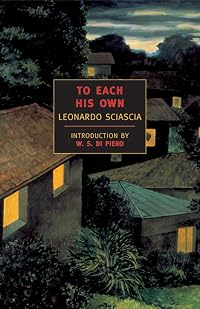
To Each His Own
by Leonardo Sciascia
On This Page
Description
"This letter is your death sentence. To avenge what you have done you will die." But what has Manno the pharmacist done? Nothing that he can think of. He takes the letter as a joke. The next day he and his hunting companion are both dead. The police investigation is inconclusive. However, Professor Laurana, a modest high school teacher with a literary bent, has noticed a clue that, he believes, will allow him to trace the killer. Patiently, methodically, Laurana begins to untangle a web of show more erotic intrigue and political calculation. But the results of his amateur sleuthing are unexpected and tragic. show lessTags
Recommendations














Member Reviews
Very neat novella that follows the gormless Professor Laurana in his erratic attempt to piece together the clues to solve a double-murder, about which everyone else in the village knows the score but is careful not to stir up the nest of corruption, politics and marital affairs. They are a colourful bunch of locals, like the rector of Sant' Anna who has a side-hustle in flogging off religious artifacts and a line in bawdy jokes. Over the village sits the conservative Dean and his nephew Rosello, the mover and shaker who contracted the killings after fearing his shady dealings would be exposed by the victim Dr Roscio. Through all this Laurana stumbles along to his doom, a socially awkward and sexist fool who is easily manipulated at the show more end by the femme fatale. The novella has a curious style, observant and quirky with a deeper sense of how 60s Italy was being shaped by the corrupt Christian Democrats but still had a lively Communist set. I read it out to Sheila, we both loved it. show less
When this novel opens, Manno, the town pharmacist, receives a note in the mail stating, "This letter is your death sentence." Ultimately deciding that the threat is a joke, he ignores it and goes on a planned hunting trip the next day with Dr. Roscio. Tragically, they both fail to return at the end of the day, and their murdered bodies are later discovered. The police investigation follows the course of trying to determine what Manno did to warrant the death threat and its implementation, with Dr. Roscio's death considered to be that of an innocent bystander to an intentional murder. However, Professor Laurana pursues another course--perhaps the intended victim was Dr. Roscio, and the death threat to Manno was merely intended to throw show more the authorities off.
This novel is an unconventional mystery and an examination of Sicilian society. According to the forward, the novel, "dramatizes from the inside out how a community will fabricate the appearance of truth from the tissue of unsubstantiated insinuations, usually because it needs to believe the worst of human beings." It highlights a Sicilian society in which, "silent complicity...allows those who know who committed the killings and why---nearly everyone around...knows---to withhold their knowledge...."
Highly recommended. show less
This novel is an unconventional mystery and an examination of Sicilian society. According to the forward, the novel, "dramatizes from the inside out how a community will fabricate the appearance of truth from the tissue of unsubstantiated insinuations, usually because it needs to believe the worst of human beings." It highlights a Sicilian society in which, "silent complicity...allows those who know who committed the killings and why---nearly everyone around...knows---to withhold their knowledge...."
Highly recommended. show less
A 'detective' novel, it's really more than that--a tightly written novel about society and life in small town Sicily. Sciascia somehow gives the reader a real sense of place without lengthy descriptions. One of those books that's thin (Sciascia, in an interview, talked about 'thin' and 'thick' writers) yet complex, but reads very cleanly and quickly. No idea how he did it.
Una lettera anonima, due morti ammazzati dei quali uno è il vero obiettivo e l'altro un effetto collaterale, un delitto che si vuole passionale. Tutto chiaro, o no?
Non so dire se è Sciascia incredibilmente moderno, oppure è la realtà italiana che non è cambiata di una virgola in tutti questi anni.
Sicuramente la chiesa, la politica, la piccineria della gente, gli intrallazzi, l'omertà e la mafia non sono diversi, ora come allora.
In più, il libro è scritto benissimo.
Non so dire se è Sciascia incredibilmente moderno, oppure è la realtà italiana che non è cambiata di una virgola in tutti questi anni.
Sicuramente la chiesa, la politica, la piccineria della gente, gli intrallazzi, l'omertà e la mafia non sono diversi, ora come allora.
In più, il libro è scritto benissimo.
What's strange about To Each His Own is how it feels like it's not the story Leonardo Sciascia wanted to write. Based on the awkward digressions thrown in here and there, Sciascia really wanted to drop some serious social commentary about contemporary Sicily, but all he had was a standard detective story. Professor Laurana, a man attempting to solve a double homicide, does his best to follow leads, but he keeps running into people that want to bloviate on the ills of their island far more than they want to help the investigation. The point these minor characters care most about is that Sicily's corruption is so foundational that trying to clean things up would do more harm than good, which is fine, I guess, but I just don't find it show more particularly compelling. "Forget it, Laurana. It's Chinatown." only needs to be said once.
The novel's saving grace is its humor. The social club at which all the town's men drink and bicker and perv out is an awesome place. I wanted to be there to watch Colonel Salvaggio throw a big tantrum about the potential impropriety of one of Arturo Pecorillo's jokes and then five minutes later start pretending to suckle on his friend's widow's boob.
The story is fine, but I think Sciascia's efforts fell short of his ambitions here. show less
The novel's saving grace is its humor. The social club at which all the town's men drink and bicker and perv out is an awesome place. I wanted to be there to watch Colonel Salvaggio throw a big tantrum about the potential impropriety of one of Arturo Pecorillo's jokes and then five minutes later start pretending to suckle on his friend's widow's boob.
The story is fine, but I think Sciascia's efforts fell short of his ambitions here. show less
Thanks to reading Sciascia's Equal Danger, I discovered that I'd had this novella on my shelves for almost five years. And I liked it even better. Sciascia takes his epigraph from Edgar Allan Poe: "Let it not be supposed that I am detailing any mystery, or penning any romance." And indeed, while the protagonist, an educated but not street-wise schoolteacher, who still lives with his mother, earnestly tracks down clues to the double murder of a pair of hunting buddies, a doctor and a pharmacist, and becomes enamored of the doctor's beautiful widow, the reader develops his or her own suspicions and, in the end, it turns out almost everyone else in the Sicilian town knew what was going on all along.
For, like Equal Danger, this is a story show more only masquerading as a mystery. But it was even more enjoyable for me because, in addition to Sciascia's wonderful writing style and his pointed wit, this novel involves more complex and interesting characters, is more indirect in its indictment of the breadth of corruption, collusion, and complicity, and provides a broader portrait of many aspects of Sicilian society, including politics, the Church, and sex. I can't resist quoting this comment about the schoolteacher's reluctance to help turn in a guilty person, one among many that are both thoroughly delightful and eminently quotable:
"Laurana had a a kind of obscure pride that made him decisively reject the idea that just punishment should be administered to the guilty one through any intervention of his. His had been a human, intellectual curiosity that could not, and should not be confused with the interest of those whom society and State paid to capture and consign to the vengeance of the law persons who transgress or break it. At play in this obscure pride were the centuries of contempt that an oppressed people, an eternally vanquished people, had heaped on the law and all those who were its instrument; a conviction, still unquenched, held that the highest right and truest justice, if one really cares about it, if one is not prepared to entrust its execution to fate or God, can only come from the barrels of a gun." p.120 show less
For, like Equal Danger, this is a story show more only masquerading as a mystery. But it was even more enjoyable for me because, in addition to Sciascia's wonderful writing style and his pointed wit, this novel involves more complex and interesting characters, is more indirect in its indictment of the breadth of corruption, collusion, and complicity, and provides a broader portrait of many aspects of Sicilian society, including politics, the Church, and sex. I can't resist quoting this comment about the schoolteacher's reluctance to help turn in a guilty person, one among many that are both thoroughly delightful and eminently quotable:
"Laurana had a a kind of obscure pride that made him decisively reject the idea that just punishment should be administered to the guilty one through any intervention of his. His had been a human, intellectual curiosity that could not, and should not be confused with the interest of those whom society and State paid to capture and consign to the vengeance of the law persons who transgress or break it. At play in this obscure pride were the centuries of contempt that an oppressed people, an eternally vanquished people, had heaped on the law and all those who were its instrument; a conviction, still unquenched, held that the highest right and truest justice, if one really cares about it, if one is not prepared to entrust its execution to fate or God, can only come from the barrels of a gun." p.120 show less
I loved this book, and it's made me a Sciascia fan for life. It's one of those novels that I started reading for the crime fiction element, but ended up loving it for other, non-crime related reasons. Although the crime fiction aspect of this book will keep the reader turning pages trying to figure out exactly what happened, the story operates on other levels as well. It is a commentary on the justice system, party politics, the Church, and other facets of Sicilian culture. And, as di Piero notes in the introduction, Sciascia
"used storytelling as an instrument for investigating and attacking the ethos of a culture -- the insular, mafia-saturated culture of Sicily -- which he believed to a metaphor of the world."
One of the basic points show more the author makes throughout this book is that there are various levels of criminality in which we are all complicit, so in that sense, the metaphor is not too far off the mark.
Readers of more socially and politically-oriented crime fiction will like this book, as will readers of literary fiction. It's intelligent, thought-provoking and frankly, is very high on my list of good books for the year.
If you want a more lengthy review, you'll find it here. show less
"used storytelling as an instrument for investigating and attacking the ethos of a culture -- the insular, mafia-saturated culture of Sicily -- which he believed to a metaphor of the world."
One of the basic points show more the author makes throughout this book is that there are various levels of criminality in which we are all complicit, so in that sense, the metaphor is not too far off the mark.
Readers of more socially and politically-oriented crime fiction will like this book, as will readers of literary fiction. It's intelligent, thought-provoking and frankly, is very high on my list of good books for the year.
If you want a more lengthy review, you'll find it here. show less
Members
- Recently Added By
Lists

The Guardian's 1000 Novels Everyone Must Read
1,005 works; 551 members

Books Set in Italy
167 works; 19 members

Italian Literature
558 works; 42 members

Books Read in 2020
4,379 works; 124 members

Read These Too
458 works; 9 members

Books Read in 2008
335 works; 8 members

I 100 migliori libri italiani degli ultimi 200 anni -- Opere fuori lista
40 works; 1 member

Read in 2008
32 works; 1 member
Author Information

626+ Works 9,847 Members
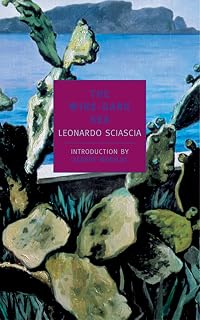
Born in Sicily, Sciascia was a literary and critical genius as well as a best-selling activist-writer. In the tradition of such Sicilian writers as Luigi Pirandello and Giuseppe Di Lampedusa, he explored in neorealist novels the island's impact on its inhabitants' lives: how they coped with crime, the Mafia, and corruption. His best-known works show more include The Day of the Owl, The Sicilian Relatives, and the collection of short stories The Wine-Dark Sea. In his most controversial work, The Moro Affair, he implicated Italy's leaders in the 1978 kidnapping and murder of former premier Aldo Moro by the leftist terrorist group, the Red Brigade. Though a long-time Communist, Sciascia eventually left the party to become a member of the Radical party, whose tenets were closer to his own anarchist leanings. As a representative of the party, Sciascia was elected to both the Italian and European Parliaments. (Bowker Author Biography) show less
Some Editions
Awards and Honors
Series
Belongs to Publisher Series
Work Relationships
Is contained in
Has the adaptation
Common Knowledge
- Canonical title
- To Each His Own
- Original title
- A ciascuno il suo
- Alternate titles
- A Man's Blessing
- Original publication date
- 1966
- People/Characters
- Manno; Dr. Roscio; Don Luigi Corvaia; Professor Paolo Laurana; Signora Laurana; Luisa Roscio
- Important places
- Sicily, Italy; Italy
- Related movies
- A ciascuno il suo (1967 | IMDb)
- Epigraph
- Let it not be supposed that I am detailing any mystery, or penning any romance.
- Edgar Allen Poe, "The Murders in the Rue Morgue" - First words
- The letter arrived in the afternoon delivery.
- Quotations
- The return of the dogs set the whole town to disputing for days and days (as will always happen when people discuss the nature of dogs) about the order of Creation, since it is not at all fair that dogs should lack the gift o... (show all)f speech. No account was taken, in the Creator's defense, that even had they had the gift of speech, the dogs would, in the given circumstances, have become so many mutes both with regard to the identity of the murderers and in testifying before the marshal of the carabinieri.
- Last words
- (Click to show. Warning: May contain spoilers.)"He was an ass," Don Luigi said.
- Original language
- Italian
Classifications
- Genres
- Fiction and Literature, General Fiction, Mystery
- DDC/MDS
- 853.914 — Literature & rhetoric Italian, Romanian & related literatures Italian fiction 1900- 20th Century 1945-1999
- LCC
- PQ4879 .C54 .A6313 — Language and Literature French, Italian, Spanish and Portuguese literatures Italian literature Individual authors, 1961-2000
- BISAC
Statistics
- Members
- 1,186
- Popularity
- 21,105
- Reviews
- 33
- Rating
- (3.75)
- Languages
- 11 — Catalan, Dutch, English, French, German, Greek, Italian, Portuguese, Spanish, Swedish, Turkish
- Media
- Paper, Audiobook, Ebook
- ISBNs
- 37
- ASINs
- 13