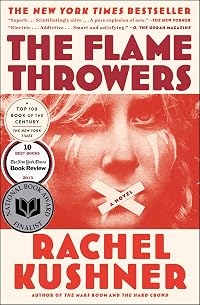
The Flamethrowers
by Rachel Kushner
On This Page
Description
The year is 1975 and Reno--so-called because of the place of her birth--has come to New York intent on turning her fascination with motorcycles and speed into art. Her arrival coincides with an explosion of activity in the art world--artists have colonized a deserted and industrial SoHo, are staging actions in the East Village, and are blurring the line between life and art. Reno meets a group of dreamers and raconteurs who submit her to a sentimental education of sorts. Ardent, vulnerable, show more and bold, she begins an affair with an artist named Sandro Valera, the semi-estranged scion of an Italian tire and motorcycle empire. When they visit Sandro's family home in Italy, Reno falls in with members of the radical movement that overtook Italy in the seventies. Betrayal sends her reeling into a clandestine undertow. - from cover p. [2] show lessTags
Recommendations









Member Reviews
The 1970s New York art scene, revolutionary Italian social movements, land speed trials on the Bonneville Salt Flats, art as object or performance, design in art and engineering — Rachel Kushner’s novel is a swirling maelstrom turning us about, offering glimpses of fleeting moments and rapidly spinning us onward. Reno is a young, beautiful, student of artfilm set on making it in New York. She’s also a former downhill skier, motorcycle racer, and student of Italian. At first the art world of New York seems impenetrable, but then she slowly begins to work her way in through cracks and crevices, all the while both seeming and believing herself to still be on the outside, even when her relationship with Sandro Valera takes her to the show more heart of all her interests. A heart which is bound to be broken.
Kushner fills these pages with startlingly vivid characters whose interests and appetites come close to overwhelming the story, such as it is. From the well spun anecdotes of Ronnie, which may be his real art form, to the lived performance by Giddle as a diner waitress, to the huge loft apartments in the Bowery which even artists could still afford in the 70s, to the openings, the after parties, and the violence of near-nihilism that underwrote much of what passed as art. It’s a world unto itself, and as such both unbelievable and entirely convincing. All rendered in neon-poetic prose. A remarkable piece of writing.
Recommended. show less
Kushner fills these pages with startlingly vivid characters whose interests and appetites come close to overwhelming the story, such as it is. From the well spun anecdotes of Ronnie, which may be his real art form, to the lived performance by Giddle as a diner waitress, to the huge loft apartments in the Bowery which even artists could still afford in the 70s, to the openings, the after parties, and the violence of near-nihilism that underwrote much of what passed as art. It’s a world unto itself, and as such both unbelievable and entirely convincing. All rendered in neon-poetic prose. A remarkable piece of writing.
Recommended. show less
[b:The Flamethrowers|15803141|The Flamethrowers|Rachel Kushner|https://i.gr-assets.com/images/S/compressed.photo.goodreads.com/books/1523541469l/15803141._SY75_.jpg|21526172] is a work of skill, bold description and strong scenes. Arty New York City in the mid-1970’s is represented in the story of Reno, a young woman trying to make it in this world by documenting photographically her motorcycle skills at the Bonneville Salt Flats. How does she fare afterwards? Her story expands to include her boyfriend Sandro’s wealthy motorcycle founding family in Milan and Red Brigade politics, an enjoyable detour. Reno is the principal character but I did not get a real sense
of her as a person. Her cohort is better characterized, for instance, show more the dinner party hosts, the Kastles, or her cool lovers, Ronnie and Sandro, even the Italians are better drawn in her brief visit to them. The instructions to potential realtors: “we say home not house, cellar not basement, lawn not yard” were hilarious and there were other funny bits throughout the book. The author's [b:The Mars Room|36373648|The Mars Room|Rachel Kushner|https://i.gr-assets.com/images/S/compressed.photo.goodreads.com/books/1524991696l/36373648._SY75_.jpg|57520253]struck me as more satisfying than this more detached early work. show less
of her as a person. Her cohort is better characterized, for instance, show more the dinner party hosts, the Kastles, or her cool lovers, Ronnie and Sandro, even the Italians are better drawn in her brief visit to them. The instructions to potential realtors: “we say home not house, cellar not basement, lawn not yard” were hilarious and there were other funny bits throughout the book. The author's [b:The Mars Room|36373648|The Mars Room|Rachel Kushner|https://i.gr-assets.com/images/S/compressed.photo.goodreads.com/books/1524991696l/36373648._SY75_.jpg|57520253]struck me as more satisfying than this more detached early work. show less
The star rating system has its limitations. _The Flame Throwers_ feels like the the author drew a set of random topics out of a bag (land speed records in Bonneville / the New York art scene in the 70s / labor uprisings in Italy) and crafted a novel around these disparate threads. Kushner is presenting three modes of being an artist; the obsessive trainspotting type that care most about materials and methods (exemplified by Marvin and his photoshop); the art scenesters who play a role, putting artifice over authenticity (Giddle, the waitress / performance artist is a fine example of this, treating her job as a work of art as a way of coping with its mundane limitations).
Our narrator Reno is the third type. She is admirable because she show more is so open to experience, and takes her own feelings and instincts seriously. She is not trying to be an "artist" but rather she is driven to the creative act by a force that she doesn't really understand, like her love of speed. I think Kushner's point is that this creative drive is like falling in love; it often leads to disappointment but we have no choice in how we experience it. Our decisions are complicated and rarely rational; the only way to make sense of the world is to not close off unexpected avenues of experience and not to neglect our creative drive. show less
Our narrator Reno is the third type. She is admirable because she show more is so open to experience, and takes her own feelings and instincts seriously. She is not trying to be an "artist" but rather she is driven to the creative act by a force that she doesn't really understand, like her love of speed. I think Kushner's point is that this creative drive is like falling in love; it often leads to disappointment but we have no choice in how we experience it. Our decisions are complicated and rarely rational; the only way to make sense of the world is to not close off unexpected avenues of experience and not to neglect our creative drive. show less
I found this novel to be unfocused for my taste. The setting moved from Reno to New York to Italy without centering itself anywhere. I did not really develop any empathy with our main character, an artist interested in motorcycles. I did like the connections made within the novel joining past and the present of the novel (late 70's). I think you might like this novel if you were interested in the art world of 1970's New York or the process of being an avant garde artist. I found some of the metaphors to be unfortunate ("....and blotted my face with a powder puff the size of a rat terrier." A rat terrier is way too smooth for facial fluffing; a shih-tzu would have done the job right).
 This review was written for LibraryThing Early Reviewers.
There is a pivotal passage somewhere in the middle of The Flamethrowers, Rachel Kushner’s incendiary novel of a young woman’s progress through the New York art world and social protests in Italy during the late 1970s, where the main characters are gathered at one of those high-brow, hipper-than-thou dinner parties that are all about posturing and pretense. In the middle of a drunken ramble by the host, one guest interjects a reflection on the purpose of language and the “power and emptiness of words [that] rule us nonetheless,” a remark which brings the following response:
“…you know what I think of language? That it’s a fake horizon and there’s something else, a real truthful thing, but language is keeping us from it. show more And I think we should torture language to stop fucking around and tell it to us. We should torture language to tell the truth.”
Indeed, truth is something that Reno, the protagonist of this engaging tale, finds to be sorely lacking in her life. After moving to New York to pursue a career as an artist in the emerging Soho scene, her initial loneliness and isolation gives way to a series of personal and professional relationships with people who pursue their own agendas at her expense. In particular, she is betrayed on a trip to Milan by Sandro, her live-in boyfriend and estranged heir to an Italian manufacturing empire, an act which leads her to connect with a group of young anarchists she barely knows and into the middle of a protest demonstration that turns violent and ends badly. Chronicling Reno’s often sad and hard-won education is a central theme of The Flamethrowers, as well as the part where the narrative shines the brightest.
I found this to be a highly compelling and thought-provoking book. In addition to creating an effective combination of insights, ideas, and storytelling, the author also does a wonderful job of capturing the essence of the time and places in which the novel is set. In fact, it would not be altogether wrong to label this a work of historical fiction, but that would really be too narrow of a description to give the book its full due. Kushner’s prose is electric throughout and she displays a nice talent for creating realistic dialogue between a set of characters the reader really comes to care about. This is a talented writer with an intense and original point of view; it will be a pleasure to read more of her work in the future. show less
“…you know what I think of language? That it’s a fake horizon and there’s something else, a real truthful thing, but language is keeping us from it. show more And I think we should torture language to stop fucking around and tell it to us. We should torture language to tell the truth.”
Indeed, truth is something that Reno, the protagonist of this engaging tale, finds to be sorely lacking in her life. After moving to New York to pursue a career as an artist in the emerging Soho scene, her initial loneliness and isolation gives way to a series of personal and professional relationships with people who pursue their own agendas at her expense. In particular, she is betrayed on a trip to Milan by Sandro, her live-in boyfriend and estranged heir to an Italian manufacturing empire, an act which leads her to connect with a group of young anarchists she barely knows and into the middle of a protest demonstration that turns violent and ends badly. Chronicling Reno’s often sad and hard-won education is a central theme of The Flamethrowers, as well as the part where the narrative shines the brightest.
I found this to be a highly compelling and thought-provoking book. In addition to creating an effective combination of insights, ideas, and storytelling, the author also does a wonderful job of capturing the essence of the time and places in which the novel is set. In fact, it would not be altogether wrong to label this a work of historical fiction, but that would really be too narrow of a description to give the book its full due. Kushner’s prose is electric throughout and she displays a nice talent for creating realistic dialogue between a set of characters the reader really comes to care about. This is a talented writer with an intense and original point of view; it will be a pleasure to read more of her work in the future. show less
This review was written for LibraryThing Early Reviewers.This book was not what I expected, but I really enjoyed it (probably more than I would have enjoyed the book I expected it to be).
I especially liked the way each character put on a personality for everyone else. They either, like Reno, didn't know themselves and so just did the best to be what they thought everyone around them wanted them to be, or they knew themselves and were intentionally trying to distance themselves from that identity (like Sandro) or distancing themselves from other people by fleecing everyone about who they really were (like Ronnie). There were a few who seemed authentic, but this didn't make them particularly likable. An authentic ass is still an ass.
Kushner addresses issues of generation and age, how people show more change as they grow older, and how individual lives work into and make up the events of history even as the individuals themselves remain invisible (like Sandro's mother's dress, "layers of transparent material that altogether were shiny and opaque").
I didn't really like the characters as people, but I found their stories compelling. I like when that happens, and I'm glad I picked up this book.
This is my quickie review. I'll write more details on my blog, Imperfect Happiness. show less
I especially liked the way each character put on a personality for everyone else. They either, like Reno, didn't know themselves and so just did the best to be what they thought everyone around them wanted them to be, or they knew themselves and were intentionally trying to distance themselves from that identity (like Sandro) or distancing themselves from other people by fleecing everyone about who they really were (like Ronnie). There were a few who seemed authentic, but this didn't make them particularly likable. An authentic ass is still an ass.
Kushner addresses issues of generation and age, how people show more change as they grow older, and how individual lives work into and make up the events of history even as the individuals themselves remain invisible (like Sandro's mother's dress, "layers of transparent material that altogether were shiny and opaque").
I didn't really like the characters as people, but I found their stories compelling. I like when that happens, and I'm glad I picked up this book.
This is my quickie review. I'll write more details on my blog, Imperfect Happiness. show less
The Flamethrowers is the kind of book I can see myself reading again.
Most of the beginning of the book takes place in Nevada. It takes its time to create a mood, to lay out some imagery and ideas, and to introduce the main character, whose real name we never learn. Then the story moves to New York and the plot picks up, going from tiny spare apartments to cheap coffee shops to art world dinner parties. The setting then shifts to a posh villa in the Italian countryside, then to a chaotic political demonstration, and then back to New York. Along the way we meet racers and would-be racers, artists and would-be artists, lovers and would-be lovers. If that were all you got out of the book—the colorful people and places and things that show more happen—that would be enough to make this worth reading. But The Flamethrowers is much more than that.
It's an ambitious, expansive novel that asks big questions. What does it mean to be authentic? Who decides? Does it matter? What has more value—the idea of something, or the thing itself? Is your life your own creation, or is it to some degree determined by where you come from—a fate you can't entirely control or escape? Where do you draw the line between real experience and just playing at something, experiencing a fantasy of it? Does money and privilege separate you from real experience or allow you to choose your experience? What makes one experience any more valid than another? And what about taking risks and breaking rules? Where do the rules come from? There’s a great thrill, and often real danger, in breaking the rules. When you break the rules, you feel alive because you take control—you feel like you are writing your own story.
Note: I received an ARC of this book through a Goodreads giveaway. show less
Most of the beginning of the book takes place in Nevada. It takes its time to create a mood, to lay out some imagery and ideas, and to introduce the main character, whose real name we never learn. Then the story moves to New York and the plot picks up, going from tiny spare apartments to cheap coffee shops to art world dinner parties. The setting then shifts to a posh villa in the Italian countryside, then to a chaotic political demonstration, and then back to New York. Along the way we meet racers and would-be racers, artists and would-be artists, lovers and would-be lovers. If that were all you got out of the book—the colorful people and places and things that show more happen—that would be enough to make this worth reading. But The Flamethrowers is much more than that.
It's an ambitious, expansive novel that asks big questions. What does it mean to be authentic? Who decides? Does it matter? What has more value—the idea of something, or the thing itself? Is your life your own creation, or is it to some degree determined by where you come from—a fate you can't entirely control or escape? Where do you draw the line between real experience and just playing at something, experiencing a fantasy of it? Does money and privilege separate you from real experience or allow you to choose your experience? What makes one experience any more valid than another? And what about taking risks and breaking rules? Where do the rules come from? There’s a great thrill, and often real danger, in breaking the rules. When you break the rules, you feel alive because you take control—you feel like you are writing your own story.
Note: I received an ARC of this book through a Goodreads giveaway. show less
Members
- Recently Added By
Lists

Vote: Your June OLOB Preference List
4 works; 145 members

1001 Books You Must Read Before You Die
1,448 works; 1,134 members

Top Five Books of 2013
1,562 works; 721 members

Best Contemporary Literary Fiction (Around the Last 30 Years)
388 works; 122 members

Best 21st Century Books (So Far)
670 works; 85 members

Your favorite books from the 2014 Baileys Women's Prize for Fiction
20 works; 23 members

Vulture's 100 Best Books of the 21st Century (So Far)
98 works; 9 members

Top Five Books of 2014
1,064 works; 398 members

National Book Award Finalists - Fiction
377 works; 12 members

Books Read in 2023
5,547 works; 145 members
Kirkus Reviews Best Fiction of 2013
99 works; 6 members

Reading Glasses Podcast
410 works; 3 members

.
184 works; 1 member

Best Books of the 2010s
20 works; 1 member

Dim Sum Lunch Reading
43 works; 2 members
NYT 100 best books of 21st C
100 works; 31 members

LitHub's Best Novels of the Decade 2010-2019
39 works; 1 member

Global Reads: Books Set in Western Europe
186 works; 10 members

Vlogbrothers Book Recommendations
307 works; 4 members
Author Information

17+ Works 6,292 Members
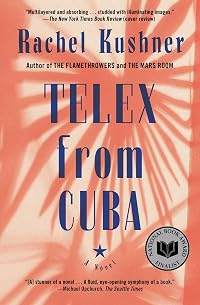
Rachel Kushner's debut novel, Telex from Cuba, was a finalist for the 2008 National Book Award and the Dayton Literary Peace Prize. Her second novel, The Flamethrowers, was a finalist for the 2013 National Book Award. She was awarded a Guggenheim Fellowship in 2013. Her fiction and essays have appeared in numerous publications including The New show more York Times, The Paris Review, The Believer, and Grand Street. She made the Bestseller List in 2018 with her title, The Mars Room. (Bowker Author Biography) show less
Some Editions
Awards and Honors
Awards
Distinctions
Notable Lists
Common Knowledge
- Canonical title
- The Flamethrowers
- Original title
- The Flamethrowers
- Original publication date
- 2013
- People/Characters
- Reno; Sandro Valera; Ronnie Fontaine
- Important places
- New York, New York, USA; Milan, Lombardy, Italy; Rome, Italy; Reno, Nevada, USA; New York, USA; Nevada, USA
- Epigraph
- FAC UT ARDEAT
- Dedication
- This book is for Cynthia Mitchell.
And for Anna, wherever she is (and probably isn't). - First words
- He killed him with a motorbike headlamp (what he had in his hand).
- Quotations*
- Menschen, die schwerer zu lieben sind, stellen eine Herausforderung dar, und die Herausforderung macht es einfacher, sie zu lieben. Man fühlt sich dazu getrieben. Wer die Liebe einfach haben will, der will eigentlich gar kei... (show all)ne Liebe.
"O Gott, das tut mir so leid. Liebe ist furchtbar. Sie ruiniert alles Normale, alles außer sich selbst. Sie macht dich verrückt, und das alles für nichts und wieder nichts, weil sie so enttäuschend ist. Aber viel Glück d... (show all)amit." - Last words
- (Click to show. Warning: May contain spoilers.)Leave, with no answer. Move on to the next question.
- Original language*
- Engels
*Some information comes from Common Knowledge in other languages. Click "Edit" for more information.
Classifications
Statistics
- Members
- 1,929
- Popularity
- 11,049
- Reviews
- 91
- Rating
- (3.45)
- Languages
- 10 — Danish, Dutch, English, French, German, Italian, Portuguese, Spanish, Swedish, Turkish
- Media
- Paper, Audiobook, Ebook
- ISBNs
- 42
- ASINs
- 13
