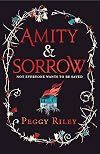
Amity & Sorrow
by Peggy Riley
On This Page
Description
Fleeing with her two daughters who have never seen the world outside of their polygamous compound, a desperate woman crashes her car in rural Oklahoma, where she finds unlikely help from a farmer grieving the loss of his wife.Tags
Recommendations





































Member Recommendations

Member Reviews
Peggy Riley’s Amity and Sorrow is a unique look, not into the life of polygamy but rather into the lasting impact of a life spent living within a cult-like environment. It explores what happens when such a life is forcibly taken away from its followers and how they do - or do not - adjust to their sudden new life. For those living such a life and fully immersed in the belief system and culture, the abrupt departure from such a life can be as traumatic as anything, and it is this trauma that drives a majority of the plot.
Amity and Sorrow are on opposite ends of the spectrum when it comes to acceptance of this life away from their family compound, and their reactions to their new-found freedoms are as opposing as their names. While the show more lack of familiar rules is disconcerting, Amity soon adapts and begins to test her new environment. Sorrow, however, wants nothing to do with this new life and aches to be back with her father and all that is familiar. While each of their reactions is understandable, given the fact that they were both born on the compound and know no other way of life, it is difficult for a reader to discern which girl is the more tragic. Sorrow is uncompromising in her abhorrence of life outside the compound and refuses to succumb to any of its lack of rules. Given what is revealed about life on the compound and her particularly uncomfortable relationship with her father, Sorrow’s exhibition of Stockholm Syndrome is upsetting but understandable. Amity does like what she finds and does begin to make the adjustment to her new life, but there is something terrible in the rules she cannot find the strength to break. Her inner conflict between old and new is every bit as heart-wrenching as Sorrow’s complete faith in the old, if not more so.
While the novel takes its name from Amaranth’s daughters, Amaranth’s story achieves its own time in the spotlight, and deservedly so. For, Amaranth remembers life before the compound, and through Ms. Riley’s careful psychology, a reader gets a clear picture of the reasons for why people remain attracted to faith-based cults. While the cult’s ideology itself is troublesome and will no doubt be distasteful for readers, one can understand how someone with Amaranth’s reckless past can find solace in an environment that embraces family and shared responsibilities. A reader’s simultaneous acceptance of and repugnance towards the compound and its belief system are some of the most surprising feelings generated by this thoughtful book.
As in life, there are many shades of grey within Amity and Sorrow that prevent a reader from feeling unequivocal sympathy towards any of the characters. Similarly, a reader will struggle with understanding and accepting the sense of camaraderie that occurred in Amaranth’s polygamous environment and with utter revulsion at what is later revealed. As one can imagine, such conflicts of feeling make the novel a dark reading experience, one in which not just the main characters will leave the story with scars. Yet, the chance to dive deeper into a polygamous culture makes it utterly fascinating. Fans of any of the current television shows about polygamous relationships should not pass up the chance for yet another viewpoint on this interesting and titillating lifestyle. show less
Amity and Sorrow are on opposite ends of the spectrum when it comes to acceptance of this life away from their family compound, and their reactions to their new-found freedoms are as opposing as their names. While the show more lack of familiar rules is disconcerting, Amity soon adapts and begins to test her new environment. Sorrow, however, wants nothing to do with this new life and aches to be back with her father and all that is familiar. While each of their reactions is understandable, given the fact that they were both born on the compound and know no other way of life, it is difficult for a reader to discern which girl is the more tragic. Sorrow is uncompromising in her abhorrence of life outside the compound and refuses to succumb to any of its lack of rules. Given what is revealed about life on the compound and her particularly uncomfortable relationship with her father, Sorrow’s exhibition of Stockholm Syndrome is upsetting but understandable. Amity does like what she finds and does begin to make the adjustment to her new life, but there is something terrible in the rules she cannot find the strength to break. Her inner conflict between old and new is every bit as heart-wrenching as Sorrow’s complete faith in the old, if not more so.
While the novel takes its name from Amaranth’s daughters, Amaranth’s story achieves its own time in the spotlight, and deservedly so. For, Amaranth remembers life before the compound, and through Ms. Riley’s careful psychology, a reader gets a clear picture of the reasons for why people remain attracted to faith-based cults. While the cult’s ideology itself is troublesome and will no doubt be distasteful for readers, one can understand how someone with Amaranth’s reckless past can find solace in an environment that embraces family and shared responsibilities. A reader’s simultaneous acceptance of and repugnance towards the compound and its belief system are some of the most surprising feelings generated by this thoughtful book.
As in life, there are many shades of grey within Amity and Sorrow that prevent a reader from feeling unequivocal sympathy towards any of the characters. Similarly, a reader will struggle with understanding and accepting the sense of camaraderie that occurred in Amaranth’s polygamous environment and with utter revulsion at what is later revealed. As one can imagine, such conflicts of feeling make the novel a dark reading experience, one in which not just the main characters will leave the story with scars. Yet, the chance to dive deeper into a polygamous culture makes it utterly fascinating. Fans of any of the current television shows about polygamous relationships should not pass up the chance for yet another viewpoint on this interesting and titillating lifestyle. show less
With memories of nothing but the polygamous compound they were raised on, sisters Amity and Sorrow long for home when their mother, Amaranth, packs them up and drives for days to escape. Amaranth reaches the dry plains of Oklahoma before her heavy eyes betray her and she crashes the family car, destroying her chances of completely getting away. Thankfully, she wrecks near land owned by Bradley, a lonely farmer willing to help, but unaware of the swirling family dynamics he is about to take on.
Though it starts immediately after the car crash with little background information to settle in on, the novel soon gains its footing as Amaranth begins to reveal pieces of her former life. As the first of fifty wives, she raised her daughters show more under the strict religious code dictated by her husband. However, Amaranth can only overlook the moral gray area the group survives in for so long before deciding to save her daughters from her husband's next move.
“Children were curious, even her children. How would they know where their own bodies stopped and someone else's began if everything was shared? Here, in this world, there were women on display, spread-eagled over paper, women who looked like whores but weren't, while her family, her children, were dressed like saints, like nuns or pilgrims, but were not and never had been."
Once the family takes shelter on Bradley's Oklahoma farm, conflict brews between Sorrow, who is determined to return to life with her father, and easily adapting Amity. Riley's writing begins to shine, in dark but beautifully penned passages. Though much of the novel is not easy to read, Amity & Sorrow digs to the depths of human connection in an eerily compelling way.
Read more at: www.rivercityreading.com show less
Though it starts immediately after the car crash with little background information to settle in on, the novel soon gains its footing as Amaranth begins to reveal pieces of her former life. As the first of fifty wives, she raised her daughters show more under the strict religious code dictated by her husband. However, Amaranth can only overlook the moral gray area the group survives in for so long before deciding to save her daughters from her husband's next move.
“Children were curious, even her children. How would they know where their own bodies stopped and someone else's began if everything was shared? Here, in this world, there were women on display, spread-eagled over paper, women who looked like whores but weren't, while her family, her children, were dressed like saints, like nuns or pilgrims, but were not and never had been."
Once the family takes shelter on Bradley's Oklahoma farm, conflict brews between Sorrow, who is determined to return to life with her father, and easily adapting Amity. Riley's writing begins to shine, in dark but beautifully penned passages. Though much of the novel is not easy to read, Amity & Sorrow digs to the depths of human connection in an eerily compelling way.
Read more at: www.rivercityreading.com show less
Once in a while, there’s a book that comes your way and it just falls into your lap. Amity & Sorrow is a book that came my way by accident. I received notification that I was pre-approved for a few titles from Little Brown and Company and decided to check them out. I devoured Peggy Riley’s book and it’s a powerful debut.
Amaranth and her daughters are on the run and by the fourth day, exhausted due to lack of sleep, Amaranth crashes into a tree. She finds a gas station and pleads for help, but the farmer, Bradley, in charge of the station tells her he can’t. He insists she needs to call her husband for help, but she refuses. Taking shelter under his porch, Amaranth and her daughters find refuge while Bradley begins to open up and show more live life. Slowly secrets are unearthed and it’s a tragic story to read.
Amity & Sorrow is told in a series of flashbacks alongside the present and readers get a full account of the life Amaranth and her daughters experienced in a fundamentalist cult. It’s a life we can only imagine and it’s a heartbreaking experience. Amaranth is the first wife of fifty and she realizes early on that her husband isn’t exactly who he says he is. She questions his actions, but at the same time is grateful that he saved her. At the time she went along with his rules and regulations, but on the night the temple was set on fire, realizing he wanted them dead, she suddenly has the courage to save her daughters.
The writing is powerful with rich descriptions. For example, Amity experiences the taste of Doritos for the first time, a “dance of salt and chemicals” on the tongue. When Amaranth realizes she’s not the first woman in her husband’s life, “Her Barbies had no wedding gowns — not a one of the eight Barbies who lived with the single Ken in their plastic house, on their cardboard beds, in sin.” I reread that sentence a few times and wow, what a powerful way to describe the moment of the life she’s now living. Riley’s research is extensive and thorough. There’s a scene where Amaranth goes to the temple and there’s clothes strewn about and she thinks for a moment that the rapture really happened only to realize that the clothes are what people left behind. That scene really hit home as to what Zachariah must have preached.
We don’t get a lot of character development outside the three protagonists. Bradley and Dust are floating the background and I would have loved to know more about Dust’s personal background regarding his family. It would have been nice to find out more about Bradley’s relationship with his own wife and perhaps the details as to why she left. Despite the lack of their backgrounds, I came to realize that this is about Amaranth and her daughters. It’s their story about how they came to be and fled. While Bradley wants her to do the right thing, that is contact police, Amaranth can’t because she’s still bound to whatever hold Zachariah has on her. She takes full responsibility for the way her children turn out especially with regards to Sorrow. There’s one scene towards the end that is powerful and moving. No mother wants to leave a child behind, but she realizes she’s done all that she can and she can’t save anyone who doesn’t want to be saved.
If I can take a moment, I’d like to discuss Amity and Sorrow. Sorrow is the eldest daughter out of all the children Zachariah has. There’s much emphasis put on her as the oracle and the one that can foretell the future. Amity is told to just watch and her power lies with her hands and healing people. It’s natural that Amity wants to hold onto Dust because she’s the first to come in contact with him and he’s the first to befriend her as well as Bradley’s father. When Sorrow begins to garner attention from Dust and the old man, Amity is jealous, but she’d devoted to Sorrow. It’s easy to see how Amaranth placed Sorrow in Amity’s hands. I won’t say what Sorrow does, but my heart broke for Amity and even in the end Amity is devoted to her. I don’t know if this because the way she was raised or if it’s just sisterly affection and devotion.
There are few unanswered questions. One primarily is how Dust was able to take Sorrow back to Idaho since it’s made clear early on that both girls do not know where they are from. I also think back to the scene in the library where Dust looks up information when Amity asks for his assistance and therefore I can sort of understand how he may have come up with a location. There’s also the question regarding garments. At one point Riley writes how Bradley has to tear Amaranth’s shift because they are sewn in and yet Zachariah has no problem lifting her skirts for sex.
I debated with the rating and in the end decided on a solid five because of the rich writing and emotional aspect. I was emotionally drained and even as I write this review, I have tears because your heart aches for Amity and what she went through and even more so for Sorrow because she’s a lost cause. You’ll think of every person you know that is lost and succumbs to a cult leader, wishing you could give them what they are looking for and trying to protect them.
Peggy Riley’s debut novel is powerful and at the end you’ll see the world a little different. If you’re not a religious person, this book isn’t filled with a lot of religious undertones and therefore you’ll have no problem reading long. If you’re a sensitive person, I do have to warn you there’s a disconcerting scene involving Sorrow and I won’t say exactly what it is because it would be a major spoiler, but do keep in mind that there are heavy issues involved. show less
Amaranth and her daughters are on the run and by the fourth day, exhausted due to lack of sleep, Amaranth crashes into a tree. She finds a gas station and pleads for help, but the farmer, Bradley, in charge of the station tells her he can’t. He insists she needs to call her husband for help, but she refuses. Taking shelter under his porch, Amaranth and her daughters find refuge while Bradley begins to open up and show more live life. Slowly secrets are unearthed and it’s a tragic story to read.
Amity & Sorrow is told in a series of flashbacks alongside the present and readers get a full account of the life Amaranth and her daughters experienced in a fundamentalist cult. It’s a life we can only imagine and it’s a heartbreaking experience. Amaranth is the first wife of fifty and she realizes early on that her husband isn’t exactly who he says he is. She questions his actions, but at the same time is grateful that he saved her. At the time she went along with his rules and regulations, but on the night the temple was set on fire, realizing he wanted them dead, she suddenly has the courage to save her daughters.
The writing is powerful with rich descriptions. For example, Amity experiences the taste of Doritos for the first time, a “dance of salt and chemicals” on the tongue. When Amaranth realizes she’s not the first woman in her husband’s life, “Her Barbies had no wedding gowns — not a one of the eight Barbies who lived with the single Ken in their plastic house, on their cardboard beds, in sin.” I reread that sentence a few times and wow, what a powerful way to describe the moment of the life she’s now living. Riley’s research is extensive and thorough. There’s a scene where Amaranth goes to the temple and there’s clothes strewn about and she thinks for a moment that the rapture really happened only to realize that the clothes are what people left behind. That scene really hit home as to what Zachariah must have preached.
We don’t get a lot of character development outside the three protagonists. Bradley and Dust are floating the background and I would have loved to know more about Dust’s personal background regarding his family. It would have been nice to find out more about Bradley’s relationship with his own wife and perhaps the details as to why she left. Despite the lack of their backgrounds, I came to realize that this is about Amaranth and her daughters. It’s their story about how they came to be and fled. While Bradley wants her to do the right thing, that is contact police, Amaranth can’t because she’s still bound to whatever hold Zachariah has on her. She takes full responsibility for the way her children turn out especially with regards to Sorrow. There’s one scene towards the end that is powerful and moving. No mother wants to leave a child behind, but she realizes she’s done all that she can and she can’t save anyone who doesn’t want to be saved.
If I can take a moment, I’d like to discuss Amity and Sorrow. Sorrow is the eldest daughter out of all the children Zachariah has. There’s much emphasis put on her as the oracle and the one that can foretell the future. Amity is told to just watch and her power lies with her hands and healing people. It’s natural that Amity wants to hold onto Dust because she’s the first to come in contact with him and he’s the first to befriend her as well as Bradley’s father. When Sorrow begins to garner attention from Dust and the old man, Amity is jealous, but she’d devoted to Sorrow. It’s easy to see how Amaranth placed Sorrow in Amity’s hands. I won’t say what Sorrow does, but my heart broke for Amity and even in the end Amity is devoted to her. I don’t know if this because the way she was raised or if it’s just sisterly affection and devotion.
There are few unanswered questions. One primarily is how Dust was able to take Sorrow back to Idaho since it’s made clear early on that both girls do not know where they are from. I also think back to the scene in the library where Dust looks up information when Amity asks for his assistance and therefore I can sort of understand how he may have come up with a location. There’s also the question regarding garments. At one point Riley writes how Bradley has to tear Amaranth’s shift because they are sewn in and yet Zachariah has no problem lifting her skirts for sex.
I debated with the rating and in the end decided on a solid five because of the rich writing and emotional aspect. I was emotionally drained and even as I write this review, I have tears because your heart aches for Amity and what she went through and even more so for Sorrow because she’s a lost cause. You’ll think of every person you know that is lost and succumbs to a cult leader, wishing you could give them what they are looking for and trying to protect them.
Peggy Riley’s debut novel is powerful and at the end you’ll see the world a little different. If you’re not a religious person, this book isn’t filled with a lot of religious undertones and therefore you’ll have no problem reading long. If you’re a sensitive person, I do have to warn you there’s a disconcerting scene involving Sorrow and I won’t say exactly what it is because it would be a major spoiler, but do keep in mind that there are heavy issues involved. show less
Amity & Sorrow opens with a mother Amaranth running away with her daughters Amity and Sorrow. When her car crashes in rural Oklahoma, Amaranth is taken in by Bradley, a farmer who is reeling from the departure of his wife, the illness of his father, and the problems of farming in hard times.
As the story unfolds, we learn that Amaranth and her daughters are running from a polygamous cult. When the cult was raided because of allegations of child abuse, Amaranth has grabbed her daughters and run as far and as fast as she can. But no matter how far she has come, she never stops looking over her shoulder, convinced that she can never run far enough or fast enough to escape the husband she has left behind.
But her children know nothing of the show more outside world; they can't read or write, have never watched TV or seen a computer. All they know is Father and all of their mothers and the temple where Sorrow was oracle, first of all the children and perhaps more than daughter to her father. Amity can learn to adapt to a new life but Sorrow will not accept a place where she is just one of many prophets who speak in tongues and tell of the coming Rapture, where she isn't oracle, where she is not first among many daughters and wives. And she will do whatever it takes to get back to Father.
Amity & Sorrow is an interesting tale of love gone bad in so many ways: between wives and husbands, children and parents, and between love of God and carnal desire and greed. It is a tale of broken people leading broken lives but seeking love and redemption all the same and although they are usually looking for salvation in all the wrong places, it is the very act of seeking that gives the story a sense of hope.
I know nothing of polygamous cults so I cannot speak to the accuracy of the way this one is depicted. But it makes for a fascinating portrait of so many wives spinning around the altar, their long skirts flaring out around them, celebrating each return of their husband and each new wife he brings with them.
Although set in modern times, it felt much older, perhaps because of the isolation both of the cult and of the farm, but also because of the references to Grapes of Wrath, Steinbeck's wonderful novel of Oklahoma farmers during the Great Depression. The story also switches time as it slowly allows us to see how Amaranth's story and that of her children unfolds and how so much love and hope had become so tainted and why she was trying so hard to put things right even though it is clear that not everything or everybody can be fixed.
I won't say I enjoyed this novel; it was disturbing in a whole lot of ways especially in the characters of Sorrow and Father but it certainly kept my attention. It is a relatively short tale but not an easy one. But, then, whoever said things had to be easy to be good. show less
As the story unfolds, we learn that Amaranth and her daughters are running from a polygamous cult. When the cult was raided because of allegations of child abuse, Amaranth has grabbed her daughters and run as far and as fast as she can. But no matter how far she has come, she never stops looking over her shoulder, convinced that she can never run far enough or fast enough to escape the husband she has left behind.
But her children know nothing of the show more outside world; they can't read or write, have never watched TV or seen a computer. All they know is Father and all of their mothers and the temple where Sorrow was oracle, first of all the children and perhaps more than daughter to her father. Amity can learn to adapt to a new life but Sorrow will not accept a place where she is just one of many prophets who speak in tongues and tell of the coming Rapture, where she isn't oracle, where she is not first among many daughters and wives. And she will do whatever it takes to get back to Father.
Amity & Sorrow is an interesting tale of love gone bad in so many ways: between wives and husbands, children and parents, and between love of God and carnal desire and greed. It is a tale of broken people leading broken lives but seeking love and redemption all the same and although they are usually looking for salvation in all the wrong places, it is the very act of seeking that gives the story a sense of hope.
I know nothing of polygamous cults so I cannot speak to the accuracy of the way this one is depicted. But it makes for a fascinating portrait of so many wives spinning around the altar, their long skirts flaring out around them, celebrating each return of their husband and each new wife he brings with them.
Although set in modern times, it felt much older, perhaps because of the isolation both of the cult and of the farm, but also because of the references to Grapes of Wrath, Steinbeck's wonderful novel of Oklahoma farmers during the Great Depression. The story also switches time as it slowly allows us to see how Amaranth's story and that of her children unfolds and how so much love and hope had become so tainted and why she was trying so hard to put things right even though it is clear that not everything or everybody can be fixed.
I won't say I enjoyed this novel; it was disturbing in a whole lot of ways especially in the characters of Sorrow and Father but it certainly kept my attention. It is a relatively short tale but not an easy one. But, then, whoever said things had to be easy to be good. show less
Amity & Sorrow propels readers through the collision of a lonely farmer and a woman on the run from a failed communal experiment—her fearful and reluctant teenage daughters in tow. Riley deftly explores the bonds and boundaries of love, faith, and responsibility when passionate and well-intentioned ideals stray far from their origins in this emotionally fraught debut.
I just read in the newspaper that this is the 20th anniversary of the siege and fire in Waco, TX. It is likely that this event of 20 years ago was the seed of the story that Ms. Riley tells in Amity & Sorrow: A Novel. Blessedly, there is no real politics interjected into the story, but rather she focuses on the influence of a dangerous and charismatic man and the effect he had on several of those who loved and trusted him.
The book begins as Amaranth, the one of 50 wives, has fled from a devastating fire at the Temple and home of her husband, a polygamist, messianic/end of the world cult leader. (Picture a combination of David Koresh and Warren Jeffs.) She is fiercely protective of her two daughters, Amity and Sorrow, and has taken them show more with her believing that her husband was the one to have set the fire in an attempt to destroy them all. Her fear keeps her driving for 4 days straight until she finally wrecks her car after falling asleep one to many times. Fortunately they are all alright, but their car is out of commission and their lack of money makes this the end of the line in their flight.
The effects of their husband/father on Amaranth, Amity, and Sorrow's lives from this point on creates a complex and original story that I found hard to get out of my head. The cover of the book pictures the girls bound together at the wrists. Their mother has done this to try to keep the oldest and most disturbed of the girls from attempting to return to her father who she sees as god. He continues to exert a powerful control over all of them, even in his absence. Their freedom lies in discovering a way to live in this world that is so different from what the girls have ever known. A simple, but understanding farmer, Bradley, allows them to take shelter with him. He appears to be a lonely man, his wife having left him, and he is a sitting duck for the needy women. Ultimately he is pivotal in changing some of them, and he and his elderly father offer the real salvation in the story much at their own expense.
I was mesmerized by the way the story, both the current as well as the backdrop unfolded. It is very disturbing, but at the same time realistic. It is through the perspective of the women that the author really brings the conflict and crisis of the story to the reader. She does a wonderful job of showing the differences between the women, and you can feel the tension and ultimate madness that eventually consumes one of them and brings the book to a close.
I am thankful to the publisher, Little, Brown and Company and NetGalley for the chance to read and review this book. It is a powerful and original story. I recommend it to readers who enjoy books that have psychological twists and get into the character's minds. It is not an ordinary story and will stay with me for a long time. show less
The book begins as Amaranth, the one of 50 wives, has fled from a devastating fire at the Temple and home of her husband, a polygamist, messianic/end of the world cult leader. (Picture a combination of David Koresh and Warren Jeffs.) She is fiercely protective of her two daughters, Amity and Sorrow, and has taken them show more with her believing that her husband was the one to have set the fire in an attempt to destroy them all. Her fear keeps her driving for 4 days straight until she finally wrecks her car after falling asleep one to many times. Fortunately they are all alright, but their car is out of commission and their lack of money makes this the end of the line in their flight.
The effects of their husband/father on Amaranth, Amity, and Sorrow's lives from this point on creates a complex and original story that I found hard to get out of my head. The cover of the book pictures the girls bound together at the wrists. Their mother has done this to try to keep the oldest and most disturbed of the girls from attempting to return to her father who she sees as god. He continues to exert a powerful control over all of them, even in his absence. Their freedom lies in discovering a way to live in this world that is so different from what the girls have ever known. A simple, but understanding farmer, Bradley, allows them to take shelter with him. He appears to be a lonely man, his wife having left him, and he is a sitting duck for the needy women. Ultimately he is pivotal in changing some of them, and he and his elderly father offer the real salvation in the story much at their own expense.
I was mesmerized by the way the story, both the current as well as the backdrop unfolded. It is very disturbing, but at the same time realistic. It is through the perspective of the women that the author really brings the conflict and crisis of the story to the reader. She does a wonderful job of showing the differences between the women, and you can feel the tension and ultimate madness that eventually consumes one of them and brings the book to a close.
I am thankful to the publisher, Little, Brown and Company and NetGalley for the chance to read and review this book. It is a powerful and original story. I recommend it to readers who enjoy books that have psychological twists and get into the character's minds. It is not an ordinary story and will stay with me for a long time. show less
Amaranth and her daughters, Amity & Sorrow, have fled their family and their life in a polygamist religious compound with nowhere to go and Amaranth's only thought being to get them as far away as possible. But when the car crashes in rural Oklahoma and she is forced to rely on a farmer for help (one of many things that challenges the strict rules they've all been taught to follow), she is also forced to confront the past, the present, and the future for both herself and her daughters.
A gripping tale of the aftermath of being indoctrinated into what I can only describe as a cult, Amity & Sorrow contains some difficult content but is one of those books that really hits you emotionally. The layers of Amaranth, Amity, and Sorrow's show more experiences that are slowly revealed over the course of the book through narrative and flashbacks are complex and provide the reader with a dark and vivid picture of their lives before the book begins.
Overall, I enjoyed the book, though I know it's not one everyone is likely to enjoy. It's gritty and certainly isn't a shiny happy tale, and I know some people don't like books like that. But I'd still encourage people to give it a chance.
Content warnings:mentions of child abuse, sexual abuse, and incest; religious fundamentalism
(eGalley provided by the publisher via NetGalley in exchange for an honest review.) show less
A gripping tale of the aftermath of being indoctrinated into what I can only describe as a cult, Amity & Sorrow contains some difficult content but is one of those books that really hits you emotionally. The layers of Amaranth, Amity, and Sorrow's show more experiences that are slowly revealed over the course of the book through narrative and flashbacks are complex and provide the reader with a dark and vivid picture of their lives before the book begins.
Overall, I enjoyed the book, though I know it's not one everyone is likely to enjoy. It's gritty and certainly isn't a shiny happy tale, and I know some people don't like books like that. But I'd still encourage people to give it a chance.
Content warnings:
(eGalley provided by the publisher via NetGalley in exchange for an honest review.) show less
Members
- Recently Added By
Lists

A Novel Cure
742 works; 23 members
Author Information

2 Works 320 Members
Common Knowledge
Classifications
Statistics
- Members
- 319
- Popularity
- 99,954
- Reviews
- 37
- Rating
- (3.44)
- Languages
- Dutch, English, Italian
- Media
- Paper, Ebook
- ISBNs
- 12
- ASINs
- 6