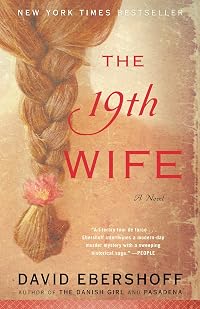
The 19th Wife
by David Ebershoff 
On This Page
Description
Faith, I tell them, is a mystery, elusive to many, and never easy to explain. Sweeping and lyrical, spellbinding and unforgettable, David Ebershoff's The 19th Wife combines epic historical fiction with a modern murder mystery to create a brilliant novel of literary suspense. It is 1875, and Ann Eliza Young has recently separated from her powerful husband, Brigham Young, prophet and leader of the Mormon Church. Expelled and an outcast, Ann Eliza embarks on a crusade to end polygamy in the show more United States. A rich account of a family's polygamous history is revealed, including how a young woman became a plural wife. Soon after Ann Eliza's story begins, a second exquisite narrative unfolds-a tale of murder involving a polygamist family in present-day Utah. Jordan Scott, a young man who was thrown out of his fundamentalist sect years earlier, must reenter the world that cast him aside in order to discover the truth behind his father's death. And as Ann Eliza's narrative intertwines with that of Jordan' s search, readers are pulled deeper into the mysteries of love and faith. Praise for The 19th Wife "This exquisite tour de force explores the dark roots of polygamy and its modern-day fruit in a renegade cult . . . Ebershoff brilliantly blends a haunting fictional narrative by Ann Eliza Young, the real-life 19th "rebel" wife of Mormon leader Brigham Young, with the equally compelling contemporary narrative of fictional Jordan Scott, a 20-year-old gay man. . . . With the topic of plural marriage and its shattering impact on women and powerless children in today's headlines, this novel is essential reading for anyone seeking understanding of the subject."--Publishers Weekly (starred review) show lessTags
Recommendations


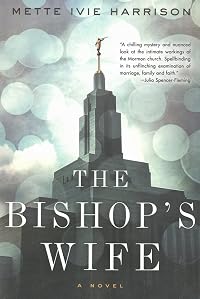
Member Recommendations
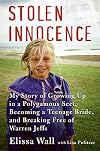
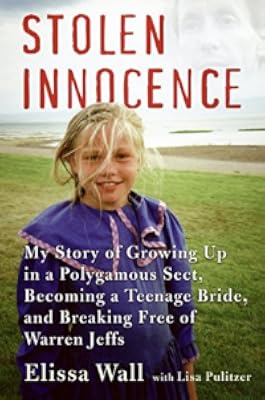
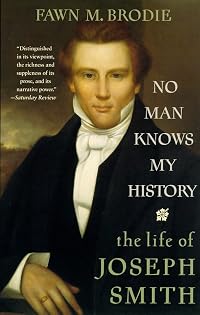
Stolen Innocence: My Story of Growing Up in a Polygamous Sect, Becoming a Teenage Bride, and Breaking Free of Warren Jeffs by Elissa Wall
sungene A true and compelling memoir of the present-day FLDS community that Ebershoff's novel uses as setting for the murder mystery part of his novel.
40

by bnbookgirl
Member Reviews
Ripped from the headlines?
When I heard what this novel was about, I immediately wanted to read it. The reason is that I’ve been so intrigued by news accounts of groups like the polygamous fundamentalists featured in this novel. For me, it was like a window into another world.
The story opens with 20-year-old Jordan Scott reading the news online. He sees a photo of a woman being placed into a police car and suddenly realizes that it’s his mother! He hasn’t seen her since she and his father left him by the side of the highway with $17 dollars in his pocket at the age of 14. You see, Jordan was raised in Utah in a polygamous Mormon sect—an extremist offshoot of the contemporary Mormon Church. Jordan’s mom was #19 of his dad’s 25 show more or so wives, and Jordan was raised with about 100 siblings. It’s a very different upbringing. Sadly, at the age of 14, Jordan was excommunicated for a non-existent offence, and cast out from his home, family, and the life he’d known. But he’s a survivor, and he’s made a life for himself in LA.
Seeing that his mother has been arrested for the murder of his father, Jordan realizes that he must return home and face his past. He goes to visit his mother in jail, and she tells him, “I didn’t do it!” and begs for his help. With all the conflicted feelings you would imagine, Jordan begins his own investigation into the murder case, and for the first time in years has contact with his former life. Despite the pain this sometimes brings him, he makes friends along the way, and they’re a fascinating and diverse group of allies.
This contemporary murder mystery would be more than enough story for your average novel, but in this case, it’s only half of it. For the chapters about Jordan and the murder mystery alternate with another story. It’s the fictionalized memoir of Ann Eliza Young, the 19th wife of Brigham Young, one of the early founders of the Mormon Church. The very formation of the Church, right through its first several decades, are seen through Ann Eliza’s eyes. She was a real historic character who did write a memoir about her life, marriage to the decades-older Young, eventual divorce, and crusade against polygamy in the Church.
Ebershoff has woven these two tales together magnificently. I can’t claim to have known much about the Mormon faith, its history, or any current issues in the religion, but I was equally fascinated by both stories being told. I realize there’s a limit to what a person can learn from a fictional work, but this novel appears to have been meticulously researched. (There’s a great author’s note at the end.) It’s a hefty book, but well-written, compelling, exotic, and more than anything one hell of a story. show less
When I heard what this novel was about, I immediately wanted to read it. The reason is that I’ve been so intrigued by news accounts of groups like the polygamous fundamentalists featured in this novel. For me, it was like a window into another world.
The story opens with 20-year-old Jordan Scott reading the news online. He sees a photo of a woman being placed into a police car and suddenly realizes that it’s his mother! He hasn’t seen her since she and his father left him by the side of the highway with $17 dollars in his pocket at the age of 14. You see, Jordan was raised in Utah in a polygamous Mormon sect—an extremist offshoot of the contemporary Mormon Church. Jordan’s mom was #19 of his dad’s 25 show more or so wives, and Jordan was raised with about 100 siblings. It’s a very different upbringing. Sadly, at the age of 14, Jordan was excommunicated for a non-existent offence, and cast out from his home, family, and the life he’d known. But he’s a survivor, and he’s made a life for himself in LA.
Seeing that his mother has been arrested for the murder of his father, Jordan realizes that he must return home and face his past. He goes to visit his mother in jail, and she tells him, “I didn’t do it!” and begs for his help. With all the conflicted feelings you would imagine, Jordan begins his own investigation into the murder case, and for the first time in years has contact with his former life. Despite the pain this sometimes brings him, he makes friends along the way, and they’re a fascinating and diverse group of allies.
This contemporary murder mystery would be more than enough story for your average novel, but in this case, it’s only half of it. For the chapters about Jordan and the murder mystery alternate with another story. It’s the fictionalized memoir of Ann Eliza Young, the 19th wife of Brigham Young, one of the early founders of the Mormon Church. The very formation of the Church, right through its first several decades, are seen through Ann Eliza’s eyes. She was a real historic character who did write a memoir about her life, marriage to the decades-older Young, eventual divorce, and crusade against polygamy in the Church.
Ebershoff has woven these two tales together magnificently. I can’t claim to have known much about the Mormon faith, its history, or any current issues in the religion, but I was equally fascinated by both stories being told. I realize there’s a limit to what a person can learn from a fictional work, but this novel appears to have been meticulously researched. (There’s a great author’s note at the end.) It’s a hefty book, but well-written, compelling, exotic, and more than anything one hell of a story. show less
 This review was written for LibraryThing Early Reviewers.
I really enjoyed this book about Ann Eliza Young, the 19th wife of Brigham Young who spoke out against polygamy at the end of the 19th c. Her story is interspersed with a contemporary murder mystery which takes place in a polygamous community that sounds very similar to the Yearning for Zion ranch that has been in the news so much lately. Ebershoff has clearly done his research but the book never bogs down in dry, factual detail - the characters are well developed and there is a strain of humor that runs through the novel that keeps the whole thing from getting too depressing.
Though the release of The 19th Wife is well-timed due to the recent national exposure of the Texas FLDS sect, the strength of Ebershoff's storytelling stands on its own. He seamlessly weaves two stories into a cohesive whole. His mastery of his art is apparent in his ability to effortlessly transition between two very different voices separated by more than a century but connected by the thread of polygamy and the destructive force it plays in the lives of men, women and children. Ebershoff sprinkles subtle clues throughout his narrative about how these two stories will become one, but never gives too much. I found myself eagerly awaiting the turn of each page. This is a brilliant book. I would recommend it to any reader.
This review was written for LibraryThing Early Reviewers.I fell into the pages of this novel very quickly. Interesting, insightful, and thought-provoking, Ebershoff is a talented author, capable of weaving together various narrators, letters, articles, research papers, and even a wiki link (all penned by the author) seamlessly and with great authenticity. Typically when reading a book with two competing stories, I find myself drawn more to one of the story lines leaving the other a more arduous read - that was not the case with this book. I found this to be a fascinating book: there is much here to fuel thoughts of spirituality, greed, humanity, and even American History; however, Ebershoff doesn't beat the reader about the neck and head with these things. It is there for those who want to show more read and ponder, or see and move on with the story
An easy read, and the author never judges these people, but brings them to life. the details around the modern mystery were very compelling. While polygamy as it is practiced in this novel is not the norm, it is what we think about when we hear stories of men like Warren Jeffs.
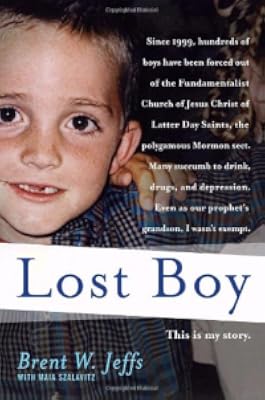
Ebershoff highlights two especially poignant side effects to the world of fundamentalist polygamy. Young girls forced to marry men, sometimes more than twice their age, and live a life bearing children to build up credit in the afterlife. There are also the lost boys, who are young men cast out of the compounds to not be competition of the older men for young, beautiful wives.
Ebershoff points out that the recorded history of the Mormon church is ambiguous at best (in the notes at the end). And modern Mormons will argue that the modern fundamentalist sect portrayed in this book are not real Mormons. Still, there's no disputing that polygamy was a huge part of the church's past.
The story of Ann Eliza Young, skillfully manipulated into a marriage with Brigham Young, a man twice her age, and then successfully divorcing him and helping fight against polygamy, was more than fascinating. It was history I was unfamiliar with, and I enjoyed learning more about this story. Ann Eliza's own dubious motivation for fighting Brigham was only a small part of the story. Finding out about what happens to her is the truly intriguing part.
This story is interwoven with a fictional account of a murder mystery in a polygamous Mormon community. A "lost boy" returns, to help his mother fight against the murder charge she is facing, as he knows she didn't murder her own husband. Even though he had not been back in years.
Not as quick of a read as I thought it might be, I still found The 19th Wife an entertaining read, especially if you are interested in the subject matter. show less
An easy read, and the author never judges these people, but brings them to life. the details around the modern mystery were very compelling. While polygamy as it is practiced in this novel is not the norm, it is what we think about when we hear stories of men like Warren Jeffs.
Ebershoff highlights two especially poignant side effects to the world of fundamentalist polygamy. Young girls forced to marry men, sometimes more than twice their age, and live a life bearing children to build up credit in the afterlife. There are also the lost boys, who are young men cast out of the compounds to not be competition of the older men for young, beautiful wives.
Ebershoff points out that the recorded history of the Mormon church is ambiguous at best (in the notes at the end). And modern Mormons will argue that the modern fundamentalist sect portrayed in this book are not real Mormons. Still, there's no disputing that polygamy was a huge part of the church's past.
The story of Ann Eliza Young, skillfully manipulated into a marriage with Brigham Young, a man twice her age, and then successfully divorcing him and helping fight against polygamy, was more than fascinating. It was history I was unfamiliar with, and I enjoyed learning more about this story. Ann Eliza's own dubious motivation for fighting Brigham was only a small part of the story. Finding out about what happens to her is the truly intriguing part.
This story is interwoven with a fictional account of a murder mystery in a polygamous Mormon community. A "lost boy" returns, to help his mother fight against the murder charge she is facing, as he knows she didn't murder her own husband. Even though he had not been back in years.
Not as quick of a read as I thought it might be, I still found The 19th Wife an entertaining read, especially if you are interested in the subject matter. show less
The last book I felt this strongly about was Jonathan Franzen's "The Corrections". Although very different books, they share a broadness of scope and an astonishing deftness to the writing. This is a novel of the highest quality.
"The 19th Wife" tells two stories; that of Ann Eliza Young, Brigham Young's "19th wife", who leaves her husband and campaigns to abolish polygamy and that of Jordan Scott, who is expelled from a polygamous sect but who returns when his mother is arrested for the murder of his father.
A sprawling historical narrative and a modern day mystery novel should not comfortably mesh together, but the transitions are natural and flow so beautifully that they fit organically together.
This is going to be a huge bestseller show more and will certainly put David Ebershoff's name on the map. He deserves all the kudos and awards his book will certainly accumulate.
Also, Elektra rocks! show less
"The 19th Wife" tells two stories; that of Ann Eliza Young, Brigham Young's "19th wife", who leaves her husband and campaigns to abolish polygamy and that of Jordan Scott, who is expelled from a polygamous sect but who returns when his mother is arrested for the murder of his father.
A sprawling historical narrative and a modern day mystery novel should not comfortably mesh together, but the transitions are natural and flow so beautifully that they fit organically together.
This is going to be a huge bestseller show more and will certainly put David Ebershoff's name on the map. He deserves all the kudos and awards his book will certainly accumulate.
Also, Elektra rocks! show less
This review was written for LibraryThing Early Reviewers.Quite a gripping tale and one where I learnt a lot about early Mormonism.
There are two stories going on here in tandem: a young man, thrown out of the 'Firsts' (a breakaway group from the Latter Day Saints, where polygamy still goes on in a rather scary, controlling cult) is visiting his mother in jail. She's accused of shooting her husband- but could it be another of his wives or someone else entirely? Readable but didnt grab me particularly.
Far more engrossing was the account of early Mormonism- the early missionary efforts by Joseph Smith and later Brigham Young - which resulted in vast numbers joining their movement from both USA and elsewhere; the dreadful privations of those pioneers as they trekked across the states to settle show more ultimately in Utah. And the decision to not merely allow polygamy, but demand their members practised it - the initial resistance from the congregations...and the corruption as Young accumulated a positive harem. Following Young's determined 'nineteenth wife', Ann Eliza Young, who moves from being relegated to a lowly position as he favours newer acquisitions over her, to escaping and telling her story to the whole of a fascinated America...
Rather horrifying reading really- while LDS have long accepted that polygamy cannot continue, the fact their leader was so into it would make the average reader look at the religion with a pretty cynical eye! show less
There are two stories going on here in tandem: a young man, thrown out of the 'Firsts' (a breakaway group from the Latter Day Saints, where polygamy still goes on in a rather scary, controlling cult) is visiting his mother in jail. She's accused of shooting her husband- but could it be another of his wives or someone else entirely? Readable but didnt grab me particularly.
Far more engrossing was the account of early Mormonism- the early missionary efforts by Joseph Smith and later Brigham Young - which resulted in vast numbers joining their movement from both USA and elsewhere; the dreadful privations of those pioneers as they trekked across the states to settle show more ultimately in Utah. And the decision to not merely allow polygamy, but demand their members practised it - the initial resistance from the congregations...and the corruption as Young accumulated a positive harem. Following Young's determined 'nineteenth wife', Ann Eliza Young, who moves from being relegated to a lowly position as he favours newer acquisitions over her, to escaping and telling her story to the whole of a fascinated America...
Rather horrifying reading really- while LDS have long accepted that polygamy cannot continue, the fact their leader was so into it would make the average reader look at the religion with a pretty cynical eye! show less
The 19th Wife is the combination of two narratives. One tells the story of Ann Eliza Young, the nineteenth wife of Brigham Young, a prophet of the fledgling Mormon church during the 1800s. The other story is the contemporary murder mystery of a Mormon-offshoot patriarch killed by his nineteenth wife, with their excommunicated son off to clear his mother’s name.
First off, this is a long book but it never felt excessive. I have to admit that at first the two narratives were confusing, but once I settled into the characters’ voices I no longer had problems separating them. Jordan’s saga started out with greater strength than Ann Eliza Young’s. I found his descriptions of growing up in a plural household fascinating and was hungry show more for every little detail he doled out. Ann Eliza’s was less interesting at first, but I did get into it halfway through, especially with her descriptions of Brigham and his wives. As for the murder mystery aspect, I thought it was handled well for being a secondary plotline. I was genuinely surprised when the real murderer was revealed and certain plot twists were made evident. Still, the focus on this book is primarily polygamy and its effect on lives.
I liked how Ebershoff used several characters and storylines. It’s a tricky device to get right but I thought it made his story more three-dimensional and epic. Now, it’s clear what stance he takes on the polygamy issue, but I appreciated that he gave Brigham and Chauncey a voice as well as their wives.
Overall, I highly enjoyed The 19th Wife and its tender portrayal of people in plural households. The use of two narratives was a bit shaky at times but I would rather have it there than not. The 19th Wife, as I said, is a thick book but I read it in two sittings and ignored three phone calls, so bravo! show less
First off, this is a long book but it never felt excessive. I have to admit that at first the two narratives were confusing, but once I settled into the characters’ voices I no longer had problems separating them. Jordan’s saga started out with greater strength than Ann Eliza Young’s. I found his descriptions of growing up in a plural household fascinating and was hungry show more for every little detail he doled out. Ann Eliza’s was less interesting at first, but I did get into it halfway through, especially with her descriptions of Brigham and his wives. As for the murder mystery aspect, I thought it was handled well for being a secondary plotline. I was genuinely surprised when the real murderer was revealed and certain plot twists were made evident. Still, the focus on this book is primarily polygamy and its effect on lives.
I liked how Ebershoff used several characters and storylines. It’s a tricky device to get right but I thought it made his story more three-dimensional and epic. Now, it’s clear what stance he takes on the polygamy issue, but I appreciated that he gave Brigham and Chauncey a voice as well as their wives.
Overall, I highly enjoyed The 19th Wife and its tender portrayal of people in plural households. The use of two narratives was a bit shaky at times but I would rather have it there than not. The 19th Wife, as I said, is a thick book but I read it in two sittings and ignored three phone calls, so bravo! show less
This review was written for LibraryThing Early Reviewers.Members
- Recently Added By
Lists

Historical Fiction
889 works; 91 members

Read the book and saw the movie
1,170 works; 195 members

Family Drama
56 works; 14 members

Historical Fiction Set in Gilded Age
13 works; 5 members

Books Read in 2017
4,249 works; 130 members
USA Road Trip
50 works; 3 members

Cults
15 works; 3 members

Fiction Books Worthy of Reading Again
37 works; 1 member
Author Information

7+ Works 5,193 Members
David Ebershoff is the author of "The Danish Girl" and the publishing director of "The Modern Library". Hi newest book is entitled, "The 19th Wife." (Publisher Provided)
David Ebershoff is a LibraryThing Author, an author who lists their personal library on LibraryThing.
Some Editions
Awards and Honors
Work Relationships
Is a retelling of
Common Knowledge
- Canonical title
- The 19th Wife
- Original publication date
- 2008-08-05
- People/Characters
- Jordan Scott; BeckyLyn Scott; Ann Eliza Young; Young, Brigham, 1801–1877; Joseph Smith; Kelly Dee (show all 18); Chauncey Webb; Harriet Beecher Stowe; Ulysses S. Grant; Roland Dott; Elizabeth Churchill Webb; Gilbert Webb; Lorenzo Dee; Johnny; Tom; James Dee; Five; Queenie Alton
- Important places
- Salt Lake City, Utah, USA; Mesadale, Utah, USA; Kirtland, Ohio, USA; Haun's Mill, Missouri, USA; Nauvoo, Illinois, USA; Liverpool, England, UK (show all 9); Pasadena, California, USA; Hildale, Utah, USA; Colorado City, Arizona, USA
- Important events
- Abolition of polygamy in the United States
- Related movies
- The 19th Wife (2010 | IMDb)
- Epigraph
- Faith is to believe what you do not see; the reward of this faith is to see what you believe. - Saint Augustine
Like all the other arts, the Science of Deduction and Analysis is one which can only be acquired by long and patient study, nor is life long enough to allow any mortal to attain the highest possible perfection in it. - Arthu... (show all)r Conan Doyle
And now, if there are faults they are the mistakes of men. - The Book of Mormons, translated by Joseph Smith, Jr. - Dedication
- for my parents Dave and Becky Ebershoff and for David Brownstein
- First words
- Preface to the First Edition:
In the one year since I renounced my Mormon faith, and set out to tell the nation the truth about American polygamy, many people have wondered why I ever agreed to become a plural wife.
Wife #19:
A Desert Mystery
By Jordan Scott:
Prologue
Her Big Boy
According to the St. George Register, on a clear night last June, at some time between eleven and half-past, my mom—who isn't any... (show all)thing like this—tiptoed down to the basement of the house I grew up in with a Big Boy .44 Magnum in her hands. - Last words
- (Click to show. Warning: May contain spoilers.)I saw my mother on her knees. And I saw myself in her prayers.
- Publisher's editor
- Medina, Kate ; Velmans, Marianne (Doubleday UK)
- Blurbers
- Greer, Andrew Sean; Schwartz, John Burnham; Bram, Christopher
Classifications
- Genres
- Fiction and Literature, Historical Fiction, General Fiction, Mystery
- DDC/MDS
- 813.54 — Literature & rhetoric American literature in English American fiction in English 1900-1999 1945-1999
- LCC
- PS3555 .B4824 .A615 — Language and Literature American literature American literature Individual authors 1961-
- BISAC
Statistics
- Members
- 3,565
- Popularity
- 4,608
- Reviews
- 296
- Rating
- (3.68)
- Languages
- 6 — Dutch, English, French, Hungarian, Italian, Portuguese
- Media
- Paper, Audiobook, Ebook
- ISBNs
- 31
- ASINs
- 12
