On This Page
Description
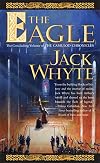
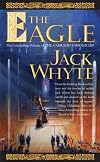
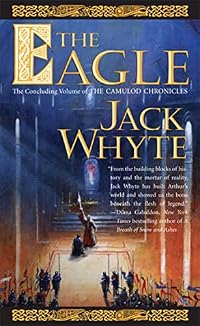
Beginning with The Skystone, the first in his riveting Camulod Chronicles, Jack Whyte has embarked on an ambitious and remarkable re-telling of the Arthurian cycle, giving us a fresh and compelling take on a story that has been beloved for centuries.The Eagle brings us at last to the heart of the tale, the creation of fabled Camelot and the love story that enshrined its glory. Whyte takes us into the minds and lives of Arthur, Guinevere, and Lancelot, three astonishing but fallible people show more who were bound together by honor, loyalty, and love. Three who created the glory that was Britain's shining dream...and, some say, caused its downfall.
The Gaulish nobleman Clothar—known in our time as Lancelot—is drawn to the young High King's court by tales of honor and nobility, where he meets a man whose love of law matches his own. More, he finds in Arthur a life-long friend whose dream of uniting the people of Britain in peace Clothar embraces. And Clothar meets Arthur's queen, a wondrous beauty whose passion and ideals match her husband's. Together they work to bring Arthur's dream to life.
But dark forces rise in opposition to Arthur's plans for creating this noble island nation and it is hard to tell friend from foe in the swirling chaos that ensues. Many tales have been told of the dream that shined and died. This one will astonish even the most jaded.
At the Publisher's request, this title is being sold without Digital Rights Management Software (DRM) applied.
. show less
Tags
Recommendations






Member Reviews
The ninth and final book in the Camulod Chronicles. I liked it more than the previous one - we spent some of the time in Camulod! People talked to each other about things besides war! Lots of recognisable stuff from the legends came to pass! And as a medical minded person I got a kick out of this scene where a knight falls down a cliff and breaks his leg, and they have to treat it and get him home again with tools they improvise from what they can find in the woods. But overall, the ending of this series was much weaker than the beginning. It’s a shame, I loved the beginning, I wanted it to stay good.
It says in the blurb that Jack Whyte had always considered the Arthur/Guinevere/Lancelot love triangle to be the heart of the Arthurian show more story, so I was disappointed by how little this version impacted me, and how little these three interacted on page. Arthur and Gwinnifer had a political marriage, and they liked and respected each other but were never really in love. Clothar and Gwinnifer liked each other too, and we’re told they eventually fell in love and got married after Arthur’s death, but everything was strictly platonic before then. And Arthur and Clothar were supposedly the very best of friends, but that just didn’t ring true for me. It’s frustrating, because I know Whyte can do better! Publius Varrus and Caius Britannicus from the first and second books in the Chronicles had a special friendship that I was very invested in. If Varrus had told Caius “You and my wife are the two people I love most in the world, I need you both to be safe”, I would have accepted it without question and felt feelings about it; but when Arthur said that to Clothar I was just like “… Is that true, though? Really? I’m gonna want some more evidence than just you saying it”.
Overall, I found this ending unsatisfying. The thing about the Arthurian story is that it’s a tragedy, and this version took away a lot of the power in that. There was nothing between Clothar and Gwinnifer, Mordred always knew he was the product of incest but he didn’t care and neither did anyone else, he was openly acknowledged as Arthur’s son and heir, Clothar left Camulod before it fell because Arthur ordered him to get out and take the queen with him, and Arthur lost his final war not due to betrayal or anyone’s fatal flaws but simply due to the overwhelming might of the enemy. It was nice, but somehow felt hollow to me. show less
It says in the blurb that Jack Whyte had always considered the Arthur/Guinevere/Lancelot love triangle to be the heart of the Arthurian show more story, so I was disappointed by how little this version impacted me, and how little these three interacted on page. Arthur and Gwinnifer had a political marriage, and they liked and respected each other but were never really in love. Clothar and Gwinnifer liked each other too, and we’re told they eventually fell in love and got married after Arthur’s death, but everything was strictly platonic before then. And Arthur and Clothar were supposedly the very best of friends, but that just didn’t ring true for me. It’s frustrating, because I know Whyte can do better! Publius Varrus and Caius Britannicus from the first and second books in the Chronicles had a special friendship that I was very invested in. If Varrus had told Caius “You and my wife are the two people I love most in the world, I need you both to be safe”, I would have accepted it without question and felt feelings about it; but when Arthur said that to Clothar I was just like “… Is that true, though? Really? I’m gonna want some more evidence than just you saying it”.
Overall, I found this ending unsatisfying. The thing about the Arthurian story is that it’s a tragedy, and this version took away a lot of the power in that. There was nothing between Clothar and Gwinnifer, Mordred always knew he was the product of incest but he didn’t care and neither did anyone else, he was openly acknowledged as Arthur’s son and heir, Clothar left Camulod before it fell because Arthur ordered him to get out and take the queen with him, and Arthur lost his final war not due to betrayal or anyone’s fatal flaws but simply due to the overwhelming might of the enemy. It was nice, but somehow felt hollow to me. show less
Some spoilers ahead:
While the title refers to Arthur, make no mistake: This is Clothar’s story. Clothar is the Frankish name the author has given to Lancelot to better fit in with his historical setting. He was introduced in the previous book, The Lance Thrower, where he earned the nickname of Lance, based on his weapon of choice. Clothar spends most of his time in either the north of Britain or in Gaul, rather than in Camulod, so he has little time to spend with his king. While this saddens him, it also saddens me because I want more Arthur.
I enjoy how bits from the legends are worked into this story, from the way that Clothar saves King Pelles’ life, to how he fights a succession of five enemy knights. Whyte also subverts the show more generally accepted legend, in that there is never an affair between Clothar and Gwinnifer, and how Mordred is not the downfall of the King. (That comes from a wound that he receives in battle about 2/3 of the way through the book, but that never properly heals, such that it continues to weaken him through his remaining years.)
This being the final installment in the Camulod Chronicles, it brings the Arthurian tale to a close, but almost too abruptly for my taste. In Clothar’s final meeting with the king, he is instructed to take the Queen back to Gaul with him, for her safety, since a battle is coming soon and the King has doubts that he will survive. As such, Clothar isn’t there at the end. He just relays hearsay and rumor, noting that he may never know the truth of what happened on that battlefield. A) I find this unsatisfactory, the diving into rumor in a series that has done so well at presenting the whole story as factually and historically and in-depth as possibly can be. Why the sudden change at the end? B) It is made clear that Clothar is extraordinarily good at infiltrating the enemy force and speedily bringing about the end of a war or siege. He does in the North against Connlyn in just over a week, what Arthur’s army had been trying to accomplish over the past two years. Therefore, with Arthur knowing this strength of his friend, why would he not use this asset in the upcoming battle. Send Gwinnifer away with another knight, but keep Clothar at hand to assist in the final fray.
But that’s not how it plays out. On the whole, I did enjoy the book and the entire series. It has the tendency to get bogged down in the minutia of the military, though. On one such occasion, Arthur tells Clothar that all his sources are clergymen, so he does not know the military particulars of the battle which sent Atilla the Hun heading back East. And then there’s a page and a half describing this battle down to the details of which flank routed which. I learned about Atilla in school, of course, but this is far more than I ever learned in any classroom about this particular battle.
I recommend this book to any who’ve read the previous in the series, obviously, but also to those who are interested in seeing Arthur and Camulod in the most realistic setting possible. If you have an interest in military history as well, then this series is definitely something you will enjoy. show less
While the title refers to Arthur, make no mistake: This is Clothar’s story. Clothar is the Frankish name the author has given to Lancelot to better fit in with his historical setting. He was introduced in the previous book, The Lance Thrower, where he earned the nickname of Lance, based on his weapon of choice. Clothar spends most of his time in either the north of Britain or in Gaul, rather than in Camulod, so he has little time to spend with his king. While this saddens him, it also saddens me because I want more Arthur.
I enjoy how bits from the legends are worked into this story, from the way that Clothar saves King Pelles’ life, to how he fights a succession of five enemy knights. Whyte also subverts the show more generally accepted legend, in that there is never an affair between Clothar and Gwinnifer, and how Mordred is not the downfall of the King. (That comes from a wound that he receives in battle about 2/3 of the way through the book, but that never properly heals, such that it continues to weaken him through his remaining years.)
This being the final installment in the Camulod Chronicles, it brings the Arthurian tale to a close, but almost too abruptly for my taste. In Clothar’s final meeting with the king, he is instructed to take the Queen back to Gaul with him, for her safety, since a battle is coming soon and the King has doubts that he will survive. As such, Clothar isn’t there at the end. He just relays hearsay and rumor, noting that he may never know the truth of what happened on that battlefield. A) I find this unsatisfactory, the diving into rumor in a series that has done so well at presenting the whole story as factually and historically and in-depth as possibly can be. Why the sudden change at the end? B) It is made clear that Clothar is extraordinarily good at infiltrating the enemy force and speedily bringing about the end of a war or siege. He does in the North against Connlyn in just over a week, what Arthur’s army had been trying to accomplish over the past two years. Therefore, with Arthur knowing this strength of his friend, why would he not use this asset in the upcoming battle. Send Gwinnifer away with another knight, but keep Clothar at hand to assist in the final fray.
But that’s not how it plays out. On the whole, I did enjoy the book and the entire series. It has the tendency to get bogged down in the minutia of the military, though. On one such occasion, Arthur tells Clothar that all his sources are clergymen, so he does not know the military particulars of the battle which sent Atilla the Hun heading back East. And then there’s a page and a half describing this battle down to the details of which flank routed which. I learned about Atilla in school, of course, but this is far more than I ever learned in any classroom about this particular battle.
I recommend this book to any who’ve read the previous in the series, obviously, but also to those who are interested in seeing Arthur and Camulod in the most realistic setting possible. If you have an interest in military history as well, then this series is definitely something you will enjoy. show less
Honestly, is this it? Damn. I feel let down. I've been following this series, have all nine books, and loved eight of them. This one is similar in style, as you'd expect - long on immaculately researched history. Lots of battles and politics from 300-500AD, as small colonies struggle to keep up a vestige of civilisation after the Romans leave and the Saxons begin to arrive.
But this book is the payoff where we expect the Arthur, Guenevere and Lancelot story to be told, and it bloody isn't! OK, it's in the same style and still quite enjoyable, but I felt cheated.
But this book is the payoff where we expect the Arthur, Guenevere and Lancelot story to be told, and it bloody isn't! OK, it's in the same style and still quite enjoyable, but I felt cheated.
Purports to tell the 'true' story behind King Arthur and the Round Table and manages to entertain the reader. Some of the concepts are pretty modern and sound like they come from a personnel manual. But still conveys the story well.
A highly readable and pleasant conclusion to a readable and pleasant series (with the exception of the plodding and pointless 'Uther'). Whyte has created a convincing version of the lives of Merlyn and Arthur and their antecedents, firmly rooted in his interpretation of the historical setting.
However, his focus on the historical and stripping all of the fantastic elements of these stories ultimately means there is little here to stir or move. This book, in particular, is somewhat anti-climactic. All series long, we've known we were building up to the appearance of Arthur and the stories built up around him, but when we get there it's no more exciting than what preceded it.
The ending is so gentle you could be forgiven for missing it. show more Arthur's kingdom disappears, we are told, but where is the drama, the tragedy, the love triangle? Granted, Whyte is not obliged to ape the various legend-focused retellings of these stories, but - without that - this could be a story about just any old short-lived chieftain and his clan.
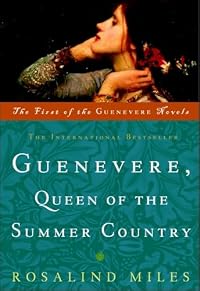
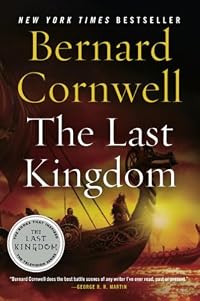
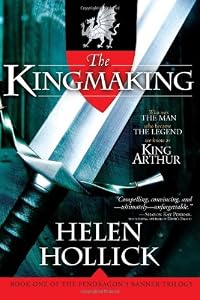
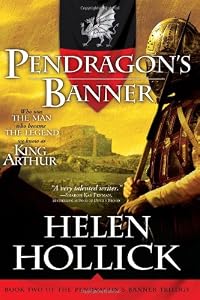
Other versions - such as those of Hollick and Cornwell - managed to be historical-rooted without being quite as prosaic as this version.
BUT, I fully acknowledge that Whyte is ('Uther' excepted) a gifted and convincing storyteller, though perhaps not compelling.
I have enjoyed reading this series, but miss the 'spark' that exists in other stories show less
However, his focus on the historical and stripping all of the fantastic elements of these stories ultimately means there is little here to stir or move. This book, in particular, is somewhat anti-climactic. All series long, we've known we were building up to the appearance of Arthur and the stories built up around him, but when we get there it's no more exciting than what preceded it.
The ending is so gentle you could be forgiven for missing it. show more Arthur's kingdom disappears, we are told, but where is the drama, the tragedy, the love triangle? Granted, Whyte is not obliged to ape the various legend-focused retellings of these stories, but - without that - this could be a story about just any old short-lived chieftain and his clan.
Other versions - such as those of Hollick and Cornwell - managed to be historical-rooted without being quite as prosaic as this version.
BUT, I fully acknowledge that Whyte is ('Uther' excepted) a gifted and convincing storyteller, though perhaps not compelling.
I have enjoyed reading this series, but miss the 'spark' that exists in other stories show less
No, unfortunately my rating of 2.5 stars is not a mistake. In the grand scheme of things this is not a terrible book but set against the rest of the series it is quite disappointing. To me, the story seemed rushed and there was not a lot of meat to it. The whole last battle of King Arthur and fall of Camelot takes place in one short chapter. Jack Whyte planed initially to end the series at Sorcerer because he felt that the fall of Camelot and death of Arthur had been done to death. The only saving grace about this book is that Whyte doesn't make this book about the whole Lancelot, Guenivere, and Arthur love triangle. For readers of the A Dream of Eagles series, I would recommend stopping at Sorcerer as Jack Whyte intended in the first show more place. Uther is a good read and answers a lot of questions about the series, but imo the eagle is a disappointing ending to an amazing series. show less
I really loved this entire series (all 9 of them) Each and every one was a really exciting fast paced story that would stand alone, but read in sequence add up to a wonderful story about Arthur and his knights.
The story starts a long time before Arthur is born, when Excalibur is forged and Camulod (Camelot) is born. How his ancestors created it and how Arthur himself came to be High King of all Britain, with Merlyn his mentor.
It is a fictional account of course feasible enough, if Arthur ever really existed!
I am so sorry to have finished this series, but have the set sitting on my shelf ready to go again, which I am positive will happen!
The story starts a long time before Arthur is born, when Excalibur is forged and Camulod (Camelot) is born. How his ancestors created it and how Arthur himself came to be High King of all Britain, with Merlyn his mentor.
It is a fictional account of course feasible enough, if Arthur ever really existed!
I am so sorry to have finished this series, but have the set sitting on my shelf ready to go again, which I am positive will happen!
Members
- Recently Added By
Author Information

36 Works 11,707 Members
Writer Jack Whyte was born in Scotland in 1940. He was raised in Scotland, but educated in England and France before migrating to Canada in 1967. He spent one year teaching English in high school, before focusing on a career as a professional singer, musician, and actor. He wrote, directed and appeared in a one man show about Scotland's national show more poet Robert Burns in the early 1970's. Due to the show's success, he started writing for CBC national television and eventually went into advertising. He is the author of The Camulod Chronicles or A Dream of Eagles series which sets the tales of King Arthur in Roman Britain and Templar Trilogy which deals with the rise and fall of the Order of the Knights of the Temple of Solomon. (Bowker Author Biography) show less
Some Editions
Series

Work Relationships
Is contained in
Contains
Common Knowledge
- Canonical title
- The Eagle
- Original title
- The Eagle
- Original publication date
- 2005
Classifications
- Genres
- Fiction and Literature, General Fiction, Historical Fiction, Fantasy
- DDC/MDS
- 813.54 — Literature & rhetoric American literature in English American fiction in English 1900-1999 1945-1999
- LCC
- PR9199.3 .W4589 .E22 — Language and Literature English English Literature English literature: Provincial, local, etc.
- BISAC
Statistics
- Members
- 553
- Popularity
- 53,380
- Reviews
- 14
- Rating
- (3.95)
- Languages
- English
- Media
- Paper, Audiobook, Ebook
- ISBNs
- 10
- UPCs
- 1
- ASINs
- 7