
On This Page
Description
With The Teachings of Don Juan, Carlos Castaneda chronicled a journey of enlightenment under the tutelage of Yaqui Indian guru don Juan. Having sold more than eight million copies of his books around the world, Castaneda inspires countless readers with his rich and awareness-expanding experiences.Tags
Recommendations

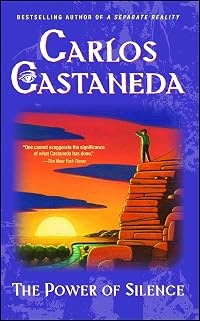
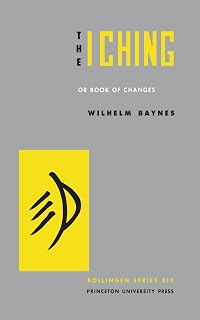
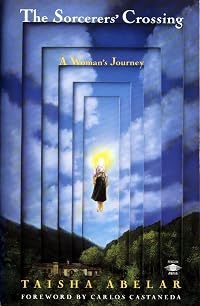
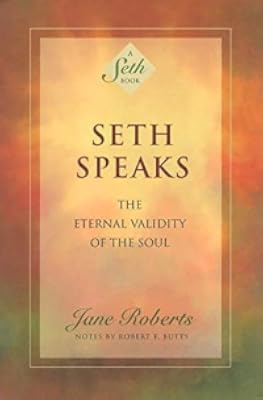





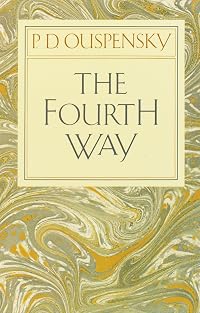
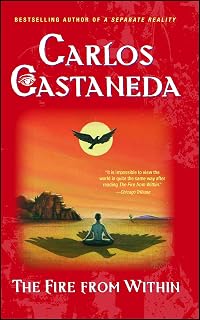
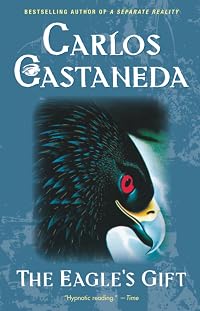
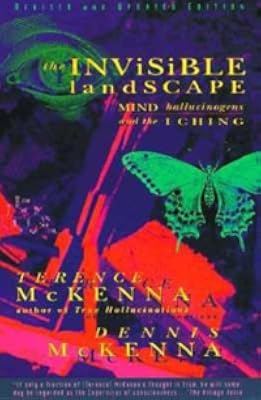








Member Recommendations

Member Reviews
In retrospect my existence seemed to lack some dimensions before learning to know don Juan, whose casual straddling of parallel realities really is one of its kind. I don't care about the discussion as to how literally the author's accounts are to be taken, whether or not they're even related to Yaqui Indians – there's something so reassuring and honest about this brujo that I can't but take him seriously. As he rolls out his mat in his simple house, puts his hands behind his neck and falls asleep, I truly feel my (bohemian?) materialism is poverty. He's so rich with nothing, he doesn't even need books!
I read a biography (The life and teachings of Carlos Castaneda) of Castaneda previously and was rather put off about him, since it turned out he was by no means a pleasant character. I thus did not plan to read any more of his books. But then I found this one and thought I would try it.
I didn’t find it as good as some of the other books. Don Juan, the Yaqui Indian who was training Carlos to be a sorcerer, or whatever, kept getting him to do such strange, complicated, and, according to what Don Juan said, deadly dangerous, things that it was difficult to find rhyme or reason in them.
And Carlos did not seem to get anything out of it at all.
Previously, Carlos was wanting information about plants, especially peyote, which is a show more hallucinogenic cactus.
Carlos was a student of anthropology interested in medicinal plants but was also extremely curious about Don Juan. His eyes shone “with a light of their own”.
They became friends. But Carlos was interested in “academic knowledge that transcends experience” whereas Don Juan talked about direct knowledge of the world.
Don Juan tells Carlos he must “feel everything, otherwise the world loses its sense”.
Don Juan tells him that Carlos shuts off the world around him and clings to his arguments: therefore all he has are problems.
Don Juan calls peyote “Mescalito” and said Mescalito taught “the right way of life”, He regarded jimson weed and the mushrooms as powers of a different sort. He called them “allies” and said a sorcerer “drew his strength from manipulating an ally”. The power contained in the mushroom was Don Juan’s personal ally, and he called it “smoke” or “little smoke”.
Carlos began to lose the certainty that “the reality of everyday life is something we can take for granted”.
Don Juan’s premise was that a light, amenable disposition was needed in order to understand the impact and strangeness of the knowledge he was teaching Carlos.
“To be a man of knowledge one needs to be light and fluid.”
Don Juan tried to teach Carlos to “see”. “Looking” was the ordinary way of perceiving the world, while “seeing” entailed a complex process by which a man of knowledge perceives the “essence” of the things of the world.
Smoking the mixture was indispensable for “seeing”.
Part One of the book is called “The Preliminaries of Seeing” and Part Two “The Task of Seeing”.
Don Juan tells Carlos that “the little smoke” will help him to “see” men as fibres of light.
Don Juan had a sense of drama, and humour.
Many things Don Juan says seem cryptic. Carlos keeps asking him to explain what he means. Don Juan tells about “controlled folly”.
Nothing one does is important. “Controlled folly” is very much like “seeing”; it is something you cannot think about.
In order to become a man of knowledge one must be a warrior. “One must strive without giving up --- until one “sees”., only to realize then that nothing matters.”
He records everything that occurs in great detail, including the exact dates on which they occur. He describes everything accurately, pedantically.
I found the book absolutely readable, though didn’t feel I really understood everything, perhaps nothing. Don Juan’s world was a different one from ours and his knowledge a different sort of knowledge.
But if the world of sorcery. “seeing” and becoming a man of knowledge interest you, then read the book. I’m not sure, but I think it was Castaneda’s second book. Happy reading! show less
I didn’t find it as good as some of the other books. Don Juan, the Yaqui Indian who was training Carlos to be a sorcerer, or whatever, kept getting him to do such strange, complicated, and, according to what Don Juan said, deadly dangerous, things that it was difficult to find rhyme or reason in them.
And Carlos did not seem to get anything out of it at all.
Previously, Carlos was wanting information about plants, especially peyote, which is a show more hallucinogenic cactus.
Carlos was a student of anthropology interested in medicinal plants but was also extremely curious about Don Juan. His eyes shone “with a light of their own”.
They became friends. But Carlos was interested in “academic knowledge that transcends experience” whereas Don Juan talked about direct knowledge of the world.
Don Juan tells Carlos he must “feel everything, otherwise the world loses its sense”.
Don Juan tells him that Carlos shuts off the world around him and clings to his arguments: therefore all he has are problems.
Don Juan calls peyote “Mescalito” and said Mescalito taught “the right way of life”, He regarded jimson weed and the mushrooms as powers of a different sort. He called them “allies” and said a sorcerer “drew his strength from manipulating an ally”. The power contained in the mushroom was Don Juan’s personal ally, and he called it “smoke” or “little smoke”.
Carlos began to lose the certainty that “the reality of everyday life is something we can take for granted”.
Don Juan’s premise was that a light, amenable disposition was needed in order to understand the impact and strangeness of the knowledge he was teaching Carlos.
“To be a man of knowledge one needs to be light and fluid.”
Don Juan tried to teach Carlos to “see”. “Looking” was the ordinary way of perceiving the world, while “seeing” entailed a complex process by which a man of knowledge perceives the “essence” of the things of the world.
Smoking the mixture was indispensable for “seeing”.
Part One of the book is called “The Preliminaries of Seeing” and Part Two “The Task of Seeing”.
Don Juan tells Carlos that “the little smoke” will help him to “see” men as fibres of light.
Don Juan had a sense of drama, and humour.
Many things Don Juan says seem cryptic. Carlos keeps asking him to explain what he means. Don Juan tells about “controlled folly”.
Nothing one does is important. “Controlled folly” is very much like “seeing”; it is something you cannot think about.
In order to become a man of knowledge one must be a warrior. “One must strive without giving up --- until one “sees”., only to realize then that nothing matters.”
He records everything that occurs in great detail, including the exact dates on which they occur. He describes everything accurately, pedantically.
I found the book absolutely readable, though didn’t feel I really understood everything, perhaps nothing. Don Juan’s world was a different one from ours and his knowledge a different sort of knowledge.
But if the world of sorcery. “seeing” and becoming a man of knowledge interest you, then read the book. I’m not sure, but I think it was Castaneda’s second book. Happy reading! show less
This adventerous meditation explores the spiritual ways of an Yaqui Indian sorceror in Mexico. Castaneda's writing is eloquently simple while conveying his ideas and experiences throughout the very mindful narrative. Good humors are prevelant while at the same time trying to take the sorcerors guidance with a serious and transcendental point of view. The peyote use alludes to a more naturalist era, almost pre-psychedelic, yet very much covering some of the same terrain of the enlightened mindscape. I recommend reading this book in one sitting, on a warm afternoon while roasting under the unfiltered sun.
Read the entire series of Castenda books in my early college years and they were really inspirational to me. The concept of alternate ways of thinking and separate realities were novel to me at the time. I have always meant to return to them. I like the mixture of a deeper hidden message and that of the light tale of the medicine man that runs through the pages.
All books of Carlos Castaneda are very important to me. He (and his Don Juan), Vadim Zeland - writer from Russia, quantum physicist and Alexey Bachev - an unusual psychologist from Bulgaria, main character of my book Life Can Be a Miracle have shaped my way of thinking, perceiving, experiencing the reality. Very grateful for showing me the miraculous way of living!!!!
"In 1961, young anthropologist Carlos Castaneda began an extraordinary apprenticeship with don Juan Matus, a powerful and mysterious Yaqui Indian spiritual leader. Don Juan's message became the basis for Castaneda's classic bestselling accounts of his explorations into ancient Mexican spiritual philosophy, which captivated millions of readers. In 1968, Castaneda returned to Mexico, to don Juan and his hallucinogenic drugs, and to a world of experience no one from Western civilization had ever entered before. A Separate Reality follows Castaneda's intimate and intensely personal reunion with don Juan, as he learns to challenge conventional perceptions of reality on the difficult and dangerous road to becoming a 'man of knowledge.'"--Back show more cover. show less
Second book in the series of Don Juan books, published by Simon & Schuster rather than UCB Press. First Edition, First Printing
Members
- Recently Added By
Lists

Books We Love to Reread
688 works; 296 members

Our Favorite Comfort Reads
334 works; 200 members

Magic Realism
371 works; 52 members

Ten Books That Have Stayed With Me
160 works; 30 members

Books That Changed Me
158 works; 47 members
Author Information

35+ Works 16,115 Members
Some Editions
Series

Belongs to Publisher Series
Work Relationships
Is contained in
Has as a student's study guide
Common Knowledge
- Canonical title
- A Separate Reality
- Original title
- A Separate Reality (Further Conversations with Don Juan) (Further Conversations with Don Juan)
- Alternate titles*
- Een aparte werkelijkheid : verdere gesprekken met don Juan
- Original publication date
- 1968
- People/Characters
- don Juan Matus
- Important places*
- Mexique
- First words
- Ten years ago I had the fortune of meeting a Yaqui Indian from northwestern Mexico. • • Introduction
Don Juan looked at me for a moment and did not seem at all surprised to see me, even though it had been ... (show all)more than two years since I last visited him. • • Chapter 1 - Last words
- (Click to show. Warning: May contain spoilers.)"You indulge too much," he said softly. • • end of Chapter 17
"Nothing has really changed in you," he said. • • Epilogue - Original language
- English
*Some information comes from Common Knowledge in other languages. Click "Edit" for more information.
Classifications
Statistics
- Members
- 2,204
- Popularity
- 9,188
- Reviews
- 12
- Rating
- (3.62)
- Languages
- 21 — Czech, Danish, Dutch, English, Estonian, Finnish, French, German, Greek, Italian, Japanese, Latvian, Lithuanian, Polish, Portuguese, Romanian, Russian, Serbian, Spanish, Swedish, Turkish
- Media
- Paper, Audiobook, Ebook
- ISBNs
- 66
- ASINs
- 20