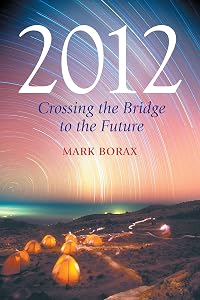
2012 - Crossing the Bridge to the Future
by Mark Borax
On This Page
Description
"2012- Crossing the Bridge to the Future is an engaging personal narrative through the author's apprenticeship with master astrologer William Lonsdale who teaches him how to access a source of great power and creativity buried within the human soul. he book begins in August 1987 on the slopes of Mount Shasta in Northern California as Borax witnesses the Harmonic Convergence, a spiritual and astrological event sparking a 26-year countdown to 2012, the year that marks the end of history in the show more Mayan calendar. Signs indicate that a major energy shift is occurring, a turning point in Earth's collective karma powerful enough to change the global perspective of humankind. orax's mountaintop experiences compel him to seek solutions to his personal turmoil. He meets Lonsdale and together they launch a mystery school to study how the twenty-five-year period between 1987 and 2012 can be used for a cosmic purging of negativity to release humanity's core forces and restore universal balance. En route, Borax and his fellow students discover truths about life after death, karma, reincarnation, past lives, human evolution, and the purpose of our existence on earth. In the tradition of T show lessTags
Recommendations




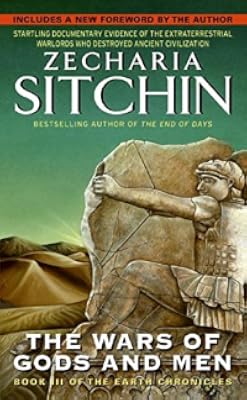
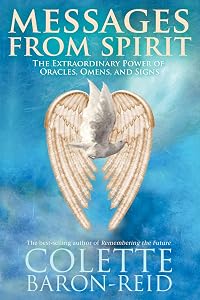

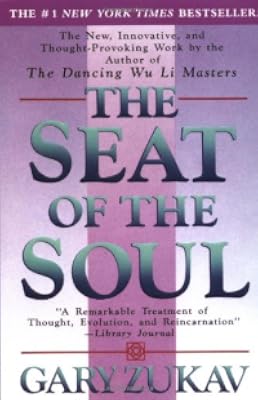
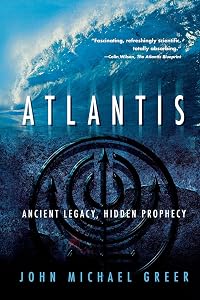






Member Recommendations

Member Reviews
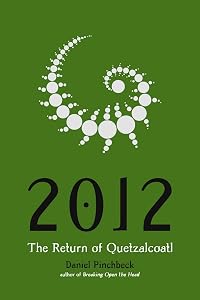
There are numerous ideas about what supposedly awaits the world in the year 2012. The most famous source of these transformational theories comes from the Mayans, whose Long Count calender completes its 12th baktun cycle on December 21 of that year. Many Mayan scholars - academics, not people who read books about the subject - believe, with good reason, that this is a misreading of the calendar. New Age devotees have latched onto José Argüelles' assertion that this date represents some sort of cataclysmic event, preceded, in 1987, by the so-called (by Argüelles) "Harmonic Convergence," the beginning of the countdown to a new cycle and an end to all manner of suffering and despair. The even more dubious "Bible Code" claims that in show more 2012 some sort of heavenly body will crash into the Earth. Author Daniel Pinchbeck proposes that there will be some sort of psychic revolution. None of this is explored in the book 2012: Crossing the Bridge to the Future. Instead, the unfortunate person who finds themself reading this book is treated to a smörgåsbord of complete horseshit.
You see, 2012: Crossing the Bridge to the Future has nothing to offer in the way of a possible theory about what will happen in 2012, which is hilarious considering the title. Instead, author Mark Borax offers a half-baked rehashing of the Mayan theory mixed with some really far-out nonsense about Atlantis and astrology and some obscure (and quite possibly made up) acid-casualty named William Lonsdale. But we're getting ahead of ourselves. Let's start from the beginning.
The first thing you will notice about Mark Borax is that his writing is terrible. For someone who professes writing to be his true love, this is truly tragic. But it's true: he sucks. He claims to have written (at the time of this book's completion, which appears to have been around 1994, despite the fact that it was released this year) to have written ten books, and yet, strangely publishers weren't breaking down his door to get their hands on another must-read Borax manuscript. We first meet Mark Borax in 1987 when he's working at some sort of comic book related job and living with his girlfriend Suzanne in Berkeley. They have problems, but you really don't care because of the frightening lack of character development in this book. He meets another woman with a similar interest in alternative spirituality (really, that's the best term I can find from it) and the three of them decide it would be a great idea to experience the Harmonic Convergence by dropping acid on Mt. Shasta. Sounds like a logical plan!
So they pile in Borax's Honda Civic and drive up the mountain. He's not even on acid yet and he decides it would be a great idea to offroad a front wheel drive Japanese subcompact. That pretty much sums up Borax's attitude toward everything. Anyway, they drop acid and Borax proceeds to have a really bad trip, the kind the ABC television network tried to warn you about in so many after-school specials. He literally refers to LSD as "an intergalactic laxative" to cure his "cosmic constipation." It's this sort of shit that makes me wish the 60s never happened.
If I took acid and had horrific vision and physical reaction I'd assume it was because of either bad LSD or just a bad reaction. But not Mark Borax! He believes that he had some sort of spiritual experience. So he seeks out a Marin County astrologer named William Lonsdale. Never heard of William Lonsdale? Neither has the Internet, except in small references. This is kind of surprising because THIS ENTIRE BOOK is based on Lonsdale's teachings. Lonsdale is pretty much what you'd expect from a Bay Area astrologer: obtuse, bearded, and long-winded. Naturally, Borax is immediately taken with him and decides to become an astrologer under his tutelage.
Despite the back cover's claim that Borax founded a mystery school with Lonsdale and the chapter title "The Sorcerer's Apprentice," Borax appears to have been some guy with a tape recorder who came to every lecture Lonsdale and his wife gave. I'm not exaggerating; there is nothing in the book to suggest he and Lonsdale have some sort of special relationship. And yet, this apprenticeship is the basis for the most of the 200-plus pages in this book.
There is sparse action in this book, because there really isn't anything like a "plot" or "direction" to be found. The majority of this book is Borax's transcriptions of lectures he taped. Again, I stress that this is no exaggeration. Borax describes these lectures as "Socratic dialogues." How true! Everyone knows that Plato's dialogues are structured like this one:
Alcibiades: Asks a question/challenges Socrates argument
Socrates: Spends two hours rambling on about nothing in particular, never bothering to answer the question/challenge, and making shit up about Atlantis
You could literally cut up Lonsdale's lectures, throw them in a hat, pick sentences out at random, and organize them into paragraphs - it wouldn't make a difference. These lectures will never make less sense than they do in their original form. The gist of Lonsdale's vision of 2012 is that we're the reincarnation of traumatized souls who perished when Atlantis was destroyed and we need to get out of the cycle of birth and rebirth and oh my God what did he say about Atlantis?
So, long, long, long lecture series short, Lonsdale and his wife are so convinced of the bullshit they made up that they choose to forgo treatments for her breast cancer. She's going to transcend death by dying. It makes perfect sense if you eat mushrooms you find in your yard. Anyway, we're eventually treated to the image of blood pouring out of Mrs. Lonsdale's nipples. Then the cancer spreads to her pancreas. Then she dies. Have we grown fond of Mrs. Lonsdale? Is her death painful to the reader? Does Mark Borax convey the loss of a great guide and teacher? Do I have to answer any of this?
What Mark Borax is really concerned with is boning. You see, as surprising as this is, all of his relationships seem to fail. The two relationships in the book he discusses in any detail have a sex component that we neither wanted nor needed to know about. The first woman, Carol, doesn't seem to crave intimacy, while Borax is a complete horndog. They take a trip to a hot spring to try to remedy this, and she gets turned on and they have what Borax describes as "intercourse." Sexy! But in the end she is apparently too repulsed by Borax (not surprising) and their relationship fizzles. Not to fear, though! Soon Borax is banging an artist named Sylvia and they have an awesome sex life. It was his description of his sexual experience with this woman that convinced me that he just threw this part in to wave his genitals in your face and say, "Yeah, that's right - I had SEX!" Mark Borax is a disgusting human being, but you already knew that.
Borax moves around more than a rail-riding hobo. He starts in Vermont and then moves to Berkeley and then various locations around the Bay Area and then Southern Oregon and then Port Townsend, Washington, followed by Whidbey Island and then finally back to the Bay Area. The back cover of the book says that Borax lives on Vashon Island, but his website clearly states that he works in Vermont. He apparently has mastered the art of teleportation as well.
In closing, I would like to say that Mark Borax's 2012: Crossing the Bridge to the Future is the worst book I have ever read. It is like a beer bong full of rancid clam juice - just when you think it couldn't get any worse, you look up and realized you're not even half-way finished. Please, do yourself a favor and read something halfway decent. Hell, read Pinchbeck's book - he's at least a good writer. But for the love of Atlantis DO NOT BUY OR READ THIS BOOK. show less
You see, 2012: Crossing the Bridge to the Future has nothing to offer in the way of a possible theory about what will happen in 2012, which is hilarious considering the title. Instead, author Mark Borax offers a half-baked rehashing of the Mayan theory mixed with some really far-out nonsense about Atlantis and astrology and some obscure (and quite possibly made up) acid-casualty named William Lonsdale. But we're getting ahead of ourselves. Let's start from the beginning.
The first thing you will notice about Mark Borax is that his writing is terrible. For someone who professes writing to be his true love, this is truly tragic. But it's true: he sucks. He claims to have written (at the time of this book's completion, which appears to have been around 1994, despite the fact that it was released this year) to have written ten books, and yet, strangely publishers weren't breaking down his door to get their hands on another must-read Borax manuscript. We first meet Mark Borax in 1987 when he's working at some sort of comic book related job and living with his girlfriend Suzanne in Berkeley. They have problems, but you really don't care because of the frightening lack of character development in this book. He meets another woman with a similar interest in alternative spirituality (really, that's the best term I can find from it) and the three of them decide it would be a great idea to experience the Harmonic Convergence by dropping acid on Mt. Shasta. Sounds like a logical plan!
So they pile in Borax's Honda Civic and drive up the mountain. He's not even on acid yet and he decides it would be a great idea to offroad a front wheel drive Japanese subcompact. That pretty much sums up Borax's attitude toward everything. Anyway, they drop acid and Borax proceeds to have a really bad trip, the kind the ABC television network tried to warn you about in so many after-school specials. He literally refers to LSD as "an intergalactic laxative" to cure his "cosmic constipation." It's this sort of shit that makes me wish the 60s never happened.
If I took acid and had horrific vision and physical reaction I'd assume it was because of either bad LSD or just a bad reaction. But not Mark Borax! He believes that he had some sort of spiritual experience. So he seeks out a Marin County astrologer named William Lonsdale. Never heard of William Lonsdale? Neither has the Internet, except in small references. This is kind of surprising because THIS ENTIRE BOOK is based on Lonsdale's teachings. Lonsdale is pretty much what you'd expect from a Bay Area astrologer: obtuse, bearded, and long-winded. Naturally, Borax is immediately taken with him and decides to become an astrologer under his tutelage.
Despite the back cover's claim that Borax founded a mystery school with Lonsdale and the chapter title "The Sorcerer's Apprentice," Borax appears to have been some guy with a tape recorder who came to every lecture Lonsdale and his wife gave. I'm not exaggerating; there is nothing in the book to suggest he and Lonsdale have some sort of special relationship. And yet, this apprenticeship is the basis for the most of the 200-plus pages in this book.
There is sparse action in this book, because there really isn't anything like a "plot" or "direction" to be found. The majority of this book is Borax's transcriptions of lectures he taped. Again, I stress that this is no exaggeration. Borax describes these lectures as "Socratic dialogues." How true! Everyone knows that Plato's dialogues are structured like this one:
Alcibiades: Asks a question/challenges Socrates argument
Socrates: Spends two hours rambling on about nothing in particular, never bothering to answer the question/challenge, and making shit up about Atlantis
You could literally cut up Lonsdale's lectures, throw them in a hat, pick sentences out at random, and organize them into paragraphs - it wouldn't make a difference. These lectures will never make less sense than they do in their original form. The gist of Lonsdale's vision of 2012 is that we're the reincarnation of traumatized souls who perished when Atlantis was destroyed and we need to get out of the cycle of birth and rebirth and oh my God what did he say about Atlantis?
So, long, long, long lecture series short, Lonsdale and his wife are so convinced of the bullshit they made up that they choose to forgo treatments for her breast cancer. She's going to transcend death by dying. It makes perfect sense if you eat mushrooms you find in your yard. Anyway, we're eventually treated to the image of blood pouring out of Mrs. Lonsdale's nipples. Then the cancer spreads to her pancreas. Then she dies. Have we grown fond of Mrs. Lonsdale? Is her death painful to the reader? Does Mark Borax convey the loss of a great guide and teacher? Do I have to answer any of this?
What Mark Borax is really concerned with is boning. You see, as surprising as this is, all of his relationships seem to fail. The two relationships in the book he discusses in any detail have a sex component that we neither wanted nor needed to know about. The first woman, Carol, doesn't seem to crave intimacy, while Borax is a complete horndog. They take a trip to a hot spring to try to remedy this, and she gets turned on and they have what Borax describes as "intercourse." Sexy! But in the end she is apparently too repulsed by Borax (not surprising) and their relationship fizzles. Not to fear, though! Soon Borax is banging an artist named Sylvia and they have an awesome sex life. It was his description of his sexual experience with this woman that convinced me that he just threw this part in to wave his genitals in your face and say, "Yeah, that's right - I had SEX!" Mark Borax is a disgusting human being, but you already knew that.
Borax moves around more than a rail-riding hobo. He starts in Vermont and then moves to Berkeley and then various locations around the Bay Area and then Southern Oregon and then Port Townsend, Washington, followed by Whidbey Island and then finally back to the Bay Area. The back cover of the book says that Borax lives on Vashon Island, but his website clearly states that he works in Vermont. He apparently has mastered the art of teleportation as well.
In closing, I would like to say that Mark Borax's 2012: Crossing the Bridge to the Future is the worst book I have ever read. It is like a beer bong full of rancid clam juice - just when you think it couldn't get any worse, you look up and realized you're not even half-way finished. Please, do yourself a favor and read something halfway decent. Hell, read Pinchbeck's book - he's at least a good writer. But for the love of Atlantis DO NOT BUY OR READ THIS BOOK. show less
 This review was written for LibraryThing Early Reviewers.
As I started reading 2012: Crossing the Bridge to the Future, I was torn between giving this a paltry half star or a full five stars. I found the book, at at one and the same time, so trite, so predictable, and yet such a revelation, such a breakthrough, that I could not make my mind up if this is for real or not. In the end, however, I found the journey satisfying, if not enlightening.
Despite the title, the book has little to say about the year 2012. If you are not familiar with the significance of that date, according to the Mayan calendar, that is the year of a massive upheaval, possibly the end of the world. The author, Mark Borax, begins to touch on the significance of this event about midway through the narrative. If you consider show more death from a mystical viewpoint, death is not a cessation of being, but rather the beginning of a new cycle. This is what Borax is referring to in the title and how the year figures into the story.
Cosmic cycles, like organic reactions, occur slowly. If you accept the premise that 2012 will be a pivotal year for Humanity, the cycle actually began around the year 1987 with the so called Harmonic Convergence, a rare alignment of planets. Considering the time it takes for some of these planets to make a full rotation around a given point, you realize why you cannot point to a specific date and say “This is it”.
The first part of Borax’s narrative is a self-indulgent recounting of sex, drugs and, not Rock-and-Roll, but Cosmic Consciousness, while attending festivities on Mount Shasta celebrating the Harmonic Convergence. We follow him through various failed relationships until he comes into the presence of William (Ellias) Lonsdale, Astrologer Extraordinaire and heir to the secrets of another Astrologer.
The rest of the book is taken up with Borax becoming, first the protégé of Lonsdale, later intimate friend, and eventually the heir apparent to Lonsdale’s legacy. Throughout, Borax becomes Lonsdale’s scribe, transcribing the unconventional teachings of the “Mage”, the voice we hear in the narratives.
In the last few chapters, Borax finally elevates his work to something beyond mediocre. If you dived in here, without the benefit of the previous chapters, you would be lost. Despite the self-indulgent nature of the beginning, there are elements you will need to follow what comes at the end.
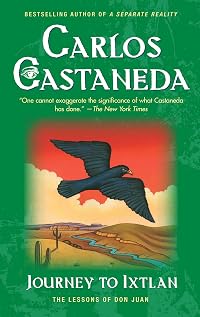
Two comparisons come readily to mind when reading this book. The Secret by Rhonda Byrne and the Don Juan works of Carlos Castaneda. Like The Secret, you’ve heard many of the beliefs mentioned here espoused elsewhere. When you step back and look at the whole body of thought presented here, unlike Byrne’s work, this seems to hold together as a non-commercial enterprise. That is not to say Borax is not seeking to boost his reputation by association with Lonsdale, but it is not as blatantly a money making publication / proposition as The Secret. Crossing the Bridge is more like Castaneda’s work, where the author is apprenticed to a semi-mythic Master who dispenses wisdom from other Masters from ages long gone. The author is there to record these pearls of wisdom and pass them on.
If you are a spiritual person, and spiritual does not necessarily mean you subscribe to a conventional religion although conventional religion is not mutually exclusive with spirituality, you may find a resonance within these pages. I remember the August night Borax describes as the beginning of the Harmonic Convergence. I remember being with a group of friends and deciding to drive from Tucson to Sedona, the Cosmic Center of the World, to celebrate the Convergence, then we all realized no one was in any condition to make that drive. Sadly, we never celebrated the Convergence the way we intended. Nonetheless, I felt the Convergence that night. If this describes you, you too will identify with Mark Borax’s spiritual journey and will probably enjoy this book.
If you read this book as a spiritual journey, you will enjoy it for just that. If you want hard answers to specific questions, you will be very disappointed. If you know you’ve been around the wheel before, or feel that you have, this book will hold something for you. If you subscribe to predestination in any form, this book will challenge you and may even anger you. If you start this book, please finish it. The spiritual journey is worth the effort. show less
Despite the title, the book has little to say about the year 2012. If you are not familiar with the significance of that date, according to the Mayan calendar, that is the year of a massive upheaval, possibly the end of the world. The author, Mark Borax, begins to touch on the significance of this event about midway through the narrative. If you consider show more death from a mystical viewpoint, death is not a cessation of being, but rather the beginning of a new cycle. This is what Borax is referring to in the title and how the year figures into the story.
Cosmic cycles, like organic reactions, occur slowly. If you accept the premise that 2012 will be a pivotal year for Humanity, the cycle actually began around the year 1987 with the so called Harmonic Convergence, a rare alignment of planets. Considering the time it takes for some of these planets to make a full rotation around a given point, you realize why you cannot point to a specific date and say “This is it”.
The first part of Borax’s narrative is a self-indulgent recounting of sex, drugs and, not Rock-and-Roll, but Cosmic Consciousness, while attending festivities on Mount Shasta celebrating the Harmonic Convergence. We follow him through various failed relationships until he comes into the presence of William (Ellias) Lonsdale, Astrologer Extraordinaire and heir to the secrets of another Astrologer.
The rest of the book is taken up with Borax becoming, first the protégé of Lonsdale, later intimate friend, and eventually the heir apparent to Lonsdale’s legacy. Throughout, Borax becomes Lonsdale’s scribe, transcribing the unconventional teachings of the “Mage”, the voice we hear in the narratives.
In the last few chapters, Borax finally elevates his work to something beyond mediocre. If you dived in here, without the benefit of the previous chapters, you would be lost. Despite the self-indulgent nature of the beginning, there are elements you will need to follow what comes at the end.
Two comparisons come readily to mind when reading this book. The Secret by Rhonda Byrne and the Don Juan works of Carlos Castaneda. Like The Secret, you’ve heard many of the beliefs mentioned here espoused elsewhere. When you step back and look at the whole body of thought presented here, unlike Byrne’s work, this seems to hold together as a non-commercial enterprise. That is not to say Borax is not seeking to boost his reputation by association with Lonsdale, but it is not as blatantly a money making publication / proposition as The Secret. Crossing the Bridge is more like Castaneda’s work, where the author is apprenticed to a semi-mythic Master who dispenses wisdom from other Masters from ages long gone. The author is there to record these pearls of wisdom and pass them on.
If you are a spiritual person, and spiritual does not necessarily mean you subscribe to a conventional religion although conventional religion is not mutually exclusive with spirituality, you may find a resonance within these pages. I remember the August night Borax describes as the beginning of the Harmonic Convergence. I remember being with a group of friends and deciding to drive from Tucson to Sedona, the Cosmic Center of the World, to celebrate the Convergence, then we all realized no one was in any condition to make that drive. Sadly, we never celebrated the Convergence the way we intended. Nonetheless, I felt the Convergence that night. If this describes you, you too will identify with Mark Borax’s spiritual journey and will probably enjoy this book.
If you read this book as a spiritual journey, you will enjoy it for just that. If you want hard answers to specific questions, you will be very disappointed. If you know you’ve been around the wheel before, or feel that you have, this book will hold something for you. If you subscribe to predestination in any form, this book will challenge you and may even anger you. If you start this book, please finish it. The spiritual journey is worth the effort. show less
This review was written for LibraryThing Early Reviewers.2012: Crossing the Bridge to the Future is part biography, part autobiography, and wholly about spiritual journeys. It begins with the author's experience on Mount Shasta during the beginning of the Harmonic Convergence in 1987 and continues on from there. The bulk of the book contains conversations and lessons with the man who is now known as Ellias Lonsdale.
Both Lonsdale and Borax have poignant things to say as they impart their observations about themselves, each other, and our world. The conversations and sessions with Lonsdale cover a wide range of topics and the book ends up being Borax's way of spreading the word of how the universe is connected and gives us a peek at how things work. Also covered is what each of us need to do in show more order to fully participate and partake of the energies that will be released during the Age of Aquarius, which begins in 2012.
This book is not so much about prophecy as it is about possibility. There are no dire predictions of calamity here. There are general instructions about what we need to achieve, individually, so as to affect our people and guide everybody toward a more harmonious existence in the largest terms possible. If you're a skeptic, this will not provide any sort of proof to you. If you're a believer, there will be something in here you can take away and apply to your own life. This is very much worth the time to read and re-visit from time to time. There is so much information in here, you'll need to come back to it time and again. show less
Both Lonsdale and Borax have poignant things to say as they impart their observations about themselves, each other, and our world. The conversations and sessions with Lonsdale cover a wide range of topics and the book ends up being Borax's way of spreading the word of how the universe is connected and gives us a peek at how things work. Also covered is what each of us need to do in show more order to fully participate and partake of the energies that will be released during the Age of Aquarius, which begins in 2012.
This book is not so much about prophecy as it is about possibility. There are no dire predictions of calamity here. There are general instructions about what we need to achieve, individually, so as to affect our people and guide everybody toward a more harmonious existence in the largest terms possible. If you're a skeptic, this will not provide any sort of proof to you. If you're a believer, there will be something in here you can take away and apply to your own life. This is very much worth the time to read and re-visit from time to time. There is so much information in here, you'll need to come back to it time and again. show less
This review was written for LibraryThing Early Reviewers.A poor imitation of Danial Pinchbeck's much better (and better researched) book on 2012. The author seems more interested recounting his drug-induced adventures which, let me assure him, are not as interesting as he remembers. I found this book so redundant and uninteresting that, honestly, I couldn't finish it.
This review was written for LibraryThing Early Reviewers.When I got this book I attempted to read it but when compared to Carlos Castaneda, Timothy Leary and Aldous Huxley the book is not even the same league. Needless to say I cannot recommend this book.
This review was written for LibraryThing Early Reviewers.A note about these newly posted non-link reviews.
This is a book that I got via the LibraryThing.com "early reviewers" program, which, while being a lovely concept, typically runs to 90% fiction (which I don't, as a rule, read), making the pickings rather slim for what I might request. I mention this because, under "free range" conditions, I would have been quite unlikely to have read Mark Borax's 2012: Crossing the Bridge to the Future, although being reasonably well-read on the whole "2012" subject.
However, this book has, remarkably, very little specifically to do with the events of 2012, and is, rather, one of those frequently-tedious "personal journey" books that every newager seems to have inside of them, itching to pupate out into show more its particular narcissistic splendor (heck, Borax notes he's written twenty books, this being the first one to be published). As is typical of the genre, there is a lot more about what the author was feeling rather than what he was doing, so it's a bit hard to really nail things down in this. The book starts with him taking an old (still living with) girlfriend and his new girlfriend up to Mount Shasta to drop acid on the Harmonic Convergence back in 1987 (hey, I was down at Tulum with a Shaman and a Zen Roshi!). He runs off and has a "transformational" trip, while the two gals scream at each other ... both soon fade from the story line (only to be replaced by others, whose relationship dynamics are all the same, but still spun out in exhibitionistic detail), but not before one of them hooks him up with an astrologer. This is William Lonsdale, who Borax latches onto as "a teacher". Borax, who has been doing some sort of itinerant comic book editing up till this point in his life, decides that he really really wants to be an astrologer too, and so begins his association with what he refers to as a "mystery school".
I was interested to find that when, before starting the book, I asked friends who are professional astrologers, neither had ever heard of Borax or Lonsdale, and certainly not of any "mystery school" being led by the latter. The deeper I got into the book, the more I found that the "mystery school" was a bit like the newage habit of calling five friends getting together in a coffee shop "a conference", as this "school" was more of an open meeting that Lonsdale was using to "bounce his ideas off people" over a relatively brief period rather than any organized project.
The 2012 title comes from Lonsdale talking about a "transformative period" between the Harmonic Convergence in 1987 and whatever "2012" event may be down the road, with almost nothing specific to the date. What is really aggravating here is the presumption that the book "says something" about 2012, yet the narrative stops in 1994 after simply covering the author's experiences over a 7-year period. Did it take him 14 years to "shop the manuscript"? This might have made an interesting "studying with the wizard in the woods" book back in the mid-90's, but it makes no sense coming out a scant 4 years before the 2012 date, when anybody reading it would know that most of what is intimated for that 25-year period in the "teachings" outlined in the text ended up to be pure hooey.
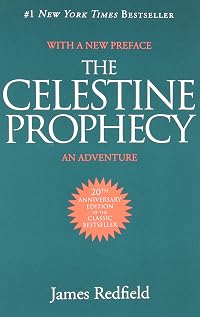
Frankly, the surface-level "take away" from this book is so frustratingly pointless that it suggests that this is one of those "look for what seems out of place" projects (to use the awesome Peter Murphy lyric), a book so blatantly off-target that it only serves as a matrix holding a few gems. And, much like The Celestine Prophesy (which, to anybody who had spent time in Peru was "so wrong", yet had nuggets of very advanced teachings in it), this is a slurry of pig manure from which one needs to sieve out the diamonds. Interestingly, one of the "shiny bits" in this is shared with The Celestine Prophesy in terms of reincarnation theory. Oh, yeah. Lonsdale's teachings are rooted in "Atlantis" ... almost a sure sign it's time to get the sieve ... and every time the teaching seem to be making sense it rotates back to somebody or another having been a high-mucketymuck with awesome powers there. Interestingly, one of the possible "gems" deals with Jesus. Now, readers familiar with my writing know that I have no use for the Christian mythos, but Lonsdale posits a very interesting "spiritual dynamic" for Jesus' role in the long-term spiritual development of the race ... that the function of the Christian passion play was to nail (yes, Jesus-as-carpenter trumps Jesus as metaphysical entity) spirit within matter, producing a modality in which working amid the "mundane world" is still a spiritual exercise. There are others (perhaps as many as a dozen) buried in there, but they take a lot of "rinsing off" twaddle-rich text to find.
As a basic read, 2012: Crossing the Bridge to the Future probably would only deeply appeal to people within a 50-mile radius of San Francisco (it really is that woo-woo), but if you can stomach the narcissism, there are some very potentially useful concepts, perceptions, and "transmissions" (ala Crowley's "Tzaddi is not the Star") to be fished out of it. As this is brand new (it officially came out in February), it should be available via your local brick-and-mortar book merchant, but it also can be had for about 1/3rd off of cover via Amazon.
A link to my "real" review:
BTRIPP's review of Mark Borax's "2012: Crossing the Bridge to the Future" show less
This is a book that I got via the LibraryThing.com "early reviewers" program, which, while being a lovely concept, typically runs to 90% fiction (which I don't, as a rule, read), making the pickings rather slim for what I might request. I mention this because, under "free range" conditions, I would have been quite unlikely to have read Mark Borax's 2012: Crossing the Bridge to the Future, although being reasonably well-read on the whole "2012" subject.
However, this book has, remarkably, very little specifically to do with the events of 2012, and is, rather, one of those frequently-tedious "personal journey" books that every newager seems to have inside of them, itching to pupate out into show more its particular narcissistic splendor (heck, Borax notes he's written twenty books, this being the first one to be published). As is typical of the genre, there is a lot more about what the author was feeling rather than what he was doing, so it's a bit hard to really nail things down in this. The book starts with him taking an old (still living with) girlfriend and his new girlfriend up to Mount Shasta to drop acid on the Harmonic Convergence back in 1987 (hey, I was down at Tulum with a Shaman and a Zen Roshi!). He runs off and has a "transformational" trip, while the two gals scream at each other ... both soon fade from the story line (only to be replaced by others, whose relationship dynamics are all the same, but still spun out in exhibitionistic detail), but not before one of them hooks him up with an astrologer. This is William Lonsdale, who Borax latches onto as "a teacher". Borax, who has been doing some sort of itinerant comic book editing up till this point in his life, decides that he really really wants to be an astrologer too, and so begins his association with what he refers to as a "mystery school".
I was interested to find that when, before starting the book, I asked friends who are professional astrologers, neither had ever heard of Borax or Lonsdale, and certainly not of any "mystery school" being led by the latter. The deeper I got into the book, the more I found that the "mystery school" was a bit like the newage habit of calling five friends getting together in a coffee shop "a conference", as this "school" was more of an open meeting that Lonsdale was using to "bounce his ideas off people" over a relatively brief period rather than any organized project.
The 2012 title comes from Lonsdale talking about a "transformative period" between the Harmonic Convergence in 1987 and whatever "2012" event may be down the road, with almost nothing specific to the date. What is really aggravating here is the presumption that the book "says something" about 2012, yet the narrative stops in 1994 after simply covering the author's experiences over a 7-year period. Did it take him 14 years to "shop the manuscript"? This might have made an interesting "studying with the wizard in the woods" book back in the mid-90's, but it makes no sense coming out a scant 4 years before the 2012 date, when anybody reading it would know that most of what is intimated for that 25-year period in the "teachings" outlined in the text ended up to be pure hooey.
Frankly, the surface-level "take away" from this book is so frustratingly pointless that it suggests that this is one of those "look for what seems out of place" projects (to use the awesome Peter Murphy lyric), a book so blatantly off-target that it only serves as a matrix holding a few gems. And, much like The Celestine Prophesy (which, to anybody who had spent time in Peru was "so wrong", yet had nuggets of very advanced teachings in it), this is a slurry of pig manure from which one needs to sieve out the diamonds. Interestingly, one of the "shiny bits" in this is shared with The Celestine Prophesy in terms of reincarnation theory. Oh, yeah. Lonsdale's teachings are rooted in "Atlantis" ... almost a sure sign it's time to get the sieve ... and every time the teaching seem to be making sense it rotates back to somebody or another having been a high-mucketymuck with awesome powers there. Interestingly, one of the possible "gems" deals with Jesus. Now, readers familiar with my writing know that I have no use for the Christian mythos, but Lonsdale posits a very interesting "spiritual dynamic" for Jesus' role in the long-term spiritual development of the race ... that the function of the Christian passion play was to nail (yes, Jesus-as-carpenter trumps Jesus as metaphysical entity) spirit within matter, producing a modality in which working amid the "mundane world" is still a spiritual exercise. There are others (perhaps as many as a dozen) buried in there, but they take a lot of "rinsing off" twaddle-rich text to find.
As a basic read, 2012: Crossing the Bridge to the Future probably would only deeply appeal to people within a 50-mile radius of San Francisco (it really is that woo-woo), but if you can stomach the narcissism, there are some very potentially useful concepts, perceptions, and "transmissions" (ala Crowley's "Tzaddi is not the Star") to be fished out of it. As this is brand new (it officially came out in February), it should be available via your local brick-and-mortar book merchant, but it also can be had for about 1/3rd off of cover via Amazon.
A link to my "real" review:
BTRIPP's review of Mark Borax's "2012: Crossing the Bridge to the Future" show less
This review was written for LibraryThing Early Reviewers.I simply could not read this book! I was very excited to receive it from the Early Reviewer program, but the excitement was short lived. The book was poorly written, and I could not manage to finish it.
This review was written for LibraryThing Early Reviewers.Members
- Recently Added By
Author Information
4 Works 29 Members
Common Knowledge
- Canonical title
- 2012 - Crossing the Bridge to the Future
- Original title
- 2012 - Crossing the Bridge to the Future
- Original publication date
- 2008
- People/Characters
- Mark Borax; Ellias Lonsdale (William Lonsdale); Sara Lonsdale
- Important places
- Mt. Shasta, California, USA; Bonny Doon, California, USA; Santa Cruz, California, USA; Whidbey Island, Washington, USA
- Epigraph
- I am certain of nothing but the holiness of the heart's affections and the truth of the imagination.
What the imagination perceives as beauty must be true, even if it never before existed.
- John Keats.
Nothing is too wonderful to be true.
-- Michael Faraday
I am on this journey where I find that I run into myself all the time.
- Ellias Lonsdale - Dedication
- For Sky and Sky's World
If you want to change a world, change its story. - First words
- Buddhists say it's fortunate to be born during the time of a great teacher.
- Last words
- (Click to show. Warning: May contain spoilers.)You get rich the moment you recognize that you have so much more to give this world than you'll ever need to take from it.
Classifications
- Genres
- Nonfiction, Religion & Spirituality, Biography & Memoir, Philosophy
- DDC/MDS
- 133.50922 — Philosophy & psychology Parapsychology & occultism Specific topics in parapsychology and occultism Astrology Astrology -- history
- LCC
- BF1791 .B67 — Philosophy, Psychology and Religion Psychology Occult sciences Seers. Prophets. Prophecies
- BISAC
Statistics
- Members
- 22
- Popularity
- 1,190,239
- Reviews
- 7
- Rating
- (1.94)
- Languages
- English
- Media
- Paper, Ebook
- ISBNs
- 2