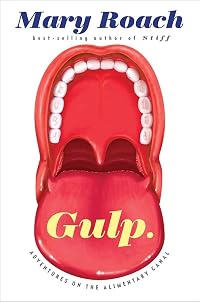
Gulp: Adventures on the Alimentary Canal
by Mary Roach
On This Page
Description
Medical. Science. Nonfiction. "America's funniest science writer" (Washington Post) takes us down the hatch on an unforgettable tour. The alimentary canal is classic Mary Roach terrain: the questions explored in Gulp are as taboo, in their way, as the cadavers in Stiff and every bit as surreal as the universe of zero gravity explored in Packing for Mars. Why is crunchy food so appealing? Why is it so hard to find words for flavors and smells? Why doesn't the stomach digest itself? How much show more can you eat before your stomach bursts? Can constipation kill you? Did it kill Elvis? In Gulp we meet scientists who tackle the questions no one else thinks of-or has the courage to ask. We go on location to a pet-food taste-test lab, a fecal transplant, and into a live stomach to observe the fate of a meal. With Roach at our side, we travel the world, meeting murderers and mad scientists, Eskimos and exorcists (who have occasionally administered holy water rectally), rabbis and terrorists-who, it turns out, for practical reasons do not conceal bombs in their digestive tracts. Like all of Roach's books, Gulp is as much about human beings as it is about human bodies. show lessTags
Recommendations




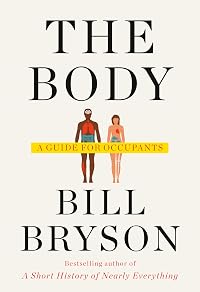



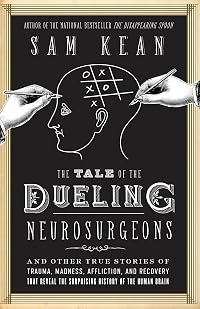
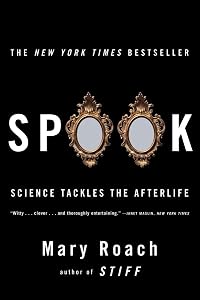


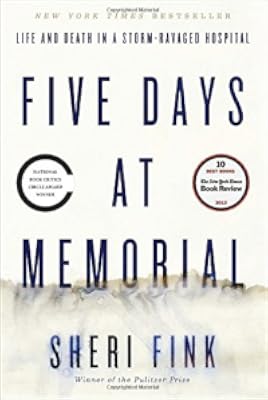













Member Recommendations
themulhern Catherine Price is like a slightly more serious Mary Roach.
Member Reviews
Where to start?
This was the book chosen (by popular vote) as The Flat Book Society's first official read. Opinions seem to be firmly split down the middle, and while possibly an inauspicious start to our fledgling club, it definitely generated a lot of discussion.
My personal feelings about the book started off complicated: this is not the book I signed up for. I was hoping for an accessible but scientific look at the human digestive process from start to finish, looking at each step of the process in relative detail. I think a lot of us thought that was the book we were getting.
Gulp is not that book.
At first this was disappointing - it still is in the sense of the curiosity unfulfilled - but as I continued reading, and adjusted my show more expectations once it became obvious I was not going to get the book I expected, I ended up enjoying it a lot.
Anyone who has ever read Judith Stone's columns in Discover magazine (a very long time ago) will know what to expect from Gulp (some of them were published in a book called Light Elements: Essays in Science from Gravity to Levity). Mary Roach is Judith Stone's successor, writing about the science that either seems trivial to most people, or the science no one wants to talk about. Obviously, Gulp is the latter.
This is an overview of digestion in general; not just human, although that is the primary focus. Roach looks at it from both an anthropological view, discussing the effects our social views and taboos about digestion have on everything from the food we eat, to the medical care we receive, as well as the scientific as she interviews scientists, looks at case histories and discuses current research.
Think of Gulp as an introduction; an audit (in the US English sense of the word), of the vast science of gastroenterology, written with a whole lot of humor. Roach never shies away from a joke, a double entendre, or a bit of lighthearted but vulgar fun. She never stoops to locker room level humour and she never does it at the expense of accuracy, but you can tell she's had a good time writing this book. She'd definitely be someone I'd enjoy meeting, although probably not at any social event including food.
If that's the kind of book that appeals to you, definitely check this out; it will be informative and entertaining. If you're hoping for a more focused look at the intricacies of eating and digestion, pass this one on by; it will definitely disappoint. show less
This was the book chosen (by popular vote) as The Flat Book Society's first official read. Opinions seem to be firmly split down the middle, and while possibly an inauspicious start to our fledgling club, it definitely generated a lot of discussion.
My personal feelings about the book started off complicated: this is not the book I signed up for. I was hoping for an accessible but scientific look at the human digestive process from start to finish, looking at each step of the process in relative detail. I think a lot of us thought that was the book we were getting.
Gulp is not that book.
At first this was disappointing - it still is in the sense of the curiosity unfulfilled - but as I continued reading, and adjusted my show more expectations once it became obvious I was not going to get the book I expected, I ended up enjoying it a lot.
Anyone who has ever read Judith Stone's columns in Discover magazine (a very long time ago) will know what to expect from Gulp (some of them were published in a book called Light Elements: Essays in Science from Gravity to Levity). Mary Roach is Judith Stone's successor, writing about the science that either seems trivial to most people, or the science no one wants to talk about. Obviously, Gulp is the latter.
This is an overview of digestion in general; not just human, although that is the primary focus. Roach looks at it from both an anthropological view, discussing the effects our social views and taboos about digestion have on everything from the food we eat, to the medical care we receive, as well as the scientific as she interviews scientists, looks at case histories and discuses current research.
Think of Gulp as an introduction; an audit (in the US English sense of the word), of the vast science of gastroenterology, written with a whole lot of humor. Roach never shies away from a joke, a double entendre, or a bit of lighthearted but vulgar fun. She never stoops to locker room level humour and she never does it at the expense of accuracy, but you can tell she's had a good time writing this book. She'd definitely be someone I'd enjoy meeting, although probably not at any social event including food.
If that's the kind of book that appeals to you, definitely check this out; it will be informative and entertaining. If you're hoping for a more focused look at the intricacies of eating and digestion, pass this one on by; it will definitely disappoint. show less
Gulp is one of the most disgusting books I have ever read. Disgustingly brilliant and fascinating! Mary Roach is the queen of taking taboo subjects (death, sex, war, the alimentary canal, etc.) and breaking them down into compulsively readable books that everyone can appreciate. Gulp takes a look at everyone's favorite organ, the alimentary canal (I mean who doesn't love the poop emoji?!), and takes a deep fascinating look at it. There is a chapter on the properties and uses of spit, a chapter on constipation (learn more about Elvis!), a chapter on on overeating or over chewing, studies on competitive food eaters. Everything you could ever want to know about what happens to food between when it enters your mouth until it gets shit out show more (so much about poop!), is covered in this fascinating nonfiction book. Read it! Soo interesting and hilariously (yet reverently) written. show less
Roach takes a top-down approach to the digestive system, exploring the complex, fascinating, and sometimes disgusting process of digestion from one end to the other. She touches on interesting historical figures, interviews scientists currently working in the field, and even does some hands-on research. I definitely feel like I learned a lot, though I probably won't bring it up as dinnertime conversation! Roach's writing is conversational and humorous, with amusing footnotes generously scattered throughout. Despite my edition's teeny-tiny font size, this book goes down easy.
As always, Mary Roach tackles taboo subjects head on, with humor and matter-of-factness. This is rather a smattering of subjects about the digestive tract that caught her interest rather than a cohesive text, but if you find the subjects that Mary Roach finds interesting interesting also, this will be a worthwhile read, though not as fascinating as Stiff, in my opinion.
This is Mary Roach at her best, with all of her classic points: a one-word, evocative, title a subject matter dancing just on the edge of the taboo line, dealt with in one part investigative journalism, one part completely unsquashable curiosity and one part a mix of stream-of-consciousness and "I just can't help but share" anecdotes.
Those who disliked Roach's previous works will hate Gulp, and those who liked her previous works will love it. The dislike largely stems from her highly present narration, and that is out in full force here. Doctors that she has known with hilariously apropos names, completely tangential stuff she found while doing research, boilerplate responses from Oster regarding an e-mail inquiry about their blenders show more being used for fecal transplate and much, much more abound in the frequent footnotes (average density seems to be about 1.5 footnotes/page.) New sections are usually introduced with commentary about what made Roach reach out to this particular person and how she feels on meeting them. The narration in fact is so present in Gulp, even compared to her previous works, that honestly, it skirts memoir territory. I consider that a win, your mileage may vary, as they say.
Meanwhile, Roach again makes the lowest of lowbrow topics palatable (sorry -- couldn't resist!) if not downright classy. For a book with an entire chapter on flatulence, it's entertaining, funny and interesting even to those of us who wouldn't dream of laughing at a fart joke. You didn't know that you wanted to know why some animals eat their own feces, the history of gastrocutaneous fistulas, the science of the chemical composition of farts, or what human tasters think of cat food and why, but Roach's curiosity is contagious and she can make any subject matter fascinating. show less
Those who disliked Roach's previous works will hate Gulp, and those who liked her previous works will love it. The dislike largely stems from her highly present narration, and that is out in full force here. Doctors that she has known with hilariously apropos names, completely tangential stuff she found while doing research, boilerplate responses from Oster regarding an e-mail inquiry about their blenders show more being used for fecal transplate and much, much more abound in the frequent footnotes (average density seems to be about 1.5 footnotes/page.) New sections are usually introduced with commentary about what made Roach reach out to this particular person and how she feels on meeting them. The narration in fact is so present in Gulp, even compared to her previous works, that honestly, it skirts memoir territory. I consider that a win, your mileage may vary, as they say.
Meanwhile, Roach again makes the lowest of lowbrow topics palatable (sorry -- couldn't resist!) if not downright classy. For a book with an entire chapter on flatulence, it's entertaining, funny and interesting even to those of us who wouldn't dream of laughing at a fart joke. You didn't know that you wanted to know why some animals eat their own feces, the history of gastrocutaneous fistulas, the science of the chemical composition of farts, or what human tasters think of cat food and why, but Roach's curiosity is contagious and she can make any subject matter fascinating. show less
A hilarious but lovingly detailed tour of the human digestive tract from mouth to anus. The author will not spare the reader any scenic overlook, no matter how gag-inducing. This will not be a comfortable read for many, but it is so full of fascinating facts and will deeply satisfy all the curiosity deemed unseemly by polite society. I'll admit that I hesitate with this one. I love and have read all of Mary Roach's other books, but I almost stopped with this one. I'm not fully sure why. I'm not a delicate or easily disgusted person. But, I don't know, I thought it would be boring? I think I imagined that the digestive tract was basically just a garden hose distributing nutrition throughout the body.
But from the first page I was show more captivated and beguiled by lively humor and broad entertainment. This book, along with Ms. Roach's others, is hugely recommended. show less
But from the first page I was show more captivated and beguiled by lively humor and broad entertainment. This book, along with Ms. Roach's others, is hugely recommended. show less
“The human digestive tract is like the Amtrak line from Seattle to Los Angeles: transit time is about thirty hours, and the scenery on the last leg is pretty monotonous."
Are you ready to take a fantastic voyage? A riveting journey from mouth to anus? Filled with humorous and informative nuggets, that will have you wincing one moment and giggling the next. Look no further, because Roach has done it again, with tireless research, throwing herself into her subjects with daring and bravado. Everything you want to know about saliva, stomach acids, flatulence, rectum storage and the joyous human marvel called the sphincter muscle. You will even find out what really killed Elvis and yes, it deals with “down there”.
If you haven’t show more sampled Roach’s nonfiction, here is your golden opportunity. Just eat lightly before reading. show less
Are you ready to take a fantastic voyage? A riveting journey from mouth to anus? Filled with humorous and informative nuggets, that will have you wincing one moment and giggling the next. Look no further, because Roach has done it again, with tireless research, throwing herself into her subjects with daring and bravado. Everything you want to know about saliva, stomach acids, flatulence, rectum storage and the joyous human marvel called the sphincter muscle. You will even find out what really killed Elvis and yes, it deals with “down there”.
If you haven’t show more sampled Roach’s nonfiction, here is your golden opportunity. Just eat lightly before reading. show less
Members
- Recently Added By
Lists

Top Five Books of 2013
1,562 works; 721 members

Recommend the 20 best books you've read in the last five years
2,168 works; 601 members

Research/Inquiry - mentor texts
43 works; 2 members

Books Read in 2013
1,630 works; 51 members

Books Read in 2014
2,343 works; 89 members

W. W. Norton & Company
47 works; 2 members

Books Read in 2016
4,666 works; 199 members

Club Read's Recommended Nonfiction Written by Women
618 works; 30 members

Weirdo Nonfiction
138 works; 3 members
Author Information

24+ Works 33,611 Members
Mary Roach was born and raised in Etna, New Hampshire. She has a BA degree in psychology from Wesleyan University. She spent a few years as a free-lance copy editor before she landed a job at the San Francisco Zoological Society turning out press releases. She then moved on to write humor pieces for such periodicals as The New York Times Magazine, show more The San Francisco Chronicle and Sports Illustrated. Her article "How to Win at Germ Warfare" was a National Magazine Award Finalist, in 1995. In 1996, her article on earthquake-proof bamboo houses took the Engineering Journalism Award. She published several books such as Stiff: The Curious Lives of Human Cadavers (2003) and Packing for Mars (2010). Mary's title Grunt: The Curious Science of Humans at War, made the New York Times Bestseller list in 2016. (Bowker Author Biography) show less
Some Editions
Awards and Honors
Awards
Distinctions
Series
Belongs to Publisher Series
Work Relationships
Is contained in
Common Knowledge
- Original title
- Gulp: Adventures on the alimentary canal
- Original publication date
- 2013-04-01
- Dedication
- For Lily and Phoebe, and my brother Rip
- First words
- Introduction
In 1968, on the Berkeley campus of the University of California, six young men undertook an irregular and unprecedented act.
The sensory analyst rides a Harley. - Quotations
- "The human digestive tract is like the Amtrak line from Seattle to Los Angeles: transit time is about thirty hours, and the scenery on the last leg is pretty monotonous."
RodentPro gift certificates are available. Because nothing says "I love you" like $100 of dead rodents delivered to the doorstep. (Chap. 12) - Last words
- (Click to show. Warning: May contain spoilers.)To which I say: Only briefly, and with the utmost respect.
- Publisher's editor
- Jill Bialosky
- Blurbers
- Pinker, Steven; Zimmer, Carl; Vanderbilt, Tom
- Original language
- English
Classifications
Statistics
- Members
- 2,947
- Popularity
- 6,071
- Reviews
- 186
- Rating
- (3.96)
- Languages
- 5 — Dutch, English, Estonian, German, Spanish
- Media
- Paper, Audiobook, Ebook
- ISBNs
- 27
- UPCs
- 2
- ASINs
- 14