On This Page
Description
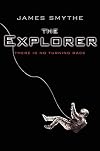
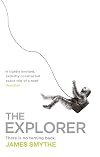
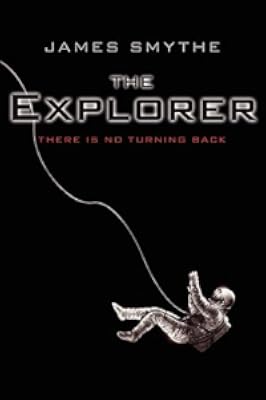
When journalist Cormac Easton is selected to document the first manned mission into deep space, he dreams of securing his place in history as one of humanity's great explorers. But in space, nothing goes according to plan.Tags
Recommendations





















Member Recommendations

anonymous user British Sci-fi dealing with a space anomaly


by anonymous user
Member Reviews
A mission is sent into space. The purpose of the mission is aspirational rather than concrete, all scientific research elements carefully sidelined in the reality-show private-enterprise style, so much so that the journalist member of the mission who writes daily stories to send back to Earth has no idea what they are and no interest in them or in the ship itself and how it works. The rest of the crew have vaguely-defined roles and no apparent ranking. None of that matters, because as soon as the crew wakes up, one of them is dead, and one by one the rest of them begin to die - all apparent accidents.
Hard to go much further without giving things away, but what follows is strange, claustrophobic tale of existential and psychological show more trauma out of Aldiss, if Aldiss had written an astronaut-trapped-in-space novel, the polar opposite of The Martian's hero sciencing his way out of this shit. Science here is incomprehensible and useless, automated and remote-controlled, instead there is a dreadful process of isolation and alienation and physical and psycholigical conditionaing at work through some unknowable force or unfathomable glitch.
Richly written, dark and sombre, but also strange and mysterious. show less
Hard to go much further without giving things away, but what follows is strange, claustrophobic tale of existential and psychological show more trauma out of Aldiss, if Aldiss had written an astronaut-trapped-in-space novel, the polar opposite of The Martian's hero sciencing his way out of this shit. Science here is incomprehensible and useless, automated and remote-controlled, instead there is a dreadful process of isolation and alienation and physical and psycholigical conditionaing at work through some unknowable force or unfathomable glitch.
Richly written, dark and sombre, but also strange and mysterious. show less
I get most of my books recommendations from blogs, the LibraryThing (forums) or award/best-of lists. For some books that are just (going to be) released you kind of take a chance if a book will be good. I found 'The Explorer' through one of the blogs I read, and purely based on the enthusiastic post and the description of the story on the back of the book, I fell for it. And I am so glad I did.
Journalist Cormac Easton is selected to join a manned space flight into deep space. The mission is basically to see how far they can go and then come back. Cormac's job is to document the journey for Earth, to make space exploration popular (and thus receive funding). They leave Earth and immediately members of the mission start dying, but mission show more control orders them to continue. Pretty soon (and I mean soon, after not even one-third of the book) Cormac is left on his own to face his inevitable death.
But then the book gets really interesting, in a way I can't really put in my summary without spoiling everything I loved about this book. I was curious what James Smythe, the author, was doing by killing everyone off in such a rapid pace, but in the end, it was just brilliant. Cormac is as confused as I was, and this makes it even better, because like us, he knows the 'rules' of science fiction. A simply brilliant book with a great twist, a must SF-read. Five out of five stars. show less
Journalist Cormac Easton is selected to join a manned space flight into deep space. The mission is basically to see how far they can go and then come back. Cormac's job is to document the journey for Earth, to make space exploration popular (and thus receive funding). They leave Earth and immediately members of the mission start dying, but mission show more control orders them to continue. Pretty soon (and I mean soon, after not even one-third of the book) Cormac is left on his own to face his inevitable death.
But then the book gets really interesting, in a way I can't really put in my summary without spoiling everything I loved about this book. I was curious what James Smythe, the author, was doing by killing everyone off in such a rapid pace, but in the end, it was just brilliant. Cormac is as confused as I was, and this makes it even better, because like us, he knows the 'rules' of science fiction. A simply brilliant book with a great twist, a must SF-read. Five out of five stars. show less
Marketed as a stand-alone novel, James Smythe's The Explorer is in fact the start of a proposed run-of-the-mill sci-fi quartet concerning the 'Anomaly', something that is sketchily introduced towards the end of this first instalment. The book can stand alone, structurally speaking (which is fortunate, as I have no intention of reading further) but it reads like the prologue of a story stretched out to its own novel length. It's a recipe, if not for failure, then at least for tedium.
Partly this tedium comes from the shallowness of the concept; it is all so vaguely done. The 'anomaly' remains a loose MacGuffin, and the motive behind the mission of the spaceship Ishiguro (itself a poor name for such a ship) is lame and impractical (pg. show more 169). The wishy-washy approach continues into the weak characterisation. We are told this is a bold mission into the unknown, but the crew is cobbled together and do not seem suitable for their tasks. "Look, fucking deal with it", crew members say to one another when they come to each other with problems (pg. 114), and that's when they're not sleeping with one another, plotting, or having angsty hang-ups about things back home (and this is right from the start of their training – not after the mission unravels). None are trained to even basic competence in each other's roles. There's no verisimilitude whatsoever, and because the reader cannot buy into the story it becomes a slog. This is made worse by the fact that the protagonist/narrator is an unlikeable bore; "this is all about me," he writes on page 177, and unfortunately, he's right. The author tries tricks to keep us reading by drip-feeding superficial revelations about the crew, and it works, sort of – it must do, because I finished it. But, as I said, a more merciful writer would have made all of this merely a prologue to a greater story.
In The Explorer, Smythe proves to be a writer who can put words on the page – but not judiciously. The book rambles and splutters along, and the author's laboured approach is made all the starker by the fact that the protagonist is meant to be a journalist, someone with a facility for words. (A journalist cherry-picked for this elite assignment, no less). The grammar and sentence construction are poor and seem unrevised ("the rest of us crewmates questioned the choice" (pg. 115)). Smythe's time loop idea is poorly handled in a narrative sense, and his understanding of spacetime superficial. He makes even virgin space exploration sound boring, and the book limps to its end. There's no real resolution, or answers to the mysteries posed. It's a set-up to a wider idea, but strung out interminably. Frankly, the author's reach vastly exceeds his grasp, and the book is a misfire. show less
Partly this tedium comes from the shallowness of the concept; it is all so vaguely done. The 'anomaly' remains a loose MacGuffin, and the motive behind the mission of the spaceship Ishiguro (itself a poor name for such a ship) is lame and impractical (pg. show more 169). The wishy-washy approach continues into the weak characterisation. We are told this is a bold mission into the unknown, but the crew is cobbled together and do not seem suitable for their tasks. "Look, fucking deal with it", crew members say to one another when they come to each other with problems (pg. 114), and that's when they're not sleeping with one another, plotting, or having angsty hang-ups about things back home (and this is right from the start of their training – not after the mission unravels). None are trained to even basic competence in each other's roles. There's no verisimilitude whatsoever, and because the reader cannot buy into the story it becomes a slog. This is made worse by the fact that the protagonist/narrator is an unlikeable bore; "this is all about me," he writes on page 177, and unfortunately, he's right. The author tries tricks to keep us reading by drip-feeding superficial revelations about the crew, and it works, sort of – it must do, because I finished it. But, as I said, a more merciful writer would have made all of this merely a prologue to a greater story.
In The Explorer, Smythe proves to be a writer who can put words on the page – but not judiciously. The book rambles and splutters along, and the author's laboured approach is made all the starker by the fact that the protagonist is meant to be a journalist, someone with a facility for words. (A journalist cherry-picked for this elite assignment, no less). The grammar and sentence construction are poor and seem unrevised ("the rest of us crewmates questioned the choice" (pg. 115)). Smythe's time loop idea is poorly handled in a narrative sense, and his understanding of spacetime superficial. He makes even virgin space exploration sound boring, and the book limps to its end. There's no real resolution, or answers to the mysteries posed. It's a set-up to a wider idea, but strung out interminably. Frankly, the author's reach vastly exceeds his grasp, and the book is a misfire. show less
It didn’t take long for the first book of the New Year to wow me!
This is a scifi book, but even if you don’t normally read this genre I think anyone can enjoy it. The premise is a crew is sent on a space mission to fly farther than any previous manned flight before. Things go wrong right away as they come out of hypersleep to find one of their crew member dead. As time goes by more crew members die and Cormac, a journalist recruited to document this historic mission, has to try and figure out why people are dying and just what is their mission. What I loved is how the story unfolded layer by layer letting the reader know what is going on through a series of flashbacks and a bit of time travel. It felt like a great episode of the show more Twilight Zone and I mean that in a good way! show less
This is a scifi book, but even if you don’t normally read this genre I think anyone can enjoy it. The premise is a crew is sent on a space mission to fly farther than any previous manned flight before. Things go wrong right away as they come out of hypersleep to find one of their crew member dead. As time goes by more crew members die and Cormac, a journalist recruited to document this historic mission, has to try and figure out why people are dying and just what is their mission. What I loved is how the story unfolded layer by layer letting the reader know what is going on through a series of flashbacks and a bit of time travel. It felt like a great episode of the show more Twilight Zone and I mean that in a good way! show less
The first manned expedition in years will go deeper into space than anyone has gone before. It's a thinly-veiled PR stunt, an attempt to reinvigorate interest in manned space exploration, and of course it all goes wrong. Cormac Easton is the journalist on board and the last survivor, chronicling the disasters and his own mental and emotional deterioration as he faces up to the inevitability of his own death.
This book knowingly embraces well-trodden tropes, and winks to them about two-thirds of the way through when the journalist writes how things could have been: everything going smoothly, returning heroes, a best-selling book - followed by a pulpy scifi novel based on familiar tropes and an attempt at a more human angle. On the show more nose.
It's also one of those books that kept me turning pages to find out the details of the unfolding past and the ultimate outcome, yet without ever achieving emotional engagement. I was curious to find out what happened to Cormac, but I didn't really care either way. Perhaps it felt a little too much like it was playing for the movie deal itself (and to be fair, it would work well on screen); perhaps Cormac just wasn't very likeable (he isn't, as the second half of the book goes to some lengths to illustrate).
But it's a good enough read. I think it's just a little too knowing, if successfully (and painfully) human. Plus, while the resolution works just fine, some of the loose ends bothered me.
That said, I suspect this novel may grow on me the longer it sits with me. Which may simply be my relatively low exposure to the core trope; I'm familiar with it, but not over-exposed. Yet.
Reread:This improved for me on a reread; apparently a bleak SFnal Groundhog Day was what I was looking for at the end of 2020. Cormac is an unsympathetic, unreliable narrator; it’s all a little stage managed; the science is laughably bad; but... I really enjoyed it. It’s partly Smythe’s deft prose, wry and knowing; it’s partly a car crash more interesting for repeat watching (apt). Forget the SF, come for the acid humanity. show less
This book knowingly embraces well-trodden tropes, and winks to them about two-thirds of the way through when the journalist writes how things could have been: everything going smoothly, returning heroes, a best-selling book - followed by a pulpy scifi novel based on familiar tropes and an attempt at a more human angle. On the show more nose.
It's also one of those books that kept me turning pages to find out the details of the unfolding past and the ultimate outcome, yet without ever achieving emotional engagement. I was curious to find out what happened to Cormac, but I didn't really care either way. Perhaps it felt a little too much like it was playing for the movie deal itself (and to be fair, it would work well on screen); perhaps Cormac just wasn't very likeable (he isn't, as the second half of the book goes to some lengths to illustrate).
But it's a good enough read. I think it's just a little too knowing, if successfully (and painfully) human. Plus, while the resolution works just fine, some of the loose ends bothered me.
That said, I suspect this novel may grow on me the longer it sits with me. Which may simply be my relatively low exposure to the core trope; I'm familiar with it, but not over-exposed. Yet.
Reread:This improved for me on a reread; apparently a bleak SFnal Groundhog Day was what I was looking for at the end of 2020. Cormac is an unsympathetic, unreliable narrator; it’s all a little stage managed; the science is laughably bad; but... I really enjoyed it. It’s partly Smythe’s deft prose, wry and knowing; it’s partly a car crash more interesting for repeat watching (apt). Forget the SF, come for the acid humanity. show less
Scary or suspenseful stories that take place on spaceships freak me out a lot. For me, the setting is claustrophobic and alien and just generally makes my skin crawl. But I'm always drawn to them and always have to watch the show or read the book. This one was well worth my small anxieties.
This story is more suspenseful than scary. The mission for the people on this ship is to travel the farthest any human ever has and then turn around and travel back to earth. Cormac Easton is the ship's journalist. He is observing and writing about the mission for the folks back home. But the mission is far from successful. First they find the captain dead in his hypersleep chamber upon waking. Then the crew, one after another, die, all in different show more ways, until Cormac is the last man standing. And once he realizes the ship does not turn around towards home like it's automatically supposed to, Cormac knows he is doomed.
All that I've got up here is tranquility now, I suppose.
That's just the first quarter of the book. I'm not going to give away the rest of the story other than it includes flashbacks to the months and weeks leading up to the mission. During these flashbacks we learn more about the crew and Cormac's relationship with his wife. These flashbacks are revealing and important to what is happening on the ship. And what's happening on the ship is enthralling. The reveal is slow going, but never boring. It's dark and beautifully written.
That was how it was sold: a voyage to rival Columbus, to rival the stories of Jules Verne.
ARC provided through Edelweiss show less
This story is more suspenseful than scary. The mission for the people on this ship is to travel the farthest any human ever has and then turn around and travel back to earth. Cormac Easton is the ship's journalist. He is observing and writing about the mission for the folks back home. But the mission is far from successful. First they find the captain dead in his hypersleep chamber upon waking. Then the crew, one after another, die, all in different show more ways, until Cormac is the last man standing. And once he realizes the ship does not turn around towards home like it's automatically supposed to, Cormac knows he is doomed.
All that I've got up here is tranquility now, I suppose.
That's just the first quarter of the book. I'm not going to give away the rest of the story other than it includes flashbacks to the months and weeks leading up to the mission. During these flashbacks we learn more about the crew and Cormac's relationship with his wife. These flashbacks are revealing and important to what is happening on the ship. And what's happening on the ship is enthralling. The reveal is slow going, but never boring. It's dark and beautifully written.
That was how it was sold: a voyage to rival Columbus, to rival the stories of Jules Verne.
ARC provided through Edelweiss show less
Unusual writing style; every character dies in a spaceship in the first few pages, then the story is repeated for the rest of the book, as it were in slow motion. There is a particular passage the author wrote on what being in space does to the human mind that I enjoyed and found to be philosophically insightful. Looking forward to the next book in this quartet.
SPOLIER: Describes a mission into space to go further than anyone had gone before, but the journalist on board discovers a deliberate sabotage by the leading scientist crew member to make it a one-way journey to study the anomaly. When the ship reaches the anomaly, time loops and a doppelganger is created, and the journalist witnesses himself react as the crew die off . He show more questions the act of intervention. show less
SPOLIER: Describes a mission into space to go further than anyone had gone before, but the journalist on board discovers a deliberate sabotage by the leading scientist crew member to make it a one-way journey to study the anomaly. When the ship reaches the anomaly, time loops and a doppelganger is created, and the journalist witnesses himself react as the crew die off . He show more questions the act of intervention. show less
Members
- Recently Added By
Lists

Books Read in 2015
3,299 works; 129 members
Author Information
20+ Works 930 Members
Some Editions
Series

Common Knowledge
- Original publication date
- 2012-12-20
- First words
- One of the first things I did when I realized that I was never going to make it home - when I was the only crewmember left, all the others stuffed into their sleeping chambers like rigid, vacuum-packed action figures - was to... (show all) write up a list of everybody I would never see again; let me wallow in it, swim around in missing them as much as I could.
Classifications
Statistics
- Members
- 290
- Popularity
- 110,019
- Reviews
- 13
- Rating
- (3.26)
- Languages
- English, Hungarian
- Media
- Paper, Audiobook, Ebook
- ISBNs
- 10
- ASINs
- 4