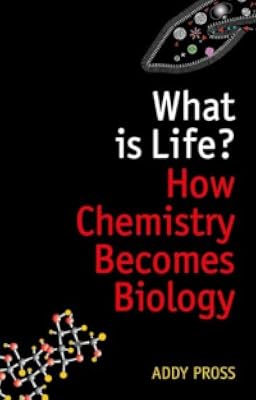
What is Life?: How Chemistry Becomes Biology
by Addy Pross
On This Page
Description
Seventy years ago, Erwin Schro dinger posed a simple, yet profound, question: 'What is life?'. How could the very existence of such extraordinary chemical systems be understood? This problem has puzzled biologists and physical scientists both before, and ever since.Living things are hugely complex and have unique properties, such as self-maintenance and apparently purposeful behaviour which we do not see in inert matter. So how does chemistry give rise to biology? Did life begin with show more replicating molecules, and, if so, what could have led the first replicating molecules up such a path? Now, deve show lessTags
Recommendations
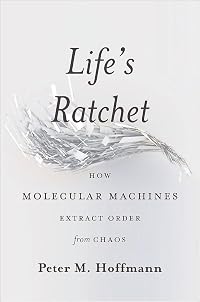
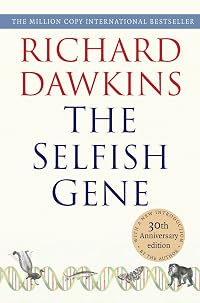
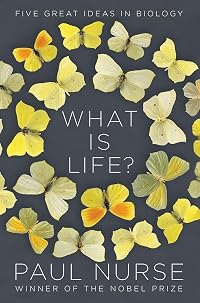
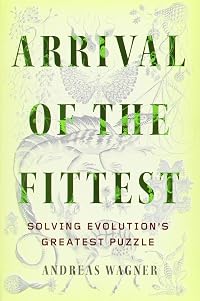
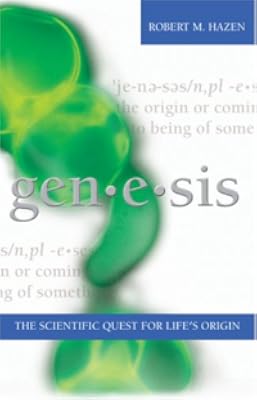





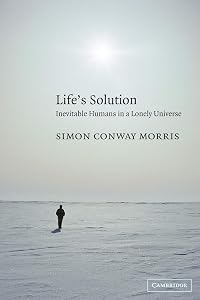
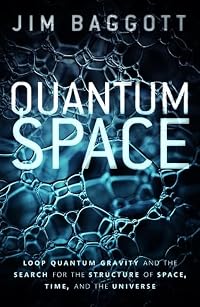
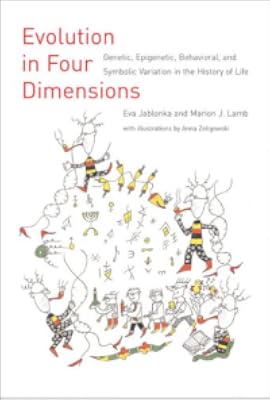
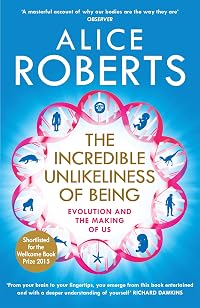


Member Recommendations
knomad Delves deeply into the actual physical mechanics of the molecular engines that power living organisms
Member Reviews
We lack an adequate theory of what life is, and therefore cannot give adequate answers to fundamental questions in biology. What are the principles at work in abiogenesis, the emergence of life from inanimate chemical building blocks? What principles guide life’s arrant defiance of the Second Law of Thermodynamics, the demand that systems tend toward maximum disorder? How is it that life, which behaves as if it has purpose could come about from a universe without purpose? I was prepared to report that this book was dry, pessimistic, and set up the reader for a lackluster attempted salvation by our heroic author/scientist. So the unexpected urgency that overcame me upon completion took me by surprise. After I finished the book, I show more realized I wasn’t finished at all. I needed to review to make sure I understood these proposals, research the status of Pross’ ideas in biology, and write it all out for the sake of clarity.
A complete summary of these ideas is beyond the scope of this review. I will focus on the core concept, one with which I had not previously been familiar. He argues that despite efforts to identify the historical origin of life on Earth some 4 billion years ago -- ocean thermal vents, the clay template model, primitive redox reactions across proto-membranes – it is likely we will never have conclusive answers about these matters. The more knowable – and more important – question surrounds the principles at work in the establishment of life and in propelling it from the simple to complexity.
A fundamental characteristic of life from a chemical point of view is its organization, its movement from the simple to the complex. Life persists despite by its very nature opposing the principle that guides all physical systems: the thermodynamic tendency to move toward maximum disorder, toward a state of maximum stability, toward the endpoint of reactivity. The explanation has always made sense. Systems can resist this thermodynamic imperative as long as they have an input of energy that powers the opposing tendency toward disorder. What Pross has done is to detail how life gets around the Second Law without violating it, and in so doing he elaborates explanatory chemical principles that illuminate the nature of life.
The proposal here is a fundamental chemical principle that allows life to perpetuate itself despite the inexorable requirement of the Second Law. His idea comes out of the field of chemical systems, specifically replicating systems. Replication is fundamental to life. Life makes more copies of itself. The genetic code is copied and recopied billions of times per day. Every protein in every cell is replaced in a perpetual process of making more and more of the chemicals of life. The better at replicating, the more persistent life is over time. Replicating systems are stable, in the sense of persisting, not by reaching an endpoint of reactivity as in classical chemical reactions. Instead, replicating systems are stable when they are powerfully able to sustain the activity of replication by ready access to the reactant materials used in the replication process. In this way, living systems have a different kind of stability than do conventional chemical reactions, which can be called dynamic kinetic stability. A waterfall supplies a visual example. It is a system that persists by the constant turnover of its materials (water) and the ongoing energy supply that comes from the conversion of potential to kinetic energy. Like the waterfall, life is driven by the stability that comes from the nature of replicative chemistry. For the author, a division between chemistry and biology is misleading. Biological systems are a form of organized and “complexifying” replicative chemical systems.
Pross concludes with his own definition: life is a “self-sustaining kinetically stable dynamic reaction network derived from the replication reaction”. It’s a beautiful addition to our understanding of what is fundamental about life. The book was valuable to me. I recommend it highly if the topic is of interest. If this brief review doesn’t intrigue you, I’d suggest something else. show less
A complete summary of these ideas is beyond the scope of this review. I will focus on the core concept, one with which I had not previously been familiar. He argues that despite efforts to identify the historical origin of life on Earth some 4 billion years ago -- ocean thermal vents, the clay template model, primitive redox reactions across proto-membranes – it is likely we will never have conclusive answers about these matters. The more knowable – and more important – question surrounds the principles at work in the establishment of life and in propelling it from the simple to complexity.
A fundamental characteristic of life from a chemical point of view is its organization, its movement from the simple to the complex. Life persists despite by its very nature opposing the principle that guides all physical systems: the thermodynamic tendency to move toward maximum disorder, toward a state of maximum stability, toward the endpoint of reactivity. The explanation has always made sense. Systems can resist this thermodynamic imperative as long as they have an input of energy that powers the opposing tendency toward disorder. What Pross has done is to detail how life gets around the Second Law without violating it, and in so doing he elaborates explanatory chemical principles that illuminate the nature of life.
The proposal here is a fundamental chemical principle that allows life to perpetuate itself despite the inexorable requirement of the Second Law. His idea comes out of the field of chemical systems, specifically replicating systems. Replication is fundamental to life. Life makes more copies of itself. The genetic code is copied and recopied billions of times per day. Every protein in every cell is replaced in a perpetual process of making more and more of the chemicals of life. The better at replicating, the more persistent life is over time. Replicating systems are stable, in the sense of persisting, not by reaching an endpoint of reactivity as in classical chemical reactions. Instead, replicating systems are stable when they are powerfully able to sustain the activity of replication by ready access to the reactant materials used in the replication process. In this way, living systems have a different kind of stability than do conventional chemical reactions, which can be called dynamic kinetic stability. A waterfall supplies a visual example. It is a system that persists by the constant turnover of its materials (water) and the ongoing energy supply that comes from the conversion of potential to kinetic energy. Like the waterfall, life is driven by the stability that comes from the nature of replicative chemistry. For the author, a division between chemistry and biology is misleading. Biological systems are a form of organized and “complexifying” replicative chemical systems.
Pross concludes with his own definition: life is a “self-sustaining kinetically stable dynamic reaction network derived from the replication reaction”. It’s a beautiful addition to our understanding of what is fundamental about life. The book was valuable to me. I recommend it highly if the topic is of interest. If this brief review doesn’t intrigue you, I’d suggest something else. show less
If one reads this book with an expectation to get answers of a more existential, philosophical nature then one is going to be highly disappointed. The book explores the question purely from a scientific viewpoint with a aim to bridge the gap between biology, or to be specific, systems biology, and systems chemistry.
In a very Richard Dawkin-ish way, Pross, breaks down all the scientific puzzles with relation to what makes life different and what attributes of it actually contribute to saying, "this is alive". The book delves into various theories over years and proposes a new one of its own - a way to think about both sciences - biology and chemistry as one. Pross provides ample arguments to sustain the case and even convert most show more (non-scientifically gifted) people into accepting the possible validity of his arguments.
It is definitely a new way to think about life and contemplate about it in a way that challenges many philosophical and theological beliefs (which is a good thing).
Only cautionary note is that the book introduces readers to a various aspects of sciences that can be a little overwhelming to a casual reader. show less
In a very Richard Dawkin-ish way, Pross, breaks down all the scientific puzzles with relation to what makes life different and what attributes of it actually contribute to saying, "this is alive". The book delves into various theories over years and proposes a new one of its own - a way to think about both sciences - biology and chemistry as one. Pross provides ample arguments to sustain the case and even convert most show more (non-scientifically gifted) people into accepting the possible validity of his arguments.
It is definitely a new way to think about life and contemplate about it in a way that challenges many philosophical and theological beliefs (which is a good thing).
Only cautionary note is that the book introduces readers to a various aspects of sciences that can be a little overwhelming to a casual reader. show less
After spending the first few chapters outlining the major obstacles to developing a theory of abiogenesis, Pross then proceeds to lay out his proposed solution to the problem. I found his analysis of the intractable problems of abiogenesis to be insightful and spot on with what I know from my other reading in origin of life research. Then in the second half of the book he, almost too glibly, in my opinion, outlines his solution to the problem, which in a nutshell, is that life evolved from chemical networks of self-replicating systems. In order to make his theory even possibly plausible, he makes the assumption that life , for certain, arose from non-life by natural processes. He then proceeds to outline what he sees as the driving show more force of abiogenesis, dynamic kinetic stability (DKS).
Like all theories of abiogenesis, this one also suffers from the same inherent problem, the needed ingredients to even get a system like he describes started is beyond statistical possibility. The only way Pross manages to maintain confidence in his theory, is the assumption that life DID arise by natural processes, thus his theory is the most likely way it happened. show less
Like all theories of abiogenesis, this one also suffers from the same inherent problem, the needed ingredients to even get a system like he describes started is beyond statistical possibility. The only way Pross manages to maintain confidence in his theory, is the assumption that life DID arise by natural processes, thus his theory is the most likely way it happened. show less
Chemistry lives! -- a 200-page argument that "systems chemistry", concerned with "dynamic kinetic stability" of collections of molecules, is the science that will explain prebiotic evolution (by "kinetic selection") and the origin of life. "[Life is] _a self-sustaining kinetically stable dynamic reaction network derived from the replication reaction_." (p 164, emphasis in original.) Pross at once shuns "teleology" and embraces "teleonomy", and that's one of the things that made me think that some of the ideas in Terrence Deacon's formidably profound _Incomplete Nature_ should be added to the mix too.
Interesting book. Here is my review.
(Rating: 4.5 /5.0, rounded up)
(Rating: 4.5 /5.0, rounded up)
Members
- Recently Added By
Lists

Big History
72 works; 1 member

Atheism, humanism, freethought, &c. — Best nonfiction books in favour of
167 works; 14 members
Author Information
3 Works 151 Members
Series
Belongs to Publisher Series
Common Knowledge
- Canonical title
- What is Life?: How Chemistry Becomes Biology
- Original publication date
- 2012
Classifications
Statistics
- Members
- 148
- Popularity
- 218,445
- Reviews
- 8
- Rating
- (3.82)
- Languages
- English, Turkish
- Media
- Paper, Audiobook, Ebook
- ISBNs
- 6
- ASINs
- 4