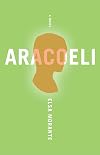
Aracoeli
by Elsa Morante
On This Page
Description
"The first time I read Aracoeli, I found it almost pointlessly disturbing and shocking. On rereading it, I still found it disturbing and shocking, but I have also grown to admire it--perhaps because it is so dark and resists any attempt to classify it. In writing this novel, Morante may have knowingly sacrificed clarity and logic in order to express her vision of a chaotic world." (Lily Tuck,Woman of Rome: A Life of Elsa Morante) Aracoeli--Elsa Morante's final novel--is the story of an aging show more man's attempt to recover the past and get his life on track in the process. The Aracoeli of the title is the narrator's deceased mother, who grew up in a small Spanish town before marrying an upper-class Italian navy ensign. The idyllic years she spends with her only son--Manuel, the narrator of the novel--are shattered when she contracts an incurable disease (probably syphilis) and becomes a nymphomaniac. Now, at the age of 43, Manuel, an unattractive, self-loathing, recovering drug addict who works a dead-end job at a small publishing house, decides to travel to her hometown in Spain in order to look for her. Filled with dreams and remembrances the novel creates a Sebaldian landscape of memory out of this painful journey, painting a portrait that is both touching and bleak. Appearing here for the first time in paperback--the hardcover was published in 1984--Aracoeli is an important, and long-neglected, work in Morante's oeuvre. show lessTags
Recommendations

















Member Recommendations


Member Reviews
"This one, unlike the other, was not the herald of weeping, but certain individuals are more inclined to weep for love than death." This is the final sentence of this amazing novel. The reader is lured into a tale of the cataclysmic meeting of past and present, of a psychopathic love of son for mother, of the despair of lonliness, and of a single love beginning in the womb and coming to rest in the mythic El Almedral, where the mother's life began. Cryptic enough? Reading this novel is like participating in a lifelong fever dream which is inhabited with deep fears, monomaniacal love, and the depths of despair. The writing is magnificent and emotionally descriptive to a degree I have rarely seen. This is a translation that uses the show more highest level of vocabulary in English. I wish I read Italian!! The intensity of the protagonist can be a bit overwhelming, but what the heck. It is an Italian novel after all, isn't it? (I write that with the greatest affection!) show less
Immediately on starting this book I was struck by how exquisite the language is. It's really masterful, beautiful. But, it's a tough read. Our narrator is a broken hopeless middle aged man who has not emotionally recovered from the death of his parents in Rome during world war II, when he was not quite a teenager. He is haunted by memories of his cherished and unusual mother, Aracoeli. Now he has set out on a journey to try to find her; a journey in two senses. He literally travels to the rocky arid village of her childhood in Spain; and, also, along the way he revisits his childhood memories, telling us his story. It's not a hopeful journey, there is no light at the end. His view of himself as scarred and unlovable lays a fateful show more gloomy shadow over the entire book.
It's not clear to me what Elsa Morante set out to do here. I don't think it's an accident that this book spends long monotonous stretches detailing the narrators history with his mother. I'm guessing this was Morante's way of really imprinting this deep in the readers mind, giving the book some heft, a lot of heft. And that I think works. It was effective, rewarding to an extent. This is a carefully and deeply crafted book.
2009
http://www.librarything.com/topic/68641#1437717 show less
It's not clear to me what Elsa Morante set out to do here. I don't think it's an accident that this book spends long monotonous stretches detailing the narrators history with his mother. I'm guessing this was Morante's way of really imprinting this deep in the readers mind, giving the book some heft, a lot of heft. And that I think works. It was effective, rewarding to an extent. This is a carefully and deeply crafted book.
2009
http://www.librarything.com/topic/68641#1437717 show less
 This review was written for LibraryThing Early Reviewers.
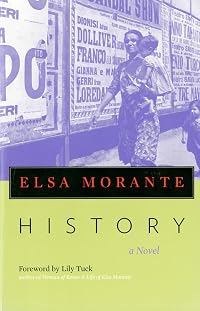
This book is wonderfully written, but it is also easy to see why some people would dislike it. A quick description of the story would make it sound predictable – from an unhappy present, the narrator thinks back on his childhood and his loving relationship with his long-dead mother Aracoeli, which eventually turned sour. However, the erudite, labyrinthine prose which describes both the arid, dead end life of Emanuele in 1970’s Milan and his pre-WWII childhood sets the book apart. It’s certainly very dense prose, which I think could make it hard going, but I really enjoyed Morante’s writing so everything went by quickly even the present sections, which could be a bit flat (deliberately so). The subject of Aracoeli is similar to show more the other Morantes that I’ve read – History: A Novel and Arturo’s Island - in that all are about the almost too-close love between a mother (or mother figure) and son(s). However, all have a very different feel even if one can see some similarities. Aracoeli, despite being a realistic story, has a fantastic or hallucinatory quality due to Emanuele’s constant fantasizing, dreaming or obsessing.
The first half of the book switches between Manuele’s empty present life, where he decides to go back to Aracoeli’s Spanish hometown, and the past, where he describes his parents’ anomalous relationship and marriage and their happy life together. The prose is wonderfully vivid and little details, like a servant’s snobbery, the differing character of their neighbors, or Aracoeli’s shopping habits, end up being memorable. Manuele’s father, a naval officer, and Aracoeli, an uneducated peasant girl, have a love at first sight relationship. After she has Manuele, his father moves them to a small house outside of the city until their marriage and removal to a class-appropriate flat. Manuele’s Aunt Monda, a helpful and busy spinster, provides support and teaches Aracoeli how to behave correctly. The narrator recollects their time in the little house as a lost paradise, when he had his mother all to himself. Even when they moved and he had to share her with his father, his life was still happy. He believes Aracoeli loves him less as he grows older and uglier, but their final estrangement starts with some family tragedies and Aracoeli’s increasingly bizarre behavior. The second half of the book stays in the past and depicts Aracoeli’s unhappy end.
Describing the plot can’t really give the feel of the book, with Manuele’s feverish obsessions and dreams, his frequently recurring inside references, occasional disquisitions on fate and unhappiness, and his detailed descriptions of every facet of the only happiness he’s ever known. The juxtaposition between the lengthy, twisting prose and Manuele’s childish self or the mundane events in the 1970’s works well. His present life is very depressing and he only has bad memories of life after Aracoeli. While the prose was still creative and high-flown in these sections, they weren’t as interesting to read. Besides the dead-end feel of the present sections, the other problem I had with the book was a possible interpretation of Manuele’s stunted romantic relationships. Unfortunately, his life seems to fit a negative stereotype of gay men – he turned to men because of a rejecting mother and badly behaving/gross women. Those bits were annoying, but overall this is a very well-written book. Recommended, with the above caveats. show less
The first half of the book switches between Manuele’s empty present life, where he decides to go back to Aracoeli’s Spanish hometown, and the past, where he describes his parents’ anomalous relationship and marriage and their happy life together. The prose is wonderfully vivid and little details, like a servant’s snobbery, the differing character of their neighbors, or Aracoeli’s shopping habits, end up being memorable. Manuele’s father, a naval officer, and Aracoeli, an uneducated peasant girl, have a love at first sight relationship. After she has Manuele, his father moves them to a small house outside of the city until their marriage and removal to a class-appropriate flat. Manuele’s Aunt Monda, a helpful and busy spinster, provides support and teaches Aracoeli how to behave correctly. The narrator recollects their time in the little house as a lost paradise, when he had his mother all to himself. Even when they moved and he had to share her with his father, his life was still happy. He believes Aracoeli loves him less as he grows older and uglier, but their final estrangement starts with some family tragedies and Aracoeli’s increasingly bizarre behavior. The second half of the book stays in the past and depicts Aracoeli’s unhappy end.
Describing the plot can’t really give the feel of the book, with Manuele’s feverish obsessions and dreams, his frequently recurring inside references, occasional disquisitions on fate and unhappiness, and his detailed descriptions of every facet of the only happiness he’s ever known. The juxtaposition between the lengthy, twisting prose and Manuele’s childish self or the mundane events in the 1970’s works well. His present life is very depressing and he only has bad memories of life after Aracoeli. While the prose was still creative and high-flown in these sections, they weren’t as interesting to read. Besides the dead-end feel of the present sections, the other problem I had with the book was a possible interpretation of Manuele’s stunted romantic relationships. Unfortunately, his life seems to fit a negative stereotype of gay men – he turned to men because of a rejecting mother and badly behaving/gross women. Those bits were annoying, but overall this is a very well-written book. Recommended, with the above caveats. show less
I never met a woman named Aracoeli. As I read Elsa Morante’s impressive and disturbing 1982 novel, of the same name, I wondered how to correctly pronounce “Aracoeli” and if it might be a common name for girls in Italy. My Italian friends Francesca and Renato both wagged their heads and index fingers when I asked. “No, it is a latin word,” they said. “Imperative tense, a command, in fact that orders you ‘to look up to the sky’.”
And then, after finishing the book, I remembered having visited a church in Rome, located at the top of a hundred steps to the side of the ‘wedding cake’ on Capoltine Hill: Santa Maria in Aracoeli. It’s a church dedicated to the Blessed Virgin for having given birth to the first son of God. show more At Christmas, pilgrims come from all over the city to adore the infant, play music for him,and leave him gifts.
The latin command, along with the Blessed Virgin and child Jesus signifiers, are gateways into the novel, which like much of Morante’s work combs through childhood: how children look up to mothers who (at least in the beginning) love them unconditionally; and from that pinnacle of perfect the painful descent into adulthood. Life chips away illusions, fantasy, dreams, and family love.
The narrator of Aracoeli, a boy named Emanuel, laments that he was torn from the uterus but, as a reward for that pain, was glued to the wonderful teat of his beautiful mother, Aracoeli. But that joy and the joy of his mother’s total adoration is a temporary way station. Emanuel grows into an ugly, nearly blind boy who wears thick glasses. He can’t read signals, is never chosen for any part, and suffers humiliation after humiliation from his family, schoolmates, and strangers. However, the worst weight he takes on, as he crosses beyond childhood is: THOU SHALT NEVER BE AN OBJECT OF LOVE NOT EVER.
Within Emanuel’s lugubrious journey, he witnesses his mother become a nymphomaniac and then die from a brain tumor, which, supposedly, transformed her behavior. His father, a strikingly handsome naval officer, is distant and emotionally retarded by patrician restraints. His Aunt Mondo, who lives nearby is concerned with what other people think and looks down her nose at Aracoeli because she is not from upper class stock.
Emanuel's first sexual encounter is with a wrinkled old prune of a woman who lives in a shit-smeared, bombed-out apartment building. The woman only charges ten lire but he can’t do it with her, or with anyone. He ends up a kneeling homosexual who never bends over to receive.
During his life Emanuel has but one friend: a Sicilian sailor who lives in a closet under the steps. In service to his Admiral, Emanuel's father, the sailor takes care of Emanuel, walks him to school, cooks him sardine dinners. But Aracoeli eventually rapes the young man and sends him scurrying back to Sicily, leaving her son once again abandoned and alone.
Add to the constant situational ugliness, that Emanuel insists is his fate, the wise glaze of childhood innocence; the bourgeois class system; the threat of Communism; Italian Fascism following on the heels of the Spanish Civil war; a dissolving family unit; and an utterly top notch translation and any literature fan will undoubtedly realize he or she is holding one terrific novel.
The writing is mesmerizing. Morante was a natural, though not prolific writer. Neither was she well-educated, but she is brilliant. If you categorize her as a modern literary ‘woman’ novelist, Morante leaves Virginia Wolf, Doris Lessing, and Iris Murdoch behind in the dust. She stands right up there with as muscle as any of the great ‘male’ writers. Perhaps her dark, disturbing stories limited her popularity.
Aracoeli is not light entertainment. Aracoeli is an artistically crafted story that forces you think on a profound level--about love, about time and memory, about parenting, about sex, your childhood, your children, war, psychotherapy, philosophy, and about the ugliness in the world.
Emanuel says to the reader as he begins his story, that he wished he had known that all the writhing he did to find love would not have be met with rejection and relapse and therefore confirm his destiny, which was to be unloved. No reader would want to agree.
Millie grazie to OPEN LETTERS, an arm of University of Rochester that publishes literary translations, for including Elsa Morante in their corral.
------------------------------------------------------------------------
A final bow to the arc of Aracoeli=looking up at the sky:
At the beginning of the novel Emanuel, living in bliss within the embrace of early childhood and unconditional love, looks up. “The sky was emptied on to the earth and into the water....All the colors were interchanged. It was a constant delight to see that transformation of space. The night was also colored. The stars had countless, different colors besides gold and silver....it was a fact, too, that the world was not planted on the ground like a tree, but was suspended in air, in the midst of the firmament, ..our house, like a kite fastened to the earth by a string. And so the stars looked much closer.
At novels end, the narrator, Emanuel, is in his fifties and has NEVER BEEN AN OBJECT OF LOVE. Looking into the same sky: “I look up into the starry sky, I see it all as a black furnace, spurting embers and sparks; and there, all the energies we have expended awake and asleep continue to burn, never being consumed. There, inside that planetary furnace, our life is paid off. It is here, from our lives, that the whole THERE sucks all the energy for its movement.” show less
And then, after finishing the book, I remembered having visited a church in Rome, located at the top of a hundred steps to the side of the ‘wedding cake’ on Capoltine Hill: Santa Maria in Aracoeli. It’s a church dedicated to the Blessed Virgin for having given birth to the first son of God. show more At Christmas, pilgrims come from all over the city to adore the infant, play music for him,and leave him gifts.
The latin command, along with the Blessed Virgin and child Jesus signifiers, are gateways into the novel, which like much of Morante’s work combs through childhood: how children look up to mothers who (at least in the beginning) love them unconditionally; and from that pinnacle of perfect the painful descent into adulthood. Life chips away illusions, fantasy, dreams, and family love.
The narrator of Aracoeli, a boy named Emanuel, laments that he was torn from the uterus but, as a reward for that pain, was glued to the wonderful teat of his beautiful mother, Aracoeli. But that joy and the joy of his mother’s total adoration is a temporary way station. Emanuel grows into an ugly, nearly blind boy who wears thick glasses. He can’t read signals, is never chosen for any part, and suffers humiliation after humiliation from his family, schoolmates, and strangers. However, the worst weight he takes on, as he crosses beyond childhood is: THOU SHALT NEVER BE AN OBJECT OF LOVE NOT EVER.
Within Emanuel’s lugubrious journey, he witnesses his mother become a nymphomaniac and then die from a brain tumor, which, supposedly, transformed her behavior. His father, a strikingly handsome naval officer, is distant and emotionally retarded by patrician restraints. His Aunt Mondo, who lives nearby is concerned with what other people think and looks down her nose at Aracoeli because she is not from upper class stock.
Emanuel's first sexual encounter is with a wrinkled old prune of a woman who lives in a shit-smeared, bombed-out apartment building. The woman only charges ten lire but he can’t do it with her, or with anyone. He ends up a kneeling homosexual who never bends over to receive.
During his life Emanuel has but one friend: a Sicilian sailor who lives in a closet under the steps. In service to his Admiral, Emanuel's father, the sailor takes care of Emanuel, walks him to school, cooks him sardine dinners. But Aracoeli eventually rapes the young man and sends him scurrying back to Sicily, leaving her son once again abandoned and alone.
Add to the constant situational ugliness, that Emanuel insists is his fate, the wise glaze of childhood innocence; the bourgeois class system; the threat of Communism; Italian Fascism following on the heels of the Spanish Civil war; a dissolving family unit; and an utterly top notch translation and any literature fan will undoubtedly realize he or she is holding one terrific novel.
The writing is mesmerizing. Morante was a natural, though not prolific writer. Neither was she well-educated, but she is brilliant. If you categorize her as a modern literary ‘woman’ novelist, Morante leaves Virginia Wolf, Doris Lessing, and Iris Murdoch behind in the dust. She stands right up there with as muscle as any of the great ‘male’ writers. Perhaps her dark, disturbing stories limited her popularity.
Aracoeli is not light entertainment. Aracoeli is an artistically crafted story that forces you think on a profound level--about love, about time and memory, about parenting, about sex, your childhood, your children, war, psychotherapy, philosophy, and about the ugliness in the world.
Emanuel says to the reader as he begins his story, that he wished he had known that all the writhing he did to find love would not have be met with rejection and relapse and therefore confirm his destiny, which was to be unloved. No reader would want to agree.
Millie grazie to OPEN LETTERS, an arm of University of Rochester that publishes literary translations, for including Elsa Morante in their corral.
------------------------------------------------------------------------
A final bow to the arc of Aracoeli=looking up at the sky:
At the beginning of the novel Emanuel, living in bliss within the embrace of early childhood and unconditional love, looks up. “The sky was emptied on to the earth and into the water....All the colors were interchanged. It was a constant delight to see that transformation of space. The night was also colored. The stars had countless, different colors besides gold and silver....it was a fact, too, that the world was not planted on the ground like a tree, but was suspended in air, in the midst of the firmament, ..our house, like a kite fastened to the earth by a string. And so the stars looked much closer.
At novels end, the narrator, Emanuel, is in his fifties and has NEVER BEEN AN OBJECT OF LOVE. Looking into the same sky: “I look up into the starry sky, I see it all as a black furnace, spurting embers and sparks; and there, all the energies we have expended awake and asleep continue to burn, never being consumed. There, inside that planetary furnace, our life is paid off. It is here, from our lives, that the whole THERE sucks all the energy for its movement.” show less
This review was written for LibraryThing Early Reviewers.Upon receiving this book, I was immediately struck by the cover's resemblance to The Brief, Wondrous Life of Oscar Wao. The comparison is apt not only because they are both stellar works, but also because they both convey a sense of fated hopelessness.
As other reviews have mentioned, the highlight of this book is the exquisite language. William Weaver definitely deserves some credit for his beautiful translation. Despite the fact that I was torn between pity and disgust for the protagonist throughout the novel, reading about him was, if not a pleasant experience, a moving and surprisingly beautiful one. I think that Elsa Morante touches on a basic element of humanity in Emmanuel, the need that all people have to be loved and accepted. show more Emmanuel's search for those things certainly hit close enough to home to make me feel uncomfortable at times.
Although the pace is sometimes sluggish, it is definitely a masterfully crafted book that will haunt you some time after you've finished it. show less
As other reviews have mentioned, the highlight of this book is the exquisite language. William Weaver definitely deserves some credit for his beautiful translation. Despite the fact that I was torn between pity and disgust for the protagonist throughout the novel, reading about him was, if not a pleasant experience, a moving and surprisingly beautiful one. I think that Elsa Morante touches on a basic element of humanity in Emmanuel, the need that all people have to be loved and accepted. show more Emmanuel's search for those things certainly hit close enough to home to make me feel uncomfortable at times.
Although the pace is sometimes sluggish, it is definitely a masterfully crafted book that will haunt you some time after you've finished it. show less
This review was written for LibraryThing Early Reviewers.I'm torn about how to review this book; as the other reviews have said, it's an incredibly well written book with very distinct characters. Unfortunately, I just loathed Emanuel, the 'hero' of this novel. In many ways I was reminded of Doris Lessing's "Children of Violence" series -- Martha Quest is a tough character for me to like but she's a true figure, acting within the constructs of her world, and Emanuel does as well. The world he lives in is absent of love, that driving force of so many other novels, and I couldn't decide if I wanted to root for him or throw the book aside. In the end, I finished it, still uncertain of my opinion. But now, a week later, it still sticks with me.
This review was written for LibraryThing Early Reviewers.Absolutely beautiful writing. Reminded me of Sebald and Saramago (pre-"Blindness"). I am surprised that this author is not more well known. This book is kind of slow moving though. It is not an easy read.
This review was written for LibraryThing Early Reviewers.Members
- Recently Added By
Lists

Italian Literature
558 works; 43 members

Female Author
1,234 works; 67 members

le donne raccontano
116 works; 1 member
Author Information

64+ Works 3,850 Members
Prolific and highly successful, Elsa Morante distinguished herself as a novelist, short story writer, and poet. The Marxist critic Gyorgy Lukacs hailed Morante's early House of the Liars (1948) as "the greatest modern Italian novel," but it was Arthur's Island (1957) that brought her international fame and an independent income. Her great show more financial triumph was, however, History (1974), which was the first Italian novel to be marketed with high-pressure promotional advertising, making use of publisher, mass media, and political party resources to push sales up to 600,000 copies in less than six months. Morante married Alberto Moravia in 1941, and they separated in 1962. (Bowker Author Biography) show less
Some Editions
Awards and Honors
Awards
Notable Lists
Series
Belongs to Publisher Series
Work Relationships
Is contained in
Common Knowledge
- Canonical title
- Aracoeli
- Original title
- Aracoeli
- Original publication date
- 1982
- First words*
- Ma mère était andalouse.
- Last words*
- (Click to show. Warning: May contain spoilers.)Elle ne fut pas cette fois-ci, comme l'autre fois, porteuse de larmes; mais il est des individus plus enclins à pleurer d'amour, que de mort.
- Original language
- Italian
*Some information comes from Common Knowledge in other languages. Click "Edit" for more information.
Classifications
- Genres
- Fiction and Literature, General Fiction
- DDC/MDS
- 853.912 — Literature & rhetoric Italian, Romanian & related literatures Italian fiction 1900- 20th Century 1900-1945
- LCC
- PQ4829 .O615 .A8813 — Language and Literature French, Italian, Spanish and Portuguese literatures Italian literature Individual authors, 1900-1960
- BISAC
Statistics
- Members
- 321
- Popularity
- 99,518
- Reviews
- 16
- Rating
- (3.68)
- Languages
- 11 — Danish, Dutch, English, Finnish, French, German, Hebrew, Italian, Norwegian (Bokmål), Spanish, Swedish
- Media
- Paper, Ebook
- ISBNs
- 23
- ASINs
- 2