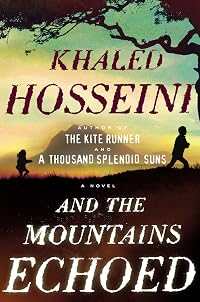
And the Mountains Echoed
by Khaled Hosseini
On This Page
Description
Presents a story inspired by human love, how people take care of one another, and how choices resonate through subsequent generations. Afghanistan, 1952. Abdullah and his sister Pari live with their father and step-mother in the small village of Shadbagh. Their father, Saboor, is constantly in search of work and they struggle together through poverty and brutal winters. To Adbullah, Pari, as beautiful and sweet-natured as the fairy for which she was named, is everything.Tags
Recommendations




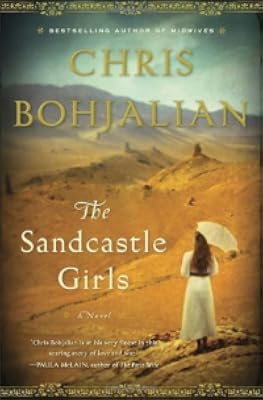
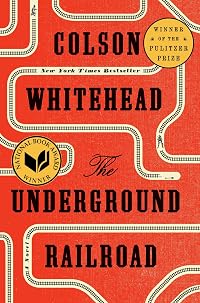


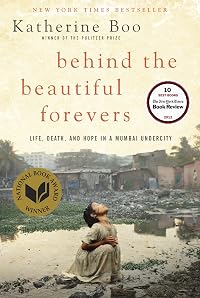
Member Recommendations
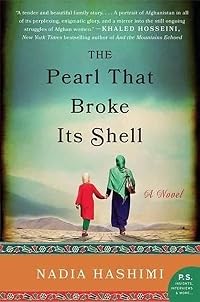
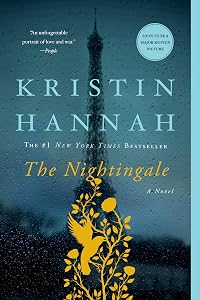
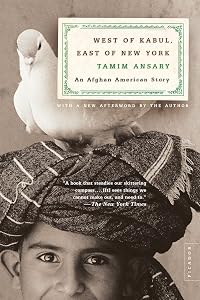
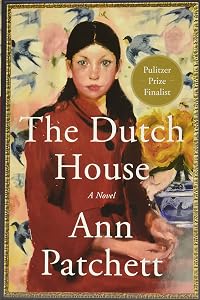
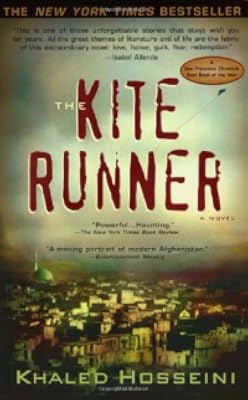
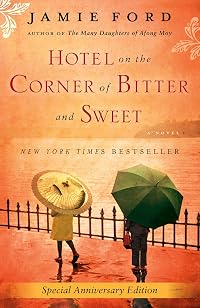
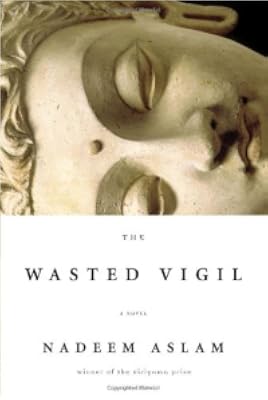
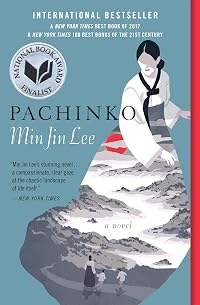
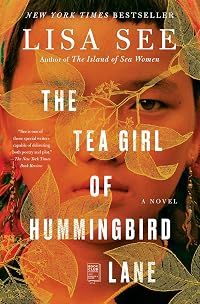
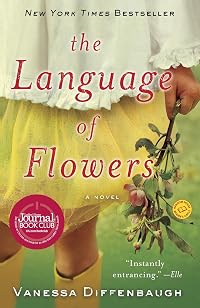
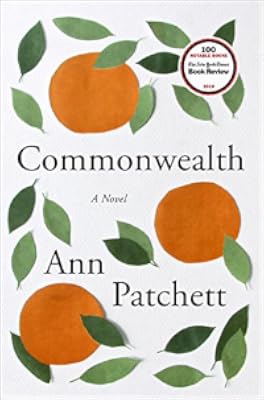
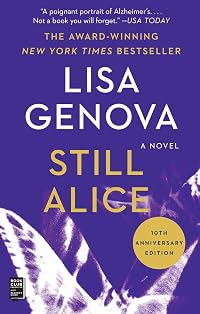
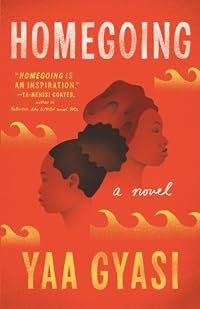
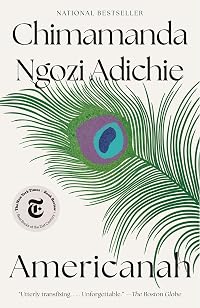
BookshelfMonstrosity Sold by their impoverished families, the young Afghan girls at the center of these sweeping novels undergo long, arduous journeys, geographically and emotionally, before coming to terms with their experiences. Though centuries separate the narratives, both offer richly detailed settings.
Member Reviews
Although not as brutal, hard-hitting or shocking as The Kite Runner and A Thousand Splendid Suns, And the Mountains Echoed is still a great book.
Like the roots of Shadbagh’s ancient oak tree, the ripple effect stemming from brother and sister, Abdullah and Pari, born in this poverty-stricken village, spreads far and wide - from Shadbagh to Kabul, Paris and Pakistan, from the Greek Island of Tinos to sunny California.
While the devasting effects of war, corruption and displacement in Afghanistan are still key to this moving family saga, windows to a wider world weave all the threads of the evolving story into a rich tapestry.
Recurring themes of disfigurement and ill health, absent mothers and desperate fathers, unrequited love, show more forbidden love and enduring love make for an emotional read.
The poignancy of a tin of feathers, the painstaking plucking away of nightmares and wishing on ten falling leaves; the concept of cutting off a little finger to save a hand, the miraculous power of memory, majestic mountains and the magnetic pull of home will all stay with me for a long time.
Despite having to occasionally double-check timeframes and who was who I really enjoyed And the Mountains Echoed. show less
Like the roots of Shadbagh’s ancient oak tree, the ripple effect stemming from brother and sister, Abdullah and Pari, born in this poverty-stricken village, spreads far and wide - from Shadbagh to Kabul, Paris and Pakistan, from the Greek Island of Tinos to sunny California.
While the devasting effects of war, corruption and displacement in Afghanistan are still key to this moving family saga, windows to a wider world weave all the threads of the evolving story into a rich tapestry.
Recurring themes of disfigurement and ill health, absent mothers and desperate fathers, unrequited love, show more forbidden love and enduring love make for an emotional read.
The poignancy of a tin of feathers, the painstaking plucking away of nightmares and wishing on ten falling leaves; the concept of cutting off a little finger to save a hand, the miraculous power of memory, majestic mountains and the magnetic pull of home will all stay with me for a long time.
Despite having to occasionally double-check timeframes and who was who I really enjoyed And the Mountains Echoed. show less
3.75
What to say about this book? Honestly, I’m not really sure. I thought about waiting for a few days before jumping into this review. You know, to clear my head and organise my ideas. Well, that wasn't smart because now I'm even more confused. And let's be honest, I will never be ready for this review. So, here I am… writing it.
First of all, a premise. This is the first book by Hosseini that I have ever read. There are so many reviews out there saying that “And the Mountains Echoed” can't t compare to the other masterpieces Hosseini wrote prior to this one. I don't know if that’s true (yet) but it appears that this little inconvenience could affect the way I perceive this author. So now I will have to read his other books show more because I'm so curious!
Anyways… It doesn't really matter if this is my first time reading Hosseini and unfortunately landing on a "not as good" a book (as pointed out by other more experienced readers) because what I could gather from it is that I absolutely love the author’s writing style! Hosseini is a natural born storyteller, there's nothing else to say! This is the main reason that is pushing me to read his other books. I’ve been captured by his style from page one, I'll never stop saying that. Hosseini simply knows how to tell a story!
He can transport the reader to Afghanistan with astonishing (and apparently effortless) talent. Readers aren't mere spectators of the story, they feel as if they are part of it. They find themselves invested, mentally and emotionally. Especially emotionally because, let me tell you, this story is heartbreaking! And if someone tells you that they didn't weep at least once, they are lying! I refuse to believe it.
Defining the underlying theme of this book is quite the challenge. Labeling it a tribute to brotherhood, and everything that comes with it, would be an embarrassing understatement. And, quite frankly, a little bit degrading too. It deals with so much more.
Hosseini takes his time to describe the complexity of relationships and he does it while trying to teach us a very important lesson - humans are generally driven by love but they are also incredibly fragile, so falling is inevitable. The easiest mistake people tend to make in order to protect their fragility is to pretend that our actions come without consequences. This is especially true when we are not able to see those consequences with our own eyes. I think the take-home message is “life is a mess… and people are even messier”.
Now, what about the writing style? Hosseini uses the multiple point of view technique which basically means that many people tell countless of stories separated by time gaps (and also different settings). I am a huge fan of this particular technique, so he won me over with that. I appreciated the great effort the author made in trying to intertwine almost perfectly all of the stories until they completely folded on each other, forming a perfect circle. However I consider some of them a little bit superfluous or maybe carried on for too long. A quick hint would have probably been enough.
The storylines I loved the most, and also the ones I would have liked lasted a tiny bit longer, were the ones involving Abdullah, Lari and Nabi. In my opinion they are the most vivid ones. They allowed me to really connect to a deeper level with the characters.
Lastly, a huge thank you to Mr Hosseini! Thank you, sir, for opening my eyes to the Afghan culture! I must admit I’m not really informed about it but this book gave me an incredible insight and drastically changed some of my (wrong) ideas. show less
What to say about this book? Honestly, I’m not really sure. I thought about waiting for a few days before jumping into this review. You know, to clear my head and organise my ideas. Well, that wasn't smart because now I'm even more confused. And let's be honest, I will never be ready for this review. So, here I am… writing it.
First of all, a premise. This is the first book by Hosseini that I have ever read. There are so many reviews out there saying that “And the Mountains Echoed” can't t compare to the other masterpieces Hosseini wrote prior to this one. I don't know if that’s true (yet) but it appears that this little inconvenience could affect the way I perceive this author. So now I will have to read his other books show more because I'm so curious!
Anyways… It doesn't really matter if this is my first time reading Hosseini and unfortunately landing on a "not as good" a book (as pointed out by other more experienced readers) because what I could gather from it is that I absolutely love the author’s writing style! Hosseini is a natural born storyteller, there's nothing else to say! This is the main reason that is pushing me to read his other books. I’ve been captured by his style from page one, I'll never stop saying that. Hosseini simply knows how to tell a story!
He can transport the reader to Afghanistan with astonishing (and apparently effortless) talent. Readers aren't mere spectators of the story, they feel as if they are part of it. They find themselves invested, mentally and emotionally. Especially emotionally because, let me tell you, this story is heartbreaking! And if someone tells you that they didn't weep at least once, they are lying! I refuse to believe it.
Defining the underlying theme of this book is quite the challenge. Labeling it a tribute to brotherhood, and everything that comes with it, would be an embarrassing understatement. And, quite frankly, a little bit degrading too. It deals with so much more.
Hosseini takes his time to describe the complexity of relationships and he does it while trying to teach us a very important lesson - humans are generally driven by love but they are also incredibly fragile, so falling is inevitable. The easiest mistake people tend to make in order to protect their fragility is to pretend that our actions come without consequences. This is especially true when we are not able to see those consequences with our own eyes. I think the take-home message is “life is a mess… and people are even messier”.
Now, what about the writing style? Hosseini uses the multiple point of view technique which basically means that many people tell countless of stories separated by time gaps (and also different settings). I am a huge fan of this particular technique, so he won me over with that. I appreciated the great effort the author made in trying to intertwine almost perfectly all of the stories until they completely folded on each other, forming a perfect circle. However I consider some of them a little bit superfluous or maybe carried on for too long. A quick hint would have probably been enough.
The storylines I loved the most, and also the ones I would have liked lasted a tiny bit longer, were the ones involving Abdullah, Lari and Nabi. In my opinion they are the most vivid ones. They allowed me to really connect to a deeper level with the characters.
Lastly, a huge thank you to Mr Hosseini! Thank you, sir, for opening my eyes to the Afghan culture! I must admit I’m not really informed about it but this book gave me an incredible insight and drastically changed some of my (wrong) ideas. show less
I am quite conflicted about what I think about this book. The third in the series, following on from The Kite Runner and A Thousand Splendid Suns, And the Mountains Echoed takes on the same ideas of siblings separated at birth and the ripples that causes and the searching that ensues.
There were many things I admired in this book. I have always enjoyed the depiction of Afghanistan in Hosseini's writing and this book is no different. We see it through several generations as it changes, is at war and as money arrives. We see the cultural clashes between those living a more traditional life in poverty out in the vast rural areas and the more westernised city people who have proabably lived abroad at some point in their lives, the effect aid show more and charity workers have on rental prices and then the drugs money.
Poverty drives the action for much of this book. A father sells his daughter to a wealthy couple in Kabul who are unable to have children together. The daughter, Pari, is young and we are expecting it because the book opens with a traditional tale of a div or demon that visits villages and takes children away. When eventually someone goes searching for them, they find them living in what could be called paradise, happy, well-fed and playing, leaving the parents in torment. Would the child be better off left where it is? So, we know the track this book is on. The searching for a sibling, but if that is a track, this story is shunted into many sidelines and diversions because as we move through the generations, more and more people become involved whether they were aware of the initial incident or not. This is a really clever way to show the ripples of effect on a family and those who know them.
Eventually, there is a reuniting when the siblings are much older and both are living in other countries. There is a definite theme running through the book of the effect of war, the Taliban and poverty on the people and thos who can, leave. It then becomes a story of the diaspora, the feeling of wanting to return and give something back. Here Hosseini plays with us with two men, both now living in America, one a doctor and the other more like a used-car salesman, Timur. They both travel back to Afghanistan and find themselves visiting a young girl with a severe deformity. The doctor visits her daily and promises to get her the surgery she needs. When he returns to America he feels the materialism of his life as a cinema room is built onto his house. The young girl fades from his mind and his half-hearted attempt to bring her to America for surgery fails at the first hurdle. It turns out that his dodgy cousin, full of talk and ego, does manage to enable her to have surgery and so our perceptions of what we might imagine happening are manipulated.
In fact there are several characters who are in pairs to provide contrast, or individual characters who show us opposing sides of themselves. The book also uses different points of view to expand what we can see and to show us how various characters feel. There are interviews and letters/postcards and so this book is filled to the brim with devices to enable the story to be told. Too many? Possibly.
There is much mention of beauty in the book, particularly in people and then there is deformity in others. This contrasting is quite obvious but it's role in the book is less clear and I couldn't follow that idea through as being important to the story. And the title? I find that hard to link in to the story unless sound waves are being used in the same way as ripples. Ripples, though, are not the same as an echo which is something repeated again and again until it fades away. What in this book is echoing other than the trauma which this country has and still is enduring? The title is a quote from William Blake's Nurse's Song and I struggle to make it fit. I understand that the whole of the series of poems is about innocence and then the corruption of this and that fits better. So is it the corruption of people and life that is echoing in this book? Or poverty and wealth? Or about the loss of innocence in children? Or all of those things?
Let me know what you think. show less
There were many things I admired in this book. I have always enjoyed the depiction of Afghanistan in Hosseini's writing and this book is no different. We see it through several generations as it changes, is at war and as money arrives. We see the cultural clashes between those living a more traditional life in poverty out in the vast rural areas and the more westernised city people who have proabably lived abroad at some point in their lives, the effect aid show more and charity workers have on rental prices and then the drugs money.
Poverty drives the action for much of this book. A father sells his daughter to a wealthy couple in Kabul who are unable to have children together. The daughter, Pari, is young and we are expecting it because the book opens with a traditional tale of a div or demon that visits villages and takes children away. When eventually someone goes searching for them, they find them living in what could be called paradise, happy, well-fed and playing, leaving the parents in torment. Would the child be better off left where it is? So, we know the track this book is on. The searching for a sibling, but if that is a track, this story is shunted into many sidelines and diversions because as we move through the generations, more and more people become involved whether they were aware of the initial incident or not. This is a really clever way to show the ripples of effect on a family and those who know them.
Eventually, there is a reuniting when the siblings are much older and both are living in other countries. There is a definite theme running through the book of the effect of war, the Taliban and poverty on the people and thos who can, leave. It then becomes a story of the diaspora, the feeling of wanting to return and give something back. Here Hosseini plays with us with two men, both now living in America, one a doctor and the other more like a used-car salesman, Timur. They both travel back to Afghanistan and find themselves visiting a young girl with a severe deformity. The doctor visits her daily and promises to get her the surgery she needs. When he returns to America he feels the materialism of his life as a cinema room is built onto his house. The young girl fades from his mind and his half-hearted attempt to bring her to America for surgery fails at the first hurdle. It turns out that his dodgy cousin, full of talk and ego, does manage to enable her to have surgery and so our perceptions of what we might imagine happening are manipulated.
In fact there are several characters who are in pairs to provide contrast, or individual characters who show us opposing sides of themselves. The book also uses different points of view to expand what we can see and to show us how various characters feel. There are interviews and letters/postcards and so this book is filled to the brim with devices to enable the story to be told. Too many? Possibly.
There is much mention of beauty in the book, particularly in people and then there is deformity in others. This contrasting is quite obvious but it's role in the book is less clear and I couldn't follow that idea through as being important to the story. And the title? I find that hard to link in to the story unless sound waves are being used in the same way as ripples. Ripples, though, are not the same as an echo which is something repeated again and again until it fades away. What in this book is echoing other than the trauma which this country has and still is enduring? The title is a quote from William Blake's Nurse's Song and I struggle to make it fit. I understand that the whole of the series of poems is about innocence and then the corruption of this and that fits better. So is it the corruption of people and life that is echoing in this book? Or poverty and wealth? Or about the loss of innocence in children? Or all of those things?
Let me know what you think. show less
"I suspect the truth is that we are waiting, all of us, against insurmountable odds, for something extraordinary to happen to us."
"You want a story and I will tell you one," is the opening line of this multi-generational family saga. It starts in 1952 with an impoverished Afghani father entertaining his children with a fable the night before they embark on a journey through the mountains of the book's title to Kabul, a fable that will still echo some sixty years later.
In the fable a div, or demon, forces a father to a make terrible choice, a similar choice that the storyteller himself must also face.
One of many characters states "A story is like a moving train, no matter where you hop onboard, you are bound to reach your destination show more sooner or later." This is really very apt for this novel. Hosseini doesn't restrict the narrative to any single route, instead it flips from various characters, eras, countries and even continents as it weaves a series of inter-connected tales. Many of these tales initially seem like branch lines going nowhere other than to take the reader away from the two central siblings but eventually each tale helps the reader get to where they want to go, if not necessarily in the route they had expected.
Throughout the novel there is grief, punishment, sadness and sorrow but there are also flashes of joy, happiness and atonement as it wends its way to its touching conclusion. But perhaps the over-riding emotion is guilt. How the decisions of parents can affect the lives of their offspring.
This isn't a book where the Taliban are particularly prominent, rather the author looks at Afghanistan's relationship with the wider world; what its traumas have done to those who remain and also to those who leave. One that asks what the rich can do do for the poor?
I found this a beautifully written and thought provoking read that not only took me on a roller-coaster of emotions but also gave me a brief insight into this conflicted and complex country and its people. As such I would highly recommend it. show less
"You want a story and I will tell you one," is the opening line of this multi-generational family saga. It starts in 1952 with an impoverished Afghani father entertaining his children with a fable the night before they embark on a journey through the mountains of the book's title to Kabul, a fable that will still echo some sixty years later.
In the fable a div, or demon, forces a father to a make terrible choice, a similar choice that the storyteller himself must also face.
One of many characters states "A story is like a moving train, no matter where you hop onboard, you are bound to reach your destination show more sooner or later." This is really very apt for this novel. Hosseini doesn't restrict the narrative to any single route, instead it flips from various characters, eras, countries and even continents as it weaves a series of inter-connected tales. Many of these tales initially seem like branch lines going nowhere other than to take the reader away from the two central siblings but eventually each tale helps the reader get to where they want to go, if not necessarily in the route they had expected.
Throughout the novel there is grief, punishment, sadness and sorrow but there are also flashes of joy, happiness and atonement as it wends its way to its touching conclusion. But perhaps the over-riding emotion is guilt. How the decisions of parents can affect the lives of their offspring.
This isn't a book where the Taliban are particularly prominent, rather the author looks at Afghanistan's relationship with the wider world; what its traumas have done to those who remain and also to those who leave. One that asks what the rich can do do for the poor?
I found this a beautifully written and thought provoking read that not only took me on a roller-coaster of emotions but also gave me a brief insight into this conflicted and complex country and its people. As such I would highly recommend it. show less
I happen to like books that make no apologies for breaking our expectations. This one doesn't disappoint. I'd heard someone say that it read like a collection of stories, and I found that thought kept coming to me as I read, wondering if that was true, or what exactly it was that I was reading.
We open on a father telling a story of great loss to his young children. A story that is redeemed, to some extent, by the actions of the father in the tale.
Not so in Hosseini's tale, though. With the opening tale as a mirror, we move over years, seeing points where lives intersect, and places where resolution could happen. We get caught up in these other lives, and we begin to understand how it is that one simple act here ripples over there.
As show more readers, we're accustomed to the happy ending. We want to turn those last pages with the tension of the story resolved. To come to the end of "Mountains" we're uncertain if we find that relief or not. We want to believe we've had it... and yet, something tells us that we've still closed the pages on a tragedy. A happy tragedy..
Much enjoyed. Well worth the read. show less
We open on a father telling a story of great loss to his young children. A story that is redeemed, to some extent, by the actions of the father in the tale.
Not so in Hosseini's tale, though. With the opening tale as a mirror, we move over years, seeing points where lives intersect, and places where resolution could happen. We get caught up in these other lives, and we begin to understand how it is that one simple act here ripples over there.
As show more readers, we're accustomed to the happy ending. We want to turn those last pages with the tension of the story resolved. To come to the end of "Mountains" we're uncertain if we find that relief or not. We want to believe we've had it... and yet, something tells us that we've still closed the pages on a tragedy. A happy tragedy..
Much enjoyed. Well worth the read. show less
It's hard to sum up a book that is driven by moments and stories rather than a cohesive plot. But that's why I loved this book. It was fascinating to see how one decision affected so many different lives. Hosseini's writing is beautiful, of course, and he uses his talents to bring all of his characters to life. We don't spend a lot of time with most of them, but I feel like I just spent the last week getting to know these people intimately, with all their strengths and flaws.
The only complaint I really have about the book (and it's not so much a complaint as it is an observation) is that every character is connected to tragedy in some way, whether it be cancer or Alzheimer's or depression, or violence or poverty or injustice. I just show more wanted these characters to be happy, but all of them were blocked by something. None of them ever got the thing they wanted most. And yet, this book isn't just about painting a picture of the harsh realities of life. Yes, some people are never able to overcome depression. Those who have Alzheimer's will never be themselves again, no matter how much you wish it. People have to make hard decisions and deal with the ramifications for the rest of their lives. But more than anything, this book is story after story of how people found ways to go on anyway. Some did it with more grace than others, but despite its harsh realities, life goes on. And there's something beautiful about that. show less
The only complaint I really have about the book (and it's not so much a complaint as it is an observation) is that every character is connected to tragedy in some way, whether it be cancer or Alzheimer's or depression, or violence or poverty or injustice. I just show more wanted these characters to be happy, but all of them were blocked by something. None of them ever got the thing they wanted most. And yet, this book isn't just about painting a picture of the harsh realities of life. Yes, some people are never able to overcome depression. Those who have Alzheimer's will never be themselves again, no matter how much you wish it. People have to make hard decisions and deal with the ramifications for the rest of their lives. But more than anything, this book is story after story of how people found ways to go on anyway. Some did it with more grace than others, but despite its harsh realities, life goes on. And there's something beautiful about that. show less
I love Khaled Hosseini’s novels, but they make me feel so sad. All three have made me cry. I think Hosseini depicts the bonds of family better than any other living writer. He is wonderful at conveying the forces that keep family members together and apart. For personal reasons, I found the sections in which someone cared for an elderly and infirm person especially moving. The whole novel is beautiful, involving, elegantly told, and full of feeling. It is more complex, spanning a longer time period and a greater number of characters, than his two previous works. This adds to its impact; some characters are only seen for a chapter but their experience further illuminates that of others. The whole book is a bittersweet pleasure. It show more reminds you of your own bonds, past and present, blood relatives and close friends, the joy of companionship and the sadness of parting. It demonstrates the personal, individual impact of national upheavals and war. And every character feels profoundly real, complex, and sympathetic. show less
Members
- Recently Added By
Lists

Top Five Books of 2013
1,562 works; 721 members

Recommend the 20 best books you've read in the last five years
2,168 works; 608 members

Best of World Literature
437 works; 52 members

Best 21st Century Books (So Far)
679 works; 86 members

Top Five Books of 2014
1,064 works; 398 members

Asia
178 works; 7 members

Books Read in 2014
2,344 works; 89 members

Summer Reads 2014
207 works; 70 members

SantaThing 2014 Gifts
299 works; 17 members

Perspectives Book Club Picks
49 works; 3 members

Global Reads: Books Set in South Asia
30 works; 3 members

Community or Social Activism
14 works; 1 member

Books Read in 2019
4,052 works; 110 members

Swinging Seventies
255 works; 18 members

My TBR list
38 works; 1 member

Bibliotherapy: Family and Personal Social Issues
174 works; 5 members

Historical Fiction Books
99 works; 5 members

Most Frequently Tagged "Read in 2015"
70 works; 1 member

Allie's Wishlist
217 works; 2 members

Mountain Adventures
26 works; 1 member
Author Information

26+ Works 102,051 Members
Khaled Hosseini was born in Kabul, Afghanistan on March 4, 1965. He received a bachelor's degree in biology from Santa Clara University in 1988 and a medical degree from the University of California-San Diego's School of Medicine in 1993. He was a practicing internist from 1996 to 2004. While in medical practice, he began writing his first novel, show more The Kite Runner, which was published in 2003. His other books include A Thousand Splendid Suns and And the Mountains Echoed. In 2006, he was named a Goodwill Envoy to UNHCR, the United Nations Refugee Agency. He established The Khaled Hosseini Foundation, a nonprofit that provides humanitarian assistance to the people of Afghanistan. (Bowker Author Biography) show less
Some Editions
Awards and Honors
Awards
Distinctions
Series
Belongs to Publisher Series
El balancí [Edicions 62] (699)
Fischer Taschenbuch (19820)
Work Relationships
Is contained in
Is abridged in
Common Knowledge
- Canonical title*
- En uit de bergen kwam de echo
- Original title
- And the Mountains Echoed
- Original publication date
- 2013-05-21
- People/Characters
- Abdullah; Pari Wahdati; Nabi; Parwana; Suleiman Wahdati; Nila Wahdati (show all 18); Saboor; Masooma; Markos Varvaris; Amra Ademovic; Thalia Gianakos; Adel; Idris Bashiri; Timur Bashiri; Roshana 'Roshi'; Madeline Gianakos Kouris; Odelia Varvaris; Gholam
- Important places
- Kabul, Afghanistan; Paris, France; San Francisco, California, USA; Tinos, Greece; Shadbagh, Afghanistan; Afghanistan (show all 7); California, USA
- Important events
- Saur Revolution (1978-04-28); Soviet-Afghan War (1979 | 1989); Afghan Civil War (1989 | 1996)
- Epigraph
- Out beyond ideas
of wrongdoing and rightdoing,
there is a field.
I'll meet you there.
Jelaluddin Rumi, 13th century - Dedication
- This book is dedicated to Haris and Farah,
both the noor of my eyes, and to my father,
who would have been proud
For Elaine - First words
- So, then. You want a story and I will tell you one. But just the one.
- Quotations
- I suspect the truth is that we are waiting, all of us, against insurmountable odds, for something extraordinary to happen to us.
J'aurais du etre plus gentille--I should have been more kind. That is something a person will never regret.
Beauty is an enormous, unmerited gift given randomly, stupidly. - Last words
- (Click to show. Warning: May contain spoilers.)Drijft weg, zorgeloos, alles helder en stralend, en alles tegelijk.
(Click to show. Warning: May contain spoilers.)Drifts off, untroubled, everything clear, and radiant, and all at once. - Original language*
- Englisch
*Some information comes from Common Knowledge in other languages. Click "Edit" for more information.
Classifications
Statistics
- Members
- 8,536
- Popularity
- 1,299
- Reviews
- 350
- Rating
- (4.01)
- Languages
- 28 — Arabic, Bulgarian, Catalan, Czech, Danish, Dutch, English, Estonian, Finnish, French, German, Hebrew, Hungarian, Italian, Lithuanian, Norwegian (Bokmål), Norwegian, Farsi/Persian, Polish, Portuguese, Romanian, Russian, Serbian, Slavic (Other), Spanish, Swedish, Turkish, Chinese, traditional
- Media
- Paper, Audiobook, Ebook
- ISBNs
- 132
- ASINs
- 25