On This Page
Description
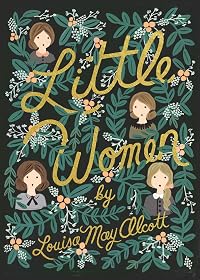
Chronicles the joys and sorrows of the four March sisters as they grow into young ladies in nineteenth-century New England.Tags
Recommendations



Member Reviews
Ah, Little Women. I did not quite realize it when I read you many years ago, but I am the Jo of my family. Tomboyish, hot-tempered, geeky. Unladylike, swearing, opinionated. Clumsy--I would be the one to burn my dress, spill things on me, and not be asked to dance. I love books more than socializing. And I have three wonderful sisters.
This book is a charming return to my childhood, and I had the treat of viewing it through the lens of life experiences this time around. I didn't understand Jo's romantic choices when I was young, but I completely understand now. I would have done the same thing. I won't spoil you if you haven't read it already, but if you have, which Marsh sister are you?
This book is a charming return to my childhood, and I had the treat of viewing it through the lens of life experiences this time around. I didn't understand Jo's romantic choices when I was young, but I completely understand now. I would have done the same thing. I won't spoil you if you haven't read it already, but if you have, which Marsh sister are you?
I must 'fess' - my only fault is writing cynical reviews of 'classic' novels that everyone else loves! I will try to be a better reviewer, and aspire to be blinded by nostalgia, and put my faith in God - no, wait, I won't. Little Women must have rotted my brain! What a trying read! I watched the BBC adaptation a couple of Christmases ago and loved the story and the characters, so I instantly downloaded the book - but never got around to completely destroying the illusion until now. The adaptation was far, far better than the 'classic' novel - and according to devoted fans of Alcott, the 2017 adaptation is not even one of the better retellings! I completely understand the distortion of nostalgia - I love the Scarlet Pimpernel books by show more Baroness Orczy, but understand how modern readers hate the florid prose and biased view of the French Revolution. Little Women is like that - for those readers who were introduced to Meg, Amy, Beth and Jo as children, I'm sure the author's simplistic narrative, cliched characters and leaden moral lessons will never fall out of fashion, but I struggled to read the first book and won't be continuing with Good Wives. show less
Readers are drawn into this classic story with Louisa May Alcott's first sentence and stay intrigued by the March characters through the entire book
as they endure poverty, separation, and the death of a sister while still celebrating their shared life. Jo stands out as an early feminist who is
clearly unhappy with the strictures imposed in the expectations of women's behavior.
Amy deserting Beth, then ending up with Laurie felt like the only contrived note.
And, the baby talk along with the insufferable "Marmee" at times seemed endless.
The author's strong feelings enlighten the pages, as with:
"Rich people have no right to sit down and enjoy themselves, or let their money accumulate for others to waste."
as they endure poverty, separation, and the death of a sister while still celebrating their shared life. Jo stands out as an early feminist who is
clearly unhappy with the strictures imposed in the expectations of women's behavior.
Amy deserting Beth, then ending up with Laurie felt like the only contrived note.
And, the baby talk along with the insufferable "Marmee" at times seemed endless.
The author's strong feelings enlighten the pages, as with:
"Rich people have no right to sit down and enjoy themselves, or let their money accumulate for others to waste."
How is it even possible to write about a novel that almost everyone has read, millions declare to be a favourite and has delighted women since the 1860’s? I really don’t know where to start.
I can’t begin to guess how long it is since I first read Little Women, I am now 44 so I suppose it is likely to be thirty years ago. The famous opening Christmas scene however, has remained with me all that time, although little else had. I remembered Beth’s illness and Jo cutting her hair, Marmee going off to her husband injured in the war – but that was all. I am delighted that this beautiful penguin clothbound classic edition now has both volumes of little women published in one book under one title. That apparently is how Louisa May show more Alcott would have wished it, the second volume, so often published separately and entitled Good Wives makes far more sense as part two of one novel. I know the two novels are generally published together now, but I certainly remember having them in two small separate volumes, the cover of my copy of Good Wives was baby pink. The note on the text of this edition in fact suggests that Alcott would have scorned the title Good Wives, which I can well imagine.
I am fairly sure that I am certainly not anything like the audience that Louisa May Alcott had in mind when she was writing this novel in the 1860’s. I am sure she was thinking of young ladies still in, or not long out of the school room. She may have wanted to give these American young ladies something to think about – to guide their futures and instruct their pliable young minds. Therefore there is a slightly pious and sentimental tone to this novel. That is in no way a criticism; I loved every word of this glorious book. I suspect I enjoyed it more now as a world weary cynical forty-something than I ever did as a young girl. I actually found it wonderfully relaxing to read such a deeply charming and heart-warming novel.
“Christmas won't be Christmas without any presents," grumbled Jo, lying on the rug.
"It's so dreadful to be poor!" sighed Meg, looking down at her old dress.
"I don't think it's fair for some girls to have plenty of pretty things, and other girls nothing at all," added little Amy, with an injured sniff.
"We've got Father and Mother, and each other," said Beth contentedly from her corner.”
There are of course hidden depths. Louisa May Alcott has written beautifully about family life, about coping with war and poverty, about young women growing up and taking their place in the world. Largely based upon Louisa May Alcott’s own childhood with her mother and sisters, Little Women is the famous story of a Victorian American family at the time of the Civil War in New England. I think we all know the story of Little Women, by and large. It is the story of four sisters and their mother and later their father, reduced to much poorer standard of living than they were born to. The novel opens at Christmas Meg, Jo, Beth and Amy are contemplating a Christmas without presents, and without their father – away at the civil war. Their mother, Marmee is a wonderfully sensible women, she guides and instructs her daughters in her own special way, often showing them the right path, rather than laying down the law. Each of the four March sisters has a wonderfully different personality. Lovely Meg the beauty yearns rather for nice things, Jo the unconventional tomboy has one beauty her fabulous hair, and she loves to climb trees and race about and despises ladylike behaviour. She loves books, and writes stories, and is quite definitely my favourite character by far.
“When Jo's conservative sister Meg says she must turn up her hair now that she is a "young lady," Jo shouts, "I'm not! and if turning up my hair makes me one, I'll wear it in two tails till I'm twenty.... I hate to think I've got to grow up, and be Miss March, and wear long gowns, and look as prim as a China aster! It's bad enough to be a girl anyway, when I like boys' games and work and manners! I can't get over my disappointment in not being a boy; and it's worse than ever now, for I'm dying to go and fight with Papa, and I can only stay at home and knit, like a poky old woman.”
Beth is the gentle soul that everyone loves, she cares for old ugly dolls that no one wants and is prone to sickliness. Amy the youngest March sister is a little spoiled has an artistic streak and great ambitions for it.
“There are many Beths in the world, shy and quiet, sitting in corners till needed, and living for others so cheerfully that no one sees the sacrifices till the little cricket on the hearth stops chirping, and the sweet, sunshiny presence vanishes, leaving silence and shadow behind.”
Next door to the March family is the large home of Mr Laurence and his grandson Theodore Laurence – often called Laurie – and later Teddy by Jo. Laurie becomes a great favourite in the March household, practically one of the family, he sees them through several trials and tribulations. It appears, though that Jo and he are the greatest friends. Mr Laurence is won over by the darling little Beth, and the two families are in and out of one another’s homes all the time. As time goes on there are dark days to be got through, Mr March comes home from the war, and then much to Jo’s horror it looks like Meg may have caught the eye of Laurie’s handsome tutor Mr Brooke.
Part two then charts the lives of the March girls three years on. Meg marries her John and has to learn to be the wife of a poor man, how to manage her small home, and not envy her wealthier friend. Jo and Amy both spend time away, pursing their ambitions. Romance and heartbreak rears its ugly head as does tragedy. Years pass and the lives of these lovely people change, as do all our lives as we grow up and start out into the world. The first volume is lighter, the hopes dreams and jolly japes of young girls who love each other very much, and have a wonderfully wise and gentle guide in their mother.
“Wouldn't it be fun if all the castles in the air which we make could come true and we could live in them?”
In the second volume, each member of the March family has to find their way, Marmee is still their guiding hand, but can’t live their lives for them. As well as new starts and great happiness, there are darker times to be got through and heartbreak and misunderstandings to be borne. This is ultimately a wonderful novel, charming and heart-warming. Why on earth it has taken me quite so long to re-read this novel I have no idea. However I am so glad I left it till now, it has been the joy of my Christmas so far. show less
I can’t begin to guess how long it is since I first read Little Women, I am now 44 so I suppose it is likely to be thirty years ago. The famous opening Christmas scene however, has remained with me all that time, although little else had. I remembered Beth’s illness and Jo cutting her hair, Marmee going off to her husband injured in the war – but that was all. I am delighted that this beautiful penguin clothbound classic edition now has both volumes of little women published in one book under one title. That apparently is how Louisa May show more Alcott would have wished it, the second volume, so often published separately and entitled Good Wives makes far more sense as part two of one novel. I know the two novels are generally published together now, but I certainly remember having them in two small separate volumes, the cover of my copy of Good Wives was baby pink. The note on the text of this edition in fact suggests that Alcott would have scorned the title Good Wives, which I can well imagine.
I am fairly sure that I am certainly not anything like the audience that Louisa May Alcott had in mind when she was writing this novel in the 1860’s. I am sure she was thinking of young ladies still in, or not long out of the school room. She may have wanted to give these American young ladies something to think about – to guide their futures and instruct their pliable young minds. Therefore there is a slightly pious and sentimental tone to this novel. That is in no way a criticism; I loved every word of this glorious book. I suspect I enjoyed it more now as a world weary cynical forty-something than I ever did as a young girl. I actually found it wonderfully relaxing to read such a deeply charming and heart-warming novel.
“Christmas won't be Christmas without any presents," grumbled Jo, lying on the rug.
"It's so dreadful to be poor!" sighed Meg, looking down at her old dress.
"I don't think it's fair for some girls to have plenty of pretty things, and other girls nothing at all," added little Amy, with an injured sniff.
"We've got Father and Mother, and each other," said Beth contentedly from her corner.”
There are of course hidden depths. Louisa May Alcott has written beautifully about family life, about coping with war and poverty, about young women growing up and taking their place in the world. Largely based upon Louisa May Alcott’s own childhood with her mother and sisters, Little Women is the famous story of a Victorian American family at the time of the Civil War in New England. I think we all know the story of Little Women, by and large. It is the story of four sisters and their mother and later their father, reduced to much poorer standard of living than they were born to. The novel opens at Christmas Meg, Jo, Beth and Amy are contemplating a Christmas without presents, and without their father – away at the civil war. Their mother, Marmee is a wonderfully sensible women, she guides and instructs her daughters in her own special way, often showing them the right path, rather than laying down the law. Each of the four March sisters has a wonderfully different personality. Lovely Meg the beauty yearns rather for nice things, Jo the unconventional tomboy has one beauty her fabulous hair, and she loves to climb trees and race about and despises ladylike behaviour. She loves books, and writes stories, and is quite definitely my favourite character by far.
“When Jo's conservative sister Meg says she must turn up her hair now that she is a "young lady," Jo shouts, "I'm not! and if turning up my hair makes me one, I'll wear it in two tails till I'm twenty.... I hate to think I've got to grow up, and be Miss March, and wear long gowns, and look as prim as a China aster! It's bad enough to be a girl anyway, when I like boys' games and work and manners! I can't get over my disappointment in not being a boy; and it's worse than ever now, for I'm dying to go and fight with Papa, and I can only stay at home and knit, like a poky old woman.”
Beth is the gentle soul that everyone loves, she cares for old ugly dolls that no one wants and is prone to sickliness. Amy the youngest March sister is a little spoiled has an artistic streak and great ambitions for it.
“There are many Beths in the world, shy and quiet, sitting in corners till needed, and living for others so cheerfully that no one sees the sacrifices till the little cricket on the hearth stops chirping, and the sweet, sunshiny presence vanishes, leaving silence and shadow behind.”
Next door to the March family is the large home of Mr Laurence and his grandson Theodore Laurence – often called Laurie – and later Teddy by Jo. Laurie becomes a great favourite in the March household, practically one of the family, he sees them through several trials and tribulations. It appears, though that Jo and he are the greatest friends. Mr Laurence is won over by the darling little Beth, and the two families are in and out of one another’s homes all the time. As time goes on there are dark days to be got through, Mr March comes home from the war, and then much to Jo’s horror it looks like Meg may have caught the eye of Laurie’s handsome tutor Mr Brooke.
Part two then charts the lives of the March girls three years on. Meg marries her John and has to learn to be the wife of a poor man, how to manage her small home, and not envy her wealthier friend. Jo and Amy both spend time away, pursing their ambitions. Romance and heartbreak rears its ugly head as does tragedy. Years pass and the lives of these lovely people change, as do all our lives as we grow up and start out into the world. The first volume is lighter, the hopes dreams and jolly japes of young girls who love each other very much, and have a wonderfully wise and gentle guide in their mother.
“Wouldn't it be fun if all the castles in the air which we make could come true and we could live in them?”
In the second volume, each member of the March family has to find their way, Marmee is still their guiding hand, but can’t live their lives for them. As well as new starts and great happiness, there are darker times to be got through and heartbreak and misunderstandings to be borne. This is ultimately a wonderful novel, charming and heart-warming. Why on earth it has taken me quite so long to re-read this novel I have no idea. However I am so glad I left it till now, it has been the joy of my Christmas so far. show less
‘’I like good, strong words that mean something.’’
Impossible to think that I hadn’t read Louisa May Alcott’s classic novel before this year’s Christmas holidays. And yet, I think that for everything there is a reason because its comfort, however momentary, was indeed welcoming during one of the most emotionally draining periods of my life.
This is the story of the March family, centred around the joys, the hopes, the pain, the dreams, the labours and the loves of the four sisters. Meg, Jo, Beth and Amy. All different, all with their gifts and weaknesses (although some are weaker than the others…). Through this beloved family, Alcott comments on the factors that shaped women’s lives at that time, the stereotypes, the show more prejudices and the unchanged, almost eternal way certain feelings are experienced.
Reading is the best comfort. Jo, especially, demonstrates this view most tangibly. Yes, books are the warmest company and I can verify that because I am talking from the bitterest of experiences. Even fairy tales are an escape from an unsatisfying reality and nowhere is this better demonstrated than in the Pickwick Portfolio, the pride and joy of the March sisters. As the reality of poverty and hardship is depicted throughout the novel with a clear eye, never sentimentally or romantically, reading and evenings by the fire become the means for a mind to find nourishment and comfort. When the pain is so acute, your heart seems within the clutches of a vise, you trust in two things. God and books. They are possibly the only ones that will not disappoint you. And it would be unforgivable not to mention that Alcott’s must be one of the first detailed depictions of a writer’s battle between the Commercial and the material that comes straight from their hearts, a fight that must be a dragon circling every writer’s lair.
Louisa May Alcott portrays the ‘woes’ of womanhood to perfection. ‘Be elegant’. ‘Be quiet’. ‘Find a husband. Make sure he is rich.’ Jo refuses this charade. She is thinking of the women who fight a different war at home while their husbands are away. While we are building our castles in the air when we are young, we don’t stop and think how quickly they are bound to fall once we reach a certain age when we can’t dream anymore…Alcott shows that, unlike Amy and her pitiful whims and fake coquetry, women who love the hardest are the seemingly ‘immune’ ones, like Jo. Moreover, she places an emphasis on the balance between motherhood and fatherhood for the creation of a beautiful family. Contemporary writers who ‘fight against patriarchy’ should take note of it. I mean, you wouldn’t have been born without a man, right? Right.
Jo is the heart of the story. The soul. The epitome of the bookish tomboy, the fire, the spirit, the independence, the refusal to compromise. When she falls in love, she keeps it locked within her. Her temper is her way of rebelling against the norm, even when she tries to contain it. She is the only sister who pursues a dream that doesn’t involve men (with the exception of Beth, of course) but targets personal and artistic fulfilment. She is the one who jumps to a loved one’s defence in ways that are most ‘unladylike’ and I could easily see my self reflected in what some would still characterise as ‘improper’, ‘unwomanly’ behaviour. They do settle forAnd leave it to her to make everything sound naughtier than it should…Women like Jo are attracted by the cerebral; they answer when their minds are stimulated. But weak men? They still settle for the timid, boring one, the docile, the fake, the plastic, the empty, the comfortable. When they can’t have the fire…
Make no mistake, dear friends. Not many things have changed over the centuries…
I fully agree with the ‘classic’ status the novel has acquired. The character of Jo will stay with me forever, and Alcott’s subtle satire exposes the stereotypes without fully condemning them, however. I am vehemently against marriage, and I have a few qualms over the way Jo’s character was ‘wrapped up’ at the end of the novel,l but that’s just me and my cynical nature.
There is a distinctive, calming quietness in this novel. A novel for winter evenings and mornings, slow and still. While I was reading, I was taken back to my childhood and the serenity I felt when I used to sit in my grandma’s house, very early in the morning during Christmas, watching the grey sky.
I can’t do this anymore. It’s impossible to experience the same innocence and lightness. It’s just not there now. Now, more than ever…
‘’A quick temper, sharp tongue and restless spirit.’’
My reviews can also be found on https://theopinionatedreaderblog.wordpress.com/ show less
Impossible to think that I hadn’t read Louisa May Alcott’s classic novel before this year’s Christmas holidays. And yet, I think that for everything there is a reason because its comfort, however momentary, was indeed welcoming during one of the most emotionally draining periods of my life.
This is the story of the March family, centred around the joys, the hopes, the pain, the dreams, the labours and the loves of the four sisters. Meg, Jo, Beth and Amy. All different, all with their gifts and weaknesses (although some are weaker than the others…). Through this beloved family, Alcott comments on the factors that shaped women’s lives at that time, the stereotypes, the show more prejudices and the unchanged, almost eternal way certain feelings are experienced.
Reading is the best comfort. Jo, especially, demonstrates this view most tangibly. Yes, books are the warmest company and I can verify that because I am talking from the bitterest of experiences. Even fairy tales are an escape from an unsatisfying reality and nowhere is this better demonstrated than in the Pickwick Portfolio, the pride and joy of the March sisters. As the reality of poverty and hardship is depicted throughout the novel with a clear eye, never sentimentally or romantically, reading and evenings by the fire become the means for a mind to find nourishment and comfort. When the pain is so acute, your heart seems within the clutches of a vise, you trust in two things. God and books. They are possibly the only ones that will not disappoint you. And it would be unforgivable not to mention that Alcott’s must be one of the first detailed depictions of a writer’s battle between the Commercial and the material that comes straight from their hearts, a fight that must be a dragon circling every writer’s lair.
Louisa May Alcott portrays the ‘woes’ of womanhood to perfection. ‘Be elegant’. ‘Be quiet’. ‘Find a husband. Make sure he is rich.’ Jo refuses this charade. She is thinking of the women who fight a different war at home while their husbands are away. While we are building our castles in the air when we are young, we don’t stop and think how quickly they are bound to fall once we reach a certain age when we can’t dream anymore…Alcott shows that, unlike Amy and her pitiful whims and fake coquetry, women who love the hardest are the seemingly ‘immune’ ones, like Jo. Moreover, she places an emphasis on the balance between motherhood and fatherhood for the creation of a beautiful family. Contemporary writers who ‘fight against patriarchy’ should take note of it. I mean, you wouldn’t have been born without a man, right? Right.
Jo is the heart of the story. The soul. The epitome of the bookish tomboy, the fire, the spirit, the independence, the refusal to compromise. When she falls in love, she keeps it locked within her. Her temper is her way of rebelling against the norm, even when she tries to contain it. She is the only sister who pursues a dream that doesn’t involve men (with the exception of Beth, of course) but targets personal and artistic fulfilment. She is the one who jumps to a loved one’s defence in ways that are most ‘unladylike’ and I could easily see my self reflected in what some would still characterise as ‘improper’, ‘unwomanly’ behaviour. They do settle forAnd leave it to her to make everything sound naughtier than it should…Women like Jo are attracted by the cerebral; they answer when their minds are stimulated. But weak men? They still settle for the timid, boring one, the docile, the fake, the plastic, the empty, the comfortable. When they can’t have the fire…
Make no mistake, dear friends. Not many things have changed over the centuries…
I fully agree with the ‘classic’ status the novel has acquired. The character of Jo will stay with me forever, and Alcott’s subtle satire exposes the stereotypes without fully condemning them, however. I am vehemently against marriage, and I have a few qualms over the way Jo’s character was ‘wrapped up’ at the end of the novel,l but that’s just me and my cynical nature.
There is a distinctive, calming quietness in this novel. A novel for winter evenings and mornings, slow and still. While I was reading, I was taken back to my childhood and the serenity I felt when I used to sit in my grandma’s house, very early in the morning during Christmas, watching the grey sky.
I can’t do this anymore. It’s impossible to experience the same innocence and lightness. It’s just not there now. Now, more than ever…
‘’A quick temper, sharp tongue and restless spirit.’’
My reviews can also be found on https://theopinionatedreaderblog.wordpress.com/ show less
Some books read like a lifelong friendship, each page a warm or comforting embrace as you laugh and weep along with the characters. Little Women by L.M. Alcott is an enduring and endearing classic that will nestle its way so deep into your heart that you’ll wonder if the sound of turning pages has become your new heartbeat in your chest. To read the novel is a magical experience, and we are all like Laurie peering in through the March’s window and relishing in the warmth within. I have long loved the film adaptations and make it a holiday tradition to ensure I at least watch it every December (it has Christmas in it, it counts), so it was fascinating to finally read the actual novel and return to character I feel I’ve always known show more yet still find it fresh and even more lovely than ever before.
Semi-autobiographical, Alcott traces the lives of the four March sisters, Meg, Jo, Beth and Amy, and their struggles to make their own way in a society that offers little use for women beyond the household. An emotional epic and moving family saga full of strong characters, sharp criticisms on society and gender roles, and a beautiful plea to dispense with the worship of wealth and find true purpose and value in simplicity, nature and generosity. show less
Semi-autobiographical, Alcott traces the lives of the four March sisters, Meg, Jo, Beth and Amy, and their struggles to make their own way in a society that offers little use for women beyond the household. An emotional epic and moving family saga full of strong characters, sharp criticisms on society and gender roles, and a beautiful plea to dispense with the worship of wealth and find true purpose and value in simplicity, nature and generosity. show less
A book that both defines and transcends the sentimental literature of the nineteenth century, Louisa May Alcott's Little Women is one of those lifelong companions that I have read and re-read, in whole and in part, too many times to count...
The story of the four March sisters, their adventures and friends, their joys and sorrows as they come of age during the tumultuous period of the American Civil War, is as relevant today as when it was first written. Here we see both the warmth and strength of family love, and the bitter rivalries that can arise between siblings. As someone who grew up in a house with three girls, I could enter fully into many of the characters' feelings, whether it was Amy's pique at being left out, or Jo's show more righteous indignation at the burning of her precious papers, and subsequent ecstasy of repentance when her anger almost costs her something far more dear. Who hasn't longed, like Meg at Vanity Fair, to be popular? And who hasn't secretly wished that, like Beth, they had a kindly benefactor?
Like the March girls, many children today must cope with the absence of a parent, whether through military service or other causes; and like the March girls, children have always been forced to confront difficult moral choices as they struggle to become adults. I have sometimes seen this book described as very "modern" in its appreciation of the many different kinds of friendship and love possible between men and women. Frankly, I tend to think that every generation overestimates its distinctness, and that what some read as "modern," are simply observations about the human animal that were as true in the 1860s as they are today...
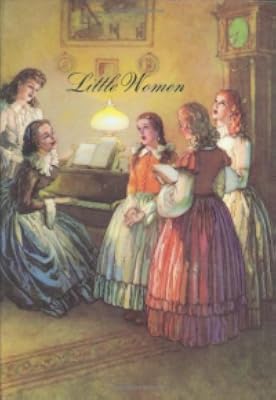
There are so many aspects of Alcott's masterpiece that I love, that it would be impossible to list them all. Suffice it to say that this is a beautiful book, both in its overarching themes and structure, and in its particular characters and narratives incidents. Finally, I should note that although this book has been published in a seemingly endless variety of editions, I myself grew up on the Illustrated Junior Library edition, with illustrations by Louis Jambor. show less
The story of the four March sisters, their adventures and friends, their joys and sorrows as they come of age during the tumultuous period of the American Civil War, is as relevant today as when it was first written. Here we see both the warmth and strength of family love, and the bitter rivalries that can arise between siblings. As someone who grew up in a house with three girls, I could enter fully into many of the characters' feelings, whether it was Amy's pique at being left out, or Jo's show more righteous indignation at the burning of her precious papers, and subsequent ecstasy of repentance when her anger almost costs her something far more dear. Who hasn't longed, like Meg at Vanity Fair, to be popular? And who hasn't secretly wished that, like Beth, they had a kindly benefactor?
Like the March girls, many children today must cope with the absence of a parent, whether through military service or other causes; and like the March girls, children have always been forced to confront difficult moral choices as they struggle to become adults. I have sometimes seen this book described as very "modern" in its appreciation of the many different kinds of friendship and love possible between men and women. Frankly, I tend to think that every generation overestimates its distinctness, and that what some read as "modern," are simply observations about the human animal that were as true in the 1860s as they are today...
There are so many aspects of Alcott's masterpiece that I love, that it would be impossible to list them all. Suffice it to say that this is a beautiful book, both in its overarching themes and structure, and in its particular characters and narratives incidents. Finally, I should note that although this book has been published in a seemingly endless variety of editions, I myself grew up on the Illustrated Junior Library edition, with illustrations by Louis Jambor. show less
Members
- Recently Added By
Lists

1001 Books You Must Read Before You Die
1,448 works; 1,137 members

The Guardian's 1000 Novels Everyone Must Read
1,005 works; 549 members
501 Must-Read Books
529 works; 71 members

The Guardian's 100 greatest novels of all time
100 works; 16 members

Honey For a Child's Heart
1,152 works; 25 members

Female Protagonist
1,056 works; 57 members
Ambleside Books
459 works; 18 members

grrrrrl power
9 works; 2 members

Classics
31 works; 1 member

el
1,139 works; 1 member

Recommended Literary Books
111 works; 1 member

Pleasant Surprises: Books That Exceeded Our Expectations
418 works; 143 members

Overdue Podcast
808 works; 9 members

Books tagged "feel good"
129 works; 20 members

Best family sagas
244 works; 34 members
Historical Fiction
889 works; 91 members
1001 Children's Books You Must Read Before You Grow Up
774 works; 101 members

Unread books
1,063 works; 83 members

BBC Big Read
191 works; 46 members
Author Information

473+ Works 109,506 Members
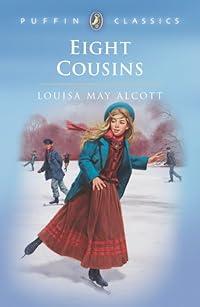
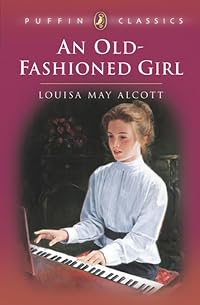
Louisa May Alcott was born in Germantown, Pennsylvania, in 1832. Two years later, she moved with her family to Boston and in 1840 to Concord, which was to remain her family home for the rest of her life. Her father, Bronson Alcott, was a transcendentalist and friend of Ralph Waldo Emerson and Henry David Thoreau. Alcott early realized that her show more father could not be counted on as sole support of his family, and so she sacrificed much of her own pleasure to earn money by sewing, teaching, and churning out potboilers. Her reputation was established with Hospital Sketches (1863), which was an account of her work as a volunteer nurse in Washington, D.C. Alcott's first works were written for children, including her best-known Little Women (1868--69) and Little Men: Life at Plumfield with Jo's Boys (1871). Moods (1864), a "passionate conflict," was written for adults. Alcott's writing eventually became the family's main source of income. Throughout her life, Alcott continued to produce highly popular and idealistic literature for children. An Old-Fashioned Girl (1870), Eight Cousins (1875), Rose in Bloom (1876), Under the Lilacs (1878), and Jack and Jill (1881) enjoyed wide popularity. At the same time, her adult fiction, such as the autobiographical novel Work: A Story of Experience (1873) and A Modern Mephistopheles (1877), a story based on the Faust legend, shows her deeper concern with such social issues as education, prison reform, and women's suffrage. She realistically depicts the problems of adolescents and working women, the difficulties of relationships between men and women, and the values of the single woman's life. (Bowker Author Biography) show less
Some Editions
Awards and Honors
Series

Belongs to Publisher Series
Work Relationships
Is contained in
Contains
Has the adaptation
Has as a reference guide/companion
Common Knowledge
- Canonical title
- Little Women & Good Wives
- Original publication date
- 1868 (vol. 1) (vol. 1); 1869 (vol. 2) (vol. 2)
- People/Characters
- Amy March; Margaret “Marmee” March; Josephine "Jo" March; Margaret "Meg" March; Elizabeth "Beth" March; Friedrich Bhaer (show all 9); John Brooke; Theodore “Laurie” Laurence; Aunt Josephine March
- Important places
- Concord, Massachusetts, USA; Massachusetts, USA
- Important events
- American Civil War; Christmas; 19th century
- Related movies
- Little Women (1994 | IMDb)
- First words
- "Christmas won't be Christmas without any presents," grumbled Jo, lying on the rug.
- Quotations
- Between Meg and Marmee:
"He's away all day, and at night when I want to see him, he is continually going over to the Scotts'. It isn't fair that I should have the hardest work, and never any amusement. Men are very sel... (show all)fish, even the best of them."
"So are women. Don't blame John till you see where you are wrong yourself." (Chapter 38, Gutenberg.org edition)
Gentlemen, which means boys, be courteous to the old maids, no matter how poor and plain and prim, for the only chivalry worth having is that which is the readiest to pay deference to the old, protect the feeble, and serve wo... (show all)mankind, regardless of rank, age, or color. (Chapter 43, Gutenberg.org edition) - Last words
- (Click to show. Warning: May contain spoilers.)"Oh, my girls, however long you may live, I never can wish you a greater happiness than this!"
- Original language
- English
- Disambiguation notice
- This LT work is the complete, unabridged Little Women , containing both Part First (originally published in 1868) and Part Second (published in 1869). American editions almost always contain both parts. UK and European... (show all) editions frequently contain only Part First, with Part Second being published separately as Good Wives. If you are not sure which version you have, check the table of contents. Part First ends with Chapter 23, "Aunt March Settles the Question." Part Second ends with the chapter entitled "Harvest Time". Please do not combine with editions that contain only Little Women: Part I., or with any abridgments, adaptations, or film versions.
Classifications
Statistics
- Members
- 19,261
- Popularity
- 314
- Reviews
- 220
- Rating
- (4.12)
- Languages
- 15 — Chinese, Czech, Dutch, English, French, German, Hungarian, Italian, Japanese, Korean, Malay, Portuguese, Spanish, Swedish, Turkish
- Media
- Paper, Audiobook, Ebook
- ISBNs
- 418
- UPCs
- 10
- ASINs
- 106