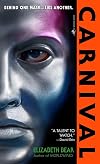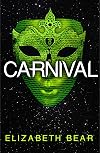
Carnival
by Elizabeth Bear 
On This Page
Description
Garnering rave reviews from multiple publications, Elizabeth Bear is a rising voice in science fiction. Michelangelo Kisanagi-Jones and Vincent Katherinessen, former ambassador-spies, have been ordered to New Amazonia to bring back information about the planet's cheap, renewable energy source. But secretly, one of the men devises other plans.Tags
Recommendations
























Member Recommendations

aulsmith Some of Bear's source material
Member Reviews
A book approximately thigh-deep in Cool. There are some things in here taken for granted that another book might well have revolved around. The plot is nicely complex, and character motivations convincing. There was a stage, early on, when I was worried that we might be headed for Farce Mode, with everybody plotting around and at cross-purposes to everybody else and getting in each other's way and having to hide in the wardrobe, but that soon went away. I should probably have known better; this is Bear, after all. Richly described, compelling, and definitely worth the cover price and time spent. (I'd like to see a sequel with more Kii in it, too. And a prequel to show in detail what actually happened at New Earth. You listening, Bear? show more WANT!)
Don't be fooled by that twist at the very end, by the way. It's not a cop-out, it's a sidestepping of the way in which such things are traditionally treated. You generally do get the thing you first thought of, and the reversal is a figurative slap in the face with a wet fish to the expectation. I liked it. show less
Don't be fooled by that twist at the very end, by the way. It's not a cop-out, it's a sidestepping of the way in which such things are traditionally treated. You generally do get the thing you first thought of, and the reversal is a figurative slap in the face with a wet fish to the expectation. I liked it. show less
That's a book that just flew under my radar - I skipped it intentionally when it was published (did not sound interesting enough - no idea why) and I bought it at the last days of December 2008 while searching a 4th book for one of these 4 for 3 books deals in Amazon. And I am so happy that I got it. It's what Science Fiction should be - a lot of ideas, great execution and believable setting.
The novel takes place some 500 years in the future (it's mentioned almost in passing somewhere in the book as being 2500 years after Christ or something like this) but the world has nothing to do with the world that we know. A few waves of assessments had wiped out most of the races on Earth (not just people but whole races - it looks like anyone show more that is not from the African Diaspora had been wiped out) and the surviving ones keep getting assessed. Which is a nice term for being killed by the ruling machines. Somewhere between all the assessments, a lot of people managed to get off the planet and created colonies... which the coalition that formed on Earth now try to get back into its grasp. So far nothing special - a coalition/empire/foundation and a few states that try to remain independent. It's as old setting as you can imagine one but somehow the novel sounds fresh.
Michelangelo Osiris Leary Kusanagi-Jones and Vincent Katherinessen are two spies/diplomats for the coalition (and the history of those names is just one of the fascinating moments in the book). Additionally they are partners (both in work and romantically) and they had been separated for way too many years. In a way, the novel can be considered their love story. But it is much more than this. Because the world they are sent to this time is New Amazonia - a place where the women and men had switched roles in an attempt to make it a better place. Except that it had not worked - the roles are changed but that's about it. The world is the same - the men behave and are treated as the women in the old world and the women behave as men. It is as believable as possible - that's just the way the human race behave. Add to this some aliens and the picture starts getting complicated.
Most of the book deals with the complicated world they all live into - showing how New Amazonia works and revealing the truth about assessments, what had happened and why things happened. A grim future shown in sparse words and with masterful imagination. But it is also a character-driven story because all that happens can happen only with these people and at this time.
A story of love, future, aliens, AI and something more. One of the most beautiful stories I had read lately. And even though this future is as grim as possible, it also has a hope... through the whole novel, all the way to the last sentence. I just wish Bear had decided to write a prequel/sequel to it - I want more from this world.
A small warning though: if you have any issues with same sex relationship, you might not enjoy the book as much - it relies heavily on such and even has sex scenes between the main characters.
5 stars out of 5. And I suppose I am on the hunt for other novels by Bear. :)
Note: review from 2010 show less
The novel takes place some 500 years in the future (it's mentioned almost in passing somewhere in the book as being 2500 years after Christ or something like this) but the world has nothing to do with the world that we know. A few waves of assessments had wiped out most of the races on Earth (not just people but whole races - it looks like anyone show more that is not from the African Diaspora had been wiped out) and the surviving ones keep getting assessed. Which is a nice term for being killed by the ruling machines. Somewhere between all the assessments, a lot of people managed to get off the planet and created colonies... which the coalition that formed on Earth now try to get back into its grasp. So far nothing special - a coalition/empire/foundation and a few states that try to remain independent. It's as old setting as you can imagine one but somehow the novel sounds fresh.
Michelangelo Osiris Leary Kusanagi-Jones and Vincent Katherinessen are two spies/diplomats for the coalition (and the history of those names is just one of the fascinating moments in the book). Additionally they are partners (both in work and romantically) and they had been separated for way too many years. In a way, the novel can be considered their love story. But it is much more than this. Because the world they are sent to this time is New Amazonia - a place where the women and men had switched roles in an attempt to make it a better place. Except that it had not worked - the roles are changed but that's about it. The world is the same - the men behave and are treated as the women in the old world and the women behave as men. It is as believable as possible - that's just the way the human race behave. Add to this some aliens and the picture starts getting complicated.
Most of the book deals with the complicated world they all live into - showing how New Amazonia works and revealing the truth about assessments, what had happened and why things happened. A grim future shown in sparse words and with masterful imagination. But it is also a character-driven story because all that happens can happen only with these people and at this time.
A story of love, future, aliens, AI and something more. One of the most beautiful stories I had read lately. And even though this future is as grim as possible, it also has a hope... through the whole novel, all the way to the last sentence. I just wish Bear had decided to write a prequel/sequel to it - I want more from this world.
A small warning though: if you have any issues with same sex relationship, you might not enjoy the book as much - it relies heavily on such and even has sex scenes between the main characters.
5 stars out of 5. And I suppose I am on the hunt for other novels by Bear. :)
Note: review from 2010 show less
http://www.strangehorizons.com/reviews/2007/04/the_2007_philip.shtml
This is a superb tale of two galactic diplomatic agents sent to liaise with the matriarchal society of a formerly isolated planet; they are both men, former lovers reconstructing their relationship; each of the two has his own secret agenda, and so does each of the women (and occasional men) they must deal with on the planet, and the revelation and casting aside of their various masks both meshes with the Carnival theme and keeps up the tension of the narrative. I found this a brilliantly realised future environment at every level - the physical description of the planet (urban, alien ruins and wilderness), the societal background of the human characters (with both the show more war-weary galactic milieu and the matriachy of New Amazonia having clear plus and minus points) and the future technology inmagined (yer basic galactic empire stuff, but with a few interesting wrinkles thrown in). Add to that an intriguing and cryptic alien intelligence (or is it an artificial intelligence? or both?), and you are set for a great ride.
It's also notable that this book seriously addresses gender issues. There are discernable homages here to Joanna Russ and Ursula Le Guin, and yet Bear has taken us into a somewhat new territory - not prescribing how society ought to be, but looking at the damage that people can do to each other under any circumstances. Carnival takes us to another world from which we can look back more critically at our own. show less
This is a superb tale of two galactic diplomatic agents sent to liaise with the matriarchal society of a formerly isolated planet; they are both men, former lovers reconstructing their relationship; each of the two has his own secret agenda, and so does each of the women (and occasional men) they must deal with on the planet, and the revelation and casting aside of their various masks both meshes with the Carnival theme and keeps up the tension of the narrative. I found this a brilliantly realised future environment at every level - the physical description of the planet (urban, alien ruins and wilderness), the societal background of the human characters (with both the show more war-weary galactic milieu and the matriachy of New Amazonia having clear plus and minus points) and the future technology inmagined (yer basic galactic empire stuff, but with a few interesting wrinkles thrown in). Add to that an intriguing and cryptic alien intelligence (or is it an artificial intelligence? or both?), and you are set for a great ride.
It's also notable that this book seriously addresses gender issues. There are discernable homages here to Joanna Russ and Ursula Le Guin, and yet Bear has taken us into a somewhat new territory - not prescribing how society ought to be, but looking at the damage that people can do to each other under any circumstances. Carnival takes us to another world from which we can look back more critically at our own. show less
At first I almost dropped it. Matriarchy theme is not my type. But then... I've read many other books let's call it “from the other side” and why not give it a try? And just like that it came with a surprise. Before this book I considered ongoing gender war just an annoying thing to avoid. After this book I think it's all just fucking disgusting. This is a perfect book for demonstration of all the shit people can do with gender issues if some of the radicals get the right to decide for the others. After all it's real war that people of all genders fight with words and ideas somehow believing they hurt less than bullets.
I’ve liked or loved almost everything I read by Elizabeth Bear (the notable exception being Blood and Iron). And I liked this book quite a bit. It is the first thing of hers since Hammered that really recaptured what made that book so enjoyable. This is a well-plotted, relentlessly-paced adventure story with imaginative twists and turns and colorful characters. It keeps you guessing, and keeps you turning pages right to the end. Elements of coolness notwithstanding, it feels like a bit of a throwback to me, to an era when science fiction was less pretentious and happy to be pure entertainment.
Some reviewers have suggested that this should be read as a novel of ideas, with important things to say about gender, sexuality, and feminism. show more My response to that is “what have you been smoking?” Carnival may provides a setting in which such issues could have been probed, but it has absolutely nothing to say about any of them beyond the patently obvious “dismissing people who are different from you as having no worth is not particularly wise.” Yes, the protagonists are gay men in a repressive society, and yes they visit a society in which men have been turned into abused, second-class citizens, but these facts are merely stage props, not anything about which Bear has insightful things to say.
The characters are fun, but not particularly believable. The societies serve to provide a backdrop for drama. Kii is fun and a bit of a mystery, if perhaps a bit in the deus ex machina mode.
In short, if you are looking for a well plotted, quick moving, entertaining adventure story by all means give this a try. And don't think about it too much. If you are looking for a story with something important or challenging to say about humanity, individually or collectively, try Ursula Le Guin or Joanna Russ instead. show less
Some reviewers have suggested that this should be read as a novel of ideas, with important things to say about gender, sexuality, and feminism. show more My response to that is “what have you been smoking?” Carnival may provides a setting in which such issues could have been probed, but it has absolutely nothing to say about any of them beyond the patently obvious “dismissing people who are different from you as having no worth is not particularly wise.” Yes, the protagonists are gay men in a repressive society, and yes they visit a society in which men have been turned into abused, second-class citizens, but these facts are merely stage props, not anything about which Bear has insightful things to say.
The characters are fun, but not particularly believable. The societies serve to provide a backdrop for drama. Kii is fun and a bit of a mystery, if perhaps a bit in the deus ex machina mode.
In short, if you are looking for a well plotted, quick moving, entertaining adventure story by all means give this a try. And don't think about it too much. If you are looking for a story with something important or challenging to say about humanity, individually or collectively, try Ursula Le Guin or Joanna Russ instead. show less
Two ambassador-spies and a security agent negotiate an energy trade on a female-ruled planet.
As others have said before me, this book is made of awesome. Each of the three protagonists has their own agenda, and the way their separate goals intersect and diverge drives most of the action. The reader needs to make a number of intuitive leaps, most of which are rooted in the characters' interactions, in order to fully understand the book.
And that's what it all boils down to, in the end: character. I connected with these characters. I felt the tension between them. I could read their history in all their exchanges. I found them compelling. I wanted to make the intuitive leaps Bear demanded of me. I'd even go so far as to say I was desperate show more to do so. I wanted to spend more time with these people. I wanted to figure them out. I wanted to see them achieve their goals. And I never, for one moment, believed it was going to be easy for them.
The plot is completely character-driven. Everything depends on who these people are and how they react to the situations they find themselves in. It's wonderful. I gobbled it straight up. I initially had some trouble reading quickly, but once I sunk into the story I was hard-pressed to put it down. I couldn't read fast enough. The plot moves along at a decent clip, and everything slots together very well indeed. There are a couple of twists that might be considered easy outs, but they're such a relief when they come that I couldn't find fault with them. One in particular left me grinning like an idiot.
The world, too, is fascinating, and Bear builds it up with great care. She writes in strict third person, so if the characters wouldn't remark on it, we don't hear about it. I had a great time piecing everything together from the little bits that did come out as the story ran its course. There's tons to think about here. The gender issues, the politics, the science... it's all good, my dears. It's all very, very good.
I highly recommend this. Seriously, people, you outta rush out and get a copy. Go! Shoo!
(A slightly longer version of this review originally appeared on my blog, Stella Matutina). show less
As others have said before me, this book is made of awesome. Each of the three protagonists has their own agenda, and the way their separate goals intersect and diverge drives most of the action. The reader needs to make a number of intuitive leaps, most of which are rooted in the characters' interactions, in order to fully understand the book.
And that's what it all boils down to, in the end: character. I connected with these characters. I felt the tension between them. I could read their history in all their exchanges. I found them compelling. I wanted to make the intuitive leaps Bear demanded of me. I'd even go so far as to say I was desperate show more to do so. I wanted to spend more time with these people. I wanted to figure them out. I wanted to see them achieve their goals. And I never, for one moment, believed it was going to be easy for them.
The plot is completely character-driven. Everything depends on who these people are and how they react to the situations they find themselves in. It's wonderful. I gobbled it straight up. I initially had some trouble reading quickly, but once I sunk into the story I was hard-pressed to put it down. I couldn't read fast enough. The plot moves along at a decent clip, and everything slots together very well indeed. There are a couple of twists that might be considered easy outs, but they're such a relief when they come that I couldn't find fault with them. One in particular left me grinning like an idiot.
The world, too, is fascinating, and Bear builds it up with great care. She writes in strict third person, so if the characters wouldn't remark on it, we don't hear about it. I had a great time piecing everything together from the little bits that did come out as the story ran its course. There's tons to think about here. The gender issues, the politics, the science... it's all good, my dears. It's all very, very good.
I highly recommend this. Seriously, people, you outta rush out and get a copy. Go! Shoo!
(A slightly longer version of this review originally appeared on my blog, Stella Matutina). show less
Much like Vincent hitting his stride, Carnival and I just clicked the moment I read that excerpt.
That's at least partly due to the fact that Our Heroes were giving off enough sexual and other tension to drive me up a wall. You read "Chapter One" and bang! here comes conflict.
I love the fact that Bear's protagonists are, as a rule, over the age of 50. It gives so much more to the plot - in wisdom, in knowledge, in experience and depth. When you say "these people were lovers who were separated" that doesn't mean "they had one or two screws and went their separate ways" but "they maintained a secret relationship for over 20 years before they were forced apart for 17." So much more history, so much more at stake. It explains everything from show more how well they work together to how much weight on their shoulders they're both carrying.
It is a love story. Without a single "I love you," without weepy dramatic sex, without things that may look fine to a romance writer but generally make me want to spork my eyes out in the cold light of day. (There is sex; it's not weepy.) It's difficult to describe just how the way Vincent and Angelo are presented together appeals to me, except to say that as I've grown, I've encountered the fact that love is like this. That no matter how much you love, there are things you will not sacrifice, or forsake for the fear of no longer being yourself. That the thought of giving something so precious up would terrify and hurt you, but to do the morally wrong thing would simply destroy you. And these two are the best example of it I ever read.
To put simpler, their love is not hearts and flowers. It's pain, and lies, and I spent much of the book going "oh if you'd only have the courage to talk to one another," and then Angelo did. And he made my day because it demonstrated how well the relationship works when it works.
But the book cannot stand on its own with just the two of them. Ultimately, as much as it is about Vincent and Angelo's relationship, it is also about New Amazonia, about New Earth and Ur, and the OECC (which we never actually see, so that's pretty darn impressive), about Lesa and how far you will go to give your children the best chance you can, about cultures taken to the extreme, and about the lies we tell ourselves to live.
Pretty impressive, no? Throw in all that physics, an AI-like character, espionage and intrigue, a bit of art, and you get an incredible book. show less
That's at least partly due to the fact that Our Heroes were giving off enough sexual and other tension to drive me up a wall. You read "Chapter One" and bang! here comes conflict.
I love the fact that Bear's protagonists are, as a rule, over the age of 50. It gives so much more to the plot - in wisdom, in knowledge, in experience and depth. When you say "these people were lovers who were separated" that doesn't mean "they had one or two screws and went their separate ways" but "they maintained a secret relationship for over 20 years before they were forced apart for 17." So much more history, so much more at stake. It explains everything from show more how well they work together to how much weight on their shoulders they're both carrying.
It is a love story. Without a single "I love you," without weepy dramatic sex, without things that may look fine to a romance writer but generally make me want to spork my eyes out in the cold light of day. (There is sex; it's not weepy.) It's difficult to describe just how the way Vincent and Angelo are presented together appeals to me, except to say that as I've grown, I've encountered the fact that love is like this. That no matter how much you love, there are things you will not sacrifice, or forsake for the fear of no longer being yourself. That the thought of giving something so precious up would terrify and hurt you, but to do the morally wrong thing would simply destroy you. And these two are the best example of it I ever read.
To put simpler, their love is not hearts and flowers. It's pain, and lies, and I spent much of the book going "oh if you'd only have the courage to talk to one another," and then Angelo did. And he made my day because it demonstrated how well the relationship works when it works.
But the book cannot stand on its own with just the two of them. Ultimately, as much as it is about Vincent and Angelo's relationship, it is also about New Amazonia, about New Earth and Ur, and the OECC (which we never actually see, so that's pretty darn impressive), about Lesa and how far you will go to give your children the best chance you can, about cultures taken to the extreme, and about the lies we tell ourselves to live.
Pretty impressive, no? Throw in all that physics, an AI-like character, espionage and intrigue, a bit of art, and you get an incredible book. show less
Members
- Recently Added By
Lists

Best Science Fiction Novels
816 works; 430 members

Gays in Space - Novels
43 works; 4 members

Future Green Dragon Group Read Books
80 works; 6 members

Parallel Novels
37 works; 6 members

Stories Inspired by Other Fiction
127 works; 24 members
Favorite Science Fiction
456 works; 218 members
Author Information

176+ Works 16,458 Members
Elizabeth Bear is a LibraryThing Author, an author who lists their personal library on LibraryThing.
Some Editions
Awards and Honors
Work Relationships
Was inspired by
Common Knowledge
- Canonical title
- Carnival
- Original publication date
- 2006
- People/Characters
- Michelangelo Osiris Leary Kusanagi-Jones; Vincent Katherinessen
- Important places
- New Amazonia
- Epigraph
- car•ni•val (kär'nə-vəl) n. [Italian carnevale, from old Italian carnelevare: carne, meat (from Latin caro, carn-) + levare, to remove (from Latin levare, to raise).] lit. "farewell to the flesh"
- Dedication
- For Stephen and Asha
- First words
- Michelangelo Osiris Leary Kusanagi-Jones had been drinking since fourteen hundred. He didn't plan on stopping soon.
- Last words
- (Click to show. Warning: May contain spoilers.)All those years, all those worlds, and we were wrong.
- Blurbers
- Brin, David
Classifications
Statistics
- Members
- 594
- Popularity
- 49,393
- Reviews
- 40
- Rating
- (3.69)
- Languages
- English
- Media
- Paper, Audiobook, Ebook
- ISBNs
- 8
- ASINs
- 4