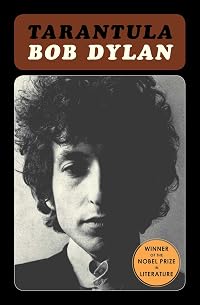
Tarantula
by Bob Dylan
On This Page
Description
Stream of consciousness writings and prose from the musician.Tags
Recommendations










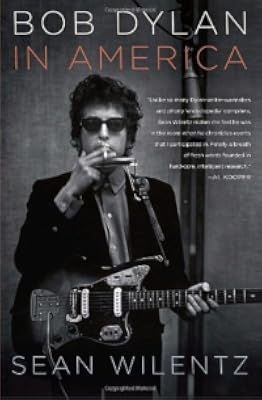

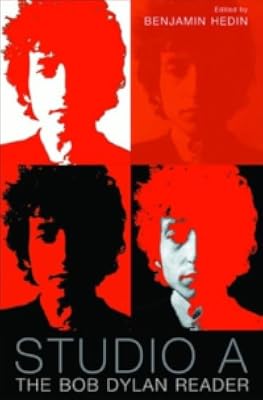
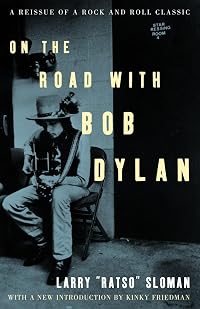


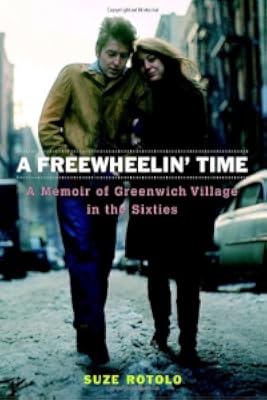





Member Reviews
It's not that bad, you know. I mean, sure, when the Nobel Prize for Literature was awarded to Bob Dylan in October of this year they probably didn't have Tarantula, the songwriter's only published 'novel', in mind as an example of his excellence. It is a rambling, nonsensical stream-of-consciousness piece of absurdity and only for the most patient or obsessive of Dylan fans.
It does have a certain rhythm to it, even if it doesn't always make sense, though we can't blame the usual precariousness of translating song lyrics to prose for the strangeness of Tarantula. Whilst Dylan's imagery does suffer from the lack of the "dobro's F hole twang & climax from disappointing lyrics" (pg. 14), there's a lot of stuff in here that's just plain show more baffling. A magazine article once highlighted the 'unintelligible' line, "now's not the time to act silly, so wear your big boots & jump on the garbage clowns" from page 2 of Tarantula. I assume they chose this early example because they didn't want to read any further; there's certainly plenty of other choice absurdities (my favourite is "little girls hide perfume up their shrimps & there are no giants – the warmongers have stolen all our german measles & are giving them to the doctors to use as bribes" from page 58). There's also evidence that Dylan didn't want the book published at all, so we shouldn't judge him too harshly for it, but clearly anybody looking for a fearsome piece of poetry along the lines of 'Like a Rolling Stone' or the eloquent phrasing of 'Lay Down Your Weary Tune' (both written around the same time as Tarantula) is going to find slim pickings.
That said, some nuggets do emerge from the stream-of-consciousness style. The book defies rigorous analysis, but "if youre going to think", Dylan advises, "dont think about why people dont love each other – think about why they dont love themselves – maybe then, you will begin to love them" (pg. 109). Riffing on Woody Guthrie, Dylan writes "this land is your land & this land is my land – sure – but the world is run by those that never listen to music anyway" (pp75-6). Such thoughts are in short supply here, but the rampant procession of song lyric snippets and literary references and the usual mid-Sixties Dylan stuff of lawyers and senators and mayors and garbage men all makes you realise just how much stuff we've got swimming around in our brains. In the introduction – or rather, the disclaimer – we are told the book is "about Bob Dylan thinking aloud" and there is more to this than apologia. As early as page 2, Dylan is talking of "bombing out your young sensitive dignity just to see once & for all if there are holes & music in the universe", an image the streaming prose returns to on page 68, when in the "vast desert" of his head he "lets yokels test bombs in his brain" (pg. 68). There's certainly value in letting a talent like Dylan use your head as a nuclear lyrical testing ground, banging away like Curtis LeMay. Like the animal of the same name, you're instinctively scared of Tarantula, but a calmer and closer look reveals it's rather more graceful than you first thought. But you still wouldn't like to get too close to it.
I'm not inclined to be harsh on the flailing, hit-and-miss Tarantula because it's clear Dylan doesn't take himself too seriously ("Take it easy & dont scratch too much" is his life advice on page 109). The book is mischievous, playful – not artsy or pretentious. There's a Loki vein of mischief in Dylan's book (as in much of his music), challenging and ridiculing those who would define or label or analyse him. "To my students", he addresses on page 107, "i take it for granted that youve all read & understand freud – dostoevsky – st. michael – confucius – coco joe – einstein – melville – porgy snaker – john zulu – kafka – sartre – smallfry – & tolstoy – all right then… now i'm giving you my book – i expect you all to jump right in – the exam will be in two weeks". Here, Dylan is remarking on the disposability of his book. Why the hell, he asks impishly, are we reading this when we've still not read Sartre? You've got to admit, he has a point. show less
It does have a certain rhythm to it, even if it doesn't always make sense, though we can't blame the usual precariousness of translating song lyrics to prose for the strangeness of Tarantula. Whilst Dylan's imagery does suffer from the lack of the "dobro's F hole twang & climax from disappointing lyrics" (pg. 14), there's a lot of stuff in here that's just plain show more baffling. A magazine article once highlighted the 'unintelligible' line, "now's not the time to act silly, so wear your big boots & jump on the garbage clowns" from page 2 of Tarantula. I assume they chose this early example because they didn't want to read any further; there's certainly plenty of other choice absurdities (my favourite is "little girls hide perfume up their shrimps & there are no giants – the warmongers have stolen all our german measles & are giving them to the doctors to use as bribes" from page 58). There's also evidence that Dylan didn't want the book published at all, so we shouldn't judge him too harshly for it, but clearly anybody looking for a fearsome piece of poetry along the lines of 'Like a Rolling Stone' or the eloquent phrasing of 'Lay Down Your Weary Tune' (both written around the same time as Tarantula) is going to find slim pickings.
That said, some nuggets do emerge from the stream-of-consciousness style. The book defies rigorous analysis, but "if youre going to think", Dylan advises, "dont think about why people dont love each other – think about why they dont love themselves – maybe then, you will begin to love them" (pg. 109). Riffing on Woody Guthrie, Dylan writes "this land is your land & this land is my land – sure – but the world is run by those that never listen to music anyway" (pp75-6). Such thoughts are in short supply here, but the rampant procession of song lyric snippets and literary references and the usual mid-Sixties Dylan stuff of lawyers and senators and mayors and garbage men all makes you realise just how much stuff we've got swimming around in our brains. In the introduction – or rather, the disclaimer – we are told the book is "about Bob Dylan thinking aloud" and there is more to this than apologia. As early as page 2, Dylan is talking of "bombing out your young sensitive dignity just to see once & for all if there are holes & music in the universe", an image the streaming prose returns to on page 68, when in the "vast desert" of his head he "lets yokels test bombs in his brain" (pg. 68). There's certainly value in letting a talent like Dylan use your head as a nuclear lyrical testing ground, banging away like Curtis LeMay. Like the animal of the same name, you're instinctively scared of Tarantula, but a calmer and closer look reveals it's rather more graceful than you first thought. But you still wouldn't like to get too close to it.
I'm not inclined to be harsh on the flailing, hit-and-miss Tarantula because it's clear Dylan doesn't take himself too seriously ("Take it easy & dont scratch too much" is his life advice on page 109). The book is mischievous, playful – not artsy or pretentious. There's a Loki vein of mischief in Dylan's book (as in much of his music), challenging and ridiculing those who would define or label or analyse him. "To my students", he addresses on page 107, "i take it for granted that youve all read & understand freud – dostoevsky – st. michael – confucius – coco joe – einstein – melville – porgy snaker – john zulu – kafka – sartre – smallfry – & tolstoy – all right then… now i'm giving you my book – i expect you all to jump right in – the exam will be in two weeks". Here, Dylan is remarking on the disposability of his book. Why the hell, he asks impishly, are we reading this when we've still not read Sartre? You've got to admit, he has a point. show less
The winning of the Nobel Prize by Bob Dylan must be the reason why the Guilin-based Guangxi Normal University Press decided to publish Dylan's only prose novel called Tarantula (1966). This edition is a bi-lingual Chinese-English (on opposing pages) heavily annotated hardback edition. For study purposes, line numering is added.
It is a beautiful edition for a horrible work! I found this utterly unreadable. Basically, it is free association, stream-of-consciousness prose, although the inclusion of very unusual references suggests post-editing and enrichment of the text. Many punctuation conventions have been abandoned, and there is frequent usage of ampersand.
It is mindboggling how anyone can produce such B.S. particularly consistently is show more such a large quantity (roughly 150 pages). (The total number of pages in this edition is 529.). I wonder whether the author used substances.
Kerouac's stream-of-consciousness prose can be challenging at times, but at least it seems artful, and one can detect beauty and meaning. Tarantula merely gave me a great sense of irritation. Phew! show less
It is a beautiful edition for a horrible work! I found this utterly unreadable. Basically, it is free association, stream-of-consciousness prose, although the inclusion of very unusual references suggests post-editing and enrichment of the text. Many punctuation conventions have been abandoned, and there is frequent usage of ampersand.
It is mindboggling how anyone can produce such B.S. particularly consistently is show more such a large quantity (roughly 150 pages). (The total number of pages in this edition is 529.). I wonder whether the author used substances.
Kerouac's stream-of-consciousness prose can be challenging at times, but at least it seems artful, and one can detect beauty and meaning. Tarantula merely gave me a great sense of irritation. Phew! show less
Dylan is the greatest musical artist of the 20th century and the best of his lyrics are some of the great poems of the period but this 'novel' is poor. Essentially an extended version of the sleevenotes for his fourth, fifth, and sixth albums, the long form leads to a lack of focus which ensures that nothing memorable emerges. There are quotes from the sleeve of Bringing It all Back Home which I can recall twenty years after first reading them, I just finished this and can't remember anything. Dylan can write prose as Chronicles shows, but for a slimmed down a far superior version of what's in Tarantula, check out his wonderful poem Last Thoughts on Woody Guthrie.
This slim volume is interesting chiefly because it is the work of Bob Dylan. No; allow me to revise that. For "chiefly," substitute "solely."
In the mid-60s, Dylan was a star, hailed as a prophet, and very young. He got a book deal. His editors and publishers didn't care what they got as long as it was Dylanesque. They got this. It was Dylanesque, all right.
Tarantula is the work of a young man who was very much out of his depth. Interesting at times for snippets that later became lyrics (the sun isn't yellow, it's chicken), and occasionally for its humour, it is otherwise simply a mess, a jumbled, rambling mass of stream-of-Bob nonsense. Under any other name, this book would never have been published.
For Dylan completists only.
In the mid-60s, Dylan was a star, hailed as a prophet, and very young. He got a book deal. His editors and publishers didn't care what they got as long as it was Dylanesque. They got this. It was Dylanesque, all right.
Tarantula is the work of a young man who was very much out of his depth. Interesting at times for snippets that later became lyrics (the sun isn't yellow, it's chicken), and occasionally for its humour, it is otherwise simply a mess, a jumbled, rambling mass of stream-of-Bob nonsense. Under any other name, this book would never have been published.
For Dylan completists only.
The only book ever published by Bob Dylan, Tarantula is a combination of various forms of poetry that almost didn’t make it to the public, especially after the book was leaked to the public without his permission.
It took awhile for me to get into Dylan’s writing style, but that is to be expected considering his creative lyrics and songwriting. It was a fun break during the read-a-thon to throw in some poetry and work my mind a bit. I wouldn’t say it’s my favorite book of poetry because it does take some concentration to fully understand the message – but it’s Bob Dylan so are you really supposed to know the full message.
It took awhile for me to get into Dylan’s writing style, but that is to be expected considering his creative lyrics and songwriting. It was a fun break during the read-a-thon to throw in some poetry and work my mind a bit. I wouldn’t say it’s my favorite book of poetry because it does take some concentration to fully understand the message – but it’s Bob Dylan so are you really supposed to know the full message.
Dylan entremeia uma prosa poética de fluxo de consciência com poemas epistolares, tudo isso numa verve deveras beatnik.
DYLAN'S BOOK
The year 1965-66 was one of the most intensely creative periods of Bob Dylan's career. This was when he produced such crucial songs as Mr. Tambourine Man, Like a Roiling Stone, Desolation Row, She Belongs to Me, Love Minus Zero/No Limit, and Ballad of a Thin Man. It was also the time in which he wrote TARANTULA, his first and (so far) only book.
'Surrealism on speed', 'a fantastical journey through our life and times', 'a beautiful, flowing, stormy prose poem', 'a carnival of vitality and vision' - TARANTU LA has been called all these. But ultimately no description can hope to convey its unique imaginative quality. It is Dylan's book. It needs no other recommendation.
Cover photograph by Jerry Schatzberg
The year 1965-66 was one of the most intensely creative periods of Bob Dylan's career. This was when he produced such crucial songs as Mr. Tambourine Man, Like a Roiling Stone, Desolation Row, She Belongs to Me, Love Minus Zero/No Limit, and Ballad of a Thin Man. It was also the time in which he wrote TARANTULA, his first and (so far) only book.
'Surrealism on speed', 'a fantastical journey through our life and times', 'a beautiful, flowing, stormy prose poem', 'a carnival of vitality and vision' - TARANTU LA has been called all these. But ultimately no description can hope to convey its unique imaginative quality. It is Dylan's book. It needs no other recommendation.
Cover photograph by Jerry Schatzberg
Members
- Recently Added By
Lists

Just Kids by Patti Smith
43 works; 1 member
Author Information

670+ Works 15,928 Members
Bob Dylan was born Robert Allen Zimmerman on May 24, 1941 in Duluth, Minnesota. He is a singer-songwriter and artist. He emerged on the New York music scene in 1961. He has recorded 38 studio albums including Bringing It All Back Home, Highway 61 Revisited, Blonde on Blonde, Blood on the Tracks, Oh Mercy, Time Out Of Mind, Love and Theft, and show more Modern Times. His songs include Blowin' in the Wind, The Times They Are a-Changin', and Like a Rolling Stone. He has published poetry and prose including a collection entitled Tarantula in 1971, a memoir entitled Chronicles: Volume One in 2004, and The Lyrics: 1961-2012 in 2016. He has received numerous awards including eleven Grammy Awards, a Golden Globe Award, and an Academy Award. In 1988, he was inducted into the Rock and Roll Hall of Fame. In 2008, the Pulitzer Prize jury awarded him a special citation for "his profound impact on popular music and American culture, marked by lyrical compositions of extraordinary poetic power." In 2012, he received the Presidential Medal of Freedom from President Barack Obama. In 2016, Dylan received the Nobel Prize in Literature "for having created new poetic expressions within the great American song tradition." (Bowker Author Biography) show less
Some Editions
Awards and Honors
Distinctions
Series
Belongs to Publisher Series
Lanterne (L 168)
Common Knowledge
- Canonical title*
- Tarantula
- Original title
- Tarantula
- Original publication date
- 1965 (50 copies) (50 copies); 1971 ("official" publication) ("official" publication)
- Epigraph
- Tarantula is Bob Dylan's first book, the only book he has ever written. He wrote it in 1966.
- First words
- aretha / crystal jukebox queen of hymn & him diffused in drunk transfusion wound would heed sweet soundwave crippled & cry salute to oh great particular el dorado reel & ye battered personal god but she cannot she the leader ... (show all)of whom when ye follow, she cannot she has no back she cannot ...
- Last words
- (Click to show. Warning: May contain spoilers.)... - there are only a few things that exist: Boogie Woogie-highpowered frogs-Nashville Blues-harmonicas walking-80 moons & sleeping midgets-there are only three things that continue: Life-Death & the lumberjacks are coming"
*Some information comes from Common Knowledge in other languages. Click "Edit" for more information.
Classifications
Statistics
- Members
- 1,069
- Popularity
- 24,001
- Reviews
- 12
- Rating
- (2.96)
- Languages
- 18 — Catalan, Chinese, Czech, Danish, Dutch, English, French, German, Italian, Norwegian (Bokmål), Norwegian, Polish, Portuguese, Russian, Serbian, Spanish, Swedish, Turkish
- Media
- Paper, Audiobook, Ebook
- ISBNs
- 40
- ASINs
- 19