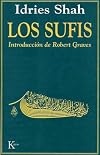
The Sufis
by Idries Shah
On This Page
Description
A unique and little-known religion, Sufism follows a mystical teaching and a way of life that has had an enormous though largely unrecognized impact on both the East and West for four thousand years. This authoritative book fills a colossal gap in Western documentation of Eastern subjects.Tags
Recommendations







































Member Reviews
This is a difficult book to review. The author, an acknowledged Sufi master, has accepted the task of writing a comprehensive book about Sufism, the first in the West by a Sufi. But one of the themes of the book is that Sufism cannot be grasped by the intellect or communicated through words. The author is therefore forced to dance around his subject for several hundred pages. He doesn't wish to obscure it with European-style analysis. Neither does he want to trivialize or dumb down a tradition that is thousands of years old. The result is at times a history, at others a mystical tract. A bit like the Bible, if the Bible had been commissioned by a publisher of textbooks.
So there is much to frustrate a reader like me, theoretically open show more to the mystical, but steeped in the Western intellectual tradition. What I think of as essential questions go unanswered, such as the question of how a movement can pass down its traditions with no centers of worship, no hierarchy, and an entirely unofficial (and anonymous) priesthood. At the same time, there is much material of which I'm skeptical, such as the many, many pages devoted to numerology and to finding the hidden meaning of words by converting them to numbers. (I wish I had room here to reproduce one of these three-page analyses.) Then there is the chapter asserting that Francis of Assisi learned much of what he taught from Sufi masters. The circumstantial evidence is interesting; but it isn't, and can never be, conclusive. (I wonder why it matters.)
You can't help feeling that the author, were he being candid, would have begun with a preface urging the reader not to waste his time, because truth can't be found in the book. Nevertheless, there are thousands of interesting anecdotes and stories, most mysterious, which I would be glad to see excerpted for contemplation, away from the numerology, the historical speculation, and the repeated insistance that Sufism is the true mystical path underlying all the world's religions. show less
So there is much to frustrate a reader like me, theoretically open show more to the mystical, but steeped in the Western intellectual tradition. What I think of as essential questions go unanswered, such as the question of how a movement can pass down its traditions with no centers of worship, no hierarchy, and an entirely unofficial (and anonymous) priesthood. At the same time, there is much material of which I'm skeptical, such as the many, many pages devoted to numerology and to finding the hidden meaning of words by converting them to numbers. (I wish I had room here to reproduce one of these three-page analyses.) Then there is the chapter asserting that Francis of Assisi learned much of what he taught from Sufi masters. The circumstantial evidence is interesting; but it isn't, and can never be, conclusive. (I wonder why it matters.)
You can't help feeling that the author, were he being candid, would have begun with a preface urging the reader not to waste his time, because truth can't be found in the book. Nevertheless, there are thousands of interesting anecdotes and stories, most mysterious, which I would be glad to see excerpted for contemplation, away from the numerology, the historical speculation, and the repeated insistance that Sufism is the true mystical path underlying all the world's religions. show less
I checked out The Sufis by Idries Shah on a whim. I ran across it while looking for his English translations of the “Tales of Nasrudin”.
I’ve long been fascinated by the Sufi. The works of Rumi and Omar Khayyám, of Hafiz, Ibn el-Arabi, Ghazali, and Averroës, all had powerful effects on me when I first read them, and each time I reread them. The Sufi exerted a powerful and largely unappreciated influence over the course of Western culture and history.
Mr. Shah is an esteemed author and a Sufi. I thought this book would be a good history and insight into their beliefs and practices.
It’s tempting to use this review to analyze and critique the beliefs and claims of the Sufi. But the real question isn’t whether or not I agree, or show more even sympathize, with Sufi philosophy and practice.
The real question is whether or not this book successfully conveys an understanding of the Sufi to a non-Sufi reader. And the answer is:
Yes?
My answer to this question can’t be unqualified.
There’s benefit in reading this book. It offers a tremendous amount of information about the Sufi from someone who is, himself, a Sufi. At the time this work was published, such a perspective didn’t properly exist in the Western literature on the subject. That alone makes this work important.
In truth, the greatest benefit I find in the book is the unique Sufi / Persian / Arabic perspective it offers on Western history and culture. Mr. Shah also covers the influence of the Sufi in Asia to lesser extent. It’s a perspective I haven’t been exposed to before and I find it fascinating.
Mr. Shah works very hard to trace Sufic roots for many Western cultural phenomena, schools of thought, and traditions. This book was written at a time when Western historians were only beginning to acknowledge the influence that Arab, Persian, and Sufi culture had on the Western world.
Reading this work today, we have a far greater appreciation of the profound influence that Middle Eastern culture had on Europe during the Middle Ages. We know now that many essential aspects of Medieval Europe—from math and science, to philosophy and art, to religious ritual and orders—were borrowed and adapted from the Arab and Persian regions of the Middle East, either via the Crusades or through Saracen Spain.
Even now, it’s likely that we still haven’t plumbed the full extent of this influence. In tracing the Sufic roots and influences of various aspects of Western culture, Mr. Shah offers a wealth of compelling evidence to expand our sense of just how much the Western world owes to Arabic, Persian, and Sufi culture and thought. His chapter, “Mysteries in the West: V. The Secret Doctrine” offers a particularly compelling take on the relationship between the Arab East and Christian West during the Middle Ages and after.
However, the benefits of reading The Sufis weren’t easy for me to get to. I encountered some major stumbling blocks in the experience of reading this book.
One is that fact that it isn’t organized in any way that I’m familiar with for a work whose purpose is to explore the nature and history of a spiritual belief system.
I expected something along the lines of a philosophical discourse or a chronological history. But The Sufis isn’t either. While there are many names and dates mentioned throughout, it’s not a chronological tale of the Sufi and the diffusion of Sufi ideas. It's also not a pure philosophical or theological treatise. Given what this book teaches us about the Sufi, it can't be either of those things. Neither would convey a correct vision of the Sufi perspective.
This book is essentially a series of snapshots of the Sufi world—short biographies of some important figures; brief explorations of some central ideas; some tracings of the influence that the Sufi have had on history. As Mr. Shah states on p. 278, “We have various aspects of this diffusion in this book, chosen in order to illustrate it, not as any complete ennunciation.”
Another stumbling block is the language of the work. There’s an obfuscation to the text beyond it’s dense, scholarly tone. The scholarly tone is a product of its time—the work was published in 1964 for an academic press. Academia in 1964 had a certain style and this density is to be expected. The obfuscation comes from a deeper Sufic paradigm. The Sufi have a way of seeing the world that doesn’t translate fully into normal language patterns and expressions. Everything in this book needs to be read as more than merely information and description—this content is also allegorical and metaphorical. But these allegories and metaphors are created from a pool of cultural reference that’s largely unfamiliar to me.
I know that I can’t understand everything Mr. Shah meant to convey. I believe it’s a beneficial effort to try, and to understand what I can as well as I can, but it’s disappointing to know that there’s meaning in this work that’s inaccessible to me.
The biggest stumbling block in this book for me, however, is this:
At the very beginning of The Sufis, Mr. Shah warns the reader that Sufism isn’t something that can be explained in words. It’s not something that anyone can understand just by reading about it. Sufism must be experienced, and the experience must be guided by a qualified teacher. He emphasizes this point repeatedly throughout the book. As he states on p. 180, “[T]hings which are comprehensive experiences ‘cannot be penned by a mumbling wordsmith, any more than he himself would accept a paper copy of a fruit as edible or nutritious.’” It therefore begs the question:
If Sufism can’t be explained by writing about it, why did he bother writing a 450 page book on the subject?
More to the point, why should I bother to read it?
This alone makes the work very difficult for me to commit to. But my misgivings on this front go even deeper.
Several times throughout this book, Mr. Shah talks about the unique teaching methods of the Sufi. Greatest stress is placed on the belief that proper guidance along the Sufi path requires that the seeker be exposed to the proper experiences at the proper time and in the proper context. Only at the correct time and in the correct context can the correct experience lead to the correct psychological development.
For a seeker to attempt an act, to hear a poem or a song or a story, to be exposed to an experience at the wrong time, in the wrong context—when the seeker isn’t prepared to experience and understand it correctly—will not merely fail to render to proper outcome: it can actively impede the seeker’s forward progress by promoting an incorrect mindset which will perpetuate further misunderstanding.
Taken in these terms, I can’t help but wonder if this entire book—written for a non-Sufi, Western audience—is the wrong lessons, communicated to the wrong people, at the wrong time, with insufficient control to ensure the proper context. Given Mr. Shah's own belief system, this whole endeavor comes across as irresponsible.
Thus, we return to my original question:
Does The Sufis successfully convey an understanding of the Sufi to a non-Sufi reader?
Yes. To an unavoidably limited extent.
But if you’re really interested in the Sufi, you’re probably better off reading Sufi works than reading a work about the Sufi. show less
I’ve long been fascinated by the Sufi. The works of Rumi and Omar Khayyám, of Hafiz, Ibn el-Arabi, Ghazali, and Averroës, all had powerful effects on me when I first read them, and each time I reread them. The Sufi exerted a powerful and largely unappreciated influence over the course of Western culture and history.
Mr. Shah is an esteemed author and a Sufi. I thought this book would be a good history and insight into their beliefs and practices.
It’s tempting to use this review to analyze and critique the beliefs and claims of the Sufi. But the real question isn’t whether or not I agree, or show more even sympathize, with Sufi philosophy and practice.
The real question is whether or not this book successfully conveys an understanding of the Sufi to a non-Sufi reader. And the answer is:
Yes?
My answer to this question can’t be unqualified.
There’s benefit in reading this book. It offers a tremendous amount of information about the Sufi from someone who is, himself, a Sufi. At the time this work was published, such a perspective didn’t properly exist in the Western literature on the subject. That alone makes this work important.
In truth, the greatest benefit I find in the book is the unique Sufi / Persian / Arabic perspective it offers on Western history and culture. Mr. Shah also covers the influence of the Sufi in Asia to lesser extent. It’s a perspective I haven’t been exposed to before and I find it fascinating.
Mr. Shah works very hard to trace Sufic roots for many Western cultural phenomena, schools of thought, and traditions. This book was written at a time when Western historians were only beginning to acknowledge the influence that Arab, Persian, and Sufi culture had on the Western world.
Reading this work today, we have a far greater appreciation of the profound influence that Middle Eastern culture had on Europe during the Middle Ages. We know now that many essential aspects of Medieval Europe—from math and science, to philosophy and art, to religious ritual and orders—were borrowed and adapted from the Arab and Persian regions of the Middle East, either via the Crusades or through Saracen Spain.
Even now, it’s likely that we still haven’t plumbed the full extent of this influence. In tracing the Sufic roots and influences of various aspects of Western culture, Mr. Shah offers a wealth of compelling evidence to expand our sense of just how much the Western world owes to Arabic, Persian, and Sufi culture and thought. His chapter, “Mysteries in the West: V. The Secret Doctrine” offers a particularly compelling take on the relationship between the Arab East and Christian West during the Middle Ages and after.
However, the benefits of reading The Sufis weren’t easy for me to get to. I encountered some major stumbling blocks in the experience of reading this book.
One is that fact that it isn’t organized in any way that I’m familiar with for a work whose purpose is to explore the nature and history of a spiritual belief system.
I expected something along the lines of a philosophical discourse or a chronological history. But The Sufis isn’t either. While there are many names and dates mentioned throughout, it’s not a chronological tale of the Sufi and the diffusion of Sufi ideas. It's also not a pure philosophical or theological treatise. Given what this book teaches us about the Sufi, it can't be either of those things. Neither would convey a correct vision of the Sufi perspective.
This book is essentially a series of snapshots of the Sufi world—short biographies of some important figures; brief explorations of some central ideas; some tracings of the influence that the Sufi have had on history. As Mr. Shah states on p. 278, “We have various aspects of this diffusion in this book, chosen in order to illustrate it, not as any complete ennunciation.”
Another stumbling block is the language of the work. There’s an obfuscation to the text beyond it’s dense, scholarly tone. The scholarly tone is a product of its time—the work was published in 1964 for an academic press. Academia in 1964 had a certain style and this density is to be expected. The obfuscation comes from a deeper Sufic paradigm. The Sufi have a way of seeing the world that doesn’t translate fully into normal language patterns and expressions. Everything in this book needs to be read as more than merely information and description—this content is also allegorical and metaphorical. But these allegories and metaphors are created from a pool of cultural reference that’s largely unfamiliar to me.
I know that I can’t understand everything Mr. Shah meant to convey. I believe it’s a beneficial effort to try, and to understand what I can as well as I can, but it’s disappointing to know that there’s meaning in this work that’s inaccessible to me.
The biggest stumbling block in this book for me, however, is this:
At the very beginning of The Sufis, Mr. Shah warns the reader that Sufism isn’t something that can be explained in words. It’s not something that anyone can understand just by reading about it. Sufism must be experienced, and the experience must be guided by a qualified teacher. He emphasizes this point repeatedly throughout the book. As he states on p. 180, “[T]hings which are comprehensive experiences ‘cannot be penned by a mumbling wordsmith, any more than he himself would accept a paper copy of a fruit as edible or nutritious.’” It therefore begs the question:
If Sufism can’t be explained by writing about it, why did he bother writing a 450 page book on the subject?
More to the point, why should I bother to read it?
This alone makes the work very difficult for me to commit to. But my misgivings on this front go even deeper.
Several times throughout this book, Mr. Shah talks about the unique teaching methods of the Sufi. Greatest stress is placed on the belief that proper guidance along the Sufi path requires that the seeker be exposed to the proper experiences at the proper time and in the proper context. Only at the correct time and in the correct context can the correct experience lead to the correct psychological development.
For a seeker to attempt an act, to hear a poem or a song or a story, to be exposed to an experience at the wrong time, in the wrong context—when the seeker isn’t prepared to experience and understand it correctly—will not merely fail to render to proper outcome: it can actively impede the seeker’s forward progress by promoting an incorrect mindset which will perpetuate further misunderstanding.
Taken in these terms, I can’t help but wonder if this entire book—written for a non-Sufi, Western audience—is the wrong lessons, communicated to the wrong people, at the wrong time, with insufficient control to ensure the proper context. Given Mr. Shah's own belief system, this whole endeavor comes across as irresponsible.
Thus, we return to my original question:
Does The Sufis successfully convey an understanding of the Sufi to a non-Sufi reader?
Yes. To an unavoidably limited extent.
But if you’re really interested in the Sufi, you’re probably better off reading Sufi works than reading a work about the Sufi. show less
Este pequeno tratado verdadeira perola oculta nos escritos postumos de Schopenhauer foi elaborado 'como uma dissecacao limpa' para conferir uma sistematizacao formal aos 'artificios desonestos recorrentes nas disputas'. Schopenhauer apresenta 38 estratagemas licitos e ilicitos aos quais e possivel recorrer para 'obter' razao: para defende-la quando ela estiver do nosso lado e para conquista-la quando estiver do lado do adversario. Leitura atraente e muito util: com frieza classificatoria Schopenhauer nos indica 'os caminhos obliquos e os truques de que se serve a natureza humana em geral para ocultar seus defeitos'.
Idries Shah's 'Sufis' makes a sincere attempt to introduce Sufism alongside some misconceptions that have traveled along with the concept. Read the complete review here https://wp.me/p6rxcY-jO
em português
LOS SUFÍS
LA SITUACIÓN
La humanidad está dormida, ocupada sólo en lo
que es inútil, viviendo en un mundo equivocado.
Creer que esto puede superarse es solo costumbre
y uso, no Religión. Esta «religión» es inepta ....
No parlotees ante la Gente del Sendero, antes
consúmete a ti mismo. Tu sabiduría y tu religión
están invertidos si te hallas cabeza abajo en relación
con la realidad.
El hombre está tejiendo una red en torno de si
mismo. Un león (el hombre del Camino) hace pedazos su jaula.
(El maestro sufí Sanai de Afganistán, maestro de Rumi,
en El cercado jardín de la Verdad, escrito en 1131)
LA SITUACIÓN
La humanidad está dormida, ocupada sólo en lo
que es inútil, viviendo en un mundo equivocado.
Creer que esto puede superarse es solo costumbre
y uso, no Religión. Esta «religión» es inepta ....
No parlotees ante la Gente del Sendero, antes
consúmete a ti mismo. Tu sabiduría y tu religión
están invertidos si te hallas cabeza abajo en relación
con la realidad.
El hombre está tejiendo una red en torno de si
mismo. Un león (el hombre del Camino) hace pedazos su jaula.
(El maestro sufí Sanai de Afganistán, maestro de Rumi,
en El cercado jardín de la Verdad, escrito en 1131)
May 23, 2024Spanish
> Arkoun Mohammed. Shah (Idries) The Sufis.
In: Archives de sciences sociales des religions, n°58/2, 1984. pp. 309-310. … ; (en ligne),
URL : https://www.persee.fr/doc/assr_0335-5985_1984_num_58_2_2339_t1_0309_0000_5
> Le Professeur Mohammed Arkoun (voir 3e millénaire n°20 & 25) enseigne l’histoire de la pensée Islamique à l'Université de Paris III, et est Directeur de la revue Arabica. Il est l’auteur d’une thèse intitulée “L’humanisme arabe au IV/Xeme siècle : Miskawayh, philosophe et historien" (1982, Ed. J. Vrin), et des ouvrages suivants : “Pour une critique de la raison islamique" (1984, Ed. Maisonneuve & Larose), “L’Islam" (1989, Ed. Grancher), “" (1991, 4e éd., Ed. P.U.F Que sais-je ?), “Le Coran” show more (1991, Ed. Flammarion). show less
In: Archives de sciences sociales des religions, n°58/2, 1984. pp. 309-310. … ; (en ligne),
URL : https://www.persee.fr/doc/assr_0335-5985_1984_num_58_2_2339_t1_0309_0000_5
> Le Professeur Mohammed Arkoun (voir 3e millénaire n°20 & 25) enseigne l’histoire de la pensée Islamique à l'Université de Paris III, et est Directeur de la revue Arabica. Il est l’auteur d’une thèse intitulée “L’humanisme arabe au IV/Xeme siècle : Miskawayh, philosophe et historien" (1982, Ed. J. Vrin), et des ouvrages suivants : “Pour une critique de la raison islamique" (1984, Ed. Maisonneuve & Larose), “L’Islam" (1989, Ed. Grancher), “" (1991, 4e éd., Ed. P.U.F Que sais-je ?), “Le Coran” show more (1991, Ed. Flammarion). show less
Jan 8, 2021 (Edited)French
Members
- Recently Added By
Lists

Read These Too
458 works; 9 members
Author Information

91+ Works 6,960 Members
Idries Shah, whose full name is Nawab-Zaba Sayed Idries Shah el-Hashimi, is Grand Sheikh of the Sufis and the eldest son of the Nawab (the Mohammedan equivalent of Maharajah) of Sardana, near Delhi in India. His family originates from the principality of Paghman in the Hindu Kush, where his ancestors have reigned since 1221, and claims the senior show more descent from Mohammed in Islam. Idries Shah was born at Simla in the Himalayas and lives in London show less
Some Editions
Common Knowledge
- First words
- The Sufis are an ancient spiritual freemasonry whose origins have never been traced or dated; nor do they themselves take much interest in such researches, being content to point out the occurrence of their own way of thought... (show all) in different regions and periods.
- Last words
- (Click to show. Warning: May contain spoilers.)"The sublime love poetry of the Sufi saints, the wholly practical nature of their teachings, the fervor allied with a deeply underlying sense of mission, of attainment of needs, both spiritual and physical, the confidence of the message and the future of the human race: these are some of the outstanding contributions of this wonderful body, admission to whose numbers conveys the undoubted and abiding sensation of membership of an ancient elect"
Classifications
- Genres
- Religion & Spirituality, Nonfiction, Philosophy, History, General Nonfiction
- DDC/MDS
- 297.4 — Religion Other religions Islam Sufi, Mysticism
- LCC
- BP189 .S38 — Philosophy, Psychology and Religion Islam. Bahaism. Theosophy, etc. Islam. Bahai Faith. Theosophy, etc. The practice of Islam Islamic religious life Sufism. Mysticism. Dervishes
- BISAC
Statistics
- Members
- 756
- Popularity
- 36,979
- Reviews
- 7
- Rating
- (3.89)
- Languages
- 6 — English, French, German, Italian, Portuguese, Spanish
- Media
- Paper, Ebook
- ISBNs
- 31
- ASINs
- 13