On This Page
Description
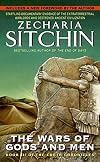
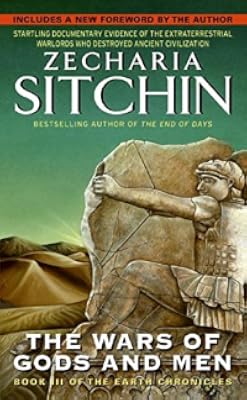
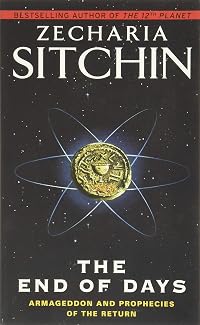
Thousands of years ago, the Earth was a battlefield. These were the wars that would shape man's destiny-terrible conflicts that began lifetimes earlier on another planet. Parting the mists of time and myth, the internationally renowned scholar Zecharia Sitchin takes us back in this volume to the violent beginnings of the human story, when gods-not men-ruled the Earth. In a spellbinding reconstruction of epic events preserved in legends and ancient writings, he traces the conflicts that began show more on another world, continued on Earth, and culminated in the use of nuclear weapons-an event recorded in the Bible as the upheaval of Sodom and Gomorrah. show lessTags
Recommendations























Member Reviews
It seems that Earth has always been a battlefield, from today all the way back to the beginning of history humans have been fighting one another, or maybe we learned from others in prehistory? In the third book of his series The Earth Chronicles, Zecharia Sitchin examines ancient texts from cuneiform tables of Sumeria to Egyptian hieroglyphs to the Bible itself to reveal long memory and devastating results of The Wars of Gods and Men.
Sitchin begins the book going over the wars of the ancient world and how the chroniclers of those wars described that the gods intervened in those wars and determined the outcome, following this he went over the wars of the gods for supremacy of Earth from Horus against Set in Egypt, the generational wars show more of the Greek pantheon, and battles of the Indian gods. Sitchin then set about showing that all these tales of battles reflect events in prehistory of members of the ruling house of the extraterrestrial Anunnaki, fighting for supremacy of “heaven” (Nibiru their homeworld) and Earth, with the rivalry between royal brothers Enlil and Enki extending into their children and grandchildren. Soon these wars began to include the “gods” human followers joining them in battle after the beginnings of civilization in Sumer, Egypt, and the Indus valley. Sitchin details that some of the Anunnaki put their personal interests above their own families resulting in various alliances with cousins against their own siblings, and parents in some cases, which began a chain of events that led Abraham out of Sumer to Canaan and how Sodom and Gomorrah were obliterated by nuclear weapons.
This book began as a more academic read like its predecessor, The Stairway to Heaven, but Sitchin quickly switched gears to more engaging prose as he brought forth his evidence for and the explanations of this theories. Sitchin did not rehash his evidence and arguments from the previous two books, only alluded to his findings so as to allow the flow of the book to progress along the line of thought he had focused on. Yet even though Sitchin did not rehash his arguments, he did contradict some of his findings in The 12th Planet in this book—namely with the identity of “ZU”—but did not state that further research had changed his conclusions which would have made a better book. However, the most intriguing part of the book was Sitchin’s discussion about Abraham, his family history, and his journey to Canaan especially in light of his theory that extraterrestrials were the “gods” of the ancient world (though he does not specifically name which Anunnaki sent Abraham on his journey).
The Wars of Gods and Men is a very intriguing, well written book with a theory and evidence that Sitchin lays out in an engaging matter. Even with the academic beginning and with some unacknowledged reversals in some Sitchin’s findings, this book gives the reader a worthy follow up to The 12th Planet that The Stairway to Heaven was not. show less
Sitchin begins the book going over the wars of the ancient world and how the chroniclers of those wars described that the gods intervened in those wars and determined the outcome, following this he went over the wars of the gods for supremacy of Earth from Horus against Set in Egypt, the generational wars show more of the Greek pantheon, and battles of the Indian gods. Sitchin then set about showing that all these tales of battles reflect events in prehistory of members of the ruling house of the extraterrestrial Anunnaki, fighting for supremacy of “heaven” (Nibiru their homeworld) and Earth, with the rivalry between royal brothers Enlil and Enki extending into their children and grandchildren. Soon these wars began to include the “gods” human followers joining them in battle after the beginnings of civilization in Sumer, Egypt, and the Indus valley. Sitchin details that some of the Anunnaki put their personal interests above their own families resulting in various alliances with cousins against their own siblings, and parents in some cases, which began a chain of events that led Abraham out of Sumer to Canaan and how Sodom and Gomorrah were obliterated by nuclear weapons.
This book began as a more academic read like its predecessor, The Stairway to Heaven, but Sitchin quickly switched gears to more engaging prose as he brought forth his evidence for and the explanations of this theories. Sitchin did not rehash his evidence and arguments from the previous two books, only alluded to his findings so as to allow the flow of the book to progress along the line of thought he had focused on. Yet even though Sitchin did not rehash his arguments, he did contradict some of his findings in The 12th Planet in this book—namely with the identity of “ZU”—but did not state that further research had changed his conclusions which would have made a better book. However, the most intriguing part of the book was Sitchin’s discussion about Abraham, his family history, and his journey to Canaan especially in light of his theory that extraterrestrials were the “gods” of the ancient world (though he does not specifically name which Anunnaki sent Abraham on his journey).
The Wars of Gods and Men is a very intriguing, well written book with a theory and evidence that Sitchin lays out in an engaging matter. Even with the academic beginning and with some unacknowledged reversals in some Sitchin’s findings, this book gives the reader a worthy follow up to The 12th Planet that The Stairway to Heaven was not. show less
This volume of Sitchin's corpus has some wonderful information on Abraham and the pyramids. Like all of his works, the bibliography is full of scholarly and conventional sources, but since the work lacks footnotes, you can hardly prove or disprove his assertions. Let us hope that one day there are footnoted editions.
Ratings
Members
- Recently Added By
Lists

Non-fiction that you shouldn't waste your time on
45 works; 15 members
Author Information

34 Works 4,152 Members
Zecharia Sitchin was born on July 11, 1920. He graduated from the University of London and worked as a journalist and editor in Israel for many years. He was an author of books promoting an explanation for human origins involving ancient astronauts. His first book, The Twelfth Planet, was published in 1976. He also wrote the Earth Chronicles show more series. He died on October 9, 2010. (Bowker Author Biography) show less
Some Editions
Series

Work Relationships
Is contained in
Common Knowledge
- Canonical title
- The Wars of Gods and Men
- Original title
- The Wars of Gods and Men
- Original publication date
- 1985-06
- First words
- In the spring of 1947, a shepherd boy searching for a lost sheep in the barren cliff's overlooking the Dead Sea, discovered a cave that contained Hebrew scrolls hidden inside earthenware jars.
- Last words
- (Click to show. Warning: May contain spoilers.)Sumer was no more, but in a distant land, the baton of its legacy passed from the hands of Abraham and Isaac his son unto the hand of Jacob, the one renamed Isra-El
Classifications
- Genres
- History, Nonfiction, General Nonfiction, Religion & Spirituality
- DDC/MDS
- 133 — Philosophy & psychology Parapsychology & occultism Specific topics in parapsychology and occultism
- LCC
- CB156 .S59 — Auxiliary Sciences of History History of Civilization History of Civilization Terrestrial evidence of interplanetary voyages
- BISAC
Statistics
- Members
- 370
- Popularity
- 84,725
- Reviews
- 2
- Rating
- (3.55)
- Languages
- 9 — Chinese, Czech, English, French, German, Greek, Italian, Portuguese, Spanish
- Media
- Paper, Audiobook, Ebook
- ISBNs
- 21
- ASINs
- 11