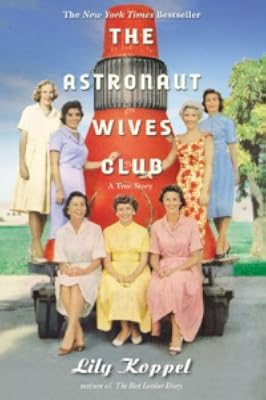
The Astronaut Wives Club: A True Story
by Lily Koppel
On This Page
Description
"As America's Mercury Seven astronauts were launched on death-defying missions, television cameras focused on the brave smiles of their young wives. Overnight, these women were transformed from military spouses into American royalty. They had tea with Jackie Kennedy, appeared on the cover of Life magazine, and quickly grew into fashion icons. Annie Glenn, with her picture-perfect marriage, was the envy of the other wives; platinum-blonde Rene Carpenter was proclaimed JFK's favorite; and show more licensed pilot Trudy Cooper arrived on base with a secret. Together with the other wives they formed the Astronaut Wives Club, meeting regularly to provide support and friendship. Many became next-door neighbors and helped to raise each other's children by day, while going to glam parties at night. As their celebrity rose-and as divorce and tragic death began to touch their lives-they continued to rally together, and the wives have now been friends for more than fifty years. THE ASTRONAUT WIVES CLUB tells the real story of the women who stood beside some of the biggest heroes in American history"-- "Bestselling author Lily Koppel reveals for the first time the stories and secrets of America's unsung heroes-the wives of our original astronauts"-- show lessTags
Recommendations




































Member Reviews
In The Astronaut Wives Club, Lily Koppel details the pressures that the wives of NASA’s astronauts faced from being suddenly thrust into the limelight, with vague expectations of how they should act in order to support NASA’s public relations goals while also receiving minimal support for themselves. The constant attention took its strain while the wives were worrying over their husbands’ being away and subject to increased attention from single women. Koppel writes, “The wives thought it was just awful. Louise was in total denial, lost in her own world and glued to her great consolation and time-passer, needlepoint. She would sit for hours sewing light yellow into the depths of brown, giving shape to florals, flame stitches, show more even abstract designs. She never stuck the wrong color in the wrong square, and rarely seemed to miss a hole. Neither did Alan.” (p. 49) NASA allowed an exclusive deal with Life magazine that provided for the astronauts financially while also aiding in their public relations goals. Loudon Wainwright of Life magazine ghost wrote the wives’ stories and worked to create the polished image of the astronaut wives, concealing Annie Glen’s stutter and trying to change Betty Grissom’s down-to-earth persona into something the magazine considered more glamorous (p. 62). The sudden glare of the press’ attention led the wives to develop a practice routine called Primly Stable, in which they pretended to be the perfect wives answering inane questions from the press all while bonding during the self-deprecating skit (p. 72-73).
The wives felt a slight easing of tension when JFK addressed the UN on 20 September 1963, suggesting a joint U.S.-U.S.S.R. mission to the Moon, thereby taking some of the pressure off the American astronauts and NASA to figure the technology and missions out on their own. Unfortunately, following Kennedy’s assassination two months later, President Johnson showed no interest in such a joint mission (p. 119-120). Instead, NASA accelerated its program in order to achieve Kennedy’s goal of landing on the Moon before the decade’s end. This rush increased risk. The wives demanded accountability from NASA after the first astronaut death, in which Ted Freeman died when a goose collided with his T-38, causing a crash. The first person to inform Faith Freeman that she was now a widow was a reporter from the Houston Chronicle who showed up on her doorstop seeking a comment. This first death rocked the astronaut community, but also pushed the agency for a protocol to notify the wives and insulate them from the press until they were notified (p. 132-133).
Koppel contrasts the Astronaut Wives Club with the rising tide of Second Wave Feminism. She writes, “In the summer of 1966, the National Organization for Women (NOW) was formed, just around the time of the first official meeting of the Astronaut Wives Club. The intent of the latter was, however, quite different from NOW” as the A.W.C. helped coordinate the social lives of the wives while also serving as a crash program for newcomers in what NASA expected of them from a public relations perspective (p. 156). Koppel writes, “If someone had asked Marge (or any of the Astrowives, for that matter) what her relationship to the nascent feminist movement was, she'd probably laugh, thinking she had nothing to do with it. But in her own way, she did. Marge was trying to create a haven for women in a world of men. The Astronaut Wives Club was the closest thing the space burbs had to a NOW chapter.” (p. 181) Continuing to examine the pressures the wives faced, Koppel writes, “The taboo subjects of depression and alcoholism, T-38 crashes and fatal fires, were strenuously avoided. So was pretty much anything that had to do with their husbands’ competition and extramarital activities. And the Cape Cookies, who represented a much-loathed rival group to the astronaut wives” (p. 172). In addition to facing expectations about their public statements and actions, the wives found signs at the local workout club promoting diets to pressure the wives into fitting a certain physical image (p. 184). According to Koppel, “Living in Togethersville, happily trapped in the fifties, the wives might have been on birth control pills, but they were still buying the clean-cut, all-American image one hundred percent. Barbara and Gene Cernan had actually walked out of the prime seats they'd been given to the free love rock musical Hair, which had just opened on Broadway, because it featured nudity and sex. They thought it was un-American. The wives didn't even seem to know that America was in total upheaval – students had taken over Columbia University, the militant Black Panthers had hijacked the civil rights movement, and radical feminists had emerged from the women's liberation movement.” (p. 203)
Even at their moment of triumph following Apollo 11, the wives found themselves confronted with a changed world. Protesters decried the cost of space exploration and a decadent ball celebrating the Moon landing amid rising awareness of domestic inequality coupled with the war in Vietnam (p. 234). The astronauts themselves began to change. Ed Mitchell, of Apollo 14, got interested in the consciousness-expanding, meditation-embracing, and far out ESP ideas of the 1960s, which embarrassed NASA when it came out that he tried using ESP to communicate with people on Earth during Apollo 14’s return journey (p. 246). As the 1960s further intruded into Togethersville, Rusty Schweickart grew his hair out and encouraged his wife to embrace his New Age beliefs. No stranger to free spirits, Clare Schweickart studied African independence movements, discussed consciousness-raising literature, and promoted liberal causes, but she couldn’t shake the thought that Rusty had changed his appearance for someone else (p. 247).
Describing Barbara Cernan’s reaction to Gene’s Apollo 17 mission, Koppel writes, “The red, white, and blue excitement char had been following the astronauts since the Mercury days had ballooned to intolerable proportions. It was simply getting to be too much to handle, like the Secret Service men Barbara had to be accompanied by because of the Black September threat.” (p. 250). Something had to give. Donn Eisele was the first astronaut divorce. Amid his affair, he began dropping hints of his actions to his wife while gaslighting her whenever she questioned him about his activities. He accused his wife, Harriet, of being crazy. She said she’d see a psychiatrist, but he pointed out that that seeming indicator of domestic instability could cost him his job, thereby illustrating how trapped the wives were in the NASA bubble (p. 196). Though Donn was the first divorce, more followed with John Young, Gordo Cooper, Jack Lousma, and others (p. 252). Betty broke with NASA over Gus’s legacy, filing suit against North American Rockwell on 27 January 1971 seeking “$10 million for negligence in the building of Gus’s Apollo 1 spacecraft, breaking the code of silence among the space widows” (p. 254). Her fight continued over controlling Gus’s flight suit (p. 283).
Koppel’s book brilliantly chronicles a different side of the Space Race, countering many of the polished official narratives while deepening our understanding of the pressures and sacrifices the race to the Moon required. She encourages readers to think deeply about the work of women in crafting the image of NASA from the very beginning, often at great personal cost. A fantastic read for anyone interested in space history. show less
The wives felt a slight easing of tension when JFK addressed the UN on 20 September 1963, suggesting a joint U.S.-U.S.S.R. mission to the Moon, thereby taking some of the pressure off the American astronauts and NASA to figure the technology and missions out on their own. Unfortunately, following Kennedy’s assassination two months later, President Johnson showed no interest in such a joint mission (p. 119-120). Instead, NASA accelerated its program in order to achieve Kennedy’s goal of landing on the Moon before the decade’s end. This rush increased risk. The wives demanded accountability from NASA after the first astronaut death, in which Ted Freeman died when a goose collided with his T-38, causing a crash. The first person to inform Faith Freeman that she was now a widow was a reporter from the Houston Chronicle who showed up on her doorstop seeking a comment. This first death rocked the astronaut community, but also pushed the agency for a protocol to notify the wives and insulate them from the press until they were notified (p. 132-133).
Koppel contrasts the Astronaut Wives Club with the rising tide of Second Wave Feminism. She writes, “In the summer of 1966, the National Organization for Women (NOW) was formed, just around the time of the first official meeting of the Astronaut Wives Club. The intent of the latter was, however, quite different from NOW” as the A.W.C. helped coordinate the social lives of the wives while also serving as a crash program for newcomers in what NASA expected of them from a public relations perspective (p. 156). Koppel writes, “If someone had asked Marge (or any of the Astrowives, for that matter) what her relationship to the nascent feminist movement was, she'd probably laugh, thinking she had nothing to do with it. But in her own way, she did. Marge was trying to create a haven for women in a world of men. The Astronaut Wives Club was the closest thing the space burbs had to a NOW chapter.” (p. 181) Continuing to examine the pressures the wives faced, Koppel writes, “The taboo subjects of depression and alcoholism, T-38 crashes and fatal fires, were strenuously avoided. So was pretty much anything that had to do with their husbands’ competition and extramarital activities. And the Cape Cookies, who represented a much-loathed rival group to the astronaut wives” (p. 172). In addition to facing expectations about their public statements and actions, the wives found signs at the local workout club promoting diets to pressure the wives into fitting a certain physical image (p. 184). According to Koppel, “Living in Togethersville, happily trapped in the fifties, the wives might have been on birth control pills, but they were still buying the clean-cut, all-American image one hundred percent. Barbara and Gene Cernan had actually walked out of the prime seats they'd been given to the free love rock musical Hair, which had just opened on Broadway, because it featured nudity and sex. They thought it was un-American. The wives didn't even seem to know that America was in total upheaval – students had taken over Columbia University, the militant Black Panthers had hijacked the civil rights movement, and radical feminists had emerged from the women's liberation movement.” (p. 203)
Even at their moment of triumph following Apollo 11, the wives found themselves confronted with a changed world. Protesters decried the cost of space exploration and a decadent ball celebrating the Moon landing amid rising awareness of domestic inequality coupled with the war in Vietnam (p. 234). The astronauts themselves began to change. Ed Mitchell, of Apollo 14, got interested in the consciousness-expanding, meditation-embracing, and far out ESP ideas of the 1960s, which embarrassed NASA when it came out that he tried using ESP to communicate with people on Earth during Apollo 14’s return journey (p. 246). As the 1960s further intruded into Togethersville, Rusty Schweickart grew his hair out and encouraged his wife to embrace his New Age beliefs. No stranger to free spirits, Clare Schweickart studied African independence movements, discussed consciousness-raising literature, and promoted liberal causes, but she couldn’t shake the thought that Rusty had changed his appearance for someone else (p. 247).
Describing Barbara Cernan’s reaction to Gene’s Apollo 17 mission, Koppel writes, “The red, white, and blue excitement char had been following the astronauts since the Mercury days had ballooned to intolerable proportions. It was simply getting to be too much to handle, like the Secret Service men Barbara had to be accompanied by because of the Black September threat.” (p. 250). Something had to give. Donn Eisele was the first astronaut divorce. Amid his affair, he began dropping hints of his actions to his wife while gaslighting her whenever she questioned him about his activities. He accused his wife, Harriet, of being crazy. She said she’d see a psychiatrist, but he pointed out that that seeming indicator of domestic instability could cost him his job, thereby illustrating how trapped the wives were in the NASA bubble (p. 196). Though Donn was the first divorce, more followed with John Young, Gordo Cooper, Jack Lousma, and others (p. 252). Betty broke with NASA over Gus’s legacy, filing suit against North American Rockwell on 27 January 1971 seeking “$10 million for negligence in the building of Gus’s Apollo 1 spacecraft, breaking the code of silence among the space widows” (p. 254). Her fight continued over controlling Gus’s flight suit (p. 283).
Koppel’s book brilliantly chronicles a different side of the Space Race, countering many of the polished official narratives while deepening our understanding of the pressures and sacrifices the race to the Moon required. She encourages readers to think deeply about the work of women in crafting the image of NASA from the very beginning, often at great personal cost. A fantastic read for anyone interested in space history. show less
In theory, Astronaut Wives Club is the kind of book I should love: it’s about a topic I find fascinating (space exploration), centers the unsung/unexplored experiences of women, and happens to be a true story. Unfortunately, I walked away thinking this would have been a great magazine article, but, at least as Lily Koppel wrote it, it made a lousy book. This book wants to focus on a wide group of women, and sacrifices pretty much all of its depth to do it. Just when the book would touch on a substantive topic like the toll the missions and public attention took on the wives, it flitted off again to focus on dresses and parties and parades. Don’t get me wrong, I love a pretty party dress as much as the next girl, but that’s not show more what I picked this book up for. I hope that some author in the future revisits this topic, focusing on 2 or 3 of the wives in a greater detail and recording the psychological and physical toll space exploration took on these women. It would do their contributions to our space program justice in a way this book simply did not. show less
The Short of It:
A behind the scenes, not so pleasant look at the women behind the Mercury Seven astronauts. Makes for a good beach read as it was pretty hard to put down.
The Rest of It:
Oh! These women! I had no idea what they went through. They were so perfect on the outside, almost Stepford-like, and yet they dealt with some seriously tough issues. On top of the everyday stress of being an astronaut’s wife, they also had to adhere to a certain standard, one that required them to dress and talk a certain way, not to mention LIVE a certain way. Their housing was pretty much determined for them, and yes, they received some perks for being part of the space program, but the really big decisions were not made by the families show more themselves.
Together, these women forge a bond with each other. They share a lot of the same concerns so naturally, they spend a lot of time together and in essence, become one big family. But the infidelity of many of the astronauts was a surprise to me. Many of these men kept women on the side and their wives were well aware of it, but not really able to do much about it since broken homes were considered a weakness for any astronaut being considered for flight.
This bothered me. I am not a fan of women that allow men to treat them poorly and keeping a “Suzie” on the side would have sent me over the edge had it been happening to me, but at the same time, it’s almost as if these women knew what they were signing up for when they married these men. They didn’t like the fact that their husbands were cheating on them, but they considered it par for the course and put up with it.
The promise of new clothes, nice homes and strategic magazine covers seemed to appease them, until their husbands are in space and their return becomes uncertain. Then, the resentment sets in as well as the worry. What will happen to them if their husbands die on a mission? Will they be able to stay in the same home? Will they be forced to move out of the area? Insurance policies are always up-to-date when you are married to an astronaut but these women had children to consider as well and as it turns out, some of these men did die, mostly from experiments on the ground.
The tragic nature of their stories is somewhat tamped down by their royalty status. Hanging out with Jackie Kennedy one minute and trading potluck recipes the next. Plus, the media was fascinated with them and could not get enough of them on camera. Entire homes were built without front windows just to give these women a false sense of privacy. But although they tried their hardest to maintain celebrity status, some days they just weren’t feeling it and that is why the Astronaut Wives Club was formed. It gave them all a chance to let loose and be themselves.
I really enjoyed this book but I felt like a total voyeur peeking into their lives like this. Plus, the politics of flight, who steps foot on the moon first, what comes out of their mouths as the whole world is watching…plays a huge role too. The images of these men and women were played up to make them look really good to the public but as with any marriage, they had their troubles too. And as new missions come-up, so do new astronauts and their new wives. The original seven quickly realize just how short-lived their fame is. It’s a little sad but I’m glad that they women had each other for support.
This is one of those books that you can’t put down. Especially if you are at all fascinated with how celebrities live. I also have a thing for that time period (late 50′s, early 60′s) so I found the combination irresistible. Oh, and did I mention that the TV series based on the book is expected to hit your living room this summer?
For more reviews, visit my blog: Book Chatter. show less
A behind the scenes, not so pleasant look at the women behind the Mercury Seven astronauts. Makes for a good beach read as it was pretty hard to put down.
The Rest of It:
Oh! These women! I had no idea what they went through. They were so perfect on the outside, almost Stepford-like, and yet they dealt with some seriously tough issues. On top of the everyday stress of being an astronaut’s wife, they also had to adhere to a certain standard, one that required them to dress and talk a certain way, not to mention LIVE a certain way. Their housing was pretty much determined for them, and yes, they received some perks for being part of the space program, but the really big decisions were not made by the families show more themselves.
Together, these women forge a bond with each other. They share a lot of the same concerns so naturally, they spend a lot of time together and in essence, become one big family. But the infidelity of many of the astronauts was a surprise to me. Many of these men kept women on the side and their wives were well aware of it, but not really able to do much about it since broken homes were considered a weakness for any astronaut being considered for flight.
This bothered me. I am not a fan of women that allow men to treat them poorly and keeping a “Suzie” on the side would have sent me over the edge had it been happening to me, but at the same time, it’s almost as if these women knew what they were signing up for when they married these men. They didn’t like the fact that their husbands were cheating on them, but they considered it par for the course and put up with it.
The promise of new clothes, nice homes and strategic magazine covers seemed to appease them, until their husbands are in space and their return becomes uncertain. Then, the resentment sets in as well as the worry. What will happen to them if their husbands die on a mission? Will they be able to stay in the same home? Will they be forced to move out of the area? Insurance policies are always up-to-date when you are married to an astronaut but these women had children to consider as well and as it turns out, some of these men did die, mostly from experiments on the ground.
The tragic nature of their stories is somewhat tamped down by their royalty status. Hanging out with Jackie Kennedy one minute and trading potluck recipes the next. Plus, the media was fascinated with them and could not get enough of them on camera. Entire homes were built without front windows just to give these women a false sense of privacy. But although they tried their hardest to maintain celebrity status, some days they just weren’t feeling it and that is why the Astronaut Wives Club was formed. It gave them all a chance to let loose and be themselves.
I really enjoyed this book but I felt like a total voyeur peeking into their lives like this. Plus, the politics of flight, who steps foot on the moon first, what comes out of their mouths as the whole world is watching…plays a huge role too. The images of these men and women were played up to make them look really good to the public but as with any marriage, they had their troubles too. And as new missions come-up, so do new astronauts and their new wives. The original seven quickly realize just how short-lived their fame is. It’s a little sad but I’m glad that they women had each other for support.
This is one of those books that you can’t put down. Especially if you are at all fascinated with how celebrities live. I also have a thing for that time period (late 50′s, early 60′s) so I found the combination irresistible. Oh, and did I mention that the TV series based on the book is expected to hit your living room this summer?
For more reviews, visit my blog: Book Chatter. show less
It started with seven wives. When the original seven wives of the Mercury astronauts were chosen to be shot up on fire-boosted rockets into the final frontier of outer space, their wives decided they needed a support group in order to help each other with the fears and ongoing stress of not only being thrust into the media limelight, but into the ongoing horror of not knowing if their husbands would return from their perilous missions.
Armed with cartons of cigarettes, bottles of champagne, jello-molds, and casseroles, these seven brave ladies gathered together to serve up laughter, hugs, and shared stories, each time an astronaut was launched into space. As years went by they were joined by the Gemini and Apollo astronaut wives, each show more additional wife adding to the wall of stiff upper-lipped women as they endured tragedy and fright as well as the joys of success and the many perks they were gifted with from NASA, the White House, celebrities, department stores, and most of all, each other.
Although on one side of the coin they battled the press that daily invaded their homes and front lawns leading to loss of privacy and sanity, NASA headquarters mandating how they lived their lives and presented themselves to the world, the flip-side marvelously handed them dinners with Presidents at the White House, friendships with Jackie Kennedy and Lady Bird Johnson, thousand dollar shopping sprees from Neiman-Marcus, balls and parties galore, bigger houses and expensive cars, and trips around the world to promote the Space Race.
Lily Koppel’s intimate look into the astronauts and their wives gives the reader a very insightful and fascinating page turner into what really went on behind the front doors of the lives of these families and how although it looked like a fairytale to those of us on the outside, it was most often a trip to hell that brought much heartbreak, traumatic emotional suffering, broken families, and even death to those who chose to live space age dreams and nightmares. I thoroughly enjoyed and recommend this terrific book; five stars from this avid reader! show less
Armed with cartons of cigarettes, bottles of champagne, jello-molds, and casseroles, these seven brave ladies gathered together to serve up laughter, hugs, and shared stories, each time an astronaut was launched into space. As years went by they were joined by the Gemini and Apollo astronaut wives, each show more additional wife adding to the wall of stiff upper-lipped women as they endured tragedy and fright as well as the joys of success and the many perks they were gifted with from NASA, the White House, celebrities, department stores, and most of all, each other.
Although on one side of the coin they battled the press that daily invaded their homes and front lawns leading to loss of privacy and sanity, NASA headquarters mandating how they lived their lives and presented themselves to the world, the flip-side marvelously handed them dinners with Presidents at the White House, friendships with Jackie Kennedy and Lady Bird Johnson, thousand dollar shopping sprees from Neiman-Marcus, balls and parties galore, bigger houses and expensive cars, and trips around the world to promote the Space Race.
Lily Koppel’s intimate look into the astronauts and their wives gives the reader a very insightful and fascinating page turner into what really went on behind the front doors of the lives of these families and how although it looked like a fairytale to those of us on the outside, it was most often a trip to hell that brought much heartbreak, traumatic emotional suffering, broken families, and even death to those who chose to live space age dreams and nightmares. I thoroughly enjoyed and recommend this terrific book; five stars from this avid reader! show less
Finally pulling this off the shelf as the end of July and the 50th anniversary of the moonwalk arrived. I found it interesting ,but a bit tedious in parts as it seems to be a recitation of facts and conversations. I am young enough not to know that these families essentially had Life magazine embedded with them for the duration of the space race and how tiring that must have been. A lot of the men chosen, both for their height and their flying abilities were from the armed forces, so a lot of the wives knew exactly how to act--including making hearty breakfasts for the astronaut trainees. They were required maintain a happy, stress free home front--a world separate from the 'rock star' status (and groupies referred to as cape Cookies) show more their husbands enjoyed while training for missions. I think it could have gone a lot deeper with how the women's movement was starting to change their lives as the Apollo project wound down in the early 70's. Only 7 of the of the core 49 couples didn't get divorced. show less
One of the very best current nonfiction books that I have ever read, Koppel gives readers the chance to meet the strong partners of the NASA astronauts - their wives. These women formed a tight knit community in order stay strong under scrutiny from the press, and the common ups and downs of NASA life.
A fascinating book from start to finish. A very fun summer read filled with intimate little details that go beyond the hype and history books. There are photographs and captions as well as a cast of characters (astronauts and astrowives) to keep the story organized. A definite reread and it passed the ultimate test because I bought the book and own it.
A fascinating book from start to finish. A very fun summer read filled with intimate little details that go beyond the hype and history books. There are photographs and captions as well as a cast of characters (astronauts and astrowives) to keep the story organized. A definite reread and it passed the ultimate test because I bought the book and own it.
During the 1950 and ‘60s the space race was in full swing. The astronauts who took those huge leaps for mankind became celebrities around the world. This book is the true story of the women who stood behind the men on the Mercury, Gemini, and Apollo missions.
Those alive during those decades might remember some of the names mentioned in the book. I had no idea that the women were under such public scrutiny. Their photos were in Life magazine along with personal tidbits about every aspect of their lives. Like politicians and movie stars, their lives became public domain as Americans clamored for more information about the men behind the space suits. Life magazine even had reporters in their homes while their husbands’ lives hung in show more the balance on various flights.
Koppel gives the dirty details about the clothes, the fights, and the quirks of the women, but there was certainly a darker side to the story as well. Many of the men were cheating on their wives and multiple marriages ended in divorce. Others ended when something went wrong on a mission and men were lost. The public grieving that followed was painful to read about.
It’s funny, when thinking about astronauts and their incredible courage and accomplishments; I don’t think I’ve ever reflected on the women who stood behind them. How terrifying that must have been to watch your husband be shot off into space in a rocket!
BOTTOM LINE: I really enjoyed learning more about the women behind those famous men. My one complaint is that they tended to all blend together for me. The author jumps between groups of women and it was hard to distinguish one from another. show less
Those alive during those decades might remember some of the names mentioned in the book. I had no idea that the women were under such public scrutiny. Their photos were in Life magazine along with personal tidbits about every aspect of their lives. Like politicians and movie stars, their lives became public domain as Americans clamored for more information about the men behind the space suits. Life magazine even had reporters in their homes while their husbands’ lives hung in show more the balance on various flights.
Koppel gives the dirty details about the clothes, the fights, and the quirks of the women, but there was certainly a darker side to the story as well. Many of the men were cheating on their wives and multiple marriages ended in divorce. Others ended when something went wrong on a mission and men were lost. The public grieving that followed was painful to read about.
It’s funny, when thinking about astronauts and their incredible courage and accomplishments; I don’t think I’ve ever reflected on the women who stood behind them. How terrifying that must have been to watch your husband be shot off into space in a rocket!
BOTTOM LINE: I really enjoyed learning more about the women behind those famous men. My one complaint is that they tended to all blend together for me. The author jumps between groups of women and it was hard to distinguish one from another. show less
Members
- Recently Added By
Published Reviews
Lily Koppel's history tells the story of the women behind the astronauts, from Project Mercury--which launched the first American into space in 1961--to the Apollo program, which landed a man on the Moon eight years later. Focusing on this tight-knit sisterhood offers a new window into America's ambitious age of exploration. It's a fairly comprehensive overview--to both its credit and show more detriment. While Koppel's thoroughness is impressive, the book often barely skims the surface of these women's lives, and there are so many characters that it's hard to keep them straight. . . . Occasionally a sense of the women's steely strength cuts through, but there's an awful lot of fluff in the way. show less
added by sgump
Lists

Books Read in 2013
1,630 works; 51 members

1960s
281 works; 16 members

Books Read in 2015
3,299 works; 126 members

Hachette Book Group
152 works; 6 members

Club Read's Recommended Nonfiction Written by Women
618 works; 30 members
Author Information

2 Works 1,895 Members
Some Editions
Common Knowledge
- Original publication date
- 2013
- People/Characters
- Rene Carpenter; Trudy Cooper; Annie Glenn; Betty Grissom; Jo Schirra; Louise Shepard (show all 10); Marge Slayton; Joan Aldrin; Susan Borman; Pat White
- Important places
- Cape Canaveral, Florida, USA; Houston, Texas, USA
- Important events
- Astronaut Program
- Related movies
- The Astronaut Wives Club (2015 | IMDb)
- Dedication
- For the wives, who have the "right stuff"
- First words
- To be an astronaut wife meant tea with Jackie Kennedy, high-society galas, and instant celebrity.
- Last words
- (Click to show. Warning: May contain spoilers.)The others joined in on the chorus:
Oh, you can be right about the universe,
You can be right on your own! - Blurbers
- Brinkley, Douglas; Nelson, Craig; Weller, Sheila
Classifications
- Genres
- General Nonfiction, Nonfiction, Biography & Memoir, History
- DDC/MDS
- 629.450092 — Applied science & technology Engineering Transportation Vehicles Spacecraft & Vehicles Manned space flight General & Biography General & Biography Biographies & History Biography
- LCC
- TL789.85 .A1 .K67 — Technology Motor vehicles. Aeronautics. Astronautics Motor vehicles. Aeronautics. Astronautics Astronautics. Space travel
- BISAC
Statistics
- Members
- 1,223
- Popularity
- 20,262
- Reviews
- 76
- Rating
- (3.38)
- Languages
- English, French
- Media
- Paper, Audiobook, Ebook
- ISBNs
- 16
- ASINs
- 11