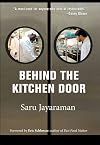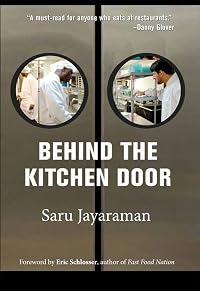
Behind the Kitchen Door
by Saru Jayaraman
On This Page
Description
"Sustainability is about contributing to a society that everybody benefits from, not just going organic because you don't want to die from cancer or have a difficult pregnancy. What is a sustainable restaurant? It's one in which as the restaurant grows, the people grow with it."-from Behind the Kitchen DoorHow do restaurant workers live on some of the lowest wages in America? And how do poor working conditions-discriminatory labor practices, exploitation, and unsanitary kitchens-affect the show more meals that arrive at our restaurant tables? Saru Jayaraman, who launched the national restaurant workers' organization Restaurant Opportunities Centers United, sets out to answer these questions by following the lives of restaurant workers in New York City, Washington, D.C., Philadelphia, Los Angeles, Chicago, Houston, Miami, Detroit, and New Orleans.Blending personal narrative and investigative journalism, Jayaraman shows us that the quality of the food that arrives at our restaurant tables depends not only on the sourcing of the ingredients. Our meals benefit from the attention and skill of the people who chop, grill, sautø, and serve. Behind the Kitchen Door is a groundbreaking exploration of the political, economic, and moral implications of dining out. Jayaraman focuses on the stories of individuals, like Daniel, who grew up on a farm in Ecuador and sought to improve the conditions for employees at Del Posto; the treatment of workers behind the scenes belied the high-toned Slow Food ethic on display in the front of the house.Increasingly, Americans are choosing to dine at restaurants that offer organic, fair-trade, and free-range ingredients for reasons of both health and ethics. Yet few of these diners are aware of the working conditions at the restaurants themselves. But whether you eat haute cuisine or fast food, the well-being of restaurant workers is a pressing concern, affecting our health and safety, local economies, and the life of our communities. Highlighting the roles of the 10 million people, many immigrants, many people of color, who bring their passion, tenacity, and vision to the American dining experience, Jayaraman sets out a bold agenda to raise the living standards of the nation's second-largest private sector workforce-and ensure that dining out is a positive experience on both sides of the kitchen door. show lessTags
Recommendations









































Member Reviews
I am guilty of a crime. It’s mostly a crime of omission or ignorance, but it is an offense nonetheless. When I go out to a restaurant, I have never concerned myself with whether the establishment has fair management or hiring practices. I never bother to find out whether anybody working that day is sick and had to come to work for fear of losing pay or their job entirely. I hardly notice that skin color tends to get darker as you approach the back of the house. But Saru Jayaraman has. Her book Behind the Kitchen Door and her organization (the Restaurant Opportunity Centers United) try to lift the veil surrounding food service workers in order to make the entire world of outside-the-home dining sustainable for all, from the food show more vendors to the workers to management, and even to the customer.
Jayaraman’s crusade for restaurant workers’ rights began with September 11th. When the Windows on the World restaurant fell with everything else in the Towers, dozens of displaced restaurant workers had to wait for re-employment. When the owners built a new establishment, many of the old workers were not hired back because they “didn’t have enough experience.” Never mind that they had already worked for this employer before, some people for many years. Jayaraman, with the help of Fekkak Mamdouh, began a protest campaign and organization that helped the workers get rehired.
Then, others came for her help. They were tired of being discrimintaed against, tired of harassment, tired of unequal pay, and tired of wage gouging and tip theft by their employers. The ROC organized studies and research into which restaurants were the worst offenders and petitioned, through either civil or legal measures, for remuneration, for fair compensation, or for more transparent hiring policies to be enacted at many restaurants. In this book, we get many stories of restaurant workers who faced hurdle after hurdle to break into the industry only to face rampant inequality once they get the job.
Granted, the book tends to read like one long informercial for a non-profit organization, but the stories need telling. I’m not about to lie and say that I’ll be doing thorough investigations of a place before I eat there, but I will be a bit more attentive to the work atmosphere, noticing who’s where and how the restaurant presents its workforce. It’s hard to climb onto a high horse after so much nonchalance on the matter, but Jaramayan makes a very good case for serious reform in the food service industry, and it would least behoove us to listen to what she has to say. show less
Jayaraman’s crusade for restaurant workers’ rights began with September 11th. When the Windows on the World restaurant fell with everything else in the Towers, dozens of displaced restaurant workers had to wait for re-employment. When the owners built a new establishment, many of the old workers were not hired back because they “didn’t have enough experience.” Never mind that they had already worked for this employer before, some people for many years. Jayaraman, with the help of Fekkak Mamdouh, began a protest campaign and organization that helped the workers get rehired.
Then, others came for her help. They were tired of being discrimintaed against, tired of harassment, tired of unequal pay, and tired of wage gouging and tip theft by their employers. The ROC organized studies and research into which restaurants were the worst offenders and petitioned, through either civil or legal measures, for remuneration, for fair compensation, or for more transparent hiring policies to be enacted at many restaurants. In this book, we get many stories of restaurant workers who faced hurdle after hurdle to break into the industry only to face rampant inequality once they get the job.
Granted, the book tends to read like one long informercial for a non-profit organization, but the stories need telling. I’m not about to lie and say that I’ll be doing thorough investigations of a place before I eat there, but I will be a bit more attentive to the work atmosphere, noticing who’s where and how the restaurant presents its workforce. It’s hard to climb onto a high horse after so much nonchalance on the matter, but Jaramayan makes a very good case for serious reform in the food service industry, and it would least behoove us to listen to what she has to say. show less
Saru Jayaraman's book Behind the Kitchen Door should be required reading for anyone who eats at restaurants-- which is almost everyone. In this call-to-arms to end restaurant industry abuses, Jayaraman asks a fairly simple, yet perplexing, question: If Americans love to eat out and care about where their food comes from (Is it local? Is it organic or sustainable?), why are we oblivious to who prepares and serves the food in restaurants? Jayaraman reports that there is a great deal of inequality in the restaurant world, and those inequalities get greater the farther back in the restaurant (and kitchen) one goes.
The plight of fast food workers with low wages and minimal, if any, benefits isn't a new story. But what might surprise many show more people is that workers in some of America's more glamorous restaurants don't fare much better. Jayaraman founded ROC, Restaurant Opportunities Centers United, a group whose purpose is to get livable wages and fair treatment for restaurant industry workers. In the book, the author details several instances of worker abuses at both large national chain restaurants as well as upscale fine dining establishments, and how ROC was able to work with management to treat workers more humanely.
Just as importantly, Jayaraman highlights a number of studies ROC has done with restaurant workers across the country. The numbers do not tell a happy tale. The author shows how pressure from restaurant lobbyists has kept the tipped minimum wage at just over $2 an hour in many states, an amount that is wiped out on paychecks by taxes. Workers then earn only the money from tips, and even then that money can be siphoned away by management. Additionally, gender and racial discrimination is prevelant throughout the restaurant industry, keeping women off the cooking line in fine dining establishments and darker skinned employees in the lowest-paying, out-of-sight jobs in the kitchen.
Behind the Kitchen Door is a call to arms for restaurant industry workers, and it is an essential and overdue work. Reading it, I couldn't help but question how many times I'd eaten at a restaurant that participated in the unsavory practices described here. Much like Upton Sinclair's exposure of the meat-packing industry in The Jungle, Behind the Kitchen Door is an alarming, gut-wrenching work that will hopefully force needed change in an industry we all need-- but clearly don't want to think too much about. This book made me, a foodie, question my love of restaurants. More importantly, it made me angry at the injustices restaurant owners can perpetuate on their workers. But thanks to Jayaraman's work, I know I can do something about it... and so can you. show less
The plight of fast food workers with low wages and minimal, if any, benefits isn't a new story. But what might surprise many show more people is that workers in some of America's more glamorous restaurants don't fare much better. Jayaraman founded ROC, Restaurant Opportunities Centers United, a group whose purpose is to get livable wages and fair treatment for restaurant industry workers. In the book, the author details several instances of worker abuses at both large national chain restaurants as well as upscale fine dining establishments, and how ROC was able to work with management to treat workers more humanely.
Just as importantly, Jayaraman highlights a number of studies ROC has done with restaurant workers across the country. The numbers do not tell a happy tale. The author shows how pressure from restaurant lobbyists has kept the tipped minimum wage at just over $2 an hour in many states, an amount that is wiped out on paychecks by taxes. Workers then earn only the money from tips, and even then that money can be siphoned away by management. Additionally, gender and racial discrimination is prevelant throughout the restaurant industry, keeping women off the cooking line in fine dining establishments and darker skinned employees in the lowest-paying, out-of-sight jobs in the kitchen.
Behind the Kitchen Door is a call to arms for restaurant industry workers, and it is an essential and overdue work. Reading it, I couldn't help but question how many times I'd eaten at a restaurant that participated in the unsavory practices described here. Much like Upton Sinclair's exposure of the meat-packing industry in The Jungle, Behind the Kitchen Door is an alarming, gut-wrenching work that will hopefully force needed change in an industry we all need-- but clearly don't want to think too much about. This book made me, a foodie, question my love of restaurants. More importantly, it made me angry at the injustices restaurant owners can perpetuate on their workers. But thanks to Jayaraman's work, I know I can do something about it... and so can you. show less
Beautifully written. Having watched Robert Irvine's Restaurant Impossible many times, it's frightening to think of the conditions of the vast majority (?) of small restaurants---which immediately advertises the fact that if you can't afford the help to take care of the facilities in the restaurant you certainly cannot be treating your workers well. Jayaraman's efforts are incredible and probably work better in large cities. The wage issue should be handled nationwide yesterday---eating in a restaurant where the workers suffer makes no sense for anyone. The guide idea is terrific and it's just a shame that it's such an uphill climb. Yes, everyone who ever eats out should read this, absorb it and remember it...the very next time he/she show more goes out to eat. show less
This is pretty much a must-read for anyone interested in social justice and everyone in America who eats out regularly.
My only criticism is that the writing style is somewhat clunky. But that has nothing to do with the message of the work, and it's the message here that matters.
My only criticism is that the writing style is somewhat clunky. But that has nothing to do with the message of the work, and it's the message here that matters.
One of the founders of Restaurant Opportunities Centers United recounts personal stories of hardship and injustice in the restaurant industry, backed up by national statistics. She details the legal policies and lobbying that enable these unjust and unhealthful working conditions, and lays out specific ways to end them. Great cause, terrible writing.
Readers will never think the same way about eating out again. Jayaraman's research is startling and hits home--if the reader doesn't care about the health of the people serving his food, he certainly will care about how it affects him. As the author points out in the book, people spend so much time worrying about the quality of the food, but not the conditions it was prepared in, the people who create it. Well, after reading this, they will. However, some of the facts lack context and seem slightly exaggerated, which, for some readers, might call into question the validity of them all.
Selected as the UUA Common Read for 2013-2014.
Explores the political, economic, and moral implications of dining out.
Chapter topics include workers health, tips, low wages, equality for women, race in the kitchen, recipes for change, and unsanitary kitchens.
Look for the Common Read Study Guide in this collection.
Explores the political, economic, and moral implications of dining out.
Chapter topics include workers health, tips, low wages, equality for women, race in the kitchen, recipes for change, and unsanitary kitchens.
Look for the Common Read Study Guide in this collection.
Members
- Recently Added By
Lists

TED 2013 Summer Reading List
190 works; 13 members
Author Information

5+ Works 246 Members
Saru Jayaraman is Co-Founder of the Restaurant Opportunities Centers United (ROC United) and Director of the Food Labor Research Center at the University of California, Berkeley. She has been named one of Crain's "40 Under 40," CNN's "Ten Visionary Women," New York's "Influential of New York," and San Francisco Chronicle's Visionary of Year for show more 2019. She is a past recipient of the James Beard Leadership Award and was named a 2014 White House Champion of Change. show less
Some Editions
Common Knowledge
- Blurbers
- Glover, Danny
Classifications
- Genres
- Nonfiction, Sociology, General Nonfiction, Food & Cooking
- DDC/MDS
- 331.7 — Society, government, & culture Economics Labor economics Labor by industry and occupation
- LCC
- HD8039 .F72 .U563 — Social sciences Industries. Land use. Labor Industries. Land use. Labor Labor. Work. Working class By industry or trade
- BISAC
Statistics
- Members
- 176
- Popularity
- 185,882
- Reviews
- 8
- Rating
- (3.40)
- Languages
- English
- Media
- Paper, Audiobook, Ebook
- ISBNs
- 4
- ASINs
- 3