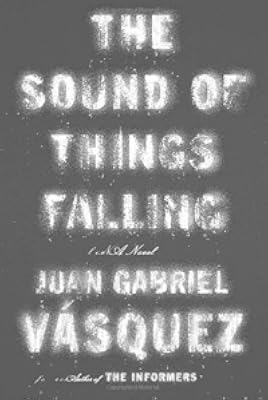
The Sound of Things Falling
by Juan Gabriel Vásquez
On This Page
Description
No sooner does he get to know Ricardo Laverde than disaffected young Colombian lawyer Antonio Yammara realizes that his new friend has a secret, or rather several secrets. Antonio's fascination with the life of ex-pilot Ricardo Laverde begins by casual acquaintance in a seedy Bogotá billiard hall and grows until the day Ricardo receives a cassette tape in an unmarked envelope. Asking Antonio to find him somewhere private to play it, they go to a library. The first time he glances up from show more his seat in the next booth, Antonio sees tears running down Laverde's cheeks; the next, the ex-pilot has gone. Shortly afterwards, Ricardo is shot dead on a street corner in Bogotá by a guy on the back of a motorbike and Antonio is caught in the hail of bullets. Lucky to survive, and more out of love with life than ever, he starts asking questions until the questions become an obsession that leads him to Laverde's daughter. His troubled investigation leads all the way back to the early 1960s, marijuana smuggling and a time before the cocaine trade trapped a whole generation of Colombians in a living nightmare of fear and random death. show lessTags
Recommendations
















Member Recommendations

El principito & Piloto de guerra/ The Little Prince & War Pilot (Spanish Edition) by Antoine de Saint-Exupéry
_eskarina Same reflexvity and melancholy as if anchored in being a pilot who flies in small planes and is used to be alone in the sky
Member Reviews
Rating: 4* of five
The Publisher Says: In the city of Bogotá, Antonio Yammara reads an article about a hippo that had escaped from a derelict zoo once owned by legendary Colombian drug kingpin Pablo Escobar. The article transports Antonio back to when the war between Escobar’s Medellín cartel and government forces played out violently in Colombia’s streets and in the skies above.
Back then, Antonio witnessed a friend’s murder, an event that haunts him still. As he investigates, he discovers the many ways in which his own life and his friend’s family have been shaped by his country’s recent violent past. His journey leads him all the way back to the 1960s and a world on the brink of change: a time before narco-trafficking show more trapped a whole generation in a living nightmare.
Vásquez is “one of the most original new voices of Latin American literature,” according to Nobel Prize winner Mario Vargas Llosa, and The Sound of Things Falling is his most personal, most contemporary novel to date, a masterpiece that takes his writing—and will take his literary star—even higher.
I received this ARC from the publisher as part of LibraryThing's Early Reviewers program
My Review: To every rule its exception: This book is praised highly by a writer whose work I abhor, Jonathan Franzen; and ordinarily that means I will avoid the book so as not to read even a Pearl-Rule 46pp of something I'm bound to hate.
Ha ha ha, rules. I liked this book a lot. Well, "like" is a weird word for the emotional resonance of the book. I responded to the book like a tuning fork responds to a smack.
The fact is that I am a fan of Latin American literature because, like this book and author, most of the translated works are political and tendentious in their natures, and so are the authors. So am I. So it's usually a good fit.
This story, which feels as personal as the blurb suggests it actually is, made me very uncomfortable, as I watched Colombia's descent into warlord rule and civil failure. I suspect I'd feel the same fearful anger if I were to visit Montana or Idaho or Wyoming, places that white supremacist/apocalyptic christian cultists have claimed for themselves. When nutball extremists take over a place, it's a failure of civil authority, and that is a crime. The net effect is the same as the drug cartels' takeover of Colombia in the 1970s or the current failure of civil authority in Mexico today or the Cascadian separatist movement here.
These are not positive developments, they have tremendous costs in personal misery, and they are much to be deplored. Vásquez does his deploring by focusing tightly on the emotional and psychic costs of civil failure to a small group of friends, Antonio's friends and his good self. It's a sad, sad chronicle of horror and rage. And it's wrapped in beautiful words expressing solidly grounded truths:
Translator McLean has done a marvelous job of making poetry in the English, and while I haven't read the original Spanish text, I can only say that she is unlikely to have made such handsome bricks without good, abundant straw.
If I must pick a nit, and I must, it's that the structure of the novel is a tad more complex than is strictly speaking necessary to tell the author's very involving story. It's not hard to follow, but it's just artificial enough to pop the reader out of the narrative flow. That's almost never a good thing. (Okay, it's never a good thing, but I've learned not to make absolute statements because some little twidgee or another will come along and say something tiresome about my opinions and frankly I'm over it.)
I hope, that issue aside, that you will all race out to your local bookeries and procure copies of this book. It's got something important to say to us in the USA about the incredibly high cost of allowing dissent to become dissolution. Colombia failed its citizens, and their agony only slowly passes. Mexico is mid-failure, and is much closer to us. And yet we allow our own idiot rebels a far freer hand in obstructing and undermining our governmental institutions and shredding our social fabric in the name of some illusory "right" they assert that they have to do this to us all.
Read the book. Learn the cost. The price of the right wing's version of freedom is too goddamned high, and Vásquez knows it first hand. Please listen to him.
This work is licensed under a Creative Commons Attribution-NonCommercial-ShareAlike 3.0 Unported License. show less
The Publisher Says: In the city of Bogotá, Antonio Yammara reads an article about a hippo that had escaped from a derelict zoo once owned by legendary Colombian drug kingpin Pablo Escobar. The article transports Antonio back to when the war between Escobar’s Medellín cartel and government forces played out violently in Colombia’s streets and in the skies above.
Back then, Antonio witnessed a friend’s murder, an event that haunts him still. As he investigates, he discovers the many ways in which his own life and his friend’s family have been shaped by his country’s recent violent past. His journey leads him all the way back to the 1960s and a world on the brink of change: a time before narco-trafficking show more trapped a whole generation in a living nightmare.
Vásquez is “one of the most original new voices of Latin American literature,” according to Nobel Prize winner Mario Vargas Llosa, and The Sound of Things Falling is his most personal, most contemporary novel to date, a masterpiece that takes his writing—and will take his literary star—even higher.
I received this ARC from the publisher as part of LibraryThing's Early Reviewers program
My Review: To every rule its exception: This book is praised highly by a writer whose work I abhor, Jonathan Franzen; and ordinarily that means I will avoid the book so as not to read even a Pearl-Rule 46pp of something I'm bound to hate.
Ha ha ha, rules. I liked this book a lot. Well, "like" is a weird word for the emotional resonance of the book. I responded to the book like a tuning fork responds to a smack.
The fact is that I am a fan of Latin American literature because, like this book and author, most of the translated works are political and tendentious in their natures, and so are the authors. So am I. So it's usually a good fit.
This story, which feels as personal as the blurb suggests it actually is, made me very uncomfortable, as I watched Colombia's descent into warlord rule and civil failure. I suspect I'd feel the same fearful anger if I were to visit Montana or Idaho or Wyoming, places that white supremacist/apocalyptic christian cultists have claimed for themselves. When nutball extremists take over a place, it's a failure of civil authority, and that is a crime. The net effect is the same as the drug cartels' takeover of Colombia in the 1970s or the current failure of civil authority in Mexico today or the Cascadian separatist movement here.
These are not positive developments, they have tremendous costs in personal misery, and they are much to be deplored. Vásquez does his deploring by focusing tightly on the emotional and psychic costs of civil failure to a small group of friends, Antonio's friends and his good self. It's a sad, sad chronicle of horror and rage. And it's wrapped in beautiful words expressing solidly grounded truths:
Adulthood brings with it the pernicious illusion of control, perhaps even depends on it. I mean that mirage of dominion over our own life that allows us to feel like adults, for we associate maturity with autonomy, the sovereign right to determine what is going to happen to us next.
Translator McLean has done a marvelous job of making poetry in the English, and while I haven't read the original Spanish text, I can only say that she is unlikely to have made such handsome bricks without good, abundant straw.
If I must pick a nit, and I must, it's that the structure of the novel is a tad more complex than is strictly speaking necessary to tell the author's very involving story. It's not hard to follow, but it's just artificial enough to pop the reader out of the narrative flow. That's almost never a good thing. (Okay, it's never a good thing, but I've learned not to make absolute statements because some little twidgee or another will come along and say something tiresome about my opinions and frankly I'm over it.)
I hope, that issue aside, that you will all race out to your local bookeries and procure copies of this book. It's got something important to say to us in the USA about the incredibly high cost of allowing dissent to become dissolution. Colombia failed its citizens, and their agony only slowly passes. Mexico is mid-failure, and is much closer to us. And yet we allow our own idiot rebels a far freer hand in obstructing and undermining our governmental institutions and shredding our social fabric in the name of some illusory "right" they assert that they have to do this to us all.
Read the book. Learn the cost. The price of the right wing's version of freedom is too goddamned high, and Vásquez knows it first hand. Please listen to him.
This work is licensed under a Creative Commons Attribution-NonCommercial-ShareAlike 3.0 Unported License. show less
 This review was written for LibraryThing Early Reviewers.
What a beautiful, sad, well-written story. The author includes all the details I needed to feel, smell, hear, taste, and see the setting for this story without compromising plot strength or character development. In these days of books that are too long because they've not been well-edited either by the author or the publisher, this book stands out as a beautifully faceted and brilliant gem. The ending is ambiguous, but I did not mind that at all. In my experience, foreign authors - or maybe their readers - have a greater tolerance for ambiguity so the plot line does not end all neatly tied up, just like life.
The Sound of Things Falling by Juan Gabriel Vásquez
My rating: 4 of 5 stars
The story is set in Bogotá, Colombia and the reader learns that much of the city is recovering from severe PTSD. Citizens who lived through the Eighties in the time of Pablo Escobar have symptoms not unlike war veterans, having spent a decade living in fear, not going out to public places, restaurants, cafes, etc. and never knowing when a family member or friend would go missing. The narrator grew up in the era and suffers irrational fears and despair after he is wounded while walking with his friend Roberto who is shot and killed, leaving him obsessed with trying to understand the death from the man's surviving daughter. The book becomes a mystery tale and show more spurs the reader on to discover what happened. The writing is beautiful in translation. Kudos to Anne McLean - I want to read more of her translations and am looking at The Anatomy of a Moment: Thirty-Five Minutes in History and Imagination. One memorable setting of the ruined and abandoned animal park/zoo owned by the drug lord is so real you can hear the squeak of a broken sign hanging by one hinge in the oppressive ever-present heat. The pace is almost dreamy for the first section of the story but picks up rapidly moving forward to other events, further puzzles.
A favorite quotation from the book:
"There is just one direct route beween La Dorada and Bogotá...You turn south and take the straight road that runs by the river that takes you to Honda, the port where travelers used to arrive when no planes flew over the Andes. From London, from New York, from Havana, Colón or Barranquilla, they would arrive by sea at the mouth of the Magdalena and change ship there...long days of sailing upriver on tired steamships...From Honda, each traveler would get to Bogotá however he could, by mule or by train or in a private car...no one has able to explain convincingly, beyond banal historical causes, why a country should choose as its capital its most remote and hidden city. It's not our fault that we Bogotanos are stuffy and cold and distant, because that's what our city is like, and you can't blame us for greeting strangers warily, for we're not used to them." show less
My rating: 4 of 5 stars
The story is set in Bogotá, Colombia and the reader learns that much of the city is recovering from severe PTSD. Citizens who lived through the Eighties in the time of Pablo Escobar have symptoms not unlike war veterans, having spent a decade living in fear, not going out to public places, restaurants, cafes, etc. and never knowing when a family member or friend would go missing. The narrator grew up in the era and suffers irrational fears and despair after he is wounded while walking with his friend Roberto who is shot and killed, leaving him obsessed with trying to understand the death from the man's surviving daughter. The book becomes a mystery tale and show more spurs the reader on to discover what happened. The writing is beautiful in translation. Kudos to Anne McLean - I want to read more of her translations and am looking at The Anatomy of a Moment: Thirty-Five Minutes in History and Imagination. One memorable setting of the ruined and abandoned animal park/zoo owned by the drug lord is so real you can hear the squeak of a broken sign hanging by one hinge in the oppressive ever-present heat. The pace is almost dreamy for the first section of the story but picks up rapidly moving forward to other events, further puzzles.
A favorite quotation from the book:
"There is just one direct route beween La Dorada and Bogotá...You turn south and take the straight road that runs by the river that takes you to Honda, the port where travelers used to arrive when no planes flew over the Andes. From London, from New York, from Havana, Colón or Barranquilla, they would arrive by sea at the mouth of the Magdalena and change ship there...long days of sailing upriver on tired steamships...From Honda, each traveler would get to Bogotá however he could, by mule or by train or in a private car...no one has able to explain convincingly, beyond banal historical causes, why a country should choose as its capital its most remote and hidden city. It's not our fault that we Bogotanos are stuffy and cold and distant, because that's what our city is like, and you can't blame us for greeting strangers warily, for we're not used to them." show less
This review was written for LibraryThing Early Reviewers.Bogota, Columbia and I immediately think of Bobby Moore and that Bracelet. In May 1970 the English World Cup team captained by Bobby Moore were in Columbia as part of their final preparations for the 1970 World Cup that was held in Mexico City. Moore was accused of stealing a bracelet in a jewellers shop situated in the teams hotel. He was held in custody for four days pending an investigation. There was an outcry in England with the British Prime Minister Harold Wilson becoming involved and the consensus of opinion was that Moore had been framed, because Bogota was the kind of place where things like that happened all the time.
Things got much worse for the inhabitants of Bogota in the 1980's when the drug cartels declared war on each show more other and the authorities. It became one of the most dangerous cities in the world, with many people affected by, or knowing someone who was affected by the violence and this is the real subject of Vasquez novel. Antonio Yammara; a lawyer befriends the mysterious Ricardo Laverde in the billiard hall that he frequents after work. Laverde it soon becomes clear has a past and has recently been released from jail. He is assassinated while walking along the street with Antonio who is also hit by one of the bullets and physically does well to recover, however the mental scars run far deeper and it brings back to him the terrors of the 1980's. In a city where there are so many unsolved murders, Antonio shakily tries to find out more about his murdered friend, it becomes essential for him to find some answers so that he can come to terms with his own wounding. The novel is built around the central mystery of what happened to Laverde, but as stories go, it is not much of a mystery.
Vasquez's fictional central characters are woven into the history of Columbia from the 1930's to the present date. There is a reconstruction of Captain Abadia's flying accident that killed 50 people at an air show watched by the President, back in the 1930's and the trauma that Antonio's grandfather never recovered from. There is the example of the bomb placed on an aircraft that was supposed to be carrying Cesar Gaviria in an effort to stop him becoming President (he was not on the plane, but the bomb exploded killing everybody on board); Pablo Escobar leader of the Medellin Cartel was deemed responsible and became public enemy number one of the USA. Antonio remembers visiting Escobar's famous zoo when he was at the height of his power, but he had to keep his visit secret from his family and later in the story he revisits the zoo six years after Escobar's death. Vasquez creates a vibrant scenario by linking his mystery so closely with actual events, so closely that they appear like reportage in some instances. Bogota is 2,600 metres above sea level, it is often under overcast skies heavy with mist and rain, cold and gun metal grey. This is in striking contrast to Antonio's journey into the more tropical areas, but Vasquez is good at painting for us his pictures and loading them with atmosphere, because he knows the country that he describes so well.
It is a book that sucks you in to it's milieu: the corruption, the violence that can change lives so drastically, and the oppressive landscape, so that it is almost a relief to set the book down and carry on with your normal life (assuming that you are not living in a city that has the problems of Bogota). The mystery story is adequate in enabling Vasquez to create a scenario in which he can explore the traumas of injustice, fear and violent deaths on a population that has no way of changing the way they live. It is well written and has passages of imagination and insight, but those seeking a fast paced high adventure mystery story may be disappointed. I certainly know more about Columbia, now that I have read the book and can understand a little of what it must be like to live and work in an environment that never feels very safe. This novel has much going for it and so 4 stars. show less
Things got much worse for the inhabitants of Bogota in the 1980's when the drug cartels declared war on each show more other and the authorities. It became one of the most dangerous cities in the world, with many people affected by, or knowing someone who was affected by the violence and this is the real subject of Vasquez novel. Antonio Yammara; a lawyer befriends the mysterious Ricardo Laverde in the billiard hall that he frequents after work. Laverde it soon becomes clear has a past and has recently been released from jail. He is assassinated while walking along the street with Antonio who is also hit by one of the bullets and physically does well to recover, however the mental scars run far deeper and it brings back to him the terrors of the 1980's. In a city where there are so many unsolved murders, Antonio shakily tries to find out more about his murdered friend, it becomes essential for him to find some answers so that he can come to terms with his own wounding. The novel is built around the central mystery of what happened to Laverde, but as stories go, it is not much of a mystery.
Vasquez's fictional central characters are woven into the history of Columbia from the 1930's to the present date. There is a reconstruction of Captain Abadia's flying accident that killed 50 people at an air show watched by the President, back in the 1930's and the trauma that Antonio's grandfather never recovered from. There is the example of the bomb placed on an aircraft that was supposed to be carrying Cesar Gaviria in an effort to stop him becoming President (he was not on the plane, but the bomb exploded killing everybody on board); Pablo Escobar leader of the Medellin Cartel was deemed responsible and became public enemy number one of the USA. Antonio remembers visiting Escobar's famous zoo when he was at the height of his power, but he had to keep his visit secret from his family and later in the story he revisits the zoo six years after Escobar's death. Vasquez creates a vibrant scenario by linking his mystery so closely with actual events, so closely that they appear like reportage in some instances. Bogota is 2,600 metres above sea level, it is often under overcast skies heavy with mist and rain, cold and gun metal grey. This is in striking contrast to Antonio's journey into the more tropical areas, but Vasquez is good at painting for us his pictures and loading them with atmosphere, because he knows the country that he describes so well.
It is a book that sucks you in to it's milieu: the corruption, the violence that can change lives so drastically, and the oppressive landscape, so that it is almost a relief to set the book down and carry on with your normal life (assuming that you are not living in a city that has the problems of Bogota). The mystery story is adequate in enabling Vasquez to create a scenario in which he can explore the traumas of injustice, fear and violent deaths on a population that has no way of changing the way they live. It is well written and has passages of imagination and insight, but those seeking a fast paced high adventure mystery story may be disappointed. I certainly know more about Columbia, now that I have read the book and can understand a little of what it must be like to live and work in an environment that never feels very safe. This novel has much going for it and so 4 stars. show less
The Sound of Things Falling by Juan Gabriel Vásquez
My rating: 4 of 5 stars
The story is set in Bogotá, Colombia and the reader learns that much of the city is recovering from severe PTSD. Citizens who lived through the Eighties in the time of Pablo Escobar have symptoms not unlike war veterans, having spent a decade living in fear, not going out to public places, restaurants, cafes, etc. and never knowing when a family member or friend would go missing. The narrator grew up in the era and suffers irrational fears and despair after he is wounded while walking with his friend Roberto who is shot and killed, leaving him obsessed with trying to understand the death from the man's surviving daughter. The book becomes a mystery tale and show more spurs the reader on to discover what happened. The writing is beautiful in translation. Kudos to Anne McLean - I want to read more of her translations and am looking at The Anatomy of a Moment: Thirty-Five Minutes in History and Imagination. One memorable setting of the ruined and abandoned animal park/zoo owned by the drug lord is so real you can hear the squeak of a broken sign hanging by one hinge in the oppressive ever-present heat. The pace is almost dreamy for the first section of the story but picks up rapidly moving forward to other events, further puzzles.
A favorite quotation from the book:
"There is just one direct route beween La Dorada and Bogotá...You turn south and take the straight road that runs by the river that takes you to Honda, the port where travelers used to arrive when no planes flew over the Andes. From London, from New York, from Havana, Colón or Barranquilla, they would arrive by sea at the mouth of the Magdalena and change ship there...long days of sailing upriver on tired steamships...From Honda, each traveler would get to Bogotá however he could, by mule or by train or in a private car...no one has able to explain convincingly, beyond banal historical causes, why a country should choose as its capital its most remote and hidden city. It's not our fault that we Bogotanos are stuffy and cold and distant, because that's what our city is like, and you can't blame us for greeting strangers warily, for we're not used to them." show less
My rating: 4 of 5 stars
The story is set in Bogotá, Colombia and the reader learns that much of the city is recovering from severe PTSD. Citizens who lived through the Eighties in the time of Pablo Escobar have symptoms not unlike war veterans, having spent a decade living in fear, not going out to public places, restaurants, cafes, etc. and never knowing when a family member or friend would go missing. The narrator grew up in the era and suffers irrational fears and despair after he is wounded while walking with his friend Roberto who is shot and killed, leaving him obsessed with trying to understand the death from the man's surviving daughter. The book becomes a mystery tale and show more spurs the reader on to discover what happened. The writing is beautiful in translation. Kudos to Anne McLean - I want to read more of her translations and am looking at The Anatomy of a Moment: Thirty-Five Minutes in History and Imagination. One memorable setting of the ruined and abandoned animal park/zoo owned by the drug lord is so real you can hear the squeak of a broken sign hanging by one hinge in the oppressive ever-present heat. The pace is almost dreamy for the first section of the story but picks up rapidly moving forward to other events, further puzzles.
A favorite quotation from the book:
"There is just one direct route beween La Dorada and Bogotá...You turn south and take the straight road that runs by the river that takes you to Honda, the port where travelers used to arrive when no planes flew over the Andes. From London, from New York, from Havana, Colón or Barranquilla, they would arrive by sea at the mouth of the Magdalena and change ship there...long days of sailing upriver on tired steamships...From Honda, each traveler would get to Bogotá however he could, by mule or by train or in a private car...no one has able to explain convincingly, beyond banal historical causes, why a country should choose as its capital its most remote and hidden city. It's not our fault that we Bogotanos are stuffy and cold and distant, because that's what our city is like, and you can't blame us for greeting strangers warily, for we're not used to them." show less
The story is set in Bogotá, Colombia and the reader learns that much of the city is recovering from severe PTSD. Citizens who lived through the Eighties in the time of Pablo Escobar have symptoms not unlike war veterans, having spent a decade living in fear, not going out to public places, restaurants, cafes, etc. and never knowing when a family member or friend would go missing. The narrator grew up in the era and suffers irrational fears and despair after he is wounded while walking with his friend Roberto who is shot and killed, leaving him obsessed with trying to understand the death from the man's surviving daughter. The book becomes a mystery tale and spurs the reader on to discover what happened. The writing is beautiful in show more translation. Kudos to Anne McLean - I want to read more of her translations and am looking at The Anatomy of a Moment: Thirty-Five Minutes in History and Imagination. One memorable setting of the ruined and abandoned animal park/zoo owned by the drug lord is so real you can hear the squeak of a broken sign hanging by one hinge in the oppressive ever-present heat. The pace is almost dreamy for the first section of the story but picks up rapidly moving forward to other events, further puzzles.
A favorite quotation from the book:
"There is just one direct route beween La Dorada and Bogotá...You turn south and take the straight road that runs by the river that takes you to Honda, the port where travelers used to arrive when no planes flew over the Andes. From London, from New York, from Havana, Colón or Barranquilla, they would arrive by sea at the mouth of the Magdalena and change ship there...long days of sailing upriver on tired steamships...From Honda, each traveler would get to Bogotá however he could, by mule or by train or in a private car...no one has able to explain convincingly, beyond banal historical causes, why a country should choose as its capital its most remote and hidden city. It's not our fault that we Bogotanos are stuffy and cold and distant, because that's what our city is like, and you can't blame us for greeting strangers warily, for we're not used to them." show less
A favorite quotation from the book:
"There is just one direct route beween La Dorada and Bogotá...You turn south and take the straight road that runs by the river that takes you to Honda, the port where travelers used to arrive when no planes flew over the Andes. From London, from New York, from Havana, Colón or Barranquilla, they would arrive by sea at the mouth of the Magdalena and change ship there...long days of sailing upriver on tired steamships...From Honda, each traveler would get to Bogotá however he could, by mule or by train or in a private car...no one has able to explain convincingly, beyond banal historical causes, why a country should choose as its capital its most remote and hidden city. It's not our fault that we Bogotanos are stuffy and cold and distant, because that's what our city is like, and you can't blame us for greeting strangers warily, for we're not used to them." show less
So, yes, I broke my rule about no longer reading novels with male academics for protagonists, and was promptly punished for it with the character of Antonio Yammara, a boring and stereotypical womaniser who sleeps around with as many drunk female students as he can get a hand on, until he gets one pregnant and has to marry her. I wish I could avoid ever reading a novel with such a plotline again, but it seems boring and unimaginative male academic writers think that every novel they write is some kind of confessional, and they have to write about their own exploits, even if it is totally irrelevant to the actual story they're trying to tell, as it is here.
Which is a good thing, because (although I almost didn't get to see it, since I show more almost ragequit at the end of chapter 1) the actual story being told here is pretty good. Mostly, this novel tells the story of Colombia, and Bogotá especially, a country and a city just beginning to recover from the drug wars of the 80s. It's evocative and poignant. The middle section of the book is, blissfully, not from Antonio's perspective at all but tells the story of the Laverdes, one of many families deeply affected by the drugs trade. Then it returns to Antonio being an asshat, of course.
As I got to the end of the book, I started to feel like Vásquez knew what he was doing with the character of Antonio, that if he was an authorial self-insert at least he wasn't an idealised one. Antonio is incredibly selfish, if not particularly self-reflective, which is illustrated by the way heabandons Aura without a word on the trail of the story of Ricardo Laverde. And then, naturally, he has to have sex with Laverde's daughter, Maya, because how can a heterosexual man connect with a woman except through sex? I don't particularly care for the way he justifies himself – Maya understands me, for she was here in Bogotá in the 80s too, unlike Aura who spent those years in México and Santiago de Chile! How could she ever understand what I've been through! – as if his formative years were any more than superficially similar to Maya's. I guess I can't fault Antonio for being unrealistic, he's just an archetype I thoroughly despise reading about.
In short, if this had just been a book about Colombia, the drug wars and the Laverdes, it'd be getting four stars at least. On the other hand, if the whole book had been like chapter 1, it would be getting one star, and less if Goodreads allowed half-stars. It's getting three because the depiction of Colombia and Bogotá, of Colombians and bogotanos, was really absorbing. Too bad about the protagonist! (Sep 2014) show less
Which is a good thing, because (although I almost didn't get to see it, since I show more almost ragequit at the end of chapter 1) the actual story being told here is pretty good. Mostly, this novel tells the story of Colombia, and Bogotá especially, a country and a city just beginning to recover from the drug wars of the 80s. It's evocative and poignant. The middle section of the book is, blissfully, not from Antonio's perspective at all but tells the story of the Laverdes, one of many families deeply affected by the drugs trade. Then it returns to Antonio being an asshat, of course.
As I got to the end of the book, I started to feel like Vásquez knew what he was doing with the character of Antonio, that if he was an authorial self-insert at least he wasn't an idealised one. Antonio is incredibly selfish, if not particularly self-reflective, which is illustrated by the way he
In short, if this had just been a book about Colombia, the drug wars and the Laverdes, it'd be getting four stars at least. On the other hand, if the whole book had been like chapter 1, it would be getting one star, and less if Goodreads allowed half-stars. It's getting three because the depiction of Colombia and Bogotá, of Colombians and bogotanos, was really absorbing. Too bad about the protagonist! (Sep 2014) show less
Members
- Recently Added By
Published Reviews
ThingScore 100
A gripping novel, absorbing right to the end, “The Sound of Things Falling” concerns a young professor of jurisprudence named Antonio who plays billiards every afternoon in Bogotá to unwind after delivering his lecture. In the billiard hall, he befriends a frail older man, Laverde, who, it is rumored, has only recently been released from prison. Standing out in the street, they’re shot show more at by two men on a passing motorbike. Laverde is killed and Antonio severely wounded. show less
added by ozzer
Lists

Top Five Books of 2013
1,562 works; 715 members

International IMPAC Dublin Literary Award
179 works; 6 members

BBC Radio 4 Bookclub
340 works; 13 members

Literature in Translation
113 works; 5 members

My TBR Challenge Leftovers
22 works; 1 member

IMPAC Dublin Literary Award 2014 longlist
150 works; 3 members

BBC World Book Club
265 works; 5 members

.
184 works; 1 member

World Book Club (BBC World Service)
206 works; 1 member
Author Information

29+ Works 3,064 Members
Juan Gabriel Vásquez was born in Bogotá, Colombia in 1973. He studied law at the University of Rosario and received a doctorate in Latin American literature at the Sorbonne. He is the author of The Informants (Los Informantes), The Secret History of Costaguana (Historia Secreta de Costaguana), and The Sound of Things Falling (El Ruido de las show more Cosas al Caer), which won International Dublin Literary Award in 2014. (Bowker Author Biography) show less
Some Editions
Awards and Honors
Awards
Distinctions
Series
Belongs to Publisher Series
Common Knowledge
- Canonical title
- The Sound of Things Falling
- Original title
- El ruido de las cosas al caer
- Original publication date
- 2011 (original Spanish) (original Spanish); 2012 (English: McLean) (English: McLean)
- People/Characters
- Antonio Yammara; Ricardo Laverde; Elena Laverde; Maya Laverde; Aura Rodriquez; Consuelo Sandoval
- Important places
- Bogotá, Colombia; La Dorada, Colombia; Hacienda Nápoles, Colombia
- Epigraph
- And the walls of my dream burning, toppling, like a city collapsing in screams. -- Aurelio Arturo, "Dream City"
So you fell out of the sky too! What planet are you from? -- Antoine de Saint-Exupery, The Little Prince - Dedication
- For Mariana, inventor of spaces and time
- First words
- The first hippopotamus, a male the color of black pearls, weighing a ton and a half, was shot dead in the middle of 2009.
- Last words
- (Click to show. Warning: May contain spoilers.)Or would I try to convince her, tell her that together we could defend ourselves better from the evil of the world, or that the world was too risky a place to be wandering on our own, without anyone waiting for us at home, who worries about us when we don't show up and who can go out to look for us?
- Blurbers*
- Krauss, Nicole; Tóibín, Colm; Vargas Llosa, Mario
*Some information comes from Common Knowledge in other languages. Click "Edit" for more information.
Classifications
- Genres
- Fiction and Literature, General Fiction
- DDC/MDS
- 863.64 — Literature & rhetoric Spanish Literature Spanish fiction 20th Century 1945-2000
- LCC
- PQ8180.32 .A797 .R8513 — Language and Literature French, Italian, Spanish and Portuguese literatures Spanish literature Provincial, local, colonial, etc. Spanish America
- BISAC
Statistics
- Members
- 1,122
- Popularity
- 22,539
- Reviews
- 57
- Rating
- (3.78)
- Languages
- 14 — Czech, Dutch, English, Estonian, French, German, Greek, Italian, Norwegian (Bokmål), Polish, Portuguese, Romanian, Spanish, Swedish
- Media
- Paper, Audiobook, Ebook
- ISBNs
- 47
- ASINs
- 11
