On This Page
Description
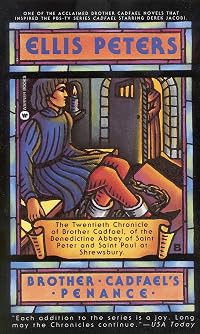
To save his estranged son, Brother Cadfael risks breaking his monastic vows For Brother Cadfael in the autumn of his life, the mild November of our Lord's year 1145 may bring a bitter-and deadly-harvest. England is torn between supporters of the Empress Maud and those of her cousin Stephen. The civil strife is about to jeopardize not only Cadfael's life, but his hopes of Heaven. While Cadfael has sometimes bent the abbey's rules, he has never broken his monastic vows-until now. Word has come show more to Shrewsbury of a treacherous act that has left thirty of Maud's knights imprisoned. All have been ransomed except Cadfael's secret son, Olivier de Bretagne. Conceived in Cadfael's soldiering youth and unaware of his father's identity, Olivier will die if he is not freed. Like never before, Cadfael must boldly defy the abbot. The good brother forsakes the order to follow his heart-but what he finds will challenge his soul. show lessTags
Recommendations











Member Reviews
Six-word review: Tender, brilliant conclusion to Cadfael's journey.
Extended review:
Never before have I been inclined to use the word "tender" to describe a murder mystery, but it fits this one.
As is the case with a number of the Cadfael books, especially in the later episodes in this twenty-book series, the real focus of the story is not the mystery or the solution of the mystery; that is simply the occasion of it. Something else is more prominent: a romance, medieval political conflict, disguise and deception, the meaning of religion and piety, the secrets of a troubled soul, the inner journey of Brother Cadfael.
In this volume it is the latter that comes to the foreground.
And appropriately so. From the books alone, without consulting show more other sources, there is no doubt in my mind that the author knew this would be the last Cadfael book. Indeed, it wouldn't surprise me at all if she had written or at least outlined much if it far earlier in the series and saved it up until it was time to draw back the last curtain.
Here at last we see the full flowering of Cadfael's relationship with Olivier de Bretagne; his remembered past with Maryam viewed from the peace of "all passion spent"; his drive to fulfill a mission given uncompromising expression; and his vocation put to a final test, transcending habit--and habit--to become a renewed choice.
I began reading Cadfael in January of 2013, having no notion of how fond of the characters--and of the author's beautiful prose--I would become. Now, sad as I am to reach the series end, I can't imagine a more fitting conclusion. It leaves me free to imagine Cadfael carrying on indefinitely, doing what he does best, yet with the settled serenity of questions answered and doubts resolved. No author could do better for a beloved character than Peters has done for her Brother Cadfael.
Now I wish that I hadn't given my paper copies away as I completed them. This one, at least, is a keeper for my shelf. show less
Extended review:
Never before have I been inclined to use the word "tender" to describe a murder mystery, but it fits this one.
As is the case with a number of the Cadfael books, especially in the later episodes in this twenty-book series, the real focus of the story is not the mystery or the solution of the mystery; that is simply the occasion of it. Something else is more prominent: a romance, medieval political conflict, disguise and deception, the meaning of religion and piety, the secrets of a troubled soul, the inner journey of Brother Cadfael.
In this volume it is the latter that comes to the foreground.
And appropriately so. From the books alone, without consulting show more other sources, there is no doubt in my mind that the author knew this would be the last Cadfael book. Indeed, it wouldn't surprise me at all if she had written or at least outlined much if it far earlier in the series and saved it up until it was time to draw back the last curtain.
Here at last we see the full flowering of Cadfael's relationship with Olivier de Bretagne; his remembered past with Maryam viewed from the peace of "all passion spent"; his drive to fulfill a mission given uncompromising expression; and his vocation put to a final test, transcending habit--and habit--to become a renewed choice.
I began reading Cadfael in January of 2013, having no notion of how fond of the characters--and of the author's beautiful prose--I would become. Now, sad as I am to reach the series end, I can't imagine a more fitting conclusion. It leaves me free to imagine Cadfael carrying on indefinitely, doing what he does best, yet with the settled serenity of questions answered and doubts resolved. No author could do better for a beloved character than Peters has done for her Brother Cadfael.
Now I wish that I hadn't given my paper copies away as I completed them. This one, at least, is a keeper for my shelf. show less
I was brought to this book via a recommendation in a Facebook group of mystery fans, so I was expecting a murder mystery. This one is the last in the series and the only one that I have read, so let that be a caveat for this review. Other books in the series may be mysteries.
A murder occurred early in the book and an innocent man was accused and kidnapped because of it. However this was not the driving force of the book. Rather the driving forces were 12rh century English/Welsh politics, with emphasis on rapidly changing loyalties and military intelligence activities of the time. In addition I learned something about siege tactics. The book would have been a good companion to Her Majesty's Spymaster, though that covered the 16th show more century.
The most entertaining sub-text of the book was its treatment of the Welsh peasantry and yeomanry. They were portrayed as having great intelligence, courage and personal loyalty; all while being pawns in the ‘great game’ of English empire building. The scenes demonstrating those traits were my favorites.
Oh yes, the murder. Some important but unpleasant guy was knifed in the chapel. A nice guy was accused, and kidnapped to receive punishment. Brother Cadfael figures out where the innocent is being kept and uses his positional influence as a monk and his knowledge of the politics of the time to get him released. At the end of the book the real murderess, an influential aristocrat, encounters Cadfael in a different chapel and reveals that she did it, without any 'detecting' effort on Cadfael’s part.
As I said up top, I was expecting a murder mystery, so I was disappointed. Going in with different expectations, one might find the exploration of the war and politics of the time to be interesting. show less
A murder occurred early in the book and an innocent man was accused and kidnapped because of it. However this was not the driving force of the book. Rather the driving forces were 12rh century English/Welsh politics, with emphasis on rapidly changing loyalties and military intelligence activities of the time. In addition I learned something about siege tactics. The book would have been a good companion to Her Majesty's Spymaster, though that covered the 16th show more century.
The most entertaining sub-text of the book was its treatment of the Welsh peasantry and yeomanry. They were portrayed as having great intelligence, courage and personal loyalty; all while being pawns in the ‘great game’ of English empire building. The scenes demonstrating those traits were my favorites.
Oh yes, the murder. Some important but unpleasant guy was knifed in the chapel. A nice guy was accused, and kidnapped to receive punishment. Brother Cadfael figures out where the innocent is being kept and uses his positional influence as a monk and his knowledge of the politics of the time to get him released. At the end of the book the real murderess, an influential aristocrat, encounters Cadfael in a different chapel and reveals that she did it, without any 'detecting' effort on Cadfael’s part.
As I said up top, I was expecting a murder mystery, so I was disappointed. Going in with different expectations, one might find the exploration of the war and politics of the time to be interesting. show less
Brother Cadfael novels have been set against the backdrop of the war between cousins King Stephen and Empress Maud for control of England during the twelfth century. Yet this struggle itself is not usually a central aspect of the Cadfael stories. In this, the twentieth Brother Cadfael novel (and alas, the last), the struggle is a major theme that helps drive the story forward, and Peters uses it masterfully.
A peace conference has been arranged by the archbishops at Coventry to bring an end to the war. Hugh Beringar, the Shrewsbury sheriff and dear friend of Brother Cadfael, is attending as a loyal subject of King Stephen. When Brother Cadfael learns that several prisoners are being held in secret without being offered for ransom, and show more that one of those prisoners may be his son, Olivier de Bretagne, he begs the abbot’s leave to attend the conference and bargain for Olivier’s release. The abbot warns Cadfael to go the conference, but no further, in his search.
Cadfael’s son, Olivier, resulted from his love with a Syrian woman during his service in the Middle East during the Crusades. This was years before his entry into the cloister. Peters had introduced Olivier to an unsuspecting Cadfael in an earlier novel, The Virgin in the Ice.
Accompanying Hugh and Cadfael on the journey is a young valiant, Yves Hugonin, Olivier’s brother-in-law. Yves exhibits the hot-blooded impulsiveness of his youth and during their entrance to the meeting, draws sword on a nobleman who had traitorously switched allegiances to Stephen. While that situation ends without bloodshed, later that night, Hugonin finds the body of that same nobleman stabbed dead and is accused of the murder himself. Cadfael sets out to investigate the murder and prove Yves innocent, and the trail leads him to a castle some distance away Shrewsbury. There, Olivier is being held by Lord Philip, the nephew and enemy of Empress Maud. To gain Olivier’s freedom, Cadfael offers himself as ransom.
Peters uses Brother Cadfael’s Penance as a brilliant study of loyalty. She raises the issue of how competing loyalties can be reconciled: family loyalty, that of a father and son; loyalty of allegiance and fealty to one’s ruler, or loyalty to an oath taken to God? Each alternative is artfully considered and the difficulties wonderfully described in heartrending detail.
Cadfael is not the only one with difficult decisions about loyalty. The brother and a loyalist of Empress Maud, Lord Robert, is the father of Lord Philip. They are on opposite sides in the war, and Philip considers his own ideas on loyalty when he witnesses Cadfael’s devotion to Olivier, and the sacrifices he’s willing to make regarding his worldly body and his soul.
In this final installment in the Brother Cadfael series, the murder mystery takes a back seat, but is still cannily solved by Brother Cadfael. It is somewhat of a surprise, but well tied into the story overall.
Peters’ prose is elegant, beautifully paced, and utterly convincing for the period. Her presentation of the historical setting, and the customs and habits of the times are expertly woven into the story.
Stephen Thorne provides a wonderful, resonant, reading of the work. His theatrical training and experience makes him an excellent choice for bringing Peters’ characters to life. Thorne switches between narrative and the various voices smoothly and never interferes with the telling of the story. The emotions he conveys are convincing and empathetic. It is sad that there will be no further Brother Cadfael novels for him to read. show less
A peace conference has been arranged by the archbishops at Coventry to bring an end to the war. Hugh Beringar, the Shrewsbury sheriff and dear friend of Brother Cadfael, is attending as a loyal subject of King Stephen. When Brother Cadfael learns that several prisoners are being held in secret without being offered for ransom, and show more that one of those prisoners may be his son, Olivier de Bretagne, he begs the abbot’s leave to attend the conference and bargain for Olivier’s release. The abbot warns Cadfael to go the conference, but no further, in his search.
Cadfael’s son, Olivier, resulted from his love with a Syrian woman during his service in the Middle East during the Crusades. This was years before his entry into the cloister. Peters had introduced Olivier to an unsuspecting Cadfael in an earlier novel, The Virgin in the Ice.
Accompanying Hugh and Cadfael on the journey is a young valiant, Yves Hugonin, Olivier’s brother-in-law. Yves exhibits the hot-blooded impulsiveness of his youth and during their entrance to the meeting, draws sword on a nobleman who had traitorously switched allegiances to Stephen. While that situation ends without bloodshed, later that night, Hugonin finds the body of that same nobleman stabbed dead and is accused of the murder himself. Cadfael sets out to investigate the murder and prove Yves innocent, and the trail leads him to a castle some distance away Shrewsbury. There, Olivier is being held by Lord Philip, the nephew and enemy of Empress Maud. To gain Olivier’s freedom, Cadfael offers himself as ransom.
Peters uses Brother Cadfael’s Penance as a brilliant study of loyalty. She raises the issue of how competing loyalties can be reconciled: family loyalty, that of a father and son; loyalty of allegiance and fealty to one’s ruler, or loyalty to an oath taken to God? Each alternative is artfully considered and the difficulties wonderfully described in heartrending detail.
Cadfael is not the only one with difficult decisions about loyalty. The brother and a loyalist of Empress Maud, Lord Robert, is the father of Lord Philip. They are on opposite sides in the war, and Philip considers his own ideas on loyalty when he witnesses Cadfael’s devotion to Olivier, and the sacrifices he’s willing to make regarding his worldly body and his soul.
In this final installment in the Brother Cadfael series, the murder mystery takes a back seat, but is still cannily solved by Brother Cadfael. It is somewhat of a surprise, but well tied into the story overall.
Peters’ prose is elegant, beautifully paced, and utterly convincing for the period. Her presentation of the historical setting, and the customs and habits of the times are expertly woven into the story.
Stephen Thorne provides a wonderful, resonant, reading of the work. His theatrical training and experience makes him an excellent choice for bringing Peters’ characters to life. Thorne switches between narrative and the various voices smoothly and never interferes with the telling of the story. The emotions he conveys are convincing and empathetic. It is sad that there will be no further Brother Cadfael novels for him to read. show less
Did I know who did it and who would be framed before the body was even discovered? Yep. Did that take away the pleasure of the book? Not a bit.
This is the last in the 20-volume Brother Cadfael series, and the second in the series that I've read. (I previously read #11).
I'd sort of expect any writer to be getting a bit weary of a scenario or character after 20 installments, however nothing of the kind came through for me. I thought this was a quite well-written book, not too bogged down by tropes of the mystery genre, with a nice mix of politicking and family drama. I found it to be more convincing and believable than many medieval mysteries, as well.
I'd sort of expect any writer to be getting a bit weary of a scenario or character after 20 installments, however nothing of the kind came through for me. I thought this was a quite well-written book, not too bogged down by tropes of the mystery genre, with a nice mix of politicking and family drama. I found it to be more convincing and believable than many medieval mysteries, as well.
It's odd that this was the last Cadfael mystery, as the issues that are dealt with are really life-resolving, now-I-can-die-in-peace sorts of issues. Perhaps Ms. Peters had an inkling that this would be the last, or near last, of her brilliant series. As with all in the series, the historical detail is incredible and the characters seem to fit perfectly into their times. Almost for the first time we see the intensity and determination that must have been the soldier Cadfael, but without ever losing the serenity of the monk. There is a murder but it's almost an afterthought to the main plot. A lovely ending to the series starring one of the most thoroughly likable characters in all of detective fiction.
The cover shows a courtyard with two men in armour surrounded by onlookers, one of whom (the Empress Maude) is standing on steps. This is an early scene in the book in which Cadfael journeys to Coventry to take observe an attempt at reconciliation between King Stephen and Empress Maude. Cadfael is in Coventry to find out what has happened to his son who was taken prisoner when Philip FitzRobert changed allegiance from the Empress to King Stephen. Cadfael's son,Olivier de Bretagne, was a close friend of Philip's but refused to turn traitor with him. Other knights also were taken captive for the same reason and the whereabouts of all of them has been established but no-one knows where Olivier is. Olivier's friend and brother-in-law, Yves, show more meets Cadfael on the road to Coventry because he also searches for Olivier. When they arrive at the abbey where the meeting will take place, Yves sees Brien de Soulis who was in charge of the castle where Olivier was taken prisoner. Yves, incensed that this traitor dares to come to the meeting, immediately draws his sword and challenges de Soulis.
When de Soulis is murdered a few days later, suspicion turns to Yves especially since he stumbled over the body in the dark after church. The Empress, who believes Yves did kill de Soulis, takes him under her protection. However, on the road from Coventry, Yves is abducted and it is believed Philip FitzRobert arranged that. Cadfael decides to try to find Yves and Olivier even though his prior only gave him leave from the monastery until the end of the meeting. Thus Cadfael is absent without leave but he feels a greater duty to his son and Yves. The story of Cadfael's penance is another chapter in the war between King Stephen and Empress Maude.
I have always loved these books by Ellis Peters and this one was no exception although there was less detection and more politics in this story than some of the earlier ones. But Peters makes you feel as if you are right there in the Middle Ages which is a real gift. This is an era of history that I really knew nothing about until I started reading her books. I keep meaning to read more fact-based writing about this civil war but I haven't done so yet. show less
When de Soulis is murdered a few days later, suspicion turns to Yves especially since he stumbled over the body in the dark after church. The Empress, who believes Yves did kill de Soulis, takes him under her protection. However, on the road from Coventry, Yves is abducted and it is believed Philip FitzRobert arranged that. Cadfael decides to try to find Yves and Olivier even though his prior only gave him leave from the monastery until the end of the meeting. Thus Cadfael is absent without leave but he feels a greater duty to his son and Yves. The story of Cadfael's penance is another chapter in the war between King Stephen and Empress Maude.
I have always loved these books by Ellis Peters and this one was no exception although there was less detection and more politics in this story than some of the earlier ones. But Peters makes you feel as if you are right there in the Middle Ages which is a real gift. This is an era of history that I really knew nothing about until I started reading her books. I keep meaning to read more fact-based writing about this civil war but I haven't done so yet. show less
Members
- Recently Added By
Lists

Historical Fiction
889 works; 91 members

Crime and Mysteries to Read
746 works; 31 members

Books featuring monks and/or nuns
166 works; 33 members

British Mystery
469 works; 14 members

Books Read in 2012 (Numbered)
168 works; 6 members

Books Read in 2012
816 works; 34 members

Books Read in 2014
2,344 works; 86 members

al.vick-parents books
301 works; 1 member

Books Read in 2024
4,727 works; 128 members

Books Read in 2026
2,160 works; 70 members
Author Information

159+ Works 58,658 Members
Ellis Peters is the pseudonym for Edith Pargeter, who was born in Horsehay, Shropshire. She was a chemist's assistant from 1933 to 1940 and participated during World War II in the Women's Royal Navy Service. The name "Ellis Peters" was adopted by Edith Pargeter to clearly mark a division between her mystery stories and her other work. Her brother show more was Ellis and Petra was a friend from Czechoslovakia, thus the name. She came to writing mysteries, she says, "after half a lifetime of novel-writing." Her detective fiction features well-rounded, knowledgeable characters with whom the reader can empathize. Her most famous literary creation is the medieval monk Brother Cadfael. The blend of history and the formula of the detective story gives Peters's works their popular appeal. As detective hero, Brother Cadfael remains faithful to the requirements of the formula, yet the historical milieu in which he operates is both fully realized and well textured. Peters received the Mystery Writers of America's Edgar Award in 1963 and the Crime Writers Association's Silver Dagger Award in 1981. (Bowker Author Biography) show less
Some Editions
Series

Belongs to Publisher Series
Work Relationships
Common Knowledge
- Canonical title
- Brother Cadfael's Penance
- Original title
- Brother Cadfael's Penance
- Original publication date
- 1994
- People/Characters
- Abbot Radulfus; Brother Cadfael; Hugh Beringar; Yves Hugonin; Olivier de Bretagne; Empress Maud (show all 7); Stephen, King of England
- Important places
- Shrewsbury, Shropshire, England, UK (12th century, 1145); Shropshire, England, UK
- Important events
- Nineteen Year Winter (1135 | 1154)
- Related movies
- Cadfael (1994 | IMDb)
- First words
- The Earl of Leicester's courier came riding over the bridge that spanned the Severn, and into the town of Shrewsbury, somewhat past noon on a day at the beginning of November, with three months' news in his saddle roll.
- Last words
- (Click to show. Warning: May contain spoilers.)'Get up now, and come with your brothers into the choir.'
- Original language*
- Anglais
*Some information comes from Common Knowledge in other languages. Click "Edit" for more information.
Classifications
Statistics
- Members
- 1,972
- Popularity
- 10,791
- Reviews
- 30
- Rating
- (4.05)
- Languages
- 8 — Czech, Dutch, English, French, German, Italian, Japanese, Spanish
- Media
- Paper, Audiobook, Ebook
- ISBNs
- 43
- UPCs
- 1
- ASINs
- 20