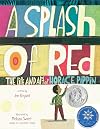
A Splash of Red: The Life and Art of Horace Pippin
by Jen Bryant
On This Page
Description
Presents an illustrated introduction to the life and work of artist Horace Pippin, describing his childhood love for drawing and the World War I injury that challenged his career.Tags
Recommendations


Member Recommendations
Member Reviews
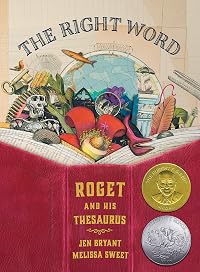
Author Jen Bryant and illustrator Melissa Sweet, who also collaborated on the picture-book biographies The Right Word: Roget and His Thesaurus and A River of Words: The Story of William Carlos Williams, return to the form in this wonderful examination of the life of African-American artist Horace Pippin. Born on Washington's birthday - January 22nd - in 1888, in West Chester, Pennsylvania, Pippin discovered his love for making pictures at an early age, winning an art contest when he was eight. Whatever else he was doing - and he had to work many different kinds of jobs, to help his family - he was always making art. Injured while serving in World War I - he was awarded the French Croix de Guerre and the Purple Heart - he returned home show more with a right arm that was almost useless. Slowly, through hard work and determination, he trained himself to use this arm again, continuing to make his paintings. Eventually, his work was discovered and promoted by such figures as painter N.C. Wyeth, and he went on to become a well-known painter...
I am so very glad that I picked up A Splash of Red: The Life and Art of Horace Pippin, as I had not previously heard of this artist, but will now seek out more of his work. His life story is certainly inspirational, as he battled all sorts of disadvantages and challenges - poverty, racial discrimination, the physical and psychological wounds of war - in order to go on making his art. I would certainly like to know more about him, and about his work. Jen Bryant's text here is simple but informative, and is paired with Sweet's appealing, mixed-media artwork, which incorporates quotations from Pippin himself. The back matter contains more information about Pippin, as well as notes from the author and illustrator, and lists of further reading ideas and other online resources. I was interested to see, from the notes, that Bryant and Sweet worked together on this, while doing their research, as this is quite atypical in contemporary American picture-book production, where the author and artist often times have no communication. This collaborative method certainly has produced a wonderful result here! Recommended to young art lovers, and to picture-book readers looking for stories about artists, about people overcoming challenges, or about veterans and their post-war experiences. show less
I am so very glad that I picked up A Splash of Red: The Life and Art of Horace Pippin, as I had not previously heard of this artist, but will now seek out more of his work. His life story is certainly inspirational, as he battled all sorts of disadvantages and challenges - poverty, racial discrimination, the physical and psychological wounds of war - in order to go on making his art. I would certainly like to know more about him, and about his work. Jen Bryant's text here is simple but informative, and is paired with Sweet's appealing, mixed-media artwork, which incorporates quotations from Pippin himself. The back matter contains more information about Pippin, as well as notes from the author and illustrator, and lists of further reading ideas and other online resources. I was interested to see, from the notes, that Bryant and Sweet worked together on this, while doing their research, as this is quite atypical in contemporary American picture-book production, where the author and artist often times have no communication. This collaborative method certainly has produced a wonderful result here! Recommended to young art lovers, and to picture-book readers looking for stories about artists, about people overcoming challenges, or about veterans and their post-war experiences. show less
Deserving of the honors it's won, A Splash of Red is engaging, beautiful, and lyrical. The art and the text work together to tell the story of Pippin's life, including some nice information about his childhood. The fact that he was wounded in WWI and therefore had to relearn to draw and paint by holding his right hand with his left is amazing. The artwork includes so many little enriching touches. I'm looking forward to sharing it and Pippin's work with my book club kids.
When I saw there was another book by the team that produced “A River of Words: The Story of William Carlos Williams” and “The Right Words: Roget and His Thesaurus” I knew I had to see it. It seems that author Jen Bryant and illustrator Melissa Sweet just can’t miss.
This book tells the story of Horace Pippin (1888-1946), the self-taught African American painter whose works have been featured in museums around the world including the Art Institute of Chicago, the National Gallery of Art in Washington, D.C.; and Tate Gallery, in London.
Born in West Chester, Pennsylvania, from the time he was little, Pippin loved to draw, using scraps of paper and charcoal. While still a young boy, he entered a drawing contest sponsored by an art show more supply company and won colored pencils, a pair of brushes, and a box of paints. When he was in eighth grade his father left and he had to quit school and work to support his family. Nevertheless, he still drew pictures whenever he could.
He joined the army during World War I, and there filled notebooks with pictures of what he saw (six of which survive). Then he was shot and his right arm was badly damaged, and he was unable to draw. Moreover, he had trouble finding a job because he couldn’t do any lifting. He took whatever employment he could find, and at night, he worked on moving his right arm.
With practice, his arm improved and his hand grew steadier, and he began to paint again, using an old brush, leftover house paint he found in alleys, and extra pieces of cloth. He hung his pictures in local stores, but no one responded to them until the famous painter N.C. Wyeth saw them and arranged an exhibition for him in West Chester. Suddenly, he became famous, and he was busy painting again.
He produced some 140 works including several self portraits, and paintings portraying American historical events.
As the author says in a note at the end of the book:
"He has been variously labeled a folk artist, a self-taught artist, and a primitive painter - but he is certainly and indisputably an American master.”
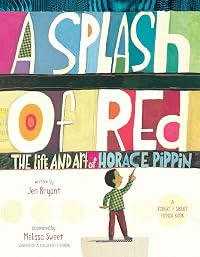
Melissa Sweet enhances Pippin’s story with her visual interpretation of his life. She adopts a folk-art approach in her own pictures, using watercolor, gouache, and collage in vivid colors, echoing Pippin’s love of deep, rich hues, and adding Pippin’s own words to her illustrations.
A map at the back of the book shows locations in the U.S. where you can find his paintings.
Evaluation: This excellent and inspirational story deserves the awards it has garnered, and furthermore performs the service of introducing new audiences to the heroic life of Horace Pippin. show less
This book tells the story of Horace Pippin (1888-1946), the self-taught African American painter whose works have been featured in museums around the world including the Art Institute of Chicago, the National Gallery of Art in Washington, D.C.; and Tate Gallery, in London.
Born in West Chester, Pennsylvania, from the time he was little, Pippin loved to draw, using scraps of paper and charcoal. While still a young boy, he entered a drawing contest sponsored by an art show more supply company and won colored pencils, a pair of brushes, and a box of paints. When he was in eighth grade his father left and he had to quit school and work to support his family. Nevertheless, he still drew pictures whenever he could.
He joined the army during World War I, and there filled notebooks with pictures of what he saw (six of which survive). Then he was shot and his right arm was badly damaged, and he was unable to draw. Moreover, he had trouble finding a job because he couldn’t do any lifting. He took whatever employment he could find, and at night, he worked on moving his right arm.
With practice, his arm improved and his hand grew steadier, and he began to paint again, using an old brush, leftover house paint he found in alleys, and extra pieces of cloth. He hung his pictures in local stores, but no one responded to them until the famous painter N.C. Wyeth saw them and arranged an exhibition for him in West Chester. Suddenly, he became famous, and he was busy painting again.
He produced some 140 works including several self portraits, and paintings portraying American historical events.
As the author says in a note at the end of the book:
"He has been variously labeled a folk artist, a self-taught artist, and a primitive painter - but he is certainly and indisputably an American master.”
Melissa Sweet enhances Pippin’s story with her visual interpretation of his life. She adopts a folk-art approach in her own pictures, using watercolor, gouache, and collage in vivid colors, echoing Pippin’s love of deep, rich hues, and adding Pippin’s own words to her illustrations.
A map at the back of the book shows locations in the U.S. where you can find his paintings.
Evaluation: This excellent and inspirational story deserves the awards it has garnered, and furthermore performs the service of introducing new audiences to the heroic life of Horace Pippin. show less
This enchanting biography tells the history of Horace Pippin, an intriguing man with an amazing point of view who taught himself how to paint and led and overall moving life. His works of art are unique and colorful, reflecting his life and this story really captures the essence of dedication that he had for painting and contributing his own piece of commentary about the world.
I absolutely adored this book. After reading it for my author study, I realized very quickly how rich in information this text is. It combines illustrations and a biography to create a fun, accurate story. I really enjoyed the illustrations by Melissa Sweet. They combine perfectly with the story. Sweet's style of illustration is so unique. Each time I read the book, I find a hundred new things in each illustration that I hadn't noticed before. I really loved the plot of the book. The story of Horace Pippin's life is so unique and inspirational. He worked so hard to be able to do what he loved, which was to paint. Finally, I liked the point of view of the story. First person point of view was a good choice. Instead of being a boring show more biography, the information was incorporated into a story format. This is much more interesting to read than a typical biography book. The main idea is that persistence is key. Horace persisted, even when his arm was hurt, and ended up creating incredible pieces of art. show less
Though no one would call their lives similar, this book immediately reminded me of how I felt after reading [b:Chuck Close Face Book|12789446|Chuck Close Face Book|Chuck Close|http://d202m5krfqbpi5.cloudfront.net/books/1344668015s/12789446.jpg|17937230]. I was struck by the fact that both artists overcame serious physical disabilities in order to paint. Chuck Close was already an established artist when he had a seizure and was confined to a wheelchair. But after "the event" (as he calls it) he made up new ways to paint that are arguably better and more innovative than before. It's similarly amazing that Horace Pippin created his best work after he was shot in the arm and lost the use of it. He still painted with his right hand, but show more guided it with his left. They say artists must struggle--that struggle creates fodder for art. And Pippin's life is a testament to that.
This book stands as a shining example of how a picture book illustrator can lovingly pay tribute to an artist. This is both kid-friendly and masterly work. I had a bit of a quibble with another picture book about a famous artist, [b:Georgia in Hawaii|11523324|Georgia in Hawaii When Georgia O'Keeffe Painted What She Pleased|Amy Novesky|http://d202m5krfqbpi5.cloudfront.net/books/1328834388s/11523324.jpg|16460617] because, though it was beautiful, it never really showed O'Keefe's work. A Splash of Red doesn't have that problem. There are lots of little examples of Pippin's work throughout. show less
This book stands as a shining example of how a picture book illustrator can lovingly pay tribute to an artist. This is both kid-friendly and masterly work. I had a bit of a quibble with another picture book about a famous artist, [b:Georgia in Hawaii|11523324|Georgia in Hawaii When Georgia O'Keeffe Painted What She Pleased|Amy Novesky|http://d202m5krfqbpi5.cloudfront.net/books/1328834388s/11523324.jpg|16460617] because, though it was beautiful, it never really showed O'Keefe's work. A Splash of Red doesn't have that problem. There are lots of little examples of Pippin's work throughout. show less
This book is great for 3-5 graders as it is a heavier read with more words and more description. The book starts off with a boy who loved to draw and paint and be creative, he then submits his drawing into a contest and wins. His love and desire to pain and draw gets delayed when his father leaves and he starts working and being their for his family. War starts and he attempts to help so he ends up with a bad are leading to an inability to use it. With practice and strength gain he gains the ability to draw and paint again. His work becomes famous and finds joy is doing what he has always desired to do. I would use this as a read aloud where students can answer questions to the book to test assess for comprehension.
Members
- Recently Added By
Lists

Unshelved Book Clubs
579 works; 5 members

Youth: BLM
265 works; 1 member

Robert F. Sibert Informational Book Medal
102 works; 1 member
Author Information

27+ Works 4,287 Members
All Editions
Awards and Honors
Awards
Distinctions
Notable Lists
Common Knowledge
- Canonical title
- A Splash of Red: The Life and Art of Horace Pippin
- People/Characters
- Horace Pippin
- Important places
- Pennsylvania, USA
Classifications
Statistics
- Members
- 673
- Popularity
- 42,660
- Reviews
- 129
- Rating
- (4.38)
- Languages
- English
- Media
- Paper, Ebook
- ISBNs
- 5
- ASINs
- 6