
Alan Rabinowitz (1) (1953–2018)
Author of A Boy and a Jaguar
For other authors named Alan Rabinowitz, see the disambiguation page.
About the Author
Alan Robert Rabinowitz was born in Brooklyn, New York on December 31, 1953. He received a bachelor's degree in biology and chemistry from Western Maryland College and a master's degree and a Ph.D. from the University of Tennessee. His dissertation was about the ecology of the raccoon in Great Smoky show more Mountains National Park. He became a leading big cat conservationist for the Wildlife Conservation Society. He established the world's first jaguar preserve in Belize and a vast tiger preserve in Myanmar. He co-founded the wild cat conservation organization Panthera in 2006. He wrote several books including Beyond the Last Village: A Journey of Discovery in Asia's Forbidden Wilderness; Life in the Valley of Death: The Fight to Save Tigers in a Land of Guns, Gold, and Greed; An Indomitable Beast: The Remarkable Journey of the Jaguar; and A Boy and a Jaguar. He died from lymphatic cancer on August 5, 2018 at the age of 64. (Bowker Author Biography) show less
Image credit: Profile photo from Twitter account.
Works by Alan Rabinowitz
Beyond the Last Village: A Journey Of Discovery In Asia's Forbidden Wilderness (2001) 109 copies, 4 reviews
Life in the Valley of Death: The Fight to Save Tigers in a Land of Guns, Gold, and Greed (2007) 69 copies, 1 review
Associated Works
Tagged
Common Knowledge
- Legal name
- Rabinowitz, Alan Robert
- Birthdate
- 1953-12-31
- Date of death
- 2018-08-05
- Gender
- male
- Education
- University of Tennessee (MS, PhD - Ecology)
- Occupations
- conservationist
biologist - Organizations
- Panthera (Co-Founder)
- Nationality
- USA
- Birthplace
- Brooklyn, New York, USA
- Associated Place (for map)
- New York, USA
Members
Reviews

Having got his last book on the Hukawng Valley in northwestern Myanmar, the temptation was just too strong to complete the journey with the two other volumes of his struggles in Southeast Asia. This one recounts his efforts in the western corner of Thailand, the Huai Kha Khaeng Wildlife Sanctuary and other adjacent tracts, one of the last large wildlife areas left in Thailand.
This is an account that only a westerner could write - there is so much personal stuff in it, including the author's show more amours. However, my main impression is of the intrusive nature of the research methodology adopted by the Wildlife Conservation Society. This entails trapping the subjects (mainly carnivores, with live bait tied inside a drop-cage), drugging them , fitting a radio collar, and tracking them thereafter through the beeps. The hazards involved are starkly demonstrated by the fate of the first animal the author succeeds in capturing: a large and vigorous leopard. Unfortunately, in his impatience to make his first catch, the author uses a wire snare, and the leopard, in pulling his foot free, fatally injures his paw to the bone, and subsequently struggles to a tragic and miserable death under a bush. However, these are scientific quests, and no one dares to say anything. The author goes on to chronicle his subsequent endeavours, succeeding finally in radio-collaring and tracking a handful of animals including leopards and leopard-cats, but not the tiger. Generalist foresters in India have always had a very ambiguous reaction to such approaches to wildlife science, resulting in a state of constant feuding between wildlife scientists and forest administrators.
The account brings out well the struggles going on between wildlife conservation and the competing interests of mining, poaching, clearing for agriculture, development of roads, dams, and townships, and so on. Another aspect starkly portrayed is the needlessly brutal level of cruelty involved even in dealing with animals captured for food or for the novelty pet trade, which raises the hackles of the author. Conservation is a dismal and hard undertaking, that wins few friends but can make enemies of a whole polity. show less
This is an account that only a westerner could write - there is so much personal stuff in it, including the author's show more amours. However, my main impression is of the intrusive nature of the research methodology adopted by the Wildlife Conservation Society. This entails trapping the subjects (mainly carnivores, with live bait tied inside a drop-cage), drugging them , fitting a radio collar, and tracking them thereafter through the beeps. The hazards involved are starkly demonstrated by the fate of the first animal the author succeeds in capturing: a large and vigorous leopard. Unfortunately, in his impatience to make his first catch, the author uses a wire snare, and the leopard, in pulling his foot free, fatally injures his paw to the bone, and subsequently struggles to a tragic and miserable death under a bush. However, these are scientific quests, and no one dares to say anything. The author goes on to chronicle his subsequent endeavours, succeeding finally in radio-collaring and tracking a handful of animals including leopards and leopard-cats, but not the tiger. Generalist foresters in India have always had a very ambiguous reaction to such approaches to wildlife science, resulting in a state of constant feuding between wildlife scientists and forest administrators.
The account brings out well the struggles going on between wildlife conservation and the competing interests of mining, poaching, clearing for agriculture, development of roads, dams, and townships, and so on. Another aspect starkly portrayed is the needlessly brutal level of cruelty involved even in dealing with animals captured for food or for the novelty pet trade, which raises the hackles of the author. Conservation is a dismal and hard undertaking, that wins few friends but can make enemies of a whole polity. show less
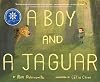
This is an autobiographical book based on the life of zoologist and conservationist Alan Rabinowitz. Alan stutters, but not if he's singing or talking to animals. At a young age, he is placed in "a class for disturbed children" and tells the reader that his teachers think he's "broken." Alan finds comfort in talking to his numerous pets, and relates to them since both he and animals "can't get the words out," and are often misunderstood or ignored because of it. Alan vows that when he grows show more up, he will be a voice for animals. As an adult, he travels to Belize where he convinces the prime minister to begin a jaguar preserve. At the end of the book, Alan comes face to face with a jaguar, just like the one he used to visit at the Bronx Zoo, and whispers, "Thank you." I love the honesty of this book - although he learns to speak without stuttering in college, he still feels broken inside. Being rejected and ridiculed as a child can have lasting effects. Alan was able to find solace in his work protecting animals. show less

As a young boy, Alan Rabinowitz suffered from a severe speech impediment, finding it impossible not to stutter unless speaking to animals. A regular visitor at the Bronx Zoo's great cat house, he was saddened by the lonely captivity of its feline residents, particularly an old female jaguar. Promising her that one day he would be a voice for her kind, he eventually went on to become a conservationist and wildlife researcher, becoming the first person to study jaguars in the wild. Conquering show more his stutter, he became an impassioned advocate for these magnificent cats, convincing the government of Belize to establish a sanctuary for them...
An immensely moving book, one which addresses complex issues like difference and communication, and the human connection to the natural world, A Boy and a Jaguar is picture-book memoir at its best. When I reached the conclusion of the story, which sees Alan face-to-face with a jaguar in the wild, I had a lump in my throat. The artwork, done in acrylic and charcoal pencil by Cátia Chien, perfectly captures the emotional register of each scene. Her depiction of the jaguar and his expressions is particularly well done. Recommended to anyone looking for children's biographies about naturalists, conservationists, great cats, or young people with speech impediments. show less
An immensely moving book, one which addresses complex issues like difference and communication, and the human connection to the natural world, A Boy and a Jaguar is picture-book memoir at its best. When I reached the conclusion of the story, which sees Alan face-to-face with a jaguar in the wild, I had a lump in my throat. The artwork, done in acrylic and charcoal pencil by Cátia Chien, perfectly captures the emotional register of each scene. Her depiction of the jaguar and his expressions is particularly well done. Recommended to anyone looking for children's biographies about naturalists, conservationists, great cats, or young people with speech impediments. show less

When Alan Rabinowitz was young, he was shy and couldn't speak well. On a trip to the Bronx Zoo he felt a connection with the jaguar there, and when he grew up he became a world-renowned conservation biologist working with jaguars in Belize. This book talks about jaguars in captivity, their history in the world, and current(ish) efforts to keep them from extinction.
I only read the first 4 chapters of this book, and the last chapter. I did not care for it much at all. The writing is not very show more accessible (speaking as a reader who is very familiar with the work of conservation biologists, and with reading scientific papers) an could not keep my interest. I did not care for Rabinowitz at all. He is very disdainful of non-scientist humans, particularly those living in the South American countries where jaguars roam, and insensitive to the point of being borderline racist. Also a lot of the premise of the book is that jaguars are ~*~special~*~, which I just don't buy. I think it's more likely that Rabinowitz views them as special because he has studied them extensively, not the other way around.
I don't doubt that Rabinowitz is doing great work for jaguars and other South American animals and plants, but I don't plan to read any more of his own writing. show less
I only read the first 4 chapters of this book, and the last chapter. I did not care for it much at all. The writing is not very show more accessible (speaking as a reader who is very familiar with the work of conservation biologists, and with reading scientific papers) an could not keep my interest. I did not care for Rabinowitz at all. He is very disdainful of non-scientist humans, particularly those living in the South American countries where jaguars roam, and insensitive to the point of being borderline racist. Also a lot of the premise of the book is that jaguars are ~*~special~*~, which I just don't buy. I think it's more likely that Rabinowitz views them as special because he has studied them extensively, not the other way around.
I don't doubt that Rabinowitz is doing great work for jaguars and other South American animals and plants, but I don't plan to read any more of his own writing. show less
Lists
Awards


You May Also Like


Associated Authors
Statistics
- Works
- 8
- Also by
- 1
- Members
- 806
- Popularity
- #31,649
- Rating
- 4.2
- Reviews
- 65
- ISBNs
- 48
- Languages
- 3