On This Page
Description
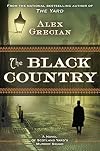
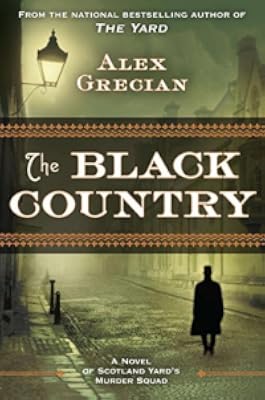
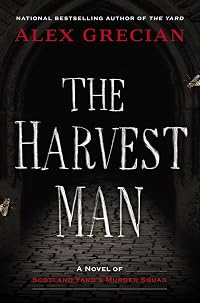
When members of a prominent coal-mining family go missing, Scotland Yard's Murder Squad teammates Inspector Walter Day and Sergeant Nevil Hammersmith, aided by newly arrived forensics pioneer Dr. Bernard Kingsley, investigate dark secrets and realize that the family's village is slowly sinking into underground mines.Tags
Recommendations
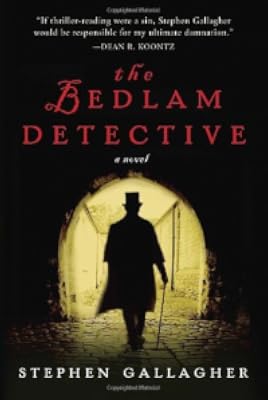

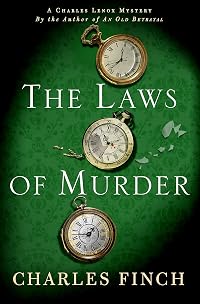
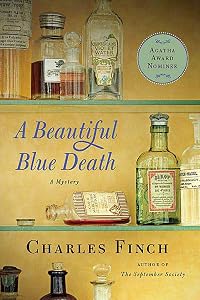
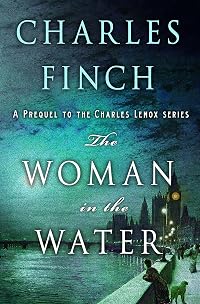
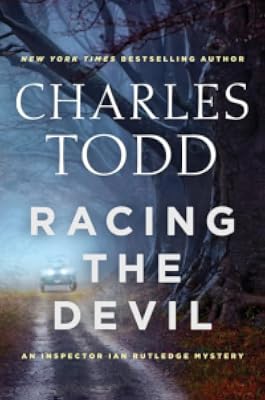
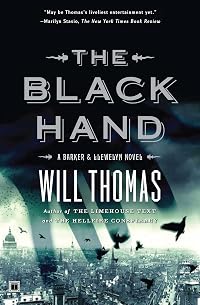
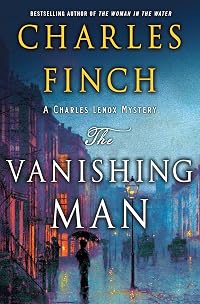
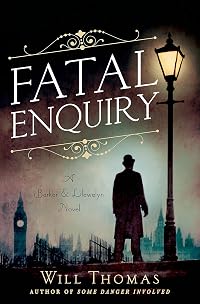




Member Recommendations
4leschats While set years apart, the dynamic of Scotland Yard coming into a small town and staying at a local pub house reminded me a great deal of the Richard Jury novels.
Member Reviews
I'm really enjoying these historical police procedurals -- partly in their realistic creepiness, partly in their fascinating characters, mostly because the atmospheric settings are awesome and there's a certain joy in seeing who will drug/ beat-up/ rescue Hammersmith this time. I also really love how easy it is to interpret the things that happen as magical or cursed, and yet there is always a scientific explanation that comes through. I like seeing the superstitions held up against early forensic techniques -- and I like how well the stories illustrate where the superstitions come from/ how bizarre the realities of 19th century were -- when you think about reality of living in a town that is literally falling into the mining tunnels, show more it becomes easier to see why the residents would also believe in omens and portents. show less
Wow. Having read the other reviews, I feel like such a contrarian! But I'm afraid I found little to like about The Black Country.
First, there's the plot, which the Huffington Post called "devilishly dark .. brilliant and unexpected," but which I found to be stagey, ill-constructed and obvious. Simply loading down your plot down with venerable gothic tropes - creepy folklore, superstitious natives, spooky children, a mysterious plague, a deformed killer, a town sinking (literally) into the bowels of the earth - doesn't automatically generate gothic suspense, as this novel proves. Specific issues: (1) The creepy folklore ("Rawhead & Bloody Bones") never goes deeper than window-dressing, a give-away that the reader isn't really supposed to show more take any of it seriously; (2) the secret that the spooky children are hiding is pretty obvious; (3) the mysterious plague sickening the town bears no relation to any important element of the plot; (4) the deformed killer is as stagey and unrealistic as a Batman villain; (5) anyone familiar with gothic as a genre - or who, for that matter, ever had to read Fall of the House of Usher in high school - can predict the baldly obvious denouement coming from a mile away.
My second issue with the book has to do with Grecian's narrative style. Awkward compound sentences ("The three lapsed into an uneasy silence, and Day watched the scenery roll by outside the carriage") alternate with page after page of stultifying dull dialogue in which characters either exchange pleasantries or repeat information that the reader already knows - surely a Writing 101 no-no? And then there's those achingly detailed descriptions of weather or every-day transactions, which accomplish nothing but to slow the pace of the narrative to a crawl. Honestly, there's maybe enough content in this for a short story - certainly not a 350+ page novel. (And there's simply *no* excuse for 22 exclamation marks on one page, unless you're a teenage girl writing about unicorns or puppies.)
Finally, I hate sloppy storytelling, and this novel is full of it. Why does the town's constable, such a major character in the opening chapters, suddenly cease to exist halfway through the novel? Are we seriously supposed to believe that our deformed killer stalks his victim for years, inexplicably waiting for the most inconvenient possible opportunity to kill him? What was the actual source of the plague - does anyone ever figure it out? Why does Hammersmith's illness sometimes leave him disabled yet other times conveniently abate so that he can chase suspects, as the plot requires? Why even bother manufacturing the one-sided flirtation between the schoolmistress and the sergeant, as it does nothing to advance either characterization or plot? And what's the deal with the blue eyeball, which appears to belong to no one?
Lord knows I love a good gothic novel! Alas, despite all the gothicky goodness promised by Black Country's breathless back-cover blurb, this is just bad. show less
First, there's the plot, which the Huffington Post called "devilishly dark .. brilliant and unexpected," but which I found to be stagey, ill-constructed and obvious. Simply loading down your plot down with venerable gothic tropes - creepy folklore, superstitious natives, spooky children, a mysterious plague, a deformed killer, a town sinking (literally) into the bowels of the earth - doesn't automatically generate gothic suspense, as this novel proves. Specific issues: (1) The creepy folklore ("Rawhead & Bloody Bones") never goes deeper than window-dressing, a give-away that the reader isn't really supposed to show more take any of it seriously; (2) the secret that the spooky children are hiding is pretty obvious; (3) the mysterious plague sickening the town bears no relation to any important element of the plot; (4) the deformed killer is as stagey and unrealistic as a Batman villain; (5) anyone familiar with gothic as a genre - or who, for that matter, ever had to read Fall of the House of Usher in high school - can predict the baldly obvious denouement coming from a mile away.
My second issue with the book has to do with Grecian's narrative style. Awkward compound sentences ("The three lapsed into an uneasy silence, and Day watched the scenery roll by outside the carriage") alternate with page after page of stultifying dull dialogue in which characters either exchange pleasantries or repeat information that the reader already knows - surely a Writing 101 no-no? And then there's those achingly detailed descriptions of weather or every-day transactions, which accomplish nothing but to slow the pace of the narrative to a crawl. Honestly, there's maybe enough content in this for a short story - certainly not a 350+ page novel. (And there's simply *no* excuse for 22 exclamation marks on one page, unless you're a teenage girl writing about unicorns or puppies.)
Finally, I hate sloppy storytelling, and this novel is full of it. Why does the town's constable, such a major character in the opening chapters, suddenly cease to exist halfway through the novel? Are we seriously supposed to believe that our deformed killer stalks his victim for years, inexplicably waiting for the most inconvenient possible opportunity to kill him? What was the actual source of the plague - does anyone ever figure it out? Why does Hammersmith's illness sometimes leave him disabled yet other times conveniently abate so that he can chase suspects, as the plot requires? Why even bother manufacturing the one-sided flirtation between the schoolmistress and the sergeant, as it does nothing to advance either characterization or plot? And what's the deal with the blue eyeball, which appears to belong to no one?
Lord knows I love a good gothic novel! Alas, despite all the gothicky goodness promised by Black Country's breathless back-cover blurb, this is just bad. show less
First Line: It was an unusual egg.
The little girl who discovers a human eyeball in a bird's nest sparks fear in a small mining village in the black country of the English Midlands due in no small part to the fact that three members of a prominent family have disappeared. The local constable knows that he's in over his head, so he sends for help to Scotland Yard's new Murder Squad. Inspector Walter Day, Sergeant Nevil Hammersmith, and Dr. Bernard Kingsley have two days to solve the case, but they have no earthly clue what they're getting themselves into. Everyone has a secret in this tiny community, and most of the villagers' lives seem to be subsumed by superstition.
Alex Grecian's The Yard was one of the few books I purchased during my show more recent trip to the UK, and when I'd read it and turned the last page, all I could say was "Wow!" I'm thrilled to say that The Black Country has now firmly placed this author on my Must Buy list.
Grecian has a very visual style of writing that makes me feel as though I'm right in the thick of things. His setting of a small mining village that's virtually cut off from the rest of the world adds the perfect Gothic atmosphere-- especially since the mine has tunneled underneath most of the buildings, and the town has been slowly sinking into the shafts for years.
Taking these three out of London gives them a chance to bond and form a relationship away from all the other characters-- in particular Day and Hammersmith-- and although I did miss some of the cast from The Yard, this element worked very well. The villagers add just the right touch of helpfulness and obstinacy and are brilliant at showing how people's histories intertwine in such a remote place. In fact their closely woven lives add all sorts of complications to the detectives' investigation.
My mother once told me that she believed I must have been a miner in a previous life (one that died in a cave-in) because I refuse to go underground. If you see me at someplace like Carlsbad Caverns, rest assured that I'll be camped out in the parking lot. With my fanatical passion for these Murder Squad books, and with a character like Nevil Hammersmith who literally grew up in a coal mine, I think I shall have to resign myself to having the heebie jeebies when I read parts of these books because they do go down into the earth from time to time. In this case, however, these sections heighten the suspense and sense of danger... a delicious way of scaring myself, I suppose you would say.
Creepy atmosphere, wonderful characters, a convoluted mystery, all wrapped up in the Victorian Era's conflict between science and superstition. What a marvelous reading experience Alex Grecian has created! Do I recommend his Murder Squad series? You bet I do! show less
The little girl who discovers a human eyeball in a bird's nest sparks fear in a small mining village in the black country of the English Midlands due in no small part to the fact that three members of a prominent family have disappeared. The local constable knows that he's in over his head, so he sends for help to Scotland Yard's new Murder Squad. Inspector Walter Day, Sergeant Nevil Hammersmith, and Dr. Bernard Kingsley have two days to solve the case, but they have no earthly clue what they're getting themselves into. Everyone has a secret in this tiny community, and most of the villagers' lives seem to be subsumed by superstition.
Alex Grecian's The Yard was one of the few books I purchased during my show more recent trip to the UK, and when I'd read it and turned the last page, all I could say was "Wow!" I'm thrilled to say that The Black Country has now firmly placed this author on my Must Buy list.
Grecian has a very visual style of writing that makes me feel as though I'm right in the thick of things. His setting of a small mining village that's virtually cut off from the rest of the world adds the perfect Gothic atmosphere-- especially since the mine has tunneled underneath most of the buildings, and the town has been slowly sinking into the shafts for years.
Taking these three out of London gives them a chance to bond and form a relationship away from all the other characters-- in particular Day and Hammersmith-- and although I did miss some of the cast from The Yard, this element worked very well. The villagers add just the right touch of helpfulness and obstinacy and are brilliant at showing how people's histories intertwine in such a remote place. In fact their closely woven lives add all sorts of complications to the detectives' investigation.
My mother once told me that she believed I must have been a miner in a previous life (one that died in a cave-in) because I refuse to go underground. If you see me at someplace like Carlsbad Caverns, rest assured that I'll be camped out in the parking lot. With my fanatical passion for these Murder Squad books, and with a character like Nevil Hammersmith who literally grew up in a coal mine, I think I shall have to resign myself to having the heebie jeebies when I read parts of these books because they do go down into the earth from time to time. In this case, however, these sections heighten the suspense and sense of danger... a delicious way of scaring myself, I suppose you would say.
Creepy atmosphere, wonderful characters, a convoluted mystery, all wrapped up in the Victorian Era's conflict between science and superstition. What a marvelous reading experience Alex Grecian has created! Do I recommend his Murder Squad series? You bet I do! show less
 This review was written for LibraryThing Early Reviewers.
Inspector Walter Day and Sergeant Nevil Hammersmith return in The Black Country the new chapter in Alex Grecian's Murder Squad series. While not up to the standard of his first entry in the series, The Yard, this is nonetheless an engaging and exciting adventure in which both locals and environment team up to hinder the investigators.
In this novel Day and Hammersmith find themselves out of London, their native environment, on a 2-day assignment in a coal mining town located in the British Midlands. They're there to investigate the disappearance of 3 members of a local family. From the start local superstition has some of the inhabitants of Blackhampton resisting the efforts of Day and Hammersmith, much to their dismay. How they show more persevere despite collapsing roads and buildings, a foreign gunman, and a late season blizzard makes for a great story. I enjoyed it quite a bit but not enough to try Groaty Dick, aka black country risotto. show less
In this novel Day and Hammersmith find themselves out of London, their native environment, on a 2-day assignment in a coal mining town located in the British Midlands. They're there to investigate the disappearance of 3 members of a local family. From the start local superstition has some of the inhabitants of Blackhampton resisting the efforts of Day and Hammersmith, much to their dismay. How they show more persevere despite collapsing roads and buildings, a foreign gunman, and a late season blizzard makes for a great story. I enjoyed it quite a bit but not enough to try Groaty Dick, aka black country risotto. show less
Alex Grecian's "The Black Country" is a terrific follow-up to "The Yard," even if the premise at the beginning of the novel seems a bit weak. Inspector Walter Day, Sergeant Nevil Hammersmith and Dr. Bernard Kingsley supposedly comprise the Scotland Yard's Murder Squad, yet they are sent to the Black Country in the English Midlands to find three people -- a husband, wife and son -- who have been missing for a few days. This does turn into a murder case, but at the time the investigators are dispatched there is no hint of a murder, just some missing people. Would Scotland Yard really send its most elite team of detectives to a rural area to conduct a search? Couldn't lesser men handle such a chore?
It soon develops that these are the right show more men, after all. There is much going on here in addition to the missing family. Campbell, a large and mysterious stranger in town, appears to have something to hide. A sinister American with a rifle stalks the woods, trying to kill someone. The superstitious innkeeper tries to keep Day and Hammersmith from their search. Most of the townspeople are seriously ill. And this is a coal-mining own located directly above the mines that provide its livelihood. As a consequence, the whole village is sinking into the ground a few inches at a time.
The trio of detectives complement one another nicely. Day, whose wife is expecting their first child, shows compassion, extreme bravery and a mind that never stops working. Hammersmith is a big lug who is ill throughout most of the story, yet keeps chugging along, insisting he is fine. Kingsley is a master of early forensic medicine, finding clues where most detectives in the 19th century would never think to look for them.
Grecian's story is complex enough to be interesting, without becoming convoluted. It moves at a fast pace and, with its brief chapters, seems much shorter than its 386 pages. Anyone who loves Victorian mysteries with lots of atmosphere will enjoy "The Black Country." show less
It soon develops that these are the right show more men, after all. There is much going on here in addition to the missing family. Campbell, a large and mysterious stranger in town, appears to have something to hide. A sinister American with a rifle stalks the woods, trying to kill someone. The superstitious innkeeper tries to keep Day and Hammersmith from their search. Most of the townspeople are seriously ill. And this is a coal-mining own located directly above the mines that provide its livelihood. As a consequence, the whole village is sinking into the ground a few inches at a time.
The trio of detectives complement one another nicely. Day, whose wife is expecting their first child, shows compassion, extreme bravery and a mind that never stops working. Hammersmith is a big lug who is ill throughout most of the story, yet keeps chugging along, insisting he is fine. Kingsley is a master of early forensic medicine, finding clues where most detectives in the 19th century would never think to look for them.
Grecian's story is complex enough to be interesting, without becoming convoluted. It moves at a fast pace and, with its brief chapters, seems much shorter than its 386 pages. Anyone who loves Victorian mysteries with lots of atmosphere will enjoy "The Black Country." show less
This review was written for LibraryThing Early Reviewers.Set in the industrial region known as the Black Country (thus called because of the soot in the air), Day and Hammersmith travel to investigate a missing persons case -- that of a father, mother and son who have mysteriously disappeared, leaving behind three more young children. Many things stand in the way of the investigation including an insular mining community and the superstitions of the townspeople. And when the ground under their feet literally starts giving way, this might be one case that they can't solve.
This is quickly becoming one of my favorite series. The characters, including the pathologist Dr. Kingsley and his assistant Henry, are complex and anything but the stereotypical Victorian crime solvers. The Black Country show more setting was very well incorporated, the dismal atmosphere almost tangible. And I'm happy that Grecian took his detective out of London so soon. It allowed for the characters to develop out of their element, their homes and their standard relationships. This means that there will be no expectations for the third book other than a strong story about these flawed but noble men doing a job that they are each uniquely qualified for.
http://webereading.com/2013/05/new-release-black-country.html show less
This is quickly becoming one of my favorite series. The characters, including the pathologist Dr. Kingsley and his assistant Henry, are complex and anything but the stereotypical Victorian crime solvers. The Black Country show more setting was very well incorporated, the dismal atmosphere almost tangible. And I'm happy that Grecian took his detective out of London so soon. It allowed for the characters to develop out of their element, their homes and their standard relationships. This means that there will be no expectations for the third book other than a strong story about these flawed but noble men doing a job that they are each uniquely qualified for.
http://webereading.com/2013/05/new-release-black-country.html show less
This review was written for LibraryThing Early Reviewers.When I read Alex Grecian's debut novel, The Yard, last year, I immediately added him to my 'must read' list.
His second book The Black Country brings back the investigators from Scotland Yard's Murder Squad.
Grecian starts off the book with a quick little 'gotcha' scene. A little girl climbing a tree finds something of great interest in a bird's nest - what she thinks is a lovely little blue egg - but it's an blue eye....
1899. Detective Day and Sergeant Hammersmith are sent to the small mining town of Blackhampton in the British Midlands. Two of the town's residents and their young son have vanished and the local constable is in over his head.
But what Day and Hammersmith find is not a town overly worried about the loss of three of show more their residents, but an insular mining town full of superstitions, suspicions and secrets. No one is willing to talk to the detectives, instead they seem bent on stopping the investigation in its tracks. A stranger who's only been in town for two weeks with his own agenda is more welcomed than Day and Hammersmith.
The Black Country is a busy book - the town is falling into the tunnels beneath, the townsfolk are falling sick from a mysterious malady, the children of the town are afraid of a boogeyman they've named "Raw Head, Bloody Bones", the weather is just as determined as the murderer to kill off a few more folks and the mysterious stranger has another mysterious stranger after him. A lot of plot? Oh, for sure - but I loved it!
What drew me to the first book has again captured me in The Black Country. I love the time period, but I especially enjoy these characters. Day's quiet, calm intelligence shines through, Hammersmith's stubborn indefatigability, the clear and gentle soul of the giant Henry and the early forensic and medical pronouncements of Dr. Kingsley.
Grecian again employs his 'interlude' technique, telling the story of the mysterious stranger in bits and pieces and slowly tying him to the mystery in Blackhampton. As with the first book, the identity of the killer is known before the end of the book. But, for this reader, it didn't detract from my enjoyment at all.
Grecian continues to flesh out his character's personal lives - I know there's more to come and will be eagerly awaiting the third in this series.
(I had a quick listen to who narrated the audio version of this book and may actually choose to listen to the next installment. Toby Leonard Moore has an amazingly rich, resonant voice with a wonderful set of accents. His pacing was slow and deliberate, catching the mores and manners of the time period.) show less
His second book The Black Country brings back the investigators from Scotland Yard's Murder Squad.
Grecian starts off the book with a quick little 'gotcha' scene. A little girl climbing a tree finds something of great interest in a bird's nest - what she thinks is a lovely little blue egg - but it's an blue eye....
1899. Detective Day and Sergeant Hammersmith are sent to the small mining town of Blackhampton in the British Midlands. Two of the town's residents and their young son have vanished and the local constable is in over his head.
But what Day and Hammersmith find is not a town overly worried about the loss of three of show more their residents, but an insular mining town full of superstitions, suspicions and secrets. No one is willing to talk to the detectives, instead they seem bent on stopping the investigation in its tracks. A stranger who's only been in town for two weeks with his own agenda is more welcomed than Day and Hammersmith.
The Black Country is a busy book - the town is falling into the tunnels beneath, the townsfolk are falling sick from a mysterious malady, the children of the town are afraid of a boogeyman they've named "Raw Head, Bloody Bones", the weather is just as determined as the murderer to kill off a few more folks and the mysterious stranger has another mysterious stranger after him. A lot of plot? Oh, for sure - but I loved it!
What drew me to the first book has again captured me in The Black Country. I love the time period, but I especially enjoy these characters. Day's quiet, calm intelligence shines through, Hammersmith's stubborn indefatigability, the clear and gentle soul of the giant Henry and the early forensic and medical pronouncements of Dr. Kingsley.
Grecian again employs his 'interlude' technique, telling the story of the mysterious stranger in bits and pieces and slowly tying him to the mystery in Blackhampton. As with the first book, the identity of the killer is known before the end of the book. But, for this reader, it didn't detract from my enjoyment at all.
Grecian continues to flesh out his character's personal lives - I know there's more to come and will be eagerly awaiting the third in this series.
(I had a quick listen to who narrated the audio version of this book and may actually choose to listen to the next installment. Toby Leonard Moore has an amazingly rich, resonant voice with a wonderful set of accents. His pacing was slow and deliberate, catching the mores and manners of the time period.) show less
Members
- Recently Added By
Published Reviews
ThingScore 92
. . . , this second in the series
moves at a brisk pace, with surprising plot twists right up to the very end. Grecian's
riveting novel is an intelligent historical thriller. . . .
moves at a brisk pace, with surprising plot twists right up to the very end. Grecian's
riveting novel is an intelligent historical thriller. . . .
added by 4leschats
Grecian packs in almost more plot than a body can stand, but he presents with fine precision the gray and gritty atmosphere of late-Victorian England
added by 4leschats
The novel's varied relationships balance pathos with humor and point up lessons on human responsibility -- on what we owe to those with whom we're connected
added by 4leschats
Lists

Books Read in 2013
1,630 works; 51 members

Books Read in 2015
3,299 works; 126 members

Majkia's Mystery/ Thriller TBR
86 works; 3 members
Author Information

43+ Works 4,045 Members
Awards and Honors
Awards
Notable Lists
Series

Common Knowledge
- Canonical title
- The Black Country
- Original title
- The Black Country
- Original publication date
- 2013-05
- People/Characters
- Walter Day (Detective Inspector); Nevil Hammersmith (Sergeant); Bennett Rose; Calvin Campbell; Hilde Rose; Anna Price (show all 15); Peter Price; Constable Grimes; Mr. Brothwood (vicar); Dr. Denby; Jessica Perkins (teacher); Dr. Bernard Kingsley; Henry Mayhew; Fiona Kingsley; Claire Day
- Important places
- Blackhampton, England, UK; Andersonville Prison, Macon County, Georgia, USA
- Epigraph
- Rawhead and bloody bones
steals naughty children from their homes,
Takes them to his dirty den.
And they are never seen again.
- Black Country Children's Rhyme - Dedication
- For Graham, who is not allowed to read this until he is much older
- First words
- It was an unusual egg.
- Last words
- (Click to show. Warning: May contain spoilers.)"Henry says the city is noplace to raise a baby."
- Blurbers
- Pierce, J. Kingston; Deaver, Jeffery; Stasio, Marilyn
Classifications
Statistics
- Members
- 666
- Popularity
- 43,227
- Reviews
- 63
- Rating
- (3.58)
- Languages
- English
- Media
- Paper, Audiobook, Ebook
- ISBNs
- 18
- ASINs
- 5