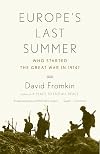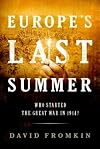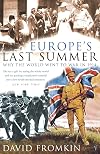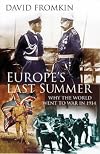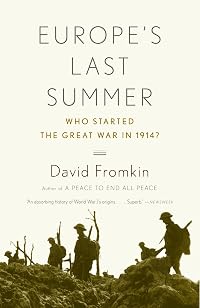
Europe's Last Summer: Who Started the Great War in 1914?
by David Fromkin
On This Page
Description
This book is a dramatic reassessment of the causes of the Great War. The early summer of 1914 was the most glorious Europeans could remember. But, behind the scenes, the most destructive war the world had yet known was moving inexorably into being, a war that would continue to resonate into the twenty-first century. The question of how it began has long vexed historians. Many have cited the assassination of Archduke Ferdinand; others have concluded that it was nobody's fault. But David show more Fromkin -- whose account is based on the latest scholarship -- provides a different answer. He makes plain that hostilities were commenced deliberately. In a gripping narrative that has eerie parallels to events in our own time, Fromkin shows that not one but two wars were waged, and that the first served as pretext for the second. Shedding light on such current issues as preemptive war and terrorism, he provides detailed descriptions of the negotiations and incisive portraits of the diplomats, generals, and rulers -- the Kaiser of Germany, the Czar of Russia, the Prime Minister of England, among other key players. And he reveals how and why diplomacy was doomed to fail. - Jacket flap. Draws on current scholarship to argue that hostilities that led to World War I were started intentionally, describing the negotiations and personalities of key leaders that contributed to the failure of diplomatic efforts. show lessTags
Recommendations





Member Recommendations
Member Reviews
I enjoyed Europe's Last Summer. Fromkin does a good job of elucidating a good deal of information with a clear analysis of a very complex set of events. The conventional wisdom, for a long time, was that the murder of Franz Ferdinand, with the complicity of some in Serbia, set the stage for the Austria's attack which, through the interlocking sets of alliances in place at the time, cascaded into a full-scale European, and world, war. Fromkin disagrees. He argues that the key point to grasp is not that there was one war that started small and escalated into something much larger, but that the conflict in 1914 consisted on two wars, intertwined and started deliberately, but separate. The first was Austria's war on Serbia which Austria was show more spoiling for in order to forestall the growth of any greater pan-Slav solidarity in the Balkans under the Serbs. As Fromkin argues:
"...as we now know, Austria-Hungary did not care whether Serbia was guilty of the murders or not. If anything, members of the imperial court came close to welcoming the assassinations. The government of Austria-Hungary...used the events of June 28 as an excuse for doing what it planned to do anyway. Better yet, the assassinations provided an opportunity to secure the support of Germany, which was vital to the success of Austria's plan to attack Serbia."
The second war was that of Germany against Russia, a war that many Germans expected, and devoutly hoped for, to staunch the growing strength and challenge of Russia and to maintain German power and authority in Europe. But Germany had to make itself look like the victim, and it did so by maneuvering the Austrians to the point where Russia mobilized and then Germany could take the defensive posture of mobilizing itself.
Germany was a country of contradictions:
"An advanced country inside a backward governmental structure, broadly humanist yet narrowly militarist, Germany was a land of paradoxes. Outside observers saw it as the coming country, the land of the future, while its own leaders believed that its time was running out. It was dazzlingly successful, but profoundly troubled, powerful but fearful to the point of paranoia. It was symbolized by its ruler, who was both physically and emotionally unbalanced. Located in the heart of Europe, Germany was at the heart of Europe's problems."
Add to this the pressure of the Prussian military elite who saw war as the only way to maintain their way of life, and the belief of Moltke, chief of the Great General Staff that, "war was inevitable and the sooner the better". Moltke believed that time was on the side of the Russians and so a preventive war should be initiated as soon as possible. In fact, in assigning blame, Fromkin puts a lot on Moltke and others in the German foreign ministry who deliberately sabotaged the directions of the Kaiser which were much more pacific and which, if followed, might have defused the crisis. Fromkin on Moltke:
"It is an arresting thought that, to the extent that any individual did so, this modest, unexceptional and indeed rather ordinary career army officer started the Great War, and thereby ushered in the twentieth century, with all its horrors and wonders."
One of the striking characteristics of the history of events from the murders of Franz Ferdinand and his wife to the advent of war, is just how very few people were involved in the decision-making in any of the countries. For astute observers, the tensions were certainly there and one could have expected war at some time, but in the summer of 1914, it is small wonder that, in retrospect, the war seemed to drop out of a clear blue sky. Interesting also to note that Kaiser Wilhelm and Franz Ferdinand were, by all accounts, difficult and mercurial men, but they both supported peace. The Kaiser's basic error, in reaction to the murder of his friend Franz Ferdinand, was to agree to give Austria carte blanche of German support in its dealings with Serbia, something that those angling for a larger war used to good effect in manipulating the Austrians.
Could it have been stopped? Fromkin is doubtful. As he notes, it takes two to make peace and only one to make war, and in the summer of 1914, there were two wars brewing: Austria versus Serbia and Germany versus Russia (which also required dealing with France). As he notes, "It was no accident that Europe went to war at that time. It was the result of premeditated decisions by two governments".
And in the final ironies, after all of its preparations and machinations, the Austro-Hungarian army was crushed by the Serbians and then they joined the wider conflict: "They moved to the Russian front and were crushed there too." Fromkin quotes Keegan in noting that by December 1914, the Hapsburg Empire had lost 1, 268,000 men out of 3,350,000 mobilized. Austria fought on under German command in a struggle just to survive, never mind the dreams of conquest in the summer of 1914. And after the debacle of the battle of the Marne in September, 1914 when some thought Moltke had snatched defeat from the jaws of victory by withdrawing, the Kaiser sacked 33 German generals and Moltke himself lost his job.
This is good history and well-worth reading. show less
"...as we now know, Austria-Hungary did not care whether Serbia was guilty of the murders or not. If anything, members of the imperial court came close to welcoming the assassinations. The government of Austria-Hungary...used the events of June 28 as an excuse for doing what it planned to do anyway. Better yet, the assassinations provided an opportunity to secure the support of Germany, which was vital to the success of Austria's plan to attack Serbia."
The second war was that of Germany against Russia, a war that many Germans expected, and devoutly hoped for, to staunch the growing strength and challenge of Russia and to maintain German power and authority in Europe. But Germany had to make itself look like the victim, and it did so by maneuvering the Austrians to the point where Russia mobilized and then Germany could take the defensive posture of mobilizing itself.
Germany was a country of contradictions:
"An advanced country inside a backward governmental structure, broadly humanist yet narrowly militarist, Germany was a land of paradoxes. Outside observers saw it as the coming country, the land of the future, while its own leaders believed that its time was running out. It was dazzlingly successful, but profoundly troubled, powerful but fearful to the point of paranoia. It was symbolized by its ruler, who was both physically and emotionally unbalanced. Located in the heart of Europe, Germany was at the heart of Europe's problems."
Add to this the pressure of the Prussian military elite who saw war as the only way to maintain their way of life, and the belief of Moltke, chief of the Great General Staff that, "war was inevitable and the sooner the better". Moltke believed that time was on the side of the Russians and so a preventive war should be initiated as soon as possible. In fact, in assigning blame, Fromkin puts a lot on Moltke and others in the German foreign ministry who deliberately sabotaged the directions of the Kaiser which were much more pacific and which, if followed, might have defused the crisis. Fromkin on Moltke:
"It is an arresting thought that, to the extent that any individual did so, this modest, unexceptional and indeed rather ordinary career army officer started the Great War, and thereby ushered in the twentieth century, with all its horrors and wonders."
One of the striking characteristics of the history of events from the murders of Franz Ferdinand and his wife to the advent of war, is just how very few people were involved in the decision-making in any of the countries. For astute observers, the tensions were certainly there and one could have expected war at some time, but in the summer of 1914, it is small wonder that, in retrospect, the war seemed to drop out of a clear blue sky. Interesting also to note that Kaiser Wilhelm and Franz Ferdinand were, by all accounts, difficult and mercurial men, but they both supported peace. The Kaiser's basic error, in reaction to the murder of his friend Franz Ferdinand, was to agree to give Austria carte blanche of German support in its dealings with Serbia, something that those angling for a larger war used to good effect in manipulating the Austrians.
Could it have been stopped? Fromkin is doubtful. As he notes, it takes two to make peace and only one to make war, and in the summer of 1914, there were two wars brewing: Austria versus Serbia and Germany versus Russia (which also required dealing with France). As he notes, "It was no accident that Europe went to war at that time. It was the result of premeditated decisions by two governments".
And in the final ironies, after all of its preparations and machinations, the Austro-Hungarian army was crushed by the Serbians and then they joined the wider conflict: "They moved to the Russian front and were crushed there too." Fromkin quotes Keegan in noting that by December 1914, the Hapsburg Empire had lost 1, 268,000 men out of 3,350,000 mobilized. Austria fought on under German command in a struggle just to survive, never mind the dreams of conquest in the summer of 1914. And after the debacle of the battle of the Marne in September, 1914 when some thought Moltke had snatched defeat from the jaws of victory by withdrawing, the Kaiser sacked 33 German generals and Moltke himself lost his job.
This is good history and well-worth reading. show less
A concise and readable study of the last few weeks of peace in 1914. Early on, I felt the author was rushing the story and glossing over some key points; I quickly realised that that was the only way to keep a general reader interested and to sort through the complex events of July 1914. Fromkin does concentrate on the who and the when, and whilst he describes many of the underlying features of international politics in the decade before the outbreak of war, this is not his main hypothesis. But he does set these issues into their proper place in the general context; and he does point out that it only takes one country to start a war.
He places the blame mostly on the shoulders of von Moltke, who advocated war between Germany and Russia show more before Russia became too powerful, and who manouvered Kaiser Wilhelm into offering Austria a "blank cheque" for its long-planned war against Serbia, knowing that this would draw Russia into conflict and giving Germany the pretext of waging war on Russia. He also dismisses the long-held opinion that the war was the result of the interlocking political landscape of international alliances; I feel that this is an over-simplification. To me, the alliances and treaties were what turned an Eastern European war into a world war.
Still: the reasons for Germany's and Austria's actions are properly examined and if you are looking for a good single source on the origins of World War I, this is the one I would recommend. show less
He places the blame mostly on the shoulders of von Moltke, who advocated war between Germany and Russia show more before Russia became too powerful, and who manouvered Kaiser Wilhelm into offering Austria a "blank cheque" for its long-planned war against Serbia, knowing that this would draw Russia into conflict and giving Germany the pretext of waging war on Russia. He also dismisses the long-held opinion that the war was the result of the interlocking political landscape of international alliances; I feel that this is an over-simplification. To me, the alliances and treaties were what turned an Eastern European war into a world war.
Still: the reasons for Germany's and Austria's actions are properly examined and if you are looking for a good single source on the origins of World War I, this is the one I would recommend. show less
An excellent and readable account of the summer of 1914, although I found the title somewhat annoying, as we have had plenty of summers since 1914, but a small quibble. David Fromkin explains the complex web of events very clearly and concisely. He also sums up the action after a few chapters, useful if you haven't quite followed things or missed something. I am no expert on these events but for me he gave the latest research and thinking and often summarised previous or alternative ideas around disputed ideas. The story is told in a clear time-line and it was an interesting and even gripping tale, well told.
A concise, accessible, and absorbing chronicle of the weeks leading up to the outbreak of the Great War following the assassination of Archduke Franz Ferdinand. Fromkin argues that there was not an accidental slide into bloody conflict exacerbated by complex alliances, ideologies, racism, or fervent nationalism. He pins the blame on the Central Powers, arguing that the war was the product of a deliberate agenda on the part of the military elite in Germany and, to a lesser degree, in Austria.
Very interesting book. Fromkin basically concludes that the assassination of Franz Ferdinand provided the pretext everyone needed to proceed with the Great War they all wanted. (As an example, he notes that Vienna started drafting the memorandum-plan to crush Serbia two weeks BEFORE Sarajevo.) Fromkin does place especial blame on Germany's General Helmuth von Moltke. Yet they all wanted war. As Teddy Roosevelt said in 1897, "No triumph of peace is quite so great as the supreme triumphs of war." (JAF)
3873. Europe's Last Summer: Who Started the Great War in 1914?, by David Fromkin (read 7 Apr 2004) Mainly because I was so impressed by Fromkin's A Peace to End All Peace: Creating the Modern Middle East 1914-1922 (read 28 Jan 1996) and In the Time of the Americans FDR, Truman, Eisenhower, Marshall, MacArthur -- The Generation That Changed America's Role in the World (read 18 Feb 1996), I read this new book by him (though with a title like that how could I not read it?) It is on a subject on which I have read much, including Sidney Bradshaw Fay's two volumes (in 1968) and Luigi Albertini's three volumes (in 1986). This book is easy to read and is not reluctant to arrive at conclusions, all of which I liked. He says there were two wars: show more Austria's against Serbia, which von Berchtold and Conrad wanted, and the war on Russia, which Helmuth con Moltke, the German Army chief of staff wanted. While the book is not well footnoted, it is still pretty persuasive. A great book on an endlessly fascinating subject. show less
Very interesting book on the events leading up to the start of WWI. After reading this book you will understand that many of the causes that lead to the eventual rise of the Third Reich had their genesis prior to the start of the WWI. The authors style is a bit off, but that was really the only down side. A must read.
Members
- Recently Added By
Lists

World War I - fiction & non-fiction
19 works; 4 members
Author Information

David Henry Fromkin was born in Milwaukee, Wisconsin on August 27, 1932. He received a bachelor's degree from the University of Chicago and a law degree from the University of Chicago Law School. He worked as a lawyer and investor until becoming a published author in his 40s and a professor in his 60s. He wrote seven books including The Question show more of Government: An Inquiry into the Breakdown of Modern Political Systems; A Peace to End All Peace; In the Time of the Americans: F.D.R., Truman, Eisenhower, Marshall, MacArthur - the Generation that Changed America's Role in the World; Kosovo Crossing: The Reality of American Intervention in the Balkans; Europe's Last Summer: Who Started the Great War in 1914?; and The King and the Cowboy: Theodore Roosevelt and Edward the Seventh, Secret Partners. He was a professor at Boston University from 1994 until 2013. He died from heart failure on June 11, 2017 at the age of 84. (Bowker Author Biography) show less
Some Editions
Common Knowledge
- Canonical title*
- Le dernier été de l'Europe. Qui a déclenché la Première guerre mondiale ?
- Original title
- Europe's Last Summer: Who Started the Great War in 1914?
- Original publication date
- 2004
- People/Characters
- Franz Ferdinand, Archduke of Austria; George V, King of the United Kingdom; Wilhelm II, German Kaiser and King of Prussia; Helmuth Johann Ludwig von Moltke
- Important places
- Austro-Hungarian Empire; Sarajevo; Serbia
- Important events
- Origins of World War I; World War I
- Related movies
- Chariots of Fire (1981 | IMDb); Lawrence of Arabia (1962 | IMDb); 1917 (2019 | IMDb); The Blue Max (1966 | IMDb)
- Epigraph
- The peremptory transition form an apparently profound peace to violent general war in a few mid-summer weeks in 1914 continues to defy attempts at explanation.-John Keegan, The First World War
- Dedication
- For Alain Silvera
- First words
- Shortly after eleven o'clock at night on Sunday, December 29, 1997, United Airlines Flight 826, a Boeing 747 carrying 374 passengers and 19 crew, was two hours into its scheduled trip across the Pacific from Tokyo to Honolulu... (show all).
- Original language
- English
*Some information comes from Common Knowledge in other languages. Click "Edit" for more information.
Classifications
Statistics
- Members
- 614
- Popularity
- 47,420
- Reviews
- 8
- Rating
- (3.95)
- Languages
- 8 — Dutch, English, French, German, Italian, Norwegian (Bokmål), Swedish, Turkish
- Media
- Paper, Audiobook, Ebook
- ISBNs
- 22
- ASINs
- 4