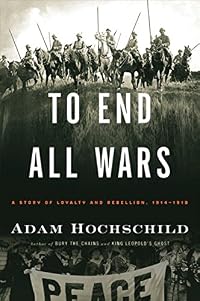
To End All Wars: A Story of Loyalty and Rebellion, 1914-1918
by Adam Hochschild
On This Page
Description
World War I stands as one of history's most senseless spasms of carnage, defying rational explanation. In his riveting narrative, Hochschild brings it to life as never before while focusing on the long-ignored moral drama of the war's critics, alongside its generals and heroes.Tags
Recommendations




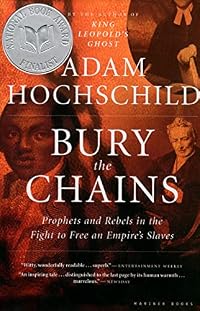
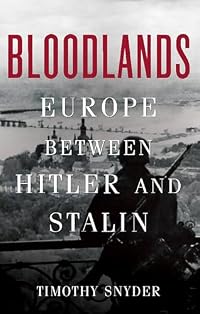
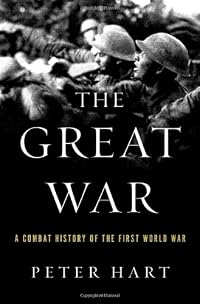
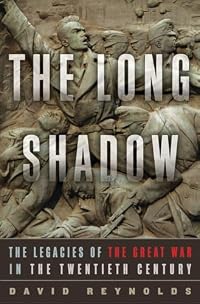
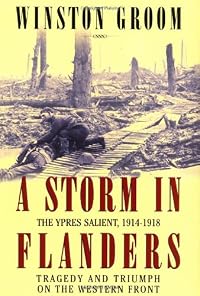
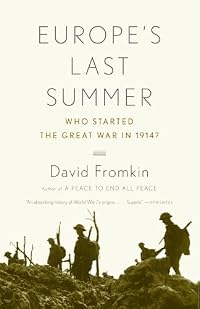
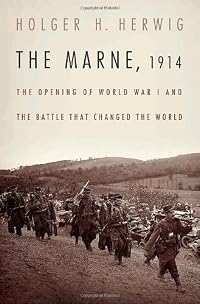

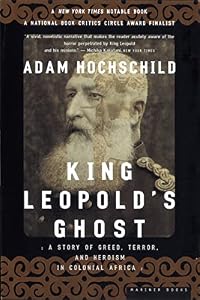

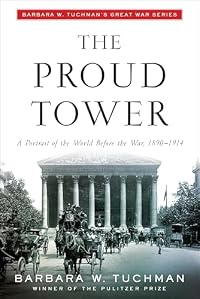
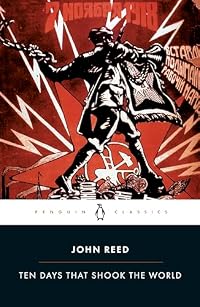
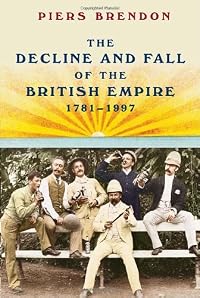
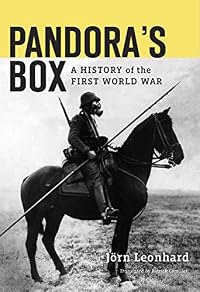


Member Recommendations

Member Reviews
This is one of the most intense books I've ever read. I recently participated in a book discussion of this one with a group of about 20 adults, all over the age of 40. Every single person in the room said "This book made me SO angry."
I joined in the group discussion because it was a book that fit into my reading for War Through the Generations. Adam Hochschild gives us an unusual perspective of looking not only at the war but at the political and social conflicts that were occurring simultaneously. He interweaves these themes so that we are able to see the arrogance of those conducting the war, the anguish of those fighting the war, and the frustration of those who want it to stop, or want to abolish the class structure that is seen as show more one of the major factors in the horrendous and unnecessary loss of life and limb.
Told almost entirely from the perspective of the British, Hochschild explains the history and concepts of Empire, class structure and struggles, and the entirely idiotic insistence of the British military of clinging to the use of Calvary in spite of the invention and use of more up to date tactics and weapons being used by the Germans.
Overlaid on this discussion is the story of Britain's conscientious objectors and pacifists, along with a look at the socialist and communist movements in Russia. The role of women in the anti-war movement is also well-documented. I was especially appalled at the treatment the "stiff-upper-lip" aristocratic officers and military hierarchy displayed to men who refused to serve because their conscience told them that killing was wrong. In several instances, these men were conscripted, sent to prison when they refused to serve, and even executed as traitors. It was at this point I become so angry, I had to put the book down and return to it several days later.
The author highlights several well -known Englishmen, including Bertrand Russell, Sir John French, Winston Churchill, Charlotte Despard, and Rudyard Kipling. Each had a specific view of the war, its rightness or its total stupidity. Each of their stories was heart-breaking, infuriating, and so well written that whether or not we agreed with the viewpoint, we understood it. What was so anger inducing however, was the recognition of all who were participating in the discussion of how little the world seems to have learned. We all could see clear and unequivocal correlations to wars that followed. The parallels between anti-war movements during Vietnam and today's conflicts were all clearly visible, and led us to the conclusion that this is a book that should be required reading for all Americans. show less
I joined in the group discussion because it was a book that fit into my reading for War Through the Generations. Adam Hochschild gives us an unusual perspective of looking not only at the war but at the political and social conflicts that were occurring simultaneously. He interweaves these themes so that we are able to see the arrogance of those conducting the war, the anguish of those fighting the war, and the frustration of those who want it to stop, or want to abolish the class structure that is seen as show more one of the major factors in the horrendous and unnecessary loss of life and limb.
Told almost entirely from the perspective of the British, Hochschild explains the history and concepts of Empire, class structure and struggles, and the entirely idiotic insistence of the British military of clinging to the use of Calvary in spite of the invention and use of more up to date tactics and weapons being used by the Germans.
Overlaid on this discussion is the story of Britain's conscientious objectors and pacifists, along with a look at the socialist and communist movements in Russia. The role of women in the anti-war movement is also well-documented. I was especially appalled at the treatment the "stiff-upper-lip" aristocratic officers and military hierarchy displayed to men who refused to serve because their conscience told them that killing was wrong. In several instances, these men were conscripted, sent to prison when they refused to serve, and even executed as traitors. It was at this point I become so angry, I had to put the book down and return to it several days later.
The author highlights several well -known Englishmen, including Bertrand Russell, Sir John French, Winston Churchill, Charlotte Despard, and Rudyard Kipling. Each had a specific view of the war, its rightness or its total stupidity. Each of their stories was heart-breaking, infuriating, and so well written that whether or not we agreed with the viewpoint, we understood it. What was so anger inducing however, was the recognition of all who were participating in the discussion of how little the world seems to have learned. We all could see clear and unequivocal correlations to wars that followed. The parallels between anti-war movements during Vietnam and today's conflicts were all clearly visible, and led us to the conclusion that this is a book that should be required reading for all Americans. show less
Adam Hochschild is a gifted storyteller, whose survey of the First World War brings to life its battles and the societies it utterly transformed. He focuses on a handful of key families and individuals, following them from a few decades before the war to the end of their various lives years or decades after the Armistice. He follows equally the pro- and anti-war factions in British and German societies (and to a lesser degree French and Russian). Filled with facts, the book nevertheless reads like a novel, smoothly, engagingly. That World War II was an inevitable consequence of World War I is repeatedly stressed from various angles. The reader can see all the social and military crises of our early 21st century mirrored in those of the show more early 20th. The roots are all there. The problems have not been solved. People with little interest in military history who wish to understand our own times better -- how we've become what we are and what we need to do to be more like what we ought to be -- will find this book fascinating and thought-provoking. show less
If Adam Hochschild went off to a conference of ichthyologists, I'm sure he would return with a compelling narrative about an obscure kind of spiny fish that no one had ever previously suspected was of any importance, and create a passion for oceanography and all the related disciplines among all his readers. That's the kind of storytelling prowess that Hochschild brings to all his books and that makes this latest narrative one of the best I've read about the First World War -- a part of history that is so replete with histories and first-hand narratives ranging from the mundane to the literary that prior to reading this I would have been prepared to swear there simply wasn't any room for a top-notch work offering a new perspective on show more the war or the issues it raised. Or, for that matter, any need for yet another tome on the subject.
I am delighted to have been proven dead wrong. Hochschild has chosen a fresh angle to explore, one that most of those who write about war shy away from altogether. Is war moral? Is it necessary? Is it something to be celebrated and glorified, or something we should avoid as a socially destructive force? When World War One ended, it became known as the war to end all wars -- so horrific had the experiences of survivors been, that they insisted war could NOT be contemplated again. And yet, at the outset, the mood was something quite different -- even socialists who had celebrated the global union of working men voted in favor of war and, with rare exceptions like Britain's Keir Hardie (one of the heroes of Hochschild's story) supported it and turned out to fight men whom they had embraced as fellow workers only months earlier but who had suddenly become "the enemy".
Hochschild does a superb job of finding the characters through which to tell his story -- the divisions within the Pankhurst family, with Emmeline the matriarch suddenly becoming an ultra-patriot, abandoning her violent campaign for womens' suffrage, even as her daughter Sylvia clung to her pacifist convictions. Sir John French, one of the generals who seemed unable to grasp the way that technological developments such as the machine gun and barbed wire had transformed the nature of war and who thus oversaw and commanded battles that resulted in unprecedented carnage, had his own cross to bear: his elder sister, Charlotte Despard, was a vehement critic of the conflict at home. Hochschild puts forth both sides with tremendous empathy, telling of the loss of Rudyard Kipling's son in battle and Kipling's wrenching grief and unshaken support for the war, as well as the fate of conscientious objectors who were shipped overseas to the front lines (against government policy) to serve in the ranks, and who faced being court-martialed and shot if they refused to pick up their rifles.
While the war was a long and complex conflict, stretching literally around the world, Hochschild's narrative is both easily digestible and makes the Great War comprehensible on a basic level. It doesn't purport to be a comprehensive survey of all the fronts and all the battles -- there is little here about the Galician front, the battle of Jutland or other naval conflicts, for instance, and there is a definite bias toward the experiences of war in the trenches of the Western front, from Flanders to Alsace-Lorraine. What is it is, however, is a book that will give even a reader who isn't familiar with the war an overview of its causes and major events, even as it prods them to think about the nature of war itself.
World War One changed the world -- it accelerated technological developments, transformed societies around the world, and laid the groundwork for subsequent conflicts that endure to this day in the Middle East. It did NOT end all wars, but it did make the question of whether war can be considered as valid a means of pursuing a nation's self interest as it was in the 16th or 17th centuries a legitimate one. Hochschild has done a brilliant job exploring the complex moral issues that surrounded that debate, without ever lapsing into platitudes or polemics.
I first received an advance review copy of this book from NetGalley; I liked it so much that I ended up purchasing my own hardcover copy as soon as the book was published. Highly recommended. show less
I am delighted to have been proven dead wrong. Hochschild has chosen a fresh angle to explore, one that most of those who write about war shy away from altogether. Is war moral? Is it necessary? Is it something to be celebrated and glorified, or something we should avoid as a socially destructive force? When World War One ended, it became known as the war to end all wars -- so horrific had the experiences of survivors been, that they insisted war could NOT be contemplated again. And yet, at the outset, the mood was something quite different -- even socialists who had celebrated the global union of working men voted in favor of war and, with rare exceptions like Britain's Keir Hardie (one of the heroes of Hochschild's story) supported it and turned out to fight men whom they had embraced as fellow workers only months earlier but who had suddenly become "the enemy".
Hochschild does a superb job of finding the characters through which to tell his story -- the divisions within the Pankhurst family, with Emmeline the matriarch suddenly becoming an ultra-patriot, abandoning her violent campaign for womens' suffrage, even as her daughter Sylvia clung to her pacifist convictions. Sir John French, one of the generals who seemed unable to grasp the way that technological developments such as the machine gun and barbed wire had transformed the nature of war and who thus oversaw and commanded battles that resulted in unprecedented carnage, had his own cross to bear: his elder sister, Charlotte Despard, was a vehement critic of the conflict at home. Hochschild puts forth both sides with tremendous empathy, telling of the loss of Rudyard Kipling's son in battle and Kipling's wrenching grief and unshaken support for the war, as well as the fate of conscientious objectors who were shipped overseas to the front lines (against government policy) to serve in the ranks, and who faced being court-martialed and shot if they refused to pick up their rifles.
While the war was a long and complex conflict, stretching literally around the world, Hochschild's narrative is both easily digestible and makes the Great War comprehensible on a basic level. It doesn't purport to be a comprehensive survey of all the fronts and all the battles -- there is little here about the Galician front, the battle of Jutland or other naval conflicts, for instance, and there is a definite bias toward the experiences of war in the trenches of the Western front, from Flanders to Alsace-Lorraine. What is it is, however, is a book that will give even a reader who isn't familiar with the war an overview of its causes and major events, even as it prods them to think about the nature of war itself.
World War One changed the world -- it accelerated technological developments, transformed societies around the world, and laid the groundwork for subsequent conflicts that endure to this day in the Middle East. It did NOT end all wars, but it did make the question of whether war can be considered as valid a means of pursuing a nation's self interest as it was in the 16th or 17th centuries a legitimate one. Hochschild has done a brilliant job exploring the complex moral issues that surrounded that debate, without ever lapsing into platitudes or polemics.
I first received an advance review copy of this book from NetGalley; I liked it so much that I ended up purchasing my own hardcover copy as soon as the book was published. Highly recommended. show less
Inasmuch as Hochschild’s To End All Wars is a history of the British at the Western front of the first world war, it’s readable and inoffensive, but fairly unremarkable. But the war isn’t his primary subject: that honor goes to the various individuals and social movements actively dissenting against England’s involvement in the war. We are introduced to upper-class suffragettes and working-class radicals among countless others, whose shifting loyalties and evolving philosophies didn’t stop the war, but did reshape the country that emerged in its wake. Hochschild’s focus on the characters and relationships embroiled in this conflict makes his book compelling and readable, even for those of us who aren’t history buffs.
Very interesting history of WWI opposition. A broad canvas history of the war sets the stage for the moral battles over whether to fight or not. It feels like a mirror of our current era's culture wars, the details are different but the struggles between liberalism and conservationism remain. No heroes or villains, nuanced and well told, but diffuse and scattered style. I seemed more interested in the background details of the war itself than the intended focus on the dissenters. Because the biographical stories are told in such a mixed and braided fashion I don't have a clear memory that will stick with me, rather flashes of events here and there.
Audiobook: I love audiobooks, but not all books convert well, such as this one. The show more narrator is excellent but the book is meant to be read, reasons include: Paragraph breaks are significant to the style but invisible in the audio; large cast of names with constant moving back and forth between stories creates a sense of vertigo, perhaps an intentional aesthetic to mirror the era, but is magnified to the point of confusion by the machine-pace of the audiobook; certain thoughts and transition points demand pausing for reflection, but they are not clear until the moment is past and the narrator has marched on. show less
Audiobook: I love audiobooks, but not all books convert well, such as this one. The show more narrator is excellent but the book is meant to be read, reasons include: Paragraph breaks are significant to the style but invisible in the audio; large cast of names with constant moving back and forth between stories creates a sense of vertigo, perhaps an intentional aesthetic to mirror the era, but is magnified to the point of confusion by the machine-pace of the audiobook; certain thoughts and transition points demand pausing for reflection, but they are not clear until the moment is past and the narrator has marched on. show less
An extraordinary history of WWI, which weaves the story around detailed biographies of a dozen or so men and women -- military, government, pacifist, socialist, feminist, and the arts. All of the characters are English, but if there is a bias to the history it certainly isn't pro-British but anti-war, portraying the conflict as a sacrifice of young men for imperial territorial gain. Most of the military commanders (for all sides) were clearly incompetent to deal with a war which, for the first time, involved tanks, machine guns, airplanes, and massive civilian deaths. A moving and cautionary history.
A book that brilliantly succeeds in finding a new way to talk about the First World War, by looking at the protesters and conscientious objectors who opposed it along the way. I must admit, in my head antiwar protests started sometime around the 60s with Vietnam; but it turns out that the British peace movement during 1914–18 is one of the most impressive in history.
So riveting are many of the details here that you end up feeling amazed and annoyed that they aren't included in more general histories of the conflict. I've read countless thousands of words on John French over the last year, yet I somehow had no idea that the field marshal's own sister was Charlotte Despard, one of the most intransigent, outspoken activists of the show more period. Despard denounced ‘the wicked war of this Capitalistic government’ while her brother was busy orchestrating it – and yet the two of them were as close as ever, regularly visiting each other and writing off their siblings' political views as charming quirks.
Despard also championed many other progressive causes of the time, notably women's suffrage. The so-called suffragettes are a key part of the story, and a good illustration of how divided liberal activists were when the war broke out. Emmeline Pankhurst and her daughter Christabel went from planting bombs in Lloyd George's house to working hand-in-hand with him from speaking-platforms and in editorials: ‘If you go to this war and give your life,’ Emmeline told a cheering crowd in Plymouth, ‘you could not end your life in a better way – for to give one's life for one's country, for a great cause, is a splendid thing.’ An argument that became impossible after Owen.
Perhaps it helped cement the votes-for-women movement as being within the establishment – sure enough, women were enfranchised in 1918 before the war ended. Nevertheless as a modern reader all your sympathies are with the younger Pankhurst daughter, Sylvia, who remained absolutely committed to the antiwar movement and was more or less thrown out of her own family as a result. Sylvia's secret lover – the pacifist independent MP Keir Hardie – is another key character in here, and one I'd previously known nothing about. Both of them were shunned, isolated, mocked.
Bertrand Russell also flits in and out of these pages, a towering moral presence. Every time I read about him I admire him more and more. Russell was jailed for six months for his antiwar activism (when the warder took down his details on arrival, he asked Russell's religion, and he replied, ‘agnostic’. Asking how to spell it, the warder sighed, ‘Well, there are many religions, but I suppose they all worship the same God’). He still managed to keep in touch with two of his lovers while in prison, too – he wrote to a French actress in French, a language his jailers couldn't understand, and sent letters to another woman smuggled out in copies of the Proceedings of the London Mathematics Society, which he told her was ‘more interesting than it appeared’.
Hochschild does a brilliant job not just in uncovering the activities of these characters, some of whom have been comprehensively neglected, but also in tying their stories together: the narrative often reads like a novel with a large but interconnected cast. The whole thing is animated by a steady but unintrusive sense of injustice, and the writing is clear, notwithstanding a few foibles (he deploys, for instance, that odd American hypercorrection ‘felt badly’).
What's particularly sad, after following these people for so long, and hoping for some kind of victory on their behalf, is seeing how desperately almost all of them latched on to the Russian Revolution in 1917. It's a harsh but enlightening test of moral character to see how quickly people could bring themselves to bail on the Soviet dream when things started going wrong – not a test many leftists passed with flying colours (but that's a story better told elsewhere). And overall, this is a story of failure and disappointment, though the tone is moving and hopeful rather than depressing. The title points up the overarching irony. President Wilson had called the slaughter the ‘war to end all wars’ – but Sir Alfred Milner was more prescient in 1918 when, peering into the future as the bodies were cleared away, he described the Treaty of Versailles as ‘a Peace to end Peace’. show less
So riveting are many of the details here that you end up feeling amazed and annoyed that they aren't included in more general histories of the conflict. I've read countless thousands of words on John French over the last year, yet I somehow had no idea that the field marshal's own sister was Charlotte Despard, one of the most intransigent, outspoken activists of the show more period. Despard denounced ‘the wicked war of this Capitalistic government’ while her brother was busy orchestrating it – and yet the two of them were as close as ever, regularly visiting each other and writing off their siblings' political views as charming quirks.
Despard also championed many other progressive causes of the time, notably women's suffrage. The so-called suffragettes are a key part of the story, and a good illustration of how divided liberal activists were when the war broke out. Emmeline Pankhurst and her daughter Christabel went from planting bombs in Lloyd George's house to working hand-in-hand with him from speaking-platforms and in editorials: ‘If you go to this war and give your life,’ Emmeline told a cheering crowd in Plymouth, ‘you could not end your life in a better way – for to give one's life for one's country, for a great cause, is a splendid thing.’ An argument that became impossible after Owen.
Perhaps it helped cement the votes-for-women movement as being within the establishment – sure enough, women were enfranchised in 1918 before the war ended. Nevertheless as a modern reader all your sympathies are with the younger Pankhurst daughter, Sylvia, who remained absolutely committed to the antiwar movement and was more or less thrown out of her own family as a result. Sylvia's secret lover – the pacifist independent MP Keir Hardie – is another key character in here, and one I'd previously known nothing about. Both of them were shunned, isolated, mocked.
Bertrand Russell also flits in and out of these pages, a towering moral presence. Every time I read about him I admire him more and more. Russell was jailed for six months for his antiwar activism (when the warder took down his details on arrival, he asked Russell's religion, and he replied, ‘agnostic’. Asking how to spell it, the warder sighed, ‘Well, there are many religions, but I suppose they all worship the same God’). He still managed to keep in touch with two of his lovers while in prison, too – he wrote to a French actress in French, a language his jailers couldn't understand, and sent letters to another woman smuggled out in copies of the Proceedings of the London Mathematics Society, which he told her was ‘more interesting than it appeared’.
Hochschild does a brilliant job not just in uncovering the activities of these characters, some of whom have been comprehensively neglected, but also in tying their stories together: the narrative often reads like a novel with a large but interconnected cast. The whole thing is animated by a steady but unintrusive sense of injustice, and the writing is clear, notwithstanding a few foibles (he deploys, for instance, that odd American hypercorrection ‘felt badly’).
What's particularly sad, after following these people for so long, and hoping for some kind of victory on their behalf, is seeing how desperately almost all of them latched on to the Russian Revolution in 1917. It's a harsh but enlightening test of moral character to see how quickly people could bring themselves to bail on the Soviet dream when things started going wrong – not a test many leftists passed with flying colours (but that's a story better told elsewhere). And overall, this is a story of failure and disappointment, though the tone is moving and hopeful rather than depressing. The title points up the overarching irony. President Wilson had called the slaughter the ‘war to end all wars’ – but Sir Alfred Milner was more prescient in 1918 when, peering into the future as the bodies were cleared away, he described the Treaty of Versailles as ‘a Peace to end Peace’. show less
Members
- Recently Added By
Published Reviews
De leeuwentemmer John S. Clarke is één van de vele kleurrijke figuren die tot leven worden gebracht in “To End All Wars,” het recentste boek van Adam Hochschild over de Eerste Wereldoorlog. Hochschild schreef eerder over de Stalinperiode in de Sovjetunie en – bij ons wellicht beter bekend: King Leopold’s Ghost A Story of Greed, Terror, and Heroism in Colonial Africa. Nu zijn over show more dat eerste wereldconflict bibliotheken volgeschreven, maar de benadering van Hochschild is, althans voor een leek als ondergetekende, volslagen nieuw. Blijkt immers dat er in Groot-Brittannië ondanks het welbekende algemene enthousiasme voor de oorlog ook hardnekkig verzet was, hoofdzakelijk maar niet exclusief in linkse kringen en onder de suffragettes, de beweging voor vrouwenstemrecht. show less
added by jdpwash
Lists

r/AskHistorians' Recommended Books
1,068 works; 17 members

THE WAR ROOM
813 works; 24 members
Author Information

16+ Works 9,703 Members
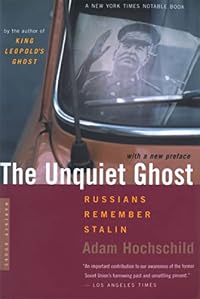
Adam Hochschild was born in New York City in 1942. As a college student, he spent a summer working on an anti-government newspaper in South Africa and worked briefly as a civil rights worker in Mississippi in 1964. He began his journalism career as a reporter at the San Francisco Chronicle. Then he worked for ten years as a magazine editor and show more writer, at Ramparts and Mother Jones, which he co-founded. He has also written for The New Yorker, Harper's Magazine, The New York Review of Books, The New York Times Magazine, and The Nation. His first book, Half the Way Home: A Memoir of Father and Son, was published in 1986. His other books include The Mirror at Midnight: A South African Journey; The Unquiet Ghost: Russians Remember Stalin; Finding the Trapdoor: Essays, Portraits, Travels; King Leopold's Ghost: A Story of Greed, Terror, and Heroism in Colonial Africa; Bury the Chains: Prophets and Rebels in the Fight to Free an Empire's Slaves; and To End All Wars: A Story of Loyalty and Rebellion, 1914-1918. He teaches writing at the Graduate School of Journalism at the University of California, Berkeley. (Bowker Author Biography) show less
Awards and Honors
Awards
Series
Belongs to Publisher Series
Common Knowledge
- Canonical title*
- Verzet en eendracht De grote oorlog 1914-1918
- Original title
- To End All Wars
- Original publication date
- 2011
- People/Characters
- John French; Douglas Haig; Emmeline Pankhurst; Charlotte Despard; Sylvia Pankhurst
- Important places
- France; Belgium; United Kingdom; Germany; Russia; USA
- Important events
- World War I (1914 | 1918)
- Dedication
- For Tom Englehardt, analyst of empire, emperor among editors
- First words
- (Introduction) An early autumn bite is in the air as a late, gold-tinged late afternoon falls over the rolling countryside of northern France.
The city had never seen such a parade. - Last words
- (Click to show. Warning: May contain spoilers.)For even a century's worth of bloodshed after the war that was supposed to end all wars, we are painfully far from the day when most people on earth will have the wisdom to feel, as did Alice Wheeldon in her prison cell, "The world is my country."
- Blurbers
- Bacevich, Andrew J.; Horwitz, Tony; Yardley, Jonathan
*Some information comes from Common Knowledge in other languages. Click "Edit" for more information.
Classifications
Statistics
- Members
- 1,326
- Popularity
- 17,998
- Reviews
- 53
- Rating
- (4.22)
- Languages
- 8 — Danish, Dutch, English, French, German, Norwegian (Bokmål), Spanish, Swedish
- Media
- Paper, Audiobook, Ebook
- ISBNs
- 28
- UPCs
- 1
- ASINs
- 11