
John Reed (1) (1887–1920)
Author of Ten Days that Shook the World
For other authors named John Reed, see the disambiguation page.
About the Author
John Reed (1887-1920) was a journalist, activist, poet, and author. In addition to chronicling the Russian Revolution, he reported on US labor strikes, the Mexican Revolution, World War I, and was a founder of and international delegate for the Communist Labor Party. He is buried at the Kremlin show more Wall in Moscow. show less
Works by John Reed
John Reed and the Russian Revolution: Uncollected Articles, Letters, and Speeches on Russia, 1917-1920 (1992) 3 copies
America in fiamme 3 copies
Tamburlaine: And Other Verses 2 copies
Rat u Srbiji 1915 2 copies
An anthology, 2 copies
War or peace 1 copy
Stationen meines Lebens 1 copy
Detrás de Billy Sunday 1 copy
Πως λειτουργούν τα σοβιέτ 1 copy
Associated Works
American Poetry: The Twentieth Century, Volume One: Henry Adams to Dorothy Parker (2000) — Contributor — 480 copies, 1 review
World War I and America: Told by the Americans Who Lived It (1918) — Contributor — 225 copies, 1 review
From Totems to Hip-Hop: A Multicultural Anthology of Poetry Across the Americas 1900-2002 (2002) — Contributor — 182 copies
John Reed - Ten Days That Shook the World — Original author — 1 copy
Tagged
Common Knowledge
- Canonical name
- Reed, John
- Legal name
- Reed, John Silas
- Other names
- Reed, Jack
- Birthdate
- 1887-10-22
- Date of death
- 1920-10-19
- Gender
- male
- Education
- Harvard University (BA|1910)
- Occupations
- journalist
- Organizations
- Communist Party of the United States
Communist Labor Party - Relationships
- Bryant, Louise (wife)
O'Neill, Eugene (friend)
Wolfe, Bertram D. (co-author) - Cause of death
- scrub typhus
- Nationality
- USA
- Birthplace
- Portland, Oregon, USA
- Place of death
- Moscow, Russia
- Burial location
- Mass Grave No. 5, Kremlin Wall Necropolis, Red Square, Moscow, Russia
Members
Reviews

John Reed, a Harvard graduate from a rather middle-class background in Portland, Oregon, had a splendidly turbulent life as a labour activist associated with the IWW, a war correspondent in the Mexican Revolution and World War I, and most of all as a first-hand observer of the Russian revolution (his account in Ten days that shook the world remains his best-known work). Frequently shot at or arrested, constantly smuggling himself over frontiers, engaged in romances with several well-known show more revolutionaries, etc., etc. ... he was obviously very unlucky to meet his end so prosaically with a typhus infection in Moscow in 1920, but he was one of the very few Americans to get a grave of honour in the Kremlin.
This collection, originally issued by Seven Seas in the early sixties and republished in slightly expanded form by City Lights in 1975, brings together some of his early short fiction and a few shorter journalistic pieces from Mexico and Russia not previously published in book form. Ferlinghetti added his autobiographical essay "Almost thirty" (1917) to round out the collection.
I was most struck by the New York stories in the first part of the book, mostly written around 1910-1912, and obviously originating as lightly fictionalised versions of conversations he had with real prostitutes and homeless people on the streets of Greenwich Village. The slightly arch, Edwardian style is oddly reminiscent of very early P G Wodehouse, but the content is anything but "literary" in that sense: he is full of respect for the people he is talking to and lets them tell their own stories without a trace of patronising superiority, and without any squeamishness about telling it like it is. Nobody who read these stories would have had any doubts about what these women were doing to earn money on the streets (which is possibly why they remained largely unpublished for so long).
Elsewhere, Reed uses the same technique of letting his characters tell their stories in their own words rather more ironically: in "Mac - American" he lets an American in Mexico rant away over a series of drinks with no comment from the narrator, gradually revealing himself as more and more of a racist, up to the point where Mac tells us about the orgasmic pleasure of joining a lynch-mob. And in the back-to-back stories "John Bull in America", two British men on their way home to enlist in the Great War are left floundering, exposing the absence of any sane reason for wanting to fight.
The more directly political pieces seemed rather less original in form than these character-studies, but I was left with the strong feeling that I would like to read more from Reed. Which is always a good note on which to finish a book! show less
This collection, originally issued by Seven Seas in the early sixties and republished in slightly expanded form by City Lights in 1975, brings together some of his early short fiction and a few shorter journalistic pieces from Mexico and Russia not previously published in book form. Ferlinghetti added his autobiographical essay "Almost thirty" (1917) to round out the collection.
I was most struck by the New York stories in the first part of the book, mostly written around 1910-1912, and obviously originating as lightly fictionalised versions of conversations he had with real prostitutes and homeless people on the streets of Greenwich Village. The slightly arch, Edwardian style is oddly reminiscent of very early P G Wodehouse, but the content is anything but "literary" in that sense: he is full of respect for the people he is talking to and lets them tell their own stories without a trace of patronising superiority, and without any squeamishness about telling it like it is. Nobody who read these stories would have had any doubts about what these women were doing to earn money on the streets (which is possibly why they remained largely unpublished for so long).
Elsewhere, Reed uses the same technique of letting his characters tell their stories in their own words rather more ironically: in "Mac - American" he lets an American in Mexico rant away over a series of drinks with no comment from the narrator, gradually revealing himself as more and more of a racist, up to the point where Mac tells us about the orgasmic pleasure of joining a lynch-mob. And in the back-to-back stories "John Bull in America", two British men on their way home to enlist in the Great War are left floundering, exposing the absence of any sane reason for wanting to fight.
The more directly political pieces seemed rather less original in form than these character-studies, but I was left with the strong feeling that I would like to read more from Reed. Which is always a good note on which to finish a book! show less
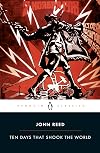
This is a thrilling eyewitness account of the October Revolution in Russia in 1917. I’ll start with a vivid example of Reed’s writing:
“I went back to Petrograd riding on the front seat of an auto truck, driven by a workman and filled with Red Guards...
Across the horizon spread the glittering lights of the capital, immeasurably more splendid by night than by day, like a dike of jewels heaped on a barren plain.
The old workman who drove held the wheel in one hand, while with the other he show more swept the far-gleaming capital in an exultant gesture.
‘Mine!’ he cried, his face all alight. ‘All mine now! My Petrograd!’ ”
It is claimed by anti-Marxist historians that Lenin’s Bolshevik Party seized power against the wishes of the majority, and that this led directly to the horrors of Stalinism. But anyone who reads this book will see that this is not the case.
The bureaucratic tyranny of the Stalinist regime in Russia from the mid 1920s onwards, and of the later, similar regimes in Eastern Europe, China etc had/has nothing to do with genuine Marxism. These so-called “communist” states were/are actually state capitalist systems controlled by a ruling class of bureaucrats who betrayed the democratic aims of the 1917 Russian Revolution.
Reed writes that the Bolsheviks did NOT take power “by the organised violence of a small clique. If the masses all over Russia had not been ready for insurrection it must have failed.”
The February Revolution of 1917 had got rid of the Tsar, but it brought to power the Provisional Government which continued to take part in the bloodbath of World War One. Lenin argued for a new revolution, which eventually took place in October.
Lenin did not want to seize power in a coup by a small group. He wanted to win over the majority of the exploited and for THEM to take power. When Marx and Lenin talked about the “dictatorship of the proletariat”, they did not mean that Marxists would rule OVER the working class, they meant rule BY the working class. This workers’ state would then gradually be replaced by a classless society in which the state would “wither away”.
Marx’s model for a democratic workers’ state was the short-lived Paris Commune, where all officials were elected, subject to recall at any time, and paid only an average worker’s wage; and where the army and police were replaced by a workers’ militia. Lenin’s idea was that the soviets (workers’ councils) would also follow this highly democratic model. Reed's book shows how democratic the soviets were in their early days.
October would only have been just a "coup" if the Bolsheviks had taken power without majority support. In fact they only took power when they had won a majority on the soviets, with the previous majority of SRs and Mensheviks having been voted out. Even the Menshevik Martov admitted that the workers were solidly behind the Bolsheviks by October.
Lenin’s idea was that the Bolshevik party should compete with other parties on the soviets. The fact that the soviets later ended up as being a one-party system was a sign of the FAILURE of the revolution: it was not what Lenin had intended.
Lenin expected the Russian Revolution to spark off revolutions in other countries. (Indeed there was a failed revolution in Germany.) But the isolation of the Russian Revolution, the horrors of the Civil War initiated by the “Whites” and intervention by foreign powers in support of the White armies combined to destroy the foundations of the new regime.
It is claimed by anti-Marxist historians that Leninism led directly to Stalinism. But Stalin actually had to DESTROY the last vestiges of genuine Leninism in order to consolidate his counter-revolution. Incidentally, given that it was the isolation of the Russian Revolution which ultimately led to its demise under Stalin, it was not the politics of Lenin's Bolsheviks which led to Stalinism, it was the LACK of mass Leninist parties in other countries.
After Lenin’s death Trotsky kept alive the genuine Marxist idea that socialism means workers’ democracy, but unfortunately he clung to the idea that Russia had become a degenerated workers’ state, whereas in fact it had become under Stalin a bureaucratic state capitalist regime.
Marx argued that a revolution was necessary in order to achieve socialism for two reasons: firstly, because the ruling class would not give up power peacefully; and secondly, because it was by going through the experience of class struggle that the working class’s ideas would change on a mass scale and the majority would be won over to socialist ideas and become “fitted to found society anew.”
Reed’s book shows precisely this changing of ideas on a mass scale. No wonder Lenin wrote a Foreword for the book in 1919, stating: “Unreservedly do I recommend it to the workers of the world.” show less
“I went back to Petrograd riding on the front seat of an auto truck, driven by a workman and filled with Red Guards...
Across the horizon spread the glittering lights of the capital, immeasurably more splendid by night than by day, like a dike of jewels heaped on a barren plain.
The old workman who drove held the wheel in one hand, while with the other he show more swept the far-gleaming capital in an exultant gesture.
‘Mine!’ he cried, his face all alight. ‘All mine now! My Petrograd!’ ”
It is claimed by anti-Marxist historians that Lenin’s Bolshevik Party seized power against the wishes of the majority, and that this led directly to the horrors of Stalinism. But anyone who reads this book will see that this is not the case.
The bureaucratic tyranny of the Stalinist regime in Russia from the mid 1920s onwards, and of the later, similar regimes in Eastern Europe, China etc had/has nothing to do with genuine Marxism. These so-called “communist” states were/are actually state capitalist systems controlled by a ruling class of bureaucrats who betrayed the democratic aims of the 1917 Russian Revolution.
Reed writes that the Bolsheviks did NOT take power “by the organised violence of a small clique. If the masses all over Russia had not been ready for insurrection it must have failed.”
The February Revolution of 1917 had got rid of the Tsar, but it brought to power the Provisional Government which continued to take part in the bloodbath of World War One. Lenin argued for a new revolution, which eventually took place in October.
Lenin did not want to seize power in a coup by a small group. He wanted to win over the majority of the exploited and for THEM to take power. When Marx and Lenin talked about the “dictatorship of the proletariat”, they did not mean that Marxists would rule OVER the working class, they meant rule BY the working class. This workers’ state would then gradually be replaced by a classless society in which the state would “wither away”.
Marx’s model for a democratic workers’ state was the short-lived Paris Commune, where all officials were elected, subject to recall at any time, and paid only an average worker’s wage; and where the army and police were replaced by a workers’ militia. Lenin’s idea was that the soviets (workers’ councils) would also follow this highly democratic model. Reed's book shows how democratic the soviets were in their early days.
October would only have been just a "coup" if the Bolsheviks had taken power without majority support. In fact they only took power when they had won a majority on the soviets, with the previous majority of SRs and Mensheviks having been voted out. Even the Menshevik Martov admitted that the workers were solidly behind the Bolsheviks by October.
Lenin’s idea was that the Bolshevik party should compete with other parties on the soviets. The fact that the soviets later ended up as being a one-party system was a sign of the FAILURE of the revolution: it was not what Lenin had intended.
Lenin expected the Russian Revolution to spark off revolutions in other countries. (Indeed there was a failed revolution in Germany.) But the isolation of the Russian Revolution, the horrors of the Civil War initiated by the “Whites” and intervention by foreign powers in support of the White armies combined to destroy the foundations of the new regime.
It is claimed by anti-Marxist historians that Leninism led directly to Stalinism. But Stalin actually had to DESTROY the last vestiges of genuine Leninism in order to consolidate his counter-revolution. Incidentally, given that it was the isolation of the Russian Revolution which ultimately led to its demise under Stalin, it was not the politics of Lenin's Bolsheviks which led to Stalinism, it was the LACK of mass Leninist parties in other countries.
After Lenin’s death Trotsky kept alive the genuine Marxist idea that socialism means workers’ democracy, but unfortunately he clung to the idea that Russia had become a degenerated workers’ state, whereas in fact it had become under Stalin a bureaucratic state capitalist regime.
Marx argued that a revolution was necessary in order to achieve socialism for two reasons: firstly, because the ruling class would not give up power peacefully; and secondly, because it was by going through the experience of class struggle that the working class’s ideas would change on a mass scale and the majority would be won over to socialist ideas and become “fitted to found society anew.”
Reed’s book shows precisely this changing of ideas on a mass scale. No wonder Lenin wrote a Foreword for the book in 1919, stating: “Unreservedly do I recommend it to the workers of the world.” show less

Journalist John Reed (most famous, I guess, for his book about the Russian Revolution, Ten Days that Shook the World, and for being played by Warren Beatty in the movie, Reds) traveled throughout Eastern Europe along with illustrator Boardman Robinson (whose drawing add quite a lot to the overall effectiveness of the book) during the spring and summer and into the fall of 1915, looking for battles report on. They kept missing actual combat, but instead provided a fascinating picture of show more people living in a war zone, victims of physical depredations and outrages (mostly the rural settings) and/or of the political skullduggery, corruption and dishonesty of their governments (mostly the urban settings, especially Moscow). Perhaps most compelling was depiction of Serbia. Reed and Boardman visited Serbia in early 1915. The Serbs had recently repulsed an Austrian invasion and were proud of that accomplishment. Yet the scene was one of starvation, disease and recent slaughter. Described are incidents of rape and murder of civilians perpetrated, at least as reported, by Hungarian soldiers within the armies of the Austrian Empire. This is made all the more poignant by our modern knowledge that a few months after Reed and Boardman's departure from the area, the Austrians launched a new offensive and succeeded in overrunning and occupying Serbia until almost the war's end.
The journeys start in Salonika (now known as Thessalonika) in Greece, move to Serbia and then on to Russia, Poland, Constantinople, Rumania and Bulgaria before looping back to Serbia and Greece. The plight and poverty of the populations and the absurdity and dishonesty of the various bureaucracies are illuminated in detail. Reed also had a wonderful facility for describing street scenes and picturing the amazing mix of cultures and nationalities that intermingled in so many of the crossroad cities of the region, especially during wartime. Reading this, I felt I was getting an intimate picture of the final days of 19th century Eastern Europe on the eve of its being ripped asunder in terms of culture and politics. Reed reports wide agreement that however the war ended, both the Austrian-Hungarian and the Ottoman Empires were assuredly done for.
Pictured very effectively is the futility and indolent corruption of the Tzarist Russian army as they slowly retreat from the advancing Russians.
Also fascinating was Reed's description of Jewish life in the region. He is frequently appalled by the squalor and poverty of Jewish neighborhoods and villages, the indescribable stench of the houses and stores and what he describes as the obsequious, furtive characteristics of the people, and laments what he perceives to be the negative results of generations of inbreeding and suspicion. Being Jewish myself, and of Russian ancestry, I was very interested in Reed's take. At times he seems to go overboard for shock value. But what do I know? He was there and I wasn't. And on the other hand, he speaks strongly against the institutionalized prejudice against Jews, especially in Russia. Here are some particularly memorable passages on the subject:
I can never forget Rovno, the Jewish town of the Pale of Settlement . . . The street was heaped with evil-smelling rubbish, amid slimy puddles splashed up by every passing conveyance Clouds of bloated flies buzzed about. On both sides a ultitude of little shops strangled each other, adn their glaring signs, daubed with portraits of the articles for sale, made a crazy-quilt up and down as far as ne could see. The greasy proprietors stood in their reeking doorways, each one bawling to us to buy from him, and not from his cheating competitor across the way. Too many shops, too many cab-drivers, barbers, tailors, herded into this narrow world where only Jews are allowed to live in Russia; and periodically augmented with the miserable throngs cleared out from the forbidden cities, where they have bribed the police to stay. In the Pale a Jew gasps for breath indeed.
and
For a thousand years the Russians and their Church have done their best to exterminate the Jews and their religion. With what success? Here in Rovno were thousands of Jews shut in an impregnable world of their own, scrupulously observing a religion incessantly purified, practising their own customs, speaking their own language, with two codes of morals--one for each other and the other for the Gentiles. Persecution has only engendered a poison and a running sore in the body of the Russian people. It is true what Miroshnikov said, as we drank kvass in a little Jewish bar--that all Jews were traitors to Russia. Of course they are.
and, in a later chapter titled The Betrayal of the Jews . . .
I dined with a captain of Atamanski Cossacks at headquarters in a Bessarabian village near the front. He was telling of his regiment: "The are such impetuous fellows, the officers cannot always hold them; when they come into a village where there are Jews, for example. Ah, the rascals! When they get to killing Jews they cannot be halted!"
. . .
"You Americans, {an infantry captain across the table} said, "do not understand what we have to endure from these people. The Jews are all traitors to Russia."
I remarked that that was curious, because in Austria and Germany there were entirely loyal, and in fact had subscribed the greater part of the last two Austrian war loans.
"That is different," replied the colonel firmly. "In Germany and Austria the Jews have civil rights; therefore naturally they are patriotic. In Russia, however, the Jews have no civil rights. So they betray us. So we kill them."
He seemed perfectly satisfied with this explanation, and the others did, too.
. . .
If you decide to read this book, try to find an original, unedited, version, either in print or online. Later editions appeared only a few years later with key chapters removed, including the description of Reed and Boardman's house arrest in Poland. If an edition has an editor's preface rather than only one written by Reed, and if it is missing a chapter "Prison Life in Cholm," look for another. All in all, it's amazing to me that this book isn't more well known. show less
The journeys start in Salonika (now known as Thessalonika) in Greece, move to Serbia and then on to Russia, Poland, Constantinople, Rumania and Bulgaria before looping back to Serbia and Greece. The plight and poverty of the populations and the absurdity and dishonesty of the various bureaucracies are illuminated in detail. Reed also had a wonderful facility for describing street scenes and picturing the amazing mix of cultures and nationalities that intermingled in so many of the crossroad cities of the region, especially during wartime. Reading this, I felt I was getting an intimate picture of the final days of 19th century Eastern Europe on the eve of its being ripped asunder in terms of culture and politics. Reed reports wide agreement that however the war ended, both the Austrian-Hungarian and the Ottoman Empires were assuredly done for.
Pictured very effectively is the futility and indolent corruption of the Tzarist Russian army as they slowly retreat from the advancing Russians.
Also fascinating was Reed's description of Jewish life in the region. He is frequently appalled by the squalor and poverty of Jewish neighborhoods and villages, the indescribable stench of the houses and stores and what he describes as the obsequious, furtive characteristics of the people, and laments what he perceives to be the negative results of generations of inbreeding and suspicion. Being Jewish myself, and of Russian ancestry, I was very interested in Reed's take. At times he seems to go overboard for shock value. But what do I know? He was there and I wasn't. And on the other hand, he speaks strongly against the institutionalized prejudice against Jews, especially in Russia. Here are some particularly memorable passages on the subject:
I can never forget Rovno, the Jewish town of the Pale of Settlement . . . The street was heaped with evil-smelling rubbish, amid slimy puddles splashed up by every passing conveyance Clouds of bloated flies buzzed about. On both sides a ultitude of little shops strangled each other, adn their glaring signs, daubed with portraits of the articles for sale, made a crazy-quilt up and down as far as ne could see. The greasy proprietors stood in their reeking doorways, each one bawling to us to buy from him, and not from his cheating competitor across the way. Too many shops, too many cab-drivers, barbers, tailors, herded into this narrow world where only Jews are allowed to live in Russia; and periodically augmented with the miserable throngs cleared out from the forbidden cities, where they have bribed the police to stay. In the Pale a Jew gasps for breath indeed.
and
For a thousand years the Russians and their Church have done their best to exterminate the Jews and their religion. With what success? Here in Rovno were thousands of Jews shut in an impregnable world of their own, scrupulously observing a religion incessantly purified, practising their own customs, speaking their own language, with two codes of morals--one for each other and the other for the Gentiles. Persecution has only engendered a poison and a running sore in the body of the Russian people. It is true what Miroshnikov said, as we drank kvass in a little Jewish bar--that all Jews were traitors to Russia. Of course they are.
and, in a later chapter titled The Betrayal of the Jews . . .
I dined with a captain of Atamanski Cossacks at headquarters in a Bessarabian village near the front. He was telling of his regiment: "The are such impetuous fellows, the officers cannot always hold them; when they come into a village where there are Jews, for example. Ah, the rascals! When they get to killing Jews they cannot be halted!"
. . .
"You Americans, {an infantry captain across the table} said, "do not understand what we have to endure from these people. The Jews are all traitors to Russia."
I remarked that that was curious, because in Austria and Germany there were entirely loyal, and in fact had subscribed the greater part of the last two Austrian war loans.
"That is different," replied the colonel firmly. "In Germany and Austria the Jews have civil rights; therefore naturally they are patriotic. In Russia, however, the Jews have no civil rights. So they betray us. So we kill them."
He seemed perfectly satisfied with this explanation, and the others did, too.
. . .
If you decide to read this book, try to find an original, unedited, version, either in print or online. Later editions appeared only a few years later with key chapters removed, including the description of Reed and Boardman's house arrest in Poland. If an edition has an editor's preface rather than only one written by Reed, and if it is missing a chapter "Prison Life in Cholm," look for another. All in all, it's amazing to me that this book isn't more well known. show less
Told by the young American social revolutionary on ground in Russia during the revolution this is probably as detailed book of the events taking place in Petrograd and Moscow during the crucial period of the revolution as we will ever have.
Rise of the Bolshevik's to power was not a clean cut by any means and we follow how various Socialist parties (Bolshevik's being on a a radical left end of the spectrum) fight for overall control of the army, navy and The Revolution. While it is very clear show more where the sympathies of John Reed are we are given views of the opposition (even conservatives and the ever "sneaky" and "backstabbing" bourgeoisie) although always with additional sarcastic comment or rather bad presentation of the speaker (bald, small in stature, horrible orator etc etc). But again we are given their views which is enormous contribution to narrative, especially considering that in today's political climate there is no way opposition would ever be given opportunity to say anything.
While underlying cause for the revolution were very difficult living conditions for more than three quarters of people in Imperial Russia nothing happened spontaneously (does anything?). It was not a unanimous rise of people and it took a while to get the correct direction and finally for Bolshevik's to take over everything.
As events progress there is no more place for compromise, enemies of the Bolshevik's are portrayed more and more like cartoon villains while Bolshevik's are portrayed as heroes for the people that are literary dropping tired off their feet but using superhuman strength to continuously push on 'til the ultimate victory.
And this would be my biggest issue with the book. But then again victors write history, right? I especially liked the author's faith in the fighters for the revolution (while clinging to the security pass in order not to be friendly fire casualty or forgotten casualty of conflict - in this remark very much like modern media but unlike them he truly believed in the cause and I understand him, you can never be too safe, right?).
That aside author manages to capture the hard living conditions of ordinary man, woman and child who are the true believers (and major victims int he entire process) here (politicians in this story (even through eyes of John Reed) are no different than politicians today - tyrants in disguise waiting for their chance to rule everyone else) - conditions under Tsar regime was horrendous for everyone not of noble origin and it was just matter of time when people will raise up in arms and bring everything down. When it comes to intelligentsia (or what we call today intellectuals) - they were as useful as they are today. Meaning they are not useful for anything but philosophizing and unable to do anything concrete. As a matter of fact when you think of politicians, intellectuals and so called experts (social or science) that are the loudest when situation is dire, we have exactly the same state today, right? Bunch of self-serving people that are only on the lookout for their own benefits and so disconnected from their very constituent that is sends chills through every sane men or women.
And this makes this book so sad and cautionary in retrospective. While reading it you cannot doubt the fire burning in John Reed and working class in general, their unwavering faith in Bolshevik party and their political goals. This makes it worse when one figures out that Bolsheviks will make a radical U turn in less than 20 years and defecate on all their ideals while doing it, even purging all the true believers, people aiming for true social justice and reforms, and finally ending up creating tyranny under the guise of democracy and democratic process.
This brings back events from the French Revolution, another revolution started due to outright atrocious conditions of life for lower classes that ate its own children in the end - deposed the King and his Court and somewhere in the process of passing power to the people (while using terror as everyday tool for solving political issues and venting out people that just did not get what they were promised) decided that Emperor is way to go and soon became all the opposite of what they fought for in the beginning.
As I see it only people benefiting from the revolution are people outside the countries where revolution takes place because governments decide that it is good thing to pay some attention to what is going on lower decks so same things do not happen in their own backyard.
Very important cautionary tale how noble intentions and reforms can very easily be overtaken by corrupting power-hungry forces. Again something to think about in these days, eh? Especially since economical division is becoming more and more visible even in our enlightened times.
Recommended to anyone interested in the period and inner events of the revolutionary process. show less
Rise of the Bolshevik's to power was not a clean cut by any means and we follow how various Socialist parties (Bolshevik's being on a a radical left end of the spectrum) fight for overall control of the army, navy and The Revolution. While it is very clear show more where the sympathies of John Reed are we are given views of the opposition (even conservatives and the ever "sneaky" and "backstabbing" bourgeoisie) although always with additional sarcastic comment or rather bad presentation of the speaker (bald, small in stature, horrible orator etc etc). But again we are given their views which is enormous contribution to narrative, especially considering that in today's political climate there is no way opposition would ever be given opportunity to say anything.
While underlying cause for the revolution were very difficult living conditions for more than three quarters of people in Imperial Russia nothing happened spontaneously (does anything?). It was not a unanimous rise of people and it took a while to get the correct direction and finally for Bolshevik's to take over everything.
As events progress there is no more place for compromise, enemies of the Bolshevik's are portrayed more and more like cartoon villains while Bolshevik's are portrayed as heroes for the people that are literary dropping tired off their feet but using superhuman strength to continuously push on 'til the ultimate victory.
And this would be my biggest issue with the book. But then again victors write history, right? I especially liked the author's faith in the fighters for the revolution (while clinging to the security pass in order not to be friendly fire casualty or forgotten casualty of conflict - in this remark very much like modern media but unlike them he truly believed in the cause and I understand him, you can never be too safe, right?).
That aside author manages to capture the hard living conditions of ordinary man, woman and child who are the true believers (and major victims int he entire process) here (politicians in this story (even through eyes of John Reed) are no different than politicians today - tyrants in disguise waiting for their chance to rule everyone else) - conditions under Tsar regime was horrendous for everyone not of noble origin and it was just matter of time when people will raise up in arms and bring everything down. When it comes to intelligentsia (or what we call today intellectuals) - they were as useful as they are today. Meaning they are not useful for anything but philosophizing and unable to do anything concrete. As a matter of fact when you think of politicians, intellectuals and so called experts (social or science) that are the loudest when situation is dire, we have exactly the same state today, right? Bunch of self-serving people that are only on the lookout for their own benefits and so disconnected from their very constituent that is sends chills through every sane men or women.
And this makes this book so sad and cautionary in retrospective. While reading it you cannot doubt the fire burning in John Reed and working class in general, their unwavering faith in Bolshevik party and their political goals. This makes it worse when one figures out that Bolsheviks will make a radical U turn in less than 20 years and defecate on all their ideals while doing it, even purging all the true believers, people aiming for true social justice and reforms, and finally ending up creating tyranny under the guise of democracy and democratic process.
This brings back events from the French Revolution, another revolution started due to outright atrocious conditions of life for lower classes that ate its own children in the end - deposed the King and his Court and somewhere in the process of passing power to the people (while using terror as everyday tool for solving political issues and venting out people that just did not get what they were promised) decided that Emperor is way to go and soon became all the opposite of what they fought for in the beginning.
As I see it only people benefiting from the revolution are people outside the countries where revolution takes place because governments decide that it is good thing to pay some attention to what is going on lower decks so same things do not happen in their own backyard.
Very important cautionary tale how noble intentions and reforms can very easily be overtaken by corrupting power-hungry forces. Again something to think about in these days, eh? Especially since economical division is becoming more and more visible even in our enlightened times.
Recommended to anyone interested in the period and inner events of the revolutionary process. show less
Lists
Awards


You May Also Like


Associated Authors
Statistics
- Works
- 40
- Also by
- 8
- Members
- 3,607
- Popularity
- #7,017
- Rating
- 3.9
- Reviews
- 54
- ISBNs
- 325
- Languages
- 17
- Favorited
- 4


