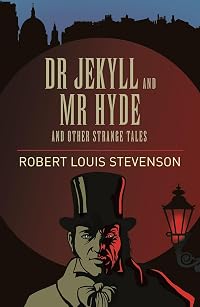
Dr Jekyll and Mr Hyde (Arcturus Classics)
by Robert Louis Stevenson
On This Page
Description
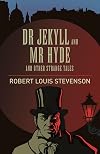
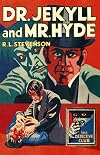
The latest in a new series of classic detective stories from the vaults of HarperCollins is a reissue of one of literature's most audacious and thought-provoking novels of murder and intrigue, in hardback with its 1929 cover design and a brand new introduction. "The Detective Story Club", launched by Collins in 1929, was a clearinghouse for the best and most ingenious crime stories of the age, chosen by a select committee of experts. Now, almost 90 years later, these books are the classics show more of the Golden Age, republished at last with the same popular cover designs that appealed to their original readers. Originally published in 1886 as "Strange Case of Dr. Jekyll and Mr. Hyde", Robert Louis Stevenson's book had been propelled to massive success following a favorable review in The Times, and by 1901 had sold a quarter of a million copies. This is how the Detective Club described the book: 'In addition to being one of the most amazing crime stories ever written, "Dr. Jekyll and Mr. Hyde" is probably the most remarkable of all the writings of Robert Louis Stevenson. It would be unfair to the reader to give away the secret of this thriller. Suffice it to say that every page grips and the unforgettable portrait of a mast criminal takes shape until the sensational climax is reached, a climax of dramatic intensity, without equal in the realm of detective fiction. If one wished to append a moral to this crime fantasy it might well be this: "The self you choose to-day, and not the self you chose yesterday, is the fate of to-morrow."' This new printing includes a brand new introduction by classic horror story expert, Richard Dalby. show lessTags
Recommendations





















Member Reviews
Como todo buen occidental, conozco muy bien el ahora mito del Dr. Jekyll y el Sr. Hyde: un monstruo humano capaz de desdoblarse en dos personalidades opuestas, el villano y el héroe. Por eso, el suspenso que Stevenson maneja (con indiscutible maestría) no dio su efecto deseado en mí: ya sabía el misterio de antemano.
Sin embargo, soy capaz de maravillarme de la calidad narrativa del autor, casi perfecta, y la profunda reflexión sobre qué significa ser humano.
Sin embargo, soy capaz de maravillarme de la calidad narrativa del autor, casi perfecta, y la profunda reflexión sobre qué significa ser humano.
Everyone has heard of this book, but I don't know the way in which the story was told. This edition has interesting material on contemporary views about a duality between good and evil.
Rating: 5 stars
Ratings
Members
- Recently Added By
Author Information

2,791+ Works 139,133 Members
Novelist, poet, and essayist Robert Louis Stevenson was born in Edinburgh, Scotland. A sickly child, Stevenson was an invalid for part of his childhood and remained in ill health throughout his life. He began studying engineering at Edinburgh University but soon switched to law. His true inclination, however, was for writing. For several years show more after completing his studies, Stevenson traveled on the Continent, gathering ideas for his writing. His Inland Voyage (1878) and Travels with a Donkey (1878) describe some of his experiences there. A variety of essays and short stories followed, most of which were published in magazines. It was with the publication of Treasure Island in 1883, however, that Stevenson achieved wide recognition and fame. This was followed by his most successful adventure story, Kidnapped, which appeared in 1886. With stories such as Treasure Island and Kidnapped, Stevenson revived Daniel Defoe's novel of romantic adventure, adding to it psychological analysis. While these stories and others, such as David Balfour and The Master of Ballantrae (1889), are stories of adventure, they are at the same time fine studies of character. The Master of Ballantrae, in particular, is a study of evil character, and this study is taken even further in The Strange Case of Dr. Jekyll and Mr. Hyde (1886). In 1887 Stevenson and his wife, Fanny, went to the United States, first to the health spas of Saranac Lake, New York, and then on to the West Coast. From there they set out for the South Seas in 1889. Except for one trip to Sidney, Australia, Stevenson spent the remainder of his life on the island of Samoa with his devoted wife and stepson. While there he wrote The Wrecker (1892), Island Nights Entertainments (1893), and Catriona (1893), a sequel to Kidnapped. He also worked on St. Ives and The Weir of Hermiston, which many consider to be his masterpiece. He died suddenly of apoplexy, leaving both of these works unfinished. Both were published posthumously; St. Ives was completed by Sir Arthur Quiller-Couch, and The Weir of Hermiston was published unfinished. Stevenson was buried on Samoa, an island he had come to love very much. Although Stevenson's novels are perhaps more accomplished, his short stories are also vivid and memorable. All show his power of invention, his command of the macabre and the eerie, and the psychological depth of his characterization. (Bowker Author Biography) show less
Series
Belongs to Publisher Series
The Folio Society ((12) 1948)
Work Relationships
Common Knowledge
- Original publication date
- 1886
- People/Characters
- Henry Jekyll; Edward Hyde
- Important places
- London, England, UK
- Important events
- Victorian Era
- Disambiguation notice
- This edition includes substantial additional material in the form of essays and background information (over half the pages of the book). Please do not combine with the original text.
Classifications
Statistics
- Members
- 434
- Popularity
- 70,625
- Reviews
- 3
- Rating
- (3.79)
- Languages
- English, Italian, Portuguese, Spanish
- Media
- Paper, Audiobook, Ebook
- ISBNs
- 15
- ASINs
- 5