On This Page
Description
Fantasy. Fiction. Literature. Thriller. HTML:A mysterious woman awakens in the heart of a dormant volcano. She comes forth into a brutal ancient world transformed by genocidal pestilence, fierce beauty, and cultural devastation. She has no memory of herself, and she could be anyone—mortal woman, demoness lover, last living heir to a long-gone race, or a goddess of destruction. Compelled by the terrifying Karrakaz to search for the mysterious Jade that is the answer to her secret self, she show more embarks on a journey of timeless wonder.Rediscover this realm of brilliant cruel beauty and seductive immortal ruins, of savage war and grand conquest, of falling stars and silver gods.
This 40th anniversary edition of legendary fantastist Tanith Lee's debut novel includes its original introduction by Marion Zimmer Bradley. show less
Tags
Recommendations














Member Reviews
An amazing first full length novel. Beautifully written in that poetic verbose prose I love so much, with world building that hints at complexity without getting bogged in details. A strong heroine, flawed and seeking. 4 stars because to my internet addled brain, it was too long.
The Birthgrave is a mixed bag for me as a reader and a revelation as a wannabe writer. I recommend the book to anyone that enjoys fantasy and I guess "darker" tales. It is a visit to an exciting world see through the eyes of a compelling protagonist. Lee has a way of pulling you into the action right from the start. The story seems to bring Lee as a writer into problems that she can't really solve without forcing characters into massive confessional bouts of exposition that are jarring in just how uncalled for and unearned they are. This might be a source of criticisms of the book that her protagonist is too passive. But these problems are not enough to detract from Lee's prose and her vision of a new world and her way of presenting it show more to us through the eyes of a character who is very different than us as humans.
Favorite aspects of the book for me as a reader are: Lee's ability to write amazing sentences, the quick pacing (with one caveat mentioned below under my issues with the book), the way Lee puts us into the world and the cultures we encounter along the way, her unflinching presentation of this world's brutality, Lee's ability to speak in the voice of a character who is not necessarily human with a sense of her own super-humanity, and the flaws in her characters.
Lee has a way with sentences. I get the sense that she really enjoys a good sentence, even if it doesn't really make sense. There were a few sentences that I really didn't understand what she was saying. That could well be on me, not her. Her flair for the great sentence contributes to the books great pacing and to her ability to create vivid dynamic images.
Lee creates a brutal world filled with flawed creatures, Her protagonist fits in well. Lee also drags you through this world's mud. You feel the grit and hardships, the costumes and the pomp, the petty rivalries, the vindictiveness and the ambitions of the characters. The book is filled with action, and Lee gets to it and through it quickly and clearly.
Least favorite aspects of the book for me as a reader are: the instances of unforced exposition, the rushed ending, and her protagonist's passivity at the end. The prose is so strong, and the world is presented in such a compelling manner, that these weaknesses are frustrating but not deal-breakers at all for me. I also think some aspects of my problems with the book are more reflections of the time it was written in than reflections on the book.
By unforced exposition I mean instances where a character will just explain major parts of the story for no good reason. In 2 major instances of it, the exposition of other characters solves major problems for the protagonist. That her unearned gains move her along on her journey or on her character arc doesn't really bother me so much. It's a cruel world, and many wins and losses in this world are completely unearned and capriciously unfair. But these episodes of unforced exposition are one the level of Dr. Evil explaining everything to Austin Powers and then walking away trusting that Powers will be killed by an overly complicated killing contraption, and on the level of meeting a therapist on a train ride and having all your dysfunctions accurately assessed for you through a casual conversation along your commute. This creates another problem in that the ending feels just very rushed. It could have been the most interesting part of the book. For me it starts out that way, and the qualities that Lee excels in are on full display as the book sets you up for the ending. But it feels like the author doesn't have time to really dig deep into it and enjoy writing this part of the journey.
Her protagonist has been called too passive by many. I think this is unfair to the protagonist. Instead I think Lee created problems for her protagonist that Lee as a writer could not figure out how to solve, and she wrote solutions that were handed to the protagonist by other characters by means of exposition. The protagonist wasn't passive, the solutions were. If she didn't solve the problems in this manner, who knows: we might never have gotten the book from her. I'd rather a finished book than a perfect idea.
Another aspect of her protagonist's so-called passivity might be a reflection of the times it was written in, and maybe even a critique of our world as it is even today. The Birthgrave presents a world filled with violence against women. Women are violently forced into a place of subservience. It is a world absent of love. Sex is nearly always violently taken quickly instead of shared passionately. Women are viewed with disdain, regardless of their capabilities. For women to be anything other than passive second fiddles in this world is nearly impossible. This is not the fault of the character. Nor is it the fault of the writer. How much if this passivity in the face of violence really a damnation of our world and our society? How much of the passivity is a coping mechanism for the character, and how much of it was exactly what the writer saw all around her? Whose passivity is at fault here: the fictional character's, or our own as a society? The book has forced me to think about these issues in ways I hadn't, though I thought I had.
Favorite aspects of the book for me as a wannabe writer are the status relationship between the reader and the narrator, Lee's powerful sentences, her ability to convey a harsh world so unflinchingly, and the chance to see Lee's writing at the start of her career in the fantasy/sci-fi genre.
A problem I've had in writing is creating likable characters when they shouldn't be. Lee inspires us drop such niceties and just write their truth. Lee does this, I think, by separating her narrator/protagonist from her self as writer, and allowing us as readers to be higher status in a manner of speaking than her characters. We quickly catch on long before the narrator when we see her protagonist making a mistake. At the end, we can take a step back and maybe realize questions the protagonist thinks were answered were only at best half answered, and her story is not necessarily as finished as she thinks.
Another thing I like about the book as a wannabe writer is that it gives me pause to think about how to solve the writing problems that were solved in the book by exposition. I've thought about how her protagonist could have discovered the information she was freely handed by other characters for no other real reason than to move the story along to the next phase of it. I look forward to seen how Lee evolves as a writer and how she deals with similar problems in her later works. show less
Favorite aspects of the book for me as a reader are: Lee's ability to write amazing sentences, the quick pacing (with one caveat mentioned below under my issues with the book), the way Lee puts us into the world and the cultures we encounter along the way, her unflinching presentation of this world's brutality, Lee's ability to speak in the voice of a character who is not necessarily human with a sense of her own super-humanity, and the flaws in her characters.
Lee has a way with sentences. I get the sense that she really enjoys a good sentence, even if it doesn't really make sense. There were a few sentences that I really didn't understand what she was saying. That could well be on me, not her. Her flair for the great sentence contributes to the books great pacing and to her ability to create vivid dynamic images.
Lee creates a brutal world filled with flawed creatures, Her protagonist fits in well. Lee also drags you through this world's mud. You feel the grit and hardships, the costumes and the pomp, the petty rivalries, the vindictiveness and the ambitions of the characters. The book is filled with action, and Lee gets to it and through it quickly and clearly.
Least favorite aspects of the book for me as a reader are: the instances of unforced exposition, the rushed ending, and her protagonist's passivity at the end. The prose is so strong, and the world is presented in such a compelling manner, that these weaknesses are frustrating but not deal-breakers at all for me. I also think some aspects of my problems with the book are more reflections of the time it was written in than reflections on the book.
By unforced exposition I mean instances where a character will just explain major parts of the story for no good reason. In 2 major instances of it, the exposition of other characters solves major problems for the protagonist. That her unearned gains move her along on her journey or on her character arc doesn't really bother me so much. It's a cruel world, and many wins and losses in this world are completely unearned and capriciously unfair. But these episodes of unforced exposition are one the level of Dr. Evil explaining everything to Austin Powers and then walking away trusting that Powers will be killed by an overly complicated killing contraption, and on the level of meeting a therapist on a train ride and having all your dysfunctions accurately assessed for you through a casual conversation along your commute. This creates another problem in that the ending feels just very rushed. It could have been the most interesting part of the book. For me it starts out that way, and the qualities that Lee excels in are on full display as the book sets you up for the ending. But it feels like the author doesn't have time to really dig deep into it and enjoy writing this part of the journey.
Her protagonist has been called too passive by many. I think this is unfair to the protagonist. Instead I think Lee created problems for her protagonist that Lee as a writer could not figure out how to solve, and she wrote solutions that were handed to the protagonist by other characters by means of exposition. The protagonist wasn't passive, the solutions were. If she didn't solve the problems in this manner, who knows: we might never have gotten the book from her. I'd rather a finished book than a perfect idea.
Another aspect of her protagonist's so-called passivity might be a reflection of the times it was written in, and maybe even a critique of our world as it is even today. The Birthgrave presents a world filled with violence against women. Women are violently forced into a place of subservience. It is a world absent of love. Sex is nearly always violently taken quickly instead of shared passionately. Women are viewed with disdain, regardless of their capabilities. For women to be anything other than passive second fiddles in this world is nearly impossible. This is not the fault of the character. Nor is it the fault of the writer. How much if this passivity in the face of violence really a damnation of our world and our society? How much of the passivity is a coping mechanism for the character, and how much of it was exactly what the writer saw all around her? Whose passivity is at fault here: the fictional character's, or our own as a society? The book has forced me to think about these issues in ways I hadn't, though I thought I had.
Favorite aspects of the book for me as a wannabe writer are the status relationship between the reader and the narrator, Lee's powerful sentences, her ability to convey a harsh world so unflinchingly, and the chance to see Lee's writing at the start of her career in the fantasy/sci-fi genre.
A problem I've had in writing is creating likable characters when they shouldn't be. Lee inspires us drop such niceties and just write their truth. Lee does this, I think, by separating her narrator/protagonist from her self as writer, and allowing us as readers to be higher status in a manner of speaking than her characters. We quickly catch on long before the narrator when we see her protagonist making a mistake. At the end, we can take a step back and maybe realize questions the protagonist thinks were answered were only at best half answered, and her story is not necessarily as finished as she thinks.
Another thing I like about the book as a wannabe writer is that it gives me pause to think about how to solve the writing problems that were solved in the book by exposition. I've thought about how her protagonist could have discovered the information she was freely handed by other characters for no other real reason than to move the story along to the next phase of it. I look forward to seen how Lee evolves as a writer and how she deals with similar problems in her later works. show less
The Birthgrave was Tanith Lee's first published novel for adult readers, and the first novel of hers that I've read. The Publishers Weekly review excerpt in the jacket copy stresses its size, and compares the protagonist to Robert E. Howard's Conan. But it's not such a very big book by today's fantasy standards. At just a little over 400 pages, it's fairly modest among the doorstop novels the genre has come to produce.
The acute storytelling might justify the comparison to Conan, but the central character actually couldn't be more dissimilar. A much closer comparison would be Moorcock's Elric, who is in many ways a schematic anti-Conan. Lee takes that reversal one step further with the change of gender. For style, pacing, and mood, I show more found myself more reminded of Gene Wolfe's multi-volume fantasies -- but it appears that Tanith Lee got there first, so I can wonder if she influenced Wolfe.
The protagonist is a nameless survivor of her own cruel, sorcery-wielding race, who adopts different identities in the course of her interactions with humanity. She is obscurely cursed, and brings misery and death to her casual and intimate contacts alike. There is an allegory here, for those who want to read on that level, made especially plain in the anagnorisis of the final twenty pages. (Feuerbachian philosophy, Freudianism, and feminism can each be useful to interpret the message of the story.)
There are a number of passages of hallucinatory vividness, and I found the entire novel quite engaging. The ending is almost too tidy, and I can see why some readers resented its deus ex machina qualities, along with what might seem like an abrupt shift in genre. But at the same time as it imposes that dislocation, the book returns to the business of its beginning in a way that makes it whole. show less
The acute storytelling might justify the comparison to Conan, but the central character actually couldn't be more dissimilar. A much closer comparison would be Moorcock's Elric, who is in many ways a schematic anti-Conan. Lee takes that reversal one step further with the change of gender. For style, pacing, and mood, I show more found myself more reminded of Gene Wolfe's multi-volume fantasies -- but it appears that Tanith Lee got there first, so I can wonder if she influenced Wolfe.
The protagonist is a nameless survivor of her own cruel, sorcery-wielding race, who adopts different identities in the course of her interactions with humanity. She is obscurely cursed, and brings misery and death to her casual and intimate contacts alike. There is an allegory here, for those who want to read on that level, made especially plain in the anagnorisis of the final twenty pages. (Feuerbachian philosophy, Freudianism, and feminism can each be useful to interpret the message of the story.)
There are a number of passages of hallucinatory vividness, and I found the entire novel quite engaging. The ending is almost too tidy, and I can see why some readers resented its deus ex machina qualities, along with what might seem like an abrupt shift in genre. But at the same time as it imposes that dislocation, the book returns to the business of its beginning in a way that makes it whole. show less
A decadent fantasy tale of personal trials within a grand setting.
The nameless main character, who emerges from a dreamless sleep fully grown but without memories, makes her dissociated way through a largely barbaric world dotted with the relics of a once-great civilization. She moves from culture to culture, adopts various roles and professions, and plays at interacting with people she really has little interest in. Over the course of her travels patterns begin to emerge and take shape, and she slowly discovers who she is, and what the extent is of her superhuman powers.
For large parts of the book the process of self-discovery blends into the background, largely forgotten as the main character gets caught up in the events that happen show more around her, making other people's motivations temporarily her own. She is a passive character throughout, allowing herself to be carried along by the wills of others, usually a domineering male. This is the background against which the few active choices that she does make stand out and form recurring patterns. As a result, much of the book is contemplative in nature, with the main character trying to make sense of the world around her and her position in it -- or perhaps outside it. Fortunately, Lee inserts well-timed bursts of action that alternate pleasantly with the more quiet chapters. Through it all, the main character becomes increasingly aware of how utterly detached she is from the vividly drawn cultures around her: she is believable as a character who is not quite human, but who slowly is learning to fend for herself.
What I like best about this book is how well this meandering purposeless-yet-goal-oriented storyline blends with Lee's writing style. Both mingle the lush and the decadent with the sparse, reinforcing and echoing each other, and that makes for a wonderfully evocative reading experience. I particularly enjoy the atmosphere of living in the shadow of inimitable sophistication that permeates the sections set in the few remaining pockets of reflected civilization.
The thing I dislike most is how rushed the ending feels, in that the pacing suddenly shifts a couple of gears: in the span of ten pages a convenient explanation is provided for all the hints and the patterns that the book has slowly been building up to. This is at least partially intentional: the main character has reached a point where she can't progress without an external catalyst; but I can't help but feel that the transformation is unpleasantly jarring -- especially because Lee essentially has to shift genre to accomplish it. show less
The nameless main character, who emerges from a dreamless sleep fully grown but without memories, makes her dissociated way through a largely barbaric world dotted with the relics of a once-great civilization. She moves from culture to culture, adopts various roles and professions, and plays at interacting with people she really has little interest in. Over the course of her travels patterns begin to emerge and take shape, and she slowly discovers who she is, and what the extent is of her superhuman powers.
For large parts of the book the process of self-discovery blends into the background, largely forgotten as the main character gets caught up in the events that happen show more around her, making other people's motivations temporarily her own. She is a passive character throughout, allowing herself to be carried along by the wills of others, usually a domineering male. This is the background against which the few active choices that she does make stand out and form recurring patterns. As a result, much of the book is contemplative in nature, with the main character trying to make sense of the world around her and her position in it -- or perhaps outside it. Fortunately, Lee inserts well-timed bursts of action that alternate pleasantly with the more quiet chapters. Through it all, the main character becomes increasingly aware of how utterly detached she is from the vividly drawn cultures around her: she is believable as a character who is not quite human, but who slowly is learning to fend for herself.
What I like best about this book is how well this meandering purposeless-yet-goal-oriented storyline blends with Lee's writing style. Both mingle the lush and the decadent with the sparse, reinforcing and echoing each other, and that makes for a wonderfully evocative reading experience. I particularly enjoy the atmosphere of living in the shadow of inimitable sophistication that permeates the sections set in the few remaining pockets of reflected civilization.
The thing I dislike most is how rushed the ending feels, in that the pacing suddenly shifts a couple of gears: in the span of ten pages a convenient explanation is provided for all the hints and the patterns that the book has slowly been building up to. This is at least partially intentional: the main character has reached a point where she can't progress without an external catalyst; but I can't help but feel that the transformation is unpleasantly jarring -- especially because Lee essentially has to shift genre to accomplish it. show less
A woman wakes deep beneath a mountain with no clue who, or even what, she is. She discovers a strange being who tells her she's the last descendant of a god-like race and if she chooses to live out her life and leave the mountain she'll be cursed. She decides to leave and begins her new life running from an erupting volcano. Arriving in the remains of a small town, she's hailed as a local goddess and begins her journey through the land. Goddess is just one of the roles she finds herself in- witch, slave, partner and mother being some of the others-while she tries to discover who she is and wants to be.
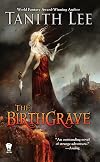
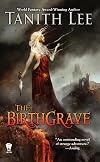
As usual, Tanith created a character who is complex and emotional. Our main character, known in parts as Uastis, annoyed and entertained show more me. As she learned of the powers she possessed and struggled through various relationships, I varied from wanting to slap her to wanting to hug her. When she was being a badass, chariot-riding warrior-babe I was rooting for her to dominate the world. There are a lot of classic fantasy elements in this book, enriched by Tanith's writing style and spiced up with surprising sci-fi elements towards the end. It's a somewhat heavy read-not something you can fly through in a day or two-but worthwhile for fantasy fans. I also have to mention the lovely cover art by Ken Kelly, which captures one of my favorite parts of the book and is everything you could want in a vintage fantasy book cover. It's my favorite cover of the three. show less
As usual, Tanith created a character who is complex and emotional. Our main character, known in parts as Uastis, annoyed and entertained show more me. As she learned of the powers she possessed and struggled through various relationships, I varied from wanting to slap her to wanting to hug her. When she was being a badass, chariot-riding warrior-babe I was rooting for her to dominate the world. There are a lot of classic fantasy elements in this book, enriched by Tanith's writing style and spiced up with surprising sci-fi elements towards the end. It's a somewhat heavy read-not something you can fly through in a day or two-but worthwhile for fantasy fans. I also have to mention the lovely cover art by Ken Kelly, which captures one of my favorite parts of the book and is everything you could want in a vintage fantasy book cover. It's my favorite cover of the three. show less
A woman wakes deep beneath a mountain with no clue who, or even what, she is. She discovers a strange being who tells her she's the last descendant of a god-like race and if she chooses to live out her life and leave the mountain she'll be cursed. She decides to leave and begins her new life running from an erupting volcano. Arriving in the remains of a small town, she's hailed as a local goddess and begins her journey through the land. Goddess is just one of the roles she finds herself in- witch, slave, partner and mother being some of the others-while she tries to discover who she is and wants to be.
As usual, Tanith created a character who is complex and emotional. Our main character, known in parts as Uastis, annoyed and entertained show more me. As she learned of the powers she possessed and struggled through various relationships, I varied from wanting to slap her to wanting to hug her. When she was being a badass, chariot-riding warrior-babe I was rooting for her to dominate the world. There are a lot of classic fantasy elements in this book, enriched by Tanith's writing style and spiced up with surprising sci-fi elements towards the end. It's a somewhat heavy read-not something you can fly through in a day or two-but worthwhile for fantasy fans. I also have to mention the lovely cover art by Ken Kelly, which captures one of my favorite parts of the book and is everything you could want in a vintage fantasy book cover. It's my favorite cover of the three. show less
As usual, Tanith created a character who is complex and emotional. Our main character, known in parts as Uastis, annoyed and entertained show more me. As she learned of the powers she possessed and struggled through various relationships, I varied from wanting to slap her to wanting to hug her. When she was being a badass, chariot-riding warrior-babe I was rooting for her to dominate the world. There are a lot of classic fantasy elements in this book, enriched by Tanith's writing style and spiced up with surprising sci-fi elements towards the end. It's a somewhat heavy read-not something you can fly through in a day or two-but worthwhile for fantasy fans. I also have to mention the lovely cover art by Ken Kelly, which captures one of my favorite parts of the book and is everything you could want in a vintage fantasy book cover. It's my favorite cover of the three. show less
The Birthgrave by Tanith Lee
S.E. Lindberg rating: 4 of 5 stars
Haunting Release: The Birthgrave is a coming of age novel of (and by) a female goddess. Tanith Lee’s debut novel is adult oriented, dark fantasy. This one is epic, dosed with poetic horror and battle, and features lots of risky writing (entertaining). The 2015 reprint comes with a haunting introduction written in January, just months before her May death coinciding with the paperback release in the US.
The female narrator quests to free her body/soul from a curse; although suffering from amnesia as she awakens from an active volcano, she learns that she is a goddess among humans… and she knows her ancestors are all mysteriously gone. She is alone, powerful, and yet show more ignorant and weak. There is plenty of rough sexual encounters, not gratuitous but written more dispassionately than romantically – and seems to toy with the stereotypes of the genre. Marion Zimmer Bradley’s introduction is short yet insightful and touches on this interplay:
Most women in science fiction write from a man’s viewpoint. In most human societies, adventures have been structured for men. Women who wish to write of adventure have had to accept, willy-nilly, this limitation. There seems an unspoken assumption in science fiction that science fiction is usually read by men, or, if it is read by women, it is read by those women who are bored with feminine concerns and wish to escape into the world of fantasy where they can change their internal viewpoint and gender and share the adventurous world of men…
…Here is a woman writer whose protagonist is a woman—yet from the very first she takes her destiny in her own hands, neither slave nor chattel. Her adventures are her own. She is not dragged into them by the men in her life, nor served up to the victor as a sexual reward after the battle. For the first time since C. L. Moore’s warrior-woman, Jirel of Joiry, we see the woman-adventurer in her own right. But this book is not an enormous allegory of women’s liberation, nor an elaborate piece of special pleading. It’s just a big delightful feast of excitement and adventure—Introduction by Marion Zimmer Bradley
Expect Ambitious, Risky Writing that Works Most of the Time: This is a first-person-perspective for 450pages! The content is full of adult psychology and complex mystery, written by a 22yr old! And it is her debut novel! How is that for pioneering? Most of the time, the risk taking pays off. The perspective works as it should, and it was easy to forget (even 400 pages in) that I still did not know “her” proper name---but by then I knew “her” so well a name was not needed. She unfolds a mystery with perfect pacing with periodic ghostly encounters and déjà vu moments. There is plenty of commentary about gender roles across barbaric and civilized cultures, though it steered away from being political commentary thankfully. Tanith Lee’s gift for poetic language is stunning. The book is saturated with efficient characterizations, like the two below:
If I broke into a run to escape them, would they too run to keep up? My eyes grew strange, and everywhere I looked, I seemed to see the glitter of the Knife of Easy Dying. Die, and let them follow me to death if they would. But I was still too new to life to let it go.
…Darak had called them to some council then, on the low hill beyond the houses. Yes, that would be it. A little king on a little throne, lording it because his subjects were smaller than even his smallness.
Avoiding spoilers, I must still note that there is a sudden encounter very late in the novel that seems to shift the genre out of its dark-fantasy-epic mold. Given the 1975 wording and delivery, it would be easy to over emphasis this section. Diehard genre readers feeling sucker-punched may have to sigh or trust my review that ultimately the milieu is consistent. In short order, the story rights its trajectory in a consistent manner.
I really enjoyed reading this experiential novel and am saddened to learn of Tanith Lee’s death. Thankfully, she was a prolific writer and wrote a large library of weird, dark fantasy… which I look forward to delving into. The Birthgrave begins a trilogy; the sequel is Vazkor, Son of Vazkor, and the finale is Quest for the White Witch. The releases come with new covers from artist Bastien Lecouffe Deharme. show less
S.E. Lindberg rating: 4 of 5 stars
Haunting Release: The Birthgrave is a coming of age novel of (and by) a female goddess. Tanith Lee’s debut novel is adult oriented, dark fantasy. This one is epic, dosed with poetic horror and battle, and features lots of risky writing (entertaining). The 2015 reprint comes with a haunting introduction written in January, just months before her May death coinciding with the paperback release in the US.
The female narrator quests to free her body/soul from a curse; although suffering from amnesia as she awakens from an active volcano, she learns that she is a goddess among humans… and she knows her ancestors are all mysteriously gone. She is alone, powerful, and yet show more ignorant and weak. There is plenty of rough sexual encounters, not gratuitous but written more dispassionately than romantically – and seems to toy with the stereotypes of the genre. Marion Zimmer Bradley’s introduction is short yet insightful and touches on this interplay:
Most women in science fiction write from a man’s viewpoint. In most human societies, adventures have been structured for men. Women who wish to write of adventure have had to accept, willy-nilly, this limitation. There seems an unspoken assumption in science fiction that science fiction is usually read by men, or, if it is read by women, it is read by those women who are bored with feminine concerns and wish to escape into the world of fantasy where they can change their internal viewpoint and gender and share the adventurous world of men…
…Here is a woman writer whose protagonist is a woman—yet from the very first she takes her destiny in her own hands, neither slave nor chattel. Her adventures are her own. She is not dragged into them by the men in her life, nor served up to the victor as a sexual reward after the battle. For the first time since C. L. Moore’s warrior-woman, Jirel of Joiry, we see the woman-adventurer in her own right. But this book is not an enormous allegory of women’s liberation, nor an elaborate piece of special pleading. It’s just a big delightful feast of excitement and adventure—Introduction by Marion Zimmer Bradley
Expect Ambitious, Risky Writing that Works Most of the Time: This is a first-person-perspective for 450pages! The content is full of adult psychology and complex mystery, written by a 22yr old! And it is her debut novel! How is that for pioneering? Most of the time, the risk taking pays off. The perspective works as it should, and it was easy to forget (even 400 pages in) that I still did not know “her” proper name---but by then I knew “her” so well a name was not needed. She unfolds a mystery with perfect pacing with periodic ghostly encounters and déjà vu moments. There is plenty of commentary about gender roles across barbaric and civilized cultures, though it steered away from being political commentary thankfully. Tanith Lee’s gift for poetic language is stunning. The book is saturated with efficient characterizations, like the two below:
If I broke into a run to escape them, would they too run to keep up? My eyes grew strange, and everywhere I looked, I seemed to see the glitter of the Knife of Easy Dying. Die, and let them follow me to death if they would. But I was still too new to life to let it go.
…Darak had called them to some council then, on the low hill beyond the houses. Yes, that would be it. A little king on a little throne, lording it because his subjects were smaller than even his smallness.
Avoiding spoilers, I must still note that there is a sudden encounter very late in the novel that seems to shift the genre out of its dark-fantasy-epic mold. Given the 1975 wording and delivery, it would be easy to over emphasis this section. Diehard genre readers feeling sucker-punched may have to sigh or trust my review that ultimately the milieu is consistent. In short order, the story rights its trajectory in a consistent manner.
I really enjoyed reading this experiential novel and am saddened to learn of Tanith Lee’s death. Thankfully, she was a prolific writer and wrote a large library of weird, dark fantasy… which I look forward to delving into. The Birthgrave begins a trilogy; the sequel is Vazkor, Son of Vazkor, and the finale is Quest for the White Witch. The releases come with new covers from artist Bastien Lecouffe Deharme. show less
Members
- Recently Added By
Lists

Witchy Fiction
253 works; 126 members
Author Information

322+ Works 29,844 Members
Tanith Lee, September 19, 1947 - May 24, 2015 Tanith Lee was born on September 19, 1947 in London, England, the daughter of ballroom dancers. She attended various primary schools and had a variety of jobs, from file clerk and assistant librarian to shop assistant and waitress. Lee attended an art college for one year, but felt she would be better show more writing her ideas than painting them. Her first professional sale was "Eustace," a 90 page vignette which appeared in The Ninth Pan Book of Horror Stories in 1968. While Lee was working as an assistant librarian, she wrote a children's story that was accepted for publication. Others of her stories were also bought but never published. In 1971, Macmillan published "The Dragon Hoard," another children's book, which was followed by "Animal Castle" and "Princess Hynchatti and Other Stories" in 1972. Lee was looking for a British publisher for her book "The Birthgrave," but was denied at every House she went. She then wrote to American publisher DAW, known for it's fantasy and horror selections, who immediately accepted her manuscript and published the book in 1975. Thus began a partnership between the two that lasted till 1989 and resulted in 28 books. After the publication of her third book by DAW, Lee quit her job and became a full-time freelance writer. Lee has been nominated for the World Fantasy Award, the August Derleth Award and the Nebula. She has had more than 40 novels published, along with over 200 short stories. Lee died peacefully in her sleep after a long illness on May 24, 2015. (Bowker Author Biography) show less
Some Editions
Awards and Honors
Awards
Series

Belongs to Publisher Series
Meulenhoff Fantasy (208)
DAW Book Collectors (154 and 463)
Work Relationships
Is contained in
Common Knowledge
- Canonical title*
- Im Herzen des Vulkans
- Original title
- The Birthgrave
- Original publication date
- 1975
- Epigraph*
- geen
- Dedication*
- geen
- First words
- To wake, and not to know where, or who you are, not even to know what you are -- whether a thing with legs and arms, or a beast, or a brain in the hull of a great fish-that is a strange awakening. But after a while, uncurling... (show all) in the darkness, I began to discover myself, and I was a woman.
- Quotations
- "I have used my life," he said, "and I shall not stop now. I am not a wanderer. I know my road." He sat down in the chair I had refused, and looked at me. His face was quite blank, completely closed, his eyes a steady bar of ... (show all)darkness that seemed to have no break. "Even you, my sister, see your life as a succession of units, a river, in which the men and women you meet are like islands. But you're wrong. Your vision is confined in the narrowness you have made. We are the sum of our achievements, nothing more and nothing less. The mountain road which led us here was built by a dead people none of us would remember otherwise. What we create is the only part of us which can survive, or has the right to. Man is nothing, except to other men."
- Last words
- (Click to show. Warning: May contain spoilers.)A hot breeze burned on my naked face, lifted strands of my hair.
I am alone. No one stands beside me, I have no Dark Prince to ride in my chariot, to walk with me, to hold me to him. I have no one. And yet. I have myself at last, I have myself. And to me, at this time, it seems enough. It seems more, much more, than enough. - Blurbers
- Hutchinson, Don
- Original language
- English
*Some information comes from Common Knowledge in other languages. Click "Edit" for more information.
Classifications
Statistics
- Members
- 789
- Popularity
- 35,276
- Reviews
- 23
- Rating
- (3.63)
- Languages
- 6 — Dutch, English, Finnish, French, German, Italian
- Media
- Paper, Ebook
- ISBNs
- 20
- ASINs
- 15