On This Page
Description
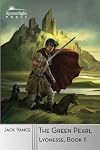
In this second volume of the Lyonesse Trilogy, The Green Pearl, King Aillas of Troicinet defends the peace of the Elder Isles against both the Ska marauders who once enslaved him and the wicked King Casmir. While organizing the unruly barons in the frontiers of his land, Aillas goes out of his way to capture the lovely Ska noblewoman who once stung him with her disregard. When he gets separated from his men, his dream of forcing the lady's recognition becomes the toil of dragging an show more obstreperous captive across lands governed by Casmir's henchmen. Meanwhile, the world of magic has gone on the move. The concentrated malice of the witch Desmëi has manifested as a green pearl, breeding lust and envy and death; and a sorcerer in Casmir's employ abducts the princess Glyneth, in a bid to draw Aillas and friends on a hopeless rescue mission across a bizarre and deadly alternate world. show lessTags
Recommendations


















Member Reviews
Energetic and onrushing second volume in Vance's brilliant fantasy trilogy. less set-up this time, more incident and plot and occasional detours and wanderings as King Aillas consolidates his hold over South Ulfland and King Casmir plots and schemes against him and the Ska gather at his borders and magicians conspire to create mischief. It's cracking stuff full of weird characters and battles and chases and captures and escapes all written in a grand ironic style.
ORIGINALLY POSTED AT Fantasy Literature.
The Green Pearl is another engrossing adventure in Jack Vance's whimsical world. This installment of Lyonesse mainly follows Aillas, now King of Troicinet, as he seeks revenge on the Ska, tests his infatuation with Tatzel, deals with a couple of traitors, and tries to thwart the ambitions of King Casmir of Lyonesse who, unbeknownst to Casmir, is Aillas's son's grandfather. We also spend quite a bit of time with Shimrod, Glyneth, Melancthe, and some new and excellent characters such as the duplicitous innkeeper Dildahl, the dogged but distractible Visbhume, and The Notable and Singular Zuck (Dealer in Objects Unique Under the Firmament).
There are two main reasons that I love Lyonesse. First, I show more admire Vance's florid imagination. His world and its creatures are unique and, while not as bizarre as Lewis Carroll's, there's plenty of weirdness. Second, I love Jack Vance's odd but irresistible style. There's no message, no lesson, no pretensions — it's just pure fast-paced entertainment. But best of all, Vance's deliberately peculiar and droll prose makes me laugh:
And the dialog is truly humorous — so many authors try, but Vance gets it right. Just two short examples:
• The barber said politely: "Sire, I suggest that you hold your feet motionless while I am cutting your toenails."
• When the beautiful but empty-headed Melancthe tries to seduce Shimrod, he says: "My character is intensely strong, and my will is like iron; still, I see no reason to demonstrate their strength needlessly."
Again I shake my head in bewilderment that this charming trilogy can not be acquired by the usual book-obtaining methods. What a shame!
Read my other Jack Vance reviews. show less
The Green Pearl is another engrossing adventure in Jack Vance's whimsical world. This installment of Lyonesse mainly follows Aillas, now King of Troicinet, as he seeks revenge on the Ska, tests his infatuation with Tatzel, deals with a couple of traitors, and tries to thwart the ambitions of King Casmir of Lyonesse who, unbeknownst to Casmir, is Aillas's son's grandfather. We also spend quite a bit of time with Shimrod, Glyneth, Melancthe, and some new and excellent characters such as the duplicitous innkeeper Dildahl, the dogged but distractible Visbhume, and The Notable and Singular Zuck (Dealer in Objects Unique Under the Firmament).
There are two main reasons that I love Lyonesse. First, I show more admire Vance's florid imagination. His world and its creatures are unique and, while not as bizarre as Lewis Carroll's, there's plenty of weirdness. Second, I love Jack Vance's odd but irresistible style. There's no message, no lesson, no pretensions — it's just pure fast-paced entertainment. But best of all, Vance's deliberately peculiar and droll prose makes me laugh:
A crippled ex-soldier named Manting for ten years had served the county as executioner. He did his work efficiently and expunged Long Liam's life definitely enough, but in a style quite devoid of that extra element of surprise and poignancy, which distinguished the notable executioner from his staid colleague. ... [then Manting comes into possession of the Green Pearl which Long Liam had carried:] ... Thereafter, all who watched Manting declared that they had never seen the executioner's work done with more grace and attention to detail, so at times Manting and the condemned man seemed participants in a tragic drama which set every heart to throbbing; and at last, when the latch had been sprung, or the blow struck, or the torch tossed into the faggots, there was seldom a dry eye among the spectators.
And the dialog is truly humorous — so many authors try, but Vance gets it right. Just two short examples:
• The barber said politely: "Sire, I suggest that you hold your feet motionless while I am cutting your toenails."
• When the beautiful but empty-headed Melancthe tries to seduce Shimrod, he says: "My character is intensely strong, and my will is like iron; still, I see no reason to demonstrate their strength needlessly."
Again I shake my head in bewilderment that this charming trilogy can not be acquired by the usual book-obtaining methods. What a shame!
Read my other Jack Vance reviews. show less
So, I don't know if I've settled into Vance's Lyonesse works better, or if this book is way better, but I enjoyed the hell out of this book - even more than Suldrun's Garden.
In the first book, we meet most of the characters in this book. King Aillas shows up on scene, gets married, takes over a throne and finds his son Dhrun.
In this book, he consolidates his power, finds his lady love, and generally shows himself to be the awesomest king of them all, while simultaneously sticking it to his nemesis (and child's grandfather), King Casimir.
This book is another raucous high-fantasy adventure. Still taking place is a pseudo-medieval pseudo-European way. Still non-stop action and the language is still flowery, descriptive, and funny as hell.
I show more like the imagery and the imagination. Jack Vance creates a weird world, but not too weird and it's still a metric tonne of fun.
And hilarious - I laughed out loud may times during some of the descriptions and action in the book. I can't wait for the last one of the series. show less
In the first book, we meet most of the characters in this book. King Aillas shows up on scene, gets married, takes over a throne and finds his son Dhrun.
In this book, he consolidates his power, finds his lady love, and generally shows himself to be the awesomest king of them all, while simultaneously sticking it to his nemesis (and child's grandfather), King Casimir.
This book is another raucous high-fantasy adventure. Still taking place is a pseudo-medieval pseudo-European way. Still non-stop action and the language is still flowery, descriptive, and funny as hell.
I show more like the imagery and the imagination. Jack Vance creates a weird world, but not too weird and it's still a metric tonne of fun.
And hilarious - I laughed out loud may times during some of the descriptions and action in the book. I can't wait for the last one of the series. show less
So, I don't know if I've settled into Vance's Lyonesse works better, or if this book is way better, but I enjoyed the hell out of this book - even more than Suldrun's Garden.
In the first book, we meet most of the characters in this book. King Aillas shows up on scene, gets married, takes over a throne and finds his son Dhrun.
In this book, he consolidates his power, finds his lady love, and generally shows himself to be the awesomest king of them all, while simultaneously sticking it to his nemesis (and child's grandfather), King Casimir.
This book is another raucous high-fantasy adventure. Still taking place is a pseudo-medieval pseudo-European way. Still non-stop action and the language is still flowery, descriptive, and funny as hell.
I show more like the imagery and the imagination. Jack Vance creates a weird world, but not too weird and it's still a metric tonne of fun.
And hilarious - I laughed out loud may times during some of the descriptions and action in the book. I can't wait for the last one of the series. show less
In the first book, we meet most of the characters in this book. King Aillas shows up on scene, gets married, takes over a throne and finds his son Dhrun.
In this book, he consolidates his power, finds his lady love, and generally shows himself to be the awesomest king of them all, while simultaneously sticking it to his nemesis (and child's grandfather), King Casimir.
This book is another raucous high-fantasy adventure. Still taking place is a pseudo-medieval pseudo-European way. Still non-stop action and the language is still flowery, descriptive, and funny as hell.
I show more like the imagery and the imagination. Jack Vance creates a weird world, but not too weird and it's still a metric tonne of fun.
And hilarious - I laughed out loud may times during some of the descriptions and action in the book. I can't wait for the last one of the series. show less
And now that we've entered firmly into the mid-eighties Fantasy, I'm startled by just how much a giant like Vance was either influenced by or was the influencer of such notable works as many, many of the D&D compendiums. After all, hasn't he been around so much longer? Ah, but never mind that.
What we've got is not dwarves and elves in a fantastic other-realm, but a continuation of the Gaelic isles, the Elder Realm, the lost continent near Avalon, with christian priests still blackmailing, kingdoms still plotting, and parentages still not known to all the pertinent peoples.
The plots are delightful and adventuresome, when they're not political and crafty, and when they're not adventuresome, they're still magical (Ten Realms, so much so,) show more and full of confidence games, tricksters, and Fae. And even kings play these same games.
Most impressively, at least for me, is the clever and clear and pertinent retellings of old fairy tales, yet again, including the redoubtable Green Pearl that enhances greed and bad luck, various old tales of mistaken identities, and yeah, I'm looking at you, Murgen, and so many other interspersed tales that I cannot even begin to crow about, because they should all be savored and enjoyed.
This may take place hundreds of years before Arthur, but it is no less delightful or lacking in any way when it comes to the sheer weight of myth, great characters, and sheer enjoyment.
Anyone looking for some great fantasy? show less
What we've got is not dwarves and elves in a fantastic other-realm, but a continuation of the Gaelic isles, the Elder Realm, the lost continent near Avalon, with christian priests still blackmailing, kingdoms still plotting, and parentages still not known to all the pertinent peoples.
The plots are delightful and adventuresome, when they're not political and crafty, and when they're not adventuresome, they're still magical (Ten Realms, so much so,) show more and full of confidence games, tricksters, and Fae. And even kings play these same games.
Most impressively, at least for me, is the clever and clear and pertinent retellings of old fairy tales, yet again, including the redoubtable Green Pearl that enhances greed and bad luck, various old tales of mistaken identities, and yeah, I'm looking at you, Murgen, and so many other interspersed tales that I cannot even begin to crow about, because they should all be savored and enjoyed.
This may take place hundreds of years before Arthur, but it is no less delightful or lacking in any way when it comes to the sheer weight of myth, great characters, and sheer enjoyment.
Anyone looking for some great fantasy? show less
I've read this many times but only just now written a review.
The Green Pearl folows on directly from the events of Lyonesse. It has three main plots, opening with Casmir and Aillas’ spy war between Lyonesse and Troicinet. There’s Aillas’ military and statecraft adventures in North and South Ulfland with the Ska and a brief 'fairytale' journey through the northernmost reaches of North Ulfland on the edges of the Forest of Tantrevalles. The magicians, Shimrod and Murgen try to keep an eye on Tamurello, with Melancthe causing trouble in between. Both Shimrod and Aillas experience disillusion about a former erotic fancy. Finally there is the intersection of magic, spies and the kingdoms when Visbhume abducts Glyneth into Tanjecterly. show more The green pearl itself -- "a whorl of depravity" according to Murgen -- is more of a framing device for the story, and a reminder of the continuing subtle influence of magicians on the Elder Isles, despite Murgen's edict of non-interference with politics. show less
The Green Pearl folows on directly from the events of Lyonesse. It has three main plots, opening with Casmir and Aillas’ spy war between Lyonesse and Troicinet. There’s Aillas’ military and statecraft adventures in North and South Ulfland with the Ska and a brief 'fairytale' journey through the northernmost reaches of North Ulfland on the edges of the Forest of Tantrevalles. The magicians, Shimrod and Murgen try to keep an eye on Tamurello, with Melancthe causing trouble in between. Both Shimrod and Aillas experience disillusion about a former erotic fancy. Finally there is the intersection of magic, spies and the kingdoms when Visbhume abducts Glyneth into Tanjecterly. show more The green pearl itself -- "a whorl of depravity" according to Murgen -- is more of a framing device for the story, and a reminder of the continuing subtle influence of magicians on the Elder Isles, despite Murgen's edict of non-interference with politics. show less
This second volume in the series begins with a flashback which gives additional information on something already covered in book 1. It seems that the sorcerer Tamurello, who has been an opponent of the helpful sorcerer Shimrod and his patron, was behind the decision of the witch Desmei to split herself into three components: Melancthe, who seems stupefied by ennui (as Desmei was as a result of Tamurello's spell) and has already acted as his pawn against Shimrod, Carfilhot, who was known for his cruelties until he was finally defeated and executed in book 1, and a green vapour which had been breathed in by Carfilhot and was released at his death. That vapour, which is the essence of evil, went into the ocean and became a green pearl, so show more in this volume it is retrieved by a fisherman after being swallowed by a fish, and brings him and others to death and disaster.
However, the story soon leaves the tale of the pearl for some time and returns to King Aillas and his attempts to bring order to his new kingdom in South Ulfland which has been beset by the ruthless Ska invaders who had enslaved him in book 1. Also, his enemy, King Casmir who was responsible for his own daughter's misery and death, is still conspiring against Aillas and trying to discover who is the father of the girl whom he believes to be his daughter's, Suldrun's, child, but whom (as revealed in book 1) is a changeling swapped for her son Dhrun. That son, his growth accelerated by his year with the fairy folk, is now with Aillas, as is Glyneth, the friend who helped Dhrun on his search for his father. Casmir also wants to find out who Dhrun's mother was, and engages Visbhume, a minor sorcerer, a vile character who is a sexual predator of young girls, to find out. And Visbhume eventually targets Glyneth.
I was confused at the beginning where Casmir pays a state visit to Aillas - they have a temporary truce - because at the end of book 1 the villainous priest who betrayed Aillas and Suldrun actually told Casmir. He seemed incredulous, but at least I would have expected him to remember what the priest had said and wonder about it when he comes face to face with Aillas and thinks he looks familiar.
The part of the book where Visbhume kidnaps Glyneth and takes her to another world where he attempts to extort the secret from her, and to assault her, and is continually thwarted by a being sent into that world who combines the virtues of certain others plus the stalwart courage and love of Aillas, does become a bit long and drawn out. It is also a bit irritating that characters such as Glyneth remain naive and prone to falling for the ploys of those that they know are totally evil. It was more believable in book 1 when Glyneth was a child, but not when she is a grown woman and that character has already wrecked havoc.
Therefore, although this was an enjoyable read with plenty of incident, the flaws in the story mean that it balances out at a 3 star read for me. show less
However, the story soon leaves the tale of the pearl for some time and returns to King Aillas and his attempts to bring order to his new kingdom in South Ulfland which has been beset by the ruthless Ska invaders who had enslaved him in book 1. Also, his enemy, King Casmir who was responsible for his own daughter's misery and death, is still conspiring against Aillas and trying to discover who is the father of the girl whom he believes to be his daughter's, Suldrun's, child, but whom (as revealed in book 1) is a changeling swapped for her son Dhrun. That son, his growth accelerated by his year with the fairy folk, is now with Aillas, as is Glyneth, the friend who helped Dhrun on his search for his father. Casmir also wants to find out who Dhrun's mother was, and engages Visbhume, a minor sorcerer, a vile character who is a sexual predator of young girls, to find out. And Visbhume eventually targets Glyneth.
I was confused at the beginning where Casmir pays a state visit to Aillas - they have a temporary truce - because at the end of book 1 the villainous priest who betrayed Aillas and Suldrun actually told Casmir. He seemed incredulous, but at least I would have expected him to remember what the priest had said and wonder about it when he comes face to face with Aillas and thinks he looks familiar.
The part of the book where Visbhume kidnaps Glyneth and takes her to another world where he attempts to extort the secret from her, and to assault her, and is continually thwarted by a being sent into that world who combines the virtues of certain others plus the stalwart courage and love of Aillas, does become a bit long and drawn out. It is also a bit irritating that characters such as Glyneth remain naive and prone to falling for the ploys of those that they know are totally evil. It was more believable in book 1 when Glyneth was a child, but not when she is a grown woman and that character has already wrecked havoc.
Therefore, although this was an enjoyable read with plenty of incident, the flaws in the story mean that it balances out at a 3 star read for me. show less
Members
- Recently Added By
Author Information

374+ Works 34,856 Members
John Holbrook Vance (August 28, 1916 - May 26, 2013) was an American mystery, fantasy and science fiction writer. Most of his work was published under the name Jack Vance. He also wrote 11 mystery novels as John Holbrook Vance and three as Ellery Queen, and once each used pseudonyms Alan Wade, Peter Held, John van See, and Jay Kavanse. Vance won show more the World Fantasy Award for Life Achievement in 1984. The Science Fiction Hall of Fame inducted him in 2001. Among his awards for particular works were: Hugo Awards, in 1963 for The Dragon Masters, in 1967 for The Last Castle, and in 2010 for his memoir This is Me, Jack Vance!; a Nebula Award in 1966, also for The Last Castle; the Jupiter Award in 1975; the World Fantasy Award in 1990 for Lyonesse: Madouc. He also won an Edgar (the mystery equivalent of the Nebula) for the best first mystery novel in 1961 for The Man in the Cage. He died at his home in Oakland, California, on May 26, 2013, aged 96. (Bowker Author Biography) show less
Some Editions
Series

Belongs to Publisher Series
Work Relationships
Common Knowledge
- Canonical title
- The Green Pearl
- Original title
- Lyonesse II: The Green Pearl
- Original publication date
- 1985
- People/Characters*
- Aillas; Dhrun; Glyneth; Tamurello; Murgen; Shimrod (show all 12); Mélancthe; Casmir; Sollace; Umphred; Tristano; Visbhume
- Important places*
- Lyonesse, Lyonesse; Ys, Ulfland du Sud; Avalon, Dahaut; Domreis, Troicinet
- Dedication*
- Pour David Alexander Tim Underwood et Chuck Miller Kirby, Kay et Ralph John II et Norma
- First words*
- Peu après la mort d'Hippolito dont il était l'élève, Visbhume sollicita un poste similaire d'apprenti auprès du sorcier Tamurello mais essuya un refus.
- Last words*
- (Click to show. Warning: May contain spoilers.)Madouc, par la nature même des choses, est une étrange petite créature, dotée d'encore moins de patience que la tragique princesse Suldrun pour les conventions de la cour du Haidion, et le trisième épisode dans le cycle des chroniques des Isles Anciennes est : LYONESSE III : MADOUC.
- Original language
- English
- Canonical DDC/MDS
- 813.087661
*Some information comes from Common Knowledge in other languages. Click "Edit" for more information.
Classifications
- Genres
- Fantasy, Fiction and Literature
- DDC/MDS
- 813.087661 — Literature & rhetoric American literature in English American fiction in English By type Genre fiction Adventure fiction Speculative fiction Fantasy High fantasy
- LCC
- PS3572 .A424 — Language and Literature American literature American literature Individual authors 1961-
- BISAC
Statistics
- Members
- 938
- Popularity
- 28,373
- Reviews
- 17
- Rating
- (4.10)
- Languages
- 9 — Dutch, English, French, German, Hungarian, Italian, Polish, Russian, Spanish
- Media
- Paper, Audiobook, Ebook
- ISBNs
- 28
- ASINs
- 15