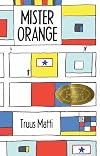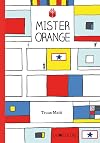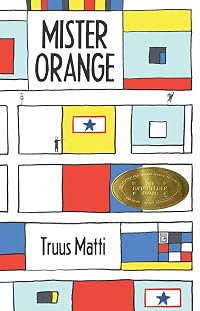
Mister Orange
by Truus Matti
On This Page
Description
When Linus Muller takes over making deliveries for his family's Manhattan grocery store in 1943, including bringing a crate of oranges every other week to an artist from Europe, the two become friends as they discuss war, the future, freedom, and imagination.Tags
Recommendations














Member Reviews
This novel, set in New York City, opens and closes in March 1945 with Linus, in his new shoes, distracted enough by a familiar image in a poster to attend the art show it advertises. The narrative then moves to September 1943 where we learn that Linus's older brother, Albie, is off to war in new boots, leaving a cascade of hand-me-down shoes for his younger siblings to grow into. Linus, who promises to mind Albie's comic books while he fulfills his superhero-like soldier role, develops a superhero of his own ("Mr. Superspeed") who serves as a sort of guide until Linus's dawning realization, based on Albie's letters home and losses suffered by neighbors, of the truth about war.
In addition to minding the comic books, Linus takes over show more Albie's delivery route for his family's market, including managing the elderly Mrs. de Winter's senescent searches for her keys, as well as taking a bi-weekly crate of oranges to an elderly artist, whom Linus dubs "Mr. Orange" because he can't recall Piet Mondrian's name. When he leaves after an inspiring visit with Mr. Orange (who lives in a white apartment he decorates by moving and changing colored squares), Linus "moved slowly because his head felt so heavy with all the things he'd just seen and heard. He didn't want all of his new thoughts to get all tangled up. He wanted to hang on to them so that he could take them out later and explore them from lots of different angles." (p.64) In addition to work at the store, Linus experiences the usual ups and downs of school and friendship, punctuated by the profound anticipation of letters from his brother, read at the table by his father, who edits the content for the younger children.
It is through these letters, his changing relationships, and his brief friendship with Mr. Orange, whose boat he learns crossed Albie's when the artist fled occupied Holland, that Linus grows in his perception of war's brutality and in his ability to transcend despair and envision a peaceful future. And, in the closing section of the book which brackets the opening, set in 1945, we see Linus learn a little more about art, color and imagination from the work and memory of his old friend, Mr. Orange.
Backmatter provides lots of information about life in New York, boogie-woogie (a favorite of Mondrian's), and the artist Mondrian himself. Overall, the writing, historical veracity and translation are excellent. Highly recommended for readers who enjoy a bit of art history (a la Konigsburg) or who might benefit from a different take on World War II or who just want to read a satisfying coming-of-age story. This could be paired with Konigsburg's "The Mysterious Edge of the Heroic World." show less
In addition to minding the comic books, Linus takes over show more Albie's delivery route for his family's market, including managing the elderly Mrs. de Winter's senescent searches for her keys, as well as taking a bi-weekly crate of oranges to an elderly artist, whom Linus dubs "Mr. Orange" because he can't recall Piet Mondrian's name. When he leaves after an inspiring visit with Mr. Orange (who lives in a white apartment he decorates by moving and changing colored squares), Linus "moved slowly because his head felt so heavy with all the things he'd just seen and heard. He didn't want all of his new thoughts to get all tangled up. He wanted to hang on to them so that he could take them out later and explore them from lots of different angles." (p.64) In addition to work at the store, Linus experiences the usual ups and downs of school and friendship, punctuated by the profound anticipation of letters from his brother, read at the table by his father, who edits the content for the younger children.
It is through these letters, his changing relationships, and his brief friendship with Mr. Orange, whose boat he learns crossed Albie's when the artist fled occupied Holland, that Linus grows in his perception of war's brutality and in his ability to transcend despair and envision a peaceful future. And, in the closing section of the book which brackets the opening, set in 1945, we see Linus learn a little more about art, color and imagination from the work and memory of his old friend, Mr. Orange.
Backmatter provides lots of information about life in New York, boogie-woogie (a favorite of Mondrian's), and the artist Mondrian himself. Overall, the writing, historical veracity and translation are excellent. Highly recommended for readers who enjoy a bit of art history (a la Konigsburg) or who might benefit from a different take on World War II or who just want to read a satisfying coming-of-age story. This could be paired with Konigsburg's "The Mysterious Edge of the Heroic World." show less
This novel, set in New York City, opens and closes in March 1945 with Linus, in his new shoes, distracted enough by a familiar image in a poster to attend the art show it advertises. The narrative then moves to September 1943 where we learn that Linus's older brother, Albie, is off to war in new boots, leaving a cascade of hand-me-down shoes for his younger siblings to grow into. Linus, who promises to mind Albie's comic books while he fulfills his superhero-like soldier role, develops a superhero of his own ("Mr. Superspeed") who serves as a sort of guide until Linus's dawning realization, based on Albie's letters home and losses suffered by neighbors, of the truth about war.
In addition to minding the comic books, Linus takes over show more Albie's delivery route for his family's market, including managing the elderly Mrs. de Winter's senescent searches for her keys, as well as taking a bi-weekly crate of oranges to an elderly artist, whom Linus dubs "Mr. Orange" because he can't recall Piet Mondrian's name. When he leaves after an inspiring visit with Mr. Orange (who lives in a white apartment he decorates by moving and changing colored squares), Linus "moved slowly because his head felt so heavy with all the things he'd just seen and heard. He didn't want all of his new thoughts to get all tangled up. He wanted to hang on to them so that he could take them out later and explore them from lots of different angles." (p.64) In addition to work at the store, Linus experiences the usual ups and downs of school and friendship, punctuated by the profound anticipation of letters from his brother, read at the table by his father, who edits the content for the younger children.
It is through these letters, his changing relationships, and his brief friendship with Mr. Orange, whose boat he learns crossed Albie's when the artist fled occupied Holland, that Linus grows in his perception of war's brutality and in his ability to transcend despair and envision a peaceful future. And, in the closing section of the book which brackets the opening, set in 1945, we see Linus learn a little more about art, color and imagination from the work and memory of his old friend, Mr. Orange.
Backmatter provides lots of information about life in New York, boogie-woogie (a favorite of Mondrian's), and the artist Mondrian himself. Overall, the writing, historical veracity and translation are excellent. Highly recommended for readers who enjoy a bit of art history (a la Konigsburg) or who might benefit from a different take on World War II or who just want to read a satisfying coming-of-age story. This could be paired with Konigsburg's "The Mysterious Edge of the Heroic World." show less
In addition to minding the comic books, Linus takes over show more Albie's delivery route for his family's market, including managing the elderly Mrs. de Winter's senescent searches for her keys, as well as taking a bi-weekly crate of oranges to an elderly artist, whom Linus dubs "Mr. Orange" because he can't recall Piet Mondrian's name. When he leaves after an inspiring visit with Mr. Orange (who lives in a white apartment he decorates by moving and changing colored squares), Linus "moved slowly because his head felt so heavy with all the things he'd just seen and heard. He didn't want all of his new thoughts to get all tangled up. He wanted to hang on to them so that he could take them out later and explore them from lots of different angles." (p.64) In addition to work at the store, Linus experiences the usual ups and downs of school and friendship, punctuated by the profound anticipation of letters from his brother, read at the table by his father, who edits the content for the younger children.
It is through these letters, his changing relationships, and his brief friendship with Mr. Orange, whose boat he learns crossed Albie's when the artist fled occupied Holland, that Linus grows in his perception of war's brutality and in his ability to transcend despair and envision a peaceful future. And, in the closing section of the book which brackets the opening, set in 1945, we see Linus learn a little more about art, color and imagination from the work and memory of his old friend, Mr. Orange.
Backmatter provides lots of information about life in New York, boogie-woogie (a favorite of Mondrian's), and the artist Mondrian himself. Overall, the writing, historical veracity and translation are excellent. Highly recommended for readers who enjoy a bit of art history (a la Konigsburg) or who might benefit from a different take on World War II or who just want to read a satisfying coming-of-age story. This could be paired with Konigsburg's "The Mysterious Edge of the Heroic World." show less
Lovely YA novel about a young man in WWII NYC whose older brother goes off to war, and who meets the painter Piet Mondrian. Really interesting exploration of the importance of imagination, the impact of war on families, and the trials of growing up. Very well written - I'm glad I found this one!
It's 1943 and Linus' oldest brother, Albert, is going to war. Everything is new and hopeful, from the new shoes handed down to Albie's younger brothers to Linus' new job as delivery boy. He has Albie's superhero, Mister Superspeed, his best friend Liam, and unbounded confidence. When he meets a new customer, Mister Orange, who has a whole new way of looking at art and the world, he's on top of the world.
But the realities of war intrude and Linus realizes that being grown-up isn't as easy or simple as he thought. What difference does Mister Orange's art or Albie's imagination in his superhero drawings make? Could they have made things worse? With some help from Mister Orange, Linus regains his hope for the future, although he's lost his show more naivety and childhood innocence.
This is different from any other historical fiction title about World War II that I've read. It focuses on both the art and vision of Mr. Orange (Piet Mondrian) and the inner imaginative life of Linus as he grows up. Linus' interactions with his family, Mondrian, and friends are interspersed with dreams and daydreams about Mister Superspeed. It's very introspective, focusing on how Mondrian thinks his art envisions the future and how Linus interacts with that art and it becomes part of his new maturity. End notes about Mondrian and his life and work are included.
Verdict: This isn't going to be of interest to most middle grade readers. It presupposed a certain amount of contextual knowledge of life in New York during World War II and the story moves at a slow, steady pace. Most kids are going to want stories with more action and less inner thought. However, for the thoughtful child and those who like historical fiction, this would be a good choice. It's not something I'd add to my small library, but would definitely be a good purchase for a larger library with more space and variety.
ISBN: 9781592701230; Published January 2013 by Enchanted Lion; Galley provided by publisher for review; Added to summer reading prizes. show less
But the realities of war intrude and Linus realizes that being grown-up isn't as easy or simple as he thought. What difference does Mister Orange's art or Albie's imagination in his superhero drawings make? Could they have made things worse? With some help from Mister Orange, Linus regains his hope for the future, although he's lost his show more naivety and childhood innocence.
This is different from any other historical fiction title about World War II that I've read. It focuses on both the art and vision of Mr. Orange (Piet Mondrian) and the inner imaginative life of Linus as he grows up. Linus' interactions with his family, Mondrian, and friends are interspersed with dreams and daydreams about Mister Superspeed. It's very introspective, focusing on how Mondrian thinks his art envisions the future and how Linus interacts with that art and it becomes part of his new maturity. End notes about Mondrian and his life and work are included.
Verdict: This isn't going to be of interest to most middle grade readers. It presupposed a certain amount of contextual knowledge of life in New York during World War II and the story moves at a slow, steady pace. Most kids are going to want stories with more action and less inner thought. However, for the thoughtful child and those who like historical fiction, this would be a good choice. It's not something I'd add to my small library, but would definitely be a good purchase for a larger library with more space and variety.
ISBN: 9781592701230; Published January 2013 by Enchanted Lion; Galley provided by publisher for review; Added to summer reading prizes. show less
A delightful historical novel set in New York City during World War II that sensitively portrays a young boy's discovery of the power of art and family life on the American home front. A Dutch translation, winner of the 2014 Mildred L. Batchelder Award.
This is a very interesting book! It is probably geared toward older kids because of the undertones of war. It is versatile in the way that it can be used in either a history or english class because of the world war 2 undertones. Overall this is very interesting perspective on that time period.
Ratings
Members
- Recently Added By
Lists

Red Dot 2014-2015 - Older Readers - Longlist
37 works; 4 members

Books About Boys
175 works; 15 members
Author Information

2 Works 141 Members
Some Editions
Awards and Honors
Awards
Distinctions
Notable Lists
Common Knowledge
- Canonical title
- Mister Orange
- Important events
- World War II
Classifications
- Genres
- Kids, Fiction and Literature, Children's Books, Tween
- DDC/MDS
- 839.3137 — Literature & rhetoric German & related literatures Other Germanic literatures Netherlandish literatures Dutch Dutch fiction 21st Century
- LCC
- PZ7 .M43542 .M — Language and Literature Fiction and juvenile belles lettres Fiction and juvenile belles lettres Juvenile belles lettres
- BISAC
Statistics
- Members
- 75
- Popularity
- 421,841
- Reviews
- 6
- Rating
- (4.15)
- Languages
- 5 — Dutch, English, French, German, Swedish
- Media
- Paper
- ISBNs
- 7