Athalie
by Jean Racine
On This Page
Description
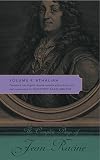
"As Voltaire famously opined, Athaliah, Racine's last play, is "perhaps the greatest masterwork of the human spirit." Its formidable antagonists, Athaliah, queen of Judah, and Jehoiada, high priest of the temple of Jerusalem, are engaged in a deadly struggle for dominion: she, fiercely determined to maintain her throne and exterminate the detested race of David; he, no less fiercely determined to overthrow this heathen queen and enthrone the orphan Joash, the scion of the house of David, show more whom Athaliah believes she slew as an infant ten years earlier. This boy represents the sole hope for the survival of the royal race from which is to spring the Christ. But in this play, even God is more about hate and retribution than about love and mercy. This is the fourth volume of a projected translation into English of all twelve of Jean Racine's plays--only the third time such a project has been undertaken. For this new translation, Geoffrey Alan Argent has rendered these plays in the verse form that Racine might well have used had he been English: namely, the "heroic" couplet. Argent has exploited the couplet's compressed power and flexibility to produce a work of English literature, a verse drama as gripping in English as Racine's is in French. Complementing the translation are the illuminating discussion, intended as much to provoke discussion as to provide it, and the extensive notes and commentary, which offer their own fresh and thought-provoking insights."--Project Muse. show lessTags
Recommendations
































Member Reviews
While I thought I knew the Bible pretty well, I must admit that I didn't remember an account quite this bloody - although to be fair, many of the stories in the Bible happen in just a few verses, so it is easy to miss the full impact of some of the atrocities recorded. Sadly, when it comes to political power, killing off one's rivals is the most effective way to keep control. This is a story told over and over in history. I liked Racine's references to the future, and to how some of the hopes of the people in this story would be overthrown in the future.
This is the last play that Racine ever wrote and produced and it did not seem to go down all that well with the people of the time, maybe because there had recently been a political affair involving a woman who was trying to set herself up as Queen (read king) of France. However, it did garner some accord from a number of intellectuals at the time, including Voltaire, who believed that it was one of Racine's greatest plays. The political machinations that Racine manages to bring out of his plays do exalt him to the position of one of the great playwrights, and in a way he is set apart from Shakespeare because of this. However, despite the fact that he is French and he wrote in French, he still does not seem to attract the popularity show more that the Bard's plays tend to (probably because he is French).
Athalie is one of two plays that Racine wrote based around biblical stories, both of them from the Old Testament. The other biblical play that he wrote is Esther, and anybody somewhat familiar with the Bible is probably familiar with the book of Esther. However the story of Athalie (or Athaliah in English) is much less familiar, and I would not be surprised if there are a number of Christians out there who have been Christians for a long time that are unfamiliar with the story of Athalie.
The story itself comes from 1 Kings 11 and occurs after the brutal murders (not that they weren't asking for it) of King Ahab and Queen Jezebel (the monarchs of the northern Kingdom of Israel) by King Jehu (the king of the southern Kingdom of Judah – Racine explains this in his introduction). While at the time Jehu did what was right in the eyes of God, as he grew old he become corrupted with power, and no doubt threw away his faith in God. It appears that he did not produce an heir because his mother, Athalie, took hold of the reigns of power in Judah and then proceeded to execute the rest of the royal family, leaving her firmly in control.
The play begins pretty quickly after she had ascended to the throne of Judah and had brought the worship of the Baals (foreign gods) back into Judah. However the priests of the Temple in Jerusalem continued the worship of the one true God, and they also had an ace up their sleeve – the only surviving heir to the throne of Judah and the only surviving descendant of the line of King David. Thus the play is set up to be a play where the queen and her prophets struggle and fight against the high priest and his prophets, who are also trying to keep the soul surviving heir a secret.
Some have suggested, and this is probably true, that this play comes out of Racine's Jansenist upbringing. In fact after Phaedre, Racine left the lime light and returned to the faith of his youth, and it was only later in life that he returned to the stage to produce a couple of plays outlining his new found faith. However it is interesting to note that Racine still does not bring the extra-ordinary into his plays. This is similar to what we see in Shakespeare and which differs from the great tragedians (and even the old comics) of the Ancient world who had the gods playing an important role in the plays. However, it is also the case that in the Ancient World the gods played an important role in civil life.
It is not that the Christian god did not play an important role however, it is just that it appears that ever since Christ's ascension to heaven, literature tended to drift away from the direct intervention of a divine ruler. Most of the stories that have come about have either come directly from the Bible, or simply focus only on the physical aspects of the world. We see this in Racine's Greek plays where the gods simply do not appear (which differs from Euripides, who would have the gods introduce and conclude the play, and also appear so as to set things right). In the European plays we tend to see a much more humanist aspect in the action, in that the play is not resolved through divine intervention, but through the acts of mere mortals.
Maybe this is what Schaeffer is talking about when he talks about nature eating up grace. Namely, we divide the world into an upper and lower story (that is heaven and Earth) and by separating heaven from Earth we restrict the power of heaven's influence over Earth. We also see this in discussions on the Greek plays where modern commentators will criticise Euripides' use of the deus ex machina, in that it is a poor attempt to resolve the play's conflict when in Eurpides' time such scenes were accepted by the audience. I suspect that it has a lot to do with us moderns drifting further and further away from the acceptance of a divinity that can actually influence the world in which we live. show less
Athalie is one of two plays that Racine wrote based around biblical stories, both of them from the Old Testament. The other biblical play that he wrote is Esther, and anybody somewhat familiar with the Bible is probably familiar with the book of Esther. However the story of Athalie (or Athaliah in English) is much less familiar, and I would not be surprised if there are a number of Christians out there who have been Christians for a long time that are unfamiliar with the story of Athalie.
The story itself comes from 1 Kings 11 and occurs after the brutal murders (not that they weren't asking for it) of King Ahab and Queen Jezebel (the monarchs of the northern Kingdom of Israel) by King Jehu (the king of the southern Kingdom of Judah – Racine explains this in his introduction). While at the time Jehu did what was right in the eyes of God, as he grew old he become corrupted with power, and no doubt threw away his faith in God. It appears that he did not produce an heir because his mother, Athalie, took hold of the reigns of power in Judah and then proceeded to execute the rest of the royal family, leaving her firmly in control.
The play begins pretty quickly after she had ascended to the throne of Judah and had brought the worship of the Baals (foreign gods) back into Judah. However the priests of the Temple in Jerusalem continued the worship of the one true God, and they also had an ace up their sleeve – the only surviving heir to the throne of Judah and the only surviving descendant of the line of King David. Thus the play is set up to be a play where the queen and her prophets struggle and fight against the high priest and his prophets, who are also trying to keep the soul surviving heir a secret.
Some have suggested, and this is probably true, that this play comes out of Racine's Jansenist upbringing. In fact after Phaedre, Racine left the lime light and returned to the faith of his youth, and it was only later in life that he returned to the stage to produce a couple of plays outlining his new found faith. However it is interesting to note that Racine still does not bring the extra-ordinary into his plays. This is similar to what we see in Shakespeare and which differs from the great tragedians (and even the old comics) of the Ancient world who had the gods playing an important role in the plays. However, it is also the case that in the Ancient World the gods played an important role in civil life.
It is not that the Christian god did not play an important role however, it is just that it appears that ever since Christ's ascension to heaven, literature tended to drift away from the direct intervention of a divine ruler. Most of the stories that have come about have either come directly from the Bible, or simply focus only on the physical aspects of the world. We see this in Racine's Greek plays where the gods simply do not appear (which differs from Euripides, who would have the gods introduce and conclude the play, and also appear so as to set things right). In the European plays we tend to see a much more humanist aspect in the action, in that the play is not resolved through divine intervention, but through the acts of mere mortals.
Maybe this is what Schaeffer is talking about when he talks about nature eating up grace. Namely, we divide the world into an upper and lower story (that is heaven and Earth) and by separating heaven from Earth we restrict the power of heaven's influence over Earth. We also see this in discussions on the Greek plays where modern commentators will criticise Euripides' use of the deus ex machina, in that it is a poor attempt to resolve the play's conflict when in Eurpides' time such scenes were accepted by the audience. I suspect that it has a lot to do with us moderns drifting further and further away from the acceptance of a divinity that can actually influence the world in which we live. show less
L-3
Oct 23, 2020Catalan
Ratings
Members
- Recently Added By
Lists

Harold Bloom - The Western Canon: B. The Aristocratic Age
231 works; 13 members

My Play Collection
769 works; 3 members
Author Information

311+ Works 7,046 Members
Jean Racine is considered the greatest of French tragic dramatists. If Shakespeare's (see Vol. 1) theater is characterized by exploration and invention, Racine's is defined by restraint and formal perfection. His themes are derived from Greco-Roman, biblical, and oriental sources and are developed in the neoclassic manner: keeping to few show more characters, observing the "three unities" defined by Aristotle (see Vols. 3, 4, and 5) as essential to tragedy (i. e., unity of time, place, and action), and writing in regular 12-syllable verses called "alexandrines." In contrast to Corneille, whose theater is eminently political and concerned with moral choices, Racine locates tragic intrigue in the conflict of inner emotions. He is a master at exploring the power of erotic passion to transform and pervert the human psyche. As a Jansenist who believed that a person deprived of grace was subject to the tyranny of instincts, Racine was interested in portraying human passions---particularly the passion of love---in a state of crisis. Racine is also one of the greatest of all French poets, and his plays are a challenge to any translator. His major tragedies include Andromaque (1667), Britannicus (1669), e Berenice (1670), Iphigenie (1674), and Phedre (1677). (Bowker Author Biography) show less
Some Editions
Series
Belongs to Publisher Series
Work Relationships
Is contained in
Has the adaptation
Common Knowledge
- Canonical title
- Athalie
- Original publication date
- 1691
- Important places*
- La Ferté-Milon, Hauts-de-France, Frankrijk
- Publisher's editor
- Howarth, W. D.
*Some information comes from Common Knowledge in other languages. Click "Edit" for more information.
Classifications
Statistics
- Members
- 171
- Popularity
- 191,118
- Reviews
- 5
- Rating
- (3.47)
- Languages
- English, French, German, Italian
- Media
- Paper, Ebook
- ISBNs
- 20
- ASINs
- 16