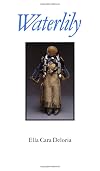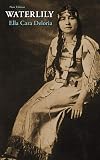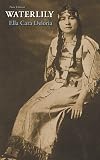
Waterlily
by Ella Cara Deloria
On This Page
Description
When Blue Bird and her grandmother leave their family's camp to gather beans for the long, threatening winter, they inadvertently avoid the horrible fate that befalls the rest of the family. Luckily, the two women are adopted by a nearby Dakota community and are eventually integrated into their kinship circles. Ella Cara Deloria's tale follows Blue Bird and her daughter, Waterlily, through the intricate kinship practices that created unity among her people.
Waterlily, published after
show more Deloria's death and generally viewed as the masterpiece of her career, offers a captiTags
Recommendations






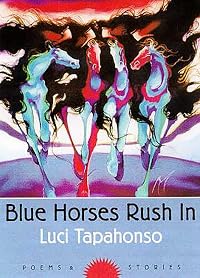


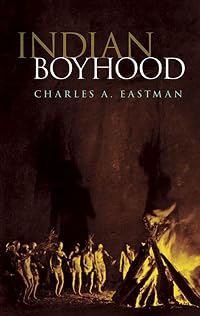

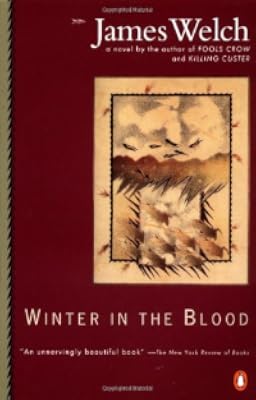

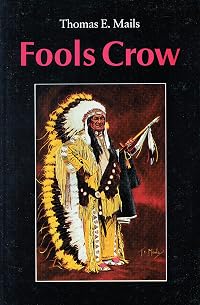

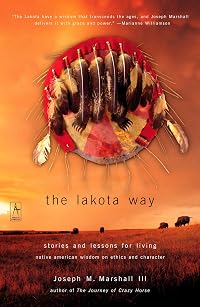
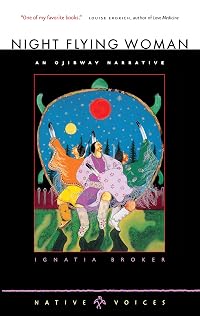
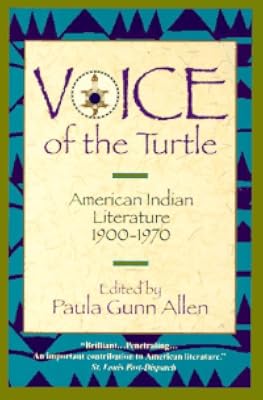
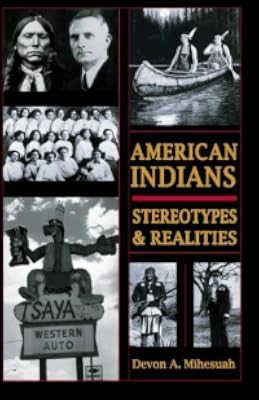
Member Recommendations
Member Reviews
I knew, going in, that Deloria had done some ethnographic work on the Dakota (Sioux) tribes. I also knew that she had tried to write this as a straightforward nonfiction work in that line, but found that she could only make it work as fiction. So of course, I was wary that it would read like a fiction blanket laid over the top of an academic analysis. I’m happy to say that it did not. The story and anthropology are pretty well fused, and the fusion feels natural, rather than imposed. The ceremonial, political, and interpersonal details of Dakota life are deeply embedded in the narrative, but never at such distance that they become abstractions.
I like Deloria’s exploration of kinship—the way obligations and ties radiate outward show more from the individual into the entire camp circle. Her depiction makes clear how profoundly this differs from the individualism of Euro-American culture, and she makes that point not through theoretical analysis, but through the lived circumstances of her characters.
Take, for example, Waterlily’s persistent struggle to be true to her own identity while truly valuing and trying to adhere to societal expectations—especially when she’s living with her husband’s family after marrying. This tension is drawn with care, and through it you understand something essential about Dakota life. These are not generic cultural notes delivered in isolation; they are part of Waterlily’s experience and her development as a character. The deliberate pacing of the novel also helps—it makes the novel less about plot mechanics than about that character development, and even allows Dakota society itself to become a “character” of sorts.
To be fair, there are moments when Deloria’s hand is visible—when a character seems purposefully more naive than believable, in order to provide an occasion for explanation. But these are rare. And overall, the fiction functions well as a vessel for the history Deloria wanted to preserve. It takes on a depth and resonance that a straightforward ethnographic analysis could not have achieved. show less
I like Deloria’s exploration of kinship—the way obligations and ties radiate outward show more from the individual into the entire camp circle. Her depiction makes clear how profoundly this differs from the individualism of Euro-American culture, and she makes that point not through theoretical analysis, but through the lived circumstances of her characters.
Take, for example, Waterlily’s persistent struggle to be true to her own identity while truly valuing and trying to adhere to societal expectations—especially when she’s living with her husband’s family after marrying. This tension is drawn with care, and through it you understand something essential about Dakota life. These are not generic cultural notes delivered in isolation; they are part of Waterlily’s experience and her development as a character. The deliberate pacing of the novel also helps—it makes the novel less about plot mechanics than about that character development, and even allows Dakota society itself to become a “character” of sorts.
To be fair, there are moments when Deloria’s hand is visible—when a character seems purposefully more naive than believable, in order to provide an occasion for explanation. But these are rare. And overall, the fiction functions well as a vessel for the history Deloria wanted to preserve. It takes on a depth and resonance that a straightforward ethnographic analysis could not have achieved. show less
This is one of those books for which the background as important as the work itself. Author Ella Cara Deloria was born in 1889 on the Yankton Sioux Reservation and lived as a child on the Standing Rock Reservation in South Dakota, where her father was a deacon of the Protestant Episcopalian church. Educated at Columbia University, Deloria did her most important work as a research specialist in American Indian ethnology and linguistics. Her position as a member of a prominent family, their political awareness and valuation of scholarship (her brother, Vine Deloria Jr. wrote ‘Custer Died for Your Sins’ and was prominent in the American Indian Movement of the late 1960s), the fact that she was among a dwindling number of native show more speakers in the first quarter of the 20th century, and the happy accident that her professional lifespan overlapped with the last of the Sioux who had lived in a culture largely untouched by white men, placed her in a truly unique position.
Drawing on all aspects of that background, Deloria produced ‘Waterlily’, a novel which chronicles the life of a Dakota Sioux woman, born probably around 1840 and coming to womanhood as the first tentacles of white culture began to invade the traditional lifestyle of the tribes. Don’t look for thrilling warpath tales here, however – ‘Waterlily’ keeps its focus strictly on the day-to-day life of a woman within this society, with particular emphasis on the relationship web that directed many of her interactions with others.
‘Waterlily’ is truly a unique work, but it is not without flaws, at least to the 21st century reader. Deloria writes adequately, but in a totally pedestrian manner. The characters are well-developed, and the everyday events she describes are a fascinating and informative look at a way of life which has long since vanished. But there is little in it to involve the emotions, even when the characters are faced with life-altering events.
It’s definitely worth a read, but don’t plan to shelve it in the “masterpiece” section. show less
Drawing on all aspects of that background, Deloria produced ‘Waterlily’, a novel which chronicles the life of a Dakota Sioux woman, born probably around 1840 and coming to womanhood as the first tentacles of white culture began to invade the traditional lifestyle of the tribes. Don’t look for thrilling warpath tales here, however – ‘Waterlily’ keeps its focus strictly on the day-to-day life of a woman within this society, with particular emphasis on the relationship web that directed many of her interactions with others.
‘Waterlily’ is truly a unique work, but it is not without flaws, at least to the 21st century reader. Deloria writes adequately, but in a totally pedestrian manner. The characters are well-developed, and the everyday events she describes are a fascinating and informative look at a way of life which has long since vanished. But there is little in it to involve the emotions, even when the characters are faced with life-altering events.
It’s definitely worth a read, but don’t plan to shelve it in the “masterpiece” section. show less
(Disclaimer: This review is from my personal blog, and, as such, it is written from a Christian perspective.)
The book “Waterlily” is an exposé of Lakota kinship relations. We learn much of culture, but primarily we learn about the Lakota’s civilized manner of living and how their kinship structure made things work. All this is told through a fictional story, a very well-written story about a woman named Blue Bird and her growing child Waterlily.
The book begins with Waterlily’s birth on the march. Blue Bird’s immediate family has all been killed in a raid (all but her grandmother), and sometime afterwards, a young man named Star Elk eloped with her. But Star Elk is a jealous, vindictive man, and when Waterlily is born, he gets show more even worse. Blue Bird stays at a cousin’s lodge until she gets stronger, and Star Elk petulantly refuses to even come and see her. Then, in a jealous rage, he “throws her away”. This is a disgraceful manner of divorcing your wife in a public setting by which you take a stick and say anyone who catches the stick can have her and then throw it away from you. Mercifully, Blue Bird is too distracted with young Waterlily to be too shamed by this experience, especially since everyone knows the fault lies in Star Elk himself. And soon after, a messenger arrives to tell Blue Bird’s grandmother that one of her grandsons has learned she still lives and is eager to welcome them back into his camp circle.
Black Eagle’s circle is composed of more than just his own immediate family. It also includes in-laws. And one of these, a young boy named Little Chief, becomes enthralled with baby Waterlily. He plays with her and watches over her constantly. In time, Little Chief’s grandmother, Gloku, notices what a fine woman Blue Bird is and how close the children are and desires that Blue Bird would marry Little Chief’s widowed father, Rainbow. Her desires are granted, and soon Blue Bird is happy, for she is finally married to a good man. Little Chief and Waterlily are happy to now be real siblings, and soon the family is grown by a child to Rainbow and Blue Bird, a son named Ohíya, meaning “he is the victor”. As Little Chief begins his training as a man, Waterlily is given a huŋká ceremony by Rainbow, a ceremony in which a feast and giveaway are given in her name and she is honored as a “child-beloved”. This raises her status in the tribe and honors her. Little Chief’s status is also being advanced as he counts first coup, goes on his first war party, and kills his first buffalo.
When Waterlily is a young woman, word comes from Rainbow’s kȟolá that he wants to see him. (A kȟolá is a special male friend whose loyalty and goodwill is pledged, even unto death.) The family travels south to near the white settlements, experience much excitement, and stay for the local Sun Dance. Among the singers at an intertribal gathering Waterlily sees a young man named Lowáŋ Láȟ (meaning “he sings very [well]”) and is quite taken with him. He notices her too. When he participates in the rigors of the Sun Dance, she sneaks water to him but then races away before he can identify her. Afterwards, Waterlily is disgusted with her behavior and determines she is going to be a perpetual virgin. Despite this, she soon forgets her intention and enjoys evading young men who come after her when she is gathering water. One day Waterlily’s grandmother, Gloku, becomes ill and quickly dies. Saddened by their great loss and remembering what a fine woman their wife, mother, and grandmother was, the family decides to honor Gloku through the custom of ghostkeeping. This is a special custom by which a bundle containing a lock of the dead woman’s hair and piece of skin is kept wrapped in a bundle inside the ghost lodge. One woman relative is chosen to constantly feed and look after the “ghost” and show hospitality to the others in her name. At the end of the process a ceremony is held where the ghost is released and a great giveaway is held in her honor.
When the time comes for Gloku’s giveaway, Black Eagle discovers that the two fine horses he had kept to give away have been maliciously murdered. He is devastated and urgent to find comparable horses so that she can be honored properly. When two strange women come with two handsome horses to buy Waterlily as a bride for their son, she sacrificially accepts, in order that her uncle may use the horses to honor her grandmother at the giveaway. Soon Waterlily is on her way with her new husband, traveling to a new camp circle full of nothing but strangers. She is practiced in the art of kinship relations and settles easily into her different roles as sister-in-law, daughter-in-law, etc. but yearns for the easiness and accepted openness of natural relations. Because of all the avoidance roles she is obliged to keep up, she struggles to let down her walls even with her husband. Sacred Horse (her new husband) is disappointed that it takes his young wife so long to come out of her shell, but he is gentle, patient, and kind to her anyway.
After only a few months, disaster strikes…small pox. The camp breaks up in order to avoid the disease’s spread, but it does no good. Many in Waterlily’s group die, including her patient husband, Sacred Horse. Burdened with sorrow and carrying her late husband’s child, Waterlily returns with anguish to her family. When her baby is born, she names him Mitȟáwa, meaning “my own”. A couple months later, a cousin of Sacred Horse (who turns out to be the handsome Lowáŋ Láȟ of five years previous) arrives to propose that she marry him and allow him to take care of his “son” (in Lakota culture, the son of a cousin is your son also). With this happy event and the joy of a growing Mitȟáwa, Waterlily finds her contentment returning. As she watches over her babe while helping in the harvesting of buffaloberries and thinks of her new husband out in the hills hunting, she finally feels truly happy. She is surrounded by kin and secure in the world that is her family.
This book is so pleasant, because it shows the good parts of Lakota culture (much like the book I last reviewed – “Soldiers Falling Into Camp”). The deep ties of kinship and caring for one another that are found in the culture are truly beautiful. Even when the new bride Waterlily is taken to a camp full of strangers, she finds a couple who, because of their relationship to their son’s kȟolá, Waterlily’s brother Little Chief, call her their own daughter and truly treat her as such. The importance of fulfilling duties to one’s kin is stressed over and over again. I have to admit, though, I would have been stressed trying to live in this environment because of all the kinship expectations and what you should and should not do. But that doesn’t mean it’s not a good thing. The one thing I think is a little sad about it is that people seem to be more driven by obligations than by agape love. (Agape is a Greek word referring to the greatest type of love, which is selfless and sacrificial. It is most often seen as coming from God the Father to Christians or from one Christian to another.)
The other beautiful thing, that is kind of an outgrowth of the kinship system but extends to everyone, is the Lakota habit of inordinate giving. Any and every occasion is an excuse to give things away. And while some of this is undoubtedly pride-rooted, pride in how generous one is, there also is just a spirit of generosity and hospitality that is bred into the community. No matter who you were, if you weren’t an outright enemy at that precise time, you could expect gifts. In many Native cultures, the purpose of wealth was to give it away. And in Lakota culture, this was taken to the nth degree.
“Teton (Lakota Sioux) children loved to give. As far back as they could remember they had been made to give or their elders gave in their name, honoring them, until they learned to feel a responsibility to do so. Furthermore, they found it pleasant to be thanked graciously and have their ceremonial names spoken aloud. For giving was basic to [L]akota life. The idea behind it was this: if everyone gives, then everyone gets; it is inevitable. And so old men and women preached continually, ‘Be hospitable; be generous. Nothing is too good for giving away.’ The children grew up hearing that, until it was a fixed notion.”
Another thing I appreciated about this book was the way it honored women by explaining how male relatives should be devoted to their female relatives’ needs and happiness. It talks about how taking caring of a man’s woman relatives is “his destiny“. The book makes much of the responsibility of male relatives and female relatives to each other and how they were meant to build each other up. Now, I know women weren’t always honored in Lakota culture. And there were ways in which men were held as supreme and women were relegated to serving them. But there was a picture of the Bible’s complementarian point of view in Lakota culture. And it’s good, and it’s beautiful.
The final thing I want to bring up that I liked about this book is the rare Lakota custom of adopting a person who has killed a relative. In order to prevent more blood being spilled and to heal their hearts, the relatives would adopt that person in place of the one of the who was killed. Reading this passage reminded me so deeply of the Gospel. Isn’t this just what our God did for us? We killed His Son, and, instead of punishing us, He allowed us to be adopted into His family, in His Son’s name. Read this and see if it does not remind you of the Gospel.
“‘they have chosen to take you to themselves in place of one who is not here…It is their desire that henceforth you shall go in and out among them without fear. By these presents which they have brought here for you, they would have you know that whatever love and compassion they had for him is now yours, forever.’…the price of his redemption had come so high.”
Now, by all these things I do not mean to intimate that Lakota culture was or is all good. This book fails to mention the spiritual darkness, the bloody warfare, the inequality, the rapes that went on among Plains nations. Yes, there were and are many wicked things in Lakota culture. But you don’t throw the baby out with the bathwater. You don’t call a whole culture bad because some characteristics of it are evil. You demean people’s human dignity when you do that. Whatever culture you go to, God has left echoes of His beauty. “He has planted eternity in the human heart, but even so, people cannot see the whole scope of God’s work from beginning to end.” (Ecclesiastes 3:11b NLT) And never forget, God promises that all cultures will be around his throne one day. “for you were slain, and by your blood you ransomed people for God from every tribe and language and people and nation, and you have made them a kingdom and priests to our God, and they shall reign on the earth.” (Revelation 5:9b-10)
[Content Warning: This book is an idealized view of Lakota culture. As such, it sometimes white-washes things that were actually very wrong. For example, it claims warfare was like a tournament where each side strove to be a “worthy foe” and alleged that systematic horse stealing was a “legitimate part of all intertribal warfare“. It also says in one of the afterwords about the author that “Sioux values mingled easily with [her parents’] devout Christian principles“. It is true that some Lakota values are good. But traditional Lakota spirituality and Christian ethics do not mix well, principally because this spirituality does not honor God which is the point of all true Christian ethics. The book contains a brief and veiled reference to incest. There is talk of maintaining virginity, though sex is never specifically discussed, only alluded to. Once a character holds a ceremony called the Virgin’s Fire where all virgins can publicly claim virginity. Moving on to violence, it is said in passing that three children were scalped. There are a couple other places where scalps are mentioned, including one where the victim’s head afterwards is briefly described. A woman also says, though she clearly doesn’t mean it all, that if she “had a knife handy [she] could hack [her husband]“. The final and largest area of objectionable content is spiritual content. Any book about Lakota culture will have to deal with Lakota spirituality because it is so tightly woven in the Lakota existence. Here is a summary of the issues that will have to be navigated. They call their god, “Grandfather” and the earth “Mother”. They make sacrifices of tobacco, including once to a rock. A man is said to be so holy that he can heal “merely by the spoken word“, something only God can do. There is a description of a Lakota altar in someone’s home. Gloku once has a prophetic dream that warns her of danger on a particular day. There are different kinds of ceremonial dreamers who are believed to have specific powers or who handle certain rites. There is a buffalo dreamer who can call the buffalo, a snake dreamer who can talk to snakes and keep them from hurting someone, and a ghost dreamer who takes care of the ghostkeeping ceremonies. The ghostkeeping is a custom in which someone’s ghost is talked to and then “kept” with the living for a time by feeding it and giving hospitality on its behalf. The closing ceremony to the ghostkeeping is described. Finally, there is the issue of the Sun Dance. The Sun Dance gets so much right and so much wrong. For one thing, God never wants us to mutilate our flesh. Our bodies are a gift from Him, and He holds them in high honor. However, there is one thing that is partially right. It says that the dancers “had paid in full by fasting and vigil, even by physical pain” in order that their requests “might be granted“. We do need someone to do the Sun Dance. We need someone to willingly surrender his body to pain and punishment. But this Someone was our Savior. He did not hurt Himself, but rather, allowed Himself to be hurt by wicked men. He did not look to the sun, but to the Father. Then, after His fasting and after His vigil in the garden, after His physical pain from the brutal beating, He was hung on the cross and paid the ultimate price for our sins. By His blood, He won for us heavenly gifts for our life on earth and eternal life with Him. “Hallelujah! What a Savior!” – Philip Bliss]
To wind up this post, let’s take a look at the reliability of the authoress. “Waterlily” was written by Ella Cara Deloria, the aunt of famous Lakota philosopher Vine Deloria, Jr. Miss Deloria was an amateur anthropologist, ethnographer, and linguist. Despite never having a formal education in these fields, her work is exceptional and known today. Born a Dakota, she lived many of her formative years on the Lakota Standing Rock Reservation. She worked hand-in-hand with one of the founding anthropologists in America, Franz Boas and, under his leadership, completed several books and articles. “By the 1940s Deloria was recognized as the leading authority on the Sioux“. This book stands on a solid foundation, and the culture described in it was one naturally and intimately known by its authoress.
To wrap everything up, I just want to say that I really like this book. It digs deep into Lakota culture and presents a reliable account of lifeways and relationships. Besides which, it’s a sweet story. There is so much familial affection and care going around. I picked up the book to read as a resource for some writing I’m doing, and it turned out to be just what I needed. I can’t wait to use the knowledge I’ve learned, and I hope you like this book too. Needless to say, I recommend this book. show less
The book “Waterlily” is an exposé of Lakota kinship relations. We learn much of culture, but primarily we learn about the Lakota’s civilized manner of living and how their kinship structure made things work. All this is told through a fictional story, a very well-written story about a woman named Blue Bird and her growing child Waterlily.
The book begins with Waterlily’s birth on the march. Blue Bird’s immediate family has all been killed in a raid (all but her grandmother), and sometime afterwards, a young man named Star Elk eloped with her. But Star Elk is a jealous, vindictive man, and when Waterlily is born, he gets show more even worse. Blue Bird stays at a cousin’s lodge until she gets stronger, and Star Elk petulantly refuses to even come and see her. Then, in a jealous rage, he “throws her away”. This is a disgraceful manner of divorcing your wife in a public setting by which you take a stick and say anyone who catches the stick can have her and then throw it away from you. Mercifully, Blue Bird is too distracted with young Waterlily to be too shamed by this experience, especially since everyone knows the fault lies in Star Elk himself. And soon after, a messenger arrives to tell Blue Bird’s grandmother that one of her grandsons has learned she still lives and is eager to welcome them back into his camp circle.
Black Eagle’s circle is composed of more than just his own immediate family. It also includes in-laws. And one of these, a young boy named Little Chief, becomes enthralled with baby Waterlily. He plays with her and watches over her constantly. In time, Little Chief’s grandmother, Gloku, notices what a fine woman Blue Bird is and how close the children are and desires that Blue Bird would marry Little Chief’s widowed father, Rainbow. Her desires are granted, and soon Blue Bird is happy, for she is finally married to a good man. Little Chief and Waterlily are happy to now be real siblings, and soon the family is grown by a child to Rainbow and Blue Bird, a son named Ohíya, meaning “he is the victor”. As Little Chief begins his training as a man, Waterlily is given a huŋká ceremony by Rainbow, a ceremony in which a feast and giveaway are given in her name and she is honored as a “child-beloved”. This raises her status in the tribe and honors her. Little Chief’s status is also being advanced as he counts first coup, goes on his first war party, and kills his first buffalo.
When Waterlily is a young woman, word comes from Rainbow’s kȟolá that he wants to see him. (A kȟolá is a special male friend whose loyalty and goodwill is pledged, even unto death.) The family travels south to near the white settlements, experience much excitement, and stay for the local Sun Dance. Among the singers at an intertribal gathering Waterlily sees a young man named Lowáŋ Láȟ (meaning “he sings very [well]”) and is quite taken with him. He notices her too. When he participates in the rigors of the Sun Dance, she sneaks water to him but then races away before he can identify her. Afterwards, Waterlily is disgusted with her behavior and determines she is going to be a perpetual virgin. Despite this, she soon forgets her intention and enjoys evading young men who come after her when she is gathering water. One day Waterlily’s grandmother, Gloku, becomes ill and quickly dies. Saddened by their great loss and remembering what a fine woman their wife, mother, and grandmother was, the family decides to honor Gloku through the custom of ghostkeeping. This is a special custom by which a bundle containing a lock of the dead woman’s hair and piece of skin is kept wrapped in a bundle inside the ghost lodge. One woman relative is chosen to constantly feed and look after the “ghost” and show hospitality to the others in her name. At the end of the process a ceremony is held where the ghost is released and a great giveaway is held in her honor.
When the time comes for Gloku’s giveaway, Black Eagle discovers that the two fine horses he had kept to give away have been maliciously murdered. He is devastated and urgent to find comparable horses so that she can be honored properly. When two strange women come with two handsome horses to buy Waterlily as a bride for their son, she sacrificially accepts, in order that her uncle may use the horses to honor her grandmother at the giveaway. Soon Waterlily is on her way with her new husband, traveling to a new camp circle full of nothing but strangers. She is practiced in the art of kinship relations and settles easily into her different roles as sister-in-law, daughter-in-law, etc. but yearns for the easiness and accepted openness of natural relations. Because of all the avoidance roles she is obliged to keep up, she struggles to let down her walls even with her husband. Sacred Horse (her new husband) is disappointed that it takes his young wife so long to come out of her shell, but he is gentle, patient, and kind to her anyway.
After only a few months, disaster strikes…small pox. The camp breaks up in order to avoid the disease’s spread, but it does no good. Many in Waterlily’s group die, including her patient husband, Sacred Horse. Burdened with sorrow and carrying her late husband’s child, Waterlily returns with anguish to her family. When her baby is born, she names him Mitȟáwa, meaning “my own”. A couple months later, a cousin of Sacred Horse (who turns out to be the handsome Lowáŋ Láȟ of five years previous) arrives to propose that she marry him and allow him to take care of his “son” (in Lakota culture, the son of a cousin is your son also). With this happy event and the joy of a growing Mitȟáwa, Waterlily finds her contentment returning. As she watches over her babe while helping in the harvesting of buffaloberries and thinks of her new husband out in the hills hunting, she finally feels truly happy. She is surrounded by kin and secure in the world that is her family.
This book is so pleasant, because it shows the good parts of Lakota culture (much like the book I last reviewed – “Soldiers Falling Into Camp”). The deep ties of kinship and caring for one another that are found in the culture are truly beautiful. Even when the new bride Waterlily is taken to a camp full of strangers, she finds a couple who, because of their relationship to their son’s kȟolá, Waterlily’s brother Little Chief, call her their own daughter and truly treat her as such. The importance of fulfilling duties to one’s kin is stressed over and over again. I have to admit, though, I would have been stressed trying to live in this environment because of all the kinship expectations and what you should and should not do. But that doesn’t mean it’s not a good thing. The one thing I think is a little sad about it is that people seem to be more driven by obligations than by agape love. (Agape is a Greek word referring to the greatest type of love, which is selfless and sacrificial. It is most often seen as coming from God the Father to Christians or from one Christian to another.)
The other beautiful thing, that is kind of an outgrowth of the kinship system but extends to everyone, is the Lakota habit of inordinate giving. Any and every occasion is an excuse to give things away. And while some of this is undoubtedly pride-rooted, pride in how generous one is, there also is just a spirit of generosity and hospitality that is bred into the community. No matter who you were, if you weren’t an outright enemy at that precise time, you could expect gifts. In many Native cultures, the purpose of wealth was to give it away. And in Lakota culture, this was taken to the nth degree.
“Teton (Lakota Sioux) children loved to give. As far back as they could remember they had been made to give or their elders gave in their name, honoring them, until they learned to feel a responsibility to do so. Furthermore, they found it pleasant to be thanked graciously and have their ceremonial names spoken aloud. For giving was basic to [L]akota life. The idea behind it was this: if everyone gives, then everyone gets; it is inevitable. And so old men and women preached continually, ‘Be hospitable; be generous. Nothing is too good for giving away.’ The children grew up hearing that, until it was a fixed notion.”
Another thing I appreciated about this book was the way it honored women by explaining how male relatives should be devoted to their female relatives’ needs and happiness. It talks about how taking caring of a man’s woman relatives is “his destiny“. The book makes much of the responsibility of male relatives and female relatives to each other and how they were meant to build each other up. Now, I know women weren’t always honored in Lakota culture. And there were ways in which men were held as supreme and women were relegated to serving them. But there was a picture of the Bible’s complementarian point of view in Lakota culture. And it’s good, and it’s beautiful.
The final thing I want to bring up that I liked about this book is the rare Lakota custom of adopting a person who has killed a relative. In order to prevent more blood being spilled and to heal their hearts, the relatives would adopt that person in place of the one of the who was killed. Reading this passage reminded me so deeply of the Gospel. Isn’t this just what our God did for us? We killed His Son, and, instead of punishing us, He allowed us to be adopted into His family, in His Son’s name. Read this and see if it does not remind you of the Gospel.
“‘they have chosen to take you to themselves in place of one who is not here…It is their desire that henceforth you shall go in and out among them without fear. By these presents which they have brought here for you, they would have you know that whatever love and compassion they had for him is now yours, forever.’…the price of his redemption had come so high.”
Now, by all these things I do not mean to intimate that Lakota culture was or is all good. This book fails to mention the spiritual darkness, the bloody warfare, the inequality, the rapes that went on among Plains nations. Yes, there were and are many wicked things in Lakota culture. But you don’t throw the baby out with the bathwater. You don’t call a whole culture bad because some characteristics of it are evil. You demean people’s human dignity when you do that. Whatever culture you go to, God has left echoes of His beauty. “He has planted eternity in the human heart, but even so, people cannot see the whole scope of God’s work from beginning to end.” (Ecclesiastes 3:11b NLT) And never forget, God promises that all cultures will be around his throne one day. “for you were slain, and by your blood you ransomed people for God from every tribe and language and people and nation, and you have made them a kingdom and priests to our God, and they shall reign on the earth.” (Revelation 5:9b-10)
[Content Warning: This book is an idealized view of Lakota culture. As such, it sometimes white-washes things that were actually very wrong. For example, it claims warfare was like a tournament where each side strove to be a “worthy foe” and alleged that systematic horse stealing was a “legitimate part of all intertribal warfare“. It also says in one of the afterwords about the author that “Sioux values mingled easily with [her parents’] devout Christian principles“. It is true that some Lakota values are good. But traditional Lakota spirituality and Christian ethics do not mix well, principally because this spirituality does not honor God which is the point of all true Christian ethics. The book contains a brief and veiled reference to incest. There is talk of maintaining virginity, though sex is never specifically discussed, only alluded to. Once a character holds a ceremony called the Virgin’s Fire where all virgins can publicly claim virginity. Moving on to violence, it is said in passing that three children were scalped. There are a couple other places where scalps are mentioned, including one where the victim’s head afterwards is briefly described. A woman also says, though she clearly doesn’t mean it all, that if she “had a knife handy [she] could hack [her husband]“. The final and largest area of objectionable content is spiritual content. Any book about Lakota culture will have to deal with Lakota spirituality because it is so tightly woven in the Lakota existence. Here is a summary of the issues that will have to be navigated. They call their god, “Grandfather” and the earth “Mother”. They make sacrifices of tobacco, including once to a rock. A man is said to be so holy that he can heal “merely by the spoken word“, something only God can do. There is a description of a Lakota altar in someone’s home. Gloku once has a prophetic dream that warns her of danger on a particular day. There are different kinds of ceremonial dreamers who are believed to have specific powers or who handle certain rites. There is a buffalo dreamer who can call the buffalo, a snake dreamer who can talk to snakes and keep them from hurting someone, and a ghost dreamer who takes care of the ghostkeeping ceremonies. The ghostkeeping is a custom in which someone’s ghost is talked to and then “kept” with the living for a time by feeding it and giving hospitality on its behalf. The closing ceremony to the ghostkeeping is described. Finally, there is the issue of the Sun Dance. The Sun Dance gets so much right and so much wrong. For one thing, God never wants us to mutilate our flesh. Our bodies are a gift from Him, and He holds them in high honor. However, there is one thing that is partially right. It says that the dancers “had paid in full by fasting and vigil, even by physical pain” in order that their requests “might be granted“. We do need someone to do the Sun Dance. We need someone to willingly surrender his body to pain and punishment. But this Someone was our Savior. He did not hurt Himself, but rather, allowed Himself to be hurt by wicked men. He did not look to the sun, but to the Father. Then, after His fasting and after His vigil in the garden, after His physical pain from the brutal beating, He was hung on the cross and paid the ultimate price for our sins. By His blood, He won for us heavenly gifts for our life on earth and eternal life with Him. “Hallelujah! What a Savior!” – Philip Bliss]
To wind up this post, let’s take a look at the reliability of the authoress. “Waterlily” was written by Ella Cara Deloria, the aunt of famous Lakota philosopher Vine Deloria, Jr. Miss Deloria was an amateur anthropologist, ethnographer, and linguist. Despite never having a formal education in these fields, her work is exceptional and known today. Born a Dakota, she lived many of her formative years on the Lakota Standing Rock Reservation. She worked hand-in-hand with one of the founding anthropologists in America, Franz Boas and, under his leadership, completed several books and articles. “By the 1940s Deloria was recognized as the leading authority on the Sioux“. This book stands on a solid foundation, and the culture described in it was one naturally and intimately known by its authoress.
To wrap everything up, I just want to say that I really like this book. It digs deep into Lakota culture and presents a reliable account of lifeways and relationships. Besides which, it’s a sweet story. There is so much familial affection and care going around. I picked up the book to read as a resource for some writing I’m doing, and it turned out to be just what I needed. I can’t wait to use the knowledge I’ve learned, and I hope you like this book too. Needless to say, I recommend this book. show less
Slice-of-life novel about Sioux people in the nineteenth century, when encroaching white men were just a rumor on the land. It is a very detailed look at their lifestyle, from the women’s perspective. Most of the story is about the duties of relationships, how the children were raised, how a woman’s life was shaped by the relatives that surrounded her, and how that shifted when she married. The narrative is rather dry in style, but not without some tenderness, humor and tragedy- though sometimes you have to read between the lines to pick it up. The central character is Waterlily- from her birth while the camp is relocating, through her years growing up, to her own marriage and finally having her first child. Her personality is show more contrasted by that of various other young girls- cousins and friends (some of whose behavior is frowned upon). She is conscious of always striving to honor her family by doing the right thing, giving gifts when it is expected, showing deference to men and elders. An important aspect of their society was the gift giving, so that goods did not belong to any one person for long, but made the rounds continually through the community. She listens to stories of her people’s past, watches ceremonies from the sidelines (including the Sun Dance, that was interesting as I had only vaguely heard of it before), and tends the younger children.
Then a certain young man catches her eye, but it’s not proper for a young woman to chase after a man, she has to indicate her interest subtly, if at all. Meanwhile she’s expected to accept a different young man from another group who asked for her in marriage, because it will enable her parents to honor someone else they’re indebted to. She does what is expected of her and moves to the other camp, where she doesn’t know anyone at all. They are kind and welcoming, but she always feels constricted by formalities among them. Waterlily is relatively content though, and looks forward to building a life with her new husband. Then someone brings blankets into camp, that foreign soldiers had dropped on a path. The blankets are coveted as a novelty item, and in the traditional gift-giving are passed around from family to family. Then many of them start to fall sick, with what sounds like smallpox. There are many deaths, in spite of their efforts to slow the spread of the disease (which they realized too late). Waterlily is soon bereft of her husband, afterwards feels even more alone in the camp. She finds means to travel back to her parents’ camp, where to her surprise, another man soon approaches her with thoughts of marriage. In this second match she is more at ease, and finds contentment and gradually, a secure feeling of joy.
This book has a plain tone. It’s not the easiest read, doesn’t have a lot of plot or exciting events, mainly being just a detailed account of everyday life. The author was part Sioux, she grew up on the Standing Rock reservation and became a linguist and educator, spent much of her life working to record Native American legends, oral history and language. So I trust it doesn't have any accuracy issues in depicting the culture. (Far from it!)
more at the Dogear Diary show less
Then a certain young man catches her eye, but it’s not proper for a young woman to chase after a man, she has to indicate her interest subtly, if at all. Meanwhile she’s expected to accept a different young man from another group who asked for her in marriage, because it will enable her parents to honor someone else they’re indebted to. She does what is expected of her and moves to the other camp, where she doesn’t know anyone at all. They are kind and welcoming, but she always feels constricted by formalities among them. Waterlily is relatively content though, and looks forward to building a life with her new husband. Then someone brings blankets into camp, that foreign soldiers had dropped on a path. The blankets are coveted as a novelty item, and in the traditional gift-giving are passed around from family to family. Then many of them start to fall sick, with what sounds like smallpox. There are many deaths, in spite of their efforts to slow the spread of the disease (which they realized too late). Waterlily is soon bereft of her husband, afterwards feels even more alone in the camp. She finds means to travel back to her parents’ camp, where to her surprise, another man soon approaches her with thoughts of marriage. In this second match she is more at ease, and finds contentment and gradually, a secure feeling of joy.
This book has a plain tone. It’s not the easiest read, doesn’t have a lot of plot or exciting events, mainly being just a detailed account of everyday life. The author was part Sioux, she grew up on the Standing Rock reservation and became a linguist and educator, spent much of her life working to record Native American legends, oral history and language. So I trust it doesn't have any accuracy issues in depicting the culture. (Far from it!)
more at the Dogear Diary show less
The life of a young woman in the Dakota (Souix) tribe in the mid-19th century. Scholarly yet entertaining.
Ratings
Members
- Recently Added By
Lists

Native American / Indigenous Literature
172 works; 100 members

500 Great Books by Women
507 works; 60 members

Top 100 books by Indigenous Masters
134 works; 7 members

Lakota (Sioux) Nation
12 works; 1 member
Author Information
10+ Works 714 Members
Awards and Honors
Notable Lists
Series
Belongs to Publisher Series
Common Knowledge
- Original publication date
- 1988
- Dedication
- In Memory of Ruth Fulton Benedict, Who Believed in Waterlily
- First words
- The camp circle was on the move again.
- Last words
- (Click to show. Warning: May contain spoilers.)He must get along with a little less than perfect happiness. It will be best that way.
- Blurbers
- Krupat, Arnold
Classifications
Statistics
- Members
- 562
- Popularity
- 52,765
- Reviews
- 6
- Rating
- (3.76)
- Languages
- English, French
- Media
- Paper, Audiobook, Ebook
- ISBNs
- 8
- ASINs
- 11