On This Page
Description
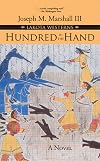
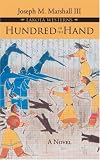
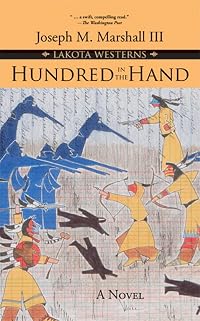
Seeking to complete the compelling story of the American West, best-selling Lakota author Joseph Marshall brings a new slant to the traditional Western: historical fiction written from the Native American viewpoint. This riveting novel takes place during the Battle of the Hundred in the Hand, otherwise known as the Fetterman Massacre of 1866. The story is told through the eyes of Cloud, a dedicated warrior who fights alongside a young Crazy Horse, as well as the white soldiers who mistake show more Cloud's redheaded wife for a captive. Beautifully written and reminiscent of the oral tradition, Hundred in the Hand brings new depth to the story of the battle and the Lakota people. show lessTags
Recommendations
















Member Recommendations

Member Reviews
(Disclaimer: This review is from my personal blog, and, as such, it is written from a Christian perspective.)
In 1866, Captain William J. Fetterman led 80 U.S. troops into a fight with the Lakota nation and their allies. None of the soldiers survived. This battle would come to be known as the Fetterman Massacre or Fetterman Fight. But, to the Lakota, it was known as the Battle of the Hundred in the Hand.
This historical fiction work focuses on the life of a Lakota man named Cloud, a participant in the Hundred in the Hand battle and preceding skirmishes between the Lakota and US forces. He is respected and looked to for leadership by the people of his nation. At the beginning of the story, Cloud and four other Lakota men discover white men show more on the Bozeman Trail. They intend to pass them by and report their presence to the elders, but one of their number, Rabbit by name, sneaks off and attempts to approach the white men for trading. When he is shot down, Cloud and the others must rescue him. They manage to get him away from the white men, but when they return to their village, the medicine man finds it necessary to amputate Rabbit’s broken arm. In revenge for the unprovoked attack, Cloud and some of his friends follow the band of white men and kill four of them. Rabbit slowly heals, but is bitter. Cloud is able to help him some by giving him a six-shooter, but the young man is still hardened towards white people and determined for revenge.
In the days to come, the Lakota discover that, although they had not yet given the whites any word on whether or not they will allow them to build forts along the Bozeman Trail, a train of whites has arrived to begin work on a fort regardless of lack of permission. Cloud and his friends spy on the train of Long Knives (a Native phrase referring to US soldiers with their swords) who settle along Buffalo Creek and prepare to build. In one of his stays at home, Cloud learns that his wife, Sweetwater Woman, is expecting their first child. The couple is overjoyed. Sweetwater Woman is a white woman by birth but was found wandering alone by a wagon trail when she was only a toddler and was then raised by the Lakota people.
Back along the Bozeman, Cloud and the other Lakota men, led by Cloud’s friend, Crazy Horse, prepare to steal the Long Knives’ horse herd. They infiltrate the herd disguised in white man’s clothes and make off with a large amount of horses and mules. In the fight, Rabbit kills three white men with malice in his heart. This will fuel him to later go on solitary vengeance raids, killing as many whites as he can.
Meantime, Cloud, Sweetwater Woman, and about twenty others go on an elk hunt. While they are traveling, a wandering white man named Max Hornby sees Sweetwater Woman through a glass, and, incensed to know there is a white woman held by Natives, he determines to rescue her. Setting out from Fort Philip Kearney with a trader’s supplies, he wanders through Lakota territory, hoping to find the right village. He is discovered by the men of Cloud’s village and held until the elders can decide what to do with him. As he waits fearfully, he sees Sweetwater Woman and goes running after her, calling out to her. Thinking he is trying to attack her, the Lakota men tackle him to the ground, and Cloud wants to kill him. But Sweetwater Woman’s eyes plead for mercy, and the old men say he should be turned loose – naked – near the fort. This unusual incident stirs up feelings of confusion and desire to know about her past in Sweetwater Woman.
Shortly after, Cloud and another Lakota leader, Grey Bull, attend a council of elders and warrior leaders. The decision is made to lead many fast and hard-hitting raids against the Long Knives, in an attempt to wear them down. Cloud leads one particular ambush along the Powder River Road, in which Rabbit blows a hole in a dead man’s arm – shattering it like his. While Sweetwater Woman worries about her biological past, Cloud goes on an elk hunt and, after a talk with the village medicine man, becomes concerned about Sweetwater Woman and decides to try to spend more time at home. After this, there is a failed ambush on a party of Long Knives that ride out to protect a wood-cutting train. After the failure, Hump and Grey Bull ride around, stirring up the young men and trying to prepare them for another ambush.
When Cloud goes out to hunt one day, he comes home to find his beloved Sweetwater Woman missing. It is bitterly cold and snowy outside, and he and other men are preparing to form a search party when Rabbit appears with her, having found her while he was hunting. When Sweetwater Woman explains herself – that she was looking for something she couldn’t find, that she kept walking trying to think, but she couldn’t find the answer because the answer was in her. She realized that she was meant to be the daughter of her Lakota mother and father and meant to be the wife of Cloud. She has found her peace, and she and Cloud embrace, weeping.
Back on the Powder River Road, Cloud and the other Lakota men endure bitter cold as they wait for another chance at the Long Knives. They choose a party of 10 men to act as decoys when the Long Knife relief column comes out of the fort to succor the wood-cutting train. Cloud and Crazy Horse are two of the ten. As they prepare for the attack, a young Mniconju prophecies of having a hundred Long Knife lives in his hand – victory for the Lakota and their Northern Cheyenne allies. The plan begins to work. As the wood-cutting train is attacked, eighty men under Captain William J. Fetterman ride out of the fort, and the decoys begin to harass them and insult them, teasing them by coming quite close and making obscene gestures. They finally manage to lead the column over Lodge Trail Ridge and down to Prairie Dog Creek. Then the trap is sprung. Over 150 Lakota and Northern Cheyenne warriors rise from ambush and wreak havoc on the troops. They close the ends of the ambush, and the Long Knives are trapped in the valley. The air is full of arrows, and when the chaos is over, all eighty soldiers are dead.
During the battle, Rabbit kills a white soldier who is preparing to kill Cloud. But as he shoots him, the Long Knife manages to get off a shot and kill Rabbit too. As Cloud bends over Rabbit, he himself is shot and remembers nothing else. When Cloud finally awakens, he is safe in his warm lodge, and his loving wife is sitting across from him, suckling their newborn daughter.
[Content Warning: “Hundred in the Hand” is definitely a book for older readers (young adult and up). There are multiple uses of “d..n” and “h..l”, but only in the scenes with white people. More problematically, Jesus’ name is taken in vain a couple times. Men are said to make obscene gestures, but they are never described. There is a reference to “testicles” once, when a man says something is not worth freezing them. There is another allusion to a man’s private parts freezing off, and, of course, there is the part where Hornsby is left naked and so has to cover his private parts with his hand. There is a mention that Sweetwater Woman sleeps naked, but there is nothing sexual here and this is just cultural fact. It was a cultural norm for Plains nations people to sleep naked. There is one vague allusion to sex, but it is more of an inference. It is never specifically referred to. A man is said to relieve himself, but that is all. About the worst thing in the book is that some of the horrible atrocities committed by white soldiers at Sand Creek are briefly described, including what was done with private parts. There is a brief, bloodless description of scalping at one point. The most bloody things are the description of a complex arm fracture and a description of how bullets sound when hitting different parts of men. There is also a very brief talk about mutilations after the Hundred in the Hand battle. Perhaps more emotionally disturbing than some of the violence is Rabbit’s lust for vengeance and the fear he sees in the white men he kills. “Dark images played in his memory, along with the sounds of gunfire and screams of terror and pain.” It says that “a dark joy glistened in his eyes“, and, as mentioned above, describes his shooting a man’s arm so that it’s mutilated like his. This is an accurate book about Lakota culture and lifeways, so there is the necessary amount of spiritual content. People burn sage and pray, offer tobacco to the four directions, and leave a bundle of sage as thanksgiving for an elk’s life. They refer to “Father Sky” and “Grandmother Earth” and call out to different animals and “Great Spirit Grandfather”. There are a couple men who are alleged to be able to see into the future. The medicine man, High Eagle, gives Cloud protection medicine to wear around his neck and tells him he saw something around his wife. “I thought it was a bad spirit trying to get at the baby. They do that sometimes.” Unfortunately, when he said this, he was right. I have read stories of missionaries whose children were threatened by evil spirits, and they had to pray hard for Jesus to protect them. Thankfully, in this case, High Eagle realizes that this is not what’s happening. High Eagle also speaks of intentionally inviting spirits (presumably good spirits) to enter Cloud’s lodge and look after them, especially the baby. The book also includes a brief description of a typical Lakota altar and says a man sings a “gathering-the-powers” song. High Eagle and Cloud also sense a shadow, something coming for the Long Knives. Some of the spiritual content in this book can be explained away, but there are other things that happen that are just part of life when you allow the devil to rule the way you worship and live your life. Since this is a book about conflict between Indigenous people and Caucasian people, there is expected talking bad about each other. The Lakota view the white people as unclean and verbally despise them, while calling themselves “true human beings“. The whites refer to the Lakota as savages and heathens and to the men by the animal term “bucks“. The book also refers to a biracial man as a “mulatto“. One man is mentioned who has a polygamous marriage, which was actually quite common. Finally, there is reference to gay or trans people. One is a prettily clad, effeminate man named Woman’s Dress. The other is a man who acts and dresses as a woman and is referred to as a “half-man“. Neither of these men’s lives or characteristics are gone into in great detail. They are simply mentioned, and it is not stated whether their way of living is right or wrong.]
Joseph Marshall III is one of the authors I trust. Mainly because he uses not just official, written sources but, also, oral tradition. He is Lakota himself, and Lakota is also his first language. He is widely respected for his cultural and historical knowledge and has been consulted for such projects as the Western mini-series “Into the West”. Besides knowing his work is trustworthy, I was able to see his accuracy in this book through the many little cultural details he included that you would miss if you don’t something about the culture. For instance, the calling a person not by their name but by a kinship relation name – uncle, cousin, etc. Another would be a wife handing up a husband’s rifle to him as he leaves for battle and saying “Remember, it is better to lay a warrior naked in death than to be wrapped up well with a heart of water inside.” There are many of these little nuggets tucked throughout the book that lend it an air of authenticity and educate you while you’re reading.
There are a couple things I want to mention that I disagreed with in this book. The first thing is that when the book describes Red Cloud’s desire to have great power, they describe this desire as Red Cloud changing and being “like a white man“. While I know that having an overall leader was not customary for the Lakota, I would disagree that some did not want that power. In every age and in every people, there are many who crave power. Each one of us has that innate desire in us that wants to rule. That’s why we raise our fist against God. Even among the Lakota, you can see this in the constant tribal conflicts that have occurred on their reservations (ex. Dick Wilson and the Goon squad). Another thing I disagree with also has to do with human nature. The book claims the Crow let the Lakota take their land because they knew they needed it. It also conveniently explains away intertribal warfare and calls fighting among the tribes “fighting for honor“. The other tribes are described as honorable enemies while the whites are portrayed as without honor of any kind. In reality, I can think of examples where Native tribes perpetuated great atrocities against each other. I do not say this to excuse Caucasians. There is no excuse for what our ancestors did. I say it to show that Native people, like all people, possess a fallen human nature and that fallen nature leads us to commit horrible sins against one another. We are all fallen and corrupt, and we all need Jesus.
The first time I read and reviewed this book, I didn’t enjoy it that much. I’m not sure why. I wrote before that “the plot is not very captivating”. But this time reading it, while I agree that the plot is not mesmerizing, I don’t think it’s supposed to be. It’s not supposed to be a thriller. It’s a story about life and about family and about defending that life and family. In some spots it’s slow in order to enjoy the beauty of the everyday, and in other spots it’s faster in order to get across the urgency of protecting that everyday. And I guess that’s why I like this book. Because it’s about peace and contentment and fighting to protect one’s own. This particular world is a place of suffering, but it’s also a place of beauty.
“The low voices and soft laughter of men and women floated up through the tall pines, rising into the cool night air of the Shining Mountains.”
I really enjoyed “Hundred in the Hand” this time through, and I am eager to see how it helps me with my own writing. The book is rough at times, but it has the sweet times too. There are so few culturally (and even historically) accurate Indigenous fiction books out there, that I find this book to be invaluable. If you want to see a Native world through Native eyes, read this book. It is very educational and very human. I have added this book and its sequel to my library, and I’m excited to read the sequel – “The Long Knives Are Crying”.
If you’re looking for a real story about the Lakota people and a true story about the Battle of the Hundred in the Hand, look no further. I recommend this book. show less
In 1866, Captain William J. Fetterman led 80 U.S. troops into a fight with the Lakota nation and their allies. None of the soldiers survived. This battle would come to be known as the Fetterman Massacre or Fetterman Fight. But, to the Lakota, it was known as the Battle of the Hundred in the Hand.
This historical fiction work focuses on the life of a Lakota man named Cloud, a participant in the Hundred in the Hand battle and preceding skirmishes between the Lakota and US forces. He is respected and looked to for leadership by the people of his nation. At the beginning of the story, Cloud and four other Lakota men discover white men show more on the Bozeman Trail. They intend to pass them by and report their presence to the elders, but one of their number, Rabbit by name, sneaks off and attempts to approach the white men for trading. When he is shot down, Cloud and the others must rescue him. They manage to get him away from the white men, but when they return to their village, the medicine man finds it necessary to amputate Rabbit’s broken arm. In revenge for the unprovoked attack, Cloud and some of his friends follow the band of white men and kill four of them. Rabbit slowly heals, but is bitter. Cloud is able to help him some by giving him a six-shooter, but the young man is still hardened towards white people and determined for revenge.
In the days to come, the Lakota discover that, although they had not yet given the whites any word on whether or not they will allow them to build forts along the Bozeman Trail, a train of whites has arrived to begin work on a fort regardless of lack of permission. Cloud and his friends spy on the train of Long Knives (a Native phrase referring to US soldiers with their swords) who settle along Buffalo Creek and prepare to build. In one of his stays at home, Cloud learns that his wife, Sweetwater Woman, is expecting their first child. The couple is overjoyed. Sweetwater Woman is a white woman by birth but was found wandering alone by a wagon trail when she was only a toddler and was then raised by the Lakota people.
Back along the Bozeman, Cloud and the other Lakota men, led by Cloud’s friend, Crazy Horse, prepare to steal the Long Knives’ horse herd. They infiltrate the herd disguised in white man’s clothes and make off with a large amount of horses and mules. In the fight, Rabbit kills three white men with malice in his heart. This will fuel him to later go on solitary vengeance raids, killing as many whites as he can.
Meantime, Cloud, Sweetwater Woman, and about twenty others go on an elk hunt. While they are traveling, a wandering white man named Max Hornby sees Sweetwater Woman through a glass, and, incensed to know there is a white woman held by Natives, he determines to rescue her. Setting out from Fort Philip Kearney with a trader’s supplies, he wanders through Lakota territory, hoping to find the right village. He is discovered by the men of Cloud’s village and held until the elders can decide what to do with him. As he waits fearfully, he sees Sweetwater Woman and goes running after her, calling out to her. Thinking he is trying to attack her, the Lakota men tackle him to the ground, and Cloud wants to kill him. But Sweetwater Woman’s eyes plead for mercy, and the old men say he should be turned loose – naked – near the fort. This unusual incident stirs up feelings of confusion and desire to know about her past in Sweetwater Woman.
Shortly after, Cloud and another Lakota leader, Grey Bull, attend a council of elders and warrior leaders. The decision is made to lead many fast and hard-hitting raids against the Long Knives, in an attempt to wear them down. Cloud leads one particular ambush along the Powder River Road, in which Rabbit blows a hole in a dead man’s arm – shattering it like his. While Sweetwater Woman worries about her biological past, Cloud goes on an elk hunt and, after a talk with the village medicine man, becomes concerned about Sweetwater Woman and decides to try to spend more time at home. After this, there is a failed ambush on a party of Long Knives that ride out to protect a wood-cutting train. After the failure, Hump and Grey Bull ride around, stirring up the young men and trying to prepare them for another ambush.
When Cloud goes out to hunt one day, he comes home to find his beloved Sweetwater Woman missing. It is bitterly cold and snowy outside, and he and other men are preparing to form a search party when Rabbit appears with her, having found her while he was hunting. When Sweetwater Woman explains herself – that she was looking for something she couldn’t find, that she kept walking trying to think, but she couldn’t find the answer because the answer was in her. She realized that she was meant to be the daughter of her Lakota mother and father and meant to be the wife of Cloud. She has found her peace, and she and Cloud embrace, weeping.
Back on the Powder River Road, Cloud and the other Lakota men endure bitter cold as they wait for another chance at the Long Knives. They choose a party of 10 men to act as decoys when the Long Knife relief column comes out of the fort to succor the wood-cutting train. Cloud and Crazy Horse are two of the ten. As they prepare for the attack, a young Mniconju prophecies of having a hundred Long Knife lives in his hand – victory for the Lakota and their Northern Cheyenne allies. The plan begins to work. As the wood-cutting train is attacked, eighty men under Captain William J. Fetterman ride out of the fort, and the decoys begin to harass them and insult them, teasing them by coming quite close and making obscene gestures. They finally manage to lead the column over Lodge Trail Ridge and down to Prairie Dog Creek. Then the trap is sprung. Over 150 Lakota and Northern Cheyenne warriors rise from ambush and wreak havoc on the troops. They close the ends of the ambush, and the Long Knives are trapped in the valley. The air is full of arrows, and when the chaos is over, all eighty soldiers are dead.
During the battle, Rabbit kills a white soldier who is preparing to kill Cloud. But as he shoots him, the Long Knife manages to get off a shot and kill Rabbit too. As Cloud bends over Rabbit, he himself is shot and remembers nothing else. When Cloud finally awakens, he is safe in his warm lodge, and his loving wife is sitting across from him, suckling their newborn daughter.
[Content Warning: “Hundred in the Hand” is definitely a book for older readers (young adult and up). There are multiple uses of “d..n” and “h..l”, but only in the scenes with white people. More problematically, Jesus’ name is taken in vain a couple times. Men are said to make obscene gestures, but they are never described. There is a reference to “testicles” once, when a man says something is not worth freezing them. There is another allusion to a man’s private parts freezing off, and, of course, there is the part where Hornsby is left naked and so has to cover his private parts with his hand. There is a mention that Sweetwater Woman sleeps naked, but there is nothing sexual here and this is just cultural fact. It was a cultural norm for Plains nations people to sleep naked. There is one vague allusion to sex, but it is more of an inference. It is never specifically referred to. A man is said to relieve himself, but that is all. About the worst thing in the book is that some of the horrible atrocities committed by white soldiers at Sand Creek are briefly described, including what was done with private parts. There is a brief, bloodless description of scalping at one point. The most bloody things are the description of a complex arm fracture and a description of how bullets sound when hitting different parts of men. There is also a very brief talk about mutilations after the Hundred in the Hand battle. Perhaps more emotionally disturbing than some of the violence is Rabbit’s lust for vengeance and the fear he sees in the white men he kills. “Dark images played in his memory, along with the sounds of gunfire and screams of terror and pain.” It says that “a dark joy glistened in his eyes“, and, as mentioned above, describes his shooting a man’s arm so that it’s mutilated like his. This is an accurate book about Lakota culture and lifeways, so there is the necessary amount of spiritual content. People burn sage and pray, offer tobacco to the four directions, and leave a bundle of sage as thanksgiving for an elk’s life. They refer to “Father Sky” and “Grandmother Earth” and call out to different animals and “Great Spirit Grandfather”. There are a couple men who are alleged to be able to see into the future. The medicine man, High Eagle, gives Cloud protection medicine to wear around his neck and tells him he saw something around his wife. “I thought it was a bad spirit trying to get at the baby. They do that sometimes.” Unfortunately, when he said this, he was right. I have read stories of missionaries whose children were threatened by evil spirits, and they had to pray hard for Jesus to protect them. Thankfully, in this case, High Eagle realizes that this is not what’s happening. High Eagle also speaks of intentionally inviting spirits (presumably good spirits) to enter Cloud’s lodge and look after them, especially the baby. The book also includes a brief description of a typical Lakota altar and says a man sings a “gathering-the-powers” song. High Eagle and Cloud also sense a shadow, something coming for the Long Knives. Some of the spiritual content in this book can be explained away, but there are other things that happen that are just part of life when you allow the devil to rule the way you worship and live your life. Since this is a book about conflict between Indigenous people and Caucasian people, there is expected talking bad about each other. The Lakota view the white people as unclean and verbally despise them, while calling themselves “true human beings“. The whites refer to the Lakota as savages and heathens and to the men by the animal term “bucks“. The book also refers to a biracial man as a “mulatto“. One man is mentioned who has a polygamous marriage, which was actually quite common. Finally, there is reference to gay or trans people. One is a prettily clad, effeminate man named Woman’s Dress. The other is a man who acts and dresses as a woman and is referred to as a “half-man“. Neither of these men’s lives or characteristics are gone into in great detail. They are simply mentioned, and it is not stated whether their way of living is right or wrong.]
Joseph Marshall III is one of the authors I trust. Mainly because he uses not just official, written sources but, also, oral tradition. He is Lakota himself, and Lakota is also his first language. He is widely respected for his cultural and historical knowledge and has been consulted for such projects as the Western mini-series “Into the West”. Besides knowing his work is trustworthy, I was able to see his accuracy in this book through the many little cultural details he included that you would miss if you don’t something about the culture. For instance, the calling a person not by their name but by a kinship relation name – uncle, cousin, etc. Another would be a wife handing up a husband’s rifle to him as he leaves for battle and saying “Remember, it is better to lay a warrior naked in death than to be wrapped up well with a heart of water inside.” There are many of these little nuggets tucked throughout the book that lend it an air of authenticity and educate you while you’re reading.
There are a couple things I want to mention that I disagreed with in this book. The first thing is that when the book describes Red Cloud’s desire to have great power, they describe this desire as Red Cloud changing and being “like a white man“. While I know that having an overall leader was not customary for the Lakota, I would disagree that some did not want that power. In every age and in every people, there are many who crave power. Each one of us has that innate desire in us that wants to rule. That’s why we raise our fist against God. Even among the Lakota, you can see this in the constant tribal conflicts that have occurred on their reservations (ex. Dick Wilson and the Goon squad). Another thing I disagree with also has to do with human nature. The book claims the Crow let the Lakota take their land because they knew they needed it. It also conveniently explains away intertribal warfare and calls fighting among the tribes “fighting for honor“. The other tribes are described as honorable enemies while the whites are portrayed as without honor of any kind. In reality, I can think of examples where Native tribes perpetuated great atrocities against each other. I do not say this to excuse Caucasians. There is no excuse for what our ancestors did. I say it to show that Native people, like all people, possess a fallen human nature and that fallen nature leads us to commit horrible sins against one another. We are all fallen and corrupt, and we all need Jesus.
The first time I read and reviewed this book, I didn’t enjoy it that much. I’m not sure why. I wrote before that “the plot is not very captivating”. But this time reading it, while I agree that the plot is not mesmerizing, I don’t think it’s supposed to be. It’s not supposed to be a thriller. It’s a story about life and about family and about defending that life and family. In some spots it’s slow in order to enjoy the beauty of the everyday, and in other spots it’s faster in order to get across the urgency of protecting that everyday. And I guess that’s why I like this book. Because it’s about peace and contentment and fighting to protect one’s own. This particular world is a place of suffering, but it’s also a place of beauty.
“The low voices and soft laughter of men and women floated up through the tall pines, rising into the cool night air of the Shining Mountains.”
I really enjoyed “Hundred in the Hand” this time through, and I am eager to see how it helps me with my own writing. The book is rough at times, but it has the sweet times too. There are so few culturally (and even historically) accurate Indigenous fiction books out there, that I find this book to be invaluable. If you want to see a Native world through Native eyes, read this book. It is very educational and very human. I have added this book and its sequel to my library, and I’m excited to read the sequel – “The Long Knives Are Crying”.
If you’re looking for a real story about the Lakota people and a true story about the Battle of the Hundred in the Hand, look no further. I recommend this book. show less
This one started off slowly, and I wasn't sure if I'd get through it. However, it got better and better as I read it. By the time I was done, I was hoping a next book was out there. The story follows Lakota and white characters up to and through a battle. It's clearly told from the perspective of the Lakota for the most part, but seems to fairly represent different perspectives. It shows people all around as generally thoughtful, mindful, and respectful. While the story left me feeling good about humanity, it also left me with questions about how realistic that perspective is.
An enjoyable read that I'd recommend!
An enjoyable read that I'd recommend!
I found it really interesting to read this book, to get to experience the American history, happenings and the West through the Lakota Native American's perspective.
We get to follow Cloud, a Young Lakota warrior and his and his comrades experiences with the White Americans, or the Long Knives. We get to meet Young warriors, shamans and the well known Lakota warrior leader Crazy Horse.
I listened to this book and greatly appreciated that it was the authour himself Reading Cloud's parts of the book. Having it read by the author makes the story come to alive even more, as Marshall III knows how to read his own work, with pace, breaks, tones etcetera. His dialect made the story even more alive. I also liked that when we got to follow the show more American Soldier that it was read differently (by someone else than the author, I didn't pick up on that) and with heavy accent as well.
Maybe the book deserves more closer to a 4, but it took me a while to get through it. show less
We get to follow Cloud, a Young Lakota warrior and his and his comrades experiences with the White Americans, or the Long Knives. We get to meet Young warriors, shamans and the well known Lakota warrior leader Crazy Horse.
I listened to this book and greatly appreciated that it was the authour himself Reading Cloud's parts of the book. Having it read by the author makes the story come to alive even more, as Marshall III knows how to read his own work, with pace, breaks, tones etcetera. His dialect made the story even more alive. I also liked that when we got to follow the show more American Soldier that it was read differently (by someone else than the author, I didn't pick up on that) and with heavy accent as well.
Maybe the book deserves more closer to a 4, but it took me a while to get through it. show less
John Richard Cloud lives in the Rosebud Sioux Indian Reservation. In 1920 he, his two daughters and his grandson traveled to visit the battle site of the Fetterman Massacre of 1866. This battle is known to the Lakota people as the Battle of the Hundred in the Hand. As they stand at the memorial his grandson Justin and daughters ask him to share with them his recollections.
From Cloud we learn the riveting story of what life for the Lakota was like at that time on their lands and the intrusion of the whites. Their daily lives in the village and of hunting. The insight into the life of the Lakota people and their point of view is enlightening. The energy of this historical fiction can be felt through the bravery and honor of Cloud. As well show more as the perspective of anger and racism shared by both the young Lakota warrior Rabbit and the Blacksmith Hornsby. Hornsby came to the Lakota lands from east of the Hudson River.
The clash of the two cultures as it builds up to the aforementioned battle is well told. The tension starts too build as their enemy goes about invading their land even while pretending to ask permission to build forts. The Lakota start to scout and defend their land that leads up to the climatic battle. The sections that deal with Cloud telling us his story read as if we are there and listening to this wonderful tale. This was an enjoyable read and would have been perfect if told only from the Lakota perspective. I look forward to reading more books from the Lakota Western series. show less
From Cloud we learn the riveting story of what life for the Lakota was like at that time on their lands and the intrusion of the whites. Their daily lives in the village and of hunting. The insight into the life of the Lakota people and their point of view is enlightening. The energy of this historical fiction can be felt through the bravery and honor of Cloud. As well show more as the perspective of anger and racism shared by both the young Lakota warrior Rabbit and the Blacksmith Hornsby. Hornsby came to the Lakota lands from east of the Hudson River.
The clash of the two cultures as it builds up to the aforementioned battle is well told. The tension starts too build as their enemy goes about invading their land even while pretending to ask permission to build forts. The Lakota start to scout and defend their land that leads up to the climatic battle. The sections that deal with Cloud telling us his story read as if we are there and listening to this wonderful tale. This was an enjoyable read and would have been perfect if told only from the Lakota perspective. I look forward to reading more books from the Lakota Western series. show less
Learned a lot - a little dry.
Ratings
Members
- Recently Added By
Lists

Lakota (Sioux) Nation
12 works; 1 member

Top Five Books of 2025
954 works; 303 members
Author Information

40+ Works 2,466 Members
Joseph M. Marshall III, historian, educator, and storyteller, is the author of six previous books, including The Lakota Way: Stories and Lessons for Living, which was a finalist for the PEN Center USA West Award in 2002. He was raised on the Rosebud Sioux Indian Reservation and his first language is Lakota. Marshall is a recipient of the Wyoming show more Humanities Award, and he has been a technical advisor and actor in television movies, including Return to Lonesome Dove. He makes his home on the Northern Plains show less
Awards and Honors
Series

Common Knowledge
- Canonical title
- Hundred in the Hand
- People/Characters
- John Richard Cloud; Rabbit; Blacksmith Hornsby; Colonel Carrington
- Important places
- South Dakota, USA
Classifications
Statistics
- Members
- 54
- Popularity
- 564,491
- Reviews
- 5
- Rating
- (3.96)
- Languages
- English
- Media
- Paper, Audiobook, Ebook
- ISBNs
- 9
- ASINs
- 2