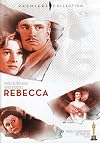
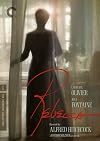
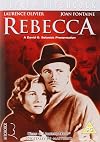
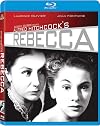
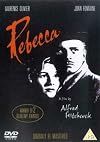
Rebecca [1940 film]
by Alfred Hitchcock (Director), Joan Harrison (Screenwriter), Robert E. Sherwood (Screenwriter)
On This Page
Description
A young woman who believes she has found her heart's desire when she marries the dashing aristocratic widower Maxim de Winter. But upon moving to Manderley, her groom's baroque ancestral mansion, she soon learns that his deceased wife's memory haunts not only the home but the temperamental, brooding Maxim as well.Tags
Recommendations






Member Reviews
“Last night I dreamt I went to Manderly again….”
Joan Fontaine is captivating in Hitchcock’s beautifully realized romantic drama of a new wife competing with a memory so strong it hangs like a shadow over every facet of her existence. Robert E. Sherwood and Joan Harrison crafted a riveting screenplay from Michael Hogan and Scottish mystery writer Phillip MacDonald’s adaptation of Daphne Du Maurier’s now classic tale of dark romance.
Franz Waxman’s lovely score and George Barnes’ lushly photographed scenes frame David O. Selznick’s stellar production like a mist forming on the grounds of Manderly. A wonderful cast of screen veterans make this very long film a mesmerizing drama from which you can’t look away.
Olivier show more gives a strong performance as the dashing yet troubled widower, Maxim, but it is Fontaine as the young and unsure girl overwhelmed by his romantic attentions who stole our hearts and became a film favorite, winning the Academy Award the next year for Hitchcock’s Suspicion.
Fontaine is swept off her feet by the debonair but brooding widower, Maxim. Mousy and shy, there is an endearing charm to her performance in the early portion of the film which has the viewer falling in love with her. It all seems like a dream to her, and Hitchcock uses a rainy windshield to give she and the viewer a snow globe-like first glance at Manderly, further augmenting the story’s dreamlike quality.
Their fairy-tale romance has its darker elements, however, and from her first moments at Manderly she begins to realize that Rebecca, though long-dead, is in many ways still very much alive. She must compete with Rebecca’s figurative ghost at every turn, diminishing her self-confidence. Friends like Reginald Denny and Nigel Bruce cannot offset the twisted loyalty of Maxim’s housekeeper, Miss Danvers (Judith Anderson).
Just when she finds the strength to break free from Rebecca’s memory, a battered boat and startling revelations from Maxim about his marriage turn everything upside down. George Sanders causes much trouble during this phase of the story but the revelations are not as yet fully disclosed; nor is the outcome for Manderly and the couple certain in any way. Fontaine is amazing as she grows up and becomes an anchor for Maxim, finally becoming Mrs. De Winter.
A romantically haunting drama with a tremendously enchanting performance from Joan Fontaine, Rebecca is a cinematic masterpiece and a must-see film. show less
Joan Fontaine is captivating in Hitchcock’s beautifully realized romantic drama of a new wife competing with a memory so strong it hangs like a shadow over every facet of her existence. Robert E. Sherwood and Joan Harrison crafted a riveting screenplay from Michael Hogan and Scottish mystery writer Phillip MacDonald’s adaptation of Daphne Du Maurier’s now classic tale of dark romance.
Franz Waxman’s lovely score and George Barnes’ lushly photographed scenes frame David O. Selznick’s stellar production like a mist forming on the grounds of Manderly. A wonderful cast of screen veterans make this very long film a mesmerizing drama from which you can’t look away.
Olivier show more gives a strong performance as the dashing yet troubled widower, Maxim, but it is Fontaine as the young and unsure girl overwhelmed by his romantic attentions who stole our hearts and became a film favorite, winning the Academy Award the next year for Hitchcock’s Suspicion.
Fontaine is swept off her feet by the debonair but brooding widower, Maxim. Mousy and shy, there is an endearing charm to her performance in the early portion of the film which has the viewer falling in love with her. It all seems like a dream to her, and Hitchcock uses a rainy windshield to give she and the viewer a snow globe-like first glance at Manderly, further augmenting the story’s dreamlike quality.
Their fairy-tale romance has its darker elements, however, and from her first moments at Manderly she begins to realize that Rebecca, though long-dead, is in many ways still very much alive. She must compete with Rebecca’s figurative ghost at every turn, diminishing her self-confidence. Friends like Reginald Denny and Nigel Bruce cannot offset the twisted loyalty of Maxim’s housekeeper, Miss Danvers (Judith Anderson).
Just when she finds the strength to break free from Rebecca’s memory, a battered boat and startling revelations from Maxim about his marriage turn everything upside down. George Sanders causes much trouble during this phase of the story but the revelations are not as yet fully disclosed; nor is the outcome for Manderly and the couple certain in any way. Fontaine is amazing as she grows up and becomes an anchor for Maxim, finally becoming Mrs. De Winter.
A romantically haunting drama with a tremendously enchanting performance from Joan Fontaine, Rebecca is a cinematic masterpiece and a must-see film. show less
A newlywed's household appears to be obsessed with her husband's dead wife.
It might have been great, but there are a few major faults. One is how frustrating it is to continually see the protagonist not doing anything about her problems. The bit that almost ruined the movie for me is the costume ball scene; it's extremely suspenseful, but for all the wrong reasons (you know exactly what's going to happen, it's horrible and awkward and you don't want it to happen, and you have to sit there just waiting for it...).
Concept: B
Story: B
Characters: D
Dialog: A
Pacing: B
Cinematography: A
Special effects/design: A
Acting: A
Music: B
Enjoyment: B
GPA: 3.2/4
It might have been great, but there are a few major faults. One is how frustrating it is to continually see the protagonist not doing anything about her problems. The bit that almost ruined the movie for me is the costume ball scene; it's extremely suspenseful, but for all the wrong reasons (you know exactly what's going to happen, it's horrible and awkward and you don't want it to happen, and you have to sit there just waiting for it...).
Concept: B
Story: B
Characters: D
Dialog: A
Pacing: B
Cinematography: A
Special effects/design: A
Acting: A
Music: B
Enjoyment: B
GPA: 3.2/4
The Du Maurier novel this is based on is a favorite--and I think is even better than the film, but I don't expect this particular adaptation to ever be matched. Joan Fontaine as the new Mrs de Winter, Laurence Oliver as her husband, Judith Anderson as Mrs Danvers and directed by Alfred Hitchcock. What more needs to be said? A classic.
The second best romanic suspense film ever made.
A self-conscious bride is tormented by the memory of her husband's dead first wife. (From IMDb)
"Ontem à noite, sonhei que voltava a Manderley. O caminho até a casa estava tomado por uma selva sombria e tortuosa. A natureza havia dominado, mas a casa ainda estava lá. Manderley. Reservada e silenciosa, como sempre foi. Ressurgida das cinzas." Assim começa "Rebecca", em cujo enredo uma jovem casada com um viúvo milionário se sente perseguida pelas memórias da falecida esposa dele, Rebecca. Mas a origem da história é questionada desde a primeira edição do livro, em 1938. Há diversos elementos em comum com uma obra brasileira, lançada quatro anos antes: "A sucessora", de Carolina Nabuco, filha de Joaquim Nabuco, que se aventurou na ficção ao ter a ideia do conto "O Retrato da primeira esposa", que evoluiu até virar "A show more sucessora". Conta a história de Marina, uma jovem que vive numa fazenda no interior do Rio de Janeiro. Ela conhece e se apaixona pelo viúvo Roberto, um empresário rico com quem se casa. Ao se mudar para a mansão dele na capital, passa a sentir a pressão das expectativas da sociedade cosmopolita carioca, principalmente por ser constantemente comparada à falecida esposa de Roberto, Alice, cuja memória a parece perseguir. A obra foi elogiada, mas só ficou conhecida 4 anos depois, com o lançamento de "Rebecca". As semelhanças não param nas premissas dos dois livros. A ingenuidade e a origem das protagonistas, as relações que desenvolvem com seus esposos e os ambientes têm muito em comum. No jornal Correio da Manhã, à época, o jornalista Álvaro Lins deu nomes aos bois: para ele, Daphne du Maurier plagiara Carolina Nabuco, a qual concordou com Lins. Em sua autobiografia, a escritora diz acreditar que Daphne du Maurier escreveu "Rebecca" após ler um manuscrito de "A sucessora" em inglês: "Eu havia traduzido o livro com esperança de vê-lo editado nos EUA. Esta tradução foi oferecida — sem êxito — a várias editoras por uma agência literária em Nova York, a quem confiei o manuscrito para esse fim, mediante contrato. Eu havia pedido a esse agente literário que tentasse também encontrar-me um editor na Inglaterra". Depois de ler "Rebecca", a brasileira entrou em contato com o agente literário, perguntando-lhe se tinha enviado o manuscrito para algum editor em Londres. Inicialmente ele respondeu que não. Mas, após as acusações de plágio reverberarem na imprensa internacional, voltou atrás e disse que sim. show less
May 19, 2026English (UK)
Rebecca is a movie whose most defining character is a dead woman’s domineering presence. Hitchcock tells a story of woman maturation, growth and struggle of “overidentification” with other women, while casting a nameless young girl, with no clear self-identity, as his heroine. And, yes. Hitchcock made significant changes to the ending of Daphne du Maurier's novel Rebecca. In du Maurier's novel, the ending is quite different from the film:
Novel: After the fire at Manderley, Maxim de Winter confesses to the murder of Rebecca, and he is arrested. The final scenes show him in court, where it's suggested he might be sentenced to death or life imprisonment. The book ends with the narrator reflecting on the destruction of Manderley and show more her uncertain future with Maxim.
Film: In Hitchcock's adaptation, the revelation is that Rebecca had terminal cancer, and she provoked Maxim into killing her, which changes the nature of his culpability. Instead of being arrested, the inquest rules her death as an accident. However, the burning of Manderley still happens, but it's implied that Mrs. Danvers, the housekeeper, set the fire. The film ends with Maxim and the narrator escaping together, with their future left ambiguous but with the implication they might start anew.
These changes were made due to pressures from the Censorship (Hays Code,) which governed what could be shown in films at the time, particularly regarding crime and morality. Hitchcock had to ensure that the film had a more morally acceptable conclusion. Additionally, these alterations helped to shift the focus from dark inevitability to a more open, albeit uncertain, hope for the protagonists. show less
Novel: After the fire at Manderley, Maxim de Winter confesses to the murder of Rebecca, and he is arrested. The final scenes show him in court, where it's suggested he might be sentenced to death or life imprisonment. The book ends with the narrator reflecting on the destruction of Manderley and show more her uncertain future with Maxim.
Film: In Hitchcock's adaptation, the revelation is that Rebecca had terminal cancer, and she provoked Maxim into killing her, which changes the nature of his culpability. Instead of being arrested, the inquest rules her death as an accident. However, the burning of Manderley still happens, but it's implied that Mrs. Danvers, the housekeeper, set the fire. The film ends with Maxim and the narrator escaping together, with their future left ambiguous but with the implication they might start anew.
These changes were made due to pressures from the Censorship (Hays Code,) which governed what could be shown in films at the time, particularly regarding crime and morality. Hitchcock had to ensure that the film had a more morally acceptable conclusion. Additionally, these alterations helped to shift the focus from dark inevitability to a more open, albeit uncertain, hope for the protagonists. show less
Jan 17, 2025Portuguese (Brazil)
Members
- Recently Added By
Lists

Great Films Based on Books
319 works; 140 members
Author Information

Alfred Hitchcock was born on August 13, 1899 in London, England. He graduated from St. Ignatius College, where he studied engineering, and took art courses at the University of London. He worked briefly as a technical calculator for a cable company, but soon decided to focus on art, becoming an advertising layout draftsman for a London department show more store. In 1920, he got a job writing and illustrating title cards for silent pictures. He rose quickly, to script writer, art director and assistant director. By 1925, he had become a director, making a melodrama called The Pleasure Garden. In 1929, he directed Blackmail, Britain's first widely successful talking feature. The other movies he directed in England included The Lodger (U.S. title, The Case of Jonathan Drew), The Man Who Knew Too Much, The 39 Steps, and The Lady Vanishes. He was approached by producer David O. Selznick about directing in the United States, and he accepted so he could take advantage of the better-equipped American studios. His first American film, Rebecca, won the Academy Award for best picture. The other movies he directed in the United States included Shadow of a Doubt, Spellbound, Rear Window, Vertigo, Psycho, The Birds, Frenzy, and Family Plot. In 1979, he was awarded the American Film Institute Life Achievement Award. In 1980, he was knighted by Queen Elizabeth II. He died from liver failure and heart problems on April 29, 1980 at the age of 80. (Bowker Author Biography) show less

All Editions
Some Editions
Awards and Honors
Series
Belongs to Publisher Series
Work Relationships
Is contained in
Is an adaptation of
Common Knowledge
- Canonical title
- Rebecca [1940 film]
- Original title
- Rebecca
- Original publication date
- 1940-03-27
- People/Characters
- The Second Mrs. de Winter (Joan Fontaine); Maxim de Winter (Laurence Olivier)
- Important places
- Manderley, Cornwall, England, UK; Cornwall, England, UK; England, UK; French Riviera; Monte Carlo, Monaco; Monaco
- Related movies
- Rebecca (1940 | IMDb)
- Original language
- English
- Canonical DDC/MDS
- 791.4372
- Canonical LCC
- PN1997
Classifications
- DDC/MDS
- 791.4372 — Arts & recreation Recreation, sports, and performing arts Public performances Motion pictures, radio, television, podcasting Motion pictures Films; screenplays Single films
- LCC
- PN1997 — Language and Literature Literature (General) Literature (General) Drama Motion pictures Plays, scenarios, etc.
Statistics
- Members
- 318
- Popularity
- 100,672
- Reviews
- 8
- Rating
- (4.21)
- Languages
- English, French, Italian, Spanish
- ISBNs
- 13
- UPCs
- 9
- ASINs
- 23