History of the Conquest of Mexico
by William H. Prescott
On This Page
Description
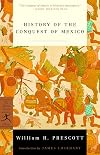
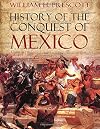
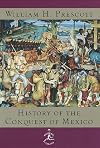
In 1519, Hernando Cortes arrived in Mexico to investigate stories of a wealthy empire. What he encountered was beyond his wildest dreams - an advanced civilisation with complex artistic, political and religious systems (involving extensive human sacrifice) and replete with gold. This was the Aztec empire, headed by the aloof emperor, Montezuma. With just a handful of men, Cortes achieved the impossible, crushing the Aztecs and their allies, and effectively annexing the whole territory for show more Spain. One of the most extraordinary stories of conquest in mankind's history, it is told here in the classic account by the American historian W. H. Prescott. show lessTags
Recommendations






















Member Recommendations
Member Reviews
It is indeed an epic tale. I hadn’t realised how organised and prosperous the Aztec state was. Prescott is, of course, a little influenced by his 19th century ideas of civilised people and savages, but he is enough of a historian to let the story speak for itself. He produces a story of bravery of a small band who through coincidences and good leadership conquer a country, a story of heroism on a Homeric scale. And yet he is aware of the evils they cause. Perhaps he emphasises too much the human sacrifices, on such a scale that they must surely have caused the collapse of the system sooner or later.
I was struck by the resemblances with Cromwell’s conquest of Ireland. Both the Spaniards and the Cromwellians were convinced that they show more were fighting for Christ, and that this justified the bloodshed. And yet the Spanish had Bishop Las Casas to argue against their actions. And the more radical sections of Cromwell’s army were not merely radical in religion (no power for any bishop or presbytery [district committee]). They were also radical in politics. There were those who said that God would not welcome converts at the point of the gun. The Leveller William Walwyn said “the cause of the Irish natives in seeking their just freedoms … was the very same with our cause here in endeavouring our own rescue and freedom from the power of oppressors,” 1646. show less
I was struck by the resemblances with Cromwell’s conquest of Ireland. Both the Spaniards and the Cromwellians were convinced that they show more were fighting for Christ, and that this justified the bloodshed. And yet the Spanish had Bishop Las Casas to argue against their actions. And the more radical sections of Cromwell’s army were not merely radical in religion (no power for any bishop or presbytery [district committee]). They were also radical in politics. There were those who said that God would not welcome converts at the point of the gun. The Leveller William Walwyn said “the cause of the Irish natives in seeking their just freedoms … was the very same with our cause here in endeavouring our own rescue and freedom from the power of oppressors,” 1646. show less
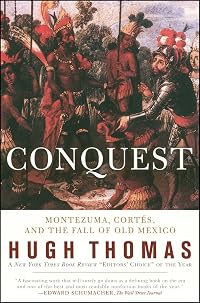
An Artifact from 1843, Mr. Prescott's book continues to be reprinted though mostly in display editions. My favourite replacement for this book is the more recent account by Hugh Thomas, but Prescott's book has its charms. The ethnological component is of course greatly out of date, but the more detailed sections of the conflict's details have some interest. A word about style: William Hickling Prescott was greatly influenced by Gibbon's weighty prose, and by the English writer's penchant for snide footnotes. But, if you are interested in a book written by an American which seems to have influenced at least the political rhetoric of the incomplete replacement of the First Nations of America, and steeped in anti-Catholic attitude, show more pleasant times can be spent with Prescott's opus. Epigramry is often sought for, and some of the product is decent.
There is a considerable and useful part of the book dedicated to biographies of Prescott's sources, show less
There is a considerable and useful part of the book dedicated to biographies of Prescott's sources, show less
A tale so fantastic that it would not have have succeeded as fiction.
Very well researched, very interesting, very difficult to find used. I spent several months looking for it on two continents. The fact that it was written 150 years ago means the language is quite nice to read, with many unusual terms. Unfortunately, it also provides a few politically incorrect shocks though it is obvious the writer was very fair and open-minded by the standards of his time.
Read this back in college when i was in the ROTC and actually really enjoyed the history of it
A most exciting, thrilling book - hard to believe it is all true.
Fine 17-volume set, leatherbound with marbled endpapers and sides of the textblock.
Members
- Recently Added By
Lists

Folio Society
831 works; 53 members

Trinity College Booklist (1951): Class Four, History
120 works; 2 members

1964 College Preparatory Reading List
202 works; 8 members

Mustich's 1000 Books to Read Before You Die: A Life Changing List
1,001 works; 19 members

Book Titles Mentioned In Newberry Medal And Honor Books
884 works; 3 members
Author Information

164+ Works 2,885 Members
Some Editions
Awards and Honors
Notable Lists
Series
Belongs to Publisher Series
Work Relationships
Common Knowledge
- Canonical title
- History of the Conquest of Mexico
- Original title
- The History of the Conquest of Mexico, with a preliminary view of the Ancient Mexican Civilization, and the Life of the Conqueror, Hernando Cortés; History of the conquest of Mexico.
- Alternate titles
- Conquest of Mexico
- Original publication date
- 1843
- People/Characters
- Hernán Cortés; Moctezuma II; Malinche
- Important places
- Mexico
- First words*
- Primo volume = Di tutto quell'esteso impero che un tempo riconosceva l'autorità spagnola nel Nuovo Mondo, nessuna parte, per interesse e importanza, può essere paragonata al Messico; e ciò, sia che se ne consideri la varie... (show all)tà del suolo e del clima; le inesauribili riserve delle ricchezze minerarie; il paesaggio, grandioso e pittoresco in modo incomparabile; il carattere dei suoi antichi abitatori, i quali non soltanto sorpassano di gran lunga per intelligenza quella delle altre razze nordamericane, ma ci ricordano, con i loro monumenti, le civiltà primitive dell'Egitto e dell'India; o sia, finalmente, che si considerino le circostanze peculiari della sua conquista, avventurose e romantiche quanto qualsiasi leggenda immaginata da trovadori normanni o italiani. //
Secondo volume = L'antica Città di Mexico occupava lo stesso luogo occupato dalla capitale moderna. - Last words*
- (Click to show. Warning: May contain spoilers.)Primo volume = Con tale proposito, chiese all'imperatore il permesso di visitare i principali edifici pubblici. // Secondo volume = Tale è il ritratto, che ci è stato lasciato dalla mano più fedele e più competente per tracciarlo, di Hernando Cortés, Conquistatore del Messico.
- Original language
- English
*Some information comes from Common Knowledge in other languages. Click "Edit" for more information.
Classifications
- Genres
- History, Nonfiction, General Nonfiction
- DDC/MDS
- 972.02 — History & geography History of North America Mexico, Central America, West Indies, Bermuda Mexico, Central America, West Indies, Bermuda Discovery and Spanish rule (1516-1810)
- LCC
- F1230 .P9366 — Local History of the United States, Canada and Latin America Latin America. Spanish America Mexico
- BISAC
Statistics
- Members
- 881
- Popularity
- 30,793
- Reviews
- 12
- Rating
- (4.01)
- Languages
- 8 — Czech, English, Finnish, French, German, Italian, Spanish, Swedish
- Media
- Paper, Audiobook, Ebook
- ISBNs
- 58
- UPCs
- 1
- ASINs
- 72