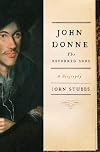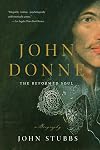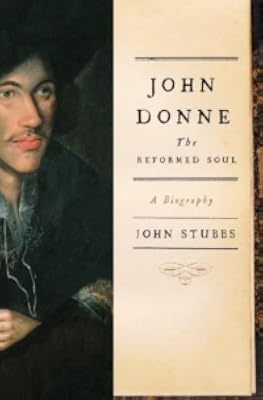
John Donne: The Reformed Soul: A Biography
by John Stubbs
On This Page
Description
Metamorphosing from scholar to buccaneer, from outcast to establishment figure, John Donne emerged as one of the greatest English poets, concentrating the paradoxes of his age within his own crises of desire and devotion. Following Donne from plague-ridden streets to palaces, from the taverns on the Bankside to the pulpit of St. Paul's, John Stubbs's biography is a vivid portrait of an extraordinary writer and his country at a time of bewildering and cruel transformation.--From publisher show more description. show lessTags
Recommendations












Member Reviews
I often find fault with subtitles for the eye-rolling breathlessness they seem to lend to a book's cover (...The Fair That Changed America, The Men Who Made America Rich, ...The Election That Changed the Country, The Drink That Changed the World, Five Friends Whose Curiosity Changed the World, &c.). You get the point. The subtitle to John Stubbs' new biography of poet and cleric John Donne, however, is well chosen and utterly without hyperbole. John Donne: The Reformed Soul is the story of a man whose life, whose very soul, was indeed reformed, reshaped, reborn - in many and various ways, no less - over the course of his earthly existence.
Stubbs says it best, in a closing chapter: "For almost sixty years, Donne ... survived by altering. show more He had transformed himself from a closeted Catholic, as boy and youth, to a government secretary; from social outcast, after he married, to a pillar of the community, as a priest; from avant-garde poet, in his writing, to a popular preacher" (p. 442). Donne, who saw his brother persecuted to death for clinging to the Catholic faith, became a staunch defender of Anglicanism and dean of St. Paul's. The man who wrote the barely-veiled lines "License my roving hands, and let them go, / Before, behind, between, above, below" as a youthful poet, who married for love and came close to committing professional suicide by doing so would, in his bereavement, preach a marriage sermon in which he called that sacrament "but a continuall fornication sealed with an oath" (p. 350).
Donne mellowed on that last point within a year or so, to be fair, but his life, as Stubbs vibrantly recounts, was indeed a life of reformation. As his nation and the world changed around him, Donne changed as well.
This is the second exhaustive biography I've read in the last month or so that has brought a historical figure I hadn't known much about to life for me (the other was Hugh Brogan's Alexis de Tocqueville, which I reviewed here). Stubbs does an admirable job of fleshing out Donne's life and works, though it is the life with which he concerns himself primarily. Michael Dirda and Thomas Mallon point out in their reviews that Stubbs may be too quick to glean autobiographical details from Donne's poetry, but these usages seem to be tactfully done and appropriately hedged so as to make them unobjectionable. The research is thorough, and the notes and bibliography are both reasonably comprehensive and useful. Like the Brogan book, this no breezy weekend read, but it too will reward your attention.
http://philobiblos.blogspot.com/2007/05/book-review-john-donne-reformed-soul.htm... show less
Stubbs says it best, in a closing chapter: "For almost sixty years, Donne ... survived by altering. show more He had transformed himself from a closeted Catholic, as boy and youth, to a government secretary; from social outcast, after he married, to a pillar of the community, as a priest; from avant-garde poet, in his writing, to a popular preacher" (p. 442). Donne, who saw his brother persecuted to death for clinging to the Catholic faith, became a staunch defender of Anglicanism and dean of St. Paul's. The man who wrote the barely-veiled lines "License my roving hands, and let them go, / Before, behind, between, above, below" as a youthful poet, who married for love and came close to committing professional suicide by doing so would, in his bereavement, preach a marriage sermon in which he called that sacrament "but a continuall fornication sealed with an oath" (p. 350).
Donne mellowed on that last point within a year or so, to be fair, but his life, as Stubbs vibrantly recounts, was indeed a life of reformation. As his nation and the world changed around him, Donne changed as well.
This is the second exhaustive biography I've read in the last month or so that has brought a historical figure I hadn't known much about to life for me (the other was Hugh Brogan's Alexis de Tocqueville, which I reviewed here). Stubbs does an admirable job of fleshing out Donne's life and works, though it is the life with which he concerns himself primarily. Michael Dirda and Thomas Mallon point out in their reviews that Stubbs may be too quick to glean autobiographical details from Donne's poetry, but these usages seem to be tactfully done and appropriately hedged so as to make them unobjectionable. The research is thorough, and the notes and bibliography are both reasonably comprehensive and useful. Like the Brogan book, this no breezy weekend read, but it too will reward your attention.
http://philobiblos.blogspot.com/2007/05/book-review-john-donne-reformed-soul.htm... show less
As a poet, John Donne's current reputation owes much to the championship of T.S. Eliot, whose critical assessments of Donne gave him currency in the mid-twentieth century. This biography traces his life not only as a poet, but also as a cleric and as a courtier. Although this book follows the standard frame of a biography ("birth, copulation and death" as Eliot might say), as Donne's life was one of the mind, it is primarily an intellectual biography, tracing the changes in Donne's mode of thought and evolving conscience. As such it is spare of the kinds of touchstones the biographies of more theatrical men might bear, but that does not make it less interesting. Most perplexing is Donne's famed marriage, and his attitudes both before show more and after toward women and the institution of marriage, but, as a member of a family that included Catholic martyr Thomas More in its escutcheon, the path by which the son of a Catholic mother became an Anglican priest is also intriguing. show less
I returned this to the library without getting much past the introduction. It's just too dense for reading in small bites, and I don't have the luxury of extended reading sessions these days. I love John Donne, though, so I'll keep this on my To Read list, to revisit when I'm enjoying a more relaxed lifestyle
I returned this to the library without getting much past the introduction. It's just too dense for reading in small bites, and I don't have the luxury of extended reading sessions these days. I love John Donne, though, so I'll keep this on my To Read list, to revisit when I'm enjoying a more relaxed lifestyle
Ratings
Members
- Recently Added By
Published Reviews
ThingScore 75
added by CtrSacredSciences
Lists

In Our Time books
4,934 works; 2 members
Author Information

3 Works 557 Members
John Stubbs received his PhD in Renaissance literature from Cambridge University. His biography John Donne: The Reformed Soul was shortlisted for the Costa Award and won a Royal Society of Literature Jerwood Award. He lives in Slovenia.
Awards and Honors
Common Knowledge
- People/Characters
- John Donne
- Important places
- London, England, UK
- Important events
- 17th century; 16th century
Classifications
Statistics
- Members
- 316
- Popularity
- 100,774
- Reviews
- 4
- Rating
- (3.98)
- Languages
- English
- Media
- Paper, Ebook
- ISBNs
- 6
- UPCs
- 1
- ASINs
- 2