The United States of Paranoia: a Conspiracy Theory
by Jesse Walker
On This Page
Description
Presents a comprehensive history of conspiracy theories in American culture and politics, from the colonial era to the War on Terror.Tags
Recommendations











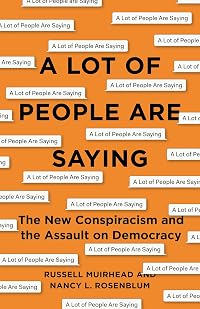









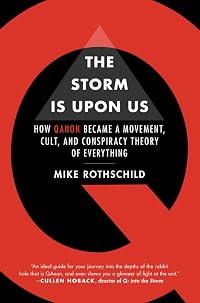









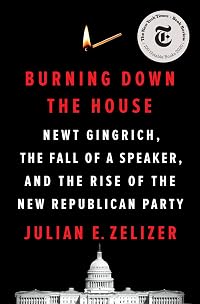
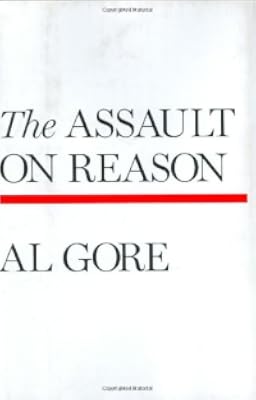














Member Recommendations

Member Reviews
Compelling evidence that Roger Ailes's propaganda machine would have thrived in the 19th century and earlier. Well, that's no real surprise: most of his audience are post-Enlightenment New Dark Ages throwbacks anyway.
Walker puts together a nice compendium of how the nut case conspiracy theorists of the truther and birther wackos are not unique to the 21st century. The United States has always had its pet fringe beliefs...except that they're less fringe and a lot more mainstream than folks care to admit.
Four stars because Walker spent a whole chapter on my favorite lunatic, Robert Anton Wilson.
Walker puts together a nice compendium of how the nut case conspiracy theorists of the truther and birther wackos are not unique to the 21st century. The United States has always had its pet fringe beliefs...except that they're less fringe and a lot more mainstream than folks care to admit.
Four stars because Walker spent a whole chapter on my favorite lunatic, Robert Anton Wilson.
I'm more familiar with climate change denial than with American paranoia, though the types seem similar. I'm not convinced that this kind of book pointing out the logical flaws really helps. The logical flaws are obvious; has any climate denier ever changed their mind when they discover that all climate scientists already know that the climate has always changed? The most useful advice here - and I think the only thing that might actually work - is to keep dialogue open by not making them feel attacked. Like Trump, they feed off a sense of oppression. Highlighting facts that show they're wrong will just make them more determined. Theoretically, showing they're being played for suckers should be the exception to that. But climate show more 'sceptics' don't seem to mind if the papers they cite about a global conspiracy are funded by fossil fuel interests.
So you have to act as if you really might be interested in what they say. 'That's interesting; I hadn't heard of that. So what does Gates get out of it? Wow! How do you know that? What makes them think that?...' I suspect real skepticism might be the stake through the heart of fake skepticism. The trouble is that it's almost impossible to do, because the arguments are so maddeningly stupid.
What about the questions: “Why engage at all? If people want to believe stupid things, let them. Nobody has been given a mission to correct every dumb idea in the world. So it makes little sense to try. Apart from anything else, why put the fake-believers through the humiliation. Don't they deserve some basic human respect too (no matter how stupid their notions)? If someone wants to believe the earth is flat, there is an invisible weightless cold-fire breathing dragon - or anything else, then let them. Provided they don't act on their beliefs to the detriment of others (so this excludes anti-vaxxers with kids) then it is nobody else's business.” Easy to answer: People who believe the earth is flat ultimately do no harm. People who believe COVID caused by 5G and then burn down towers or fail to get vaccinated and prolong its spread killing more people so cause harm to others primarily. That is why they need addressing. Of course, calling them a fuckwit and moving on is not really constructive, but it is satisfying.
Recently had a woman in my blog on one of my posts who asked if I believed the virus was real, her scepticism heightened by the fact that neither she nor anyone she knew had caught the virus. I asked her how many people she knew were airline pilots. She looked puzzled, and said none. I asked her if that meant she doubted the existence of airline pilots. She said no. She then said she "had heard" that the vaccine would be used to inject computer chips into people. I asked her how chips work. She didn't know. I suggested they were designed to work in computers, and be plugged into them so they can run their programmes. I suggested this might work in her, if she was a machine, a robot. I asked her how a chip might work in a flesh and blood human, rather than a robot. She couldn't say. I then said that even if a microscopic chip could be injected, how will it be plugged into a microscopic port within - one assumes - her brain? Was there also a microscopic IT geek inside her, waiting to plug the chip in? By this stage she had gone quiet. Had I convinced her of the insanity of believing such nonsense? Maybe not.
Her thoughts as she went quite: "I knew it, this guy is part of the conspiracy, he is trying to get into my brain and manipulate it.... I better end this conversation, it could be truly dangerous".... etc., etc.
You can't eliminate them from the face of Earth.... you can only keep them into a minority, just as Trump has learned at the recent USA presidential election. show less
So you have to act as if you really might be interested in what they say. 'That's interesting; I hadn't heard of that. So what does Gates get out of it? Wow! How do you know that? What makes them think that?...' I suspect real skepticism might be the stake through the heart of fake skepticism. The trouble is that it's almost impossible to do, because the arguments are so maddeningly stupid.
What about the questions: “Why engage at all? If people want to believe stupid things, let them. Nobody has been given a mission to correct every dumb idea in the world. So it makes little sense to try. Apart from anything else, why put the fake-believers through the humiliation. Don't they deserve some basic human respect too (no matter how stupid their notions)? If someone wants to believe the earth is flat, there is an invisible weightless cold-fire breathing dragon - or anything else, then let them. Provided they don't act on their beliefs to the detriment of others (so this excludes anti-vaxxers with kids) then it is nobody else's business.” Easy to answer: People who believe the earth is flat ultimately do no harm. People who believe COVID caused by 5G and then burn down towers or fail to get vaccinated and prolong its spread killing more people so cause harm to others primarily. That is why they need addressing. Of course, calling them a fuckwit and moving on is not really constructive, but it is satisfying.
Recently had a woman in my blog on one of my posts who asked if I believed the virus was real, her scepticism heightened by the fact that neither she nor anyone she knew had caught the virus. I asked her how many people she knew were airline pilots. She looked puzzled, and said none. I asked her if that meant she doubted the existence of airline pilots. She said no. She then said she "had heard" that the vaccine would be used to inject computer chips into people. I asked her how chips work. She didn't know. I suggested they were designed to work in computers, and be plugged into them so they can run their programmes. I suggested this might work in her, if she was a machine, a robot. I asked her how a chip might work in a flesh and blood human, rather than a robot. She couldn't say. I then said that even if a microscopic chip could be injected, how will it be plugged into a microscopic port within - one assumes - her brain? Was there also a microscopic IT geek inside her, waiting to plug the chip in? By this stage she had gone quiet. Had I convinced her of the insanity of believing such nonsense? Maybe not.
Her thoughts as she went quite: "I knew it, this guy is part of the conspiracy, he is trying to get into my brain and manipulate it.... I better end this conversation, it could be truly dangerous".... etc., etc.
You can't eliminate them from the face of Earth.... you can only keep them into a minority, just as Trump has learned at the recent USA presidential election. show less
An excellent examination of the lifecycle and evolution of conspiracies--real or imagined--throughout United States history. It illustrates how our paranoias and favorite conspiracies often say much more about ourselves than we realize.
Ratings
Members
- Recently Added By
Lists

Books Read in 2014
2,343 works; 89 members
Author Information
4 Works 283 Members
Jesse Walker is the books editor of Reason magazine and the author of Rebels on the Air: An Alternative History of Radio in America. He lives in Baltimore with his wife and their two daughters.
Awards and Honors
Distinctions
Notable Lists
Common Knowledge
- Canonical title
- The United States of Paranoia: a Conspiracy Theory
- Original publication date
- 2013-08
- Epigraph
- Can't you see, he'd said, the truth is so much more interesting: secret societies have not had power in history, but the notion that secret societies have had power in history has had power in history. — John Crowley, AEg... (show all)ypt
- Dedication
- For Maya and Lila, live fearlessly
- First words
- On January 30, 1835, as Andrew Jackson exited a congressman's funeral, an assassin drew a weapon and pointed it at the president.
- Blurbers
- Debbie Nathan; Jeet Heer
- Original language
- English
Classifications
- Genres
- Sociology, Nonfiction, History, General Nonfiction, Politics and Government
- DDC/MDS
- 973 — History & geography History of North America United States
- LCC
- E183 .W18 — History of the United States United States History Diplomatic history. Foreign and general relations. Relations with individual countries
- BISAC
Statistics
- Members
- 253
- Popularity
- 128,506
- Reviews
- 3
- Rating
- (3.52)
- Languages
- English
- Media
- Paper, Ebook
- ISBNs
- 4
- UPCs
- 1
- ASINs
- 2