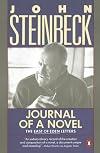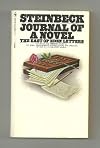
Journal of a Novel: The East of Eden Letters
by John Steinbeck
On This Page
Description
Each working day from January 29 to November 1, 1951, John Steinbeck warmed up to the work of writing East of Eden with a "letter" to the late Pascal Covici, his friend and editor of the Viking Press. It was his way, he said, of "getting my mental arm in shape to pitch a good game." Steinbeck's letters were written on the left-hand pages of a notebook in which the facing pages would be filled with the text of the novel. They touched on many subjects--story arguments, trial flights of show more workmanship, concern for his sons. Part autobiography, part writer's workshop, these letters offer an illuminating perspective on Steinbeck's creative process and a fascinating glimpse of Steinbeck, the private man.--From publisher description. show lessTags
Recommendations










Member Recommendations
Member Reviews
I'm not a devotee of Steinbeck's work, though I have read several of his books over the years, but I have much respect for the man. My grandpa was an Okie who family ventured to California before the Great Depression fully struck, and was subject to a great deal of prejudice. Steinbeck stood up for the Okies and Arkies in a way that few did; for that, I am thankful.
It's been almost ten years since I read East of Eden. My memory of the book is sketchy, but even so, it was fascinating to read about the process behind the book. I love Steinbeck's honesty. As a writer, I am always amazed at the weird ideas people have about the process (that you only write when the mood strikes, that rough drafts are perfect, that it's easy). Steinbeck was show more already a successful writer as he began East of Eden, but that didn't take away from his terror. "There is nothing beyond this book--nothing follows it. It must contain all in the world I know and it must have everything in it of which I am capable--all styles, all technique, all poetry--and it must have in it a great deal of laughter."
The journal is highly readable. To me, it felt exactly like a modern author blog. He discusses the struggles in the daily writing--his hopes for the character development, the fact that his hand is callused from the pencil, his inability to write at all that day, the one time his beloved pencil sharpener actually started belching sparks and smoke--with other daily comments like a diary. He talks about going to plays and parties, his stepdaughter and young sons, and how he often needs to withdraw in order to write.
I noted dozens of inspirational quotes to type up and keep for my own future reference. When I'm feeling stressed and neurotic, it will be comforting to say, "I'm being just like Steinbeck." Good company, that. This is one of those writing books that most writers should read or keep handy, just to keep things in perspective. show less
It's been almost ten years since I read East of Eden. My memory of the book is sketchy, but even so, it was fascinating to read about the process behind the book. I love Steinbeck's honesty. As a writer, I am always amazed at the weird ideas people have about the process (that you only write when the mood strikes, that rough drafts are perfect, that it's easy). Steinbeck was show more already a successful writer as he began East of Eden, but that didn't take away from his terror. "There is nothing beyond this book--nothing follows it. It must contain all in the world I know and it must have everything in it of which I am capable--all styles, all technique, all poetry--and it must have in it a great deal of laughter."
The journal is highly readable. To me, it felt exactly like a modern author blog. He discusses the struggles in the daily writing--his hopes for the character development, the fact that his hand is callused from the pencil, his inability to write at all that day, the one time his beloved pencil sharpener actually started belching sparks and smoke--with other daily comments like a diary. He talks about going to plays and parties, his stepdaughter and young sons, and how he often needs to withdraw in order to write.
I noted dozens of inspirational quotes to type up and keep for my own future reference. When I'm feeling stressed and neurotic, it will be comforting to say, "I'm being just like Steinbeck." Good company, that. This is one of those writing books that most writers should read or keep handy, just to keep things in perspective. show less
On every working day between 29 January and 1 November 1951, John Steinbeck wrote a letter to his close friend and editor at Viking Press, Pat Covici, before he began his work for the day on the manuscript of [b:East of Eden|4406|East of Eden|John Steinbeck|http://d.gr-assets.com/books/1309212913s/4406.jpg|2574991]. The letters were written on the left-hand pages of the large notebook in which Steinbeck wrote - by hand, in pencil - the novel which meant most to him. Steinbeck told Covici that writing the letters was his way of "getting [his] mental arm in shape to pitch a good game".
Steinbeck's daily letters to Covici touch on a range of subjects. They describe what he intended to achieve on the day in question. They refer to his show more personal circumstances, in particular to his love for his third wife Elaine and his concerns regarding his young sons. The letters also describe Steinbeck's other projects: the gadgets he liked to invent, his woodwork projects (in particular a carved box he was making for Covici and in which he would ultimately give Covici the manuscript of the novel). However, the most signficant aspect of the work is the light that the letters throw on the process through which East of Eden was written, on Steinbeck's passionate devotion to the writing of the novel and on his own psychological make-up. As is fitting for a writer who was skilled at describing people and their environment, Steinbeck had insight into his thought processes and emotions. He unflinchingly described his bouts of depression and self-doubt, his periods of manic activity, the days when everything went well and the days when he had difficulty motivating himself to work.
While there is some repetition in the letters - there were days which were a lot like other days - the work is also full of insights into how Steinbeck felt, not just about the book, but about writing. For example, on 3 September 1951 he wrote:
Writing is a very silly business at best. There is a certain ridiculousness about putting down a picture of life. And to add to the joke - one must withdraw from life in order to set down that picture. And third one must distort one's own way of life in order in some sense to simulate the normal in other lives. Having gone through all this nonsense, what emerges may well be the palest of reflections.... And the greatest foolishness of all lies in the fact that to do it at all, the writer must believe that what he is doing is the most important thing in the world. And he must hold to this illusion even when he knows it is not true. If he does not, the work is not worth even what it might otherwise have been.
Steinbeck was not fond of professional literary critics, but he was aware that he could not control how readers would react to East of Eden, the novel which meant more to him that anything else he had written. On 10 October 1951, three weeks before he finished the manuscript, he wrote:
In a short time [it] will be done and it will not be mine any more. Other people will take it over and own it and it will drift away from me as though I had never been a part of it. I dread that time because one can never pull back. [It's] like shouting good-bye to someone going off on a bus and no one can hear because of the roar of the motor.
I wish I had read this book around the same time as I listened to the audiobook of East of Eden last year, so that the details of the novel were clearer in my head. As I read, I occasionally re-read particular chapters of the novel in order to refresh my memory. However, I know that reading the novel and this book in conjunction with each other would have enriched my experience of both works. That said, I very much enjoyed the book. It is highly recommended for admirers of Steinbeck's writing in general and East of Eden in particular. show less
Right away I noticed a kindred spirit between the way Steinbeck wrote East of Eden and the way I think. I'm not sure what it was, but reading this literary work of art felt good and comfortable in spite of the often unsettling story. I wanted to learn more about him and began reading Journal of a Novel shortly after finishing E of E.
Written every working day between January and November 1951, Steinbeck used these journal entries to get ready for the task at hand: writing East of Eden. He struggled with plot lines, characters, generational twists and even arriving at a title. It is remarkable to catch a glimpse of his thought processes as he worked through not only issues of the text, but also personal thoughts and feelings.
As show more suspected, many of his musings to editor and longtime friend Pascal Covici were similar to my own - the way a day has a "feel" and how his own inconsistencies were made all the more stark by the consistent, stable nature of his wife - however, the most important nugget I found was the answer to a question that has intrigued me for many years. What is it about good, dense books that seem to make my life and its various burdens, worries and concerns lighter to bear? What solace does great literature bring me that friends and family cannot?
I found my answer about midway through the book as Steinbeck postulates a theory based on the importance of a "big book" versus a short one. In addition to believing a big book stays with the reader longer in a temporal sense, he also compares books to "a wedge driven into a man's personal life." He believed a short book drives "in and out quickly" and whatever message taken in by the reader is just as quickly forgotten. But, with a longer book "when the wedge is finally withdrawn and the book set down, the mind cannot ever be quite what it was before...[l]iving with it longer has given it greater force."
THAT is my reason, my passion, for reading. show less
Written every working day between January and November 1951, Steinbeck used these journal entries to get ready for the task at hand: writing East of Eden. He struggled with plot lines, characters, generational twists and even arriving at a title. It is remarkable to catch a glimpse of his thought processes as he worked through not only issues of the text, but also personal thoughts and feelings.
As show more suspected, many of his musings to editor and longtime friend Pascal Covici were similar to my own - the way a day has a "feel" and how his own inconsistencies were made all the more stark by the consistent, stable nature of his wife - however, the most important nugget I found was the answer to a question that has intrigued me for many years. What is it about good, dense books that seem to make my life and its various burdens, worries and concerns lighter to bear? What solace does great literature bring me that friends and family cannot?
I found my answer about midway through the book as Steinbeck postulates a theory based on the importance of a "big book" versus a short one. In addition to believing a big book stays with the reader longer in a temporal sense, he also compares books to "a wedge driven into a man's personal life." He believed a short book drives "in and out quickly" and whatever message taken in by the reader is just as quickly forgotten. But, with a longer book "when the wedge is finally withdrawn and the book set down, the mind cannot ever be quite what it was before...[l]iving with it longer has given it greater force."
THAT is my reason, my passion, for reading. show less
Read from January 17 to May 15, 2011
"...I want to write this one as though it were my last book." (quoted from page 8, February 12.)
From January 29-November 1, 1951 John Steinbeck documented the writing of East of Eden in notebooks, entries addressed to "Pat" (Pascal Covici, his friend and editor at Viking Press.) I took my time reading these letters every night just before going to sleep. East of Eden is one of my all time favorite books and it was such a treat to read these passages documenting the time he spent writing it. This book is a historical document, a primary source, therefore, a casual reader might find it confusing and boring to read about John Steinbeck's one-sided conversation with his editor, which contains odd details show more about aches and pains, nervous observations about personal health and concerns about family, carpentry projects, quirky habits having to do with sharpened pencils and notebooks, and an annoying wrinkle in the blotting paper on his desk. But for me, as a writer, I am able relate to this sort of stuff, especially with the joys and frustrations that go along with the process of writing a novel, the interruptions from writing because of life's events and the difficult, sometimes sluggish return to work after the interruptions were resolved. A writer often lives with a fear that something will happen to cause the book to be left unfinished or somehow destroyed. The entries are overflowing with the knowledge that not everyone is going to like the book at the same time that he knows there will be people who will love it...it's an emotional see-saw, at one moment he says "Oh the Hell with it", and the next, he's agonizing with self doubt.
"You know just as well as I do that this book is going to catch the same kind of hell that all the others did and for the same reasons. It will not be what anyone expects and so the expecters will not like it. And until it gets to people who don't expect anything and are just willing to go along with the story, no one is likely to like this book." (quoted from page 26, March 8, Thursday.) I couldn't have said that better myself!
Writing a book is a process that is all consuming, the line between dreams and realities becomes so fuzzy while in the thick of it, a writer can be easily lost, caught up in the tides of emotions, everything is on at full blast and wide open, it takes a special person to accomplish the writing of a book, seeing it through to the end and remaining consistent and faithful to the inspiration, at the same time letting it go its own way...and it takes a special spouse to put up with the writer while they go through the process. (Kudos to Elaine!)
It is all very strange...this is a book for the writer to read, to gain reassurance that you're not nuts, and all of this is part of the package of being a writer. show less
"...I want to write this one as though it were my last book." (quoted from page 8, February 12.)
From January 29-November 1, 1951 John Steinbeck documented the writing of East of Eden in notebooks, entries addressed to "Pat" (Pascal Covici, his friend and editor at Viking Press.) I took my time reading these letters every night just before going to sleep. East of Eden is one of my all time favorite books and it was such a treat to read these passages documenting the time he spent writing it. This book is a historical document, a primary source, therefore, a casual reader might find it confusing and boring to read about John Steinbeck's one-sided conversation with his editor, which contains odd details show more about aches and pains, nervous observations about personal health and concerns about family, carpentry projects, quirky habits having to do with sharpened pencils and notebooks, and an annoying wrinkle in the blotting paper on his desk. But for me, as a writer, I am able relate to this sort of stuff, especially with the joys and frustrations that go along with the process of writing a novel, the interruptions from writing because of life's events and the difficult, sometimes sluggish return to work after the interruptions were resolved. A writer often lives with a fear that something will happen to cause the book to be left unfinished or somehow destroyed. The entries are overflowing with the knowledge that not everyone is going to like the book at the same time that he knows there will be people who will love it...it's an emotional see-saw, at one moment he says "Oh the Hell with it", and the next, he's agonizing with self doubt.
"You know just as well as I do that this book is going to catch the same kind of hell that all the others did and for the same reasons. It will not be what anyone expects and so the expecters will not like it. And until it gets to people who don't expect anything and are just willing to go along with the story, no one is likely to like this book." (quoted from page 26, March 8, Thursday.) I couldn't have said that better myself!
Writing a book is a process that is all consuming, the line between dreams and realities becomes so fuzzy while in the thick of it, a writer can be easily lost, caught up in the tides of emotions, everything is on at full blast and wide open, it takes a special person to accomplish the writing of a book, seeing it through to the end and remaining consistent and faithful to the inspiration, at the same time letting it go its own way...and it takes a special spouse to put up with the writer while they go through the process. (Kudos to Elaine!)
It is all very strange...this is a book for the writer to read, to gain reassurance that you're not nuts, and all of this is part of the package of being a writer. show less
John Steinbeck's Journal of a Novel, published posthumously, consists of journal entries written in 1951 to his close friend and editor, Pascal Covici, as Steinbeck was writing his epic saga East of Eden. The book offers some fascinating insights into the author's crafting of the story, his daily writing process, and musings on life in general. But to get to these elements you have to sift through a lot of mundane material, such as his daily family issues, his mood each day, daily chores apart from writing, and so forth. That said, if you enjoyed East of Eden you will find that this book provides a unique look inside Steinbeck's mind, but you may also find yourself skimming quite a bit to get to those nuggets.
Fantastic "Mind of the Writer" memoir. Steinbeck gives us an unfiltered view of his writing process during one of his most challenging projects.
As a fan of East of Eden and the work of John Steinbeck in general, I loved this book. There is so much insight into what I consider the most brilliant work of fiction ever crafted. With all the cuts that were made to the final product of East of Eden, it's sometimes difficult to tell whether Steinbeck was really dabbling in Postmodernism or not. Journal of Novel makes it clear that he was. And for that, I love this man.
For the writer, there are some wonderful bits of advice in Journal, but it's probably not worth reading the entire work. Essentially, Steinbeck's philosophy could be summed up as "do what you feel is right and don't give a damn what anyone says."
For the layman, there isn't much here. After all, Journal of a Novel is a show more series of letters written to a friend (and editor). Steinbeck repeatedly says things like "I have to go use the toilet now." Now, for me, I care. 'Cause I want to know about every bowel movement John Steinbeck had. But you, you probably don't care.
I'd only recommend this book for those who have a passion for East of Eden. It'll add some color to an already wonderful story. show less
For the writer, there are some wonderful bits of advice in Journal, but it's probably not worth reading the entire work. Essentially, Steinbeck's philosophy could be summed up as "do what you feel is right and don't give a damn what anyone says."
For the layman, there isn't much here. After all, Journal of a Novel is a show more series of letters written to a friend (and editor). Steinbeck repeatedly says things like "I have to go use the toilet now." Now, for me, I care. 'Cause I want to know about every bowel movement John Steinbeck had. But you, you probably don't care.
I'd only recommend this book for those who have a passion for East of Eden. It'll add some color to an already wonderful story. show less
Members
- Recently Added By
Lists

Reading LIst
648 works; 1 member
Author Information

486+ Works 207,748 Members
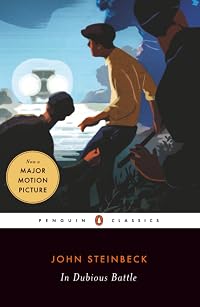
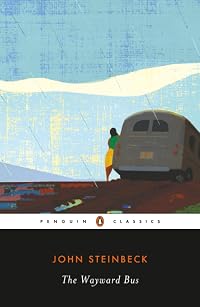
In recent years Steinbeck has been elevated to a more prominent status among American writers of his generation. If not quite at the world-class artistic level of a Hemingway or a Faulkner, he is nonetheless read very widely throughout the world by readers of all ages who consider him one of the most "American" of writers. Born in Salinas County, show more California on February 27, 1902, Steinbeck was of German-Irish parentage. After four years as a special student at Stanford University, he went to New York, where he worked as a reporter and as a hod carrier. Returning to California, he devoted himself to writing, with little success; his first three books sold fewer than 3,000 copies. Tortilla Flat (1935), dealing with the paisanos, California Mexicans whose ancestors settled in the country 200 years ago, established his reputation. In Dubious Battle (1936), a labor novel of a strike and strike-breaking, won the gold medal of the Commonwealth Club of California. Of Mice and Men (1937), a long short story that turns upon a melodramatic incident in the tragic friendship of two farm hands, written almost entirely in dialogue, was an experiment and was dramatized in the year of its publication, winning the New York Drama Critics Circle Award. It brought him fame. Out of a series of articles that he wrote about the transient labor camps in California came the inspiration for his greatest book, The Grapes of Wrath (1939), the odyssey of the Joad family, dispossessed of their farm in the Dust Bowl and seeking a new home, only to be driven on from camp to camp. The fiction is punctuated at intervals by the author's voice explaining this new sociological problem of homelessness, unemployment, and displacement. As the American novel "of the season, probably the year, possibly the decade," it won the Pulitzer Prize in 1940. It roused America and won a broad readership by the unusual simplicity and tenderness with which Steinbeck treated social questions. Even today, The Grapes of Wrath remains alive as a vivid account of believable human characters seen in symbolic and universal terms as well as in geographically and historically specific ones. Ma Joad is one of the most memorable characters in twentieth-century American fiction. It is her courage that sustains the family. Steinbeck's best and most ambitious novel after The Grapes of Wrath is East of Eden (1952), a saga of two American families in California from before the Civil War through World War I. Cannery Row (1945), The Wayward Bus (1947), and Sweet Thursday (1955) are lighter works that find Steinbeck returning to the lighthearted tone of Tortilla Flat as he recounts picaresque adventures of modern-day picaros. The Winter of Our Discontent (1961) struck some reviewers as being appropriately titled because of its despairing treatment of humanity's fall from grace in a wasteland world where money is king. Steinbeck also wrote important nonfiction, including Russian Journal (1948) in collaboration with the photographer Robert Capa; Once There Was a War (1958) and America and Americans (1966), which features pictures by 55 leading photographers and a 70-page essay by Steinbeck. His interest in marine biology led to two books primarily about sea life, Sea of Cortez (1941) (with Edward F. Ricketts) and The Log from the Sea of Cortez (1951). Travels with Charley (1962) is an engaging account of his journey of rediscovery of America, which took him through approximately 40 states. Steinbeck was married three times and died in New York City on December 20, 1968 of heart disease and congestive heart failure. He was 66, and had been a life-long smoker. (Bowker Author Biography) show less
Awards and Honors
Distinctions
Series
Belongs to Publisher Series
Work Relationships
Was inspired by
Common Knowledge
- Original publication date
- 1969
- People/Characters
- John Steinbeck
- First words
- January 29, 1951 [Monday] Dear Pat: How did the time pass and how did it grow so late.
- Last words
- (Click to show. Warning: May contain spoilers.)May God give you health--and may He be not unmindful of me, as well. - John Steinbeck
- Original language
- English
Classifications
Statistics
- Members
- 568
- Popularity
- 52,227
- Reviews
- 10
- Rating
- (3.75)
- Languages
- 5 — English, French, German, Spanish, Swedish
- Media
- Paper, Audiobook, Ebook
- ISBNs
- 19
- ASINs
- 9