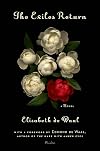
The Exiles Return
by Elisabeth de Waal
On This Page
Description
"Vienna is demolished by war, the city an alien landscape of ruined castles, a fractured ruling class, and people picking up the pieces. Elisabeth de Waal's mesmerizing The Exiles Return is a stunningly vivid postwar story of Austria's fallen aristocrats, unrepentant Nazis, and a culture degraded by violence. The novel follows a number of exiles, each returning under very different circumstances, who must come to terms with a city in painful recovery. There is Kuno Adler, a Jewish research show more scientist, who is tired of his unfulfilling existence in America; Theophil Kanakis, a wealthy Greek businessman, seeking to plunder some of the spoils of war; Marie-Theres, a brooding teenager, sent by her parents in hopes that the change of scene will shake her out of her funk; and Prince "Bimbo" Grein, a handsome young man with a title divested of all its social currency. With immaculate precision and sensitivity, de Waal, an exile herself, captures a city rebuilding and relearning its identity, and the people who have to do the same. As mesmerizing as Stefan Zweig's The World of Yesterday, and as tragic as Hans Fallada's Every Man Dies Alone, de Waal has written a masterpiece of European literature, an artifact revealing a moment in our history, clear as a snapshot, but timeless as well"-- show lessTags
Recommendations









Member Reviews
Elisabeth de Waal grew up in an affluent Viennese family, rescuing her parents from the Anschluss in 1938 and returning after the war to a very different country (a story brilliantly told in her grandson Edmund's memoir, The Hare with Amber Eyes). Her novel, The Exiles Return, grew out of that experience. de Waal introduces several "exiles" in post-war Vienna: Kuno Adler, a scientist returning from America; Theophil Kanakis, a wealthy Greek businessman, Prince Lorenzo Grein-Lauterbach (aka Bimbo) and his sister Nina, who lost their parents to the Nazis, and young Marie-Theres (aka Resi), an American of Austrian descent visiting her aunt. Their stories, initially completely disconnected, slowly weave together. The storyline is show more straightforward, even simplistic, but the plot exists only to support the character studies, and exploration of exile and its effects on the human spirit. I found Edmund de Waal's account of his family's war experience more action-packed and compelling, and it made this novel more interesting because I understood the events framing the author's point of view. show less
I must be one of the few people who hasn't read The Hare with Amber Eyes by Edmund de Waal, though one of my reasons for not having done so has to be that it was written this century and I've been reading a lot from the last one. When I was asked if I'd be interested in reviewing one of the most recent Persephones, though, the description made me leap at the chance. It's a previously unpublished novel about five people returning to Vienna in the early 1950s, and there was every indication that it was going to be one of those rather quiet, uneventful novels that I like so much and that Persephone Books do so well. The author is Elisabeth de Waal, grandmother of Edmund, and herself an exile from Vienna, which she left in 1939. This book show more is her "return" to the city where she grew up.
I wasn't disappointed in my expectations, unless it was because it seemed to be over so quickly. That's not to say there was anything rushed about it, just that I was so absorbed in the life of the characters that I wanted more of them. When Professor Kuno Adler decides to return to Vienna, his wife is appalled. She has made a success of their life in America and the promise of reinstatement to his old job has no absolutely appeal for her, so he goes alone. "Reinstatement" turns out to be a bit of a misnomer, and there is awkwardness with former friends who had stayed throughout the war, but there is some small pleasure in rediscovering the city, and the surrounding areas. Kanakis, on the other hand, wants to recreate the life he had before the war, and is looking for "a pavilion of graceful eighteenth century proportions...a little palais" such as he thinks he might have heard of once, and which just might have survived the conflict. While he's looking for his perfect house he meets the rather louche "Bimbo" Grein, a pleasure-loving but penniless young prince who will, sooner or later, be hanging out for a rich bride, and Bimbo's serious older sister Nina.
The remaining exile is the beautiful Resi, daughter of one of the Princesses Altmandorff, who has grown up in America but really doesn't fit in there. Her parents, unsure what they can do for the best, send her to stay with her aunt on the family estate, and the scene is set for the intertwining of the lives of all our characters. At first Resi is absolutely content at Wald; lazing in the garden, helping with the flowers, "she floated on the broad unruffled stream of life". The idyll is interrupted, though, by the arrival of cousins and friends, including Nina Grein, who unwittingly ousts her from the position she's happily fallen into as her aunt's companion, setting her adrift again.
The lives of these returning exiles become intertwined, providing the focus for the second half of the book. And it's here that I have some reservations about the overall shape, since it felt a little like two separate books stuck together. Professor Adler, who is in some ways the most interesting and fully-rounded character, fades into the background for a long section, so much so that I wondered whether he was ever going to reappear! Resi, on the other hand, is of interest mostly because she's a misfit - she's actually rather young and dull, and given to melodrama, and she didn't emerge sharply enough from the pages for me to feel much patience with her. However, the eventual contrast between two people searching for a place to feel at home, the faltering Resi, and the quiet Professor Adler, aware as he is of so much about the recent war that is unspoken, becomes a compelling study of identity.
In the end, I felt that this was very nearly a wonderful novel. But its minor flaws are more than compensated for by its interest as a remarkable piece of social history, one which offers a rare insight into postwar Vienna. It's certainly an excellent addition to the Persephone canon. show less
I wasn't disappointed in my expectations, unless it was because it seemed to be over so quickly. That's not to say there was anything rushed about it, just that I was so absorbed in the life of the characters that I wanted more of them. When Professor Kuno Adler decides to return to Vienna, his wife is appalled. She has made a success of their life in America and the promise of reinstatement to his old job has no absolutely appeal for her, so he goes alone. "Reinstatement" turns out to be a bit of a misnomer, and there is awkwardness with former friends who had stayed throughout the war, but there is some small pleasure in rediscovering the city, and the surrounding areas. Kanakis, on the other hand, wants to recreate the life he had before the war, and is looking for "a pavilion of graceful eighteenth century proportions...a little palais" such as he thinks he might have heard of once, and which just might have survived the conflict. While he's looking for his perfect house he meets the rather louche "Bimbo" Grein, a pleasure-loving but penniless young prince who will, sooner or later, be hanging out for a rich bride, and Bimbo's serious older sister Nina.
The remaining exile is the beautiful Resi, daughter of one of the Princesses Altmandorff, who has grown up in America but really doesn't fit in there. Her parents, unsure what they can do for the best, send her to stay with her aunt on the family estate, and the scene is set for the intertwining of the lives of all our characters. At first Resi is absolutely content at Wald; lazing in the garden, helping with the flowers, "she floated on the broad unruffled stream of life". The idyll is interrupted, though, by the arrival of cousins and friends, including Nina Grein, who unwittingly ousts her from the position she's happily fallen into as her aunt's companion, setting her adrift again.
The lives of these returning exiles become intertwined, providing the focus for the second half of the book. And it's here that I have some reservations about the overall shape, since it felt a little like two separate books stuck together. Professor Adler, who is in some ways the most interesting and fully-rounded character, fades into the background for a long section, so much so that I wondered whether he was ever going to reappear! Resi, on the other hand, is of interest mostly because she's a misfit - she's actually rather young and dull, and given to melodrama, and she didn't emerge sharply enough from the pages for me to feel much patience with her. However, the eventual contrast between two people searching for a place to feel at home, the faltering Resi, and the quiet Professor Adler, aware as he is of so much about the recent war that is unspoken, becomes a compelling study of identity.
In the end, I felt that this was very nearly a wonderful novel. But its minor flaws are more than compensated for by its interest as a remarkable piece of social history, one which offers a rare insight into postwar Vienna. It's certainly an excellent addition to the Persephone canon. show less
Persephone generally publishes books that have often enjoyed great success in the past, but have been out of print for a number of years. This is not the case with The Exiles Return. The author Elisabeth De Waal was the grandmother of Edmund De Waal who wrote the hugely successful The Hare with Amber Eyes – which I have not read – I think I might though now. It is solely through his efforts that Elisabeth’s book is now available. The manuscript of what became The Exiles Return Elisabeth De Waal kept with her on her travels across Europe for years, the story was important to her although it seems she had little hope of it ever being read by anyone, much less that it would be published. Before I go any further I must say I really show more enjoyed this book, which I hadn’t intended to read this month until I saw a lovely review of it from Claire at word by word. I loved the sense of time and place, the feeling of returning to place once loved is strong, and the idea of things being put back together again – of families reconnecting is one I really enjoyed. However I don’t think this is a faultless novel; there were moments when I felt oddly disconnected from it.
“Kuno Adler handed over his passport, his American passport, with a sense of defiance, as if challenging him to question its authenticity. The man leafed through it, looked at the photograph and at Adler himself for what seemed an intolerably long time, probably twenty seconds, cocking his head to look at him from all angles. All right, all right! Adler thought, of course he can see that I am a Jew, a refugee. What of it?
‘Coming back?’ the man asked, closing the passport and handing it back to him.
Adler had meant to answer the question in English. But somehow he couldn’t. ‘Ja’ he replied, and in the same soft German, ‘I’m coming back.’”
The Exiles Return is set in Austria in 1954/55 during the occupation following World War Two. As the title suggests it concerns the return home of people living in Exile. There are three story strands – which are linked slightly – but which at times felt oddly disjointed. Having thought about the novel some more since I finished it – I think that this is a strangely powerful way to portray that feeling of exile that Elisabeth De Waal herself experienced.
Professor Adler a Jewish scientist returns to Vienna from America where he has been living with his wife and daughters. However Adler returns alone, his relationship with his wife is difficult. Adler finds a place familiar and yet altered. The Professor finds he needs to work with people who had worked within the regime that saw him having to flee his homeland fifteen years earlier. Entrepreneur Kanakis , an Austrian of Greek descent returns, intending to find his dream home, and make money out of the new opportunities that he hopes will be opening up. Resi – is an American the nineteen year old daughter of immigrants, she is sent by her mother to her Austrian relations in the Austrian countryside. Resi enjoys her time in the country; she becomes happier in these idyllic surroundings, finding herself drawn to her aunt, and happy in the company of her older cousin Hanni. However a move to the city that allows Resi to attend university and socialise with friends of Hanni’s, sets in motion events that will lead to tragedy. (This is not a spoiler- the tragedy is revealed in the novel’s prelude).
I loved the story of Professor Adler – and rather wished I had rather more of him in the novel. His sad disillusion is touching, his delight in meeting up with an old man who he knew years earlier, and an unexpected romance are wonderfully poignant. Resi’s story is different – more dramatic, and for me, a little strange, especially at the end. I didn’t connect with the character of Resi – I was unconvinced by some of her actions and was a little confused by her attitude toward some of the characters – there were a few things for me which didn’t entirely hold together. All in all although I did enjoy this novel – and I am glad that I have read it, I do feel it is not as strong as other Persephone novels. show less
“Kuno Adler handed over his passport, his American passport, with a sense of defiance, as if challenging him to question its authenticity. The man leafed through it, looked at the photograph and at Adler himself for what seemed an intolerably long time, probably twenty seconds, cocking his head to look at him from all angles. All right, all right! Adler thought, of course he can see that I am a Jew, a refugee. What of it?
‘Coming back?’ the man asked, closing the passport and handing it back to him.
Adler had meant to answer the question in English. But somehow he couldn’t. ‘Ja’ he replied, and in the same soft German, ‘I’m coming back.’”
The Exiles Return is set in Austria in 1954/55 during the occupation following World War Two. As the title suggests it concerns the return home of people living in Exile. There are three story strands – which are linked slightly – but which at times felt oddly disjointed. Having thought about the novel some more since I finished it – I think that this is a strangely powerful way to portray that feeling of exile that Elisabeth De Waal herself experienced.
Professor Adler a Jewish scientist returns to Vienna from America where he has been living with his wife and daughters. However Adler returns alone, his relationship with his wife is difficult. Adler finds a place familiar and yet altered. The Professor finds he needs to work with people who had worked within the regime that saw him having to flee his homeland fifteen years earlier. Entrepreneur Kanakis , an Austrian of Greek descent returns, intending to find his dream home, and make money out of the new opportunities that he hopes will be opening up. Resi – is an American the nineteen year old daughter of immigrants, she is sent by her mother to her Austrian relations in the Austrian countryside. Resi enjoys her time in the country; she becomes happier in these idyllic surroundings, finding herself drawn to her aunt, and happy in the company of her older cousin Hanni. However a move to the city that allows Resi to attend university and socialise with friends of Hanni’s, sets in motion events that will lead to tragedy. (This is not a spoiler- the tragedy is revealed in the novel’s prelude).
I loved the story of Professor Adler – and rather wished I had rather more of him in the novel. His sad disillusion is touching, his delight in meeting up with an old man who he knew years earlier, and an unexpected romance are wonderfully poignant. Resi’s story is different – more dramatic, and for me, a little strange, especially at the end. I didn’t connect with the character of Resi – I was unconvinced by some of her actions and was a little confused by her attitude toward some of the characters – there were a few things for me which didn’t entirely hold together. All in all although I did enjoy this novel – and I am glad that I have read it, I do feel it is not as strong as other Persephone novels. show less
I'm not sure if this would have been published if it hadn't been for de Waal's grandson Edmund and the very amazing Hare with the Golden Eyes. It doesn't quite hang together as a novel.
But as a picture of post-war Vienna and some of the issues the city's returning or remaining population faced, it's quite fascinating.
Warning: there is a predatory homosexual stereotype that may make your eyes roll back in your head.
But as a picture of post-war Vienna and some of the issues the city's returning or remaining population faced, it's quite fascinating.
Warning: there is a predatory homosexual stereotype that may make your eyes roll back in your head.
I enjoyed Hare With The Amber Eyes so much I wanted to see if the story telling is hereditary. I liked the story. It wasn't what I thought it would be, the tone was much lighter than I had anticipated. I also do not approach it with the history or connection to the tale that others do. So it may seem far more dark to others. It was an only novel and never published when the author was alive, so there wasn't any chance to tweet the story in the publishing process. But considering (I assume) it is her first run of it, I liked it. Worth my time and probably yours.
Wriiten by the grandmother of Edmond de Waal (The Hare with the Amber Eyes), the book was not published inher lifetime. It concerns the return of a few Viennese exiles after the second world war and their different experiences. It centres on the experience of a young lady from America spending time with her extended family and her introduction to the society of the time. This whirlwind of society and its tragic end is counterpointed with a much more low key return of a medical researcher and his happier relationship with a princess turned lab assistant. The book explores postwar Vienna, old and new worlds, and the intrusion of American culture.
The writing is good, but the structure is a little imbalanced, something that may have been show more corrected by and editor had the book been published in her lifetime. Nevertheless a good read whether or not you are coming to it after The Hare with the Amber Eyes. show less
The writing is good, but the structure is a little imbalanced, something that may have been show more corrected by and editor had the book been published in her lifetime. Nevertheless a good read whether or not you are coming to it after The Hare with the Amber Eyes. show less
Sehr schön geschrieben. Evoziert Gefühle und Eindrücke die mich sehr an "Effi Briest" erinnern. Mir gefielen auch die Nuancen des österreichischen Deutsches im Vergleich zu typischem Deutsch.
Members
- Recently Added By
Lists

Schwob Nederland
207 works; 2 members

Persephone
148 works; 3 members
Author Information

3 Works 331 Members
Some Editions
Series
Belongs to Publisher Series
Persephone (102)
dtv (14450)
Common Knowledge
- Canonical title
- The Exiles Return
- Original title
- The Exiles Return
- Original publication date
- 2013
- People/Characters
- Kuno Adler; Theophil Kanakis; Prince Lorenzo Grein-Lauterbach (Bimbo); Marie-Theres Larsen (Resi)
- Important places
- Vienna, Austria
Classifications
- Genres
- Fiction and Literature, General Fiction, Historical Fiction
- DDC/MDS
- 823.914 — Literature & rhetoric English & Old English literatures English fiction 1900- 1901-1999 1945-1999
- LCC
- PR9095.9 .D43 .E95 — Language and Literature English English Literature English literature: Provincial, local, etc.
- BISAC
Statistics
- Members
- 280
- Popularity
- 115,391
- Reviews
- 7
- Rating
- (3.67)
- Languages
- 5 — Dutch, English, German, Polish, Spanish
- Media
- Paper, Audiobook, Ebook
- ISBNs
- 11
- ASINs
- 6