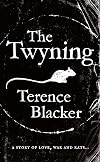
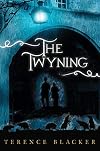
The Twyning
by Terence Blacker
On This Page
Description
In a harsh and dangerous world, a rat and a boy must each choose their way as their fates become inextricably linked. Efren is a young rat, unnoticed and timid among the kingdom of rats living in the London sewers. When the king dies, leaving the kingdom in upheaval, only Efren dares to journey into the human world, where he discovers a human doctor's plan to destroy London's entire rat population. Meanwhile, Peter, otherwise known as Dogboy, does odd jobs for both the scheming doctor and show more the town ratcatcher. But his gift for understanding animals — even rats — forces him to decide where his allegiances truly lie. Dogboy and Efren, along with the waifish girl Caz and her pet rat, Malaika, set out to test the strengths of friendship and loyalty against the gut-wrenching cruelties of the world.. show less
Tags
Recommendations
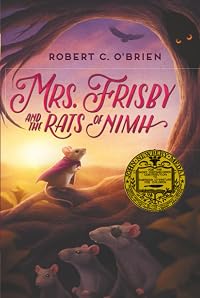


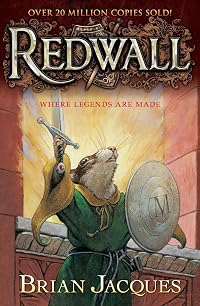
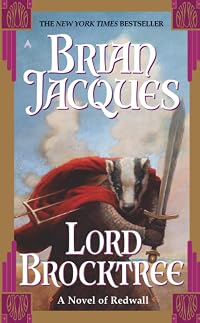
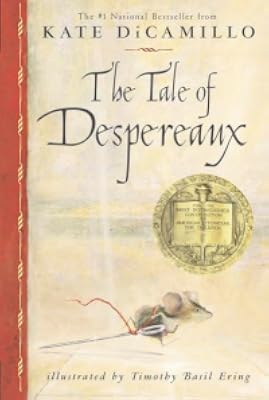









Member Recommendations
Member Reviews
As far as quasi-Dickensian fantasies go, this was a strange one. Blacker seems to be going for the more gritty approach in this tale of rat kingdoms versus anti-rat politicians, and he's populated his Victorian city with the requisite quirky and occasionally twisted individuals. The human hero is of course an orphan for all practical purposes (the reason for this is unusual, but I guess it might have been in an attempt to prevent his being a literal orphan). There's also a strange pedophile, which is unusual. And rat torturers who bite out eyeballs, also unusual. And a rat-stomping fest, also unusual. Yeah. All pretty unusual and unpleasant.
 This review was written for LibraryThing Early Reviewers.
When most of us think about rats, it’s usually along the same lines as we think of mosquitoes or fleas, as plague carrying pests with no value, whose extermination would be beneficial to us all. Author Terence Blacker attempts in his novel, The Twyning to do for rats what Richard Adams’ book Watership Down did for rabbits.
Set in Victorian London, two young orphans ‘Dogboy’ and Caz live in a rubbish dump. Dogboy supports them by hunting rats both for sport and science. Beneathe their feet, in the rat kingdom great changes are occurring: the old king is dying and as tradition demands, he swims away from the kingdom to die above ground and a new more cruel regime is taking over. Efren, a young ratling and lowly taster but with the show more heart of a hero, ascends to the world above to discover the fate of his king. What he reports back causes outrage in the kingdom.
Above ground, Dogboy works for a doctor with a particular hatred for rats. He convinces everyone that the rats are planning war against humans and, if they are to survive, the humans must strike first. Soon both rats and humans are planning for this conflict and it will take all of Efren’s efforts with the aid of the children to ensure the survival of both species.
The Twyning, a middle-grade fantasy by author Terence Blacker, is both compelling and engrossing. It asks some very tough questions and examines some real grey areas. Neither side in the story is completely in the right but neither is completely evil either. The characters are well-drawn with Efren especially gaining the reader’s sympathies. It should be noted that there are some rather disturbing scenes making this unsuitable for very young children. At times, it also felt like Blacker was channeling Dickens as well as Adams as unlikely coincidences and fortuitous saves occur just in the knick of time. Still, for those who enjoy a good tale with interesting characters and world-building, plenty of action, and no easy answers, The Twyning makes for a very entertaining read for both children and adults. show less
Set in Victorian London, two young orphans ‘Dogboy’ and Caz live in a rubbish dump. Dogboy supports them by hunting rats both for sport and science. Beneathe their feet, in the rat kingdom great changes are occurring: the old king is dying and as tradition demands, he swims away from the kingdom to die above ground and a new more cruel regime is taking over. Efren, a young ratling and lowly taster but with the show more heart of a hero, ascends to the world above to discover the fate of his king. What he reports back causes outrage in the kingdom.
Above ground, Dogboy works for a doctor with a particular hatred for rats. He convinces everyone that the rats are planning war against humans and, if they are to survive, the humans must strike first. Soon both rats and humans are planning for this conflict and it will take all of Efren’s efforts with the aid of the children to ensure the survival of both species.
The Twyning, a middle-grade fantasy by author Terence Blacker, is both compelling and engrossing. It asks some very tough questions and examines some real grey areas. Neither side in the story is completely in the right but neither is completely evil either. The characters are well-drawn with Efren especially gaining the reader’s sympathies. It should be noted that there are some rather disturbing scenes making this unsuitable for very young children. At times, it also felt like Blacker was channeling Dickens as well as Adams as unlikely coincidences and fortuitous saves occur just in the knick of time. Still, for those who enjoy a good tale with interesting characters and world-building, plenty of action, and no easy answers, The Twyning makes for a very entertaining read for both children and adults. show less
This review was written for LibraryThing Early Reviewers.Generally speaking, I am not one for fantasy literature. I prefer books that transform this world over books that build new worlds. Terrence Blacker’s The Twyning does both with great success.
The Twyning is a young adult novel, but most definitely one of those with appeal beyond this age group. The novel is set in the late 1800s. Peter and Caz, the main human characters are in their early teens, living in a rubbish tip in a hollow Peter’s dug into one of the mounds of trash. Peter picks up odd jobs as he can, most regularly working with Bill, who catches rats for use in rat pits, and for a doctor engaged in an obsessive campaign against rats.
But Blacker gives readers a second world, set below the streets of the city where Peter and show more Caz live. There we meet Efren, a young rat. Of course, readers can see where this is headed: rats hunted for sporting, hygenic, or political ends; two children who are cogs in these mechanisms of destruction deciding whether to place their loyalties with a human world that has treated them harshly or with the Kingdom, the world of rats they’ve been taught to despise.
The Kingdom, the rat-world, is a marvelously detailed creation with complex rituals, a tense political structure, and a variety of courts—the Court of Governance, the Court of Punishment, the Court of Warriors, the Court of Historians. Efren is a very junior member of the Court of Tasters, rats trained to detect poison-laced food. The Kingdom also has a spiritual center: the Twyning, a group of rats congenitally connected who rely on the community for necessities and who function as a single entity. (And, yes, these really do exist.)
This book had me captivated from the moment I began reading. It’s narrated in two voices—Peter’s and Efren’s—and weaves the two stories together in another sort of twyning: a cross-species bonding full of distrust that becomes increasingly central to the survival of both Peter and Caz and of the Kingdom.
This book has violent moments. First off, there are the rat pits, where human “sportsmen” wager against each other, predicting which dogs will kill the most rats most efficiently. There are also two large-scale rat hunts. Normally, I can’t stomach books with violence toward animals, but in The Twyning, this violence is central to the story, and Blacker depicts it clearly, but never luridly.
In all, The Twyning is a remarkable tale that makes for compelling reading. The reader wants to spend time exploring the Kingdom, observing the ethos and actions that hold it together. The reader also longs for a happy ending for Peter and Caz. Once one starts reading, it is very, very hard to put this book down. Whether or not you’re a young adult, this is a book that will have you reading long past your usual bedtime. show less
The Twyning is a young adult novel, but most definitely one of those with appeal beyond this age group. The novel is set in the late 1800s. Peter and Caz, the main human characters are in their early teens, living in a rubbish tip in a hollow Peter’s dug into one of the mounds of trash. Peter picks up odd jobs as he can, most regularly working with Bill, who catches rats for use in rat pits, and for a doctor engaged in an obsessive campaign against rats.
But Blacker gives readers a second world, set below the streets of the city where Peter and show more Caz live. There we meet Efren, a young rat. Of course, readers can see where this is headed: rats hunted for sporting, hygenic, or political ends; two children who are cogs in these mechanisms of destruction deciding whether to place their loyalties with a human world that has treated them harshly or with the Kingdom, the world of rats they’ve been taught to despise.
The Kingdom, the rat-world, is a marvelously detailed creation with complex rituals, a tense political structure, and a variety of courts—the Court of Governance, the Court of Punishment, the Court of Warriors, the Court of Historians. Efren is a very junior member of the Court of Tasters, rats trained to detect poison-laced food. The Kingdom also has a spiritual center: the Twyning, a group of rats congenitally connected who rely on the community for necessities and who function as a single entity. (And, yes, these really do exist.)
This book had me captivated from the moment I began reading. It’s narrated in two voices—Peter’s and Efren’s—and weaves the two stories together in another sort of twyning: a cross-species bonding full of distrust that becomes increasingly central to the survival of both Peter and Caz and of the Kingdom.
This book has violent moments. First off, there are the rat pits, where human “sportsmen” wager against each other, predicting which dogs will kill the most rats most efficiently. There are also two large-scale rat hunts. Normally, I can’t stomach books with violence toward animals, but in The Twyning, this violence is central to the story, and Blacker depicts it clearly, but never luridly.
In all, The Twyning is a remarkable tale that makes for compelling reading. The reader wants to spend time exploring the Kingdom, observing the ethos and actions that hold it together. The reader also longs for a happy ending for Peter and Caz. Once one starts reading, it is very, very hard to put this book down. Whether or not you’re a young adult, this is a book that will have you reading long past your usual bedtime. show less
The Twyning is a difficult book to place. Usually "animal stories" are more engaging for young children, but the mature themes, the bleak atmosphere and the frequent gory violence in this story make it more appropriate for young adults.
Blacker has created a complex and compelling underground world for his rat characters, who behave as rats rather than as people, although with a few human traits and conventions thrown in. Their society is threatened by an overzealous doctor who believes they are a scourge to be eliminated at all costs. A young rat, Efren, forms a reluctant bond with a human boy, Dogboy, who must decide between his duty to his human employers and his sympathy for the animals.
I found the fantasy elements and the story show more quite engrossing, but the frequent violence and overall bleakness of the story did not make for a very enjoyable read. I also felt like the characters and their relationships were not quite fully formed, and didn't draw me in. Overall though, it was a good story with some important ideas to consider, and worth a read for older, more mature children. show less
Blacker has created a complex and compelling underground world for his rat characters, who behave as rats rather than as people, although with a few human traits and conventions thrown in. Their society is threatened by an overzealous doctor who believes they are a scourge to be eliminated at all costs. A young rat, Efren, forms a reluctant bond with a human boy, Dogboy, who must decide between his duty to his human employers and his sympathy for the animals.
I found the fantasy elements and the story show more quite engrossing, but the frequent violence and overall bleakness of the story did not make for a very enjoyable read. I also felt like the characters and their relationships were not quite fully formed, and didn't draw me in. Overall though, it was a good story with some important ideas to consider, and worth a read for older, more mature children. show less
This review was written for LibraryThing Early Reviewers.I'm probably not justified in reviewing this book because I didn't finish it, but since I didn't want to be penalized for not reviewing it, I'm leaving a review of sorts.
This was a book I thought I was going to enjoy. I like reading YA and anything where animals are key characters grabs my attention. In a way, I wasn't disappointed. I really liked the development two of the main characters- one a rat, one a human boy- received; they were rounded characters with personality. The writing style itself was somewhat jolting at first since I don't read much present tense or first person, but I got used to this and came to find this a unique way of telling a story.
Unfortunately I just couldn't keep reading. It was just too gruesome and show more violent for me to be able to handle. This is supposed to be middle grade, young-young adult fantasy, but as a thirty-something woman, I found myself feeling sick to my stomach and anxious. In a way, this shows the author's skill with words and building a setting because it affected me so strongly. After I found myself skipping past two entire chapters/sections, I figured I should probably just put the book aside. I'm sure those who are less affected by violence and have stronger stomachs will find this perfectly enjoyable, but this wasn't for me. show less
This was a book I thought I was going to enjoy. I like reading YA and anything where animals are key characters grabs my attention. In a way, I wasn't disappointed. I really liked the development two of the main characters- one a rat, one a human boy- received; they were rounded characters with personality. The writing style itself was somewhat jolting at first since I don't read much present tense or first person, but I got used to this and came to find this a unique way of telling a story.
Unfortunately I just couldn't keep reading. It was just too gruesome and show more violent for me to be able to handle. This is supposed to be middle grade, young-young adult fantasy, but as a thirty-something woman, I found myself feeling sick to my stomach and anxious. In a way, this shows the author's skill with words and building a setting because it affected me so strongly. After I found myself skipping past two entire chapters/sections, I figured I should probably just put the book aside. I'm sure those who are less affected by violence and have stronger stomachs will find this perfectly enjoyable, but this wasn't for me. show less
This review was written for LibraryThing Early Reviewers.The Twyning by Terence Blacker
This is the story of a boy and a rat. I was expecting a feel good tale about a boy and his pet. This tale is about a war, a war between men and rats...
Candlewick Press and Net Galley gave me the opportunity to read this book for review (thank you). This book will be published September 9th so watch for a copy at your local bookstore.
This story is not for the faint-hearted. It's an honest ugly tale told from the point of view of the abandoned children and the rats. Rats are used for dog fighting. When a young homeless boy gets involved with a ratcatcher, he develops the name Dogboy. Dogboy does what he must to survive, but he doesn't hate the rats. He thinks they just want to survive, too.
Surprisingly, this show more tale is mostly about the rats. They have a sense of honor, a sense of responsibility and they have love, too. They also have politics until the majority of the population gets wiped out and citizen rule starts to take over.
Dogboy befriends a young girl whose mother sold her to a man for his uses. She escaped and she was homeless. She's still homeless, but they have a spot they hide that protects them from the world. When Dogboy brings her a pet rat back from his travels, she finds she can talk to it. He thinks she's touched, but he lets it be. When she disappears and her rat says she and her boyfriend can find the girl, he thinks he's losing his mind! However, he follows them and saves her from the man who kidnapped her. His boss helps him.
There's lots of trouble, lots of squabbles and lots of loss on both sides in this story. The ending redeems the sorrow in the middle. I can tell you, though, once you read this you won't easily forget it... show less
This is the story of a boy and a rat. I was expecting a feel good tale about a boy and his pet. This tale is about a war, a war between men and rats...
Candlewick Press and Net Galley gave me the opportunity to read this book for review (thank you). This book will be published September 9th so watch for a copy at your local bookstore.
This story is not for the faint-hearted. It's an honest ugly tale told from the point of view of the abandoned children and the rats. Rats are used for dog fighting. When a young homeless boy gets involved with a ratcatcher, he develops the name Dogboy. Dogboy does what he must to survive, but he doesn't hate the rats. He thinks they just want to survive, too.
Surprisingly, this show more tale is mostly about the rats. They have a sense of honor, a sense of responsibility and they have love, too. They also have politics until the majority of the population gets wiped out and citizen rule starts to take over.
Dogboy befriends a young girl whose mother sold her to a man for his uses. She escaped and she was homeless. She's still homeless, but they have a spot they hide that protects them from the world. When Dogboy brings her a pet rat back from his travels, she finds she can talk to it. He thinks she's touched, but he lets it be. When she disappears and her rat says she and her boyfriend can find the girl, he thinks he's losing his mind! However, he follows them and saves her from the man who kidnapped her. His boss helps him.
There's lots of trouble, lots of squabbles and lots of loss on both sides in this story. The ending redeems the sorrow in the middle. I can tell you, though, once you read this you won't easily forget it... show less
This review was written for LibraryThing Early Reviewers.The Twyning is a middle-grade historical fiction/fantasy novel where two children living in the dump befriend two rats during the human's War Against Rats.
Peter finds work catching rats for two very different characters. One, a doctor who is convinced that all of the diseases that rats carry will be the cause of our ultimate downfall; the other a rat catcher for pit fights who believes the creatures harmless. Peter lives with Caz, a young girl who ran away from a dance school that she was sold to.
Below the streets, the rat King has died. When a lowly taster, Efren goes to the world above to find out the fate of their King, he brings back news of just how much the humans hate them and how they plan on getting rid of them. Efren also show more finds Caz's pet rat, named Mailika as well as his gift for hearing and communicating with humans.
When Peter's doctor declares war and complete eradication of the rats, the children and the rats use their unique gift to help each other.
For a middle grade novel, this had a lot of graphic violence of killing rats, although probably very truthful to the time period early 1900's England. The writing brings feelings of compassion and a sense of great intelligence to the rats with their society and skills. However, the human side of the rats being disease carriers is also true. I liked that both sides were presented, but there needed to be more into how the two species can actually live together peacefully. Anyway, I did like the characterization of the rats and the device of how Efren and Mailika could communicate with Caz and Peter through 'revelation' or thoughts. The structure of the rat society was also very well thought out with the Twyning being a sort of governing body. Efren's eventual role within his rat society was nice and unexpected, a good character for beating the odds. The point of view shifts chapter to chapter between humans and rats and it took me a second to realize that fact. Both rats and children are safe at the end; however, there aren't really any answers given for how humans and rats will coexist.
This book was received for free in return for an honest review. show less
Peter finds work catching rats for two very different characters. One, a doctor who is convinced that all of the diseases that rats carry will be the cause of our ultimate downfall; the other a rat catcher for pit fights who believes the creatures harmless. Peter lives with Caz, a young girl who ran away from a dance school that she was sold to.
Below the streets, the rat King has died. When a lowly taster, Efren goes to the world above to find out the fate of their King, he brings back news of just how much the humans hate them and how they plan on getting rid of them. Efren also show more finds Caz's pet rat, named Mailika as well as his gift for hearing and communicating with humans.
When Peter's doctor declares war and complete eradication of the rats, the children and the rats use their unique gift to help each other.
For a middle grade novel, this had a lot of graphic violence of killing rats, although probably very truthful to the time period early 1900's England. The writing brings feelings of compassion and a sense of great intelligence to the rats with their society and skills. However, the human side of the rats being disease carriers is also true. I liked that both sides were presented, but there needed to be more into how the two species can actually live together peacefully. Anyway, I did like the characterization of the rats and the device of how Efren and Mailika could communicate with Caz and Peter through 'revelation' or thoughts. The structure of the rat society was also very well thought out with the Twyning being a sort of governing body. Efren's eventual role within his rat society was nice and unexpected, a good character for beating the odds. The point of view shifts chapter to chapter between humans and rats and it took me a second to realize that fact. Both rats and children are safe at the end; however, there aren't really any answers given for how humans and rats will coexist.
This book was received for free in return for an honest review. show less
This review was written for LibraryThing Early Reviewers.Members
- Recently Added By
Published Reviews
ThingScore 50
This book is, in many ways, pleasantly stereotypical, and the London-that-shall-not-be-named is just the beginning. The Twyning's themes, in particular, are quite conventionally noble. In its four-hundred-odd pages, author Terence Blacker grapples with some profound ideas: violent extermination, the march to war, republicanism versus kingship, and the struggle between personal life and the show more exigencies of the body politic all feature in this story. show less
added by karenb
Author Information

Common Knowledge
- Original publication date
- 2012
Classifications
Statistics
- Members
- 78
- Popularity
- 405,053
- Reviews
- 9
- Rating
- (3.77)
- Languages
- English
- Media
- Paper, Audiobook, Ebook
- ISBNs
- 13
- ASINs
- 2