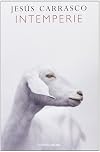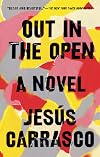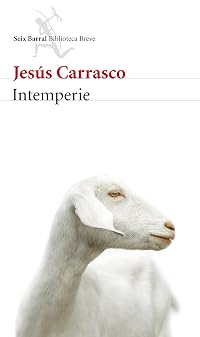
Out in the Open
by Jesús Carrasco
On This Page
Description
"A searing dystopian vision of a young boy's flight through an unnamed, savaged country, searching for sanctuary and redemption--from one of Europe's bestselling literary stars. A young boy has fled his home. He's pursued by dangerous forces. What lies before him is an infinite, arid plain, one he must cross in order to escape those from whom he's fleeing. One night on the road, he meets an old goatherd, a man who lives simply but righteously, and from that moment on, their paths intertwine. show more Out in the Open tells the story of this journey through a drought-stricken country ruled by violence. A world where names and dates don't matter, where morals have drained away with the water. In this landscape the boy--not yet a lost cause--has the chance to choose hope and bravery, or to live forever mired in the cycle of violence in which he was raised. Carrasco has masterfully created a high stakes world, a dystopian tale of life and death, right and wrong, terror and salvation"-- show lessTags
Recommendations





















Member Reviews
Out in the Open is a Spanish novel from 2013. It reminds me of The Road but better. To appreciate, one has to know of Spain's environmental problems with water. There are dry regions that once had villages and farms that have been abandoned to desert. This is due to water mismanagement by coastal resort cities and global warming, rivers dry up, vegetation dies. None of this is discussed in the novel, but anyone from Spain will understand the context and visuals described, not unlike an Old West movie. The setting is vaguely in the future, after the rule of law has collapsed, but with a foot in the Middle Ages. If the age had a historical parallel it might be Late Antiquity when pagan culture was dying off and the Dark Ages beginning. show more The writing is spare and action oriented with a sinister sense of being hunted - at some point I became so attached to the main characters it left me afraid to keep reading. Carrasco has that power, it is immersive and believable. Highly recommend. show less
Years after The Drought has come, a young boy runs away from home. He has his reasons. After hiding from the people sent out to find him on the only motorcycle, and worn down by hunger, thirst and fear, he bumps into the shepherd; an old man with a dog, a dozen goats, and a donkey and not much else. "Come on if you're coming," the shepherd says, and together they walk on.
Anyone wanting to make the ubiquitous The Road comparison will hear no argument from me; not just the setting - though Carrasco wisely makes his maybe-kinda-post-apocalypse much vaguer than McCarthy's - but the heavy Christian imagery as well. But I guess you get that for free when one of your main characters is a taciturn but merciful shepherd known only as "Señor". show more Carrasco's language is the main draw here; concise, intense, raw, almost sandblasted to the point where you find yourself grateful for the occasional well of humanity he finds. Yes, he repeats himself a bit (enough with the urine already), and some of his similes a bit overworked, but he mostly makes it work, enough so that I blaze through the novel in three sittings up to the inevitable violent showdown. 4- show less
Anyone wanting to make the ubiquitous The Road comparison will hear no argument from me; not just the setting - though Carrasco wisely makes his maybe-kinda-post-apocalypse much vaguer than McCarthy's - but the heavy Christian imagery as well. But I guess you get that for free when one of your main characters is a taciturn but merciful shepherd known only as "Señor". show more Carrasco's language is the main draw here; concise, intense, raw, almost sandblasted to the point where you find yourself grateful for the occasional well of humanity he finds. Yes, he repeats himself a bit (enough with the urine already), and some of his similes a bit overworked, but he mostly makes it work, enough so that I blaze through the novel in three sittings up to the inevitable violent showdown. 4- show less
Out in the Open by Jesus Carrasco is a highly recommended stark story of violence, escape, and survival. It was translated from the original Spanish by Margaret Jull Costa.
In this bleak novel of drought-stricken landscapes and violence, a young boy escapes, runs away, from what he feels will be death. He is pursued by a man called the bailiff and his henchmen. In order to escape he must cross an arid plan where a source of water and food is uncertain, while keeping hidden from the men who are looking for him. When the young boy meets an elderly goatherd, he is offered food and water, and eventually he understands protection as the old man tries to keep the boy safe and help him escape, traveling at night, even as the violent, evil men show more who are pursuing him draw closer.
In this austere narrative names and dates don't matter and one day/night blends into another. The details explaining what caused the boy to flee his family are never explained. The old man and the boy are either on the move, trying to avoid the bailiff, or tending to the most basic of needs - water, food, bodily elimination, and sleeping - for them and the donkey, dog, and goats they are traveling with. The landscape is harsh, reflecting a dystopian world, but no explanation for that state of their drought-blighted land is given. The dialogue is meager, subdued. The threat of violence is always present, lurking nearby.
In the end this novel has an almost parable-like feel to it, if you ignore the violence, based on the boy's potential to escape and not perpetuate the threatening behavior he has been exposed to his whole life. The old man exhibits the traits of an adherent to Christian principles (goatherd/shepherd), and Carrasco has some Christian imagery included in the novel. The boy is almost like a disciple of the old man, who is protecting and instructing him, in his minimalist way, on survival and, ultimately, on becoming a man.
The writing is descriptive and elegant, even as the story is violent and bleak. The climax of Out in the Open is grim and devastating, but also gives a slight measure of hope and redemption. This novel may not be a ideal choice for a general audience, but if you liked The Road and lean toward literary fiction, Out in the Open might be a fully satisfying selection.
Disclosure: My review copy was courtesy of Penguin Random House.
http://www.shetreadssoftly.com/2017/07/out-in-open.html
https://www.goodreads.com/review/show/2057689507 show less
In this bleak novel of drought-stricken landscapes and violence, a young boy escapes, runs away, from what he feels will be death. He is pursued by a man called the bailiff and his henchmen. In order to escape he must cross an arid plan where a source of water and food is uncertain, while keeping hidden from the men who are looking for him. When the young boy meets an elderly goatherd, he is offered food and water, and eventually he understands protection as the old man tries to keep the boy safe and help him escape, traveling at night, even as the violent, evil men show more who are pursuing him draw closer.
In this austere narrative names and dates don't matter and one day/night blends into another. The details explaining what caused the boy to flee his family are never explained. The old man and the boy are either on the move, trying to avoid the bailiff, or tending to the most basic of needs - water, food, bodily elimination, and sleeping - for them and the donkey, dog, and goats they are traveling with. The landscape is harsh, reflecting a dystopian world, but no explanation for that state of their drought-blighted land is given. The dialogue is meager, subdued. The threat of violence is always present, lurking nearby.
In the end this novel has an almost parable-like feel to it, if you ignore the violence, based on the boy's potential to escape and not perpetuate the threatening behavior he has been exposed to his whole life. The old man exhibits the traits of an adherent to Christian principles (goatherd/shepherd), and Carrasco has some Christian imagery included in the novel. The boy is almost like a disciple of the old man, who is protecting and instructing him, in his minimalist way, on survival and, ultimately, on becoming a man.
The writing is descriptive and elegant, even as the story is violent and bleak. The climax of Out in the Open is grim and devastating, but also gives a slight measure of hope and redemption. This novel may not be a ideal choice for a general audience, but if you liked The Road and lean toward literary fiction, Out in the Open might be a fully satisfying selection.
Disclosure: My review copy was courtesy of Penguin Random House.
http://www.shetreadssoftly.com/2017/07/out-in-open.html
https://www.goodreads.com/review/show/2057689507 show less
In a dystopian world that is almost, but not quite, our world, a nameless boy is fleeing a horrifically abusive situation. He must cross a waterless expanse with little cover. His abuser, an evil man known as the bailiff and the bailiff’s gang which include the boy’s teacher and even the boy’s own father, cannot let him escape. The boy is well aware that most probably his journey will lead to his death, and yet he cannot stay.
Unexpectedly the boy comes across an old man, a goat herder. He is one of the few people known to live and travel this empty plain. But is he friend or foe?
The boy slowly learns to trust and rely on his new acquaintance. Even more slowly the boy learns confidence in himself.
The old herder adheres to a moral show more code of right and wrong, even in this evil world. Some reviewers point out the allegorical images of the goatherder/(shepherd) and his moral teachings. If so, to me it’s an Old Testament sort of morality at times meeting violence with violence, but at the same time stopping short of revenge.
It can be a tough read, but it is a page turner and is one of my favorite books of the year. show less
Unexpectedly the boy comes across an old man, a goat herder. He is one of the few people known to live and travel this empty plain. But is he friend or foe?
The boy slowly learns to trust and rely on his new acquaintance. Even more slowly the boy learns confidence in himself.
The old herder adheres to a moral show more code of right and wrong, even in this evil world. Some reviewers point out the allegorical images of the goatherder/(shepherd) and his moral teachings. If so, to me it’s an Old Testament sort of morality at times meeting violence with violence, but at the same time stopping short of revenge.
It can be a tough read, but it is a page turner and is one of my favorite books of the year. show less
I read this in my quest to prepare for my trip to Spain by reading more Spanish authors. It was at the library, apparently quite a popular book in Spain. Hopefully this book will NOT be useful in my travels, as it's mostly about suffering. It takes place in a post-apocalyptic landscape, a dreadful drought that has left the landscape very harsh, and for the most part the people match the landscape. The main character is a young boy. We never learn his name, he is just the boy; I think as a reminder of how dehumanizing the whole situation is. The boy is on the run from abuse and betrayal in his village. He meets an elderly goatherd. The goatherd doesn't talk much, but turns out to be the one kind person around, and he takes the boy under show more his wing. This takes courage, because the boy is being chased by evil characters from his village.
The story seems allegorical, on the one hand, but on the other hand, the descriptions are very specific. For example, when Carrasco tells you about the boy's attempts to milk goats, you can really visualize the scene. This is a good translation I think, and I found the book compelling. show less
The story seems allegorical, on the one hand, but on the other hand, the descriptions are very specific. For example, when Carrasco tells you about the boy's attempts to milk goats, you can really visualize the scene. This is a good translation I think, and I found the book compelling. show less
A dense, hard story about a boy running away from home, from atrocities, from his personal demon, from stupidity and obedience, from .... his life in fact.
Without spoiling too much: it's not pleasant to read, it's about abuse, violence, poverty, disease, no freedom, no future. So be prepared.
In an unspecified timeframe but not recent, in an unspecified country but probably the Extremadura region in Spain, as the author has his roots there, little or no names but a very detailed very local setting which contributes again to this density, as do the hard and detailed description of interaction between the very few main characters in the novel. All these elements together must provide a universal background so that the reader can imagine show more this happening closeby.
Internationally acclaimed as being a gem, and yes it is kind of a pageturner, but too unlikely in the end, as if the author wanted to compensate for all the misfortune in the kid's life. show less
Without spoiling too much: it's not pleasant to read, it's about abuse, violence, poverty, disease, no freedom, no future. So be prepared.
In an unspecified timeframe but not recent, in an unspecified country but probably the Extremadura region in Spain, as the author has his roots there, little or no names but a very detailed very local setting which contributes again to this density, as do the hard and detailed description of interaction between the very few main characters in the novel. All these elements together must provide a universal background so that the reader can imagine show more this happening closeby.
Internationally acclaimed as being a gem, and yes it is kind of a pageturner, but too unlikely in the end, as if the author wanted to compensate for all the misfortune in the kid's life. show less
De Vlucht is een goede titel. De lezer wordt niet verteld waarom. De naam van de jongen en een herder worden niet genoemd. Het gaat om overleven op de aride vlakte in Spanje. Het vinden van eten, drinken en beschutting. Dieren zijn belangrijk. De jongen leert. Een iets te hoog gehalte aan: 'Maar het lukt.' Goede taal. Niet een boek om achter elkaar uit te lezen.
The Flight is a good title. The reader is not told why. The name of the boy and a shepherd are not mentioned. It is about survival on the arid plains in Spain. Finding food, drink and shelter. Animals are important. The boy is learning. A little too much of, "They survived". Good language.Not a book to read back-to-back from beginning to end
The Flight is a good title. The reader is not told why. The name of the boy and a shepherd are not mentioned. It is about survival on the arid plains in Spain. Finding food, drink and shelter. Animals are important. The boy is learning. A little too much of, "They survived". Good language.Not a book to read back-to-back from beginning to end
Members
- Recently Added By
Lists

International Dublin Literary Award Longlist 2017
147 works; 3 members

Dublin Literary Award Longlist 2017
147 works; 2 members

Kirkus Starred Fiction Reviews of Books Published in 2017
412 works; 7 members

Books Read in 2019
4,052 works; 110 members
Author Information

10 Works 663 Members
Some Editions
Awards and Honors
Awards
Distinctions
Notable Lists
Work Relationships
Has the adaptation
Common Knowledge
- Canonical title
- Out in the Open
- Original title
- Intemperie
- Original publication date
- 2013; 2017 (English) (English)
- People/Characters
- De jongen; De oude man
- Important places
- Spain
- First words
- Vanuit zijn lemen schuilplaats hoorde hij de echo van de stemmen die hem riepen en als waren het krekels, probeerde hij iedere man afzonderlijk te plaatsen binnen de grenzen van de olijfboomgaard. Gebrul als verschroeide rots... (show all)rozen.
- Quotations
- Na meer dan een dag waren de ingewanden van de gekeelde geiten gaan koken, waardoor hun buik was opgezwollen. Dodelijke gassen in de kookpan van darmen.
De gieren en kraaien, die spoedig zouden komen, zouden uiteindelijk ... (show all)een kolom vormen die tot kilometers in de omtrek te zien was.
Een vliegende schroef met het geklapwiek van zwarte veren boven de stoffige aarde. ( op +- 50%)
Hij kneep zijn ogen dicht van de pijn, die hem inwendig leegzoog.Hij schreeuwde niet. Hij keek naar de lucht en huilde als een Sint Sebastiaan bij zijn marteling met de pijlen. - Last words
- (Click to show. Warning: May contain spoilers.)Daarna liep hij weer naar de deur en bleef daar zolang het regende staan kijken hoe God voor even de duimschroeven wat losser draaide.
- Blurbers
- Het Parool
- Original language
- Spanish
Classifications
Statistics
- Members
- 465
- Popularity
- 65,831
- Reviews
- 29
- Rating
- (3.88)
- Languages
- 13 — Czech, Dutch, English, Finnish, French, German, Hebrew, Hungarian, Italian, Norwegian (Bokmål), Portuguese, Spanish, Swedish
- Media
- Paper, Audiobook, Ebook
- ISBNs
- 40
- ASINs
- 3