On This Page
Description
Initially banned in France by King Louis, Molière's celebrated social satire Tartuffe exposes false piety and hypocrisy in the Catholic Church. When a pious fraud worms his way into a wealthy family and manipulates the patriarch into giving up his fortune, it's up to his family to expose the truth before they end up in the poorhouse! An L.A. Theatre Works full-cast performance starring:Brian Bedford as TartuffeJB Blanc as M. Loyal and OfficerDaniel Blinkoff as DamisGia Carides as DorineJane show more Carr as Mme. PernelleJohn de Lancie as CleanteMartin Jarvis as OrgonAlex Kingston as ElmireMatthew Rhys as ValereSarah Zimmerman as MarianeTranslated by Richard Wilbur. Directed by Dakin Matthews. Recorded at The Invisible Studios, West Hollywood in June, 2010. show lessTags
Recommendations

















Member Recommendations

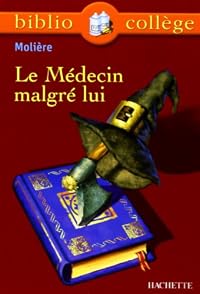
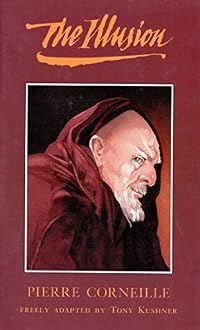
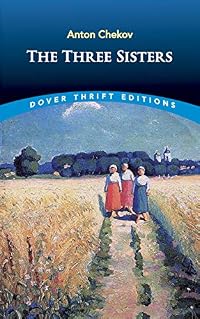
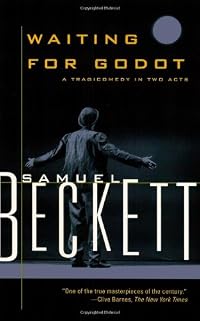
2below Similar themes and situations. I also think they're both hilariously entertaining.
Member Reviews
“To be flawlessly monstrous is, thank heaven, not easy.”
“life, happily, will not have it.”
It is a bit surreal reading Tartuffe during the first 100 days of this new administration in the United States. These two lines are from the introduction to the Arion Press Tartuffe by translator Richard Wilbur. They give me hope. I haven’t read Moliere before and just wasn’t expecting it to be so relevant 350 years later. At the same time, it seems strange that the play was censored so strongly back in its day because even with its portrayal of Tartuffe as a religious hypocrite, it would seem a stretch for the French Roman Catholic Church to take enough offense to almost excommunicate the author. Seems pretty innocuous by the standards show more of our day. But one of the signs of great literature is when parallels can still be drawn and the relevance can still be there so many years later.
The play was an easy and quick read in Wilbur’s translation and the use of verse did not seem forced or awkward as it does in some translations. Wilbur gives some of his reasons for keeping the rhymes (and making his translation task that much harder, no doubt), saying that “... rhyme and verse are required for other good reasons: to pay out the long speeches with clarifying emphasis, and at an assimilable rate; to couple farcical sequences to passages of greater weight and resonance; and to give a purely formal pleasure,...” His summary of the storyline, from which comes the quote above, breaks it down well:
Tartuffe is only incidentally satiric; what we experience in reading or seeing it, as several modern critics have argued, is not a satire but a "deep" comedy in which (1) a knave tries to control life by cold chicanery, (2) a fool tries to oppress life by unconscious misuse of the highest values, and (3) life, happily, will not have it.
Our own personal experiences, inclinations, and interests obviously affect the parallels and relevance we see in the literature we read. Being in the tea business, I always love running across tea references or quotes above and beyond the ones everyone has heard. So Dorine’s two lines here have already been used a couple times and look to have a long future in appropriate places. This exchange occurs while chiding her mistress for her docile compliance to her father’s wish that she marry Tartuffe despite her love for Valere:
DORINE: Tartuffe's your cup of tea, and you shall drink him.
MARIANCE: I've always told you everything, and relied...
DORINE:No. You deserve to be tartuffified.
Then the clash of the patriarchy and the effects of a father’s (misuse of) authority with respect to a daughter’s morals definitely made me think about my own daughter and how she might respond to something of this sort. Again, it’s Dorine who seems to have one of the most reasonable heads in the play, as she berates Orgon about his decision:
A young girl's virtue is imperilled, Sir,
When such a marriage is imposed on her;
For if one's bridegroom isn't to one's taste,
It's hardly an inducement to be chaste,
And many a man with horns upon his brow
Has made his wife the thing that she is now.
It's hard to be faithful wife, in short,
To certain husbands of a certain sort,
And he who gives his daughter to a man she hates
Must answer for her sins at Heaven's gates.
Think, Sir, before you play so risky a role.
Finally, as a yogi and student of yogic philosophy, I was reminded of one definition of yoga as the “middle path”, when Cleante asks his mad brother Orgon
Ah, there you go--extravagant as ever!
Why can you not be rational? You never
Manage to take the middle course, it seems,
But jump, instead, between absurd extremes.
While that question could be made from the standpoint of many a rational philosophic system, I couldn’t help thinking that Cleante (or Moliere) might have a little yogi in them.
Drama is not something I read a lot of but I have discovered that when I do read it, I really like to read it in folio size, like this edition of Tartuffe. The Letterpress Shakespeare from the Folio Society are similarly sized, and I’ve been reading quite a few of those lately. The large page size allows for a large type for easy reading and that is also easy to read aloud while walking or standing, something I find myself doing fairly often with drama as well as verse.
This Arion Press edition is beautifully designed and crafted. The burgundy moiré silk over boards binding is beautiful, creating a wave-like pattern as light hits it. Instead of a slipcase, it is protected by a stiff Mylar(?) cover. The text is printed in two colors, black for the regular dialogue and a rich burgundy for the decorative type, the text below the illustrations, and the undulating rule that divides the character and dialogue on each page. The Arches mould-made paper is very nice to the touch as you read through the play, maybe even more so than usual since the quick reading of the dialogue gives ample opportunity for turning the page.
The illustrations are well fitted to the play, and reminded me of New Yorker or Playboy ink and pen illustrations even before I learned that William Hamilton has done much work for the former. Unlike a good portion of the Arion Press catalogue, where the illustrations fall more in the “Livres de Artiste” style where the artist does not always seem to have an easily seen direct correlation with the author, these illustrations correspond closely with the characters and action of the plot.
All in all, this book would definitely make it on the list of books I would like to own from the press. It’s place in the canon of Western Literature, its applicability and relevance to our world today, and the beautiful design of this edition make it a no-brainer for me.
AVAILABILITY: This 2004 edition is limited to 300 copies and is still available from the press. The price is $600.
NOTE: The Whole Book Experience would like to thank Andrew Hoyem and the Arion Press for the generosity that made this review possible.
For more book reviews, including photos of the physical book and overall reading experience, visit my blog The Whole Book Experience at http://www.thewholebookexperience.com/ show less
“life, happily, will not have it.”
It is a bit surreal reading Tartuffe during the first 100 days of this new administration in the United States. These two lines are from the introduction to the Arion Press Tartuffe by translator Richard Wilbur. They give me hope. I haven’t read Moliere before and just wasn’t expecting it to be so relevant 350 years later. At the same time, it seems strange that the play was censored so strongly back in its day because even with its portrayal of Tartuffe as a religious hypocrite, it would seem a stretch for the French Roman Catholic Church to take enough offense to almost excommunicate the author. Seems pretty innocuous by the standards show more of our day. But one of the signs of great literature is when parallels can still be drawn and the relevance can still be there so many years later.
The play was an easy and quick read in Wilbur’s translation and the use of verse did not seem forced or awkward as it does in some translations. Wilbur gives some of his reasons for keeping the rhymes (and making his translation task that much harder, no doubt), saying that “... rhyme and verse are required for other good reasons: to pay out the long speeches with clarifying emphasis, and at an assimilable rate; to couple farcical sequences to passages of greater weight and resonance; and to give a purely formal pleasure,...” His summary of the storyline, from which comes the quote above, breaks it down well:
Tartuffe is only incidentally satiric; what we experience in reading or seeing it, as several modern critics have argued, is not a satire but a "deep" comedy in which (1) a knave tries to control life by cold chicanery, (2) a fool tries to oppress life by unconscious misuse of the highest values, and (3) life, happily, will not have it.
Our own personal experiences, inclinations, and interests obviously affect the parallels and relevance we see in the literature we read. Being in the tea business, I always love running across tea references or quotes above and beyond the ones everyone has heard. So Dorine’s two lines here have already been used a couple times and look to have a long future in appropriate places. This exchange occurs while chiding her mistress for her docile compliance to her father’s wish that she marry Tartuffe despite her love for Valere:
DORINE: Tartuffe's your cup of tea, and you shall drink him.
MARIANCE: I've always told you everything, and relied...
DORINE:No. You deserve to be tartuffified.
Then the clash of the patriarchy and the effects of a father’s (misuse of) authority with respect to a daughter’s morals definitely made me think about my own daughter and how she might respond to something of this sort. Again, it’s Dorine who seems to have one of the most reasonable heads in the play, as she berates Orgon about his decision:
A young girl's virtue is imperilled, Sir,
When such a marriage is imposed on her;
For if one's bridegroom isn't to one's taste,
It's hardly an inducement to be chaste,
And many a man with horns upon his brow
Has made his wife the thing that she is now.
It's hard to be faithful wife, in short,
To certain husbands of a certain sort,
And he who gives his daughter to a man she hates
Must answer for her sins at Heaven's gates.
Think, Sir, before you play so risky a role.
Finally, as a yogi and student of yogic philosophy, I was reminded of one definition of yoga as the “middle path”, when Cleante asks his mad brother Orgon
Ah, there you go--extravagant as ever!
Why can you not be rational? You never
Manage to take the middle course, it seems,
But jump, instead, between absurd extremes.
While that question could be made from the standpoint of many a rational philosophic system, I couldn’t help thinking that Cleante (or Moliere) might have a little yogi in them.
Drama is not something I read a lot of but I have discovered that when I do read it, I really like to read it in folio size, like this edition of Tartuffe. The Letterpress Shakespeare from the Folio Society are similarly sized, and I’ve been reading quite a few of those lately. The large page size allows for a large type for easy reading and that is also easy to read aloud while walking or standing, something I find myself doing fairly often with drama as well as verse.
This Arion Press edition is beautifully designed and crafted. The burgundy moiré silk over boards binding is beautiful, creating a wave-like pattern as light hits it. Instead of a slipcase, it is protected by a stiff Mylar(?) cover. The text is printed in two colors, black for the regular dialogue and a rich burgundy for the decorative type, the text below the illustrations, and the undulating rule that divides the character and dialogue on each page. The Arches mould-made paper is very nice to the touch as you read through the play, maybe even more so than usual since the quick reading of the dialogue gives ample opportunity for turning the page.
The illustrations are well fitted to the play, and reminded me of New Yorker or Playboy ink and pen illustrations even before I learned that William Hamilton has done much work for the former. Unlike a good portion of the Arion Press catalogue, where the illustrations fall more in the “Livres de Artiste” style where the artist does not always seem to have an easily seen direct correlation with the author, these illustrations correspond closely with the characters and action of the plot.
All in all, this book would definitely make it on the list of books I would like to own from the press. It’s place in the canon of Western Literature, its applicability and relevance to our world today, and the beautiful design of this edition make it a no-brainer for me.
AVAILABILITY: This 2004 edition is limited to 300 copies and is still available from the press. The price is $600.
NOTE: The Whole Book Experience would like to thank Andrew Hoyem and the Arion Press for the generosity that made this review possible.
For more book reviews, including photos of the physical book and overall reading experience, visit my blog The Whole Book Experience at http://www.thewholebookexperience.com/ show less
Hilarious satire! My Kindle edition, acquired from Project Gutenberg, didn't have the best translation but the humor still shines in this play. Orgon (and his mother) is completely taken in by Tartuffe, whom the rest of the household dislike. Tartuffe and his hypocrisy are really just foils Molière uses to display the folly of Orgon's gullibility. The saying "There is none so blind as those who will not see" could have been coined to describe Orgon & Madame Pernelle! The most comic scenes in the play are when Dorine (his daughter´s maid) and later Damis (his son) try to convince him of his foolishness. I thought Cleante, Orgon's brother-in-law, portrayed the voice of reason & his description of how Orgon had a temperament which flew show more to extremes was so apt.
Molière has a keen eye for human nature & although Orgon & Tartuffe are exaggerated for comic effect, they still display characteristics which I can recognize in people today. I will certainly be reading more of his plays! show less
Molière has a keen eye for human nature & although Orgon & Tartuffe are exaggerated for comic effect, they still display characteristics which I can recognize in people today. I will certainly be reading more of his plays! show less
Many people I talked with said that this is Moliere's argument against religion. To me, it seems like Moliere's argument against hero-worship and in favor of humanity*--as well as a response to Greek Tragedy. That paper has probably already been written.
And, admittedly, I laughed. Even Shakespeare couldn't get me to laugh (solely while reading the text). Perhaps that says more about me than it does Shakespeare, but I was absolutely amused by the vividness of Moliere's characters and the placing of dialogue.
* Anyone else think it ironic that we are living in a time when "realness" is celebrated and encouraged, but public shaming of heroes who have fallen off of their chargers has never been so prevalent? No? Just me then.
And, admittedly, I laughed. Even Shakespeare couldn't get me to laugh (solely while reading the text). Perhaps that says more about me than it does Shakespeare, but I was absolutely amused by the vividness of Moliere's characters and the placing of dialogue.
* Anyone else think it ironic that we are living in a time when "realness" is celebrated and encouraged, but public shaming of heroes who have fallen off of their chargers has never been so prevalent? No? Just me then.
Reading the introduction of Moliere’s 1664 “Tartuffe”, I noted several distinctions for this celebrated play.
- It is the most frequently produced play in the French language and considered to be Moliere’s best.
- The play was written entirely in rhymed iambic pentameter (or according to Wiki – in 1,962 twelve-syllable lines [alexandrines] of rhyming couplets).
- The play was so “famous” (or as it turns out - “infamous”) that King Louis XIV refused a private performance request from Queen Christina of Sweden and no public performances were allowed for 5 years, i.e. it opened widely in 1669.
The third bit caught my attention as I pondered (before reading the play) what was so different about this play that the King kept show more it from the public for 5 years.
“Tartuffe” is the main character and subject of the play where he is a vagrant and a pious fraud, who fooled and influenced the wealthy Orgon and his mother. Much to the chagrin of his other family members, Orgon fell deeply under the spell of Tartuffe, believing all his martyr-like yet self-promoting speeches, so much so that he disowned his son, broke a promise of marriage for his daughter to a loyal young man, and instead offered her to Tartuffe. Believing all of Tartuffe’s preaches and trusting him, Orgon renounced his wealth and contractually signed his possessions to Tartuffe, including a briefcase with confidential and damning information, which is then used against Orgon upon the reveal of the betrayal. The happy ending came when the enlightened King intervened, nullifying the contract, pardoning Orgon, and arresting Tartuffe for fraud.
Moliere was quite explicit with his condemnation of the church. “Who could imagine that devout façade could hide such double-dealing wickedness?... he’s the last religious man I’ll trust; in future I’ll recoil from them in horror.” 1664 is far too early and risky for the arts to openly mock the church. On the other hand, the King was presented as the all-seeing wise and mighty hero who swooped in to save Orgon. In short, it is a (perhaps unintended) bold piece of literature that pitted the King against the Church. Though my book’s introduction didn’t include this, I found articles online that validated my hunch. The French Roman Catholic Church was displeased with the play; the Archbishop of Paris issued an edict banning it with the threat of excommunication. Meanwhile, King Louis XIV got his jollies from the play and protected Moliere from excommunication.
To be honest, with my modern mind, the plot sounded so preposterous that it is laughable. Though putting on a lens of time, I believe that is the intended appeal of this play – mocking the gullibility of the wealthy and the falsehood of piety. Surely, such was a provocative rarity then. Without being able to read it in French, the charm of the alexandrines rhymes is absent. However, there are indentations that mark the pace of lines; these remain to be affective even in English.
Favorite Character: Dorine, the maidservant who was vocal and spoke the truth and obviousness and never held her tongue regardless who she is addressing. You go girl!
3.5 stars for the play
+0.5 star considering the original publication year show less
- It is the most frequently produced play in the French language and considered to be Moliere’s best.
- The play was written entirely in rhymed iambic pentameter (or according to Wiki – in 1,962 twelve-syllable lines [alexandrines] of rhyming couplets).
- The play was so “famous” (or as it turns out - “infamous”) that King Louis XIV refused a private performance request from Queen Christina of Sweden and no public performances were allowed for 5 years, i.e. it opened widely in 1669.
The third bit caught my attention as I pondered (before reading the play) what was so different about this play that the King kept show more it from the public for 5 years.
“Tartuffe” is the main character and subject of the play where he is a vagrant and a pious fraud, who fooled and influenced the wealthy Orgon and his mother. Much to the chagrin of his other family members, Orgon fell deeply under the spell of Tartuffe, believing all his martyr-like yet self-promoting speeches, so much so that he disowned his son, broke a promise of marriage for his daughter to a loyal young man, and instead offered her to Tartuffe. Believing all of Tartuffe’s preaches and trusting him, Orgon renounced his wealth and contractually signed his possessions to Tartuffe, including a briefcase with confidential and damning information, which is then used against Orgon upon the reveal of the betrayal. The happy ending came when the enlightened King intervened, nullifying the contract, pardoning Orgon, and arresting Tartuffe for fraud.
Moliere was quite explicit with his condemnation of the church. “Who could imagine that devout façade could hide such double-dealing wickedness?... he’s the last religious man I’ll trust; in future I’ll recoil from them in horror.” 1664 is far too early and risky for the arts to openly mock the church. On the other hand, the King was presented as the all-seeing wise and mighty hero who swooped in to save Orgon. In short, it is a (perhaps unintended) bold piece of literature that pitted the King against the Church. Though my book’s introduction didn’t include this, I found articles online that validated my hunch. The French Roman Catholic Church was displeased with the play; the Archbishop of Paris issued an edict banning it with the threat of excommunication. Meanwhile, King Louis XIV got his jollies from the play and protected Moliere from excommunication.
To be honest, with my modern mind, the plot sounded so preposterous that it is laughable. Though putting on a lens of time, I believe that is the intended appeal of this play – mocking the gullibility of the wealthy and the falsehood of piety. Surely, such was a provocative rarity then. Without being able to read it in French, the charm of the alexandrines rhymes is absent. However, there are indentations that mark the pace of lines; these remain to be affective even in English.
Favorite Character: Dorine, the maidservant who was vocal and spoke the truth and obviousness and never held her tongue regardless who she is addressing. You go girl!
3.5 stars for the play
+0.5 star considering the original publication year show less
The comedy of this play walked the fine line between humor and tragedy. In the modern world there are all kinds of people insisting that black is white and white is black and declaring others crazy for not believing, so Tartuffe is readily believable. The appeal to the king is overt - the ending is resolved through the "wisdom and benevolence" of the king in the play. Even so, the story is a powerful warning against hypocrisy.
Wilbur's translation is a marvel and has all the awards to prove it. Even on the page, the couplets read so easily! And he sacrifices none of the subtlety of suggestion. What's fun is to get someone else to read it aloud with you (ideally, someone of the opposite sex), so you can appreciate how finely the rhymes and meter sound.
The humor's a bit outdated, and it's rather short, but if you know anything about how strong the church was in the 1600s then this is the boldest play you will ever read. The balls, Moliere, the balls.
Members
- Recently Added By
Lists

Best of French Literature
138 works; 26 members

Greatest Books, allegedly
484 works; 9 members

My Favorite Plays
25 works; 1 member

Next Plays to Watch
50 works; 1 member

Next Plays / 2025
352 works; 1 member

My Play Collection
769 works; 3 members

Recommended Reading : 600 Classics Reviewed, Editors of Salem Press, 2015
634 works; 6 members

The Well-Educated Mind, Susan Wise Bauer, 2016
179 works; 3 members

Well-Educated Mind
150 works; 3 members

100 Books to Read in a Lifetime (That Are Older Than 200 Years)
415 works; 175 members

How to Read a Book's Recommended Reading List
309 works; 10 members
The Well-Educated Mind Reading Challenge
75 works; 7 members

1964 College Preparatory Reading List
202 works; 8 members

Europe
205 works; 6 members

Amanda's Guaranteed Books
110 works; 5 members

Favourite Books
1,817 works; 316 members

Literary Works Read in College
316 works; 15 members

Fav. Stage Plays / First-Time Watched / Listened To / 2025
20 works; 1 member
Author Information

The French dramatist Moliere was born Jean-Baptiste Poquelin on January 15, 1622, in Paris. The son of a wealthy tapestry merchant, he had a penchant for the theater from childhood. In 1636, he was sent off to school at the Jesuit College of Claremont and in 1643, he embarked upon a 13-year career touring in provincial theater as a troupe member show more of Illustre Theatre, a group established by the family Bejarts. He married a daughter of the troupe, Armande Bejart, in 1662 and changed his name to Moliere. The French King Louis XIV, becoming entranced with the troupe after seeing a performance of The Would-Be Gentleman, lent his support and charged Moliere with the production of comedy ballets in which he often used real-life human qualities as backdrops rather than settings from church or state. Soon, Moliere secured a position at the Palais-Royal and committed himself to the comic theater as a dramatist, actor, producer, and director. Moliere is considered to be one of the preeminent French dramatists and writers of comedies; his work continues to delight audiences today. With L'Ecole des Femmes (The School for Wives) Moliere broke with the farce tradition, and the play, about the role played by women in society and their preparation for it, is regarded by many as the first great seriocomic work of French literature. In Tartuffe (1664), Moliere invented one of his famous comic types, that of a religious hypocrite, a character so realistic that the king forbade public performance of the play for five years. Moliere gave psychological depth to his characters, engaging them in facial antics and slapstick comedy, but with an underlying pathos. Jean Baptiste Moliere died in 1673. (Bowker Author Biography) show less
Some Editions
Awards and Honors
Notable Lists
Series

Belongs to Publisher Series
Wereldbibliotheek (112)
Haagse Comedie (7)
Limited Editions Club (S:2.04)
Arion Press (68)
Insel-Bücherei (Nr. 76)
Gallimard, Folio (3228)
Work Relationships
Is contained in
Bourgeois Gentleman / Imaginary Invalid / Misanthrope / Miser / School for Husbands / School for Wives / Tartuffe by Molière
Bourgeois Gentleman / Dom Juan / Imaginary Invalid / Learned Ladies / Misanthrope / Miser / Tartuffe by Molière
Bourgeois Gentleman / Imaginary Invalid / Learned Ladies / Misanthrope / Miser / Scapin / School for Wives / Tartuffe by Molière
Amphitryon / Bourgeois Gentleman / Dom Juan / Imaginary Invalid / Misanthrope / Miser / Tartuffe by Molière
The Affected Misses / Don Juan / Tartuffe / The Misanthrope / the Doctor by Compulsion / The Miser / The Tradesman Turned Gentleman / The Learned Ladies by Molière
Tartuffe and Other Plays: Tartuffe; The Ridiculous Precieuses; The School for Husbands; The School for Wives; Don Juan; The Versailles Impromptu; The Critique of the School for Wives by Molière
Plays of Moliere: The School for Wives, Tartuffe, The Misanthrope, The Miser, The Physician In Spite of Himself (Art Type Edition) by Molière
The slave of truth (Le misanthrope) Tartuffe. The imaginary invalid. New English versions by Molière
ŒUVRES COMPLETES.THEATRE.1668-1669 George Dandin. L'avare. Le Tartuffe. TEXTE ETABLI ET PRESENTE PAR RENE BRAY by Molière
Has the adaptation
Common Knowledge
- Canonical title
- Tartuffe; Tartuffe or The Hypocrite [Squid Ink Classics Edition]
- Original title
- Le tartuffe ; Le bourgeois gentilhomme ; L’ecole des femmes.; Tartuffe ou L´Imposteur
- Alternate titles*
- Tartufe
- Original publication date
- 1664 (Premiere) (Premiere); 1682 (First Edition) (First Edition)
- People/Characters*
- Tartuffe
- Important places
- Paris, France
- Related movies
- Herr Tartüff (1925 | IMDb); Tartuffe (1978 | IMDb); Le tartuffe (1984 | IMDb); Le tartuffe (1983 | IMDb)
- First words
- Allons, Flipote, allons, que d'eux je me délivre
- Last words
- (Click to show. Warning: May contain spoilers.)Oui, c'est bien dit; allons à ses pieds, avec joie,
Nous louer des bontés que son cœur nous déploie:
Puis acquittés un peu de ce premier devoir,
Aux justes soins d'un autre, il nous faudra pourvoir;
Et par un doux hymen, couronner en Valère,
La flamme d'un amant généreux, et sincère. - Original language
- French
*Some information comes from Common Knowledge in other languages. Click "Edit" for more information.
Classifications
Statistics
- Members
- 3,315
- Popularity
- 5,100
- Reviews
- 45
- Rating
- (3.76)
- Languages
- 20 — French-based Creoles and Pidgins, Czech, Danish, Dutch, English, Finnish, French, German, Greek, Hungarian, Italian, Lithuanian, Norwegian (Nynorsk), Norwegian (Bokmål), Polish, Portuguese, Russian, Scots, Spanish, Swedish
- Media
- Paper, Audiobook, Ebook
- ISBNs
- 222
- UPCs
- 3
- ASINs
- 74