On This Page
Description
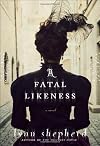
Commissioned to negotiate the release of papers linked to Frankenstein infamy, London detective Charles Maddox, whose uncle remains haunted by an unsolved mystery surrounding the Romantics literary movement, is roped into a gothic-tinged case that places him in the path of such luminaries as Lord Byron and Mary Shelley.Tags
Recommendations



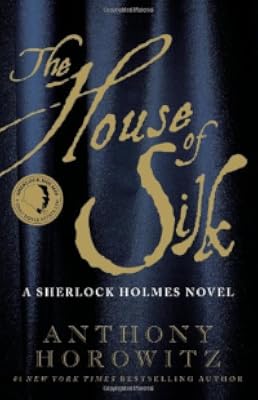

Member Recommendations

fyrefly98 Both are fictional attempts to fill in some of the historical gaps regarding what was really going on in the lives of the Romantic poets - particularly Percy Shelley - although the two books come to very, very different answers (A Fatal Likeness is a historical mystery, while The Stress of Her Regard goes a more supernatural route).
Member Reviews
Gripping & complex Victorian mystery
The plot in this book is so complex as to be impossible to summarize ( I have posted a longer version on amazon.ca). Nutshell version: Charles Maddox, a 19th century private investigator ( and star of 2 previous books by the author) takes on a request by clients Sir Percy & Jane Shelley. He is the son of famous poet Percy Shelley & Mary Godwin (Frankenstein). They want him to round up any personal documents & letters of Shelley's that may be in the wrong hands. The poet is long dead but Mary is still alive although very ill. But soon Charles will become aware of the hidden agenda behind their request.
The author has taken well documented real events & people from the lives of Shelley, Mary & her half show more sister Claire Clairmont & embellished the story with fictional ones. The result is a seamless blend & a book that is engrossing, fascinating & chilling.
The main protagonist, Charles is a compelling character. He's smart, intuitive & slightly repressed. What he learns as he digs shocks him (and me!) & will change his life irrevocably. He has taken over the business for his great uncle Maddox while he recovers from what sounds like a stroke & the case quickly becomes personal as he uncovers Maddox's involvement with the family, going back 30 years.
Layer by layer, the author reveals secrets & lies so the reader is as surprised as Charles. Individual characters tell their story in alternating chapters, obviously with their own best interests in mind, switching from villain to victim in a heartbeat. Each is fully realized with a distinct voice & dialogue is carefully composed and appropriate for the time.
As Charles becomes obsessed with getting to the truth, he neglects his home life with tragic results. It's a good example of the toxic effect Shelley, Mary & Claire had on anyone who entered their sphere. These are not nice people & if alive today, no doubt they'd be diagnosed with a raft of personality disorders. But in the way of a witnessed train wreck, you can't take your eyes away even as your jaw drops while you read on.
There are many characters & side stories that add to the plot and at times, I found it difficult to keep the cast straight (first & second spouses with children from previous relationships). This is not a quick, easy read & you have to pay attention. But boy, is it worth it.
The author has done copious research & skillfully weaves fact & fiction to create a haunting tale that will stay with you long after you've finished. show less
The plot in this book is so complex as to be impossible to summarize ( I have posted a longer version on amazon.ca). Nutshell version: Charles Maddox, a 19th century private investigator ( and star of 2 previous books by the author) takes on a request by clients Sir Percy & Jane Shelley. He is the son of famous poet Percy Shelley & Mary Godwin (Frankenstein). They want him to round up any personal documents & letters of Shelley's that may be in the wrong hands. The poet is long dead but Mary is still alive although very ill. But soon Charles will become aware of the hidden agenda behind their request.
The author has taken well documented real events & people from the lives of Shelley, Mary & her half show more sister Claire Clairmont & embellished the story with fictional ones. The result is a seamless blend & a book that is engrossing, fascinating & chilling.
The main protagonist, Charles is a compelling character. He's smart, intuitive & slightly repressed. What he learns as he digs shocks him (and me!) & will change his life irrevocably. He has taken over the business for his great uncle Maddox while he recovers from what sounds like a stroke & the case quickly becomes personal as he uncovers Maddox's involvement with the family, going back 30 years.
Layer by layer, the author reveals secrets & lies so the reader is as surprised as Charles. Individual characters tell their story in alternating chapters, obviously with their own best interests in mind, switching from villain to victim in a heartbeat. Each is fully realized with a distinct voice & dialogue is carefully composed and appropriate for the time.
As Charles becomes obsessed with getting to the truth, he neglects his home life with tragic results. It's a good example of the toxic effect Shelley, Mary & Claire had on anyone who entered their sphere. These are not nice people & if alive today, no doubt they'd be diagnosed with a raft of personality disorders. But in the way of a witnessed train wreck, you can't take your eyes away even as your jaw drops while you read on.
There are many characters & side stories that add to the plot and at times, I found it difficult to keep the cast straight (first & second spouses with children from previous relationships). This is not a quick, easy read & you have to pay attention. But boy, is it worth it.
The author has done copious research & skillfully weaves fact & fiction to create a haunting tale that will stay with you long after you've finished. show less
This book is a slow build, with each character offering up a self-serving narrative that casts the others in a jaundiced light, as investigator Charles Maddox tries to ascertain the truth. A bizarre read. I'd hate to come to it with no knowledge of the Shelleys thinking I was going to learn something... First Shelley is accused of strangling his infant daughter, then Mary is accused of starving all her children to death, Shelley is proclaimed the true author of Frankenstein, etc. Shepherd justifies all the hatchet work in an afterward that claims there's plenty of evidence for what she's alleging. Byron remains on the periphery, painted in the usual broad-brush clichés--vain, haughty, etc.
Victorian era thief-taker (private detective) Charles Maddox has been working with is great uncle, also named Charles Maddox. Now, a stroke has rendered Maddox the elder incapable of doing business, so Maddox the younger takes on the latest case, which turns out to be a hire by Sir Percy Shelley, son of the Romantic poet, and his wife, Jane. It seems someone-namely Clair Clairmont, the step-sister of Mary Wollstonecraft, the widow of Shelley, former lover of Lord Byron and probable lover of Shelley as well- is threatening to make public certain papers of the long dead poet unless . Sir Percy- and especially Jane, who has a shrine to the poet in the living room- do not wish anything to tarnish the reputation of Shelley senior. They want show more Maddox to find out what, exactly, she has.
Through the acting abilities of Nancy, a prostitute and friend of an informant Maddox has used before, Charles Maddox finds himself a roomer in Clairmont’s house. It doesn’t take him long to discover some of the papers. It doesn’t take long, either, for Clair to confront him about what he’s doing in the house. She tells her side of the story and makes a counterproposal. That should be about the end of it, right?
Not even close. This all takes place in the very beginning of the book. As Maddox discovers that there are missing pages in his uncles record books about a case concerning Shelley before, he looks deeper. And deeper. More papers turn up, more tales from the past are told. It seems that the poet’s life was very tangled, involving several women, several children who died, and just possibly murder. Nothing about Shelley, it seems, was ever as it appeared to be.
It’s an interesting story, and Shepherd has researched her subjects well. Her story is not one of alternative history but of things that could well have happened in the missing spaces of what was recorded. She’s caught the flavor of the era well. Sadly, I found the book hard to follow. Too many people of the same or similar name, too many contradictory backstories. Told by an omnipotent third party and several characters, there is sometimes little to go on when a shift is made between narrators. I also wondered about the inclusion of Molly, the housemaid; she seemed like an expendable afterthought, something thrown in to show that Maddox had some iota of a personal life. She would have made a lot more impart if her character had been fleshed out –I have to admit, however, that I have not read the first two books in the series and she may well have played a bigger role in those.
The ending of the novel, though- that is really well done and totally unexpected, and made the whole thing worthwhile. Just maybe it should have a few tweaks before going to press. show less
Through the acting abilities of Nancy, a prostitute and friend of an informant Maddox has used before, Charles Maddox finds himself a roomer in Clairmont’s house. It doesn’t take him long to discover some of the papers. It doesn’t take long, either, for Clair to confront him about what he’s doing in the house. She tells her side of the story and makes a counterproposal. That should be about the end of it, right?
Not even close. This all takes place in the very beginning of the book. As Maddox discovers that there are missing pages in his uncles record books about a case concerning Shelley before, he looks deeper. And deeper. More papers turn up, more tales from the past are told. It seems that the poet’s life was very tangled, involving several women, several children who died, and just possibly murder. Nothing about Shelley, it seems, was ever as it appeared to be.
It’s an interesting story, and Shepherd has researched her subjects well. Her story is not one of alternative history but of things that could well have happened in the missing spaces of what was recorded. She’s caught the flavor of the era well. Sadly, I found the book hard to follow. Too many people of the same or similar name, too many contradictory backstories. Told by an omnipotent third party and several characters, there is sometimes little to go on when a shift is made between narrators. I also wondered about the inclusion of Molly, the housemaid; she seemed like an expendable afterthought, something thrown in to show that Maddox had some iota of a personal life. She would have made a lot more impart if her character had been fleshed out –I have to admit, however, that I have not read the first two books in the series and she may well have played a bigger role in those.
The ending of the novel, though- that is really well done and totally unexpected, and made the whole thing worthwhile. Just maybe it should have a few tweaks before going to press. show less
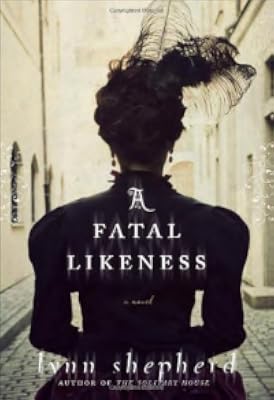
A Fatal Likeness by Lynn Shepherd is a mystery novel based on the lives of the famous poet Percy Bysshe Shelley and the women in his life, most notably his second wife, Mary Shelley, famous author of Frankenstein.
Charles Maddox is asked by Mary Shelley's son and daughter in law to look into a small matter for them. His uncle has had a relapse and can't help with the case. But the Shelley's obviously have some dark secrets they are trying to hide. Charles finds out his uncle had been hired by the Shelley's in past years but the papers have vanished or been destroyed. He throws himself into investigating the hidden secrets in the Shelley family and what role if any his uncle played in covering up those secrets. In the meantime Charles is show more dealing with, or not dealing with, some personal issues of his own.
The mystery is very compelling - I wanted to discover the hidden secrets as much as Maddox does - although it is rather a dark novel which does not present the Shelley's in a favorable light. There were a few sections I had difficulty reading because of the harm done to very young children and young women. I just wanted to give a warning in case other readers might be sensitive to those things as I am.
There are a lot of complicated family relationships in this book so I much appreciated the family tree chart in the beginning of the book and referred to it often. I also appreciate the final section where the author breaks down what details are historical facts and which ones were invented by the author.
I will never hear the name Percy Bysshe Shelley or Mary Shelley again without thinking of this novel. show less
Charles Maddox is asked by Mary Shelley's son and daughter in law to look into a small matter for them. His uncle has had a relapse and can't help with the case. But the Shelley's obviously have some dark secrets they are trying to hide. Charles finds out his uncle had been hired by the Shelley's in past years but the papers have vanished or been destroyed. He throws himself into investigating the hidden secrets in the Shelley family and what role if any his uncle played in covering up those secrets. In the meantime Charles is show more dealing with, or not dealing with, some personal issues of his own.
The mystery is very compelling - I wanted to discover the hidden secrets as much as Maddox does - although it is rather a dark novel which does not present the Shelley's in a favorable light. There were a few sections I had difficulty reading because of the harm done to very young children and young women. I just wanted to give a warning in case other readers might be sensitive to those things as I am.
There are a lot of complicated family relationships in this book so I much appreciated the family tree chart in the beginning of the book and referred to it often. I also appreciate the final section where the author breaks down what details are historical facts and which ones were invented by the author.
I will never hear the name Percy Bysshe Shelley or Mary Shelley again without thinking of this novel. show less
 This review was written for LibraryThing Early Reviewers.
One of the best things about A Fatal Likeness is how carefully Lynn Shepherd ties together the correspondence and journal entries to formulate a very possible explanation for what is often considered a blank period in the Percy/Mary relationship. Ms. Shepherd even goes so far as to detail which elements of the story are based on fact and which fictional elements she brought in to flesh out the story. Doing so makes one appreciate her imagination as well as her ability to extrapolate based on certain clues. While no one will ever know what Percy, Mary, and Claire experienced during those years, Ms. Shepherd does her best to create a scenario that is just as likely as anything else historians have theorized.
Another excellent aspect of the show more story is the historical elements of detective work. While Charles Maddox is a second-generation thief taker, detective work is still in its infancy throughout A Fatal Likeness. In addition to being a fascinating historical detail, Charles’ use of paid informants, bribes, extortion, and even physical violence to uncover the truth provides an excellent comparison point for today’s detectives and the relative ease with which they can go about their work.
Because the story jumps between the past, when Percy was alive, and the present, when his son now holds his title, many of the characters have the same name. The use of present tense throughout the story does nothing to distinguish these characters. As such, readers have to pay particularly close attention in order to decipher which Mrs. Shelley in which time period the story is following at any given time. The necessity of having to keep track of this in order to understand the story does detract from one’s overall enjoyment because it becomes impossible to completely lose oneself within the narrative. The story is too complex and the characters too closely connected to be able to read without having to pause to remember or discern a character. For other stories, careful reading is perfectly acceptable, but for a detective novel, it seems less than desirable.
A Fatal Likeness is intense and exciting, but it is not the type of novel that lingers in one’s mind. In fact, several weeks after finishing the story, one may find it difficult to remember key details of the plot. While this does not diminish the thrills incurred while reading the story, it does lessen the overall impact of the story. In essence, it becomes nothing more than a good detective novel but something far removed from a life-changing experience. show less
Another excellent aspect of the show more story is the historical elements of detective work. While Charles Maddox is a second-generation thief taker, detective work is still in its infancy throughout A Fatal Likeness. In addition to being a fascinating historical detail, Charles’ use of paid informants, bribes, extortion, and even physical violence to uncover the truth provides an excellent comparison point for today’s detectives and the relative ease with which they can go about their work.
Because the story jumps between the past, when Percy was alive, and the present, when his son now holds his title, many of the characters have the same name. The use of present tense throughout the story does nothing to distinguish these characters. As such, readers have to pay particularly close attention in order to decipher which Mrs. Shelley in which time period the story is following at any given time. The necessity of having to keep track of this in order to understand the story does detract from one’s overall enjoyment because it becomes impossible to completely lose oneself within the narrative. The story is too complex and the characters too closely connected to be able to read without having to pause to remember or discern a character. For other stories, careful reading is perfectly acceptable, but for a detective novel, it seems less than desirable.
A Fatal Likeness is intense and exciting, but it is not the type of novel that lingers in one’s mind. In fact, several weeks after finishing the story, one may find it difficult to remember key details of the plot. While this does not diminish the thrills incurred while reading the story, it does lessen the overall impact of the story. In essence, it becomes nothing more than a good detective novel but something far removed from a life-changing experience. show less
This review was written for LibraryThing Early Reviewers.Summary: Charles Maddox is the nephew of London's greatest thief taker, and quite an excellent investigator in his own right. He's currently preoccupied with his uncle's deteriorating health and mental faculties, but that doesn't stop him from taking on new business when it comes to him. He is contacted by the only surviving son of the famous poet Percy Bysshe Shelley and the author Mary Wollstonecraft Godwin Shelley. The son, Sir Percy, wants Maddox to investigate someone who is said to be in possession of papers that may be damaging to the family's legacy, which Mary, her son, and her daughter-in-law protect vigilantly. But when Maddox takes the case, he finds the person in question is Mary's step-sister, Claire Clairmont, and her show more stories and vitriolic attitude towards Mary open up even more questions. Who was Shelley really, and what accounts for his widely noted eccentric behavior? What happened in the death of his first wife? What was really going on while Shelley, Mary, and Claire were traveling in Europe? And - perhaps most interestingly to Charles - what does his uncle have to do with the whole affair?
Review: The life and times of the romantic poets - particularly the tangled family tree of the Shelleys and the Godwins and Claire Clairmont and Lord Byron - are complicated and strange by all accounts, with gaps in our knowledge and unanswered questions and unexplainable events. A Fatal Likeness is the second book I've read in the past year that uses some artistic license to fill in those gaps while still staying as true as possible to the known facts. (The other is The Stress of Her Regard by Tim Powers, and while the solutions to the mysteries of history offered by Shepherd are undeniably more plausible than Powers's vampiric stony lamia spirits, the supernatural explanations lingered in my mind as I read Shepherd's more down-to-earth account, perhaps as I was trying to make them fit together.) I should also add that, prior to these books, I was not at all familiar with this bit of literary history, or even with the literary works of the people involved. So how well Shepherd did at playing with actual history, I can't answer.
What I can speak to is the story that she herself presents. And I think she presents it well, although I didn't find it as smooth or as enjoyable as her previous novel, The Solitary House. As far as the mystery goes, the various pieces are laid out well, doled out in appropriate chunks, and presented in such a way that someone (like myself) who only has the barest knowledge of the actual facts could follow along. (The family tree in the front of the book was a huge help that I had to flip to frequently, although I could also have used a timeline as to when some of the major events in Shelley/Mary/Claire's lives took place.) The solution to many of the mysteries laid out in the book (particularly centering around Shelley's strange behavior), however, didn't quite work so well. It was interesting, and fit with the facts of the story, but it came rather abruptly near the end, and wasn't (in my opinion) figure-out-able from clues in the rest of the book, which is not how I prefer my mystery novels.
But the bigger reason that I didn't love this book is that I disliked almost all of the characters, and didn't get enough of the characters I did enjoy. There's some development for Charles, and I'm curious to see where Shepherd will take his character in the future, and it was fascinating to get to see things from the perspective of his uncle (via old case files). But it felt like most of the time was spent with the Shelleys or Claire Clairmont (or both), and I found almost everyone involved to be thoroughly unpleasant and unlikeable. Again, that may or may not be true to the historical record, I can't say, but it made it difficult to get involved with the progress of the mystery. It seemed like we, the audience, were supposed to want to get to the bottom of the strange and terrible things that had happened in the previous generation, but after a while, I was of the opinion that all of these awful people deserved each other, and can we please go spend some more time with Charles and his household, or roaming around Victorian London (which is a great thing about Shepherd's books, she can write atmospheric and vaguely Gothic Victoriana like nobody's business.)
So, overall, it wasn't the best historical mystery I've ever read, but it was well-written and interesting enough to keep me absorbed, and I'll be curious to see what literary inspiration strikes Shepherd next. 3.5 out of 5 stars.
Recommendation: People interested in the Romantic poets would be my first recommendation, obviously, but fans of historical mysteries, particularly those with a literary bent, should enjoy it (and/or The Solitary House) as well. show less
Review: The life and times of the romantic poets - particularly the tangled family tree of the Shelleys and the Godwins and Claire Clairmont and Lord Byron - are complicated and strange by all accounts, with gaps in our knowledge and unanswered questions and unexplainable events. A Fatal Likeness is the second book I've read in the past year that uses some artistic license to fill in those gaps while still staying as true as possible to the known facts. (The other is The Stress of Her Regard by Tim Powers, and while the solutions to the mysteries of history offered by Shepherd are undeniably more plausible than Powers's vampiric stony lamia spirits, the supernatural explanations lingered in my mind as I read Shepherd's more down-to-earth account, perhaps as I was trying to make them fit together.) I should also add that, prior to these books, I was not at all familiar with this bit of literary history, or even with the literary works of the people involved. So how well Shepherd did at playing with actual history, I can't answer.
What I can speak to is the story that she herself presents. And I think she presents it well, although I didn't find it as smooth or as enjoyable as her previous novel, The Solitary House. As far as the mystery goes, the various pieces are laid out well, doled out in appropriate chunks, and presented in such a way that someone (like myself) who only has the barest knowledge of the actual facts could follow along. (The family tree in the front of the book was a huge help that I had to flip to frequently, although I could also have used a timeline as to when some of the major events in Shelley/Mary/Claire's lives took place.) The solution to many of the mysteries laid out in the book (particularly centering around Shelley's strange behavior), however, didn't quite work so well. It was interesting, and fit with the facts of the story, but it came rather abruptly near the end, and wasn't (in my opinion) figure-out-able from clues in the rest of the book, which is not how I prefer my mystery novels.
But the bigger reason that I didn't love this book is that I disliked almost all of the characters, and didn't get enough of the characters I did enjoy. There's some development for Charles, and I'm curious to see where Shepherd will take his character in the future, and it was fascinating to get to see things from the perspective of his uncle (via old case files). But it felt like most of the time was spent with the Shelleys or Claire Clairmont (or both), and I found almost everyone involved to be thoroughly unpleasant and unlikeable. Again, that may or may not be true to the historical record, I can't say, but it made it difficult to get involved with the progress of the mystery. It seemed like we, the audience, were supposed to want to get to the bottom of the strange and terrible things that had happened in the previous generation, but after a while, I was of the opinion that all of these awful people deserved each other, and can we please go spend some more time with Charles and his household, or roaming around Victorian London (which is a great thing about Shepherd's books, she can write atmospheric and vaguely Gothic Victoriana like nobody's business.)
So, overall, it wasn't the best historical mystery I've ever read, but it was well-written and interesting enough to keep me absorbed, and I'll be curious to see what literary inspiration strikes Shepherd next. 3.5 out of 5 stars.
Recommendation: People interested in the Romantic poets would be my first recommendation, obviously, but fans of historical mysteries, particularly those with a literary bent, should enjoy it (and/or The Solitary House) as well. show less
This review was written for LibraryThing Early Reviewers.I'll be honest with you, peeps. Despite struggling with writing style, ultimately I found this book fascinating.
Lynn Shepherd slowly and painstakingly reassembled a fatal love triangle which consisted of Percy Bysshe Shelley, Mary Godwin (lately Shelley) and Claire Clairmont. She also reintroduced various mysterious events in Shelley's life and her own very Gothic version of what was happening around him and his women.
I freely admit that I was gobsmacked by A Fatal Likeness' series of events. It's very dark, twisted and convoluted, and it's intricately woven in such a mystery that the reader along with the detective Charles Maddox is forced to stumble alone in the dark, coming to the wrong conclusions again and again until we get to see show more the final version of the truth.
It's disconcerting, at times horrifying, but half way through the book you find that you are too invested in its characters to stop reading.
The writing style wasn't my sort of thing only because it varied between the old-fashioned Victorian language and author's own insights into what this or other event or condition would be called in the future. Such interventions were minute but I don't think they were necessary until Author's Notes and Acknowledgements where Lynn explained what she did and how she did it. I know that they kept ruining my immersion into the story.
Did you notice that I haven't said anything about the characters yet? That' because the characters is what totally made the story shine for me. They are creepy and ambiguous and keep you uncertain if you can trust your own judgement... Perhaps the only solid rock in A Fatal Likeness is Charles Maddox, the detective himself, the rest are fluid. This is why I won't tell you anything about them so as not to spoil your own impressions.
Overall, very good, although you might need to push yourself through the first third of the book to truly enjoy the whole thing. show less
Lynn Shepherd slowly and painstakingly reassembled a fatal love triangle which consisted of Percy Bysshe Shelley, Mary Godwin (lately Shelley) and Claire Clairmont. She also reintroduced various mysterious events in Shelley's life and her own very Gothic version of what was happening around him and his women.
I freely admit that I was gobsmacked by A Fatal Likeness' series of events. It's very dark, twisted and convoluted, and it's intricately woven in such a mystery that the reader along with the detective Charles Maddox is forced to stumble alone in the dark, coming to the wrong conclusions again and again until we get to see show more the final version of the truth.
It's disconcerting, at times horrifying, but half way through the book you find that you are too invested in its characters to stop reading.
The writing style wasn't my sort of thing only because it varied between the old-fashioned Victorian language and author's own insights into what this or other event or condition would be called in the future. Such interventions were minute but I don't think they were necessary until Author's Notes and Acknowledgements where Lynn explained what she did and how she did it. I know that they kept ruining my immersion into the story.
Did you notice that I haven't said anything about the characters yet? That' because the characters is what totally made the story shine for me. They are creepy and ambiguous and keep you uncertain if you can trust your own judgement... Perhaps the only solid rock in A Fatal Likeness is Charles Maddox, the detective himself, the rest are fluid. This is why I won't tell you anything about them so as not to spoil your own impressions.
Overall, very good, although you might need to push yourself through the first third of the book to truly enjoy the whole thing. show less
Members
- Recently Added By
Published Reviews
In many ways, A Fatal Likeness is a Chinese Box -- the term often given to the structure of literary classics like Turn of the Screw or Wuthering Heights. There are stories within stories, nested like serpents, one inside the other, until the reader (like the protagonist) doesn't know who or what to trust. There is no 'ah-ha' moment, no comfortable denouement. With each clue gained, we are show more plunged precipitously into the next inexplicable mire, breathless and hurried until the very last page. Only then do we pause for breath, but it is not the contented satisfaction of truth discovered; it is the cold knowledge of a truth discovered too late. show less
added by mysterymax
It’s a dramatic, dark story of people infamous in their own time, famous in ours, some fact, some supposition, some the author’s own flair for the dramatic. Ms. Shepherd has penned the story of a man who may have been guilty of horrendous crimes, if only in his own mind. All in all A Fatal Likeness is an overwhelming narrative of love in its darkest moments, of a man “fated to bring show more death on all those unfortunate enough to come within his sphere . . . whether it is his intention or not,” while now being considered one of its most notable poets. show less
added by mysterymax
Lists

Kirkus Reviews Best Fiction of 2013
99 works; 6 members
Author Information

5 Works 1,114 Members
Awards and Honors
Distinctions
Series

Common Knowledge
- Canonical title
- A Fatal Likeness
- Original title
- A Treacherous Likeness
- Original publication date
- 2013-08-20
- People/Characters
- Charles Maddox; Mary Shelley; Percy Bysshe Shelley; Mary Wollstonecraft Shelley; Claire Clairmont
Classifications
Statistics
- Members
- 179
- Popularity
- 181,310
- Reviews
- 28
- Rating
- (3.35)
- Languages
- English
- Media
- Paper, Audiobook, Ebook
- ISBNs
- 12
- ASINs
- 4