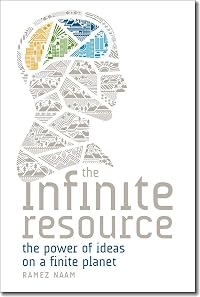
The Infinite Resource: The Power of Ideas on a Finite Planet
by Ramez Naam
On This Page
Description
A surprising, convincing, and optimistic argument for meeting the crisis of scarcity with the power of ideasTags
Recommendations



Member Reviews
Ramez Naam calls himself an optimist, and his book's simple thesis -- through innovation we can extract all the resources and wealth we could ever need from our planet -- is nothing if not optimistic. He deploys a modicum of history, economics, popular science, and conventional political wisdom to convince the reader that, time and again, unforeseen technological advances have made possible more efficient production and distribution of goods and resources and allowed both the population and the average worldwide standard of living to climb. This is, so far, not terribly controversial, and his brisk, journalistic style makes the book accessible to a wide audience.
I am no expert on politics as the art of the possible, so I cannot fairly show more evaluate his specific proposals regarding, for example, carbon taxes. His matter-of-fact tone and common-sense posture, however, mask some deeply partisan ideas. I point to his unqualified endorsement of genetically-modified food products and his quick dismissal of European Union requirements for transparent labeling and restrictions on their development and sale. Because Naam is so optimistic about the human capacity for innovation, he does not dwell at length on the potential for disastrous unintended consequences of the deployment of technology. Human history is littered with examples. For Naam, they are but further opportunities for innovation.
Underlying his untroubled belief in "innovation" as a progressive, positive force in history is an acceptance of Richard Dawkins' broader social application of Darwinian natural selection. Naam writes that "memes" engage in "idea sex," leading to the creation of new ideas. If they propagate further, these "sexually" reproduced ideas will, he believes, pass on the best of their parent ideas. Space does not allow here a full exploration of the ways this proposition fails to take into account the range of influences on human behavior that might shape the creation and application of ideas. It becomes easier to see, though, how Naam believes that at the level of the planet and the species, human existence on Earth can proceed unproblematically if we just keep thinking.
Naam does not limit his predictions to the macrocosm, however. He predicts wealth and prosperity for individuals and societies in ways that move beyond optimism to utopianism. The book's presentation of the challenges facing the world today is clear, but its embrace of technological change as a means to perpetual growth does not dwell on the many political, economic, and ethical problems involved in applying scientific development on such a massive scale. show less
I am no expert on politics as the art of the possible, so I cannot fairly show more evaluate his specific proposals regarding, for example, carbon taxes. His matter-of-fact tone and common-sense posture, however, mask some deeply partisan ideas. I point to his unqualified endorsement of genetically-modified food products and his quick dismissal of European Union requirements for transparent labeling and restrictions on their development and sale. Because Naam is so optimistic about the human capacity for innovation, he does not dwell at length on the potential for disastrous unintended consequences of the deployment of technology. Human history is littered with examples. For Naam, they are but further opportunities for innovation.
Underlying his untroubled belief in "innovation" as a progressive, positive force in history is an acceptance of Richard Dawkins' broader social application of Darwinian natural selection. Naam writes that "memes" engage in "idea sex," leading to the creation of new ideas. If they propagate further, these "sexually" reproduced ideas will, he believes, pass on the best of their parent ideas. Space does not allow here a full exploration of the ways this proposition fails to take into account the range of influences on human behavior that might shape the creation and application of ideas. It becomes easier to see, though, how Naam believes that at the level of the planet and the species, human existence on Earth can proceed unproblematically if we just keep thinking.
Naam does not limit his predictions to the macrocosm, however. He predicts wealth and prosperity for individuals and societies in ways that move beyond optimism to utopianism. The book's presentation of the challenges facing the world today is clear, but its embrace of technological change as a means to perpetual growth does not dwell on the many political, economic, and ethical problems involved in applying scientific development on such a massive scale. show less
 This review was written for LibraryThing Early Reviewers.
The world right now is facing some pretty serious problems. We're running out of the fossil fuels that power our civilization, our planet is warming up at an alarming rate, we're rapidly depleting the edible fish from our oceans, and in many places fresh water is becoming an increasingly scarce resource. Ramez Naam paints a starkly realistic view of all these problems, but he believes that technological innovation provides the key to solving them. He discusses -- in great detail and with almost too many examples -- the point that technological progress has significantly and steadily increased our standard of living and, in general, made the world a better and healthier place. Past decades' dire projections of imminent worldwide famine, show more he points out, have not come to pass, thanks to the fact that new agricultural developments have more than kept pace with the the growing global population. And we've already managed to solve some fairly significant environmental problems, such as ozone depletion. So the best way to survive and thrive as a species, in his view, is to harness the power of human ingenuity.
His recipes for doing that are mostly not anything terribly surprising or new, largely focusing on developing renewable energy technologies and increasing the efficiency and cleanness of existing fossil fuel technology through a combination of free-market enterprise and some simple, sensible government regulations designed to encourage things in the right direction. Although he does also make a few more controversial suggestions, such as completely revamping our educational system and being willing to give a second chance to some currently unpopular technologies. (In particular, he contends that nuclear power is less dangerous than coal and could provide a useful stopgap during the transition to greener energy sources, and argues that genetically modified crops are potentially a great boon to both humanity and the environment.)
Although Naam doesn't pull any punches when it comes to describing the severity of our current difficulties, the overall tone of the book is extremely optimistic. Possibly a little too much so, since, after all, there are limits to how confident we should be when projecting past trends into the future, including the trend of technological progress. It is entirely possible that we've now reached a sort of tipping point where our technological advancements have begun to cause problems larger than technology can solve, or faster than it can solve them, and, to his credit, Naam does acknowledge this as a possibility.
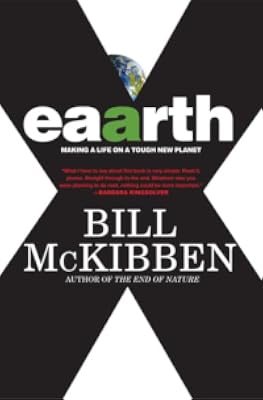
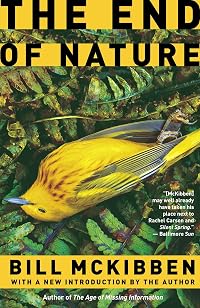
It's interesting to compare this book with Bill McKibben's Eaarth: Making a Life on a Tough New Planet, which I read a couple of years ago (and which, coincidentally, I also got through LibraryThing's Early Reviewers program). McKibben believes that we've pretty much already crossed a point of no return when it comes to global warming and that our only hope as a civilization is to pare back, to give up our expectations of constant growth, and to adopt a simpler, less energy-intensive, more locally oriented lifestyle. He makes a pretty good, if very depressing, case for his point of view. But Naam has some very good points, as well. I truly don't know which of them is right, but I'm certainly hoping that it's Naam. Even putting aside the question of which world we'd rather live in, I honestly don't see any practical way of getting to the future McKibben envisions without a major social and economic collapse. Whereas Naam is basically suggesting that we just need to keep doing more or less the same things we have been doing, only smarter. Only time will tell. show less
His recipes for doing that are mostly not anything terribly surprising or new, largely focusing on developing renewable energy technologies and increasing the efficiency and cleanness of existing fossil fuel technology through a combination of free-market enterprise and some simple, sensible government regulations designed to encourage things in the right direction. Although he does also make a few more controversial suggestions, such as completely revamping our educational system and being willing to give a second chance to some currently unpopular technologies. (In particular, he contends that nuclear power is less dangerous than coal and could provide a useful stopgap during the transition to greener energy sources, and argues that genetically modified crops are potentially a great boon to both humanity and the environment.)
Although Naam doesn't pull any punches when it comes to describing the severity of our current difficulties, the overall tone of the book is extremely optimistic. Possibly a little too much so, since, after all, there are limits to how confident we should be when projecting past trends into the future, including the trend of technological progress. It is entirely possible that we've now reached a sort of tipping point where our technological advancements have begun to cause problems larger than technology can solve, or faster than it can solve them, and, to his credit, Naam does acknowledge this as a possibility.
It's interesting to compare this book with Bill McKibben's Eaarth: Making a Life on a Tough New Planet, which I read a couple of years ago (and which, coincidentally, I also got through LibraryThing's Early Reviewers program). McKibben believes that we've pretty much already crossed a point of no return when it comes to global warming and that our only hope as a civilization is to pare back, to give up our expectations of constant growth, and to adopt a simpler, less energy-intensive, more locally oriented lifestyle. He makes a pretty good, if very depressing, case for his point of view. But Naam has some very good points, as well. I truly don't know which of them is right, but I'm certainly hoping that it's Naam. Even putting aside the question of which world we'd rather live in, I honestly don't see any practical way of getting to the future McKibben envisions without a major social and economic collapse. Whereas Naam is basically suggesting that we just need to keep doing more or less the same things we have been doing, only smarter. Only time will tell. show less
This review was written for LibraryThing Early Reviewers.Naam has written a well-sourced and full-throated argument for innovation's power to overcome the environmental challenges faced by the world today. Drawing clear inspiration from Julian Simon's work on the importance of human innovation in creating wealth, Naam makes the case for why humans can successfully overcome the challenges of climate change and energy depletion.
Naam's tone is pleasant and largely non-partisan, befitting his thesis that these issues are complicated, not clarified, when viewed through ideological lenses. While he summarizes the evidence for human-caused climate change and oil depletion, his main argument follows the logic of insurance: at the right price, it make sense to invest in some hedges to avoid the worst show more consequences should it turn out that some of these bleak forecasts develop.
How to find that insurance at the right price occupies a great deal of Naam's discussion. He argues for using the market to find the most efficient means for reducing CO2 emissions, for example. He argues for serious consideration of small nuclear plants that can exploit the cost benefits of learning curves (and argues that nuclear energy is already safer than coal, which kills many people annually, just in less attention-grabbing ways). Ultimately, he argues for action informed by optimism.
Naam covers a broad range of topics, which necessitates summaries. I did not find any glaring misrepresentations in the areas that I am most familiar with (peak oil arguments and economic innovation theories, mainly). The book combines some of the characteristics of popular science, though I find it has much more substance than a Malcolm Gladwell book. It is most clearly a call for action. I was already sympathetic to his argument for optimism and action, inspired by the capacity of human beings to innovate, so I am not an ideal test subject, but I found his argument to be well-written, compelling and illustrating an impressive scope. show less
Naam's tone is pleasant and largely non-partisan, befitting his thesis that these issues are complicated, not clarified, when viewed through ideological lenses. While he summarizes the evidence for human-caused climate change and oil depletion, his main argument follows the logic of insurance: at the right price, it make sense to invest in some hedges to avoid the worst show more consequences should it turn out that some of these bleak forecasts develop.
How to find that insurance at the right price occupies a great deal of Naam's discussion. He argues for using the market to find the most efficient means for reducing CO2 emissions, for example. He argues for serious consideration of small nuclear plants that can exploit the cost benefits of learning curves (and argues that nuclear energy is already safer than coal, which kills many people annually, just in less attention-grabbing ways). Ultimately, he argues for action informed by optimism.
Naam covers a broad range of topics, which necessitates summaries. I did not find any glaring misrepresentations in the areas that I am most familiar with (peak oil arguments and economic innovation theories, mainly). The book combines some of the characteristics of popular science, though I find it has much more substance than a Malcolm Gladwell book. It is most clearly a call for action. I was already sympathetic to his argument for optimism and action, inspired by the capacity of human beings to innovate, so I am not an ideal test subject, but I found his argument to be well-written, compelling and illustrating an impressive scope. show less
This review was written for LibraryThing Early Reviewers.The free market is such a powerful catalyst of innovation that we need to be very careful about where we fail to employ it. The inventions of the industrial revolution, telephones, electric light bulbs, cars, airplanes, radio, television, computers, DVDs, iPods, and iPhones are all innovative products, encouraged by the free market, that improve our lives. But we are once again living in the best of times and the worst of times. We are approaching peak oil—the point in time when global oil production will decline forever, food prices doubled between 2002 and 2010, catches of wild fish have plateaued, fresh water shortages are becoming more common, and deforestation continues. Today’s population is consuming 1.5 planets’ worth of show more natural resources, yet we have only one planet. Resource consumption will continue to get worse, if everyone on earth lived like Americans we’d be using up 4.4 planets’ worth of natural resources.
Perhaps the most ominous warning of all is that our planet is warming. Even former skeptics now recognize that global warming is real. While many factors contribute, it is clear that carbon dioxide concentrations in the atmosphere are now higher than at any point in the last million years. The warming we are seeing is almost entirely man made. Forecasts now show seas rising three to six feet by the end of this century, enough to displace millions of people from coastal cities and villages. Extreme weather, pressures on agriculture, rapid species extinctions, and ocean acidification are all likely.
The evidence and the consequences are clear. We must find ways to produce food and energy that sharply reduce greenhouse gas emissions. How can free market mechanisms help?
There is a giant loophole in how we apply the free market today, it is called The Commons. The commons refers to those resources used freely by many, yet excluded from typical financial calculations. The oceans, rivers, lakes, and the air we breathe are now available free to any and all comers. This leads to the “Tragedy of the Commons” where waste and distortions occur from overuse of these essential resources. This market error is manifest today as overfishing, many forms of pollution, and the free emission of greenhouse gasses. The market isn’t just neutral to pollution. If polluting saves companies money, the market encourages it.
“The key to that—to all of that—is to make sure the market directly values the natural resources we care about. . . . Pricing carbon isn’t a big-government initiative. It’s a way to improve the market by giving it access to information it doesn’t have—the external costs of carbon emissions.”
The author proposes this simple plan for creating a carbon dividend:
1. Tax carbon. For the first five years the tax is zero.
2. Raise the tax periodically and predictably until the emissions goal is met.
3. Tax imports from countries that don’t have a carbon price, to level the playing field.
4. Give all the money collected back to the taxpayers. This is the direct dividend.
This is a tax on the bad rather than on the good, and it can be tax and revenue neutral. This simple plan provides insurance against the risks of peak oil, rising coal prices, and climate change.
With effective market incentives, innovation can unleash solar energy, desalinization, recycling, and continued increases in efficiency of materials and energy used. Our challenge isn’t that we’re running out of energy, it’s that we’re using the wrong source. To collect enough energy to provide for all of humanity’s current needs, using current consumer-grade solar technology, it would take only 0.6 percent of Earth’s land area. Because of the learning curve, every solar panel built makes solar energy cheaper. Every barrel of oil extracted makes oil more expensive.
This immensely important book is a joy to read. It is innovative, well written, clear, well researched, and scrupulously balanced. The author presents and examines the traditionally conservative viewpoints, the traditionally liberal viewpoints, the big business arguments, and the environmentalist arguments, clearly, factually, fairly, and completely. He embraces capitalism, free markets, nuclear energy, and genetically modified crops, along with government regulations and the imperative to shift to solar energy sources and reduce greenhouse gasses. He particularly courts conservative thinkers with appeals to free markets, highlighting successful ecological actions of Ronald Reagan and George Bush, and the opportunity to return money to taxpayers. He identifies the free exploitation of the commons as a form of socialism, rather than an example of free market forces at work.
The author is not only innovative and practical, he is optimistic. Throughout the book he identifies many available alternatives that can improve the lives of all future generations. The last chapter identifies four changes that we as a society need to make:
1. Fix our markets to properly account for the value of the commons.
2. Invest in research and development to fund long-range innovations.
3. Embrace the technologies that stand poised to improve our lives while bettering our planet.
4. Empower each of the billions of minds on this planet, to turn them into assets that can produce new ideas that benefit us all. Add to the Knowledge Commons.
The book ends with two very different tours of the future. One describes affluence and well-being for all, the other is quite grim. The choice is clearly ours, and this book clearly informs our choice. show less
Perhaps the most ominous warning of all is that our planet is warming. Even former skeptics now recognize that global warming is real. While many factors contribute, it is clear that carbon dioxide concentrations in the atmosphere are now higher than at any point in the last million years. The warming we are seeing is almost entirely man made. Forecasts now show seas rising three to six feet by the end of this century, enough to displace millions of people from coastal cities and villages. Extreme weather, pressures on agriculture, rapid species extinctions, and ocean acidification are all likely.
The evidence and the consequences are clear. We must find ways to produce food and energy that sharply reduce greenhouse gas emissions. How can free market mechanisms help?
There is a giant loophole in how we apply the free market today, it is called The Commons. The commons refers to those resources used freely by many, yet excluded from typical financial calculations. The oceans, rivers, lakes, and the air we breathe are now available free to any and all comers. This leads to the “Tragedy of the Commons” where waste and distortions occur from overuse of these essential resources. This market error is manifest today as overfishing, many forms of pollution, and the free emission of greenhouse gasses. The market isn’t just neutral to pollution. If polluting saves companies money, the market encourages it.
“The key to that—to all of that—is to make sure the market directly values the natural resources we care about. . . . Pricing carbon isn’t a big-government initiative. It’s a way to improve the market by giving it access to information it doesn’t have—the external costs of carbon emissions.”
The author proposes this simple plan for creating a carbon dividend:
1. Tax carbon. For the first five years the tax is zero.
2. Raise the tax periodically and predictably until the emissions goal is met.
3. Tax imports from countries that don’t have a carbon price, to level the playing field.
4. Give all the money collected back to the taxpayers. This is the direct dividend.
This is a tax on the bad rather than on the good, and it can be tax and revenue neutral. This simple plan provides insurance against the risks of peak oil, rising coal prices, and climate change.
With effective market incentives, innovation can unleash solar energy, desalinization, recycling, and continued increases in efficiency of materials and energy used. Our challenge isn’t that we’re running out of energy, it’s that we’re using the wrong source. To collect enough energy to provide for all of humanity’s current needs, using current consumer-grade solar technology, it would take only 0.6 percent of Earth’s land area. Because of the learning curve, every solar panel built makes solar energy cheaper. Every barrel of oil extracted makes oil more expensive.
This immensely important book is a joy to read. It is innovative, well written, clear, well researched, and scrupulously balanced. The author presents and examines the traditionally conservative viewpoints, the traditionally liberal viewpoints, the big business arguments, and the environmentalist arguments, clearly, factually, fairly, and completely. He embraces capitalism, free markets, nuclear energy, and genetically modified crops, along with government regulations and the imperative to shift to solar energy sources and reduce greenhouse gasses. He particularly courts conservative thinkers with appeals to free markets, highlighting successful ecological actions of Ronald Reagan and George Bush, and the opportunity to return money to taxpayers. He identifies the free exploitation of the commons as a form of socialism, rather than an example of free market forces at work.
The author is not only innovative and practical, he is optimistic. Throughout the book he identifies many available alternatives that can improve the lives of all future generations. The last chapter identifies four changes that we as a society need to make:
1. Fix our markets to properly account for the value of the commons.
2. Invest in research and development to fund long-range innovations.
3. Embrace the technologies that stand poised to improve our lives while bettering our planet.
4. Empower each of the billions of minds on this planet, to turn them into assets that can produce new ideas that benefit us all. Add to the Knowledge Commons.
The book ends with two very different tours of the future. One describes affluence and well-being for all, the other is quite grim. The choice is clearly ours, and this book clearly informs our choice. show less
This review was written for LibraryThing Early Reviewers.This book is an overview of the history and future possibilities of human ingenuity, written by an Egyptian-American scientist. Ramez Naam's overall tone reminded me a bit of pundits-turned-authors such as Malcolm Gladwell or Thomas Friedman. However, he was a much better writer and his points were better argued.
Naam's thesis is that, given our ability as humans to innovate, and the power of the connection of human thought, if we are creative and serious about deciding what things to focus on and doing the problem-solving in a rational way, we can continue to maximize our efficiency in our use of resources and thereby solve environmental problems and human issues like poverty and hunger and in fact sustain a larger population than the show more Earth has now while raising the standard of living worldwide.
Naam spends a few chapters looking at the serious resource problems we face, and then goes into a detailed overview of how he thinks they can be solved. Most of his ideas sound good to me, as a lay person who is not an expert on any of those issues per se, but who has read widely on the environmental issues, particularly energy use and global warming.
Naam has the enviable ability to speak to people whose minds are already pretty much made up, and force them to at least do some minimal thinking about their views. He had me thinking about my views on nuclear energy and bioengineering. I won't say he totally convinced me, but he did make me think about these controversial sciences in a new way.
One issue on which I very much disagreed with Naam was his facile view on education. I agree with him that it is very important. I don't agree with him that the solution is to have "market based" solutions and only fund college degrees in the STEM fields because the humanities are worthless. I find it kind of ironic he's from the Middle East, where I lived for many years, and yet he does not understand how useful a liberal arts education can be. There are many people who have narrowly focused degrees in the types of field he values, who end up being extremists, cranks or merely selfish capitalists. Part of why many such people turn out this way is their narrow views of what sort of education is "good" and their dismissal of other areas of education. Not everyone has the same proclivities and there is always going to be a place in the world for art, literature, music, and the type of creativity that comes out of the humanities. Science needs to be balanced by other sorts of things, it is not a be all end all for humanity.
I also find it kind of problematic for him to assert that in his ideal future, all of us will be doing highly competent, intellectually stimulating, important work focusing on innovations that will make us all happier, healthier and wealthier. First of all we don't have a system in place that incentivizes this ideal but rather we have a lot of incentives in place that encourage people to be selfish, greedy, anxious about their own future and suspicious of others. Second of all we have different strengths. Not all of us are suited to be highly intellectual scientists, or policy wonks, or other things that his theory assigns great value.
These are actually fairly minor critiques as they only concern a small portion of his overall book. The book made me think a lot about my preconceived notions about the fate and future of humanity and the planet we live on, and it also gave me some hope that perhaps we are not such a destructive species after all. However, my final thought on closing the book was that I can't really let go of the idea that hubris is a dangerous thing, and this tempered my mostly positive reaction to the book. While I appreciate the many strides we have made in technology, science, and manufacturing, I worry that humanity is prone to making mistakes as well and that many of the things we do have unintended consequences. I think it would be good for us to take the ideas in this book, and if policy makers decide to apply any or all of them, they should do so with a modicum of humility. show less
Naam's thesis is that, given our ability as humans to innovate, and the power of the connection of human thought, if we are creative and serious about deciding what things to focus on and doing the problem-solving in a rational way, we can continue to maximize our efficiency in our use of resources and thereby solve environmental problems and human issues like poverty and hunger and in fact sustain a larger population than the show more Earth has now while raising the standard of living worldwide.
Naam spends a few chapters looking at the serious resource problems we face, and then goes into a detailed overview of how he thinks they can be solved. Most of his ideas sound good to me, as a lay person who is not an expert on any of those issues per se, but who has read widely on the environmental issues, particularly energy use and global warming.
Naam has the enviable ability to speak to people whose minds are already pretty much made up, and force them to at least do some minimal thinking about their views. He had me thinking about my views on nuclear energy and bioengineering. I won't say he totally convinced me, but he did make me think about these controversial sciences in a new way.
One issue on which I very much disagreed with Naam was his facile view on education. I agree with him that it is very important. I don't agree with him that the solution is to have "market based" solutions and only fund college degrees in the STEM fields because the humanities are worthless. I find it kind of ironic he's from the Middle East, where I lived for many years, and yet he does not understand how useful a liberal arts education can be. There are many people who have narrowly focused degrees in the types of field he values, who end up being extremists, cranks or merely selfish capitalists. Part of why many such people turn out this way is their narrow views of what sort of education is "good" and their dismissal of other areas of education. Not everyone has the same proclivities and there is always going to be a place in the world for art, literature, music, and the type of creativity that comes out of the humanities. Science needs to be balanced by other sorts of things, it is not a be all end all for humanity.
I also find it kind of problematic for him to assert that in his ideal future, all of us will be doing highly competent, intellectually stimulating, important work focusing on innovations that will make us all happier, healthier and wealthier. First of all we don't have a system in place that incentivizes this ideal but rather we have a lot of incentives in place that encourage people to be selfish, greedy, anxious about their own future and suspicious of others. Second of all we have different strengths. Not all of us are suited to be highly intellectual scientists, or policy wonks, or other things that his theory assigns great value.
These are actually fairly minor critiques as they only concern a small portion of his overall book. The book made me think a lot about my preconceived notions about the fate and future of humanity and the planet we live on, and it also gave me some hope that perhaps we are not such a destructive species after all. However, my final thought on closing the book was that I can't really let go of the idea that hubris is a dangerous thing, and this tempered my mostly positive reaction to the book. While I appreciate the many strides we have made in technology, science, and manufacturing, I worry that humanity is prone to making mistakes as well and that many of the things we do have unintended consequences. I think it would be good for us to take the ideas in this book, and if policy makers decide to apply any or all of them, they should do so with a modicum of humility. show less
This review was written for LibraryThing Early Reviewers.The ancient Chinese symbol signifying equal attributes for danger/opportunity is the approach taken by Ramez Naam in his recently published The Infinite Resource: The Power of Ideas on a Finite Planet. Present dangers make Naam's book an anxious read. The thread that haunts these pages: have we passed the limits of our planet's capacity to support us. Yet, the book offers equal examples of innovations that provide opportunities to overcome seemingly insurmountable dangers.
Traveling between time and cultures is the pendulum that moves this extensively-researched book. Naam's comparison of the U. S. in the 1970s (when his parents emigrated) to his birth country, Egypt, was, he notes, like looking back in time. "Polio was common in Egypt show more in the 1970s but that wasn't far different from what it had been in the U. S. just two decades earlier." As an immigrant, Naam's perspective was intensely personal: "Five of my mother's siblings died in infancy from preventable diseases. Three of my father's siblings died the same way . . . Yet, had I been born in the United States in the early decades of the twentieth century, my chances of infant death would have been just as great as they were in the Egypt of 1973."
Naam's optimism is palpable as he outlines the many ways in which civilization(particularly Western society), has used innovation to overcome obstacles: superior results over the last century are astonishing -- for instance, life expectancy has risen, even in undeveloped countries; there is better nutrition (better seeds and farm technologies with free market systems to give farmers incentives to grow more food with higher yeilds); in the last fifty years, we've tripled food production, feeding billions of people. Genetically modified plants have fulfilled a goal of more nutrition. Clyphosate (the product Round-Up) is safe, compared with previous herbicides (there are no records of toxicity). There is much greater literacy (in 1970, 63 percent of adults worldwide could read and write; in 2010, the percentage was 84.) Even our economic hurdles have improved: "The Great Depression of the 1930s knocked the GDP of the U.S. down by 26 percentage points, to 25 percent. By comparison, the 2008-2009 recession, the GDP dropped 3.3 percent, less than one percent of the banks in the country failed, and the unemployment rose by 5 percentage points to 10 percent." On a global scale, Naam writes, the rich are getting richer but the poor are gaining in wealth even more quickly. That's just some of the good news -- and there is much good news in this book about our finite planet.
Yet, Naam reminds his (feeling good now!) reader that the mighty Mayan civilization, a large and sophisticated culture whose members undoubtedly saw themselves as masters of their domain, exhausted the primary source of energy for their survival -- the land beneath their feet. And the land beneath our feet? Oil. Eighty million barrels a day, every day. Which is finite. Just like the soil of the Mayan civilization. The focus of the "danger" in our present environment is our dependence on, and overwhelming of, our finite resources, oil the primary example. The danger in our dependence on oil is the carbon dioxide we release into our atmosphere. Today, that means 30 billion tons of CO2 every year, sixty times more than we released at the beginning of the twentieth century. Before the Industrial Revolution, CO2 made up 280 parts per million of the atmosphere. In November, 2011, it was about 390 parts per million. Recent news reports have stated the ppm are now at 400. The question becomes, how many parts per million of CO2 can the atmosphere withstand without destroying life on our planet. Some pertinent facts include: Half of the warming of the planet, between 1 and 1.5 degrees farenheit, has happened since 1970. The ten warmest years on record since the 1800s have all occurred since 2000. Across the U. S. in the last ten years, record high temperatures occurred twice as often as record lows. In the '50s, they occurred with equal frequency. Yet, Naam makes clear that climate change in "lumpy and uneven." That's why you hear the redundant joke when temperatures plunge below normal: "must be global warming."
For those who continue to doubt climate change, Naam outlines many "heated" examples: Europe had the hottest summer on record since 1540 in August, 2003. Seventy thousand died. France lost 20 percent of its wheat crop. The Ukraine lost 75 percent of its wheat harvest.
China, likewise, in March 2010, experienced the worst drought in a century, leaving 20 million people without drinking water. Wells dried up. . . wells that had provided water since 1517. When the rains returned in May, it was the worst flooding in a century. More than 3,000 were killed, with the evacuation of more than 15 million people. A million + homes were destroyed.
A study in 2005 found the amount of energy and destructive power of hurricanes in the Atlantic had risen by about 75 percent over 30 years.
Wildfires in the U. S. between 1960 and 1978 generally burned between 500,000 and one million acres of land a year. In 2000, five million acres burned. In 2011, nearly nine million acres burned.
In 1850, Montana's Glacier National Park had 150 active glaciers. Today, there are less than 25.
In one century, Mt. Kilimanjaro has gone from 20 square kilometers of glacier to less than three. Half the mountain glacier cover seen a century ago in the Alps is now gone. Sea levels around the world have risen seven inches in the last century -- their rise has doubled in the last ten years.
But it isn't just the warming of the planet, created by CO2 levels in the atmosphere. We're overwhelming our seas (some fishing industries have, for all practical purposes, collapsed), our fresh water ("the rate at which we consume water -- particularly for agriculture -- exceeds the rate at which we can capture it from rain or via sustainable withdrawals from rivers), our forests (the U.N. reported that between 2000 and 2010, the world's forest cover dropped by an average of 5.2 million hectares (or 20,000 square miles) a year) and even our elements, such as potassium, neodymium, tantium (used in electronics), uranium, helium in addition to coal and natural gas.
Despite the dangers and depletions, Naam remains an optimist. He sees opportunity in many of our present innovations, excitable opportunities. He sees hope not only in solar power but also nuclear power. He sees abundance in genetically engineered seeds. He sees miraculous possibilities in products such as graphene -- a better heat conductor than any known material and, at room temperature, a better electrical conductor than any known material.
Naam gives the free market credit for innovations. Western civilization has particularly benefitted from the free market and the exchange of ideas and innovations. But he notes the flaw in the free market -- the common areas. Like rivers. Like air. Like forests. Like the oceans. "Our rivers, lakes, forests, oceans and our atmosphere are resources that we simply can't live without. The value they provide us is astronomical. Yet, because no one owns them and no one manages them, no one feels the full brunt of loss when they are damaged. No one feels a concentrated SELF-INTEREST proportional to the value these resources provide us." He reminds his reader that the exploitation of the commons isn't the free market -- it's a form of socialism. The market only works well in managing those resources that have prices on them.
Naam challenges capitalists -- and he admits to being one -- to level the playing field of the market by putting a price on damage to our common areas. He is firm in his belief that the market is the real key to solving our environmental challenges. The market is "a brilliant tool for aligning personal self-interest with the interest of others." His book is a call to use our infinite resource to protect our finite resources. His exhaustive command of environmental issues as well as cultural and scientific details, innovations and advances, makes an anxious read nevertheless an exciting and important one -- and should be required reading in high schools and colleges. show less
Traveling between time and cultures is the pendulum that moves this extensively-researched book. Naam's comparison of the U. S. in the 1970s (when his parents emigrated) to his birth country, Egypt, was, he notes, like looking back in time. "Polio was common in Egypt show more in the 1970s but that wasn't far different from what it had been in the U. S. just two decades earlier." As an immigrant, Naam's perspective was intensely personal: "Five of my mother's siblings died in infancy from preventable diseases. Three of my father's siblings died the same way . . . Yet, had I been born in the United States in the early decades of the twentieth century, my chances of infant death would have been just as great as they were in the Egypt of 1973."
Naam's optimism is palpable as he outlines the many ways in which civilization(particularly Western society), has used innovation to overcome obstacles: superior results over the last century are astonishing -- for instance, life expectancy has risen, even in undeveloped countries; there is better nutrition (better seeds and farm technologies with free market systems to give farmers incentives to grow more food with higher yeilds); in the last fifty years, we've tripled food production, feeding billions of people. Genetically modified plants have fulfilled a goal of more nutrition. Clyphosate (the product Round-Up) is safe, compared with previous herbicides (there are no records of toxicity). There is much greater literacy (in 1970, 63 percent of adults worldwide could read and write; in 2010, the percentage was 84.) Even our economic hurdles have improved: "The Great Depression of the 1930s knocked the GDP of the U.S. down by 26 percentage points, to 25 percent. By comparison, the 2008-2009 recession, the GDP dropped 3.3 percent, less than one percent of the banks in the country failed, and the unemployment rose by 5 percentage points to 10 percent." On a global scale, Naam writes, the rich are getting richer but the poor are gaining in wealth even more quickly. That's just some of the good news -- and there is much good news in this book about our finite planet.
Yet, Naam reminds his (feeling good now!) reader that the mighty Mayan civilization, a large and sophisticated culture whose members undoubtedly saw themselves as masters of their domain, exhausted the primary source of energy for their survival -- the land beneath their feet. And the land beneath our feet? Oil. Eighty million barrels a day, every day. Which is finite. Just like the soil of the Mayan civilization. The focus of the "danger" in our present environment is our dependence on, and overwhelming of, our finite resources, oil the primary example. The danger in our dependence on oil is the carbon dioxide we release into our atmosphere. Today, that means 30 billion tons of CO2 every year, sixty times more than we released at the beginning of the twentieth century. Before the Industrial Revolution, CO2 made up 280 parts per million of the atmosphere. In November, 2011, it was about 390 parts per million. Recent news reports have stated the ppm are now at 400. The question becomes, how many parts per million of CO2 can the atmosphere withstand without destroying life on our planet. Some pertinent facts include: Half of the warming of the planet, between 1 and 1.5 degrees farenheit, has happened since 1970. The ten warmest years on record since the 1800s have all occurred since 2000. Across the U. S. in the last ten years, record high temperatures occurred twice as often as record lows. In the '50s, they occurred with equal frequency. Yet, Naam makes clear that climate change in "lumpy and uneven." That's why you hear the redundant joke when temperatures plunge below normal: "must be global warming."
For those who continue to doubt climate change, Naam outlines many "heated" examples: Europe had the hottest summer on record since 1540 in August, 2003. Seventy thousand died. France lost 20 percent of its wheat crop. The Ukraine lost 75 percent of its wheat harvest.
China, likewise, in March 2010, experienced the worst drought in a century, leaving 20 million people without drinking water. Wells dried up. . . wells that had provided water since 1517. When the rains returned in May, it was the worst flooding in a century. More than 3,000 were killed, with the evacuation of more than 15 million people. A million + homes were destroyed.
A study in 2005 found the amount of energy and destructive power of hurricanes in the Atlantic had risen by about 75 percent over 30 years.
Wildfires in the U. S. between 1960 and 1978 generally burned between 500,000 and one million acres of land a year. In 2000, five million acres burned. In 2011, nearly nine million acres burned.
In 1850, Montana's Glacier National Park had 150 active glaciers. Today, there are less than 25.
In one century, Mt. Kilimanjaro has gone from 20 square kilometers of glacier to less than three. Half the mountain glacier cover seen a century ago in the Alps is now gone. Sea levels around the world have risen seven inches in the last century -- their rise has doubled in the last ten years.
But it isn't just the warming of the planet, created by CO2 levels in the atmosphere. We're overwhelming our seas (some fishing industries have, for all practical purposes, collapsed), our fresh water ("the rate at which we consume water -- particularly for agriculture -- exceeds the rate at which we can capture it from rain or via sustainable withdrawals from rivers), our forests (the U.N. reported that between 2000 and 2010, the world's forest cover dropped by an average of 5.2 million hectares (or 20,000 square miles) a year) and even our elements, such as potassium, neodymium, tantium (used in electronics), uranium, helium in addition to coal and natural gas.
Despite the dangers and depletions, Naam remains an optimist. He sees opportunity in many of our present innovations, excitable opportunities. He sees hope not only in solar power but also nuclear power. He sees abundance in genetically engineered seeds. He sees miraculous possibilities in products such as graphene -- a better heat conductor than any known material and, at room temperature, a better electrical conductor than any known material.
Naam gives the free market credit for innovations. Western civilization has particularly benefitted from the free market and the exchange of ideas and innovations. But he notes the flaw in the free market -- the common areas. Like rivers. Like air. Like forests. Like the oceans. "Our rivers, lakes, forests, oceans and our atmosphere are resources that we simply can't live without. The value they provide us is astronomical. Yet, because no one owns them and no one manages them, no one feels the full brunt of loss when they are damaged. No one feels a concentrated SELF-INTEREST proportional to the value these resources provide us." He reminds his reader that the exploitation of the commons isn't the free market -- it's a form of socialism. The market only works well in managing those resources that have prices on them.
Naam challenges capitalists -- and he admits to being one -- to level the playing field of the market by putting a price on damage to our common areas. He is firm in his belief that the market is the real key to solving our environmental challenges. The market is "a brilliant tool for aligning personal self-interest with the interest of others." His book is a call to use our infinite resource to protect our finite resources. His exhaustive command of environmental issues as well as cultural and scientific details, innovations and advances, makes an anxious read nevertheless an exciting and important one -- and should be required reading in high schools and colleges. show less
This review was written for LibraryThing Early Reviewers.This is simply an outstanding book about the challenges, and potential solutions to the world's problems.
The author starts by describing the classic bet between Paul Ehrlich and Julian Simon, the result, along with an explanation of how powerful markets can be in decreasing the cost of goods. He goes on to describe the changing conditions the world has seen since then, with the rapid growth of the developing part of the world. He describes in vivid terms the climate change problems we face, and the challenges this planet faces in supplying enough energy for itself. As the author points out, most metals have since increased in price drastically, and if the bet had been placed more recently, Paul Ehrlich would have won.
The remainder of show more the book is a soaring, optimistic look at many of the potential solutions the world has available to it. He talks about nuclear power, and how badly its safety has been distorted. He talks about GMOs and their ability to reduce hunger, reduce nitrogen runoff, and improve nutrition through things like golden rice. He also talks about effective, market-based ways of reducing carbon output, like cap and trade, and even a carbon tax.
The book is an incredibly fast read, and I would highly, highly recommend it to anyone remotely interested in these topics. show less
The author starts by describing the classic bet between Paul Ehrlich and Julian Simon, the result, along with an explanation of how powerful markets can be in decreasing the cost of goods. He goes on to describe the changing conditions the world has seen since then, with the rapid growth of the developing part of the world. He describes in vivid terms the climate change problems we face, and the challenges this planet faces in supplying enough energy for itself. As the author points out, most metals have since increased in price drastically, and if the bet had been placed more recently, Paul Ehrlich would have won.
The remainder of show more the book is a soaring, optimistic look at many of the potential solutions the world has available to it. He talks about nuclear power, and how badly its safety has been distorted. He talks about GMOs and their ability to reduce hunger, reduce nitrogen runoff, and improve nutrition through things like golden rice. He also talks about effective, market-based ways of reducing carbon output, like cap and trade, and even a carbon tax.
The book is an incredibly fast read, and I would highly, highly recommend it to anyone remotely interested in these topics. show less
This review was written for LibraryThing Early Reviewers.Members
- Recently Added By
Lists

Top Five Books of 2013
1,562 works; 721 members

Rethinking Money
21 works; 4 members

Non-Fiction Worth Reading
1,015 works; 261 members
Author Information

7+ Works 2,570 Members
Classifications
Statistics
- Members
- 149
- Popularity
- 219,894
- Reviews
- 27
- Rating
- (3.90)
- Languages
- English
- Media
- Paper, Ebook
- ISBNs
- 4
- ASINs
- 2