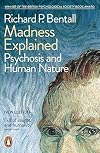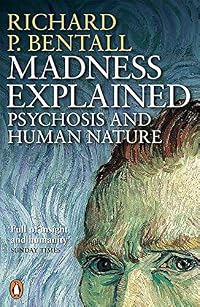
Madness Explained: Psychosis and Human Nature
by Richard P. Bentall
On This Page
Description
THIS BOOK WILL EXPLAIN WHAT MADNESS IS, TO SHOW THAT IT CAN BE UNDERSTOOD IN PSYCHOLOGICAL TERMS, AND THAT BY STUDYING IT WE CAN LEARN IMPORTANT INSIGHTS ABOUT THE NORMAL MIND. THE BOOK WILL ARGUE THAT TRADITIONAL APPROACHES TO MADNESS MUST BE ABANDONED IN FAVOUR OF A NEW APPROACH WHICH IS MORE CONSISTENT WITH THAT WE NOW KNOW ABOUT THE HUMAN MIND. OVER THE LAST CENTURY OR SO IT HAS BECOME SO COMMONPLACE TO REGARD MADNESS SIMPLY AS A MEDICAL CONDITION THAT IT HAS BECOME DIFFICULT TO THINK OF show more IT IN ANY OTHER WAY. BENTALL ARGUES INSTEAD THAT DELUSIONS, HALLUCINATIONS AND OTHER UNUSUAL BEHAVIOURS ARE BEST UNDERSTOOD PSYCHOLOGICALLY, AND THAT SUCH EXPERIENCES FOR THE MOST PART REPRESENT EXAGGERATIONS OF MENTAL FOIBLES TO WHICH WE ARE ALL PRONE. show lessTags
Recommendations























Member Reviews
Is madness really what we think it is? The whole psychiatric industry relies upon the Kraepelian paradigm, whereas there is a well-defined variety of mental illnesses, clearly clear-cut from mental health, each with their own set of symptoms that, eh oh!, specific pills can address like we address a cold or a flu. Isn't it wonderful? Well, such simplistic view surely serves a whole flourishing and more than profitable market. Yet, is it sound? The question must be asked, because, in the end, it's how we treat patients which is at stake.
Richard Bentall, an influential clinical psychologist, is cutting here right through the bs in this lengthy book, detailed, well-researched and engrossing even if at times quite challenging. I loved it, show more because such demystifying and debunking is more than needed!
What are mental illnesses? Well, he starts by detailing the work of Emil Kraepelin, the brilliant German psychiatrist who, at the turn of the 20th century, had defined such conditions as dementia praecox and manic-depression. This approach was brilliant in discerning different symptoms as patterns to different illnesses, but, this obsession to classify, according to Bentall, is also what failed Kraepelin... and what has been failing psychiatry ever since! Indeed, dementia praecox is now known as schizophrenia, manic-depression as bipolar, and the way we define both doesn't bear much ressemblance to how Kraepelin himself had described them! How such conditions came to be studied, described, and redefined over the past century is in fact a telling lesson about how fleeting and arbitrary such labellings are. This is where he then goes on straight to the point: focusing on some features at the core of their definitions (eg psychosis, language and communication issues, behaviours like mania and hypomania...) to demonstrate that, the clear-cut divide between sane and insane, 'normal' and not, might not be so clear-cut after all... Here's to another blow against the Kraepelian paradigm: not only our defining of specific illnesses remains vague and unhelpful, but, the supposed well-defined line between 'madness' and 'normal' (psychosis are a case in point) is blurred to say the least.
Now, let's be very clear: he doesn't in any way dilute or minimise the challenging and harrowing fate of sufferers, and this is not an anti-psychiatry manifesto. What he does by challenging how we define madness, and so various mental illnesses, is to show that, as a result, patients are being failed. Being a clinical psychologist himself, his indictment can seem harsh. And yet...
The problem with modern psychiatry is not only that it meaninglessly tries and fit people into very ill-shaped boxes ('schizophrenia', 'bipolar'...). The problem is that diagnoses are based on a flawed view of mental illness, whereas such disorders are perceived as being solely due to chemical imbalance in the brain, which, therefore, can only be addressed by chemicals prescribed to restore such balance. Richard Bentall, of course, doesn't reject such biological outlook! He just regrets its reductionism - what about the environment? Not taking into account the background, experience, personal history, and surrounding environment of the patient is to be blind to the underlying reason and triggers to their condition; an approach which cannot but lead to a poor way to address them.
'...psychiatric theories that consider the brain in isolation from the social world are unlikely to lead to a proper understanding of the origins of psychosis. The neoKraepelian project of an exclusively biological psychiatry has been doomed to failure from the outset.'
Indeed, and, so, where does that leave us? If classifying mental illnesses is everything but as straightforward as classifying plants, if what is considered as the main features of mental illnesses (eg psychosis especially) turn out to don't be the sole prerogative of the insane after all, and if persisting in fitting vague symptoms with specific illnesses does nothing but confusing it all even more (the evolution of the DSM is a case in point) then what of mental illness itself? How to define it? How to address it? The author proposes here a ground-breaking and radical new approach:
'We should abandon psychiatric diagnoses altogether and instead try to explain and understand the actual experiences and behaviours of psychotic patients.'
In other words: we should stop ascribing sufferers with arbitrary labels, but, focus on the specific symptoms they experience - address their condition on a symptom by symptom basis, that is, if such symptoms constitutes serious impairments.
I don't know if such approach will ultimately triumph (there are already some therapies out there valuing medications as much as patient history) but here's a radical read which, in depth, throws a bright new light upon what we call 'madness'. Again, it can be tedious and challenging at times, but the arguments put forward to demystify how mental illnesses are being defined are compelling to say the least. Richard Bentall's proposals may or may not turn out to be the founding basis to a new paradigm, but his book here surely is a fascinating read for anyone interested in mental health. Brilliant! show less
Richard Bentall, an influential clinical psychologist, is cutting here right through the bs in this lengthy book, detailed, well-researched and engrossing even if at times quite challenging. I loved it, show more because such demystifying and debunking is more than needed!
What are mental illnesses? Well, he starts by detailing the work of Emil Kraepelin, the brilliant German psychiatrist who, at the turn of the 20th century, had defined such conditions as dementia praecox and manic-depression. This approach was brilliant in discerning different symptoms as patterns to different illnesses, but, this obsession to classify, according to Bentall, is also what failed Kraepelin... and what has been failing psychiatry ever since! Indeed, dementia praecox is now known as schizophrenia, manic-depression as bipolar, and the way we define both doesn't bear much ressemblance to how Kraepelin himself had described them! How such conditions came to be studied, described, and redefined over the past century is in fact a telling lesson about how fleeting and arbitrary such labellings are. This is where he then goes on straight to the point: focusing on some features at the core of their definitions (eg psychosis, language and communication issues, behaviours like mania and hypomania...) to demonstrate that, the clear-cut divide between sane and insane, 'normal' and not, might not be so clear-cut after all... Here's to another blow against the Kraepelian paradigm: not only our defining of specific illnesses remains vague and unhelpful, but, the supposed well-defined line between 'madness' and 'normal' (psychosis are a case in point) is blurred to say the least.
Now, let's be very clear: he doesn't in any way dilute or minimise the challenging and harrowing fate of sufferers, and this is not an anti-psychiatry manifesto. What he does by challenging how we define madness, and so various mental illnesses, is to show that, as a result, patients are being failed. Being a clinical psychologist himself, his indictment can seem harsh. And yet...
The problem with modern psychiatry is not only that it meaninglessly tries and fit people into very ill-shaped boxes ('schizophrenia', 'bipolar'...). The problem is that diagnoses are based on a flawed view of mental illness, whereas such disorders are perceived as being solely due to chemical imbalance in the brain, which, therefore, can only be addressed by chemicals prescribed to restore such balance. Richard Bentall, of course, doesn't reject such biological outlook! He just regrets its reductionism - what about the environment? Not taking into account the background, experience, personal history, and surrounding environment of the patient is to be blind to the underlying reason and triggers to their condition; an approach which cannot but lead to a poor way to address them.
'...psychiatric theories that consider the brain in isolation from the social world are unlikely to lead to a proper understanding of the origins of psychosis. The neoKraepelian project of an exclusively biological psychiatry has been doomed to failure from the outset.'
Indeed, and, so, where does that leave us? If classifying mental illnesses is everything but as straightforward as classifying plants, if what is considered as the main features of mental illnesses (eg psychosis especially) turn out to don't be the sole prerogative of the insane after all, and if persisting in fitting vague symptoms with specific illnesses does nothing but confusing it all even more (the evolution of the DSM is a case in point) then what of mental illness itself? How to define it? How to address it? The author proposes here a ground-breaking and radical new approach:
'We should abandon psychiatric diagnoses altogether and instead try to explain and understand the actual experiences and behaviours of psychotic patients.'
In other words: we should stop ascribing sufferers with arbitrary labels, but, focus on the specific symptoms they experience - address their condition on a symptom by symptom basis, that is, if such symptoms constitutes serious impairments.
I don't know if such approach will ultimately triumph (there are already some therapies out there valuing medications as much as patient history) but here's a radical read which, in depth, throws a bright new light upon what we call 'madness'. Again, it can be tedious and challenging at times, but the arguments put forward to demystify how mental illnesses are being defined are compelling to say the least. Richard Bentall's proposals may or may not turn out to be the founding basis to a new paradigm, but his book here surely is a fascinating read for anyone interested in mental health. Brilliant! show less
This hefty book at over 500 pages with another 130 pages or so of glossary and notes is not always an easy read but it will be very useful for anyone interested in psychosis whether from curiosity or because they are worried they have symptoms or want to understand better someone who has them.
Unfortunately it tries to do two things simultaneously - to be an exhaustive half-polemic about a particular view of madness against peers who Bentall considers to be locked into a dysfunctional past paradigm and to be a scientifically rigorous attempt to educate the wider public.
This means that the reader can lurch from almost excessively detailed accounts of recent (meaning prior to 2004) research to personal revelation and then to assertion show more while all the time the author tries to moderate those tentative assertions with admissions as to how little we know.
The main themes - that the 'normality' of many symptoms associated with madness (such as hearing voices) has been underestimated and that (in the author's opinion) madness as dysfunctional is more a matter of environmental than genetic dislocation - can get buried in the quantity of data.
Bentall returns to the family (an idea fashionable in the 1970s) as a source of much of the dynamic behind psychotic mental breakdown although he is wise enough not to overplay the claim. Still, research is highly suggestive of the role of family dynamics.
Its British Psychological Society Book Award in 2004 is well earned. The idea that an almost obsessive analytical attempt to 'diagnose' mental illness has perverted our understanding of extreme mental distress is well argued and plausible.
Similarly, Bentall's determination to build an alternative model of 'madness' almost brick by brick and chart by chart based on evidence derived from scientific research may be exhausting but it serves its purpose. The revised paradigm does seem to fit the evidence better than the old one.
The doubts are two-fold. First, that the scientific evidence remains so tentative in many respects by the nature of the subject and, second, following on from that, his over-emphasis on the environmental is not absolutely justified by what we read. It is still only a well-founded belief.
This is not to say that mental breakdown is by any means genetically predictable but the conformation of minds (as brains) might reasonably be seen as having strong genetic components that predict mental crisis under certain family conditions.
Despite this caveat and the fact that his two very personal interventions about his own state of mind and his family issues create a suspicion of a predisposition to occult angst about the genetic, the environmental aspect has to be considered as the most dominant element in breakdown.
Somewhat defensively, Bentall does not want us to think he is drifting back into the speculations of R. D. Laing. He is at pains to avoid 'blaming the family' (quite rightly) but he is very plausible on the effect of mental well-being of certain types of negative language within families.
There may be a class element to this. Certainly there is a cultural continuity as negative language by parents about children repeats patterns from their own pasts but much work still needs to be done on the precise mechanisms here since not every child from such a background goes on to be unhappy.
There may be more subtle socio-cultural things going on here. Maybe apparently negative language in families works as a stable survival mechanism under some social conditions but breaks down in others or that vulnerabilities appear as individuals transition between classes and conditions.
The book can be seen as a marker of another transition that has become dominant in mental healthcare - from expensive psychotherapeutic 'talking' attempts to cure (whose success rates are unproven) to faster and more focused work on cognition (CBT) to meet specific symptoms.
There is also a welcomed new emphasis on the 'normality' of some apparently 'odd' symptoms such as hallucination and hearing voices so that social stigma is removed, experiences can be taken as just part of life and a wider spectrum of intensity of symptoms be considered.
None of this is to be interpreted as dismissing the real agony of complete psychotic breakdown and misery but it shifts attention to the hidden rationalities within the apparent irrationality of the 'mad' and more interest in how the 'mad' perceive their own situation.
These situations may quite simply be more than some people can bear. It could be argued that we see a dialectic between a society that is 'mad' and individuals who are sent mad by the dissonance between their mental situation and reality where 'reality' is disconnected from human need.
There are no cures in this book only increased understanding which might alleviate the condition of many people who have not yet collapsed into the pit of hell. Where Bentall is most plausible is in clearing away a great deal of professional dead wood thinking in order to rethink madness itself.
If there is one major takeaway from the book, it is that the human mind (and we know how complex the brain is) cannot be categorised in simple terms by diagnosticians. There are no rules that predict individual human variation and behaviour.
One individual may come from the same family background as another and yet the first may go mad and the second be a model of emotional stability. People can move in and out of madness in unpredictable ways. Some never escape their condition. Drugs work for some, not for others.
This is a world of probabilities and possibilities and not of certainties. It is the intellectual challenge of understanding the human mind that drives many clinical psychologists as well as philosophers, historians and others.
Bentall, despite the density of his book, has clarified matters considerably or, rather, he has removed a lot of obfuscatory history to his profession and reminded us that we still do not know enough. We have a great deal of work to do in order to ensure mental health as, in fashionable language, a 'right'.
My own suspicion is that the complexity can only be resolved not merely by understanding better an individual mind or the nature of our species as a bio-cognitive organism but by understanding how our species constructs its mental world under wider social and cultural conditions.
It would be far too simple to say that mental health would be improved with improved material resources (though this would help) because environmental effects include issues of culture and society that involve issues of meaning in the world.
We do not easily understand meaning in the world. Symptoms historically could often be embedded within religious or spiritual models that have now been shattered or at least weakened but this is not necessarily an argument for traditionalism as the solution to mental health issues.
Globalisation and liberalism have attenuated many systems of meaning but people can still invent their own if they so chose. Perhaps that is the way ahead - not to invent one meaning for all but to personalise meaning much earlier in the life of a child, as an act of liberation.
Madness seems often to be a perfectly 'rational' response to intolerable (to the person) pressures so this way ahead suggests not going back so much as going forward to relieve those pressures - in early life, within the dynamics of the family, in social expectations and in lack of resources.
In short, Bentall may be right in his implication - that madness is an environmental and social issue and so possibly a political issue but one where compassion dictates that genetic mental predispositions are accounted for within a prevailing socio-cultural framework.
The solution to madness is thus not just a matter of drugs (though they can alleviate) or even the patching up involved in individual psychotherapy or even CBT before things go too wrong. They may be a matter of a much longer process of human development in continuingly uncertain times. show less
Unfortunately it tries to do two things simultaneously - to be an exhaustive half-polemic about a particular view of madness against peers who Bentall considers to be locked into a dysfunctional past paradigm and to be a scientifically rigorous attempt to educate the wider public.
This means that the reader can lurch from almost excessively detailed accounts of recent (meaning prior to 2004) research to personal revelation and then to assertion show more while all the time the author tries to moderate those tentative assertions with admissions as to how little we know.
The main themes - that the 'normality' of many symptoms associated with madness (such as hearing voices) has been underestimated and that (in the author's opinion) madness as dysfunctional is more a matter of environmental than genetic dislocation - can get buried in the quantity of data.
Bentall returns to the family (an idea fashionable in the 1970s) as a source of much of the dynamic behind psychotic mental breakdown although he is wise enough not to overplay the claim. Still, research is highly suggestive of the role of family dynamics.
Its British Psychological Society Book Award in 2004 is well earned. The idea that an almost obsessive analytical attempt to 'diagnose' mental illness has perverted our understanding of extreme mental distress is well argued and plausible.
Similarly, Bentall's determination to build an alternative model of 'madness' almost brick by brick and chart by chart based on evidence derived from scientific research may be exhausting but it serves its purpose. The revised paradigm does seem to fit the evidence better than the old one.
The doubts are two-fold. First, that the scientific evidence remains so tentative in many respects by the nature of the subject and, second, following on from that, his over-emphasis on the environmental is not absolutely justified by what we read. It is still only a well-founded belief.
This is not to say that mental breakdown is by any means genetically predictable but the conformation of minds (as brains) might reasonably be seen as having strong genetic components that predict mental crisis under certain family conditions.
Despite this caveat and the fact that his two very personal interventions about his own state of mind and his family issues create a suspicion of a predisposition to occult angst about the genetic, the environmental aspect has to be considered as the most dominant element in breakdown.
Somewhat defensively, Bentall does not want us to think he is drifting back into the speculations of R. D. Laing. He is at pains to avoid 'blaming the family' (quite rightly) but he is very plausible on the effect of mental well-being of certain types of negative language within families.
There may be a class element to this. Certainly there is a cultural continuity as negative language by parents about children repeats patterns from their own pasts but much work still needs to be done on the precise mechanisms here since not every child from such a background goes on to be unhappy.
There may be more subtle socio-cultural things going on here. Maybe apparently negative language in families works as a stable survival mechanism under some social conditions but breaks down in others or that vulnerabilities appear as individuals transition between classes and conditions.
The book can be seen as a marker of another transition that has become dominant in mental healthcare - from expensive psychotherapeutic 'talking' attempts to cure (whose success rates are unproven) to faster and more focused work on cognition (CBT) to meet specific symptoms.
There is also a welcomed new emphasis on the 'normality' of some apparently 'odd' symptoms such as hallucination and hearing voices so that social stigma is removed, experiences can be taken as just part of life and a wider spectrum of intensity of symptoms be considered.
None of this is to be interpreted as dismissing the real agony of complete psychotic breakdown and misery but it shifts attention to the hidden rationalities within the apparent irrationality of the 'mad' and more interest in how the 'mad' perceive their own situation.
These situations may quite simply be more than some people can bear. It could be argued that we see a dialectic between a society that is 'mad' and individuals who are sent mad by the dissonance between their mental situation and reality where 'reality' is disconnected from human need.
There are no cures in this book only increased understanding which might alleviate the condition of many people who have not yet collapsed into the pit of hell. Where Bentall is most plausible is in clearing away a great deal of professional dead wood thinking in order to rethink madness itself.
If there is one major takeaway from the book, it is that the human mind (and we know how complex the brain is) cannot be categorised in simple terms by diagnosticians. There are no rules that predict individual human variation and behaviour.
One individual may come from the same family background as another and yet the first may go mad and the second be a model of emotional stability. People can move in and out of madness in unpredictable ways. Some never escape their condition. Drugs work for some, not for others.
This is a world of probabilities and possibilities and not of certainties. It is the intellectual challenge of understanding the human mind that drives many clinical psychologists as well as philosophers, historians and others.
Bentall, despite the density of his book, has clarified matters considerably or, rather, he has removed a lot of obfuscatory history to his profession and reminded us that we still do not know enough. We have a great deal of work to do in order to ensure mental health as, in fashionable language, a 'right'.
My own suspicion is that the complexity can only be resolved not merely by understanding better an individual mind or the nature of our species as a bio-cognitive organism but by understanding how our species constructs its mental world under wider social and cultural conditions.
It would be far too simple to say that mental health would be improved with improved material resources (though this would help) because environmental effects include issues of culture and society that involve issues of meaning in the world.
We do not easily understand meaning in the world. Symptoms historically could often be embedded within religious or spiritual models that have now been shattered or at least weakened but this is not necessarily an argument for traditionalism as the solution to mental health issues.
Globalisation and liberalism have attenuated many systems of meaning but people can still invent their own if they so chose. Perhaps that is the way ahead - not to invent one meaning for all but to personalise meaning much earlier in the life of a child, as an act of liberation.
Madness seems often to be a perfectly 'rational' response to intolerable (to the person) pressures so this way ahead suggests not going back so much as going forward to relieve those pressures - in early life, within the dynamics of the family, in social expectations and in lack of resources.
In short, Bentall may be right in his implication - that madness is an environmental and social issue and so possibly a political issue but one where compassion dictates that genetic mental predispositions are accounted for within a prevailing socio-cultural framework.
The solution to madness is thus not just a matter of drugs (though they can alleviate) or even the patching up involved in individual psychotherapy or even CBT before things go too wrong. They may be a matter of a much longer process of human development in continuingly uncertain times. show less
Ratings
Members
- Recently Added By
Lists

Tom's Bookstore
346 works; 2 members
Author Information
7+ Works 369 Members
Some Editions
Awards and Honors
Common Knowledge
- Canonical title
- Madness Explained: Psychosis and Human Nature
- Original publication date
- 2003
- First words
- It is nearly twenty years since I first walked on to a psychiatric ward.
- Blurbers
- James, Oliver; Beck, Aaron T.
Classifications
Statistics
- Members
- 238
- Popularity
- 136,160
- Reviews
- 2
- Rating
- (4.24)
- Languages
- English
- Media
- Paper, Ebook
- ISBNs
- 4
- ASINs
- 2